Reviewed · LONDON TOURS
London: The Lost Tunnels of Euston Station Guided Tour
Euston’s working Tube station has a secret second life: dark passageways, abandoned platforms, old posters, and a ventilation shaft where you can look down on Victoria line trains. This 75-minute guided walk offers a rare look at London’s transport past without leaving the station area.
I like the tour for two clear reasons: the preserved advertising fragments make the past feel close, and the guides, including Scott and Anthony, give the walk a friendly, picture-friendly pace. The main drawback is just as clear: low light, stairs, uneven ground, and tight spaces make this a poor fit for anyone with mobility limits or claustrophobia.
Key points
- Faded posters survive underground: See advertising remnants hidden from public view for more than 50 years.
- The ventilation shaft is the showstopper: Look down at Victoria line trains from an unusual position above the tracks.
- Euston’s future is part of the story: Learn how HS2 is expected to reshape this major London terminus.
- The meeting point is easy to miss: Start at the south exit of Euston Square, not at Euston Underground station.
- This is an active walking tour: Expect stairs, uneven surfaces, dim lighting, and no toilets.
- The small-group feel matters: A quiet group can leave more room for questions and photographs.
Why Euston’s forgotten corridors are worth your time
Most visitors use Euston to catch a train, change lines, or hurry toward central London. This tour asks you to slow down and notice the parts of the station most passengers never see.
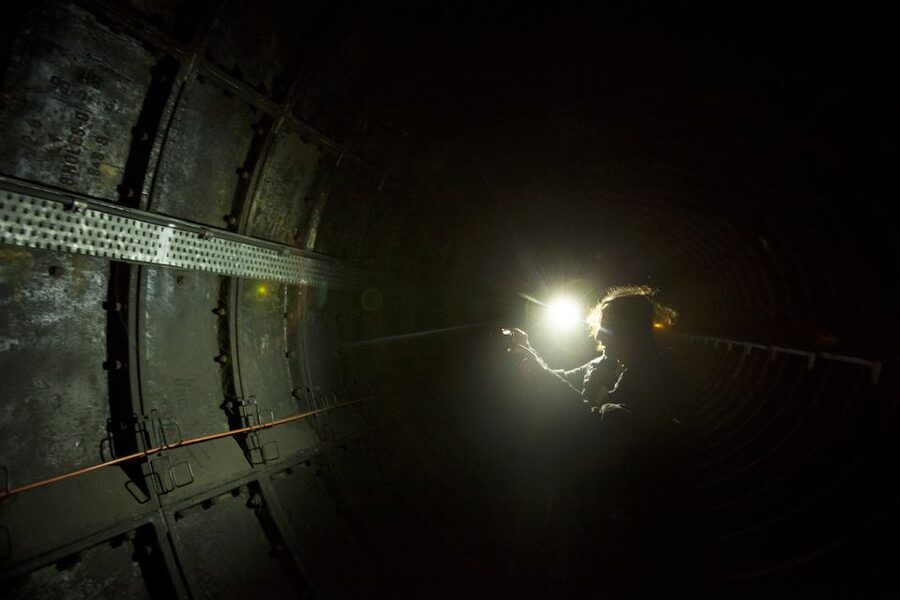
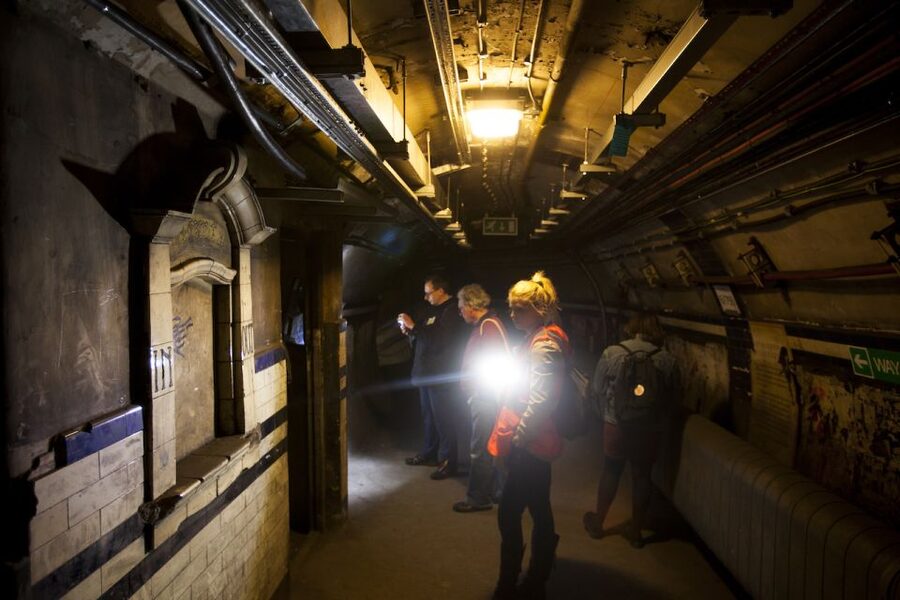
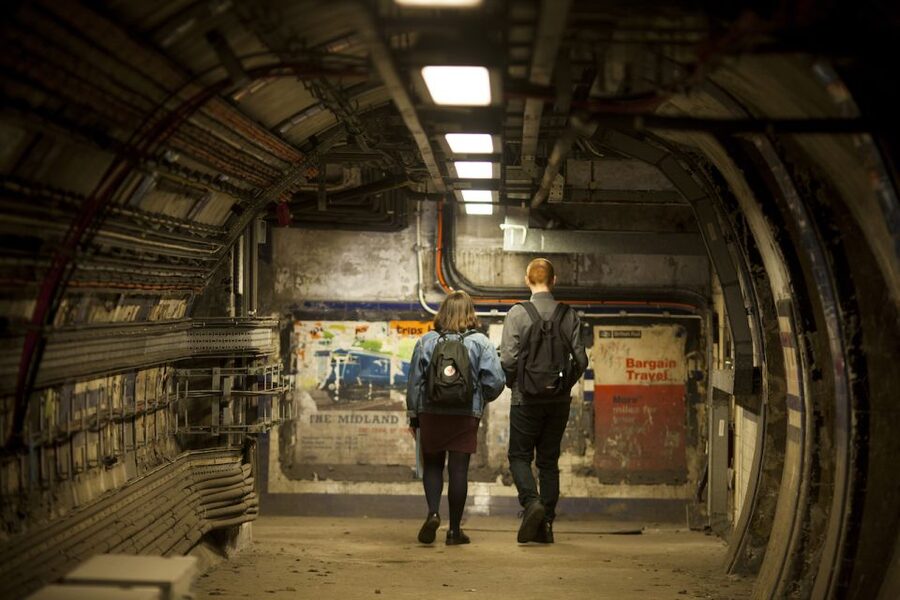
You follow your guide into disused tunnels and passageways once used by the travelling public. The spaces are dark and dusty, and that is part of the appeal. You are not looking at a polished museum display. You are walking through a working piece of London’s transport story that has slipped out of everyday use.
The route also connects three different periods of Euston’s life. You hear about the station’s early beginnings near Melton Street and Drummond Street, see the remains of older Underground design, and learn about the changes planned around HS2. That mix gives the tour more substance than a simple walk through an abandoned corridor.
The London Transport Museum developed the tour with historical specialists and material from its archive and collection. In practical terms, that means the guide can explain not only what a tunnel looks like, but why it was built, used, closed, and changed.
A handful of other London outings to weigh up
- From London: Harry Potter Warner Bros Studio Tour
★ 4.7 · 26,588 reviews - London: Westminster to Greenwich River Thames Cruise
★ 4.5 · 22,836 reviews - Magical London: Harry Potter Guided Walking Tour
★ 4.7 · 22,044 reviews
Finding the correct Euston Square meeting point
Your tour begins at the south exit of Euston Square station, on the corner of Gower Street and Gower Place, NW1 2BF. This is not the same place as Euston Underground station, so give yourself time to get your bearings.
Look for the station entrance with the glass façade on the hospital side of Euston Road. There is more than one entrance to Euston Square, and choosing the wrong one could leave you searching for the group at the last minute.
The what3words location is baked.bend.worry. That is useful if your phone has the app or if you want a precise backup reference. I would still rely on the glass-fronted entrance and the street names first.
The activity ends back at the same meeting point. That makes the tour simple to fit into a day around Euston, though you should not schedule a train connection immediately afterward. A 75-minute advertised duration leaves little room for delays if you need to cross London after the walk.
The early Euston story starts above ground
The opening part of the tour sets up Euston’s development before you head through the less familiar spaces. You learn about the station’s beginnings around Melton Street and Drummond Street, then see how the Underground network grew around it.
This context matters because Euston is not one single station with one single past. It is part of a layered transport complex shaped by Underground expansion, railway demands, engineering work, and later modernization.
The guide helps connect the visible station to the spaces below. You begin to understand why some corridors are broad, why others feel cramped, and how passenger routes have changed over time.
Do not expect a long architectural lecture. The tour lasts only 75 minutes, so the information needs to stay focused. That works in its favor. You get enough background to understand what you are seeing, then move on before the pace becomes heavy.
Walking through tunnels once used by passengers
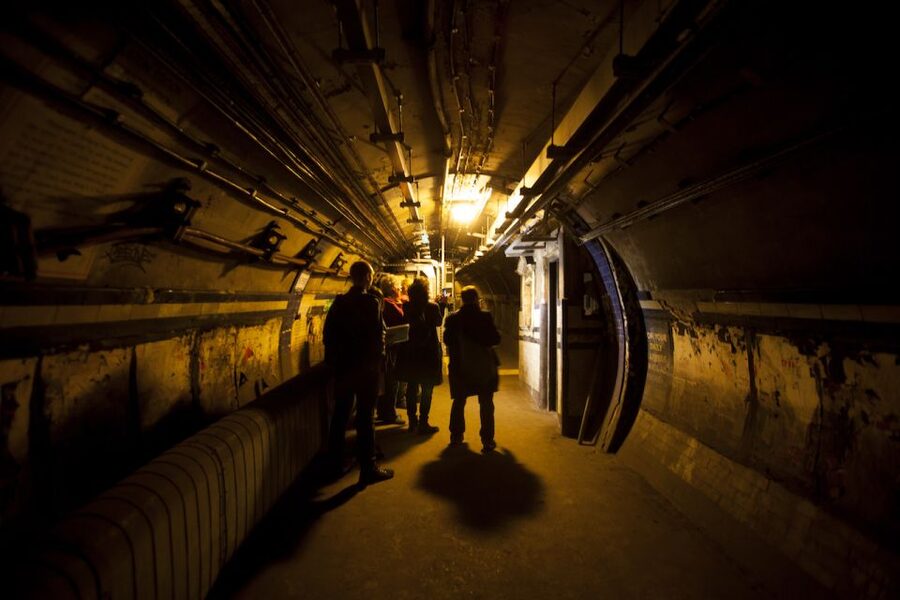
The heart of the tour is the walk through Euston’s disused tunnels and passageways. These routes were once part of the passenger experience, but they have been hidden from public use for decades.
The physical setting is deliberately rough. You may encounter uneven ground, low lighting, and stairs as the route moves through the old network. Comfortable shoes are essential, and weather-appropriate clothing is sensible even though much of the experience takes place underground.
This is not a standard Tube ride or a museum gallery. You are on foot for much of the 75 minutes, paying attention to walls, corners, surfaces, and changes in level. The darkness adds atmosphere, but it also means you should watch your footing rather than rush ahead for photographs.
The passageways are valuable because they show how a station works behind the signs and platforms. You get a sense of the space required to move people, manage trains, and connect one part of the system with another. Even an empty corridor can explain a great deal once the guide points out its former purpose.
The tour is not suitable for people with mobility impairments, and the operator also rules it out for people with claustrophobia. That is not a minor warning. Treat it as a central part of your booking decision.
Elsewhere in London, a change of pace:
- London: Madame Tussauds London
★ 4.6 · 20,915 reviews - London: Warner Bros. Studio Tour with Transfers
★ 4.7 · 17,586 reviews - London: Tower Bridge Entry Ticket
★ 4.7 · 15,560 reviews - London: St Paul’s Cathedral Entry Ticket
★ 4.7 · 9,813 reviews
Faded posters hidden for more than 50 years
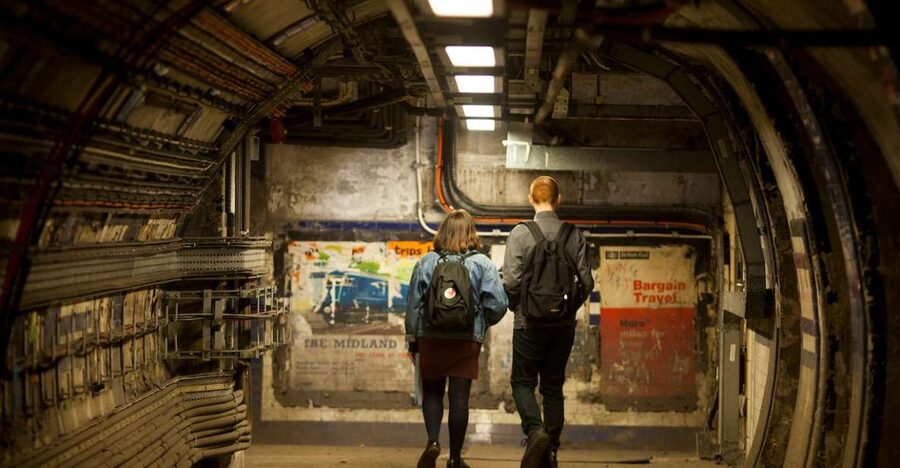
One of the most appealing details is the remains of vintage advertising posters concealed from public view for over half a century. These fragments give the tunnels a human touch.
An old poster is more than decoration. It shows what passengers once saw while waiting, changing trains, or walking through the station. Even when the image is incomplete, the surviving paper and color suggest the changing tastes and commercial life of earlier London.
The experience is especially good for anyone who likes small details. You are not simply told that the station is old. You can look at physical traces left behind by people who used the Underground generations ago.
Photography is allowed, and the tour’s pace gives you time to take pictures. Scott and Anthony were specifically praised for being friendly and allowing plenty of time for photographs. That makes a difference in a dim space, where you may need a moment to frame a shot without holding up the group.
Still, keep your expectations realistic. These are remnants, not a restored poster gallery. Some areas may be dusty, worn, or difficult to photograph in the low light. The attraction is the authentic condition of the space, not a perfect display.
The ventilation shaft above the Victoria line
The most distinctive stop is a secret ventilation shaft where you can look down on Victoria line trains. It brings the working Underground directly into the abandoned side of the station.
This moment helps explain why old tunnels cannot always simply be sealed and forgotten. Underground stations need ventilation, access routes, and engineering space. A disused passenger passage may sit beside infrastructure that remains important to the live network.
Watching Victoria line trains from above also gives the tour a useful contrast. You see the old and new Tube at once: a quiet corridor from an earlier phase of Euston and trains still carrying passengers through the modern system.
Because the route involves low lighting and stairs, follow the guide’s instructions carefully at this stop. The shaft is a memorable feature, but it is not an observation deck designed for casual wandering. The tour’s structure and guide supervision are what make access possible.
Leslie Green design before redevelopment
The walk also brings you near an iconic Leslie Green station and its surroundings. Leslie Green stations are associated with distinctive early Underground design, so this part will appeal to anyone interested in London architecture as well as transport.
Here the tour takes on a sense of urgency. The station and nearby spaces are expected to change as work connected with HS2 reshapes Euston. The point is not to promise that every historic element will disappear at once, but to show you an area in transition.
That makes the timing of the tour important. You are seeing surviving features before planned transport improvements alter the setting. The experience helps you understand the cost of progress: faster rail links and a larger station may bring practical benefits, while older spaces face pressure.
HS2 is presented as part of Euston’s next chapter, with the station planned as the London terminus for high-speed services to the Midlands. You hear how the project may affect the station and its underground network, adding a current affairs angle to the historical material.
How the guide shapes the experience
The guide is central here. Without explanation, a dusty corridor is only a dusty corridor. With the right context, you can see an old passenger route, an engineering solution, or a surviving design feature.
The tours are conducted in English. Guides such as Scott and Anthony have been praised for being friendly, clear, and willing to allow time for photographs. That combination suits this setting, since you need both solid explanation and enough space to look around.
The small group can shape your experience. A group of four, as on one reported outing, allows easy questions and a quieter walk. A fuller departure may feel less personal and may make photography harder, particularly in narrow areas. The operator does not provide a guaranteed group size in the supplied details, so book for the subject rather than expecting an intimate private tour.
The strongest guides will help you picture the station as it was, explain why sections were closed, and connect old Tube service with current improvements. You should come away with a clearer sense of how Euston’s underground network developed and why it now faces another major change.
Is $60.61 good value for 75 minutes?
At $60.61 per person, this is not a cheap way to fill an hour in London. You are paying for restricted access, specialist interpretation, and a route that you cannot reproduce by simply tapping an Oyster card and riding the Tube.
The value is strongest if you care about London transport, engineering, architecture, or places normally closed to the public. The old posters and ventilation shaft provide concrete features to remember, while the HS2 discussion gives the visit a current purpose.
The value is weaker if you expect a long exploration or a polished attraction with many rooms. The tour lasts 75 minutes, and the route is focused on one station’s disused spaces. You should also factor in the physical demands. A paid experience is poor value if dim tunnels and stairs make you uncomfortable from the start.
Free cancellation up to 24 hours before the tour and the option to reserve now and pay later reduce some booking risk. Even so, check the starting time carefully, since departures vary and availability determines the schedule.
Who should book this underground walk?
I would recommend it to you if you enjoy unusual London sites, transport history, or the practical workings of old infrastructure. It is also a good choice if you have already seen the main museums and want a more specific experience.
Families can book, but children must be at least 10 years old. No more than four children aged 10 to 15 are allowed per adult. The walking conditions make this better for older children who can manage stairs, uneven ground, low light, and a quiet guided pace.
It is not suitable for anyone with a mobility impairment or claustrophobia. Open-toed shoes are not allowed, and comfortable footwear is a must. Large bags, luggage, food, and drinks are also prohibited.
There are no toilets on the tour. Use facilities before you arrive, especially if you are fitting this between a train journey and another timed attraction.
My verdict on the Lost Tunnels of Euston tour
Book this tour if you want to see the Tube as a layered piece of infrastructure rather than just a way to get around. The faded posters, former passenger corridors, Leslie Green surroundings, and view over Victoria line trains give you several memorable points in a compact visit.
I especially like the balance between old and new. You see traces of a station that has changed over decades, then hear how HS2 may reshape Euston again. That link makes the tour feel useful, not just spooky.
Skip it if you need step-free access, dislike enclosed spaces, or want a broad survey of London’s Underground system. At $60.61, the tour asks you to value access and interpretation over length.
For the right person, this is one of London’s more unusual guided walks: focused, atmospheric, and full of details you would miss from the platform.
FAQ
Where does the Euston tunnels tour start?
Meet your guide at the south exit of Euston Square station, NW1 2BF, on the corner of Gower Street and Gower Place.
How do I identify the correct entrance?
Use the Euston Square entrance with the glass façade on the hospital side of Euston Road. The station has more than one entrance.
How long does the tour last?
The guided walking tour lasts 75 minutes.
What language is the tour conducted in?
The live guided tour is conducted in English.
Where does the tour finish?
The activity ends back at the same meeting point where it starts.
Is the tour suitable for children?
Children under 10 are not permitted. A maximum of four children aged 10 to 15 is allowed per adult.
Is the tour suitable for people with mobility impairments or claustrophobia?
No. The route includes uneven ground, low lighting, and stairs, and it is not suitable for people with mobility impairments or claustrophobia.
What should I bring and what is not allowed?
Bring a passport or ID card, comfortable shoes, comfortable clothing, and weather-appropriate clothing. Food, drinks, luggage, large bags, and open-toed shoes are not allowed. There are no toilets on the tour.
New listings around London
- London: GoBoat Rental in Canary Wharf with London Docklands★ 4.2 · 14 reviews
- Windsor Castle & Hampton Court Palace VIP Black Taxi Tour★ 4.9 · 14 reviews
- London Royal Tour – Buckingham Palace Entry – 12 guests 2,5h★ 4.9 · 14 reviews
- London: Christmas Party Dinner Cruise★ 3.9 · 14 reviews
- London: Traditional Afternoon Tea Tour in a Luxury Coach★ 4.7 · 15 reviews
- Hobbledown Heath One-Day Entry Ticket★ 4.2 · 15 reviews
- London: Sherlock Holmes Tour by Black Cab★ 4.9 · 15 reviews
- Iconic London: Bard, Beatles, Bond & Baker Street★ 4.9 · 15 reviews
London Tours, compared.

Westminster to Greenwich River Thames Cruise
Read our review →
Magical London: Harry Potter Guided Walking Tour
Read our review →