
Reviewed · LONDON TOURS
Jack the Ripper and Victorian London: Beyond the Shadows
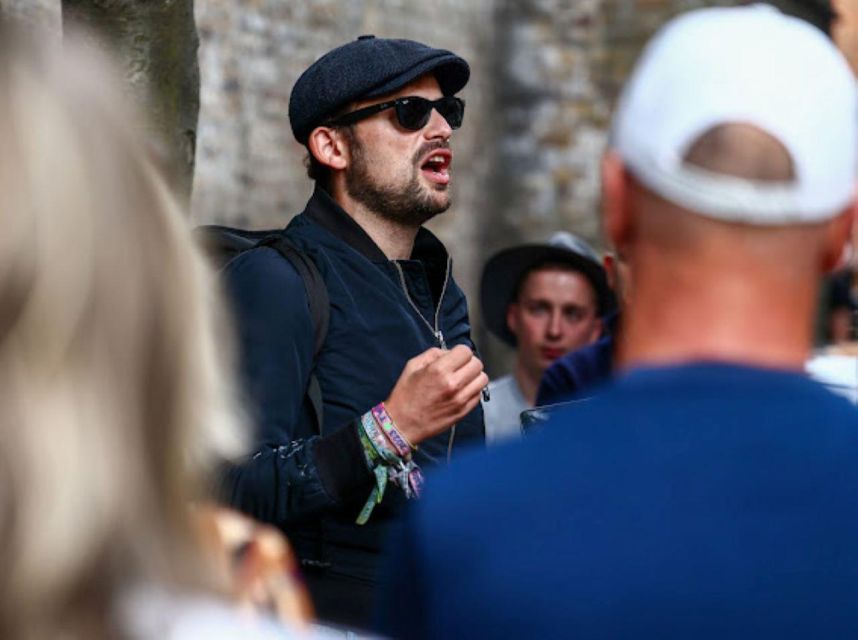
The best thing about this 140-minute walking tour is that it does not treat Jack the Ripper as a cartoon villain. Guide Nick uses the murders as a doorway into Victorian East End life, asking you to look past lurid headlines and consider the women, poverty, press coverage, and social divisions behind the case. I like the careful balance between true crime and serious history, and I like Nick’s lively, theatrical delivery, shaped by his past work in musical theatre.
The main drawback is the subject itself. The tour deals with murder, poverty, and the deaths of women, so it may not suit anyone seeking a light evening walk. You will also be on foot for nearly two and a half hours, often outdoors, so good shoes and weather-ready clothing matter.
Key points at a glance
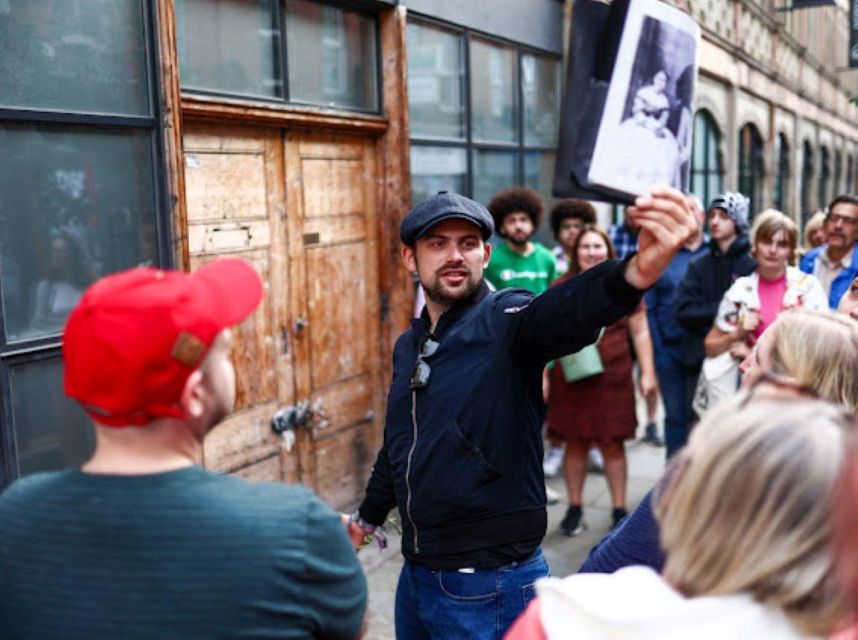
- Nick’s theatrical storytelling: Expect humor, questions, and a strong sense of performance rather than a dry list of dates.
- A wider view of the crimes: The tour gives real attention to the women involved and the false ideas that have grown around their lives.
- A focused East End route: Walk from Braham Street through Brick Lane, Hanbury Street, Goulston Street, Mitre Square, and Spitalfields.
- Fact checked against myth: You are encouraged to think about what is known, what was reported, and what remains uncertain.
- Good value at $24: For 140 minutes with a live English guide, the price is modest for central London.
- A practical finish: The route ends at Spitalfields Market, a useful spot for food, browsing, or continuing your evening.
Why this Jack the Ripper walk feels different
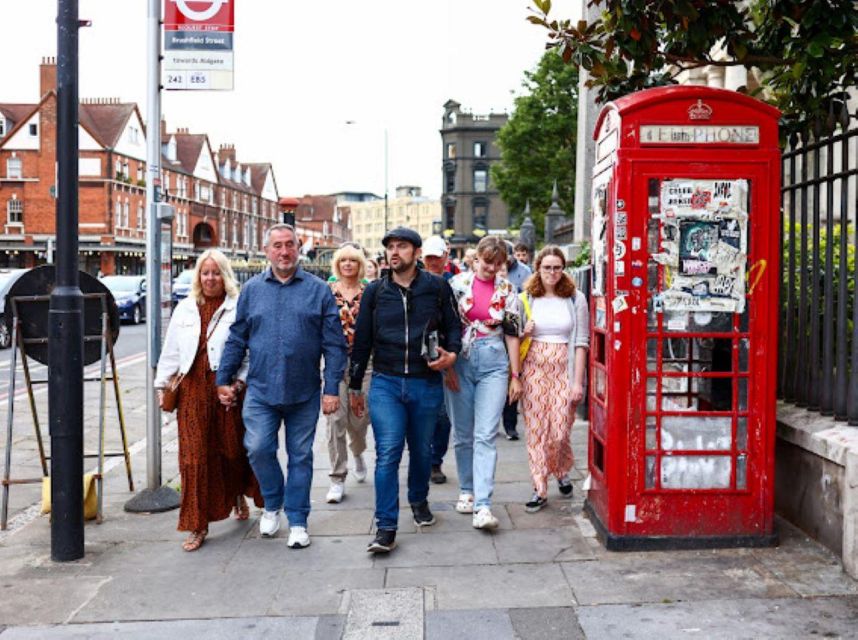
Many London crime walks lean hard on shock. This one takes a more useful path. You still follow the main locations linked with the Whitechapel murders, but the real subject is Victorian London and the people who lived there.
I like that distinction. The murders are the hook, but they are not the whole meal. Nick explains the East End as a place shaped by poverty, work, immigration, social class, journalism, and public fear. That context helps you understand why the case became such a sensation and why so many stories about it still circulate.
The tour also asks you to look at the victims as people, not just names in a murder case. That is important. Their lives have often been reduced to the circumstances of their deaths, while the killer has received most of the attention. Here, the focus shifts back toward the women and the misunderstandings surrounding them.
Nick’s style is a major part of the experience. He is funny, direct, and comfortable answering questions. His former work in musical theatre gives the presentation a dramatic edge, but the drama does not depend on gore. You get an engaging performance without being pushed into cheap scares.
Further Ripper walks after dark:
- London: The Original Jack the Ripper Walking Tour
★ 4.7 · 7,833 reviews - London: Jack the Ripper Small Group Tour
★ 4.7 · 3,159 reviews - German Language : Original Jack the Ripper Tour
★ 4.6 · 1,805 reviews
Starting at Braham Street and entering the East End
The walk begins on Braham Street. This gives the tour a clear starting point away from the most crowded sightseeing areas and places you close to the district that shaped the story.
From the outset, expect a street-level look at the East End rather than a museum lecture. You move through modern London while listening for traces of the Victorian city. That contrast is part of the appeal. The streets have changed, but the route allows you to consider how people once moved through them, where they worked, and how sharply daily life could differ by class.
The beginning also sets up an important theme: this is not only a search for a murderer. It is a study of how a city reacts when violence, poverty, newspapers, and rumor collide.
Brick Lane: modern color over Victorian hardship
Brick Lane is one of the liveliest sections of the route today, known for food, shops, art, and an international atmosphere. During the walk, it becomes a useful place to think about how the East End has changed and how much of its identity still comes from movement between cultures.
Your guide connects the street to Victorian conditions and local life. The point is not to pretend that the modern street looks as it did in 1888. It does not. Instead, you get a sense of how the area’s social character developed and why the East End mattered to London as a whole.
This is a good stop for visitors who want more than crime trivia. The street helps place the murders within a working district rather than an empty film set. You will likely hear about the pressures facing poor families and the narrow choices available to many women.
Because Brick Lane can be busy, keep close to the group and listen carefully when the guide stops. The walk is accessible, but it is still a city walk through active streets.
Hanbury Street and the human cost of the case
Hanbury Street brings the tour closer to one of the key murder sites. Here, the tone becomes more serious. The guide discusses what is known about the events, while also separating solid evidence from later claims and popular storytelling.
This is where the tour’s method matters most. You are not simply handed a neat answer. Instead, you are encouraged to consider the sources, the gaps in the evidence, and the way newspapers shaped public understanding.
I appreciate that approach because the Jack the Ripper case is full of confident theories built on uncertain ground. A good guide should tell you what can be supported and what remains speculation. Nick’s delivery, according to the supplied experience details, is direct without becoming needlessly graphic.
Hanbury Street also gives the tour a chance to discuss the people who lived in these neighborhoods. The women connected with the case had lives, work, friendships, and hardships that deserve attention beyond the final moments of their stories.
A handful of other London outings to weigh up
- From London: Harry Potter Warner Bros Studio Tour
★ 4.7 · 26,588 reviews - London: Westminster to Greenwich River Thames Cruise
★ 4.5 · 22,836 reviews - Magical London: Harry Potter Guided Walking Tour
★ 4.7 · 22,044 reviews - London: Madame Tussauds London
★ 4.6 · 20,915 reviews
Old Spitalfields Market and the working city
The route continues through Old Spitalfields Market. This stop helps broaden the picture from crime scenes to commerce and work.
Markets were central to city life. They brought together sellers, shoppers, laborers, and people searching for a day’s income. A place like Spitalfields helps you picture the constant movement of goods and people that made the East End such an important part of London.
Today, the market is a popular place to eat and shop, so you will see a very different setting from the Victorian streets described by the guide. That difference is useful rather than distracting. You can compare the polished modern market with the harder working conditions of the past.
The stop also breaks up the darker sections of the tour. You remain close to the central story, but the surroundings offer more light, activity, and room to take stock. If you are sensitive to the subject, this change of setting can make the overall experience easier to handle.
Goulston Street and the problem of evidence
Goulston Street is tied to one of the most debated pieces of evidence in the case. The guide uses the location to explore how clues were interpreted, recorded, and later turned into part of the Ripper legend.
This is one of the strongest reasons to choose a historically minded tour. You get a lesson in uncertainty. Victorian policing did not have the methods or technology available today, and the surviving records do not answer every question.
Nick’s approach encourages you to test the story rather than accept every famous claim. That makes the tour interactive. You listen, form an opinion, and consider how another piece of information might change it.
The stop is also a reminder that history is not always tidy. A good walking tour can show you the limits of the evidence without losing the drama of the subject. This one aims to do exactly that.
Mitre Square, the most atmospheric stop

Mitre Square is likely to be the emotional center of the walk. It is one of the best-known locations connected with the murders, and standing there gives the story a stronger sense of place than reading about it in a book.
You will not find a preserved Victorian crime scene. Modern London surrounds the location, and that is worth remembering. The power of the stop comes from the guide’s explanation, your imagination, and the knowledge that the area has been transformed over time.
This is also where a measured tone matters. The supplied comments about Nick repeatedly point to his ability to tell the story without relying on unnecessary gore. He keeps the subject serious while using humor at suitable moments to prevent the evening from becoming relentlessly grim.
If you want a frightening theatrical show, this may feel restrained. If you want a thoughtful account that still has atmosphere, Mitre Square is likely to be one of the most effective parts.
The London Fruit & Wool Exchange and a changing district
The walk then reaches the London Fruit & Wool Exchange. This stop adds another piece to the East End’s economic story.
The name points to the area’s commercial past, and the location helps you think about how trade shaped the streets. Victorian London was not just grand monuments and royal ceremonies. It was also warehouses, markets, transport, manual work, and crowded housing.
That broader view makes the tour more valuable. You begin to see the murders within a city undergoing major social and economic change. The crimes attracted attention partly because they exposed conditions many wealthier Londoners preferred not to see.
The area has changed, but the guide’s local perspective helps connect the present street plan with the older district. Nick is described as someone with family ties to the area, so you can expect local observations alongside the main subject.
Finishing at Spitalfields Market
The tour ends at Spitalfields Market, close to where the route began at Old Spitalfields Market. This is a practical finish. You are not left at an isolated location or required to retrace the entire walk before finding somewhere to sit.
Spitalfields is a good place to continue the evening. You might stop for food, browse the stalls, or simply take a break after the serious subject matter. The ending also returns you to the present, which helps bring the story back into proportion.
Do not expect the tour to end with a final solution to the Ripper case. The identity of Jack the Ripper remains uncertain, and the value of the walk comes from understanding the evidence and the era rather than receiving a sensational answer.
Nick’s guiding style and the tone of the evening
Nick receives the strongest praise in the supplied feedback. He is described as funny, friendly, well prepared, and highly engaging. His presentation is interactive, and he has a knack for encouraging questions rather than asking you to stand quietly while facts roll past.
His theatre background matters here. He can use timing and performance to hold attention, particularly during a long outdoor walk. That does not mean the tour becomes a stage show. The historical material remains central, with the performance helping you follow the complicated story.
Several details suggest that Nick adapts well to a group. He answers questions, offers London tips, and can lighten the mood when needed. One group found the experience especially memorable despite heavy rain, with Nick making an extra effort to keep the evening enjoyable. That is useful to know, though you should still dress for the weather rather than rely on charm to keep you warm.
The tone is best described as serious but not oppressive. You may laugh during parts of the walk, but the guide does not sugar-coat the violence or turn the victims into props.
Is $24 a good price for 140 minutes?
At $24 per person, I consider this good value for London. You get 140 minutes with a live English-speaking guide and a route covering several important East End locations.
The value comes from the interpretation rather than admission to a building. There is no museum ticket or indoor attraction included, but a strong guide can give you something a map or podcast cannot: a sense of sequence, place, and debate as you walk.
The price also works well for couples, families with older children, and solo visitors who want structure in an unfamiliar part of London. The material is serious, so I would be cautious about booking for young children. The activity specifically lists people over 95 as unsuitable, and the nearly two-and-a-half-hour walking time is worth considering for anyone with mobility concerns.
The tour is wheelchair accessible, which is helpful, though city streets can still require attention around crowds and changing surfaces. If the weather is poor, the outdoor format becomes a larger factor in your decision.
Free cancellation up to 24 hours before the activity adds useful flexibility. You can also reserve now and pay later, which helps if your London schedule is still changing.
Who should book this East End tour?
I would choose this walk if you want:
- True crime presented with historical context
- A guide who can entertain as well as explain
- More attention on the victims and their lives
- A route through several genuine East End locations
- A thoughtful look at rumor, evidence, and newspaper influence
- A reasonably priced evening activity
It is especially suited to history fans, older teenagers, adults interested in crime stories, and visitors who prefer a walking experience to a museum display.
I would skip it if you dislike murder-related subjects, want a purely comic ghost walk, or would struggle with nearly two and a half hours outside. The tour is not built around jump scares, and it does not promise a tidy answer to the mystery.
Should you book Jack the Ripper and Victorian London?
Yes, if you want the story placed in its real social setting rather than served as a string of gruesome anecdotes. The route covers the key locations, but the strongest reason to book is Nick’s style: theatrical, warm, questioning, and careful with a difficult subject.
For the best experience, wear comfortable shoes, bring weather protection, and arrive ready to listen while walking through active city streets. Keep an open mind about the evidence. The tour is at its best when you treat it not as a hunt for a famous villain, but as a way to understand the women, workers, institutions, and neighborhoods caught up in one of London’s most enduring mysteries.
FAQ
How long does the tour last?
The tour lasts 140 minutes, or about two hours and 20 minutes.
What is the price?
The listed price is $24 per person.
Where does the tour start?
The tour starts at Braham Street.
Where does the tour finish?
The walk finishes at Spitalfields Market.
Which locations are included?
The route includes Brick Lane, Hanbury Street, Old Spitalfields Market, Goulston Street, Mitre Square, and the London Fruit & Wool Exchange.
What language is the tour conducted in?
The live tour is conducted in English.
Is the tour wheelchair accessible?
Yes, the activity is listed as wheelchair accessible.
Can I cancel or pay later?
You can cancel up to 24 hours in advance for a full refund. You can also reserve your place and pay later.
New listings around London
- London: Secrets of Freddie Mercury Tour with a Cocktail★ 4.1 · 15 reviews
- London: Hampton Court Private Guided Tour★ 3.4 · 15 reviews
- London: Jack the Ripper Tour and Underground Prison in Spanish★ 5.0 · 15 reviews
- Spanish Language : Original Harry Potter Walking Tour★ 4.5 · 15 reviews
- London: Private Couples Photography Session with Landmarks★ 5.0 · 15 reviews
- London: The Saturday Supershow Cabaret at Phoenix Arts Club★ 4.5 · 15 reviews
- London: 2-Hour Guided Tour of the British Museum★ 4.7 · 16 reviews
- London’s Ghosts & Gruesome Past Nighttime Walking Tour★ 4.8 · 16 reviews
London Tours, compared.

Westminster to Greenwich River Thames Cruise
Read our review →
Magical London: Harry Potter Guided Walking Tour
Read our review →


Warner Bros. Studio Harry Potter Tour with Transfers
Read our review →Browse the lists this tour appears in