Reviewed · LONDON TOURS
London: Churchill’s Life & WW2 with Tour of War Rooms
Churchill’s wartime London is best understood underground. Above ground, you’ll see the monuments and government buildings tied to Britain’s fight against Nazi Germany. Below ground, you’ll enter the Churchill War Rooms, the bunker network where wartime decisions were made under the pressure of bombing and invasion.
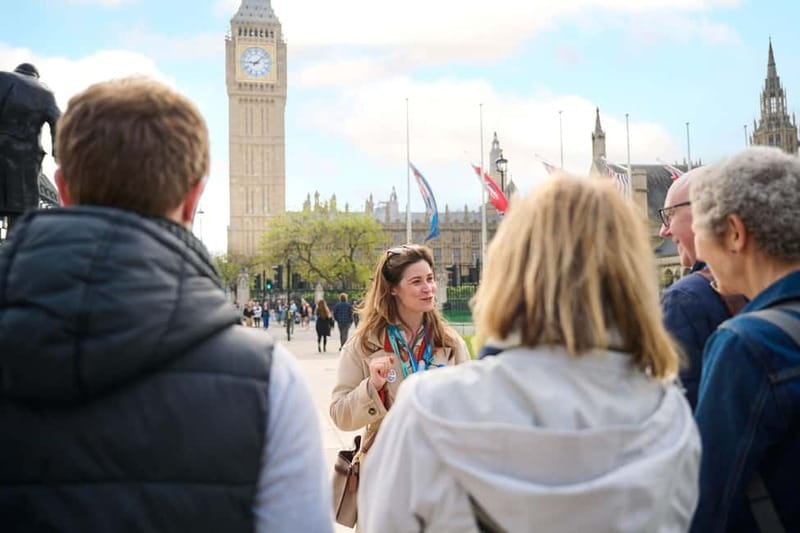
I like the way this tour links famous sights such as Big Ben and Downing Street to Churchill’s speeches, choices, and daily work. I also like the small-group format, which allows a guide such as Kate, Peter, or Salvadore to answer questions and keep the walk lively. The main drawback is pace: three hours includes a substantial walk, and the War Rooms can feel crowded on weekends and during school holidays.
Key points to know before you book
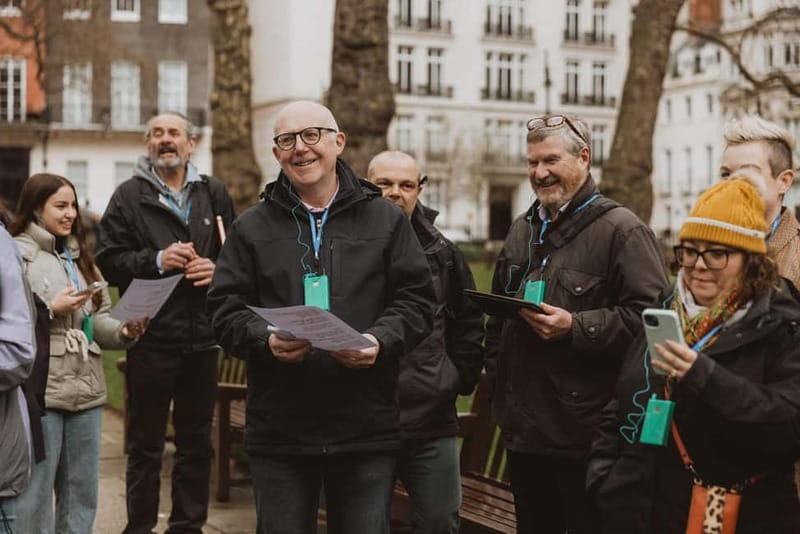
- The War Rooms take up half the tour: You get about 90 minutes underground, with an audio guide covering the map room, Churchill’s office, and other preserved spaces.
- The walking route is packed with landmarks: The RAF Memorial, Boudica Statue, Big Ben, Parliament Square, Westminster Abbey, Downing Street, Whitehall, Horse Guards Parade, and the Guards Memorial all fit into one outing.
- Guiding quality matters here: Kate, Peter, and Salvadore are praised for strong storytelling, humor, and answers to questions.
- The group is limited to 15 people: Some departures may be smaller, with one group reported at only six people.
- You walk at a moderate pace: This is not a relaxed hop-on, hop-off outing, and the activity is not suitable for strollers or people with mobility limitations.
- The War Rooms visit is audio-guided: Your walking guide leads the outdoor portion, but you explore the underground museum at your own pace.
Why this Churchill tour works
This experience gives you two different ways to read wartime London. The first is outdoor and public. You move through ceremonial streets, government squares, memorials, and monuments where Churchill’s leadership is part of the national story. The second is private and confined. In the War Rooms, you see the rooms where maps, telephones, staff, and military reports supported decisions made during the Second World War.
That combination is the tour’s strongest feature. A visit to the War Rooms alone gives you the bunker. A standard Westminster walk gives you the buildings. Here, the guide connects the two.
I especially like the opening at the Royal Air Force Memorial. It gives the tour a clear starting point rather than dropping you into a general Westminster sightseeing walk. You hear about the Battle of Britain and the force of Churchill’s speeches before moving through the political heart of London.
The tour is in English, and the outdoor portion is led by a local English-speaking guide. The War Rooms section uses an audio guide, so you should expect the tone to change halfway through. Outside, you can ask questions and follow a storyteller. Inside, you control the pace and listen through the museum’s recorded presentation.
A handful of other London outings to weigh up
- From London: Harry Potter Warner Bros Studio Tour
★ 4.7 · 26,588 reviews - London: Westminster to Greenwich River Thames Cruise
★ 4.5 · 22,836 reviews - Magical London: Harry Potter Guided Walking Tour
★ 4.7 · 22,044 reviews
Starting at the RAF Memorial
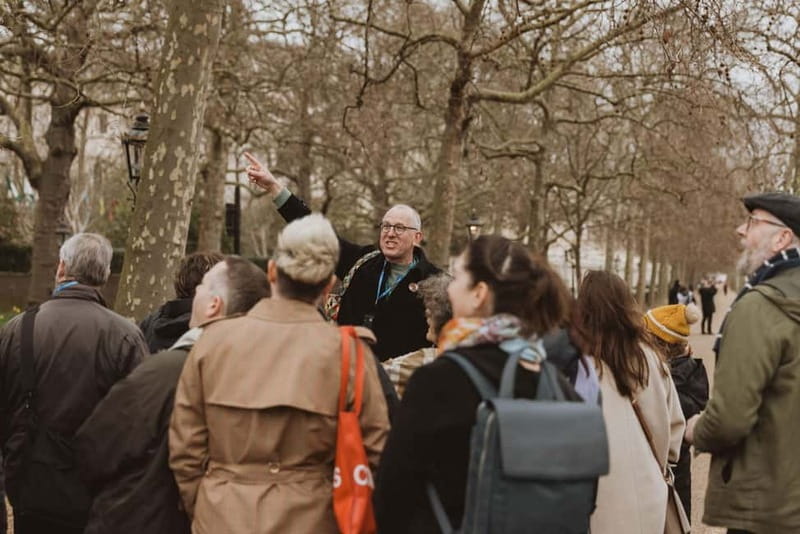
Arrive 15 minutes early at the Royal Air Force Memorial and look for the guide holding a green Walks sign. The first stop is the Monument to the RAF, where you spend about 10 minutes hearing about the Battle of Britain and Churchill’s wartime speeches.
This is a useful introduction because it puts the air war before the political monuments. Churchill’s public language mattered during the darkest weeks of 1940, but the memorial also points toward the people who fought in the skies. The emphasis is not only on one famous leader. It reminds you that Britain’s survival depended on military personnel as well as speeches and government decisions.
From there, the group moves to the Boudica Statue for about five minutes. Boudica, the ancient British queen associated with rebellion against Rome, serves as an older symbol of resistance. The guide explains how Churchill referred to such examples of strength when calling on Britain to keep fighting.
This stop is brief, but it adds a useful thread. Churchill’s public image drew on older stories of defiance, not just modern military events. You will not spend long at the statue, so consider it a quick story stop rather than a full look at Boudica’s monument.
Big Ben, Parliament Square, and the Churchill statue
The walk continues to Big Ben, where the guide discusses how the clock tower survived wartime bomb damage and became a sign of continuity. Big Ben is one of London’s most photographed sights, but the wartime angle gives your stop a sharper purpose.
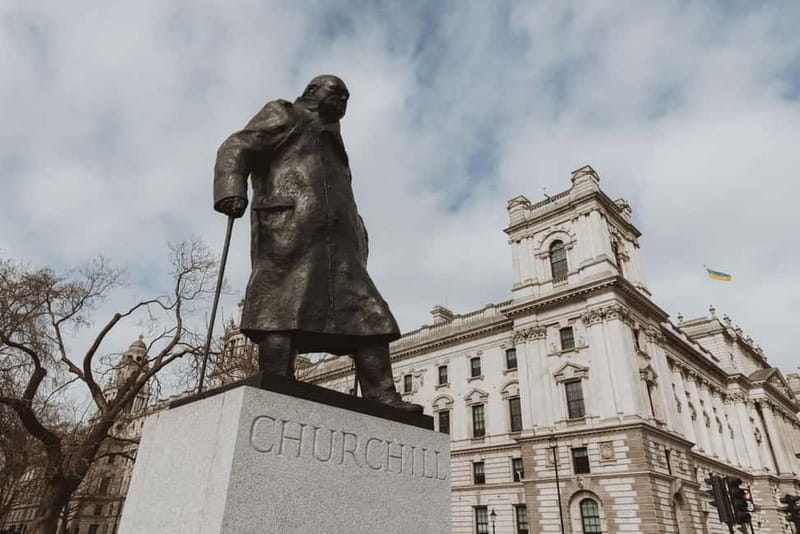
You then cross into Parliament Square for roughly 15 minutes. Here, the focus turns to the Houses of Parliament and the Churchill Statue. This is where the tour places Churchill within the larger question of British democracy. The guide explains his leadership during the Blitz and his efforts to protect the parliamentary system while the country was under attack.
I like this part because it avoids treating Churchill as only a heroic statue. The buildings around you matter. Parliament Square is the setting for national debate, and the story becomes one of keeping political life going during war, not simply winning battles.
The outdoor stops are relatively short, usually five to 15 minutes. That keeps the route moving, but it also means you should not expect long independent time at each monument. If you want detailed photographs or a quiet look at every statue, you may need to return on your own.
Westminster Abbey and Downing Street
At Westminster Abbey, the group pauses outside for around 15 minutes. This is an exterior stop only, so you will not enter the abbey as part of this activity.
The location still matters. Westminster Abbey is closely tied to British national life, ceremonies, and public memory. From the outside, you get another view of the institutions Churchill was trying to defend. The guide’s commentary helps connect the building to the wartime story, while the short visit keeps the schedule focused on Churchill and the War Rooms.
Next comes 10 Downing Street, the prime minister’s official address. You spend about 10 minutes in the area and hear how Churchill used the government center during the war.
Do not expect to enter Downing Street. This is a street-side viewing stop, with security and barriers shaping what you can see. The value comes from the setting and the explanation. Churchill’s wartime work was not carried out only in the bunker. It also involved meetings, strategy, diplomacy, and public leadership from the center of government.
Elsewhere in London, a change of pace:
- London: Madame Tussauds London
★ 4.6 · 20,915 reviews - London: Warner Bros. Studio Tour with Transfers
★ 4.7 · 17,586 reviews - London: Tower Bridge Entry Ticket
★ 4.7 · 15,560 reviews - London: St Paul’s Cathedral Entry Ticket
★ 4.7 · 9,813 reviews
Whitehall, Horse Guards Parade, and the Guards Memorial
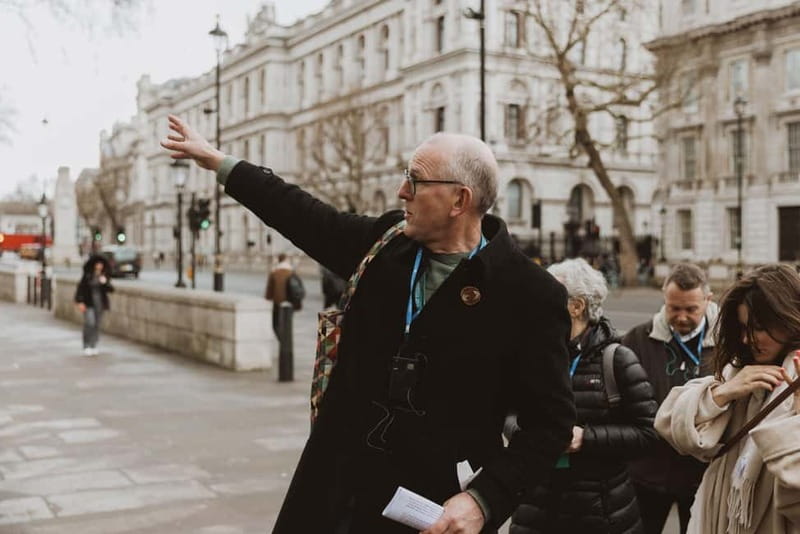
The route follows Whitehall for about 10 minutes. This broad government street is lined with buildings and memorials tied to British administration and military service. The guide uses the walk to keep the wartime story moving between Downing Street and the War Rooms.
At Horse Guards Parade, you spend another 10 minutes learning about Churchill’s connection to the site. The parade ground brings a ceremonial and military note to the walk, but it also gives you a chance to see how close the military world was to the government buildings nearby.
The final outdoor stop is the Guards Memorial, with about five minutes for a short explanation. It honors those who served during the Second World War. This is a compact memorial visit, not a long pause, but it gives the outdoor portion a respectful ending before you enter the bunker.
The sequence works well geographically and thematically. You start with air defense, move through public symbols and government, then finish among military memorials. By the time you reach the War Rooms, the underground headquarters feels connected to the streets above.
Entering the Churchill War Rooms
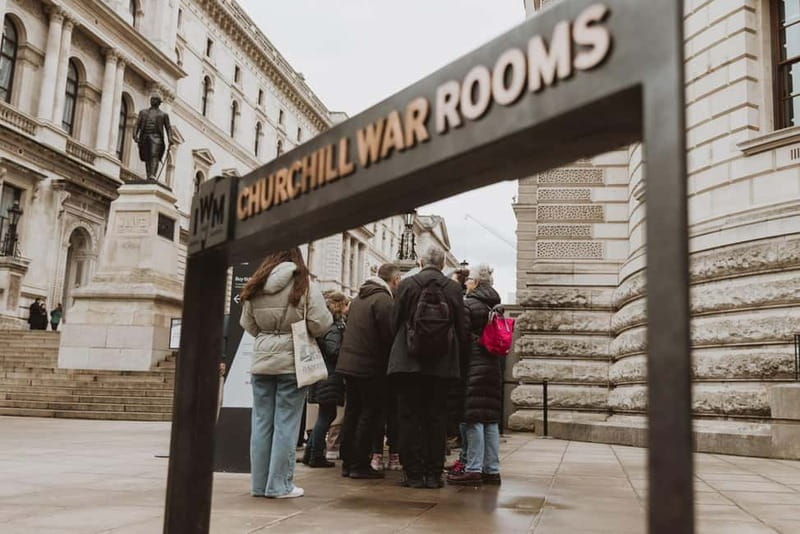
The War Rooms portion lasts about 90 minutes and is the main reason to choose this experience. Your ticket is reserved in advance, which is valuable at a major London museum where queues and timed entry can affect your day.
Once inside, you explore the underground rooms with an audio guide. The complex was used by Churchill and his staff during the war and remains preserved from 1945. That preserved quality is the heart of the visit. You are not seeing a modern reconstruction designed to look old. You are walking through rooms connected to the wartime command system.
The map room is one of the key spaces. It shows how military information was gathered, tracked, and shared while events changed quickly across several fronts. The room helps you picture the staff work behind public announcements and political speeches.
You also see Churchill’s private office. This adds a personal scale to the visit. The bunker was a place of national command, but it also contained working and private spaces used by one man during an extraordinary period.
Because the War Rooms section is audio-guided, you can take some control over your time. You might pause longer in the map room or move more quickly through sections that interest you less. The tradeoff is that you lose the direct conversation and local perspective of the outdoor guide.
Security screening is required, and the museum can be crowded during weekends and school holidays. If you dislike tight spaces or large indoor crowds, choose your date carefully. The underground setting is part of the experience, but it also means the visit can feel enclosed when attendance is high.
What the small group adds
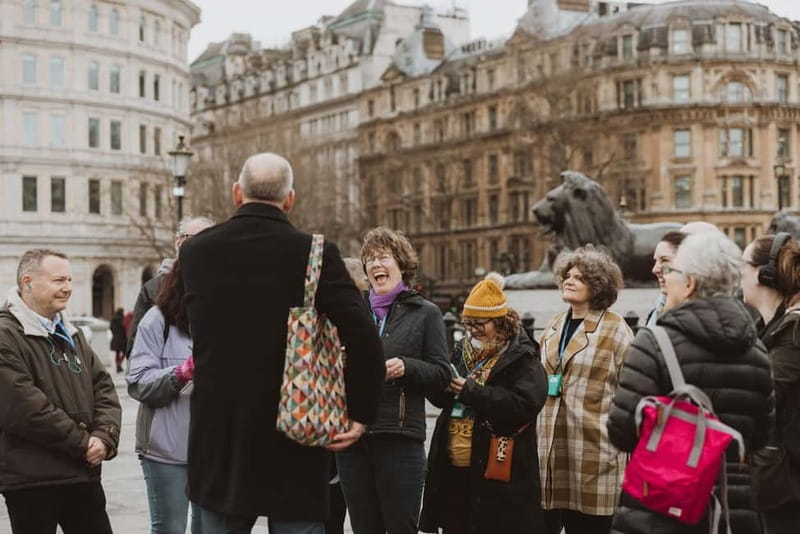
The group limit is 15 people, smaller than many central London walking tours. That matters most at the outdoor stops, where a good guide can adjust the pace, point out details, and handle questions without shouting across a large crowd.
The strongest guide feedback centers on personal delivery. Kate is praised for bringing together Churchill’s private life and public achievements. Peter is described as funny, attentive, and good at answering questions. Salvadore receives particular praise for making London and Churchill’s story entertaining, with the War Rooms as a strong finish.
Those details suggest what you should look for from the experience: not just dates and names, but a guide who can explain why a place mattered. Guide assignments can change, so you cannot book a specific person unless the operator confirms it. Still, the tour’s format gives the guide room to add personality.
One reported group had only six people. A small departure like that can make the walk feel almost conversational. The maximum is 15, though, so book with the stated limit in mind rather than assuming you will get a tiny group.
Price, timing, and practical value
The listed price is $106.41 per person for three hours. That is not a budget London walk, but it includes the guided route and a reserved ticket to the Churchill War Rooms, the most expensive and time-sensitive part of the experience.
I see the value in the combination. You are paying for context before the museum, rather than entering the War Rooms without understanding how the surrounding government district fits into the story. You are also paying for a guide who can organize the Westminster route and help you use your time efficiently.
The three-hour schedule is fairly full. The outdoor stops add up to about 90 minutes, and the museum takes another 90 minutes. You should arrive ready to walk at a moderate pace, with comfortable shoes and enough energy for several short standing stops.
There is no hotel pickup or drop-off. You make your own way to the RAF Memorial and leave from Clive Steps on King Charles Street, according to the stated route details. The meeting information also says the activity ends back at the meeting point, so confirm the final location when booking if you need to coordinate transport afterward.
Free cancellation is available up to 24 hours before the start time, and you can reserve now and pay later. Those terms help if your London schedule is still shifting.
The accessibility information needs careful attention. One section describes the activity as wheelchair accessible, while the important notes say it is not suitable for wheelchair users, strollers, or people with mobility impairments. The walking requirements and the underground museum should be taken seriously. Contact the operator before booking if accessibility affects your plans.
Who should book this experience
I would choose this tour if you want Churchill to be the main thread of a Westminster visit. It suits first-time London visitors who want a guided introduction to Big Ben, Parliament, Whitehall, and Downing Street, along with a focused museum visit.
It also works well for anyone interested in military or political history. The route is not just a collection of famous photo stops. Each location helps explain the relationship between public morale, government, military service, and command.
Families with older children and teenagers may appreciate the variety. The walk changes location often, and the War Rooms provide a clear physical setting for the story. Very young children may struggle with the walking pace, security process, and audio-guided museum portion.
You should skip it if you want to enter Westminster Abbey, spend a long time at each landmark, or explore the War Rooms entirely with a live guide. You should also think twice if crowds, underground spaces, or moderate walking are a problem.
Should you book the Churchill War Rooms tour?
Book it if you want a well-shaped Churchill day rather than a museum visit in isolation. The best feature is the progression from memorials and government buildings into the bunker where wartime decisions were made. Strong guides such as Kate, Peter, and Salvadore can add warmth, humor, and useful context to the outdoor walk.
The price makes sense if the reserved museum entry and guided Westminster route save you planning time. If you already know central London well and prefer to explore alone, buying a War Rooms ticket and walking Whitehall independently may suit you better.
For most history-minded visitors who can walk at a moderate pace, this is a focused and worthwhile way to spend three hours. Just confirm the accessibility details, expect an audio guide underground, and choose a quieter time if you can.
FAQ
How long does the Churchill tour last?
The activity lasts three hours. About 90 minutes covers the outdoor walking route, and about 90 minutes is set aside for the Churchill War Rooms.
Is the Churchill War Rooms ticket included?
Yes. A pre-reserved ticket to the Churchill War Rooms is included, along with an audio guide for the museum portion.
Is the entire tour led by a live guide?
No. A live English-speaking guide leads the walking tour. Inside the Churchill War Rooms, you explore with an audio guide at your own pace.
Where does the tour start?
The tour starts at the Royal Air Force Memorial in London. Arrive 15 minutes early and look for a guide holding a green Walks sign.
Is the tour suitable for wheelchair users or strollers?
The important tour notes say it is not suitable for wheelchair users, people with mobility impairments, or strollers. Another section lists the activity as wheelchair accessible, so contact the operator to confirm your specific needs before booking.
Can I cancel or pay later?
You can cancel up to 24 hours before the tour for a full refund. Reserve now and pay later is also available.
New listings around London
- Windsor Castle & Hampton Court Palace VIP Black Taxi Tour★ 4.9 · 14 reviews
- London Royal Tour – Buckingham Palace Entry – 12 guests 2,5h★ 4.9 · 14 reviews
- London: GoBoat Rental in Canary Wharf with London Docklands★ 4.2 · 14 reviews
- London: Christmas Party Dinner Cruise★ 3.9 · 14 reviews
- London: Traditional Afternoon Tea Tour in a Luxury Coach★ 4.7 · 15 reviews
- Hobbledown Heath One-Day Entry Ticket★ 4.2 · 15 reviews
- Iconic London: Bard, Beatles, Bond & Baker Street★ 4.9 · 15 reviews
- London: Sherlock Holmes Tour by Black Cab★ 4.9 · 15 reviews
London Tours, compared.

Westminster to Greenwich River Thames Cruise
Read our review →
Magical London: Harry Potter Guided Walking Tour
Read our review →