
Reviewed · LIVERPOOL TOURS
Liverpool: A Walk Through Time: Full History Walking Tour
Liverpool’s story comes into focus when you walk it in order, from the medieval settlement around the Lyver Pool to the port that helped shape the north of England and the British Empire. This two-hour route connects the waterfront, old commercial streets, civic buildings, and docks instead of treating them as isolated sights.
I like the guide-led storytelling, especially the way dates, buildings, trade, railways, and local life are tied together. I also like the practical finish: you end on Castle Street, within easy reach of places to eat, and guides such as John have suggested where to try scouse. The main consideration is pace. Two hours covers a lot, so you will see major places from outside rather than tour every interior.
Key points at a glance
- A clear timeline from 1207 to today: The tour explains how Liverpool grew from a small medieval trading town into a major port and industrial city.
- A strong waterfront opening: The Royal Liver Building and the Three Graces give you an immediate sense of Liverpool’s maritime ambition.
- More than Beatles history: Trade, empire, slavery, railways, architecture, local government, and social change all get their place.
- Academic depth without a dry lecture: Guides including John and Dave have explained complex links in clear, engaging language.
- Useful for first-time visitors: The route helps you understand the city centre before exploring museums, docks, shops, and pubs on your own.
- Good value at $22: You get two hours with a live English-speaking guide and a route through several of Liverpool’s key historic areas.
Why this two-hour route works
Liverpool can seem like several cities at once. There is the grand waterfront, the compact medieval core, the shopping district, the former dock system, and the modern city centre. This walk gives you the thread connecting them.
The central idea is change. You hear how Liverpool developed from a settlement granted borough status in 1207 into a port with global reach. You also learn how geography and technology mattered: the river, the docks, shipping, and rail connections all helped the city grow.
That approach is more useful than a string of disconnected facts. When you later look at the Royal Albert Dock, Castle Street, or the Town Hall, you understand why those places exist and what role they played.
The tour is built around visible landmarks, so the city itself acts as the classroom. Guides point out architectural details you could easily miss, including features on important civic and commercial buildings. Bring your curiosity, because the best parts often come when you ask a question and the guide links Liverpool to wider British or world events.
More History Tours in Liverpool
- Liverpool: Haunted History Guided City Tour
★ 4.9 · 404 reviews - Liverpool: St James’ Cemetery Historical Ghost Tour
★ 4.9 · 169 reviews - Liverpool: Heritage, History & Culture Guided Walking Tour
★ 4.9 · 52 reviews
Meeting at the Royal Liver Building
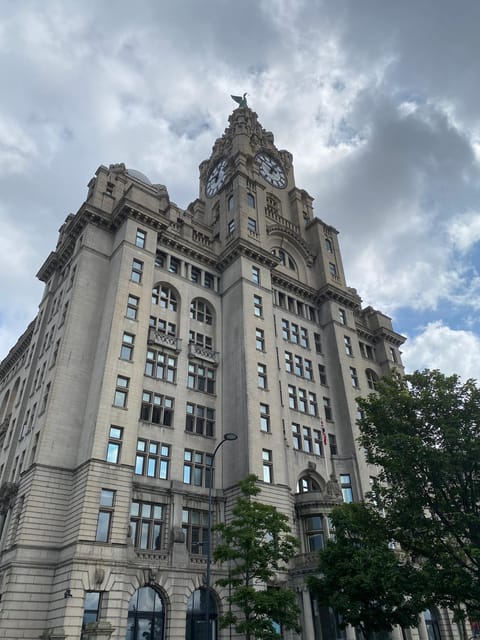
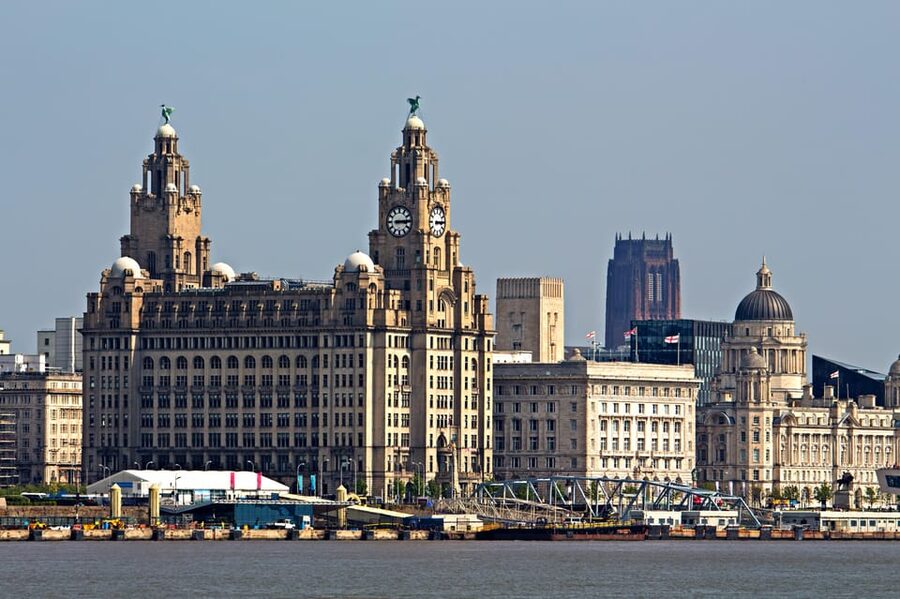
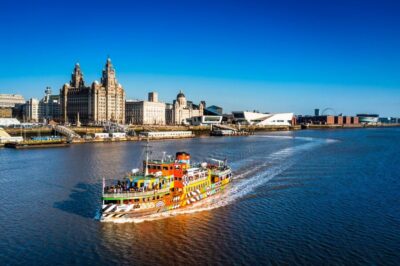
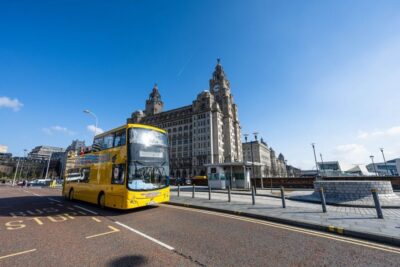
You meet outside the entrance of the Royal Liver Building, at the black gate facing the river. This is a practical starting point because it puts you directly beside one of Liverpool’s most recognisable buildings and the waterfront.
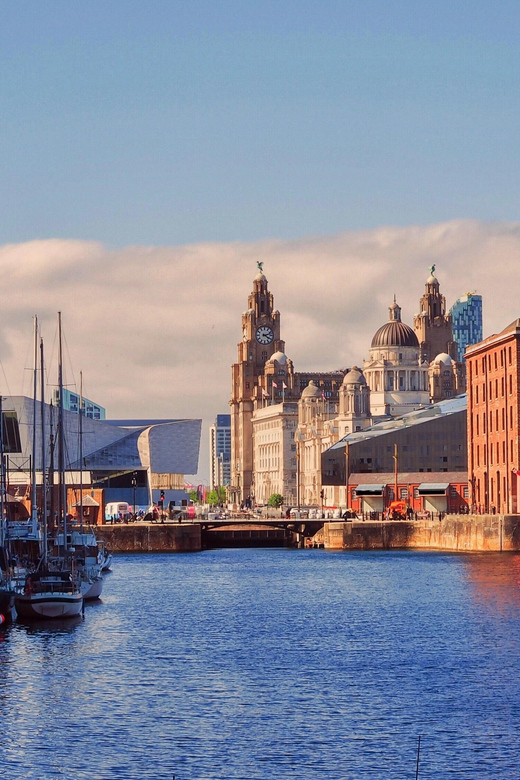
The Royal Liver Building is part of the Three Graces, the group of grand structures that defines the riverside. The opening explanation places the building in the wider story of Liverpool’s shipping, insurance, commerce, and civic pride.
This first stop also sets the tone. You are not simply being shown a photogenic façade. You are being asked to read the city through its buildings. The guide explains why Liverpool invested in such imposing architecture and how the port’s success shaped the city’s public image.
The riverfront can be exposed, so dress for changing Merseyside weather. Since the tour is on foot, comfortable shoes matter more than smart clothes.
Liverpool’s medieval beginnings and the Lyver Pool
The early section explains Liverpool before its grand docks and commercial buildings. The city’s name and its growth are tied to its position beside the River Mersey and to the waterway known as the Lyver Pool.
The important point is scale. Liverpool did not begin as the powerful port you see today. The tour traces the long process by which a small settlement became a trading centre, with geography creating an opportunity that later generations expanded through investment and technology.
I find this part especially useful for first-time visitors because it gives the rest of the walk a base. The grand buildings make more sense when you know they represent centuries of growth rather than a city that appeared fully formed.
The guide also connects local events to wider national and international developments. That makes the story easier to remember, particularly for younger visitors who may not yet know the sequence of Liverpool’s development.
Parish Church Gardens and Chapel Street
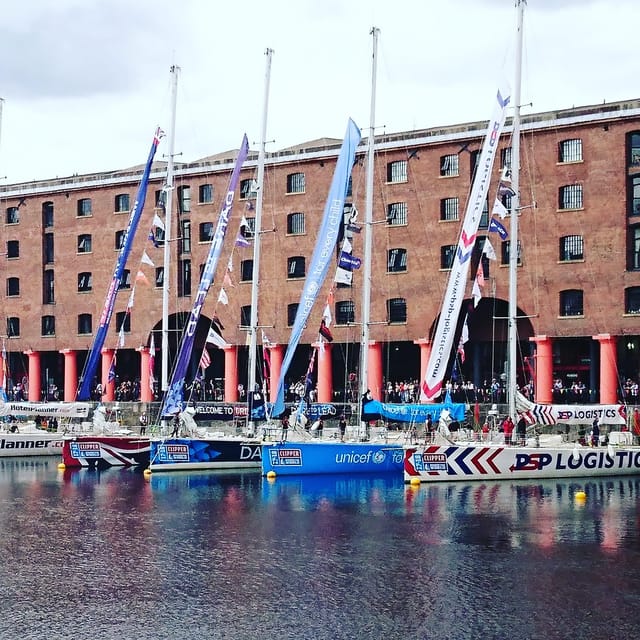
The route continues past Liverpool Parish Church, also known as Our Lady and Saint Nicholas, with time in the surrounding gardens. This area helps show the older civic and religious centre of the city.
The church has a long connection with Liverpool’s waterfront community, and its setting offers a change from the large commercial buildings by the river. Here, the tour can explore how the city’s people, institutions, and port life were connected.
Chapel Street is another useful link between old Liverpool and the later commercial centre. As you walk, pay attention to how the character of the streets changes. The route is not just about arriving at famous landmarks. It shows how the city’s centre developed in layers.
This section may appeal most to people who enjoy urban detail. If you prefer entering museums or historic buildings, you should know that this is a walking and storytelling experience, with the emphasis on what you can see along the route.
More Walking Tours in Liverpool
- Liverpool: Beatles Highlights Walking Tour
★ 4.8 · 274 reviews - Liverpool: The Beatles and Cavern Quarter Walking Tour
★ 4.7 · 133 reviews - Liverpool: Guided City Walking Tour
★ 4.9 · 119 reviews - Liverpool: The Beatles and Waterfront Guided Walking Tour
★ 4.7 · 51 reviews
Town Hall, Castle Street, and the Queen Victoria Monument
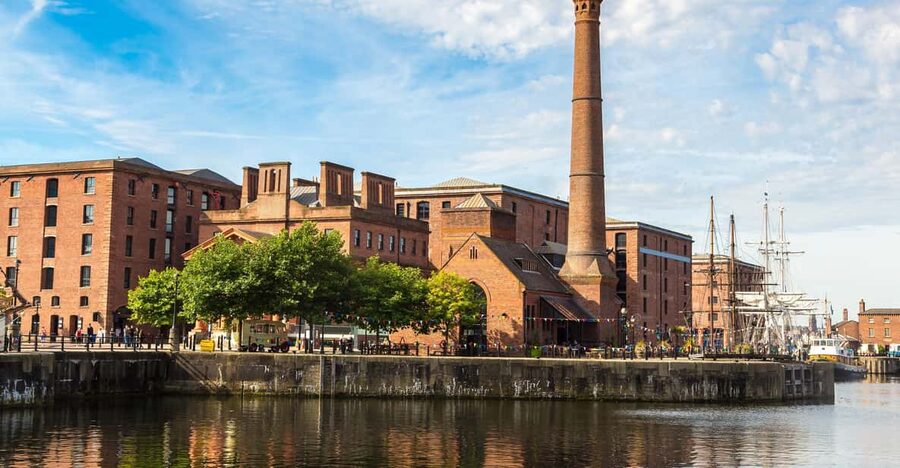
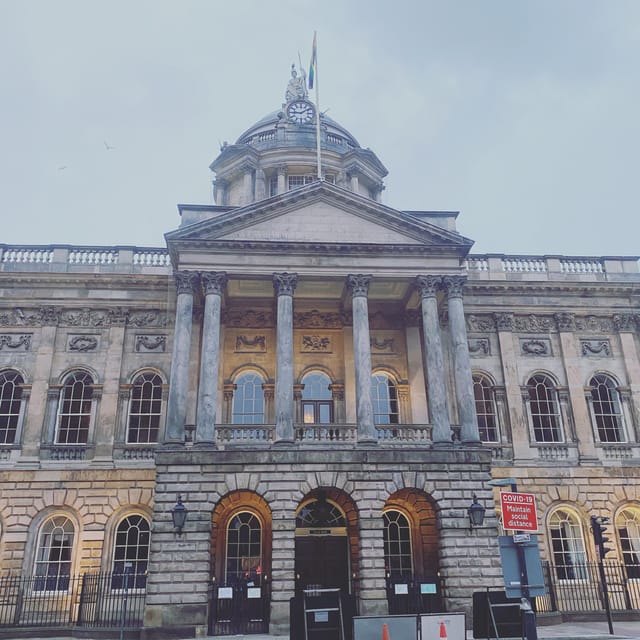
Castle Street is one of the walk’s strongest stretches. The route brings you through an important civic and commercial area, with the Town Hall and the Queen Victoria Monument helping explain Liverpool’s confidence during its most powerful period.
The Town Hall represents civic authority and wealth. Castle Street links the city’s historic core with its grander later buildings, while the monument reflects the political and imperial era in which Liverpool became a major British city.
The guide’s job here is to provide context, not just dates. The story covers the people, decisions, trade, and wider forces that helped Liverpool grow. Several people specifically valued the way the guide connected local events with national and world history.
Look up as you walk. Architectural details are easy to miss when you are focused on traffic, shops, or navigation. The guide draws attention to features that encourage you to see the city centre as a record of its past.
Castle Street is also the stated finishing point. That makes it a useful place to continue independently after the tour, though the activity itself does not include a meal or further visit.
Liverpool ONE and the Old Dock
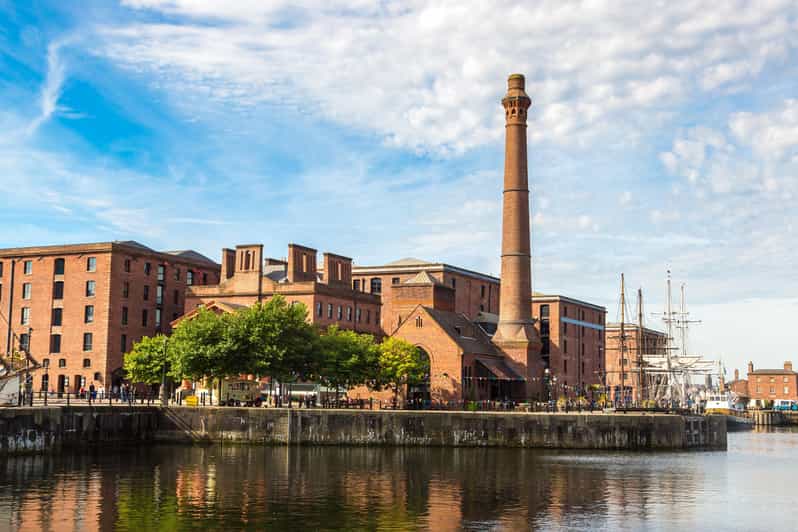
Liverpool ONE brings the story into the modern city centre. The shopping and leisure district represents a much newer phase of urban development, and its place on the route helps you compare present-day Liverpool with the port city described earlier.
Nearby, the Old Dock returns you to the infrastructure that made Liverpool important. Docks are not simply scenic waterside spaces. They were working systems built to handle ships, goods, people, and the pressures of international trade.
This contrast is one of the best features of the route. You move from medieval origins to commercial expansion, then to modern redevelopment, without needing a bus or taxi between the main areas.
The stop at Liverpool ONE is brief, listed at around 10 minutes. Think of it as part of the wider explanation rather than a shopping break. You will not have time to browse shops during the guided walk, but you can return later if you want to explore the area on your own.
Royal Albert Dock and the waterfront
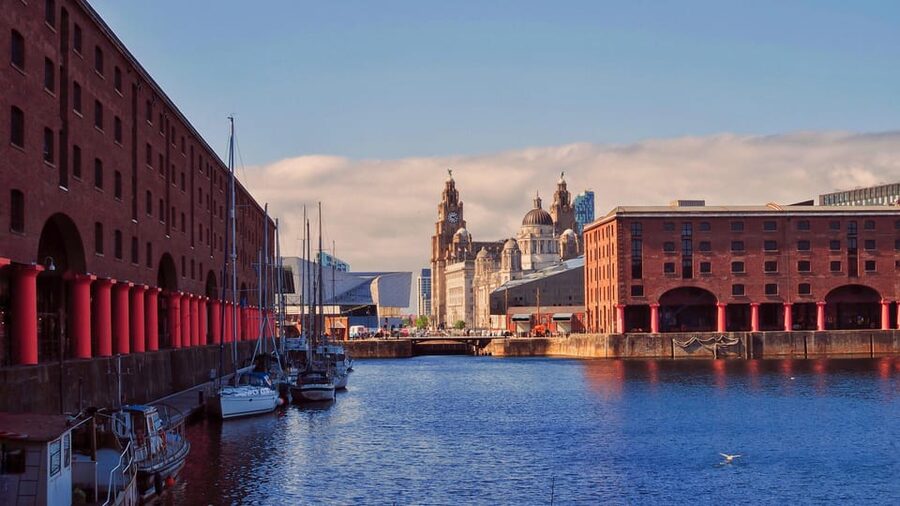
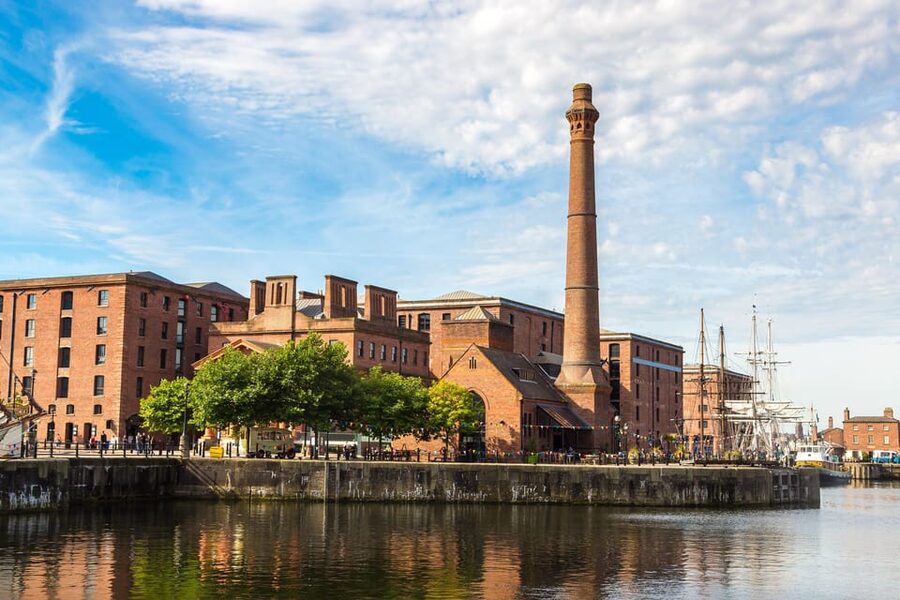
The Royal Albert Dock provides the tour’s clearest look at Liverpool’s maritime identity. Its warehouses and dockside setting show how closely the city’s wealth was tied to shipping and global commerce.
The guide explains the dock as part of Liverpool’s wider development rather than treating it as a standalone attraction. That context matters. The dock is impressive to look at, but the reason it matters is the work it once supported and the role it played in the city’s economic rise.
The waterfront also gives you a chance to pause and take in the scale of the Mersey setting. From here, the earlier discussion of trade and port growth feels more concrete.
The tour finishes back in the central area rather than taking you through every waterfront attraction. If you want a longer visit to the dock, museums, or other riverside sights, plan that separately after the walk.
The guides: John, Dave, and the value of good explanation
The strongest feature of this experience is the quality of the guiding. John is named repeatedly in the supplied booking feedback, while Dave is also mentioned as a guide. John is described as having a PhD in imperial and maritime history, which helps explain the tour’s focus on trade, empire, shipping, and Liverpool’s place in the world.
That academic background is useful only when a guide can communicate clearly. Here, the repeated praise focuses on clear speaking, enthusiasm, humour, patience, and the ability to answer questions. One particularly useful quality is the effort to project the voice, which matters on a city street where traffic and wind can compete with the explanation.
The delivery also appears flexible. The guide checks that the group is keeping up, adjusts the pace, and encourages questions. That makes the tour suitable for mixed ages and for people with different levels of prior knowledge.
You should not expect a scripted performance with every minute identical. The guide may spend more time on a question or adjust the emphasis for the group. That is a benefit if you like conversation, though people seeking a tightly timed sightseeing checklist may find the format less predictable.
What you learn beyond the famous buildings
The tour’s main strength is its range. In two hours, you get an introduction to:
- Liverpool’s medieval foundation
- The city’s rise as a trading and maritime centre
- The role of the Mersey and the docks
- Liverpool’s importance to the north of England
- Imperial and commercial connections
- Rail and technological change
- Civic architecture and public monuments
- The shift from an industrial port to a modern city centre
- Local food and places to try scouse
The route also challenges the idea that Liverpool can be reduced to Beatles attractions. Music may be part of the city’s identity, but this walk focuses on the older forces that made the city possible.
For me, the most useful lesson is how geography alone was not enough. Liverpool’s position mattered, but growth also depended on construction, trade, transport, business, and civic decisions. The guide brings those strands together in a way that helps you understand the city rather than simply collect names.
Price, pace, and practical value
At $22 per person, this is a reasonable price for a two-hour guided walk, particularly if you want an introduction before choosing which museums, docks, or historic buildings to visit in greater detail.
You are paying for a live guide, not admission to interiors. That distinction matters. The value lies in the explanation, route planning, and local context. If you walked the same streets alone, you would still see the buildings, but you would miss much of the connection between Liverpool’s medieval start, port expansion, civic wealth, and modern redevelopment.
The tour is listed as wheelchair accessible, and it lasts two hours. Starting times vary, so you need to check availability when booking. English is the tour language.
You can cancel up to 24 hours before the activity for a full refund, and the reserve-now, pay-later option can help if your Liverpool plans are still shifting. The meeting point is clear, but arrive at the river-facing black gate of the Royal Liver Building rather than assuming every entrance leads to the group.
The route ends on Castle Street. You should expect a city walk, not a circular return to the exact starting gate, even though the waterfront and Royal Albert Dock form a major part of the experience.
Who should book this Liverpool walking tour?
I would recommend it to first-time visitors who want the city to make sense quickly. It is also a good fit for history students, families with older children, and local residents who know Liverpool’s landmarks but want the larger story behind them.
The tour suits you if you enjoy asking questions and learning through conversation. The guide’s ability to explain links between local, British, imperial, maritime, and economic history is a major reason to choose it.
It may be less suitable if you want lots of free time for photographs, shopping, or interior visits. The route covers many places, and the two-hour limit means the stops are selective. You will see the city’s important sights and hear their stories, but you will need separate time for a close look inside attractions.
Wear comfortable shoes, keep your schedule flexible around the starting time, and consider booking the walk near the beginning of your stay. The guide’s suggestions for other places to visit and for trying scouse can help shape the rest of your day.
Should you book A Walk Through Time?
Book this tour if you want a serious but friendly introduction to Liverpool for $22. The route is well chosen, the subject matter reaches far beyond the Beatles, and the guide-led format turns ordinary streets into evidence of the city’s past.
The deciding factor is your interest in explanation. If you want interiors and long photo stops, choose individual attractions instead. If you want to understand how Liverpool grew from a medieval settlement into a major port and modern city, this compact walk is a strong starting point.
FAQ
Where does the Liverpool history walking tour start?
The tour starts outside the entrance of the Royal Liver Building, at the black gate facing the river.
Where does the tour finish?
The walking tour finishes on Castle Street.
How long does the tour last?
The stated duration is two hours.
How much does the tour cost?
The listed price is $22 per person.
What language is the tour conducted in?
The tour is conducted in English with a live English-speaking guide.
Is a guide included?
Yes. A live guide and the walking tour are included.
Is the tour wheelchair accessible?
Yes, the activity is listed as wheelchair accessible.
Which Liverpool sights are included on the route?
The route includes the Royal Liver Building, Liverpool’s waterfront, the Royal Albert Dock, Liverpool ONE, Liverpool Parish Church and its gardens, Chapel Street, Castle Street, the Town Hall area, and the Queen Victoria Monument.
Does the tour cover Liverpool’s full history?
The tour covers Liverpool from its development in 1207 through its growth as a trading and maritime city to the present day. It provides a broad overview rather than a detailed interior visit at each site.
Can I cancel for a full refund?
Yes. You can cancel up to 24 hours in advance for a full refund.
New listings around Liverpool
- THE HANGOVER BRUNCH | Benidorm Bingo & Drag Queens★ 4.5 · 15 reviews
- Liverpool: The Beatles Tour on Electric Pedal-Assist Ebikes★ 5.0 · 17 reviews
- Liverpool: Alcotraz Immersive Prison Cocktail Experience★ 4.8 · 20 reviews
- From Liverpool: Full-Day Yorkshire Sightseeing Adventure★ 4.4 · 21 reviews
- Liverpool: FunnyBoyz Benidorm Bingo Cabaret Show★ 4.2 · 25 reviews
- Liverpool: FunnyBoyz Benidorm Bingo Bottomless Brunch★ 4.1 · 27 reviews
- From Liverpool: North Wales Sightseeing Tour Shore Excursion★ 4.3 · 34 reviews
- Liverpool: Theatrical History Tour and The Dead House★ 4.9 · 37 reviews
Liverpool Tours, compared.
Liverpool Football Club Museum and Stadium Tour
Read our review →
City & Beatles Tour with Live Guide & Live Music
Read our review →
Browse the lists this tour appears in