
Reviewed · LONDON TOURS
London: Modern Architecture & Building Guided Walking Tour
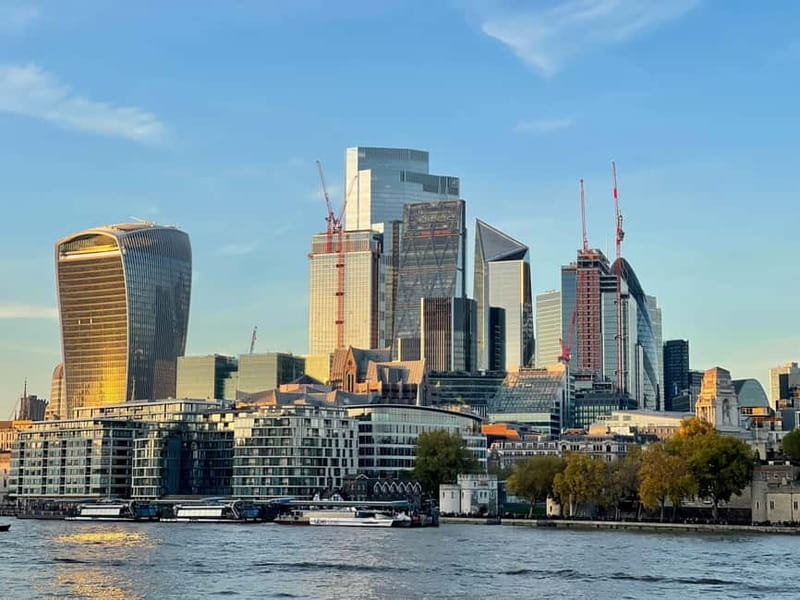
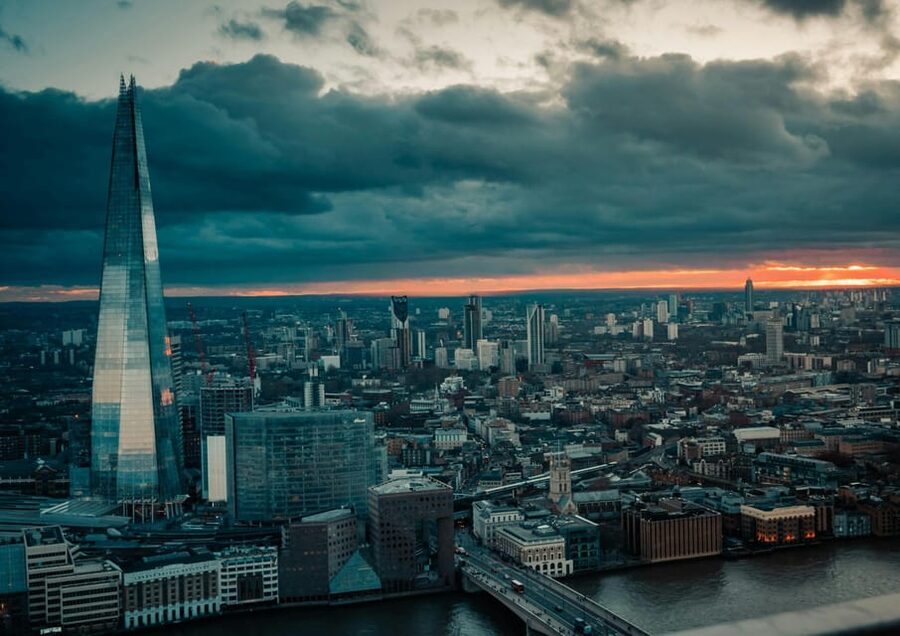
London’s modern skyline makes the best first impression from street level. On this two-hour walk, you move from the Thames and the Shard through the City of London, seeing the Walkie Talkie, Gherkin, Lloyd’s Building, Barbican, and other bold structures from close range. The useful twist is that Sam, your guide, has worked in construction management in London and Sydney, so the talk goes beyond architect names and glossy façades.
I like the focus on how buildings actually work, including the engineering projects beneath London’s streets. I also like the finish at the NLA, where you can view scaled models of London’s future skyline at your own pace. The main drawback is that this is an outdoor walking tour with no building interiors, and the route is not suitable for wheelchair users or people with mobility impairments.
Key points to know before booking
- Sam brings a construction professional’s view: Expect clear stories about building methods, engineering, development, and city planning.
- The route links London’s biggest modern icons: You see the Shard, Walkie Talkie, Gherkin, Lloyd’s, Cheesegrater, Barbican, and more.
- The Thames provides a strong opening: The tour begins at Sugar Quay Jetty near the Tower of London, with early views toward the river and City skyline.
- The finish adds useful context: NLA, inside The London Centre, has information and scale models to explore after the guided walk.
- It is a two-hour outdoor experience: Wear comfortable shoes, carry water, and prepare for changing London weather.
- The NLA visit depends on timing: It is open Tuesday through Saturday until 17:00, so Sunday, Monday, and evening tours cannot enter.
Why this London architecture walk feels different
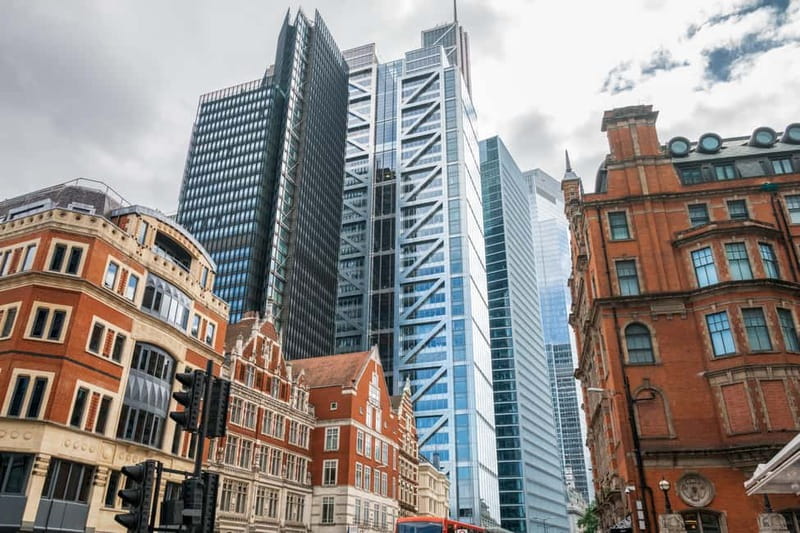
Many city architecture tours point at famous buildings and give you a name, date, and architect. This one aims at the machinery behind the view. You hear how modern towers are built, how older structures fit beside them, and how major civil engineering projects have changed the ground beneath London.
That approach gives the tour a practical edge. You are not simply looking up at shiny towers. You are encouraged to notice the demands of height, tight city plots, transport links, underground construction, and the constant push to rebuild the City.
Sam is the key to that approach. His background in construction management means he can answer technical questions while keeping the main talk understandable. That balance matters if one person in your group loves engineering and another only has a mild interest in architecture. The available feedback describes the tour as easy to follow, engaging for non-specialists, and detailed enough for people who want to ask about building techniques.
The tour is in English. Sam’s style is described as friendly and clear, with time for questions and a relaxed pace. At $52.53 per person, this is not the cheapest way to see London from the pavement. I think the price makes sense if you want informed commentary rather than a quick photo walk, especially since the route covers a wide range of major buildings in two hours.
More Walking Tours in London
- Magical London: Harry Potter Guided Walking Tour
★ 4.7 · 22,044 reviews - London: The Original Jack the Ripper Walking Tour
★ 4.7 · 7,833 reviews - London: Harry Potter Movies Walking Tour (Kids Go Free)
★ 4.7 · 3,071 reviews
Starting at Sugar Quay Jetty beside the Thames
The meeting point is Sugar Quay Jetty, near the Tower of London on the northern side of the Thames. It is a fitting beginning. You start with the river, one of the forces that shaped London’s growth, then look toward a City packed with old landmarks and new towers.
The early river section gives you a useful sense of contrast. London’s modern buildings do not exist on an empty plot. They rise beside the Tower of London, historic quays, bridges, and long-established streets. The Thames also gives you some of the tour’s better open views, before the route turns into the tighter streets of the financial district.
Bring a camera, but keep your attention on the guide. The point is not only to collect pictures of the skyline. Sam explains what you are looking at and adds background about how London’s building work has changed over time.
City Hall and the changing Thames frontage
City Hall is one of the first major sights. Its curved form gives you an immediate example of London’s late twentieth and early twenty-first century design ambitions. From here, the Thames remains part of the story as you see how public buildings, commercial towers, and riverside development share the same narrow urban setting.
The river stop is also useful for orientation. You can look across the water and understand how the Shard, City towers, and older London landmarks relate to one another. This is not a tour confined to one office district. The route uses the river as a thread connecting different parts of the city.
You do not enter City Hall or any other building. Every structure is viewed from outside, so you should book this for architecture, city planning, and photography rather than interior access.
The Shard from street level
The Shard is one of the tour’s headline sights. Seen from below, it shows how far London has moved toward vertical development. Its height changes the way nearby streets and river views feel, and its sharp profile is easy to pick out from several points along the route.
A street-level explanation can be more useful than simply visiting a high viewing deck. You get to consider how the tower fits into the surrounding district and how a very tall building changes the skyline. Sam also places the building within the wider development of London, rather than treating it as an isolated attraction.
If your main goal is to go inside the Shard or reach its viewing platform, this walk will not replace that visit. There is no entry into any building, and the value here comes from the explanation and the changing viewpoints.
Elsewhere in London, a change of pace:
- From London: Harry Potter Warner Bros Studio Tour
★ 4.7 · 26,588 reviews - London: Westminster to Greenwich River Thames Cruise
★ 4.5 · 22,836 reviews - London: Madame Tussauds London
★ 4.6 · 20,915 reviews - London: Warner Bros. Studio Tour with Transfers
★ 4.7 · 17,586 reviews
Crossing into the Square Mile

From the river, the walk moves through the City of London, often called the Square Mile. This is where the tour becomes especially effective for comparing several different ideas of modern architecture within a short distance.
The City has limited space, high land values, complex underground infrastructure, and layers of older construction. New towers have to fit around streets, stations, protected views, historic buildings, and existing foundations. Those pressures help explain why the buildings look so different from one another.
You will hear about current and future developments, as well as major past and present engineering projects beneath London. That underground angle is a strong reason to choose this tour. It shifts your attention from the visible skyline to the tunnels, foundations, services, and transport systems that let the City function.
The Walkie Talkie and the problem of a bold shape
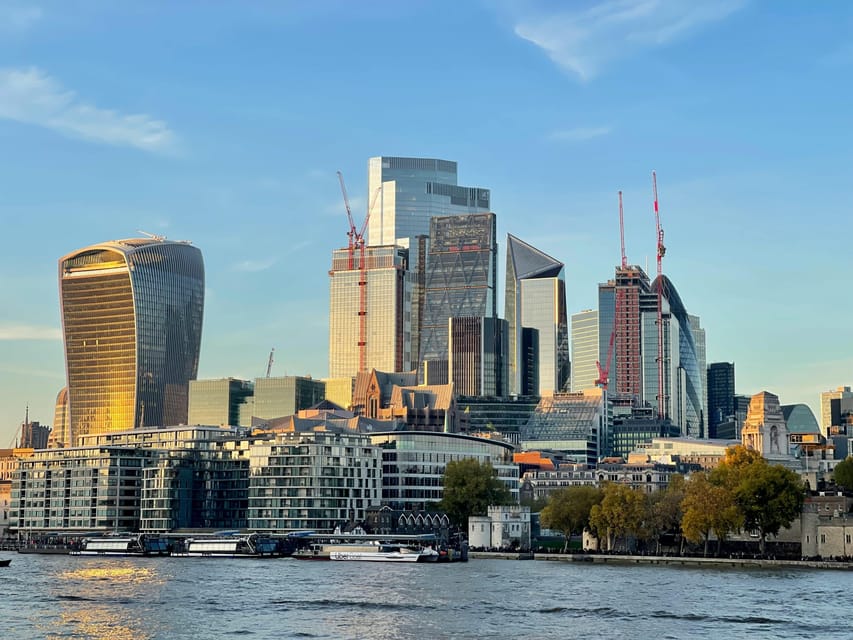
The Fenchurch Building, better known as the Walkie Talkie, is among the most recognizable stops. Its top-heavy profile makes it easy to identify, and it offers a good chance to discuss how an unusual shape affects the surrounding streets.
Sam covers the stories and design facts connected with the buildings on the route. The talk is not limited to appearance. You can expect an explanation of the building’s role within the City and the practical issues involved in creating large modern structures in a crowded district.
This stop should appeal even if you do not usually seek out architecture tours. The Walkie Talkie is visually odd enough to spark a reaction, and a good guide can turn that reaction into a wider discussion about design, planning, and engineering.
Lloyd’s of London and architecture as machinery
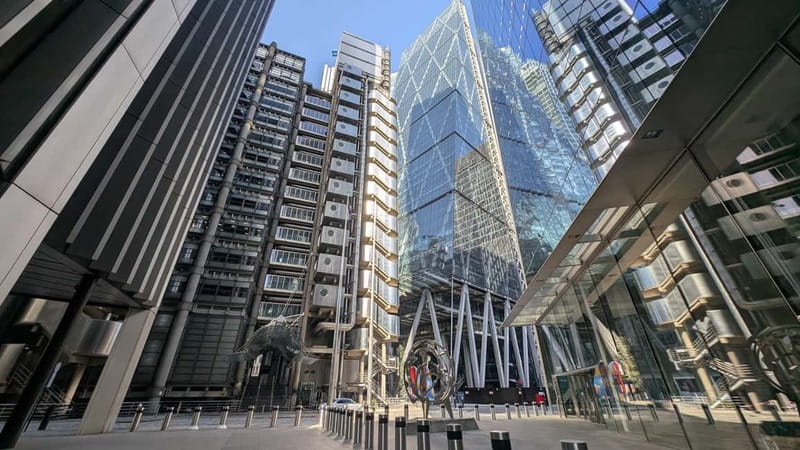
Lloyd’s of London offers a very different look. Its structure is known for placing pipes, lifts, and other working parts on the outside, giving the building a mechanical character.
It is a useful counterpoint to smoother glass towers such as the Gherkin or the Cheesegrater. Instead of hiding the systems that make a building work, Lloyd’s makes them part of the visible design. Sam’s professional background is well suited to explaining why those choices matter.
You see the building from outside, so the stop is about form, structure, and the ideas behind the design. If you appreciate buildings that reveal their working parts, this may be one of the most rewarding points on the route.
The Leadenhall Building, or the Cheesegrater
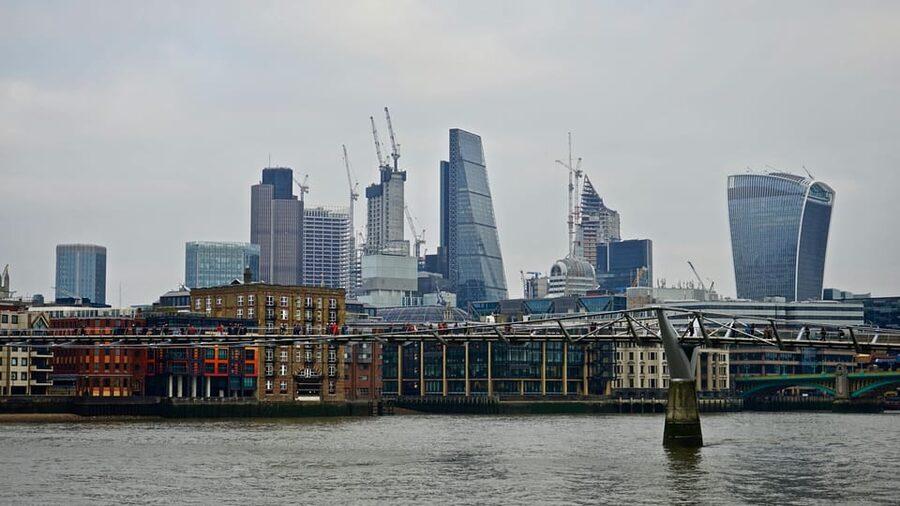
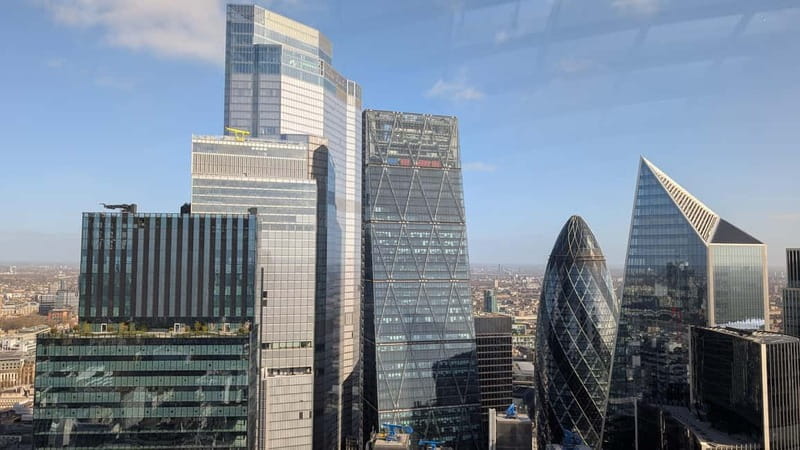
The Leadenhall Building has earned the nickname Cheesegrater because of its sloping profile. Its shape responds to the need to protect particular views toward St Paul’s Cathedral, showing how planning rules can affect the form of a skyscraper.
This is the sort of detail that makes a guided walk worthwhile. On your own, you might notice the slope but miss the reason for it. With Sam, the building becomes an example of how modern construction is negotiated with London’s older landmarks.
The Cheesegrater also helps you see that the City’s towers are not simply competing for height. Their shapes reflect views, streets, neighboring buildings, transport routes, and planning decisions.
The Gherkin and the Can of Ham
At 30 St Mary Axe, the Gherkin, you encounter one of London’s most familiar modern buildings. Its rounded, tapering form breaks from the conventional box, while its glass exterior gives the City a different kind of visual marker.
The nearby 70 St Mary Axe, known as the Can of Ham, provides a useful comparison. Seeing these buildings together lets you consider how architects use curved edges, setbacks, glass, and steel to manage height and space.
This part of the walk is likely to be popular with photographers, but the guide adds more than a photo stop. You get the stories and facts that explain why these buildings look the way they do and how they fit into the surrounding group of towers.
The names are half the fun. London’s modern buildings often acquire nicknames based on their shapes, and those names make the City easier to remember. They also give Sam a natural way to keep the discussion light, even when the subject turns technical.
Liverpool Street Station and the city beneath your feet
Liverpool Street Station shifts the focus from office towers to transport. It is a reminder that the modern City depends on infrastructure at ground level and below it.
The tour explains major engineering projects beneath London, which gives this stop extra value. Stations, tunnels, foundations, utilities, and other underground work are easy to ignore because you cannot see most of them. Sam brings those hidden systems into the wider story of how the City has been shaped.
This is also a practical point in the walk. You are moving through an active part of London rather than a purpose-built exhibition area. Expect the setting to feel like a working city, with the usual movement and noise of central streets. The tour’s relaxed pace and question time help, but you should still wear shoes that are comfortable for two hours outside.
The Barbican and a different kind of modern London
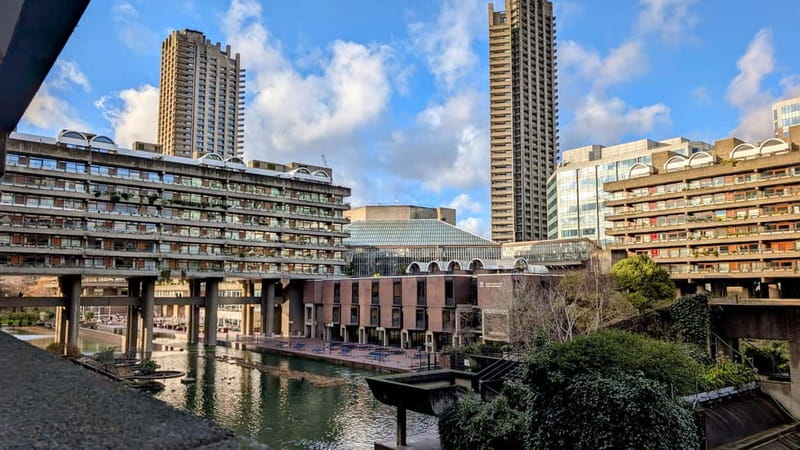
The Barbican brings a major change in mood and material. Its concrete forms, raised walkways, housing, arts spaces, and planted areas create a more layered setting than the isolated office towers nearby.
It is an important stop because modern architecture is not only about glass skyscrapers. The Barbican shows how an entire part of the city can be planned as a connected place for homes, culture, movement, and public space.
You may find this section especially useful if you want to understand London beyond its financial image. It adds social and civic dimensions to the tour, even though the central theme remains construction and modern design.
Finishing at NLA and the London skyline models
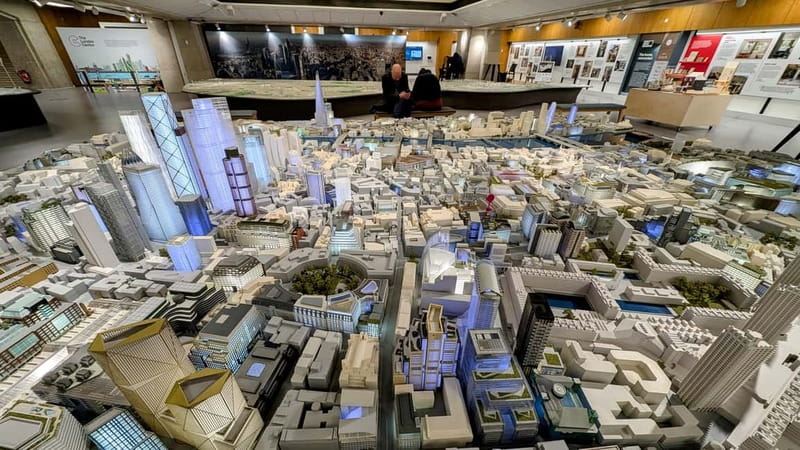
The guided route finishes at NLA, inside The London Centre. Entry is free, and you can spend extra time looking at information and scaled models of London’s skyline.
I would allow another 15 to 30 minutes here. The models help you see the City as a whole after walking among individual buildings. They also make the discussion of future development more concrete, since you can study how planned projects may alter the skyline.
Timing matters. NLA is open Tuesday through Saturday until 17:00. Sunday, Monday, and evening tours cannot enter, so you should not assume every departure includes this final indoor stop. The walking tour still takes about two hours, but the model displays are a useful bonus when the schedule allows.
What the $52.53 price gives you
At $52.53, you are paying for a focused guide-led walk, not admission to attractions. There is no entry to the Shard, Gherkin, Lloyd’s, City Hall, or any other building.
The value comes from Sam’s specialist background, the number of significant buildings covered, and the explanation of engineering beneath the streets. If you were already planning to stroll through the City with a guidebook, the tour may feel expensive. If you want technical context, stories, and a chance to ask questions, the price is easier to justify.
The tour also offers free cancellation up to 24 hours before the start and a reserve-now, pay-later option. Those terms help if your London schedule is still shifting, though you should check the available start times before fixing other plans.
Who should book, and who should skip it
I would recommend this walk to anyone curious about how London is built, especially architecture students, engineers, construction professionals, photographers, and visitors who have already seen the standard historic sights.
It also works for a mixed-interest group. One person can ask about construction techniques while another enjoys the shapes, nicknames, river views, and city stories. The feedback about Sam points to exactly this strength: he can make the subject accessible without losing the technical detail.
You should think twice if you want to go inside famous buildings, avoid outdoor walking, or need a wheelchair-accessible route. The tour is not suitable for people with mobility impairments or wheelchair users, and it continues in ordinary weather unless conditions become extreme.
Bring water, comfortable shoes, a camera, and clothing suited to the forecast. London weather can change quickly, and this experience depends on being outside for the full route.
Should you book this modern architecture tour?
Book it if you want London explained from the viewpoint of the people who design, build, and connect it. The Shard, Gherkin, Walkie Talkie, Lloyd’s Building, Cheesegrater, and Barbican provide plenty to see, but the strongest feature is the link between visible architecture and the engineering hidden below your feet.
I would choose a Tuesday through Saturday daytime departure if seeing NLA’s models matters to you. For a first-time visitor, this is a smart way to add a modern side to a London trip filled with castles, churches, and museums. It is best for curious walkers who value a good guide and practical context more than indoor entry.
FAQ
How long does the London modern architecture tour last?
The guided walking tour takes approximately two hours. You should allow another 15 to 30 minutes if you want time at NLA to view the information and scaled skyline models.
Where does the tour start?
The tour starts at Sugar Quay Jetty near the Tower of London, on the northern side of the Thames.
Where does the tour finish?
The route finishes at NLA, inside The London Centre, after passing through the City of London.
Is entry to the buildings included?
No. The tour includes guided viewing and commentary from outside, but entry into the buildings is not included.
Can I visit NLA on every tour?
No. NLA is open Tuesday through Saturday until 17:00. Sunday, Monday, and evening tours cannot enter NLA.
What should I bring?
Bring comfortable shoes, water, a camera, and weather-appropriate clothing. The tour proceeds in most weather conditions unless conditions become extreme.
New listings around London
- London: Bermondsey Craft Brewery Tour★ 5.0 · 3 reviews
- Colourful Notting Hill Photography Tour★ 5.0 · 3 reviews
- The London Historic Pubs Tour★ 4.0 · 3 reviews
- Ultimate Royal London, Thames River Boat Ride & Walking Tour★ 5.0 · 3 reviews
- London: Wallace Collection & National Gallery Private Tours★ 5.0 · 3 reviews
- London: The Birthplace of The Rolling Stones Private Tour★ 5.0 · 3 reviews
- Historic pub tour with Brazilian guide (in Portuguese)★ 5.0 · 3 reviews
- London: Royal Tour with Westminster Abbey & Afternoon Tea★ 3.0 · 3 reviews
London Tours, compared.

Westminster to Greenwich River Thames Cruise
Read our review →
Magical London: Harry Potter Guided Walking Tour
Read our review →


Warner Bros. Studio Harry Potter Tour with Transfers
Read our review →Browse the lists this tour appears in