
Reviewed · LONDON TOURS
Woolf & Dickens: London Literary Tour & Writing Workshop
London becomes your writing desk on this unusual literary walking workshop. From the view across Waterloo Bridge to St Mary Le Strand and Doctor Johnson’s house, Joseph Pierson uses famous writers and city details as prompts for short exercises. You are not just listening to literary facts. You are asked to look, think, and write.
I like the thoughtful mix of major English writers and hands-on prompts, and I like that the exercises suit a first-time writer as well as someone with years of practice. The main drawback is the short 1.5-hour format: you will get a taste of several ideas and places, not a long, leisurely literary seminar.
- Waterloo Bridge view: Use Virginia Woolf’s reflections on the city to write about memory, place, and personal history.
- Somerset House exercise: Try a mindful writing task that asks you to pay close attention to your surroundings.
- St Mary Le Strand: Respond to T.S. Eliot’s ideas about time, history, and the church’s grand interior.
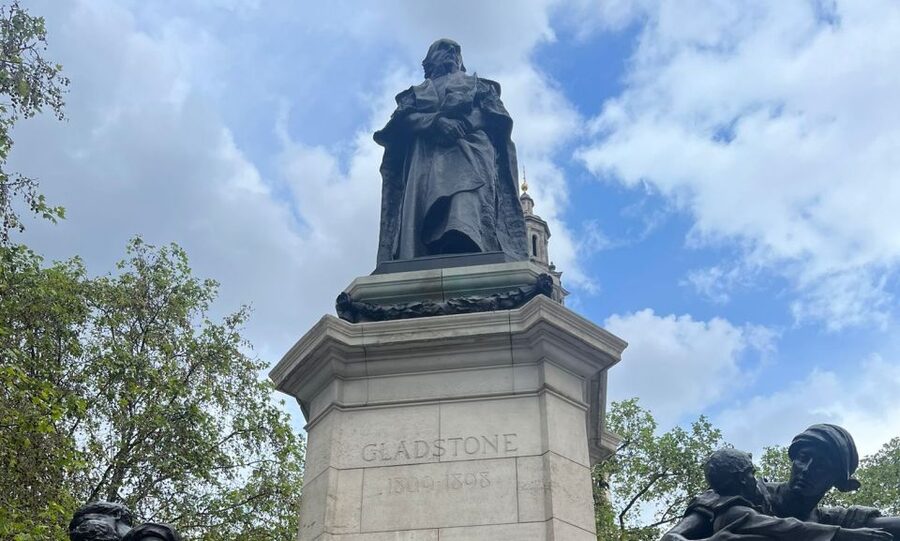
- Politics and truth: Use the statue of Gladstone, Dickens, and Samuel Johnson to question how facts change with perspective.
- Private English-language group: Work in an intimate setting with novelist and writing scholar Joseph Pierson.
- Simple, flexible booking: The tour costs $101 per person, lasts 1.5 hours, and allows cancellation up to 24 hours before the start.
What This London Writing Tour Really Offers
This is part walking tour, part literature class, and part guided writing session. The route gives you a series of strong locations, but the goal is not simply to collect landmarks or literary names. Each stop gives you a way to make a short piece of writing.
Joseph Pierson is an award-winning novelist with a PhD in Creative Writing. His role is not only to explain Woolf, Dickens, Eliot, or Johnson. He also sets the tone for writing in public, where many people feel self-conscious. The workshop is designed to be kind and inclusive, with prompts that leave room for your own memories and ideas.
That matters because writing exercises can easily become stiff. Here, you are not expected to produce polished work. You may write a sketch, a list, a description, or a few honest lines. The value is in noticing London with more care and seeing how a place can start a piece of writing.
The private-group format also changes the feel. You are not in a large crowd waiting for a guide to finish a speech. The information provided does not state the maximum group size, but the experience is sold as a private group and is built around participation. If you prefer to keep your notebook closed and simply hear stories, this may not be the right fit.
Starting at Waterloo Bridge With Virginia Woolf
The meeting point is at the north end of Waterloo Bridge, at a slope on the right that runs behind Somerset House. This is useful to know because Waterloo Bridge has several approaches, and the instruction is more precise than simply saying to meet at the bridge.
The opening theme comes from Virginia Woolf’s reflections on the view from Waterloo Bridge. Woolf was interested in the way a familiar city scene can hold several times at once: the present view, memories of earlier days, and the private life of the person looking.
You use that idea for a biographical sketch. The exercise asks you to connect the view with a person or moment, rather than write a standard description of the river and buildings. You might find yourself asking what the city brings back, what has changed, or how your own story alters the scene in front of you.
This is a good early exercise because it does not require specialist literary knowledge. You can respond to Woolf as a reader, but you can also work from your own experience. If you have never taken a writing class, this gives you a clear starting point without demanding a finished story.
The practical catch is weather. Waterloo Bridge is an exposed outdoor location, so bring an umbrella and water. You will also need a pen and notebook. Internet access is listed among the items to bring, though the supplied information does not explain exactly how it is used.
More workshops and classes in London:
- London: Traditional English Scone Making and Tea Workshop
★ 5.0 · 702 reviews - London: East End Street Art Tour and Spray Painting Workshop
★ 4.8 · 297 reviews - London: Half-Day Street Art Tour and Workshop
★ 4.9 · 172 reviews
Somerset House and the Practice of Paying Attention
The route continues toward Somerset House, where you try a mindful writing experiment. This is less about producing a clever paragraph and more about training your attention.
A good writing exercise often begins before the first sentence. You need to notice shape, sound, movement, texture, and the small details that usually disappear when you hurry through a city. A mindful prompt can help you slow down and give those details a place on the page.
Somerset House is a useful setting for that kind of work because it gives the group an urban environment to observe. The experience information does not promise a particular room, gallery, or interior visit, and no entry tickets are needed. You should therefore think of this as an outdoor or public-space exercise rather than a museum visit.
I like this part for readers who want practical help with writing. The exercise can be useful even if you do not plan to write fiction. It may sharpen a travel journal, a personal essay, or a simple description of a place. The prompt gives you a method you can repeat later in London or at home.
St Mary Le Strand, Time, and Ekphrasis
At St Mary Le Strand, the focus shifts from the open city to architecture, religion, and time. T.S. Eliot’s writing about time and history provides the starting point, while a timeline on the walls at Aldwych helps connect the abstract idea to the place around you.
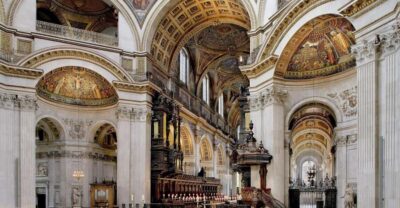
The church visit includes an ekphrasis exercise. In plain terms, ekphrasis means writing in response to a work of art or a visual object. Here, the grand interior of St Mary Le Strand becomes your subject.
You are not being asked to write a guidebook description. The point is to let the interior trigger thought, mood, memory, or an imagined voice. You might focus on the building itself, or on the way a person moves through a religious space. The exercise also asks you to consider how places carry layers of time.
This stop adds variety to the workshop. The Waterloo Bridge task begins with a view and personal memory. St Mary Le Strand gives you a fixed interior and asks you to turn visual details into language. That change can help keep the session active, especially for people who prefer concrete subjects to open-ended prompts.
There is one practical limit. Since the tour lasts only 90 minutes and includes several stops, the church portion cannot become a full architectural visit. You will get a focused writing response to the space, not an extended church tour.
Gladstone, Dickens, and the Problem of Truth
The statue of William Gladstone introduces politics, truth, and history. This section asks you to consider how a person or event can look different depending on who is doing the looking and which facts are being emphasized.
The writing task is a list of facts. That may sound simple, but it gives the exercise a useful edge. You blend personal history with the public environment around you, placing your own facts beside the facts suggested by the statue, the street, and the political setting.
Dickens and Samuel Johnson also help frame this discussion. Dickens gives the workshop a way to think about society, public life, and the people shaped by political systems. Johnson brings language and definition into the conversation. Together, they point toward a basic question: who decides what is true, and how do words influence that decision?
I find this one of the more useful ideas in the workshop because it moves beyond pretty descriptions. You are encouraged to look at London as a place shaped by power, argument, institutions, and memory. The writing stays personal, but it is not cut off from public life.
This also makes the session suitable for readers who enjoy essays, journalism, biography, or political writing. You do not need to agree with a particular political view. The task is to examine perspective and the way facts are arranged.
A handful of other London outings to weigh up
- From London: Harry Potter Warner Bros Studio Tour
★ 4.7 · 26,588 reviews - London: Westminster to Greenwich River Thames Cruise
★ 4.5 · 22,836 reviews - Magical London: Harry Potter Guided Walking Tour
★ 4.7 · 22,044 reviews - London: Madame Tussauds London
★ 4.6 · 20,915 reviews
Doctor Johnson’s House and the Structure of Language
The final literary reference is Samuel Johnson, whose house provides a setting for thinking about dictionaries, language, religion, politics, and art. You read from Johnson’s dictionary and consider how these systems help form the people we become.
This is a fitting end to the workshop. Earlier exercises ask you to observe a view, respond to an interior, and write facts. Johnson brings the focus back to words themselves. A dictionary can appear orderly and firm, yet language is shaped by use, culture, argument, and time.
The supplied information says no entry tickets are needed, so this stop should not be treated as a separate paid museum visit. The exact interior access and amount of time at the house are not specified, so your experience here may focus on the surrounding setting and the reading rather than a long house tour.
For you as a writer, the Johnson section can be a useful reminder that words are tools with histories. It suits anyone curious about how definitions affect thought, especially if you enjoy wordplay, essays, or the odd argument over what a word really means.
The Guide’s Approach and the Workshop Atmosphere
Joseph Pierson’s role is central to the experience. He brings literary readings, city anecdotes, and writing prompts together, rather than treating them as separate parts of a standard tour.
The strongest praise for his approach is specific. He creates a welcoming and safe place to learn, uses relevant readings, asks good questions, and gives prompts that can be made your own. That tells you what to expect in practical terms: you will not be pushed toward one correct answer, and the writing tasks should have enough flexibility for different levels of experience.
That flexibility is important. A novice can write a short response without feeling behind. An experienced writer can use the prompt as a constraint and take it in a more complex direction. The workshop does not promise one-to-one editing or a finished manuscript, so book it for stimulation and practice rather than formal instruction on a novel.
The language of the session is English. If you are comfortable reading English literature and discussing ideas in English, you should be able to follow the material. The private format may suit couples, families, friends, or small groups with a shared interest in writing, though the data does not state a required minimum or maximum group size.
Is $101 a Fair Price for 90 Minutes?
At $101 per person, this is not a cheap walking tour. The price makes the most sense if you value the guided writing work as much as the London route.
You are paying for a specialist-led session, not just directions between landmarks. The experience combines a live guide, literary readings, several structured exercises, and a private group setting. No entry tickets are needed, so there are no extra admission costs built into the route.
The value is strongest for someone who would otherwise pay for a writing class or wants a focused literary activity during a London visit. The value is weaker if you mainly want historical facts, famous sights, or free time for photographs. You will spend part of the 1.5 hours writing, so the route is not designed to cover a large number of landmarks.
I would also compare the cost with your group size and goals. A private session can be worthwhile when several people already know they want a writing activity. For one person who is unsure about writing in public, the price may feel high for a short introduction.
The ability to reserve now and pay later gives you some planning flexibility. You can cancel up to 24 hours in advance for a full refund. Starting times depend on availability, so check the offered time before building the rest of your day around the walk.
Who Should Book This Experience?
I would recommend it most strongly to:
- Readers who enjoy Woolf, Dickens, T.S. Eliot, or Samuel Johnson
- People trying creative writing for the first time
- Experienced writers who want fresh prompts in a London setting
- Couples or private groups looking for a quiet, thoughtful activity
- Visitors who prefer participation to a standard lecture
- Students of English literature or creative writing
You do not need to know all four writers in advance. The readings and prompts provide a way in. Still, you should enjoy at least some reading, reflection, and short writing. If you dislike being asked to put thoughts on paper, the workshop format may feel more demanding than relaxing.
The experience is wheelchair accessible, which is useful for planning, though the supplied details do not describe the exact surface conditions or facilities along the route. Bring sensible clothing for changing weather, a notebook, a pen, and water.
My Verdict on This Literary Walk
Book this if you want London to prompt your own writing, not simply supply a backdrop for a tour. The best parts are the link between place and exercise: Woolf at Waterloo Bridge, mindful observation at Somerset House, ekphrasis inside St Mary Le Strand, and the questions about truth and language raised by Gladstone and Johnson.
Skip it if you want a long sightseeing route, detailed architectural commentary, or a formal writing course with extensive feedback. At $101, the experience asks you to value the guide’s prompts and the private-group setting.
For the right reader, this is a thoughtful way to spend 90 minutes in central London. Bring a notebook, expect to write, and leave room for your own ideas.
FAQ
How long does the Woolf and Dickens literary tour last?
The tour and writing workshop last 1.5 hours.
How much does the experience cost?
The price is $101 per person.
Where is the meeting point?
Meet at the north end of Waterloo Bridge, at the slope on the right that goes behind Somerset House.
Who leads the writing workshop?
The workshop is led by Joseph Pierson, an award-winning novelist with a PhD in Creative Writing.
Which writers are included?
The experience uses readings and ideas connected with Virginia Woolf, Charles Dickens, T.S. Eliot, and Samuel Johnson.
Do I need previous writing experience?
No. The exercises are designed for all levels, from novice to novelist.
What should I bring?
Bring a pen, notebook, water, and an umbrella in case of rain. Internet access is also listed among the items to bring.
Is the tour wheelchair accessible?
Yes, the activity is listed as wheelchair accessible.
Can I cancel for a refund?
Yes. You can cancel up to 24 hours in advance for a full refund. You can also reserve now and pay later.
New listings around London
- London: Bermondsey Craft Brewery Tour★ 5.0 · 3 reviews
- Colourful Notting Hill Photography Tour★ 5.0 · 3 reviews
- The London Historic Pubs Tour★ 4.0 · 3 reviews
- Ultimate Royal London, Thames River Boat Ride & Walking Tour★ 5.0 · 3 reviews
- London: Wallace Collection & National Gallery Private Tours★ 5.0 · 3 reviews
- London: The Birthplace of The Rolling Stones Private Tour★ 5.0 · 3 reviews
- Historic pub tour with Brazilian guide (in Portuguese)★ 5.0 · 3 reviews
- London: Royal Tour with Westminster Abbey & Afternoon Tea★ 3.0 · 3 reviews
London Tours, compared.

Westminster to Greenwich River Thames Cruise
Read our review →
Magical London: Harry Potter Guided Walking Tour
Read our review →


Warner Bros. Studio Harry Potter Tour with Transfers
Read our review →Browse the lists this tour appears in