
Reviewed · WESTMINSTER ABBEY TOURS
London: Westminster Abbey Entrance Ticket
Westminster Abbey packs royal ceremony, famous graves, soaring Gothic stonework, and centuries of worship into one remarkable building. You can see the Coronation Chair, used for every British monarch’s coronation since 1066, then wander through Poets’ Corner and pause at memorials to writers, monarchs, scientists, and politicians.
I like the freedom to move at your own pace, and I like the well-organized audio guide, which is available in 13 languages. The main drawback is simple: this is not a skip-the-line ticket, and the Abbey can feel crowded, especially around the most famous tombs.
Key points to know before you go
- The Coronation Chair has been used since 1066, making it one of the visit’s most important objects.
- Poets’ Corner brings famous writers into one compact area, but much of the lettering may be difficult to read without extra context.
- The multimedia guide is included in English, Arabic, Chinese, Dutch, French, German, Italian, Japanese, Polish, Portuguese, Russian, and Spanish.
- Plan on roughly two hours, though you may want longer if you stop at every memorial and inscription.
- Enter at the North Door on North Green, where you present your voucher at the ticket office.
- Arrive early if possible, since queues and crowded interior spaces can slow you down.
Why Westminster Abbey feels different from a normal sightseeing stop
Many historic buildings let you admire architecture, then move on. Westminster Abbey asks you to keep switching between grand public events and very personal traces of the past.
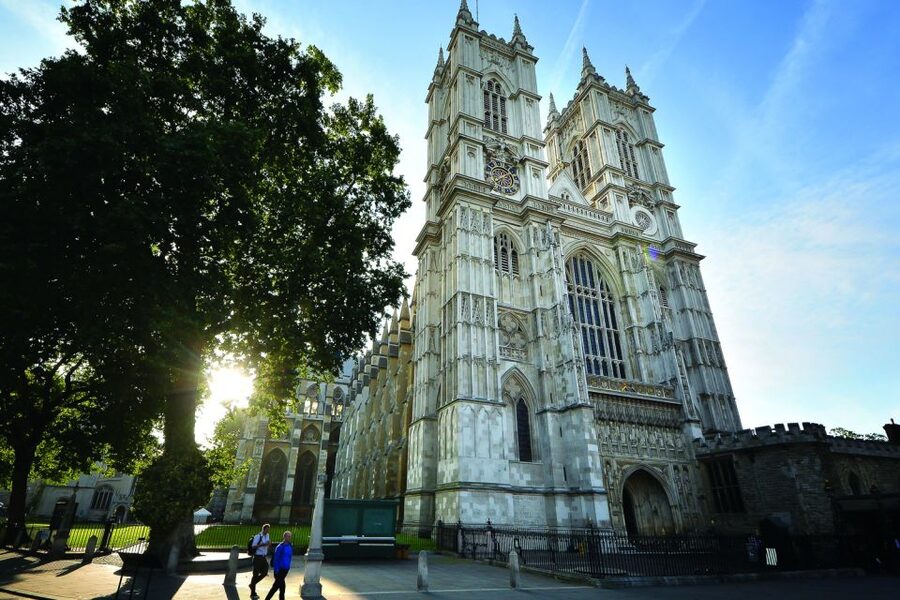
This is where British monarchs have been crowned since William the Conqueror’s time. It has also hosted royal weddings, state ceremonies, memorial services, and regular worship. The building is not just a museum of British history. It remains a working church, so visitors need to treat it as a place of prayer as well as a major attraction.
That distinction matters. You may hear a prayer during your visit, and some areas may be closed for a service or special event. The atmosphere can shift from busy sightseeing to quiet reflection within a few steps.
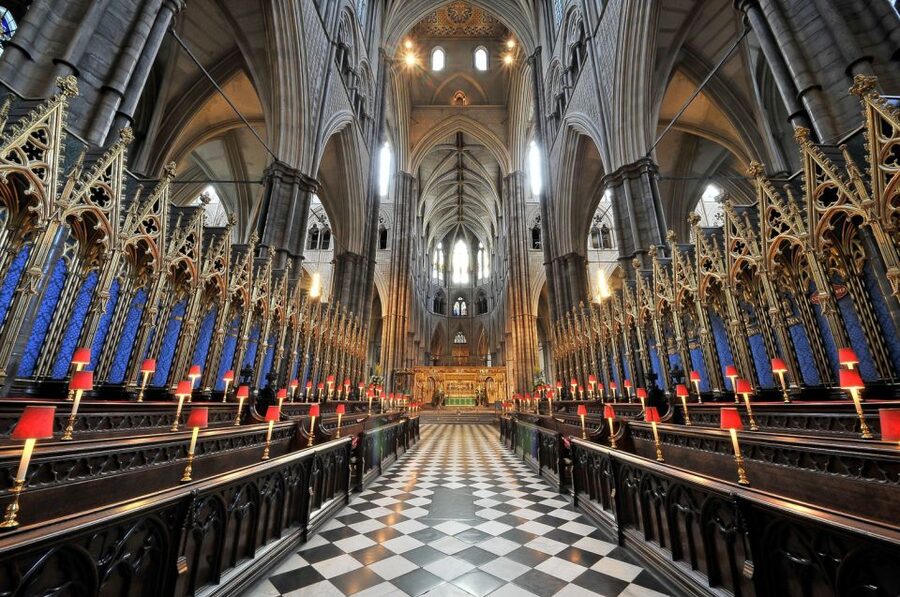
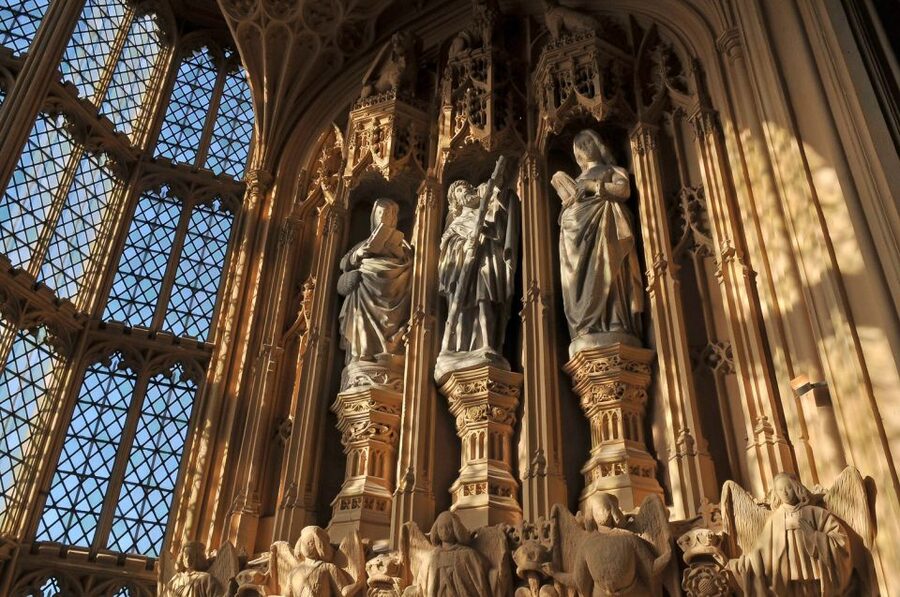
The building itself does much of the work. Look up at the vaulted ceilings, carved stone, stained glass, and layered Gothic details. Even if royal history is not your main interest, the interior gives you plenty to study. Several visitors found themselves spending two and a half hours inside, and it is easy to understand why. There are simply too many small details to absorb in one quick circuit.
Further Westminster Abbey tickets:
- London: Westminster Abbey, Big Ben & Buckingham Guided Tour
★ 4.8 · 2,170 reviews - London: Buckingham Palace, Westminster Abbey & Big Ben Tour
★ 4.8 · 949 reviews - London: Westminster Abbey Guided Tour
★ 4.5 · 445 reviews
Entering through the North Door
Your practical starting point is the ticket office at the North Door, on North Green. Present your voucher there, then go through the entry process and security check.
The voucher arrangement is worth noting. Some visitors expect to walk straight in with the email on their phone, but vouchers may need to be exchanged for physical tickets before entry. That can add time to the visit, particularly if a large queue has formed.
The ticket does not promise priority access. At quiet times, entry may be quick. At busy times, you could face a long wait before reaching the door. Early arrival is the safest approach, and several visitors found morning entry easier than arriving later in the day.
Large bags and luggage are not allowed. Smoking, alcohol, drugs, pets, and audio recording are also prohibited. Assistance dogs are permitted. Travel light, since a bag problem at the entrance can turn a smooth visit into an awkward one.
Once inside, the staff and attendants help direct the flow. The route is generally easy to follow, with numbered points that match the audio guide. That simple system helps you get your bearings without needing a live guide beside you.
The multimedia guide and the self-guided route
The included multimedia guide is the main source of explanation. It lets you choose your pace and decide which subjects deserve more of your time.
I find that useful in a building like this. A live tour can give you a lively overview, but it also moves on whether you are ready or not. Here, you can pause at a royal tomb, replay a section, or skip material that does not interest you.
The guide is available in 13 languages:
- English
- Arabic
- Chinese
- Dutch
- French
- German
- Italian
- Japanese
- Polish
- Portuguese
- Russian
- Spanish
The English content gives a solid introduction to the building and its major points. It is well presented, though some visitors found it less detailed than the audio program at St Paul’s Cathedral. If you want every inscription explained, a live tour or more detailed guidebook may suit you better.
The guide cannot solve every problem. Many tombs and memorials use Latin or dense lettering, and some visitors wished they had more help interpreting them. If you have a strong interest in royal genealogy, medieval church history, or literary memorials, plan to supplement the guide with your own reading before arrival.
Still, the numbered stops make the visit easy to manage. You can follow the suggested route for a clear overview, or wander and return to the sections that catch your eye. I would allow at least two hours rather than treating this as a quick one-hour stop.
The Coronation Chair and the story of British monarchs
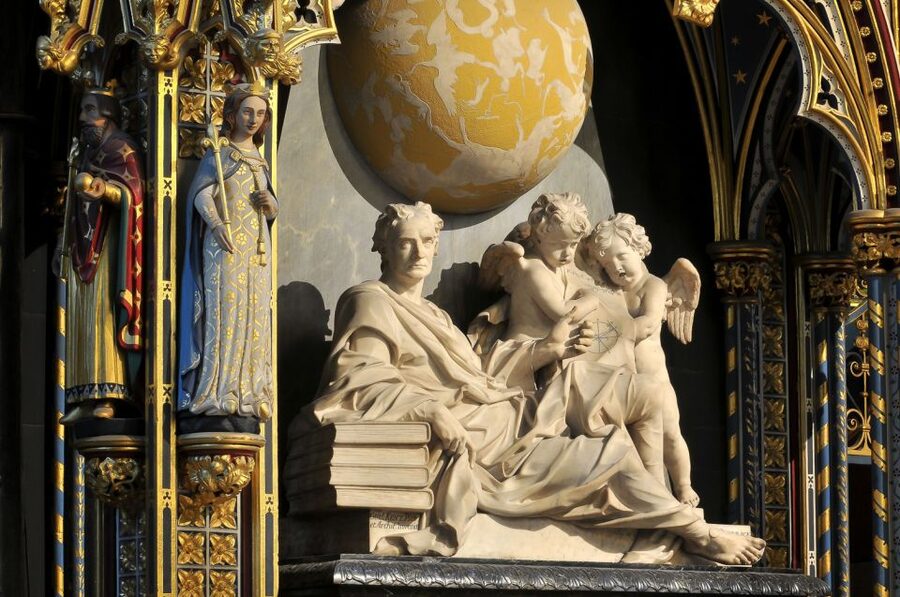
The Coronation Chair is one of the clearest reasons to visit Westminster Abbey. It is the oldest piece of furniture in the country still used for its original purpose, and every British monarch has been crowned in the Abbey since 1066.
That long use gives the chair unusual force. It is not merely an old object behind glass. It connects ceremonies separated by nearly a thousand years, from medieval kings to Queen Victoria and Elizabeth II.
You will not need to know every monarch in advance to appreciate it. The guide supplies the basic context, while the setting gives the object its weight. Look for the wear and age of the chair, then consider how many coronations, political changes, and national celebrations have taken place around it.
Royal burial places add another layer. The Abbey is the final resting place of many monarchs, including Elizabeth I and Mary, Queen of Scots. You may also find yourself drawn to less familiar names, such as the young princes Edward V and Richard, Duke of York.
This is where a little preparation pays off. A short list of monarchs buried in the Abbey can help you recognize the names as you move through the chapels and aisles. Without it, the number of people and inscriptions can feel overwhelming.
A handful of other Westminster Abbey outings to weigh up
- London Westminster Abbey French Tour with Fast-Track Tickets
★ 4.8 · 57 reviews - London: The London Eye Entry Ticket
★ 4.6 · 35,875 reviews - London: Tower Bridge Entry Ticket
★ 4.7 · 15,560 reviews - London: St Paul’s Cathedral Entry Ticket
★ 4.7 · 9,813 reviews
Poets’ Corner and the famous names on the walls
Poets’ Corner is one of the Abbey’s most popular areas. The name comes from the concentration of poets and writers buried or commemorated there, but the space also honors playwrights, novelists, and other figures connected to British literature.
You may find memorials linked with Shakespeare, Dickens, and Austen, along with many names that are less familiar outside Britain. The attraction is not just the celebrity list. It is the way literary memory has been built into the church over time.
Read slowly here. The lettering can be small, old, and sometimes in Latin. The guide helps, but it may not explain every inscription in the detail you want. If a particular writer matters to you, check the Abbey’s current information before visiting and note where that memorial is located.
Poets’ Corner can also become a bottleneck. The most famous names attract a steady crowd, and it may be hard to stand back for a full view. Be patient, keep the route moving, and return later if the space is packed.
Architecture that rewards looking up
The Abbey’s Gothic architecture is not background decoration. It is the central visual experience.
Start with the ceiling. The height and intricate construction create the feeling of a much larger space than the floor plan suggests. Then look at the stained glass and carved stonework. Some details are easy to miss when you focus only on graves and royal history.
The building has been restored in places and is generally in very good condition. That makes the carved surfaces, arches, and memorials easier to appreciate, but it can also make the Abbey feel almost too polished for its age. The sense of time comes from the objects, names, and ceremonies connected with the building rather than from decay.
Photography may be tempting, especially when you see the ceilings from the center of the church. Follow the current rules and remember that the Abbey is still a place of worship. Even when the room is full of sightseers, a respectful, quieter approach improves the experience for everyone.
Crowds, queues, and the best way to pace your visit
Crowds are the main practical weakness. The Abbey is one of London’s most popular sights, and narrow areas around tombs can become difficult to move through. The overall visitor flow is well managed, but good organization cannot make the building larger.
Arriving early is the most useful tip. Some people entered with little waiting, while others faced a 20-minute queue or more. Midday arrival can work, but you should keep some flexibility in your schedule rather than booking a tightly timed restaurant or theater visit immediately afterward.
Inside, expect pauses around the main tombs and memorials. The route may feel crowded, yet the movement is usually orderly. Staff, volunteers, and officiants are present to help visitors and keep people going in the right direction.
Do not rush because the advertised duration is two hours. A focused visit can take 40 minutes to an hour with the audio guide, but that means choosing only the major points. If you want to read inscriptions, study the architecture, and stop at Poets’ Corner, two to three hours is more realistic.
Is the $41 ticket good value?
At $41 per person, this is not a cheap London admission. You are paying a premium for access to one of the city’s most important historic interiors, not for a long guided excursion or a full-day activity.
I think the value depends on how you visit. If you spend only 40 minutes inside and have little interest in royal or literary history, the price may feel steep. If you use the guide, take your time, and explore the memorials carefully, the admission becomes easier to justify.
The ticket includes entry and the multimedia guide, but not skip-the-line access or a live tour. That distinction is important when comparing options. Paying more does not automatically mean you avoid the queue, and this product is best understood as an independent visit with helpful commentary.
Some visitors also found that certain sections or displays could require an additional charge. Check the current terms before booking if you have a particular royal exhibit in mind, since the basic ticket may not cover every optional area.
The flexible cancellation policy improves the value for a changing schedule. You can cancel up to 24 hours before the visit for a full refund, and the reserve-now, pay-later option lets you hold a place without paying immediately.
Who will enjoy this visit most?
This ticket suits first-time London visitors who want to see one of the capital’s major historic buildings without committing to a fixed live tour. It also works well for families, since you can adjust the pace and shorten the visit if younger children lose interest.
History fans will have the most to explore. The Abbey brings together monarchs, poets, musicians, scientists, and politicians, so the visit can appeal to several interests at once.
It is also a good choice for repeat visitors. The building has enough memorials and details that a second visit can reveal things you missed the first time. One person’s third visit still offered new discoveries.
You may prefer a live tour if you want help with Latin inscriptions, royal family connections, or the wider story of the building. The self-guided format gives freedom, but it puts more responsibility on you to choose what to study.
Visitors with limited mobility can ask about a wheelchair on arrival. One visitor reported that staff provided one for a family member who could not walk long distances. Since arrangements can change, confirm current access details directly before your visit.
Practical tips for a smoother Abbey visit
Keep your bag small and simple. Large luggage is not allowed, and security checks take longer when you arrive with items that need extra attention.
Download or keep your voucher easy to reach on your phone, but allow time to exchange it for a physical ticket if required. Go to the North Door ticket office on North Green, not just the nearest Abbey entrance you happen to see.
Give yourself a buffer before the next activity. A queue outside, a slow section inside, or a prayer service can change your timing.
Use the audio guide, but do not wear it every second. Take a few minutes to listen to the building itself. The prayers, footsteps, and quiet pauses are part of the experience, and constant commentary can make the visit feel more like a checklist.
Finally, look up. The tombs draw attention downward, but the ceilings and upper stonework often provide the most startling views.
Should you book Westminster Abbey entry?
I would book this ticket if you want to see the Coronation Chair, royal burial places, Poets’ Corner, and the Gothic interior at your own pace. The guide is useful, the route is manageable, and the Abbey offers far more than a quick photo stop.
I would choose a live tour instead if you need detailed explanations of Latin inscriptions or want someone to connect every monarch and memorial for you. Also think twice if your London schedule cannot absorb a queue or an occasional closure for worship.
For most first visits, the experience earns its place on a London itinerary. Book with a flexible schedule, arrive early, travel light, and allow two hours or more. That gives you time to see the famous objects without missing the quieter details that make Westminster Abbey memorable.
FAQ
How long does the Westminster Abbey visit take?
The stated duration is two hours. A shorter visit with the audio guide can take about 40 minutes to one hour, while a slower visit may last two to three hours.
Is skip-the-line entry included?
No. This is not a skip-the-line ticket, so you may need to wait before entering.
Where do I present my voucher?
Present your voucher at the ticket office at the North Door entry point on North Green.
Is an audio guide included?
Yes. A multimedia guide is included upon arrival.
Which languages are available for the audio guide?
The guide is available in English, Arabic, Chinese, Dutch, French, German, Italian, Japanese, Polish, Portuguese, Russian, and Spanish.
Can Westminster Abbey close during my visit?
Yes. It is a working church and may close occasionally for special services or events.
What items are not allowed inside?
Smoking, luggage or large bags, pets, alcohol, drugs, and audio recording are not allowed. Assistance dogs are permitted.
Can I cancel the booking?
Yes. You can cancel up to 24 hours in advance for a full refund. The reserve-now, pay-later option also lets you book without paying immediately.
New listings around Westminster Abbey
- Skip the line Westminster Abbey & Guard Change Ceremonies★ 3.9 · 17 reviews
- London: Westminster Abbey & Churchill War Rooms Walking Tour★ 4.9 · 39 reviews
- London: Westminster Abbey & Jubilee Galleries Guided Tour★ 4.9 · 56 reviews
- London Westminster Abbey French Tour with Fast-Track Tickets★ 4.8 · 57 reviews
- London: Westminster Abbey, Tower of London and Boat Tour★ 4.7 · 74 reviews
- Skip-the-Line London Westminster Abbey Guided Tour in German★ 4.9 · 135 reviews
- London: Westminster Abbey & Optional Parliament Tour★ 4.4 · 176 reviews
- London: Westminster Abbey Priority Access & Guided City Tour★ 4.5 · 282 reviews
Westminster Abbey Tours, compared.

Westminster Abbey, Big Ben & Buckingham Guided Tour
Read our review →
Buckingham Palace, Westminster Abbey & Big Ben Tour
Read our review →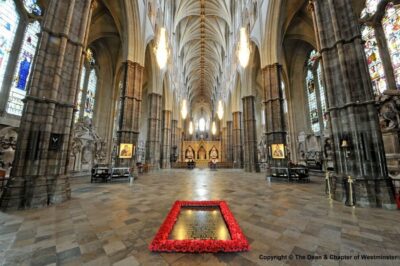
Guided Westminster Abbey Tour and Refreshments
Read our review →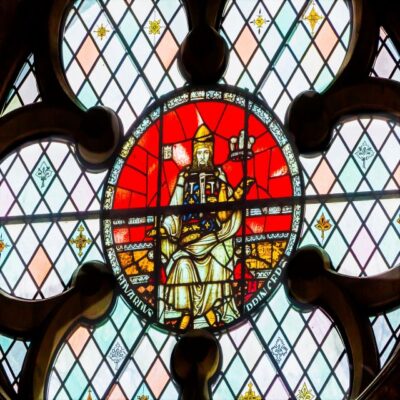
Westminster Abbey Skip-the-line Entry & Guided Tour
Read our review →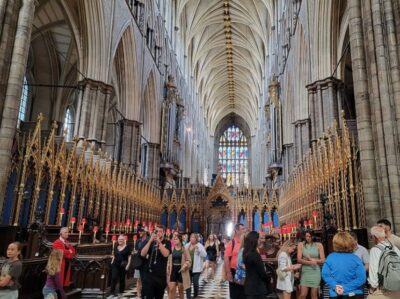
Westminster Walking Tour & Westminster Abbey Visit
Read our review →
Westminster Abbey Priority Access & Guided City Tour
Read our review →Browse the lists this tour appears in