
Reviewed · ADRENALINE EXPERIENCES
Maidenhead: Spitfire Simulator Flight Experience
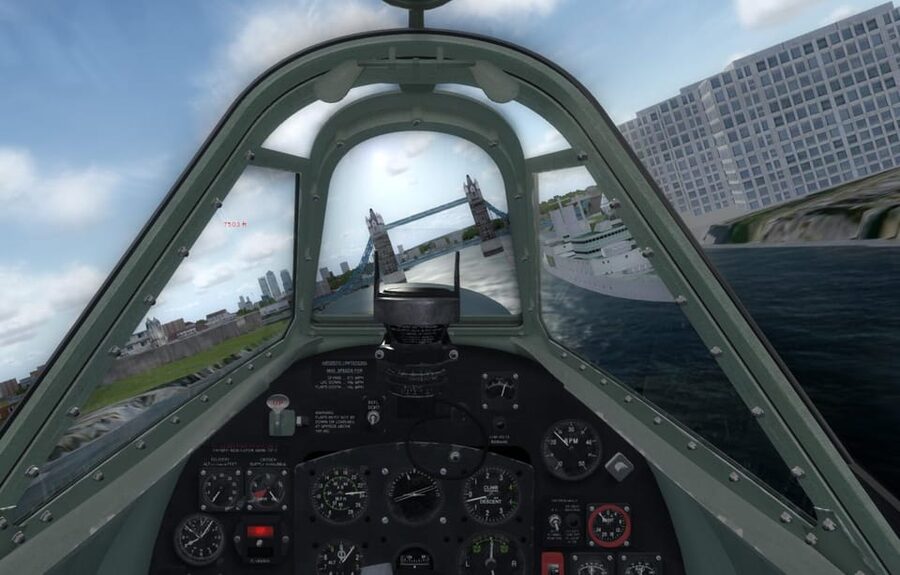
The Merlin engine roars, London spreads below you, and Tower Bridge suddenly becomes a very narrow target. This Spitfire simulator at Maidenhead Heritage Centre gives you the fun of flying a famous wartime aircraft without needing a pilot’s license or a runway.
I like two things right away: you can choose your own route, from London to Paris or New York, and the session includes a useful introduction to the Spitfire and its pilots. I also like the Thames race, where two teams can compete to fly from London City Airport, through Tower Bridge, around Big Ben, and back again. The main drawback is that the history talk takes up part of your time, so families should book the longer session only if everyone wants a turn and a little classroom time.
Key points about the Maidenhead Spitfire simulator
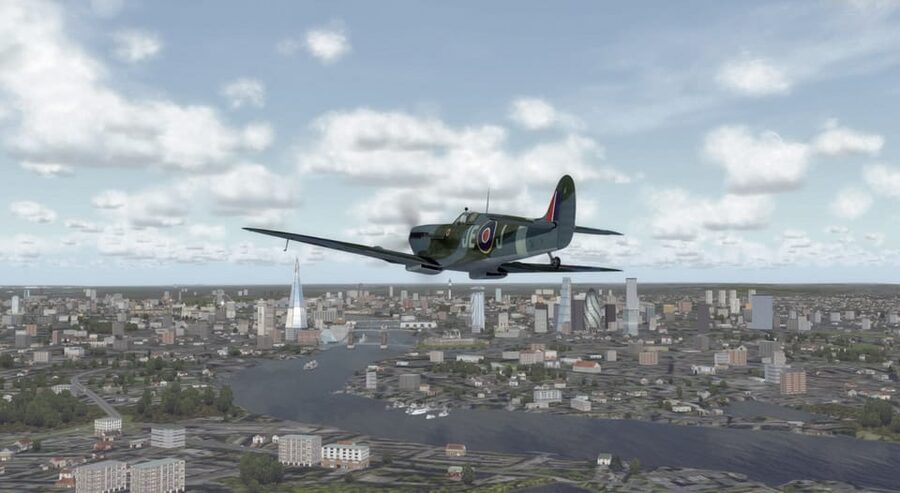
- Fly the iconic Merlin-powered aircraft: Open the throttle and handle a Spitfire in a purpose-built flight simulator.
- Choose your own virtual route: Fly over London, Paris, New York, or another destination around the world.
- Race through central London: Teams fly from London City Airport, past the O2 and Canary Wharf, through Tower Bridge, around Big Ben, and back.
- Learn about wartime aviation: The experience includes a short historical film and an introduction to Spitfire pilots and the Air Transport Auxiliary.
- Pick 30 or 60 minutes carefully: A half-hour may suit one participant, while family groups should consider extra time.
- Visit the museum galleries too: Admission for up to four people includes the Maidenhead Heritage Centre and Air Transport Auxiliary Gallery.
A Spitfire lesson with a real sense of occasion
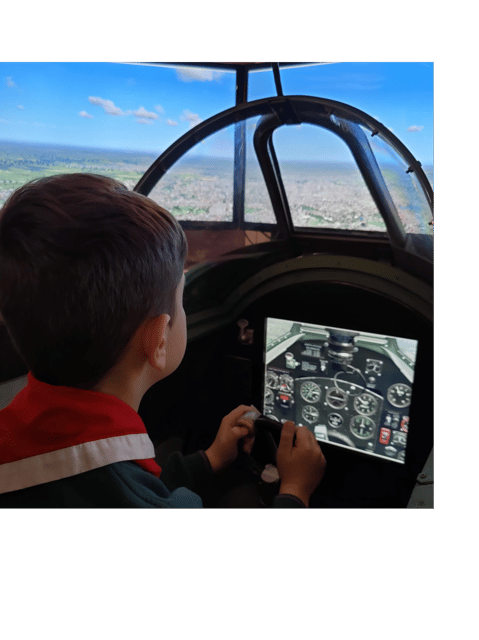
This is not simply a video game with a cockpit shell. You sit at the controls of a Spitfire simulator, receive instruction in English, and work out how to keep the aircraft pointed in the right direction. The friendly volunteer instructors help you get started, so you do not need previous flying experience.
The mood changes when the engine sound begins. The famous Merlin engine gives the session a strong link to the actual aircraft, even though you remain safely on the ground in Maidenhead. You can raise the throttle, set off from the virtual airport, and discover quickly that keeping an aircraft in the air takes more attention than most passengers expect.
I would approach this as a hands-on history experience rather than a pure arcade attraction. You get time at the controls, but you also get context about the machine and the people who flew it. That balance is one reason the activity works well for adults who care about wartime aviation as much as children who simply want to fly.
The presentation begins with a short film from the period, followed by a history lesson. The exact balance between instruction, history, and simulator time matters, especially if you book only 30 minutes. With a short session, you should expect a brisk introduction before taking control.
Also worth an afternoon while you are in Britain:
- London: The London Eye Entry Ticket
★ 4.6 · 35,875 reviews - From London: Harry Potter Warner Bros Studio Tour
★ 4.7 · 26,588 reviews - London: Westminster to Greenwich River Thames Cruise
★ 4.5 · 22,836 reviews
The story behind the aircraft and its pilots
The Spitfire is famous for its role in World War II, but this experience also points toward the people who are often left out of the usual account. The Air Transport Auxiliary Gallery covers the service that flew aircraft to British airfields so they could be used operationally.
That means the visit is not only about fighter pilots in combat. You also get a chance to learn about the women who ferried aircraft around Britain during the war. Their work was vital, yet it tends to receive less attention than the better-known battles and aces.
One especially strong part of the experience is the contribution of an ex-pilot who leads or supports the historical side of the centre. You are given more than a list of dates and aircraft names. The presentation connects the simulator to the people who handled these machines and the demanding work of getting planes where they needed to go.
If you have just finished school history, the talk may feel familiar rather than new. If you have a long-standing interest in aircraft, military history, or the Air Transport Auxiliary, you are more likely to appreciate the extra detail. I would not skip the history section, but I would choose your session length with it in mind.
Taking control of the Spitfire
Once the introduction is over, the simulator becomes the main event. Your instructor shows you how to operate the controls and helps you get the aircraft moving. You will need to listen carefully, since the fun comes from making the aircraft respond to your decisions rather than simply watching a screen.
The simulator lets you fly over London, Paris, New York, or any other part of the world you choose. That flexibility is useful for mixed groups. One person can choose a familiar city, while another can use the time to try a route connected with an interest in aviation or travel.
London is the most structured choice. The special course begins at London City Airport, takes you past the O2 and Canary Wharf, and sends you through Tower Bridge. You then turn around Big Ben, return through Tower Bridge, and try to land back at London City Airport.
The route sounds simple until you are trying to control the aircraft. Tower Bridge becomes a test of timing and steering, while the return leg gives you another chance to make the same mistake, or correct it. If you hit the river or a building, penalty time is added. That rule gives the race a clear purpose and adds a little pressure without making the activity too serious.
You should expect some crashes, especially on a first attempt. The penalty system is part of the fun, and the group format encourages cheering and good-natured booing. It gives the experience a social side that a solo flight around a virtual city may not have.
The Thames race for groups of up to four
The London race works best with friends, family, or colleagues. Two teams of up to four people can take part, with each team receiving a flying lesson before racing against the clock.
The team setup turns the simulator into a shared activity. You can watch someone else struggle with Tower Bridge, offer advice, and celebrate a clean run. The good-humored competition also helps if not everyone in your group is equally interested in aircraft history.
There is an important practical point here. The activity information describes the booking as a small group with limited participation, while the group race is designed for two teams of up to four people. If you are arranging a group visit, confirm how your party will be divided and how much time each person will have at the controls.
For families, the centre specifically advises booking a longer period. That makes sense. A group needs time for the introduction, the lesson, each person’s turn, and the race itself. A 30-minute booking may be enough for a focused individual session, but it can feel short when several people want to fly.
The 60-minute option gives you more breathing room. It is the better choice if you want to share the controls, listen to the historical material, and take part in the London course without rushing. One visitor who booked an hour felt 30 minutes would have been sufficient for a younger family member, so the best option depends on how many people will fly and how much history they want.
Elsewhere in Britain, a change of pace:
- Magical London: Harry Potter Guided Walking Tour
★ 4.7 · 22,044 reviews - London: Madame Tussauds London
★ 4.6 · 20,915 reviews - London: Warner Bros. Studio Tour with Transfers
★ 4.7 · 17,586 reviews - Edinburgh: Loch Ness, Glencoe & the Scottish Highlands Tour
★ 4.6 · 17,446 reviews
Is the $53 price good value?
At about $53 per person, this is not priced like a quick amusement ride. The value comes from the combination of simulator time, instruction, and museum admission.
You are paying for a guided activity rather than simply entering a room and pressing buttons. The session gives you a flight lesson, access to an instructor, and a historical introduction. Up to four people also receive admission to the Maidenhead Heritage Centre and its Air Transport Auxiliary Gallery.
For one person with a strong interest in aircraft, the price is easier to justify. You get a focused activity plus the chance to spend time with the museum displays. For a family, the calculation depends on the number of people and the session length. A 30-minute option may keep the cost down, while a 60-minute booking gives a group more useful time at the controls.
I would consider the price fair if you value both the flying and the history. If you only want a fast virtual flight, you may find the introduction longer than expected. If you want to understand the aircraft and the wartime flying work connected with it, the extra material adds value.
Food and drinks are not included, and transportation to and from the attraction is not included. Plan those parts separately. The experience is at Maidenhead Heritage Centre in South East England, so you should also allow enough time to reach the centre before your booked start.
How long should you book?
The advertised session lasts 30 minutes or 60 minutes. The right choice depends mainly on who is flying.
Choose 30 minutes if you are booking for one person who wants to try the simulator and does not need a long museum visit. It can also suit a child or teenager with only a passing interest in the historical material.
Choose 60 minutes if you are bringing a family group, want a proper introduction, or plan to use the Thames race. More time matters when several people need instruction and a turn at the controls.
Children under nine are not suitable for the experience. Older children and teenagers can take part, but interest levels will vary. A 16-year-old may enjoy the simulator more than the history lesson, particularly after completing school exams on similar material. I would explain the format before booking so younger participants know this is part museum visit and part flight activity.
Who will enjoy this most?
I would recommend the experience most strongly to:
- People who enjoy aircraft, military history, or flight simulators
- Families with children aged nine and over who like hands-on activities
- Adults looking for an unusual museum visit in Maidenhead
- Groups of friends who enjoy friendly competition
- Colleagues seeking a small group activity with a clear challenge
It is less suitable if you want a purely fast-paced attraction with no historical explanation. It is also not the best choice for children under nine, since they cannot take part.
The attraction works particularly well for someone who already knows a little about the Spitfire but wants a more physical way to connect with it. You will not learn to fly a real aircraft, of course, but you will get a better feel for the attention and control involved in keeping the machine on course.
Accessibility and basic planning
The experience is wheelchair accessible, which makes it available to a wider range of visitors. The instructor language is English.
You should plan your visit around the session length and not assume that the simulator is the only part of the attraction. The Heritage Centre and Air Transport Auxiliary Gallery are included for up to four people, so allow time to look around if the wartime story interests you.
Food and drinks are not included. You will need to arrange your own transport to Maidenhead Heritage Centre, since transfers are not part of the activity.
You can cancel up to 24 hours before the start for a full refund, and the reserve-now, pay-later option lets you hold a place without paying at once. Availability and start times should be checked before you book.
Should you book the Maidenhead Spitfire experience?
Book it if you want more than a few minutes at a joystick. The combination of a Spitfire simulator, wartime aviation background, and the London race gives you several ways to enjoy the visit. The discussion of the Air Transport Auxiliary is especially worthwhile if you want a broader view of World War II flying.
For a single participant, 30 minutes may be enough. For a family or group, I would lean toward 60 minutes so everyone gets a fair turn and the history does not feel rushed. Bring a competitive spirit for the Thames course, but do not worry about crashing. The penalty clock is there to make the route funny and challenging.
This is a good-value choice for aviation fans and curious families who are happy to mix a museum visit with hands-on play. It is a weaker fit for anyone who wants a nonstop simulator session with no historical talk. Pick the duration carefully, and the experience should give you both a better sense of the Spitfire and a memorable battle with Tower Bridge.
FAQ
Where does the Spitfire simulator experience take place?
It takes place at Maidenhead Heritage Centre in South East England, United Kingdom.
How long is the simulator session?
You can choose a 30-minute or 60-minute session. Check the available start times when booking.
What can I fly over in the simulator?
You can fly over London, Paris, New York, or anywhere else in the world you would like to visit virtually.
What is included in the experience?
The booking includes the 30-minute or 60-minute Spitfire simulator session, instruction from volunteer flight instructors, and admission for up to four people to the Maidenhead Heritage Centre and Air Transport Auxiliary Gallery.
Can groups take part together?
The London race is designed for two teams of up to four people. Each team receives a flying lesson before racing against the clock.
How does the London Thames race work?
You take off from London City Airport, fly past the O2 and Canary Wharf, pass through Tower Bridge, turn around Big Ben, return through Tower Bridge, and land at London City Airport. Penalty time is added for hitting the river or buildings.
Is the experience suitable for children?
Children under nine are not suitable for the activity. Family groups should book a longer period so everyone has enough time to share the experience.
Is the attraction wheelchair accessible?
Yes, the experience is wheelchair accessible. Instruction is provided in English.
New listings around Britain
- London: Bermondsey Craft Brewery Tour★ 5.0 · 3 reviews
- Loch Lomond & Trossachs National Park Drive Tour with an App★ 3.8 · 3 reviews
- Chawton: Village tour to discover its ties to Jane Austen★ 5.0 · 3 reviews
- Colourful Notting Hill Photography Tour★ 5.0 · 3 reviews
- Anglesey Tour App, Hidden Gems Game and Big Britain Quiz (7 Day Pass) UK★ 5.0 · 3 reviews
- Roybridge, Lochaber: CANYONING – Laggan Canyon★ 5.0 · 3 reviews
- The London Historic Pubs Tour★ 4.0 · 3 reviews
- Shore excursion from Invergordon – Castles, Scenery & Whisky★ 5.0 · 3 reviews
Adrenaline Experiences, compared.

Whitewater Rafting on the River Dee in Llangollen
Read our review →
White Water Rafting Experience in River Dee in Llangollen
Read our review →




iFLY Indoor Skydiving at The O2 Entrance Ticket
Read our review →Browse the lists this tour appears in