
Reviewed · LAKE DISTRICT TOURS
Meditate With Horses
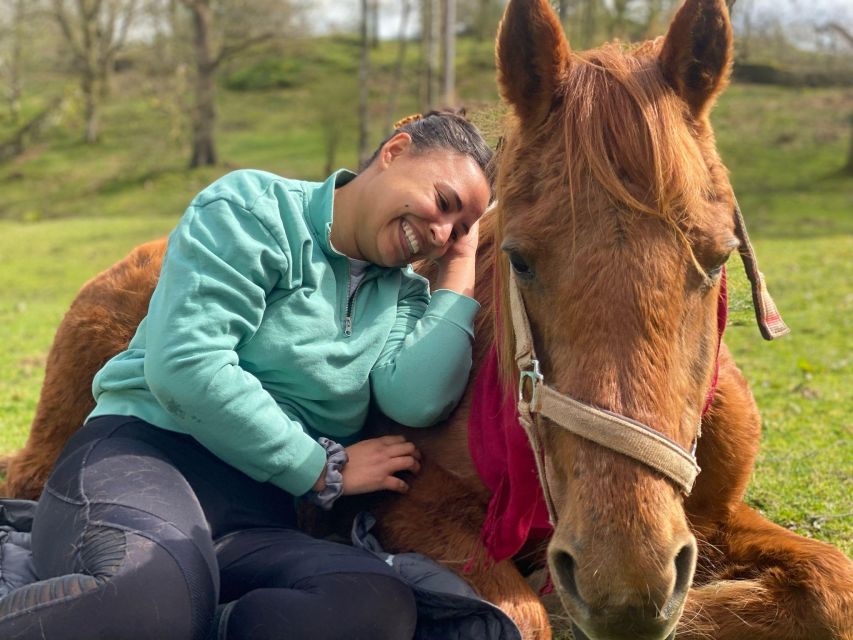
The unusual part comes quickly: you lie down near rescued horses and let their slow breathing, warm bodies, and quiet attention help settle your own mind. This is not a riding lesson with a meditation tacked on. It is a horse-centered session built around stillness and careful observation.
I like the Lake District setting, with Holmeshead Farm near Ambleside and views toward the Langdales. I also like that the horses are rescue animals, and that the fee goes toward their care. The main consideration is simple: if you want to ride, this is the wrong experience. You work with the horses from the ground.
- Rescued horses lead the lesson: The animals have been rehabilitated through a gentle, meditation-led approach.
- Grooming comes before stillness: You learn to read body language while using slow, simple movements.
- The Langdales provide the setting: Holmeshead Farm is a working farm near Ambleside with mountain views.
- Sessions can last up to six hours: The full schedule includes a safety talk, two workshops, and a one-hour break.
- Katherine guides the meditation: Instruction is available in English or French.
- You do not ride: Expect breath work, guided meditation, support, and time beside the horses.
Arriving at Holmeshead Farm near Ambleside
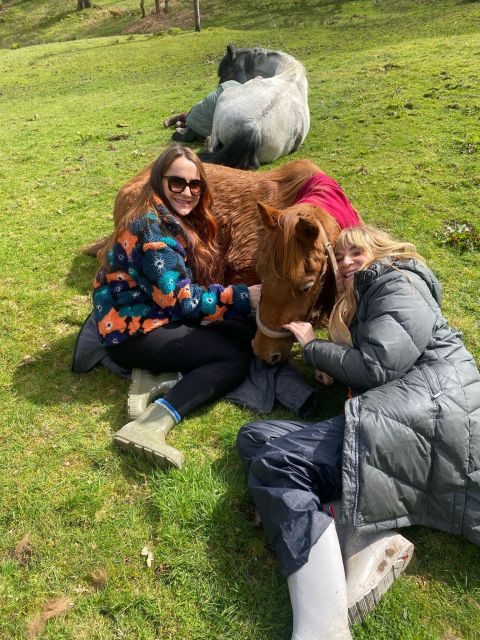
Holmeshead Farm B&B is the meeting point, in the countryside around Ambleside. The farm is surrounded by the Lake District, with an enchanting view toward the Langdales. That setting matters here. You are not being asked to ignore the outside world in a plain indoor room. The farm, trees, grass, and mountain views give your attention somewhere natural to rest.
You receive a What3Words link for directions, so keep an eye out for that before setting off. The meeting point is not presented as a town-center attraction, and you should plan your route carefully rather than assume it will be obvious when you arrive.
The provider suggests doing this activity at the beginning of your holiday. I think that is sound advice. The first day or two of a trip often carries the mental clutter of home: emails, lists, travel worries, and unfinished tasks. A slow morning with horses can help you switch into Lake District time before filling your days with walks, drives, and sightseeing.
Accommodation is available for people visiting mainly for this experience, but you need to enquire about it. That option could be useful if you want the session to be the main purpose of your stay rather than one more item squeezed between attractions.
A 30-minute safety talk before meeting the horses
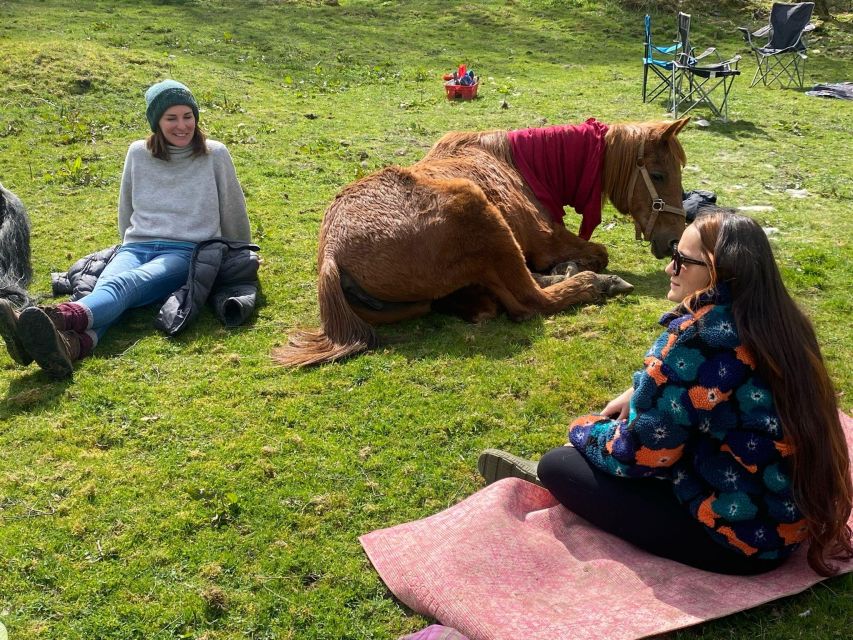
The experience begins with a safety briefing of about 30 minutes. Do not treat this as paperwork before the real activity. Horses are large herd animals, and learning how to behave around them is part of the experience itself.
You are shown how to approach the horses and how to pay attention to their body language. One published rating specifically praised learning to read horse signals and stay present in the moment. That is a useful clue about the tone of the session: you are not simply placed beside an animal and told to relax. You are given ways to notice what the horse is communicating.
Wear old clothes and sturdy boots. Horse areas can be muddy, and grooming can be a dusty, hands-on job. Warm shoes are important, too. On cold days, wrap up very warmly, and bring full waterproofs if the weather calls for them.
One unusual instruction is not to carry sugar in your pockets. It is a small point, but it tells you that the horses’ welfare and boundaries come first. Follow the guidance closely, even if you have spent time around horses before.
More horse riding in Lake District:
- London: Slow Horses TV Series Guided Tour
★ 5.0 · 13 reviews - York: Horse Drawn Carriage Ride Around the Countryside York
★ 4.1 · 13 reviews - Westminster History Walking Tour & Horse Guards Parade
★ 4.7 · 6 reviews
Grooming rescued horses and learning to read their signals
The hands-on part often begins with grooming. You use gentle circles with curry combs while the horses lower their heads and settle into the repeated motion. Grooming gives your hands a job, which can make it easier to stop chasing every thought in your head.
I like this stage because it gives the experience a practical base. You are not expected to become instantly serene. You begin with an ordinary task, learn the horse’s response, and gradually slow your pace. The horse’s body language becomes part of the lesson.
These horses are rescue animals rehabilitated with a gentle, meditation-led technique. That adds meaning to the session, but it also means you should approach with patience. The goal is not to demand a response from the horse. You learn to offer calm attention and notice what comes back.
The experience explains horses as herd animals that respond to one another’s hormones and heart rates. During meditation, changes in your breathing and body can be mirrored by the horses. The intended result is a shared settling of pace, with the horses becoming sleepy and relaxed.
You should keep your expectations sensible. The description uses powerful language about a natural sedative and intense relaxation, but people respond differently to meditation. Some will feel a strong physical calm. Others may find the horse contact and countryside more useful than the formal meditation. Both are valid outcomes.
Breath work and the quiet connection with a horse
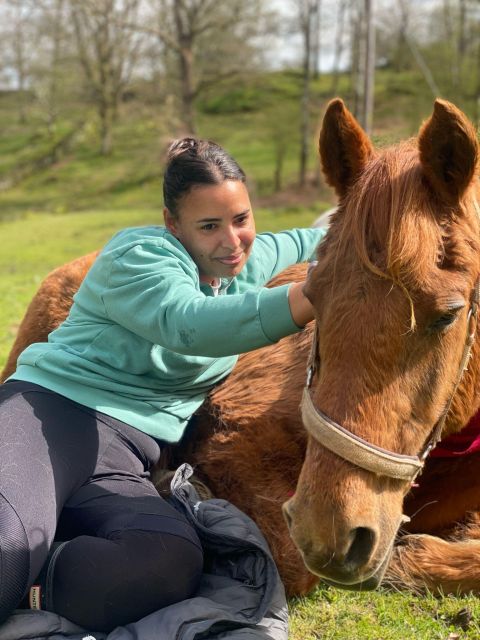
The main workshop combines breath work, guided meditation, and support from the instructor. You may be asked to lie down with the horses nearby, close your eyes, and pay attention to your breathing and the animal’s steady presence.
This is the part that makes the session different from a standard farm visit. You are not watching a demonstration from behind a fence. You are encouraged to become quiet enough to notice small things: the rhythm of a breath, the weight of a horse’s movement in the grass, or the steady beat of a heart beneath a warm coat.
The experience may include placing a hand on a horse and feeling its heartbeat. That can be a powerful way to bring your attention out of your thoughts and into the present moment. If you are nervous around horses, the earlier safety talk and grooming time give you a gradual path into this contact.
Do not expect constant talking or entertainment. Silence is a major part of the session. The useful question is not how much activity you get for your money, but how comfortable you are with several hours of slow attention and guided reflection.
Katherine leads the sessions, and instruction is available in English or French. The group can be small, which suits the subject well. Fewer people usually means less noise and more room to focus, though the exact group size is not specified.
The Lake District setting does part of the work
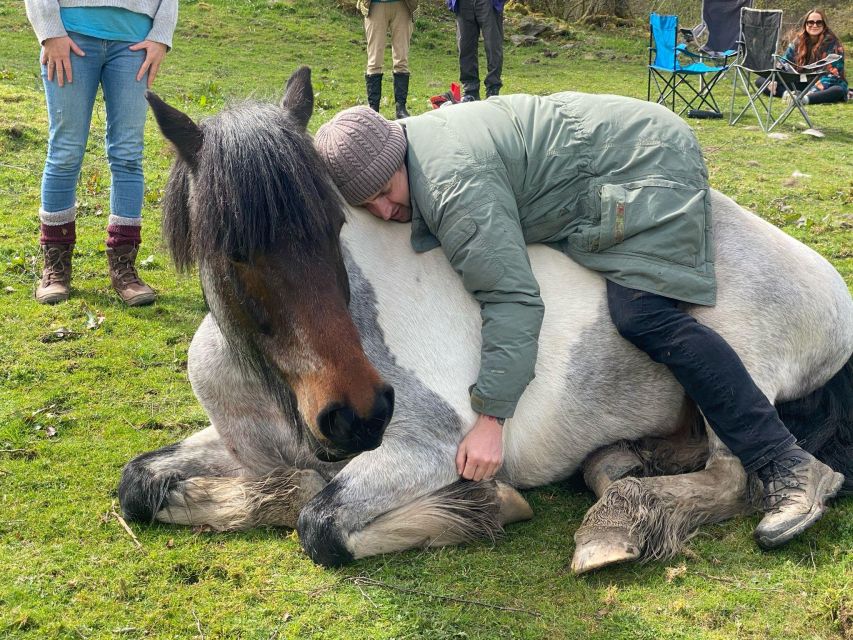
The farm sits near Ambleside, with the Langdales in view. You are surrounded by grass, trees, horses, and mountain scenery rather than by screens or traffic. The setting is not a backdrop added for photographs. It supports the central idea of the session: slow down, pay attention, and let the natural world set the pace.
In cold morning conditions, you might see a horse’s breath rise in pale clouds. In changing light, the fields and mountains will look different from one hour to the next. These details are modest, but they give your mind something real to notice when you are trying to stop replaying yesterday or planning tomorrow.
The countryside also creates one practical drawback. Weather affects comfort. Warm clothing is not optional on a cold day, and waterproofs may be needed. Bring more layers than you think you need, since meditation involves periods of sitting or lying still.
You should also know that this is not a substitute for a Lake District walk. You may enjoy the views, but the focus is the horses and the guided work. If you want a full day of scenery and miles on foot, book a separate outing.
A handful of other Lake District outings to weigh up
- From Windermere: Ten Lakes Full-Day Tour of Lake District
★ 4.8 · 785 reviews - Lake District: Beatrix Potter Half-Day Tour
★ 4.7 · 163 reviews - Windermere Red Cruise: Sail Between Bowness and Ambleside
★ 4.5 · 142 reviews - Lake District: Six Lakes Morning Tour from Windermere
★ 4.8 · 125 reviews
A one-hour break in the middle of the day
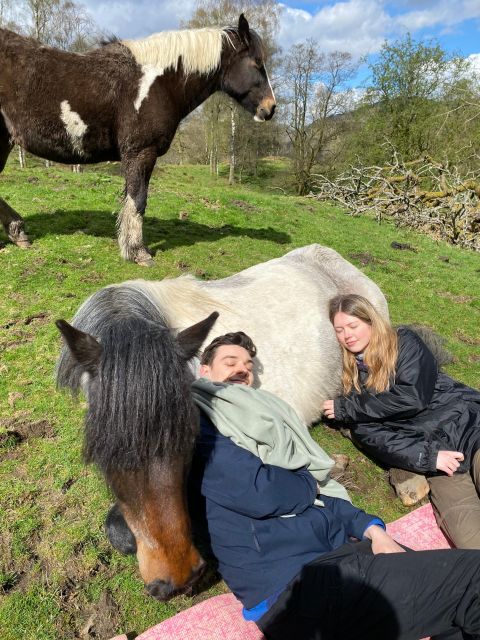
The full schedule includes a one-hour break between the two workshops. This gives you time to eat, warm up, collect your thoughts, and let the first session settle before returning to the horses.
The supplied information does not specify whether lunch is provided, so do not assume it is included. Ask the provider if you need food arrangements clarified. In any case, bringing what you need for a break is sensible, especially if you are spending close to six hours at the farm.
This pause is valuable because the experience asks for sustained attention. A two-hour workshop followed by another two and a half hours can feel long if you expect constant movement. The break divides the day and gives you a chance to decide how you are feeling before the second session.
The second workshop and the closing circle
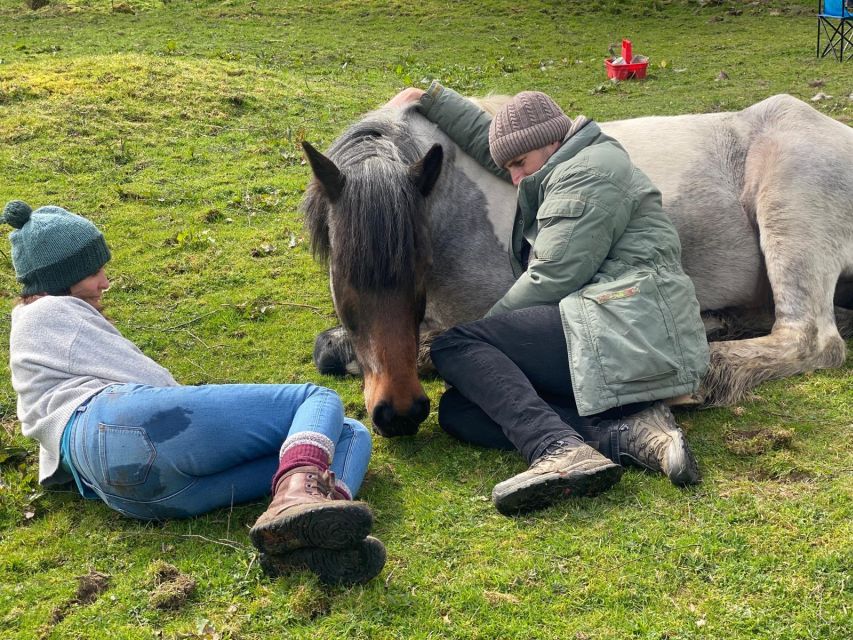
The later workshop lasts about two and a half hours in the full itinerary. It continues the same mix of horse contact, meditation, breathing, and quiet support. You may spend more time lying or sitting near the horses, observing how the animals respond as everyone becomes calmer.
The closing circle gives the group a chance to talk about what the horses brought up for them. The themes may include stillness, perspective, and a greater sense of peace. This discussion helps turn a pleasant morning into something you can think about after leaving the farm.
I appreciate that the activity includes this shared ending. The group begins with strangers, but a quiet experience can make conversation feel easier by the end. Still, you should know that sharing is part of the shape of the session, so this may not suit someone who wants a completely private experience.
Afterward, you return to Holmeshead Farm B&B. The total schedule can run from two to six hours, depending on the option and availability. The full version described here adds up to roughly six hours, including the safety talk and break. Check the starting time and exact duration when booking.
What $114 buys you
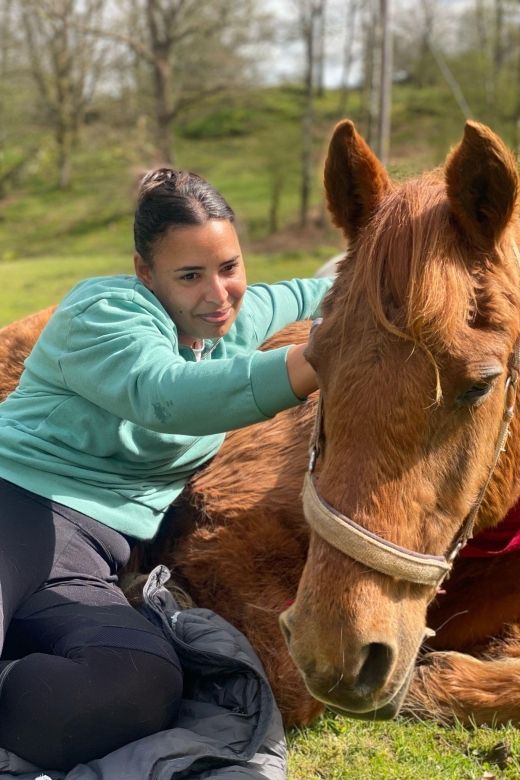
At $114 per person, this is not a cheap way to spend an hour with farm animals. The value depends on what you want. You are paying for instruction, a safety talk, breath work, guided meditation, support, and a long period of supervised contact with rescued horses.
You are also supporting the horses. The provider says 100 percent of the fee goes toward their care. That makes the price easier to understand than a simple admission charge, though you should still compare the cost with your budget and the length of the session.
For someone seeking a structured reset at the start of a Lake District holiday, the price can make sense. You receive a focused activity in a special setting, with an instructor and a clear method rather than an informal animal encounter.
The value is weaker if you mainly want to see horses, take photographs, or ride. Riding is not included, and there is no indication that it can be added. This is a calm, reflective experience, not a riding excursion.
Free cancellation is available up to 24 hours before the start for a full refund. You can also reserve and pay later, which helps if your plans are still changing. Wheelchair access is available, though you should ask the provider about the practical details of outdoor ground, horse areas, and any lying-down activities before booking.
Who will get the most from this experience
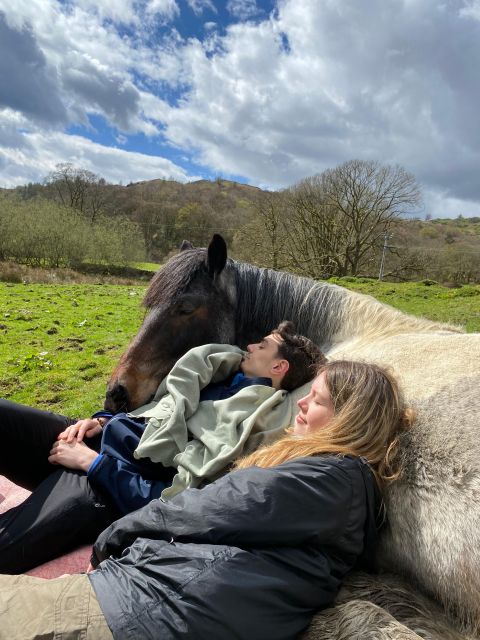
I would recommend this to you if you:
- Want a quiet activity at the start of a Lake District break
- Feel comfortable around horses, or want a gentle introduction from the ground
- Enjoy meditation, breath work, and guided reflection
- Care about supporting rescued animals
- Prefer a small group to a busy attraction
- Can dress for cold, wet farm conditions
You may want to skip it if you need a fast-paced activity, dislike silence, or specifically want to ride. It is also worth thinking about the physical format. The experience includes lying down and periods of stillness, so ask about adaptations if that may be difficult for you.
The strongest part is the combination of horse body-language lessons and meditation. One rating praised exactly that pairing, along with the feeling of calm. Another described the experience as interesting and relaxing, with time to breathe and slow down beside gentle animals. Those points match the design of the session: the horse is not a prop. It is the focus.
Should you book Meditate With Horses?
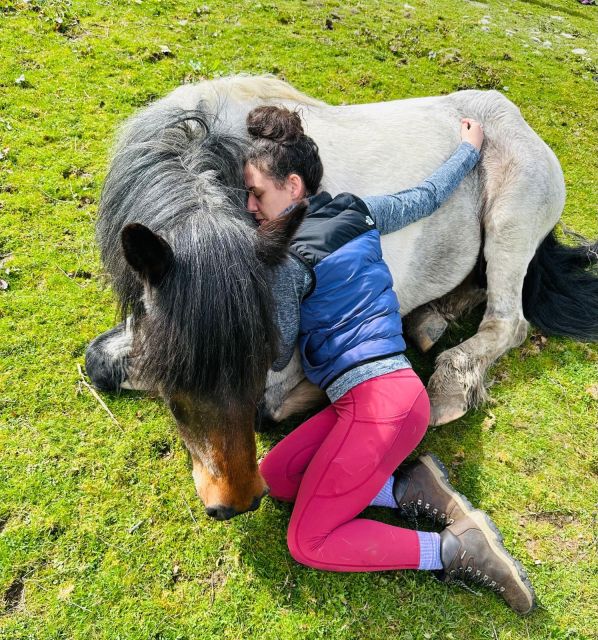
Book it if you want to begin your Cumbria holiday by putting ordinary worries to one side. The Langdale views, rescued horses, grooming, breath work, and quiet meditation make this a thoughtful choice for a reset rather than a standard sightseeing stop.
I would choose the full session only if you are happy with long stretches of calm, limited activity, and plenty of time outdoors. If you are unsure, ask about the shorter two-hour option and confirm what it includes. At $114, the experience makes the most sense when you value the horse welfare work and want genuine relaxation, not when you are simply looking for the cheapest farm visit.
FAQ
Where does Meditate With Horses take place?
The experience begins and ends at Holmeshead Farm B&B near Ambleside in Cumbria, in the Lake District.
What can I see from the farm?
The farm has views toward the Langdales and is surrounded by the Lake District countryside.
How long does the experience last?
The stated duration is between two and six hours. The full schedule includes a 30-minute safety talk, a two-hour workshop, a one-hour break, and a two-and-a-half-hour workshop.
How much does it cost?
The price is $114 per person.
Do I get to ride a horse?
No. Riding is not included. The activity focuses on grooming, horse body language, breath work, meditation, and time beside the horses.
Are the horses rescued?
Yes. All the horses are rescue horses that have been rehabilitated through a gentle meditation-led technique.
What languages are available?
The instructor can provide the experience in English or French.
What should I wear?
Wear old clothes, sturdy boots, warm shoes, and plenty of warm clothing. Bring full waterproofs if needed for the weather.
Can I bring sugar in my pockets?
No. You are specifically asked not to have sugar in your pockets.
Can I cancel the booking?
You can cancel up to 24 hours in advance for a full refund. A reserve-now, pay-later option is also available.
New listings around Lake District
- Lake District: Langdale Valley and Coniston Half-Day Tour★ 5.0 · 4 reviews
- From Lake District: Full-Day Yorkshire Dales Tour★ 4.6 · 5 reviews
- Keswick: Mountain Bike Guiding★ 5.0 · 5 reviews
- Ultimate Lake District Tour Visiting 10 Lakes★ 5.0 · 8 reviews
- Windermere: The Brontes, Wuthering Heights & Jane Eyre Tour★ 5.0 · 8 reviews
- Half-Day Tour of Beatrix Potter Country and Places★ 4.7 · 19 reviews
- Lake District: Half-Day 8 Lakes Tour★ 4.8 · 40 reviews
- From Windermere: Mountain Passes & Muncaster Castle★ 4.8 · 112 reviews
Lake District Tours, compared.
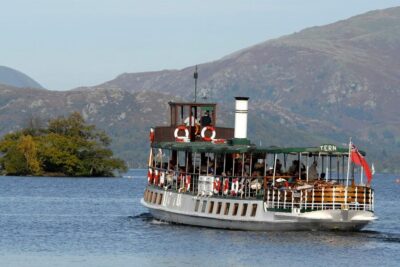
Windermere Red Cruise: Sail Between Bowness and Ambleside
Read our review →
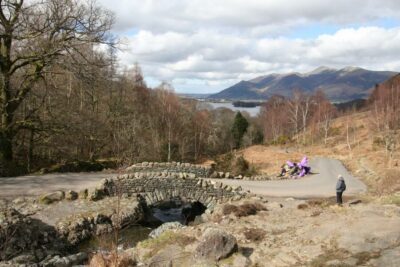
Half-Day Tour of Beatrix Potter Country and Places
Read our review →
Browse the lists this tour appears in