
Reviewed · OXFORD TOURS
Oxford: History of Medicine Tour – by Uncomfortable Oxford™
Oxford’s medical past is not just a parade of clever discoveries. It is also a story of epidemics, dissection, and contested public health, told through streets, university buildings, and former medical spaces. This 90-minute walk connects medieval plague with the medical school, anatomy, penicillin, and the question of who gets to control a body.
I like the way the tour uses Oxford itself as its classroom, and I like that it is led by a trained university researcher rather than a general sightseeing guide. Jonathan, one guide praised for making the subject clear and lively, sounds like the right sort of host for this walk. The main drawback is simple: you do not go inside colleges or libraries, and the tour leans toward discussion and social history rather than a parade of medical artifacts.
Key points to know before you book
- Medieval plague is only the starting point: The tour follows Oxford’s response to epidemic disease and how health shaped the city.
- Anatomy gets an honest treatment: You’ll consider dissection, university study, and the ethical cost of medical progress.
- The route is mostly outdoors: Stops at New College, the Bodleian Quadrangle, the Clarendon Building, and the Natural History Museum are viewed from outside.
- Modern issues are part of the story: Public health, individual rights, race, class, gender, empire, and health equity all enter the discussion.
- It covers about 2 kilometers: The walk lasts 1.5 hours, with places to sit, but uneven cobbles and busy streets can slow the pace.
- It suits curious older children and adults: The recommended minimum age is 12, and the subject is more thoughtful than lighthearted.
Oxford medicine begins with plague and public fear
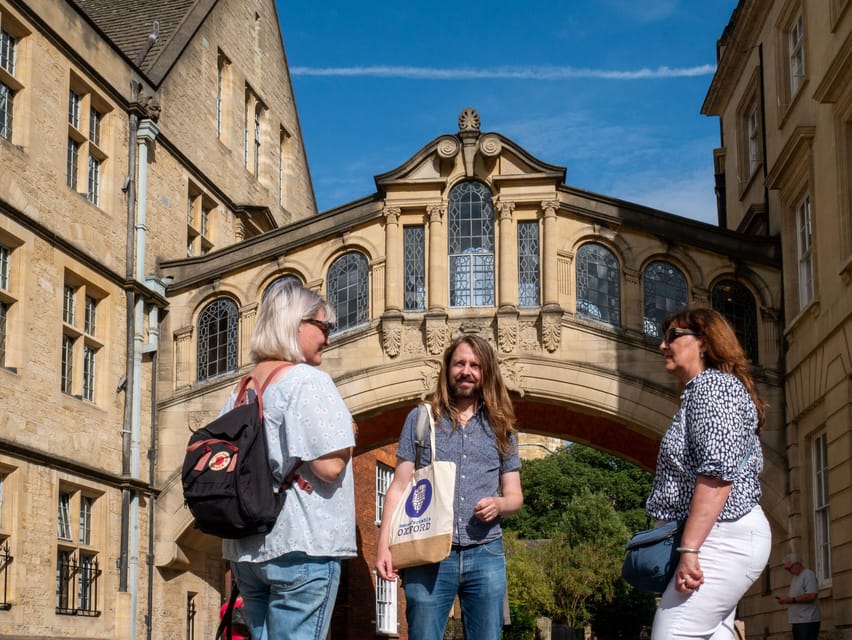
The tour starts under the Bridge of Sighs, also called Hertford Bridge. This is a practical meeting point in central Oxford, and your guide should be easy to spot in a bright blue vest with an Uncomfortable Oxford tote bag.
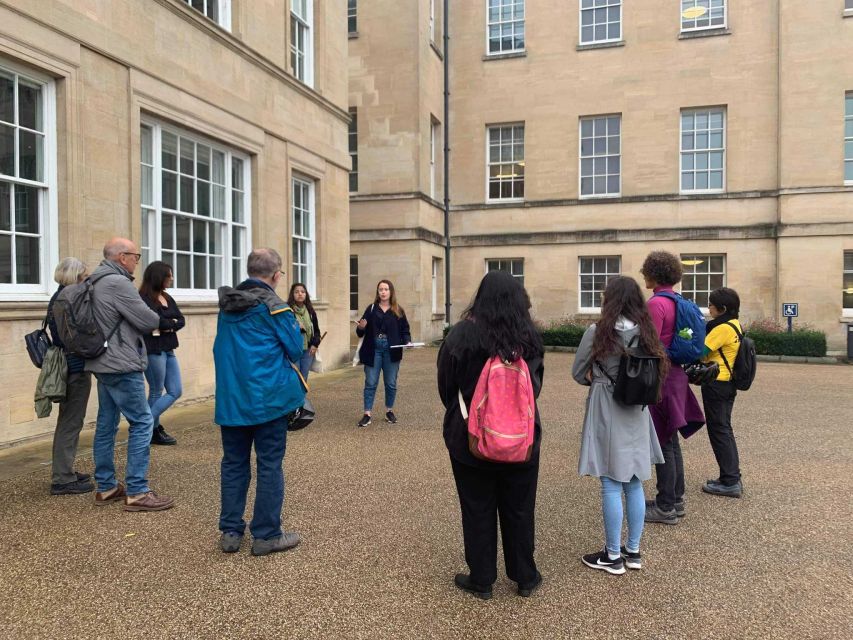
From here, the story moves into medieval epidemic disease. You are not simply asked to memorize dates or names. The guide uses the city’s layout to discuss how disease affected different communities, how people understood contagion, and how authorities tried to manage public health.
That approach is one of the tour’s strengths. Oxford can look like a collection of grand stone buildings, but this walk asks you to think about who lived, studied, worked, and suffered within that setting. Health was never distributed evenly, and the built city offers clues about power, wealth, movement, and access.
The subject can be grim. Plague, illness, and medical inequality are not cheerful holiday topics. Still, the tour is recommended for ages 12 and older, and the focus is educational rather than sensational.
More History Tours in Oxford:
- Oxford: Private City Tour & University Historical Highlights
★ 4.9 · 14 reviews - Oxford: Historic Pubs & Taverns Guided Walking Tour
★ 4.6 · 5 reviews - London: Historic Pubs of Central London Walking Tour
★ 4.9 · 1,065 reviews
New College and the university’s medical authority
The first major stop is New College, reached after a walk of roughly 15 minutes. You will not enter the college, so do not book this tour expecting a standard college interior visit.
Instead, New College helps frame the university’s role in shaping knowledge. The discussion can move from learning and institutional authority to the practical business of studying the human body. The tour looks at cases of dissection and the development of anatomy at Oxford, including the uneasy relationship between scientific research, religious ideas, law, and personal rights.
This part should appeal to you if you enjoy history with a moral question attached. Who could be dissected? Who gave permission? Whose body was treated as a source of knowledge? The walk does not present medicine as a clean march from ignorance to modern science.
A drawback is that the physical stop may feel less satisfying if you want a clearly marked medical site. New College is important here as a setting for the conversation, not as a museum of medical objects.
The Bodleian Quadrangle and the limits of learning
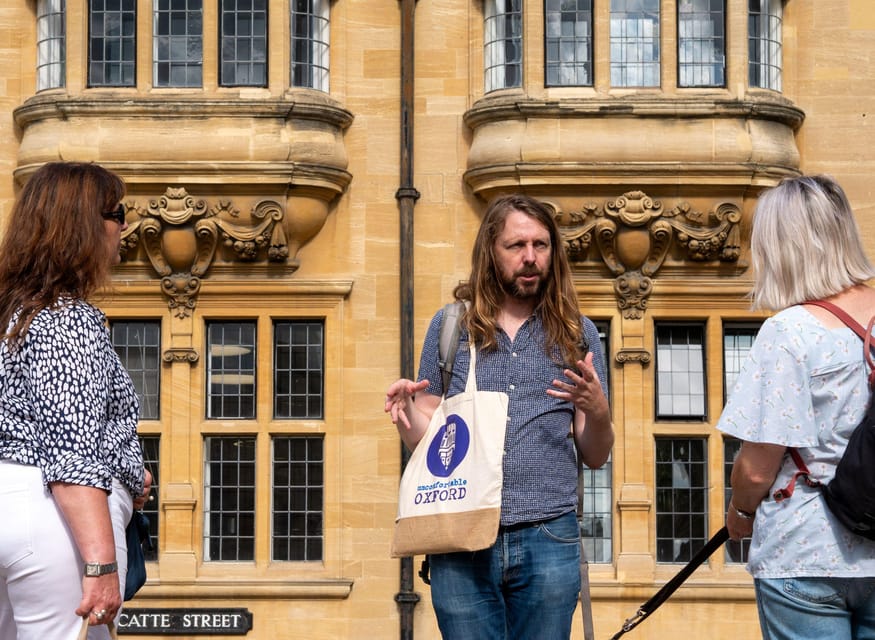
The route continues toward the Bodleian Library, specifically the Bodleian Quadrangle. Again, the tour remains outside. You get the architecture and the setting, but not entry into the library or its collections.
That distinction matters. Oxford’s famous interiors can be a major reason to visit, yet this experience is not a substitute for a library or college tour. Its value comes from interpretation. The guide connects the university’s pursuit of knowledge with the systems that decided which questions were worth asking and which people were suitable subjects for study.
Here, the discussion of medicine widens. You may consider how class, race, gender, and empire shaped medical ideas and access to care. The tour also asks you to look at modern health debates as part of a much longer pattern, not as isolated arguments from the present day.
I find this a useful way to see the Bodleian. The building is not treated only as a photogenic Oxford landmark. It becomes a reminder that knowledge is shaped by institutions, funding, authority, and social assumptions.
Clarendon Building: progress with a price tag
The Clarendon Building is the next stop, after another walk of about 15 minutes. Its grand exterior helps make the point that university power has always been visible in stone, ceremony, and public space.
The medical story here turns toward progress and its costs. The founding of the medical school forms part of the larger account, along with the changing status of anatomy and clinical study. You will hear about the ways institutions promoted new knowledge, while also confronting the people who resisted or paid the price for those changes.
This is where the tour’s title makes sense. Medical history is uncomfortable because improvement often came with arguments over consent and control. Public health measures may protect a population, but they can also limit individual choice. Scientific discovery may help future patients, but the path to it is not always fair.
If you want a short list of famous doctors and inventions, this stop may feel too theoretical. If you want to understand why medical ethics remains difficult, it adds real value.
A handful of other Oxford outings to weigh up
- Oxford: University and City Walking Tour with Alumni Guide
★ 4.7 · 4,429 reviews - Oxford: City and University Tour, including college entry
★ 4.5 · 2,243 reviews - Oxford: Harry Potter Walking Tour Including New College
★ 4.6 · 1,446 reviews - Oxford: University Walking Tour with Christ Church Visit
★ 4.6 · 820 reviews
A pause near the Kings Arms Pub
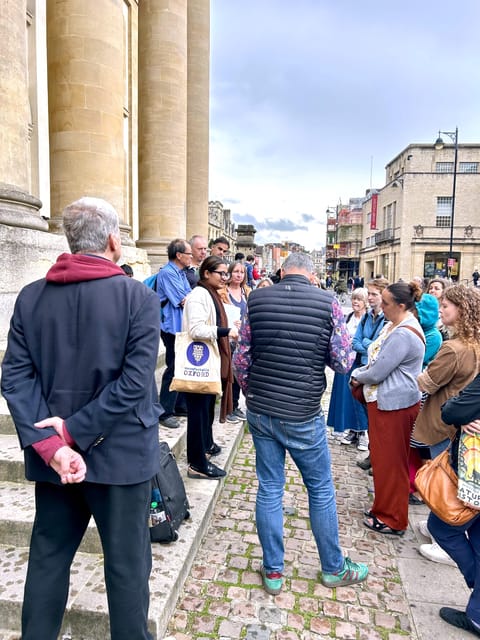
The route includes the Kings Arms Pub, one of the familiar central Oxford landmarks along the walk. The pub is not presented as a medical museum or a major indoor attraction. Think of it as part of the city setting and a useful point in the route’s urban story.
A stop in a working city environment helps keep the tour from becoming an isolated university lecture. Oxford medicine did not happen only in lecture rooms. It affected ordinary people, public spaces, workers, students, and families.
The tour’s discussion of health equity fits naturally here. Access to medical care, exposure to disease, and the ability to resist official policies have never been the same for everyone. You will get more from this section if you are willing to connect grand university history with everyday life.
The Natural History Museum and the study of bodies
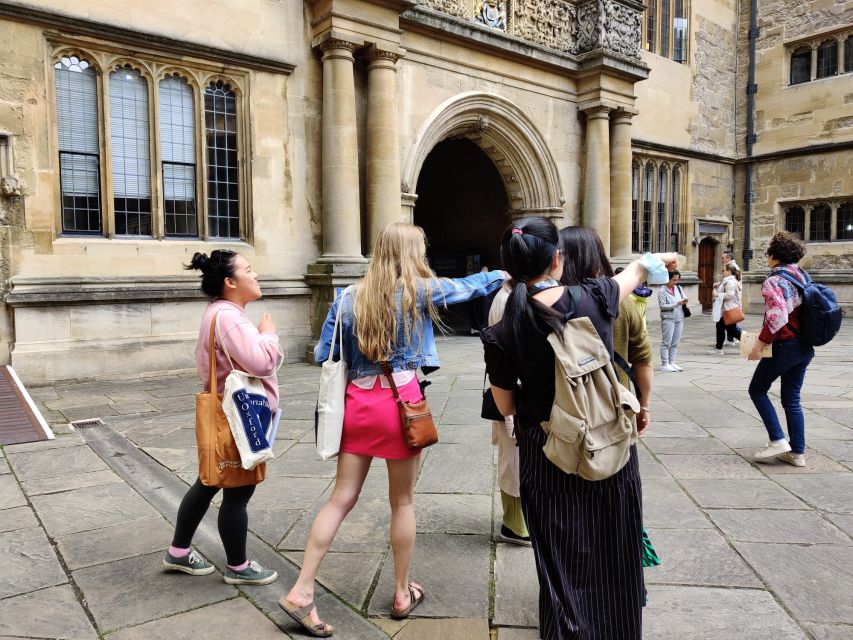
The Oxford University Museum of Natural History provides one of the route’s most promising settings. The walk reaches it after another section of about 15 minutes, and the building offers a strong visual link to scientific classification and the study of the natural world.
You should not assume that this tour includes entry to the museum. The experience is an outdoor walking tour, and the itinerary specifically does not include access to colleges or libraries. The museum’s exterior and location support the discussion rather than replace a museum visit.
This is a good point to think about the relationship between natural history and medicine. Classification can help researchers compare bodies, diseases, and species. It can also carry old assumptions about race and human difference. The guide’s attention to empire, race, class, and gender gives this section a wider frame than a basic history of medical discoveries.
The best guides make these ideas understandable without turning the walk into a string of academic terms. Jonathan was praised for explaining the subject clearly and keeping it interactive. That matters here, since the themes can become dense if presented as a formal lecture.
War Memorial Garden and the public body
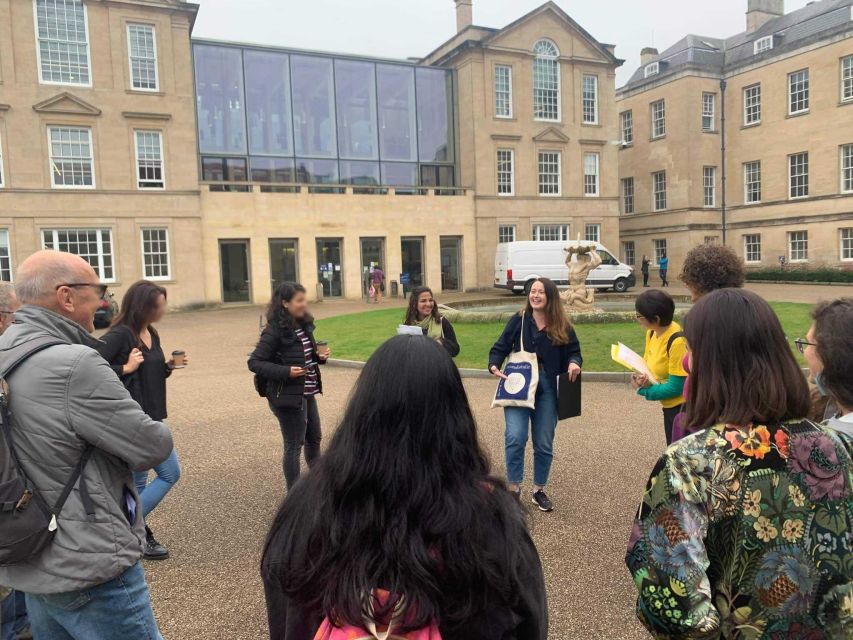
The walk then moves toward the War Memorial Garden. This stop brings questions of death, sacrifice, public memory, and the body into the open.
The connection with medicine is not merely about hospitals or laboratories. War has always affected medical practice, public health, injury care, and ideas about whose bodies are protected or sacrificed. The garden gives the guide a place to discuss the human consequences of political decisions and medical systems.
This part may be especially meaningful if you like tours that connect one subject to a wider civic story. It also shows why the walk covers more than famous medical names. Oxford’s medical history is woven into its public spaces, memorials, institutions, and debates about authority.
You may find the tone serious. There is no promise of comic relief or a quick succession of photo stops. The reward is a more thoughtful understanding of how medicine operates within society.
St Luke’s Chapel and the final discussion
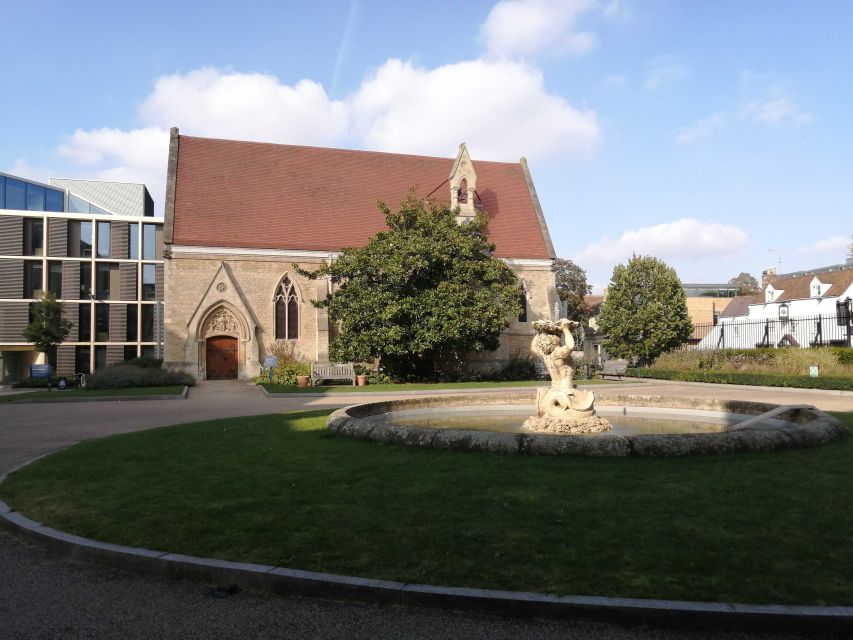
The listed finish is St Luke’s Chapel, near the Radcliffe Observatory Quarter. The route covers about 2 kilometers in all, though the exact order or stopping points can vary slightly by guide and timing.
By the end, the discussion has moved from medieval epidemic disease to the founding of formal medical education, anatomy, public health, and the first trials of penicillin. Penicillin gives the tour a recognizable scientific milestone, but the point is not to treat it as a simple triumph.
Instead, the experience asks you to consider how discoveries reach the public, who benefits, and what ethical questions remain. The final discussion can leave you thinking about present-day medical policy rather than simply checking off a famous invention.
That is the appeal of Uncomfortable Oxford. Its guides are university researchers who complete the company’s formal training program, and the tours combine performance with research. The result should feel more engaging than a classroom talk, although one cold-weather experience felt too much like standing outside for a lecture.
What the 1.5-hour format means for your day
Ninety minutes is a sensible length for this subject. You get a coherent route without giving up half a day, and the distance is manageable for most people who are comfortable walking around central Oxford.
The pace includes several walks of about 15 minutes between key stops. The guide will likely pause for discussion rather than rush from building to building, so allow enough time to listen carefully and cross busy streets.
The tour runs in all weather. Wear a proper rain layer and comfortable shoes, not just something suitable for photographs. Bring water if you need it, and remember that even a mild Oxford day can feel cold when you are standing still.
The route is wheelchair accessible, with mild uneven cobblestones and busy streets on weekends. Places to sit are available throughout. If you use a wheelchair or have limited stamina, a private or small-group booking may make it easier to set the pace, though the supplied details do not promise a different route.
Is $29 good value?
At $29 per person, this is reasonably priced for a 1.5-hour specialist walk led by a university researcher. You are paying for interpretation and access to a focused subject, not for admission to buildings or a collection of medical objects.
I would compare it with a standard Oxford walking tour. A general tour gives you the city’s big landmarks, college traditions, and famous characters. This one gives you a particular lens: disease, anatomy, public policy, bodily rights, and the social history of medicine.
The value depends on your expectations. If you want to see William Osler’s house or the original penicillin culture, this is not that experience. Those were specifically hoped-for sights by one participant but are not part of the stated route.
On the other hand, if you enjoy serious history and want a guide who can explain why medicine developed unevenly, $29 is fair. The strongest feedback praises the guides for being informative, interactive, clear, and enthusiastic. That combination is important because the subject can otherwise feel like a university seminar held on a pavement.
Who should book this Oxford history walk?
I would choose this tour if you are interested in:
- The history of disease and public health
- Medical ethics and bodily rights
- The role of universities in scientific progress
- Race, class, gender, empire, and health equity
- Oxford beyond the usual college checklist
- A small-group or private experience with a research-trained guide
It is a good match for older teenagers, university students, teachers, health professionals, and adults who like social history. The recommended age is 12 and older, but younger children may find the discussion too serious or abstract.
I would skip it if your main aim is to enter historic buildings, see original medical objects, or hear a light overview of Oxford. The tour is primarily an outdoor conversation supported by architecture and place.
Should you book the History of Medicine Tour?
Book it if you want Oxford history with a sharp ethical edge. You will hear about plague, anatomy, medical education, penicillin, and public health, but you will also be asked who had power, who was left out, and what medical progress cost.
Go in knowing that the route does not enter colleges, libraries, or museums. Dress for rain, expect about 2 kilometers of walking, and choose a private or small group if a slower pace or more questions would help.
For a curious adult or teenager, I think this is a worthwhile specialist tour. It is less suitable for a relaxed sightseeing afternoon, especially in cold rain. The choice comes down to one question: do you want Oxford’s medical story presented as a list of breakthroughs, or as an ongoing argument about people and power?
FAQ
Where does the History of Medicine Tour start?
Meet your guide under the Bridge of Sighs, also known as Hertford Bridge, in Oxford.
How will I recognize the guide?
The guide will wear a bright blue vest and carry an Uncomfortable Oxford branded tote bag.
Where does the tour finish?
The listed finishing point is St Luke’s Chapel.
How long is the tour?
The tour lasts 1.5 hours.
How far does the tour cover?
The walk covers about 2 kilometers.
Is the tour conducted in English?
Yes. The live tour guide speaks English.
Does the tour enter Oxford colleges or libraries?
No. The tour does not go inside any colleges or libraries.
Is the tour wheelchair accessible?
Yes, though you should expect mild uneven cobblestones and busy streets on weekends. Places to sit are available throughout the route.
What should I wear?
The tour runs in all weather, so dress appropriately for rain, cold, or other conditions. Comfortable walking shoes are a sensible choice.
Is the tour suitable for children?
The recommended age is 12 and older.
Can I book a private or small-group tour?
Yes. Private and small-group options are available.
Can I cancel the booking?
You can cancel up to 24 hours in advance for a full refund. Reserve now and pay later is also available.
New listings around Oxford
- Oxford: CS Lewis and JRR Tolkien Walking Tour★ 4.3 · 3 reviews
- Oxford: City & University Tour with College entry included★ 5.0 · 4 reviews
- Oxford: River Cruise and 6-Course Tasting at The Folly★ 4.7 · 4 reviews
- Oxford Food & Drink Tasting & Sightseeing Guided Tour★ 4.4 · 5 reviews
- Oxford: Historic Pubs & Taverns Guided Walking Tour★ 4.6 · 5 reviews
- Oxford: City Tour & Exploration Game★ 3.9 · 5 reviews
- Undiscovered Cotswolds Private Driving Tour★ 5.0 · 5 reviews
- Oxford: Haunted Oxford Tour – by Uncomfortable Oxford™★ 4.5 · 5 reviews
Oxford Tours, compared.

University and City Walking Tour with Alumni Guide
Read our review →
City and University Tour, including college entry
Read our review →
Harry Potter Walking Tour Including New College
Read our review →
University Walking Tour with Christ Church Visit
Read our review →
Harry Potter Insights Divinity School Group Tour
Read our review →
Morse, Lewis and Endeavour Walking Tour of Oxford
Read our review →

Browse the lists this tour appears in