

Reviewed · OXFORD TOURS
Oxford: The Original Uncomfortable Oxford™ Tour
Oxford’s grand buildings tell only part of the story. This 1.5-hour walk asks who gained power here, who was left out, and how the university shaped the city and the wider world. You’ll hear about empire, race, class, and gender while passing some of Oxford’s most familiar sights.
I like the research-led guides, who are trained through the Uncomfortable Oxford program rather than simply reciting dates. I also like the discussion format: guide Jonathan, praised for his patience, and other guides may ask questions and draw you into the subject. The main caution is practical: one group found a guide hard to hear and too willing to pause for long audience discussions, so group size and guide style can affect the experience.
Key points to know before you book

- Oxford beyond the postcard: The walk uses famous buildings to explain power, inequality, empire, and institutional change.
- University researchers lead the way: Guides complete specialist Uncomfortable Oxford training and bring academic context to the streets.
- A compact central route: You walk about 2 kilometres in 90 minutes, with cobblestones, crossings, and outdoor stops.
- No college interiors: You see the entrances and surrounding streets, but this is not an inside tour of Oxford colleges.
- Best for curious families and history fans: The recommended minimum age is 12, and the format suits people who enjoy questions and discussion.
- A useful follow-up reading list: Your ticket includes access to a reading list prepared by University of Oxford experts.
Why this Oxford walk looks past the spires
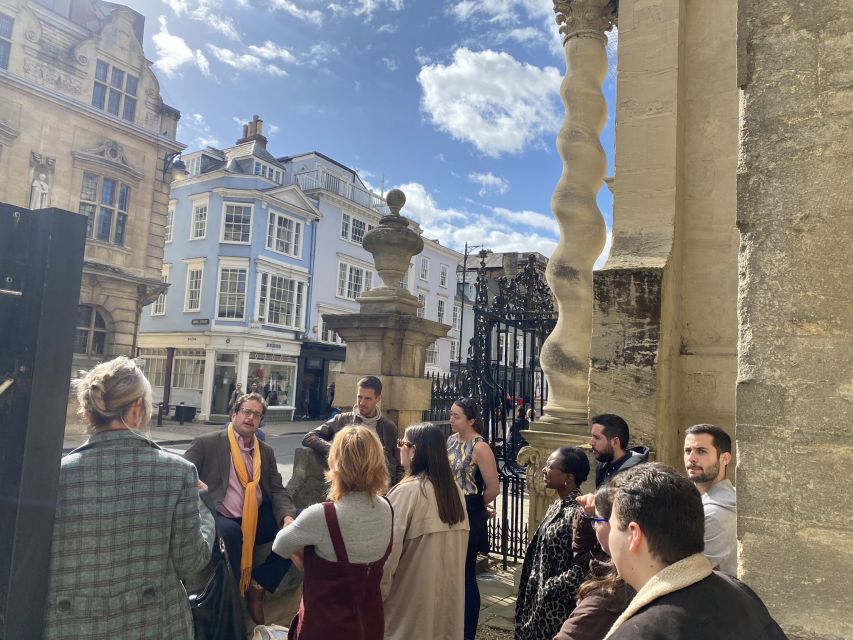
Many first-time visits to Oxford focus on old stone, famous scholars, and college gates. This tour gives you those sights, but it does not leave them floating free of politics. The guide connects the university’s buildings and traditions with questions about money, status, race, gender, and Britain’s imperial past.
That approach matters because Oxford can otherwise feel like a perfectly preserved film set. The university and the town have depended on each other, but they have not always shared power equally. The walk explains the long-running tension between town and gown, meaning the people of Oxford and the university community.
I find this most useful early in a visit. You get a quick orientation to the city centre, then a set of questions that can sharpen what you notice later. A statue, library, or college wall becomes part of a larger argument about who built institutions, who benefited from them, and how their influence continues today.
The tone is serious, but the tour is designed to be engaging rather than gloomy. You are not simply listening to a lecture. Guides may ask you to consider a historical choice or compare past attitudes with the present. That works especially well if you enjoy an active conversation instead of a guide speaking without pause.
A handful of other Oxford outings to weigh up
- Oxford: University and City Walking Tour with Alumni Guide
★ 4.7 · 4,429 reviews - Oxford: City and University Tour, including college entry
★ 4.5 · 2,243 reviews - Oxford: Harry Potter Walking Tour Including New College
★ 4.6 · 1,446 reviews
Starting at Carfax Tower or Fantastea
You may begin at Carfax Tower or at Fantastea, a tea shop offering teas from around the world. The exact meeting point depends on the option you book, so check it carefully before setting off. Carfax Tower is a clear central reference point, but the two starting choices mean you should allow time to find the correct one.
The tour then moves through central Oxford on foot. The route covers roughly 2 kilometres, which is manageable for most people but not entirely effortless. You will cross streets, walk over some cobblestones, and spend much of the time outdoors.
Wear comfortable shoes and bring clothing suited to the weather. The walk operates in rain as well as fair weather. There is no promise of shelter at every stop, so a waterproof layer is a sensible part of your Oxford packing list.
Carfax Tower and the town and gown divide

Carfax Tower begins the route with a useful city-centre anchor. From here, the guide sets up the relationship between Oxford as a town and Oxford as a university. That distinction is central to the tour, since the university has long held major economic, political, and cultural power within the city.
Expect about 10 minutes here. The value is less about the tower alone than about the framework the guide builds around it. You begin to see Oxford as a place where an academic institution and an ordinary city occupy the same streets, sometimes uneasily.
This is also a good point to listen closely for the guide’s style. One booking group found the discussion format thought-provoking, while another felt that extended audience contributions made it harder to hear. If the group is large, stay close to the guide and speak up if you miss a point.
University Church and Oriel College
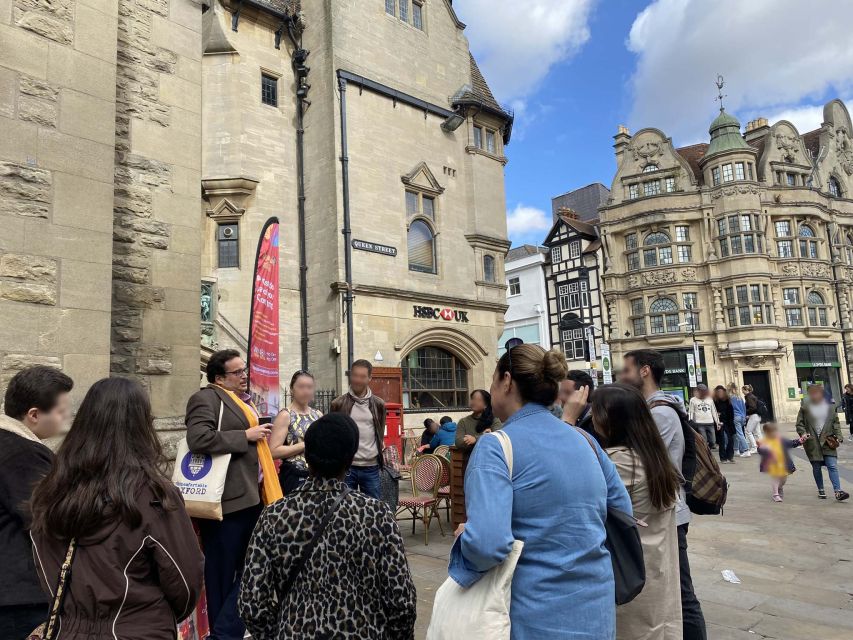
The University Church of St Mary the Virgin receives about five minutes. Its connection with the university makes it a natural stop for explaining how religious, academic, and civic authority overlapped in Oxford’s past.
The short timing means you will not receive a full architectural tour. Instead, the church serves the wider story of institutions and influence. That is a recurring feature of this experience: each stop is a piece of an argument rather than an isolated attraction.
The route continues to Oriel College for around 10 minutes. Oriel is one of the colleges named in the walk, but you should not expect to go inside. The tour remains on public streets and outdoor spaces, using college fronts and city views as prompts for discussion.
That limitation is worth knowing. If your main goal is to see college courtyards, dining halls, or libraries from within, book a separate college visit. Here, the focus is on the meaning of the institution and its place in Oxford, not on interior rooms.
Elsewhere in Oxford, a change of pace:
- Oxford: University Walking Tour with Christ Church Visit
★ 4.6 · 820 reviews - Oxford: Harry Potter Insights Divinity School Group Tour
★ 4.6 · 783 reviews - Morse, Lewis and Endeavour Walking Tour of Oxford
★ 4.8 · 710 reviews - Oxford: City Sightseeing Hop-On Hop-Off Bus Tour
★ 4.5 · 706 reviews
All Souls College and the power of an Oxford institution
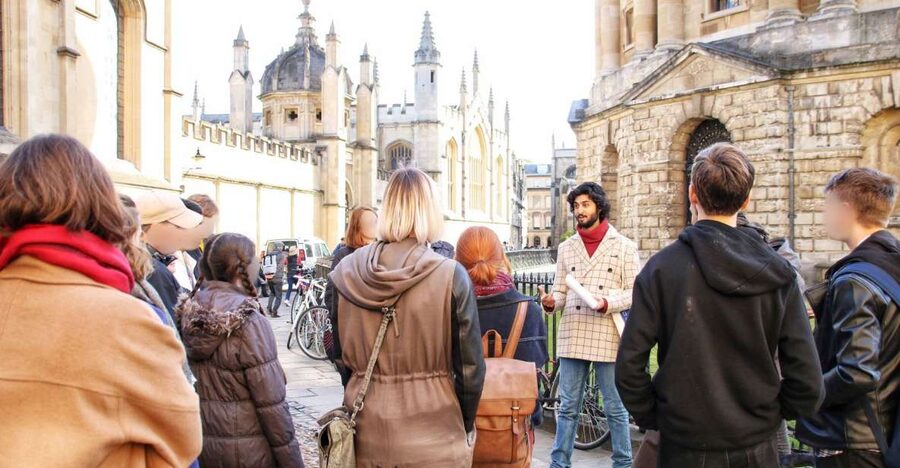
All Souls College gets another 10-minute stop. Even from outside, its setting gives the guide a chance to discuss how Oxford colleges acquire status and shape public life. The discussion may connect the college system with class and access, themes that run through the whole walk.
This is one of the places where the tour moves beyond a standard list of famous names. You are encouraged to consider who could enter these institutions, who funded them, and how ideas formed in Oxford travelled far beyond the city.
The guide’s academic background helps here, but the experience is not advertised as a specialist seminar. You do not need prior knowledge of Oxford. The material is intended as an introduction, with enough substance to send history fans toward further reading.
The Bodleian Library and the reach of ideas
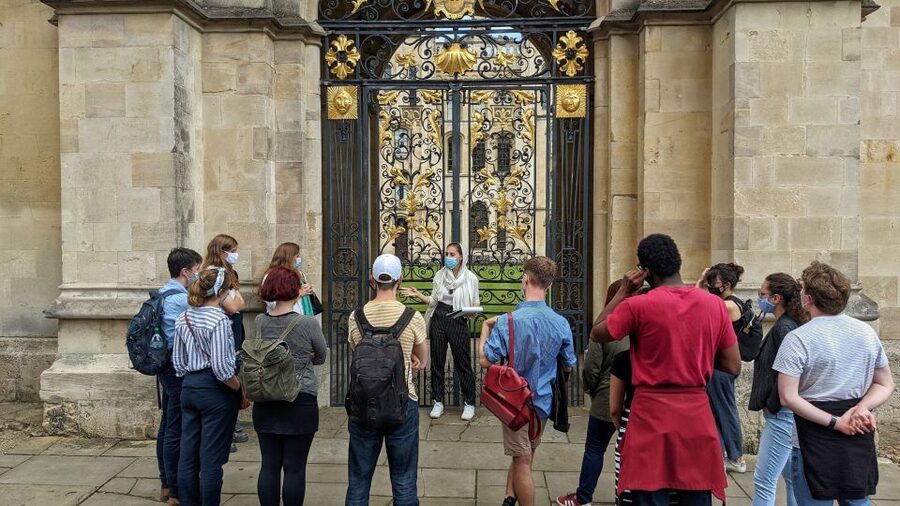
The Bodleian Library receives about 15 minutes, the longest stop on the route. Its fame makes it an obvious Oxford highlight, but the tour uses it for more than a photograph.
Libraries represent authority over knowledge: what gets collected, preserved, taught, and passed on. At the Bodleian, the guide can place Oxford’s academic influence alongside questions about empire, race, and whose work has traditionally received recognition.
You will remain outside. This is important for your expectations, since the word Bodleian can suggest a library interior visit. You will see the building and hear its place in the university’s story, but entry is not part of this experience.
The stop is also a good reminder that impressive institutions can have complicated foundations. The tour does not ask you to dismiss Oxford’s achievements. It asks you to examine them with more than one measure.
The Sheldonian Theatre and official university ceremony
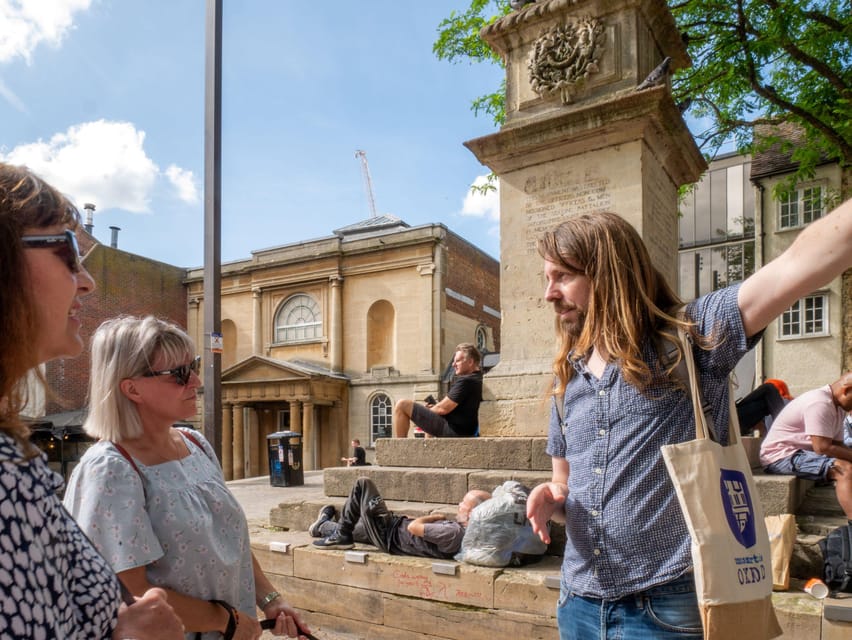
The Sheldonian Theatre is scheduled for about 10 minutes. Its formal setting helps explain how the university presents itself through ceremony, architecture, and public ritual.
The guide may use this stop to consider who gets honoured, who is visible, and which traditions are treated as permanent. Those questions connect directly with the tour’s attention to gender, class, and changing ideas about equality.
Again, you should expect an outdoor explanation rather than a performance or interior visit. The appeal is in seeing a familiar Oxford landmark with a more critical set of questions in mind.
For families with older children, this can be a useful point to keep the conversation grounded. The subject matter is serious, but ages 12 and up are welcome. Parents should decide if their children are comfortable discussing discrimination, inequality, and Britain’s imperial past.
Balliol College and changing access

Balliol College receives around 10 minutes. Like Oriel and All Souls, it is viewed from the route rather than entered. The college setting gives the guide another chance to discuss access to education and the social systems surrounding Oxford.
This is where the distinction between seeing Oxford and understanding Oxford becomes clear. A conventional walk might tell you when a college was founded or which famous person studied there. This one asks what the college represented, who could participate, and how its influence extended beyond its walls.
The format works best if you are ready to think aloud. One particularly positive account described a guide who asked questions instead of simply talking at the group. That evidence-based, conversational method is a major reason to choose this tour over a purely sightseeing walk.
It can also slow the pace. If you prefer a brisk route with constant movement, the pauses may feel long. The tour’s purpose is discussion, not maximum sightseeing per minute.
The Faculty of History and Oxford’s own record

The Faculty of History is allotted about 10 minutes. This stop brings the subject close to home. The university does not only study history; it also has its own record of deciding which histories matter and how they are taught.
Expect the guide to connect academic study with real institutions and modern debates. The themes of race, class, gender, and empire are not treated as distant topics. They are used to ask how the past still affects public life and university culture.
For me, this is one of the strongest reasons to take the walk with a trained researcher. The guide can present historical claims as evidence-based discussion rather than simple opinion. That does not mean every question has one easy answer. It means you are shown how to think about the evidence.
The tour has a reported rating of 4.6 from 21 ratings, with several very positive responses praising the academic lead and the desire to keep learning afterward. The included reading list is useful here. It lets you continue with the subjects that catch your interest instead of trying to absorb everything on the pavement.
Bonn Square and a useful finish
The walk ends at Bonn Square after about 10 minutes there. This gives the tour a change of setting from the university quarter and returns attention to Oxford as a lived-in city.
Ending here reinforces the town and gown theme. The university is not an isolated collection of colleges. It occupies a city with its own residents, public spaces, pressures, and identity.
The finish is practical, too. Bonn Square is a central place from which to continue exploring, though the supplied details do not specify onward directions or nearby stops. You can use the end of the walk to review the reading list, ask a final question, or continue seeing Oxford with the tour’s themes in mind.
What $29 buys you
At $29 per person, this is reasonably priced for a 90-minute guided walk led by a researcher trained in a specialist program. You are paying for interpretation and discussion rather than admission tickets, since the route does not include college interiors or paid entries.
The value is strongest if you want context. If you only want quick facts and exterior photographs, a cheaper general orientation walk may be enough. If you want to understand how Oxford gained authority and how its institutions connect to empire and inequality, the price is easier to justify.
Private or small-group options are available. These may suit you if hearing clearly and asking questions matter, though the supplied information does not give separate prices or group limits. Confirm the exact option before paying.
Free cancellation up to 24 hours before the start and reserve-now, pay-later booking add useful flexibility. One serious service problem did occur when a scheduled guide failed to arrive because dates had been mixed up. The company later apologised and tried to make amends, but if your Oxford stay is short, confirm the meeting details and start time in advance.
Who will get the most from this walk
I would choose this for history fans, cultural tourism, and anyone who wants Oxford presented with more honesty than ceremony alone can offer. It also suits families with teenagers aged 12 and up who enjoy asking why institutions work as they do.
The tour is less suitable if you mainly want indoor access to colleges, a rapid photo stop at every landmark, or a light introduction without difficult subjects. The material covers empire, race, class, and gender, so you should expect thoughtful discussion rather than a gentle sightseeing script.
Accessibility is taken seriously. The walk is wheelchair accessible, guides receive accessibility training, and the itinerary or content can be adapted for participants of different abilities. Still, the route includes street crossings and cobblestones, so contact the provider ahead of time to discuss your particular needs.
Should you book Uncomfortable Oxford?
Book it if you want to see Oxford’s famous buildings while asking harder questions about power, privilege, and the university’s global reach. The strongest parts are the trained research guides, the question-led format, and the way each landmark supports a larger story.
Think twice if your priority is entering colleges or hearing a fast, tightly scripted commentary. Stay near the guide, check the meeting point, and be ready for pauses where the group may discuss the subject. For $29, this is a good-value introduction to Oxford’s contested past, provided you want an active history walk rather than a simple parade of spires.
FAQ
How long does the Uncomfortable Oxford tour last?
The tour lasts 1.5 hours.
How much walking is involved?
The route covers about 2 kilometres and includes street crossings and some cobblestones.
Does the tour go inside Oxford colleges?
No. The itinerary visits college exteriors and public streets, but it does not include entry into the colleges.
What language is the tour conducted in?
The tour is conducted in English with a live guide.
What sights are included?
Stops include Carfax Tower, the University Church of St Mary the Virgin, Oriel College, All Souls College, the Bodleian Library, the Sheldonian Theatre, Balliol College, the Faculty of History, and Bonn Square.
Is the tour suitable for children?
It is described as family-friendly and suitable for ages 12 and up.
What do I receive after the tour?
You receive an Uncomfortable Oxford souvenir sticker and access to a reading list compiled by University of Oxford experts.
New listings around Oxford
- Oxford: City and Universities Express Tour & Audio Guide★ 4.5 · 18 reviews
- Oxford: MINI Factory Tour – Go Behind the Scenes★ 5.0 · 22 reviews
- Oxford: Private Walking Tour with University Alumni Guide★ 4.9 · 23 reviews
- From London: Oxford, Cotswolds & Country Pub Lunch★ 4.9 · 25 reviews
- Oxford: University Tour for Prospective Students★ 4.9 · 26 reviews
- Oxford: Harry Potter Tour with New College & Divinity School★ 4.6 · 28 reviews
- Oxford: Alumni-Led Walking & Punting Tour w/opt New College★ 4.3 · 30 reviews
- Oxford Official Ghost Tour★ 4.3 · 41 reviews
Oxford Tours, compared.

University and City Walking Tour with Alumni Guide
Read our review →
City and University Tour, including college entry
Read our review →
Harry Potter Walking Tour Including New College
Read our review →
University Walking Tour with Christ Church Visit
Read our review →
Harry Potter Insights Divinity School Group Tour
Read our review →
Morse, Lewis and Endeavour Walking Tour of Oxford
Read our review →

Browse the lists this tour appears in