
Reviewed · BRIGHTON TOURS
Brighton: Royal Pavilion Admission Ticket
Brighton’s Royal Pavilion is a royal palace unlike any other in Britain. Its Indian-style exterior and Chinese-inspired interiors lead to rooms crowded with dragons, chandeliers, lacquerwork, vivid colour, and extravagant detail. I especially like the restored 1823 interiors and the way the visit explains how the building later became a military hospital during the First World War.
I also like the helpful room attendants, who add human detail beyond the signs, and the freedom to move at your own pace rather than follow a fixed tour. The main drawback is practical: there is no passenger lift, so visitors who cannot manage stairs will need to use the first-floor video in the AV room.
Key points to know before you go
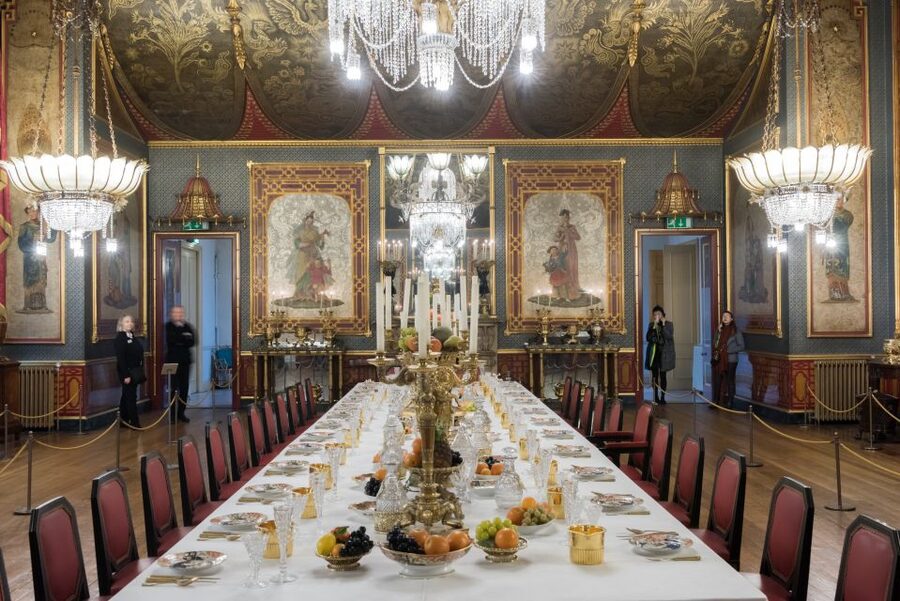
- The Banqueting Room is the visual high point: Look up at the elaborate ceiling, chandeliers, and decoration that show the Pavilion at its most theatrical.
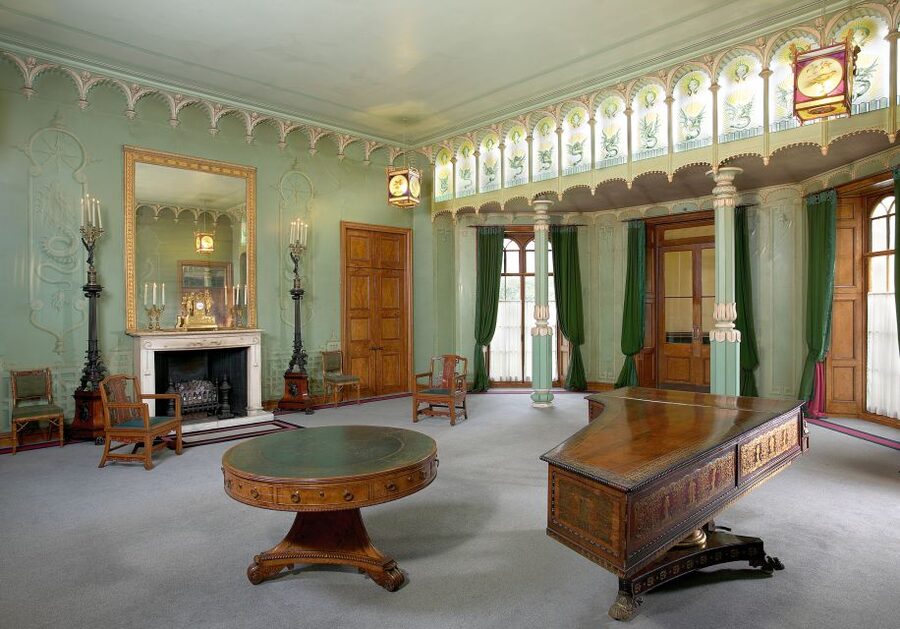
- The Saloon has recently been restored: It gives you a strong sense of the palace as royal guests would have encountered it in the 1820s.
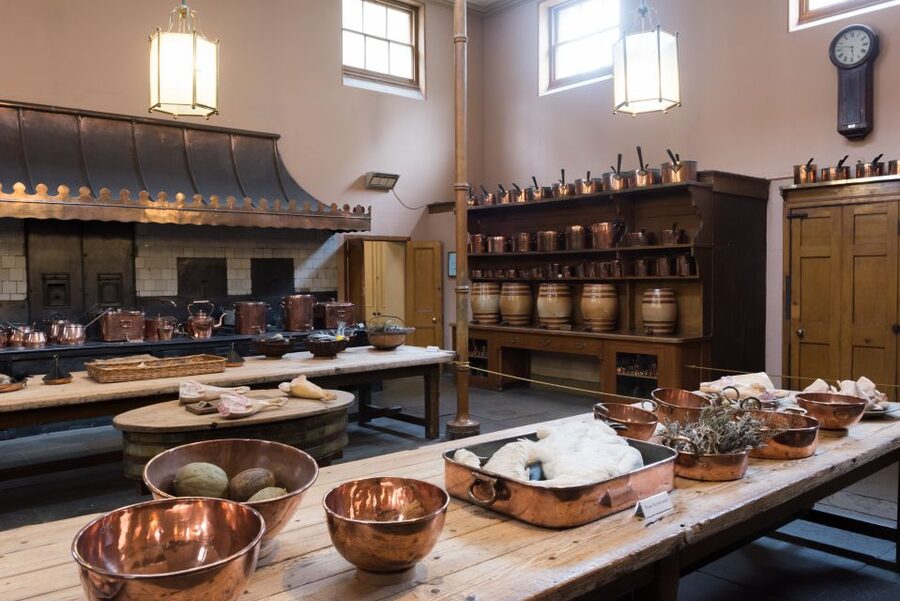
- The Great Kitchen adds working detail: This is where the grand entertaining becomes a story about heat, labour, and difficult conditions for the palace staff.
- The building has a second life as a hospital: Displays explain its use for Indian soldiers during the First World War.
- The gardens provide breathing space: Admission includes the grounds, a useful pause after the densely decorated rooms.
- Allow time for the stair issue: There is no lift, and mobility scooters and non-folding wheelchairs cannot enter the building.
Why Brighton’s Royal Pavilion feels so different
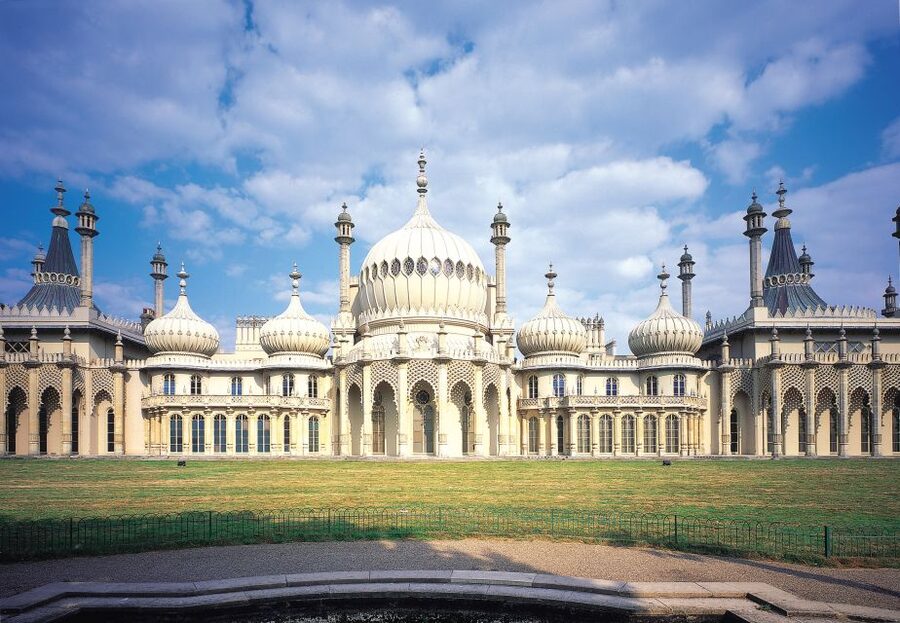
Many British royal residences rely on symmetry, restraint, and rows of formal portraits. The Royal Pavilion takes another route. Built for the future George IV and completed by architect John Nash, it uses an exotic fantasy of India on the outside and Chinese-inspired decoration within.
That difference is the point. You do not come here for a quiet country house or a neatly ordered royal collection. You come to see a building where every room tries to outdo the last one. The effect can be almost overwhelming, in the best sense, especially if you enjoy architecture, interior design, or buildings with a strong personality.
The palace has also had practical lives beyond royal entertainment. It became a civic building and served as a hospital for Indian soldiers during the First World War. That history gives the visit more weight. You see the glittering rooms, then learn how the same building was adapted for a very different purpose.
A handful of other Brighton outings to weigh up
- From Brighton: Seven Sisters and South Downs Tour
★ 4.9 · 746 reviews - Brighton: City Sightseeing Hop-On Hop-Off Bus Tour
★ 4.5 · 352 reviews - Brighton: Zip Wire Experience Ticket
★ 4.5 · 260 reviews
Entering through the Pavilion Garden
The entrance is through the Royal Pavilion Garden, with access from Pavilion Buildings, New Road, or Church Street. This is a convenient central Brighton location, and starting in the garden gives you a useful first view of the building before you go inside.
Take a moment outside if the weather is kind. The grounds offer a calmer setting than the rooms themselves, and admission includes access for the full one-day validity period. You can visit the interior, step outside for a break, then return according to the arrangements in place on the day.
The gardens are not the main reason to buy this ticket, but they make the visit feel less compressed. After the strong colours, crowded ornament, and narrow route through parts of the palace, a walk outside helps you reset your eyes.
The Banqueting Room and Music Room
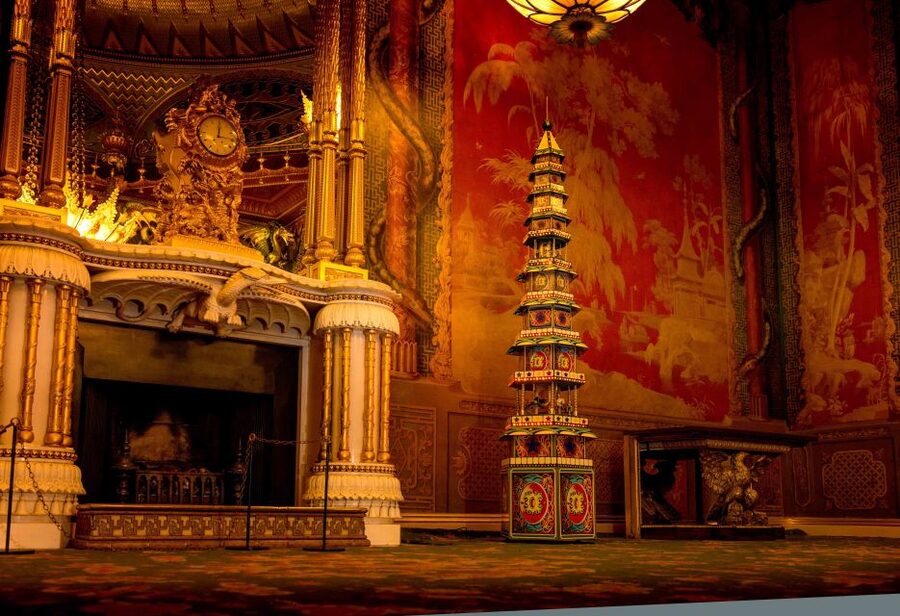
The ground-floor staterooms are the heart of the visit. Start with the Banqueting Room, one of the spaces most likely to make you stop in the doorway. The scale, ceiling decoration, chandeliers, furnishings, and objects on display show George IV’s taste for spectacle.
I would not rush through this room. Look above eye level, then return to the furniture and smaller decorative details. The Pavilion rewards slow looking because the decoration is not limited to one obvious feature. You may notice something new each time you shift your attention from the ceiling to the walls and objects.
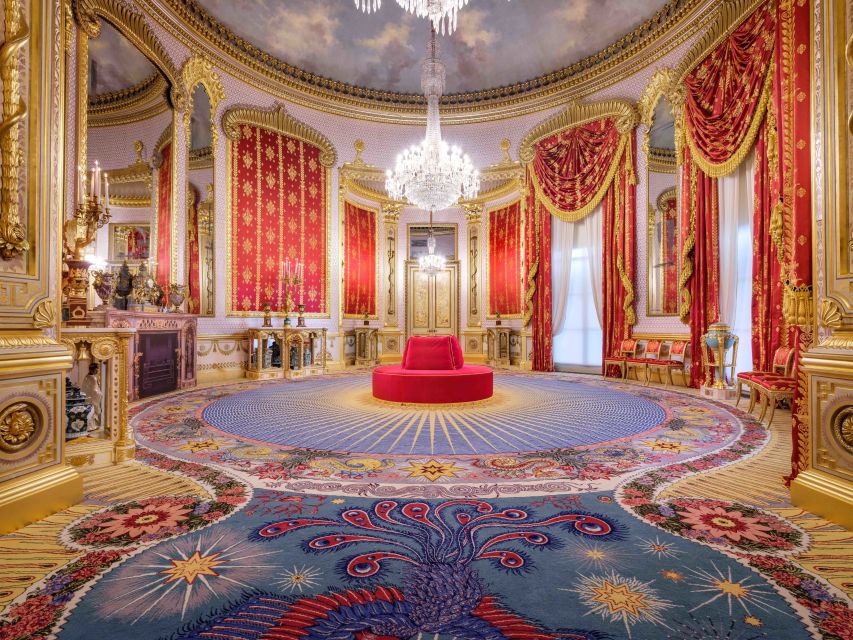
The Music Room brings a different kind of drama. It continues the Chinese-inspired theme and gives you another chance to see how the decorative scheme works as a complete setting rather than as a collection of isolated antiques. The audio guide can help explain the rooms and their furnishings, while attendants stationed inside can add information and answer questions.
The human help matters here. Several attendants are placed around the rooms, and staff member Pav has been singled out for particularly useful historical explanations. You should feel free to ask questions rather than treating the attendants as silent guards.
The restored Saloon and the royal route upstairs
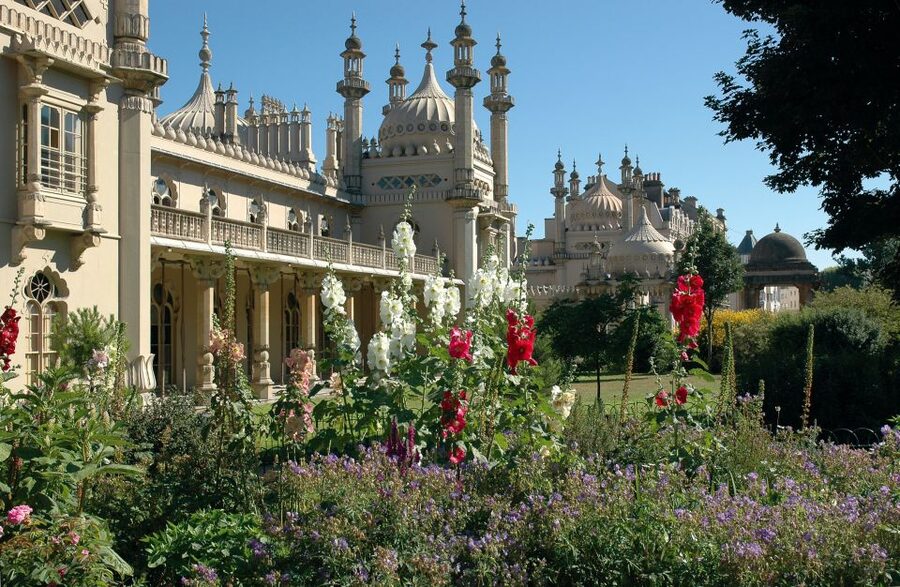
The recently restored Saloon is another major stop. Restoration work continues in parts of the Pavilion, but the restored areas show why careful conservation matters. You get a clearer sense of how the palace was meant to look, rather than seeing only a faded or partially interpreted version of the rooms.
The route then takes you upstairs to further rooms, including Queen Victoria’s bedroom. This section helps balance the public splendour of the entertaining rooms with more private royal spaces. It is also where the lack of a lift becomes important.
There is no passenger lift in the building. If you cannot climb stairs, the first-floor rooms can be seen through a video in the AV room, but that is not the same as standing inside the spaces. Some manual wheelchairs may be available on arrival, though they cannot be reserved in advance. Mobility scooters and non-folding wheelchairs are not allowed inside.
The Pavilion is wheelchair accessible in a limited, practical sense, but you should plan around these restrictions. Contacting the venue before your visit may help you understand the current arrangements, while the official conditions make clear that the upper-floor video is the alternative for visitors unable to use the stairs.
Elsewhere in Brighton, a change of pace:
- From Brighton: Seven Sisters Boat Tour
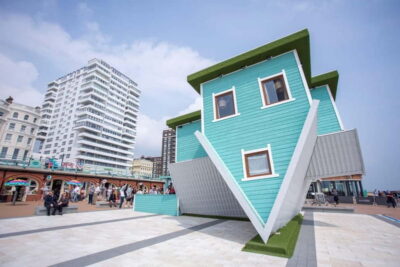
★ 4.9 · 169 reviews - Brighton: Upside Down House Entry Ticket
★ 4.3 · 138 reviews - Brighton City Bike Tour
★ 4.9 · 106 reviews - From Brighton: Stonehenge and Bath Full-Day Trip
★ 4.7 · 87 reviews
The Great Kitchen explains the work behind the show
The Great Kitchen is one of the most useful stops because it takes you away from royal display and toward daily operation. A palace filled with large meals and elaborate entertaining depended on staff working in difficult conditions, especially around heat.
A room attendant in the kitchen has been praised for explaining how the staff worked in extreme temperatures. That sort of detail changes how you read the rest of the Pavilion. The Banqueting Room may look effortless, but the kitchen reminds you that every grand dinner required planning, heat, cleaning, and a large workforce.
If you are visiting with children, this room can be an especially good counterpoint to the glittering staterooms. The dragons and chandeliers catch the eye, but the kitchen gives you a more grounded question to discuss: how did people actually make this royal lifestyle function?
The First World War hospital story
The Royal Pavilion’s hospital chapter is easy to overlook if you focus only on the decoration, but it is an important part of the visit. During the First World War, the building was used as a military hospital for Indian soldiers.
This history broadens the Pavilion beyond a story about one extravagant monarch. The rooms were not frozen in 1823. Over time, the building changed purpose and served the city and the wider war effort. Look for the information about this period as you move through the visit, especially if you want to understand how a royal residence fitted into Brighton’s civic life.
The contrast is striking. One part of the building reflects private royal entertainment, while another chapter concerns wounded soldiers far from home. That change in use is one reason the Pavilion deserves more than a quick photo from outside.
How much time should you allow?
The ticket is valid for one day, so you are not tied to a short entry slot or a fixed guided schedule. The visit itself is self-paced, and you can spend longer in the rooms that interest you most.
I would allow at least a couple of hours if you want to read the displays, listen to the audio guide, speak with attendants, see the main rooms, and walk through the gardens. You can see the palace faster, but doing so would reduce it to a sequence of colourful rooms. The building is far more rewarding when you pause to notice the workmanship and understand its changing uses.
Crowding can affect the pace. One visitor reported that a large school exchange group made access to some rooms difficult for a time. This is not a reason to avoid the Pavilion, but a quieter visit may be more comfortable if you can choose your timing. The palace has also been enjoyed during quieter periods, including the Christmas shopping season.
Price, ticket value, and what you receive
At $26 per person, this is not a bargain attraction in the sense of a quick, low-cost stop. It is good value if you are willing to give the Pavilion real time. Your ticket covers one day of admission, the ground-floor staterooms, upstairs rooms where accessible, the Great Kitchen, the gardens, and the historical interpretation of the building’s hospital years.
The value comes from the variety. You are not paying only to see an ornate palace interior. You also get the architecture, restored rooms, royal objects, staff explanations, the gardens, and a building with a long civic and military story.
The ticket is especially worthwhile for anyone already spending a day in Brighton. The Pavilion is distinctive enough to provide something you are unlikely to find in another British city, and the admission price is reasonable compared with the amount of material on view. If you only want exterior photographs, you do not need this ticket. If you want to understand why the building is so famous, going inside is essential.
Free cancellation up to 24 hours before the visit and the option to reserve now and pay later are useful if your Brighton plans are still changing. The ticket is a day pass, not a timed guided tour.
Practical restrictions that affect your visit
You cannot bring cameras, food, drinks, luggage, or large bags inside. Pets are not permitted, although assistance dogs are allowed. The camera rule is worth noting because the interiors are unusually photogenic, but you will need to experience and remember the rooms without taking photographs.
Children under 14 must be accompanied by someone over 16. That makes the Pavilion suitable for families, but younger children may need help taking in the historical detail. The dragons, colours, chandeliers, and unusual architecture offer plenty to spot, while the audio guide and room attendants can provide more substance for older children.
The site is wheelchair accessible with important limits. Non-folding wheelchairs and mobility scooters cannot enter, and manual wheelchairs available on arrival cannot be pre-booked. Visitors unable to climb stairs can use the first-floor AV presentation.
Facilities are functional rather than a major part of the visit. The cafe has been appreciated for its food, and the gift shop carries a wide range of good-quality items. Toilets have been described as clean and usable, though they may feel less polished than the palace itself.
Who will enjoy the Royal Pavilion most?
I would choose this admission for anyone interested in unusual architecture, interior design, royal history, restoration, or Brighton’s civic past. It also works well for a birthday outing, a family visit, or a rainy-day plan when the seaside is less inviting.
You do not need to be an expert in royal history. The rooms are visually strong enough to hold your attention, and the audio guide and attendants make the story easier to follow. If you like stately homes but find many of them too similar, the Pavilion offers a welcome change.
It may not suit you if you dislike ornate interiors, cannot manage stairs and want full physical access to the upper floor, or mainly want a photography stop. The no-camera rule is firm in the current visitor information, and the building can become awkward to move through when school groups arrive.
Should you book Brighton’s Royal Pavilion?
Yes, if you want to see Brighton’s most unusual historic building from the inside. The Banqueting Room, Music Room, restored Saloon, Great Kitchen, and Queen Victoria’s bedroom provide plenty to see, while the First World War hospital story gives the visit a useful historical dimension.
I would book it as a half-day anchor for a Brighton visit rather than squeeze it into a rushed hour. Choose a quieter time if possible, arrive ready to leave large bags and cameras behind, and plan for stairs. At $26, it earns its price through the quality of the rooms, the restoration, the staff presence, and the chance to see a royal palace that feels completely unlike the usual British model.
FAQ
How long is the Royal Pavilion ticket valid?
The admission ticket is valid for one day. You can check availability for the available starting times when booking.
Where is the entrance to the Royal Pavilion?
Entrance is through the Royal Pavilion Garden. You can access it from Pavilion Buildings, New Road, or Church Street.
Is the Royal Pavilion wheelchair accessible?
The Royal Pavilion is wheelchair accessible with restrictions. There is no passenger lift, and visitors unable to climb stairs can watch a video of the first floor in the AV room.
Can I bring a mobility scooter into the Pavilion?
No. Mobility scooters are not allowed inside the building. Some manual wheelchairs may be available on arrival, but they cannot be pre-booked.
Can I take photographs inside?
No. Cameras are not allowed inside the building.
Are children allowed to visit alone?
Children under 14 must be accompanied by a person aged over 16.
Can I cancel my admission ticket?
Yes. You can cancel up to 24 hours in advance for a full refund. You can also reserve now and pay later.
New listings around Brighton
- From Brighton: Sussex Wine Tour on a Vintage Bus with Lunch★ 4.6 · 18 reviews
- From Brighton: Cambridge and Greenwich Day Trip★ 4.9 · 18 reviews
- Brighton: Escape the Vault and Rob a Bank Escape Room★ 4.7 · 25 reviews
- Brighton: Cabaret Carousel Show Ticket★ 3.0 · 27 reviews
- From Brighton: Oxford, Windsor and Eton Full Day Trip★ 4.7 · 32 reviews
- Brighton: The Prince’s Panic Murder Mystery Experience★ 4.8 · 35 reviews
- Brighton: Jetski Ride★ 4.9 · 37 reviews
- From Brighton: Isle of Wight Full-Day Trip via Portsmouth★ 4.7 · 77 reviews
Brighton Tours, compared.




Browse the lists this tour appears in