
Reviewed · LONDON TOURS
London: Tower Bridge Entry Ticket
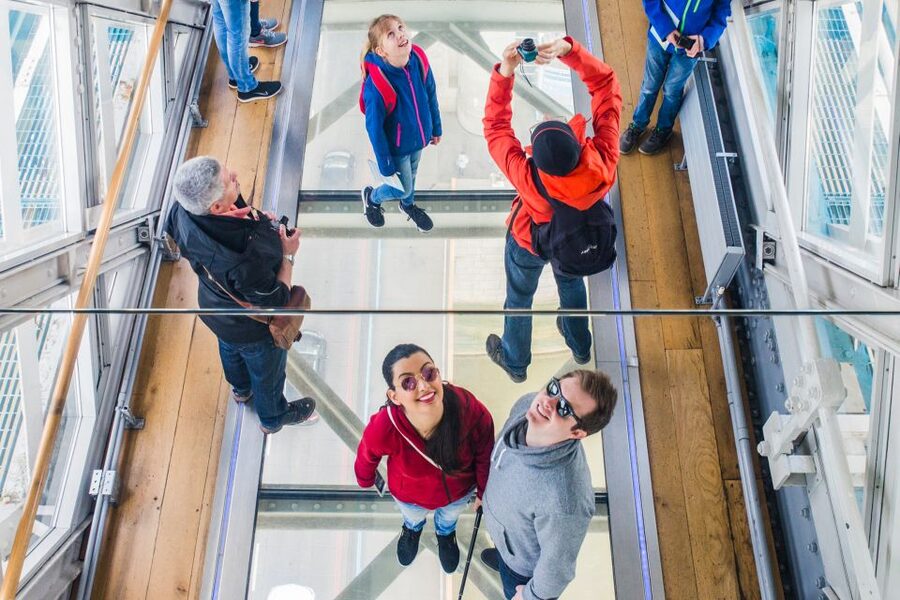
Tower Bridge saves its best surprise for above the road: a 42-metre-high glass walkway where you can look down at the River Thames, passing boats, and traffic crossing the bridge. It is part engineering lesson, part London viewpoint, and part test of nerve for anyone uneasy with heights.
I like the clear displays and videos, which explain how the bridge was designed and built without turning the visit into a lecture. I also like that the ticket includes the old Engine Rooms, where the machinery and stories of the workers give the bridge a human side. The main drawback is that this is a self-guided visit, and your pre-booked ticket does not let you skip the queue.
Key points
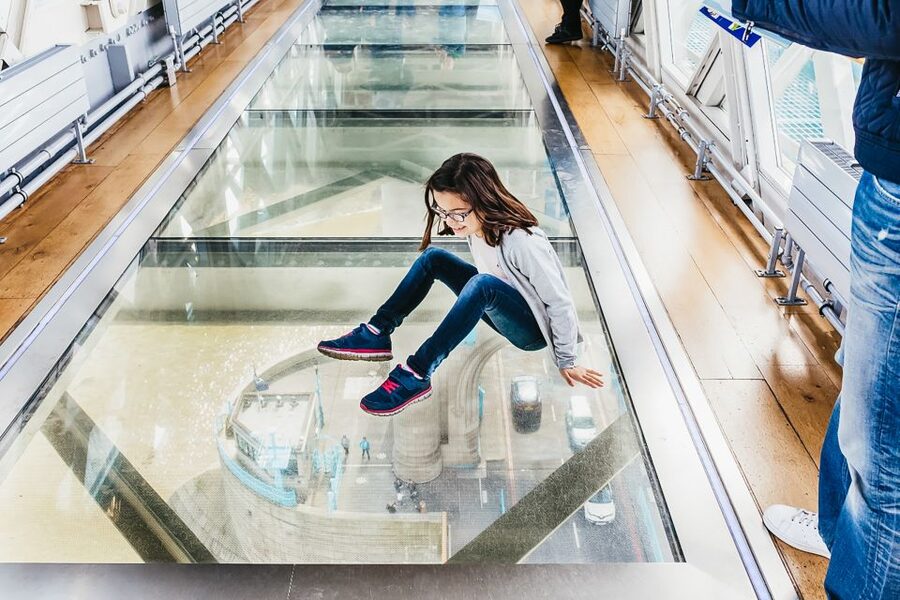
- Glass floor at 42 metres: Look straight down to the Thames and the roadway below.
- Both bridge towers and walkways: Visit the North and South Towers and compare their views.
- Victorian Engine Rooms included: See the machinery and learn how the bridge was raised.
- Blue Line worker stories: Follow a route honoring the people who operated and maintained the bridge.
- Helpful on-site staff: Staff members assist with entry, photos, questions, and practical needs.
- One-hour plan, longer visit possible: The official duration is one hour, though families and curious visitors may stay two hours or more.
Why the glass walkway is the star attraction
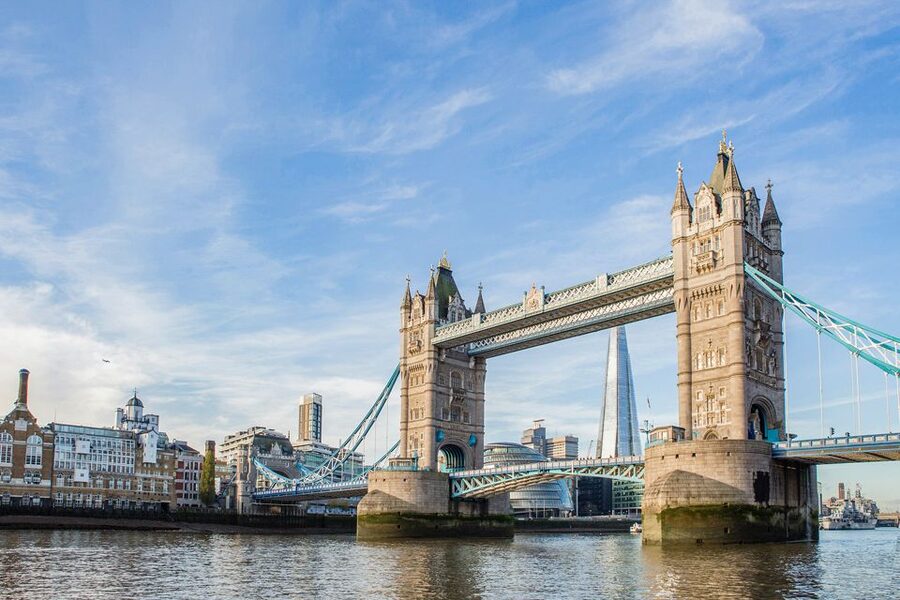
Tower Bridge looks spectacular from the riverbank, but the ticket earns its keep by taking you into the upper level. Between the two towers, the walkways give you a different view of London than you get from street level. You see the Thames from above, watch road traffic pass under your feet, and look along the bridge’s famous structure rather than merely photographing it from outside.
The glass section is the moment most people remember. The transparent panels let you look directly down, so the height feels real rather than abstract. If you are comfortable with heights, it is a fun photo stop. If you are not, you can walk beside the glass and still enjoy the bridge. One visitor described inching along while holding the rail before finally looking down, so you certainly do not need to force yourself across the middle.
I recommend visiting both walkways. They offer different angles over the river and city, and the walk from one tower to the other helps you understand how the bridge fits together. Take your time with photographs, since the best view can be briefly blocked by other people.
The walkways are also enclosed and staff have used heaters in cold weather. On hot days, airflow can be limited, although fans may be provided. That makes the experience more comfortable in winter but potentially warm in summer, especially if you linger.
Further Tower Bridge visits:
- London: Westminster to Tower Bridge River Thames Cruise
★ 4.5 · 6,127 reviews - London: VIP Tower of London & Tower Bridge Early-Access Tour
★ 4.8 · 862 reviews - Secrets of London Bike Tour: Thames, Tower Bridge & Market
★ 4.8 · 42 reviews
Entering through the North Tower
The entrance is on the western side of the North Tower. You join the outdoor queue, where the Tower Bridge team helps with entry. This is important: buying a ticket in advance reserves your admission, but it does not create a fast-track lane.
Queueing appears to be managed carefully so the upper walkways do not become too crowded. Early morning can help, with one visitor arriving around 9:00 and finding the line manageable. Still, you should allow extra time rather than planning an arrival down to the minute. Entry can be affected by the queue and by security searches.
Every bag is searched on arrival. The permitted maximum bag size is 45 by 35 by 20 centimetres, and wheeled bags are not allowed. Wheelchairs and prams are permitted, but they are searched too. These rules are easy to handle if you arrive with a small day bag, but they could catch you out if you are carrying luggage.
Staff have shown some flexibility when people are only a few minutes late or arrive early, but I would not treat that as a guarantee. If you are delayed, speak to the team as soon as you can.
What you learn in the two towers
Once inside, the visit explains the bridge’s design, construction, and working life through information boards and videos. The displays are useful because they give context before you reach the machinery. You begin to see Tower Bridge not just as a pretty Victorian structure, but as a carefully planned crossing that had to open for river traffic.
The boards cover the choice of design and the people who built the bridge. This is a good balance for a self-guided attraction: you can read every panel if you want detail, or move quickly toward the views if that is your main reason for coming.
The towers also make the bridge’s scale easier to grasp. From below, the stone and metal can seem decorative. Inside, the route shows how much work went into making a bridge that could carry road traffic and still lift for boats on the Thames.
There is no included guide, so you control the pace. That suits families and mixed groups, since one person can stop to read while another heads for the glass floor. It also means you should not expect the kind of storytelling, questions, or live commentary that comes with a guided tour.
Look out for the hidden cats and the Cat Trail Hunt if you are visiting with children. A teenager enjoyed the activity, and younger children can have a reason to study the displays rather than simply race toward the glass.
The Blue Line and the people behind the bridge
A blue line connects the towers with the historic Engine Rooms. It highlights former Tower Bridge workers who kept the bridge operating. This is a small but worthwhile detail, since large landmarks often focus on architects and public figures while overlooking the people who handled the daily work.
Following the line gives the visit a clear route. Instead of treating the Engine Rooms as a separate museum at the end, you can see the journey as a link between the public face of the bridge and the machinery that made it function.
The worker stories also help younger visitors understand that the bridge did not simply operate by itself. More than 80 people were needed to operate the engines and raise the bridge. That figure makes the job feel substantial and gives the machinery a practical human setting.
A handful of other London outings to weigh up
- From London: Harry Potter Warner Bros Studio Tour
★ 4.7 · 26,588 reviews - London: Westminster to Greenwich River Thames Cruise
★ 4.5 · 22,836 reviews - Magical London: Harry Potter Guided Walking Tour
★ 4.7 · 22,044 reviews - London: Madame Tussauds London
★ 4.6 · 20,915 reviews
Why the Victorian Engine Rooms are worth your time
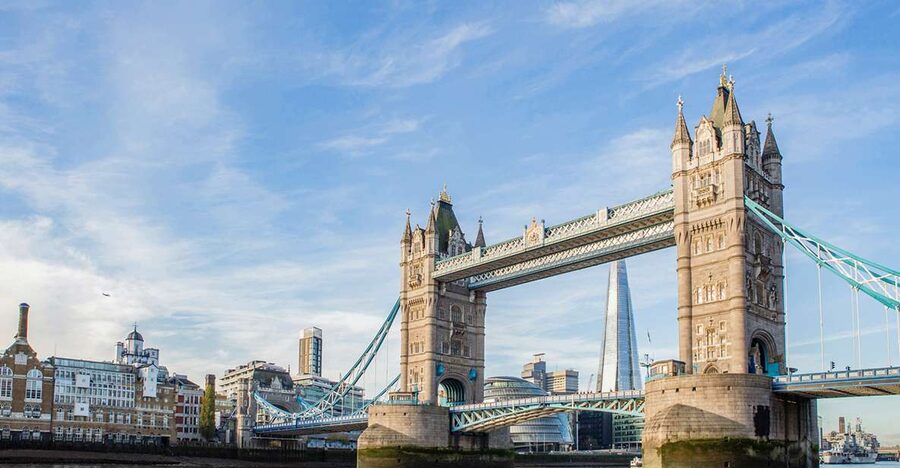
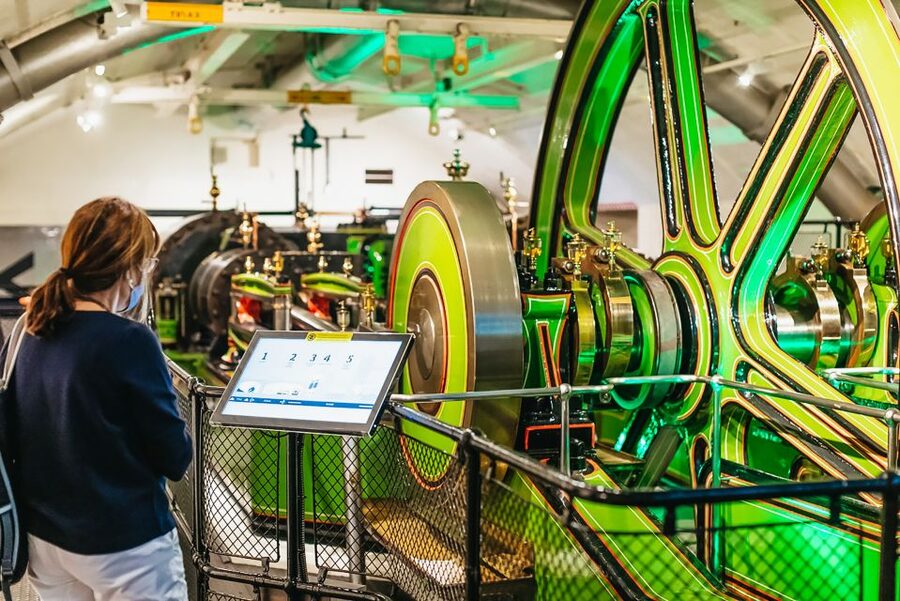
Do not leave after the glass walkway. The Engine Rooms are included in the ticket, and they are one of the strongest parts of the experience for anyone interested in machines, work, or London’s industrial past.
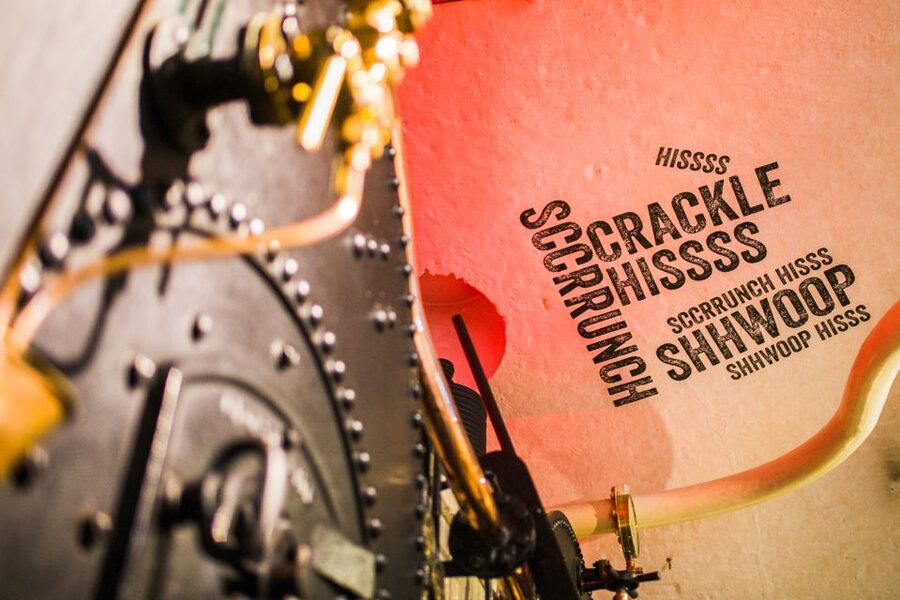
Here you see the rooms that once powered the bridge. The old equipment gives you something physical to study after the upper walkways have provided the visual drama. You can connect the controls and machinery with the bridge-opening process and understand why so many workers were needed.
The Engine Rooms also contain old photographs of the workers. These images add warmth to what could otherwise be a display of metal, pipes, and mechanisms. I found this part especially valuable because it explains the bridge as a workplace, not only as an architectural symbol.
Some people may expect a large museum and find the Engine Rooms more compact than anticipated. The official visit lasts about one hour, and the rooms form one section of the route rather than a full-day collection. Still, the inclusion adds real value to a ticket that could otherwise be judged only on the view.
How much time should you allow?
The advertised duration is one hour, which works if you move steadily through the towers, walkways, and Engine Rooms. I would allow more time if you want to read the information boards, take photos, complete the cat activity, or wait for a clear view through the glass.
Families may spend two hours here without feeling rushed. One family with children aged six and nine rated it among the best stops on a four-day London trip and spent more than two hours exploring. That is a useful guide if you are building a day around nearby sights.
The length also depends on the queue and your interest. A visitor focused on the glass floor may finish quickly. Someone interested in construction, engineering, and worker stories will get more from a slower visit.
Try not to schedule a tightly timed attraction immediately afterward. The bridge is a place where you may want to pause for a second look, especially if a boat passes below or the bridge begins to rise.
The chance to see Tower Bridge raised
The bridge may be raised during your visit, but this is not guaranteed and should not be treated as part of the ticket. If it happens, you get to see the landmark perform its main job rather than simply admire its structure.
The view is especially good from the upper walkways, where you can watch river traffic and understand the relationship between the road deck and the Thames. Check the bridge’s own operating information if seeing a lift is a major priority, since the activity details do not promise a raising during any particular entry time.
Even without a lift, the upper level gives you plenty to watch. Road traffic passes below, boats move along the river, and London’s changing light can make the same view feel different from one minute to the next.
Staff, photos, and the practical side of the visit
The on-site team is one of the attraction’s strengths. Staff help with questions, entry problems, and photographs. Gary was singled out by one visitor as a highlight, while Nick helped another person with onward directions to the National Gallery. Those details matter when you are visiting alone or trying to make the most of a short London stop.
If you want a photo on the glass floor, be patient. The walkway can be busy, and the clearest image may require waiting for people to move. Staff may help take a picture, which is useful if you are traveling alone.
There is a gift shop at the end, and the visit finishes near the Engine Rooms checkout area. A photo service is also available, though one person had trouble with a blurry printed image and an email delivery issue. I would check any image carefully before paying and confirm that digital delivery has worked.
Is $21 good value?
At about $21 per person, this is a fair price for a major London landmark, especially because the ticket covers the towers, both walkways, the glass floor, and the Engine Rooms. You are paying for more than a viewpoint. The displays explain the bridge’s design, while the machinery shows how it worked.
The value is strongest if you enjoy history, architecture, engineering, or photography. It is also a good family choice because the glass floor adds a playful challenge and the cat activity gives children something extra to do.
The value is weaker if you only want an exterior photograph. You can see Tower Bridge from the surrounding streets and riverbanks without paying an admission fee. The ticket makes sense when you want to go inside, walk across the upper level, and spend time with the displays.
Since there is no fast-track entry or guided tour, compare the price with your expectations. This is a flexible self-guided visit, not a private experience. For many people, that is exactly the point. You can linger at the view, skip a panel, or revisit the glass floor without following a group.
Who should book Tower Bridge entry?
I would recommend this to first-time London visitors who want an iconic sight with something to do inside it. The views are memorable, but the combination of the glass walkway and Engine Rooms gives the visit more substance than a simple photo stop.
It suits families particularly well. Children can search for hidden cats, watch the traffic below, and treat the glass floor as a small bravery challenge. Teenagers may also enjoy it because the attraction is active rather than just a series of display cases.
It is a good choice for solo visitors, too. Staff can help with photographs, and the self-guided layout lets you move at your own speed. People using wheelchairs or prams can enter, subject to the standard bag search.
I would think twice if you dislike queues, heights, or enclosed spaces. The glass floor is optional, but the attraction can become warm on hot days, and a pre-booked ticket does not remove the outside queue. Bring a small bag and allow extra time.
FAQ
Where is the entrance to Tower Bridge?
The entrance is on the western side of the North Tower. Join the outside queue, and the Tower Bridge team will help you enter.
Does this ticket include fast-track entry?
No. The pre-booked ticket does not provide skip-the-line or fast-track access.
What does the ticket include?
It includes entry to Tower Bridge, both towers, the walkways, the glass floor, and the Victorian Engine Rooms.
Is a guided tour included?
No. This is a self-guided visit, with information boards and videos available along the route.
How long does the visit last?
The stated duration is one hour. You can spend longer if you read the displays, take photos, complete the cat activity, or explore at a slower pace.
Are children under five charged?
No. Children under five enter free.
What bags are allowed?
Bags must be no larger than 45 by 35 by 20 centimetres. Wheeled bags are not allowed, and all bags are searched on arrival.
Is Tower Bridge wheelchair accessible?
Yes. Wheelchairs and prams are allowed, but they are subject to the same arrival search policy.
Should you book it?
Book this experience if you want to see Tower Bridge from inside, not just photograph it from the riverbank. The glass walkway provides the memorable moment, while the displays, Blue Line, and Engine Rooms give you enough context to make the visit worthwhile.
At around $21, it is good value for a one-hour stop and even better value if you stay closer to two hours. Choose an early entry time if possible, bring only a small bag, and do not count on skipping the queue. If you can handle the height, step onto the glass. If not, enjoy the views from the solid walkway and spend extra time with the fascinating old machinery below.
New listings around London
- London: Secrets of Freddie Mercury Tour with a Cocktail★ 4.1 · 15 reviews
- London: Hampton Court Private Guided Tour★ 3.4 · 15 reviews
- London: Jack the Ripper Tour and Underground Prison in Spanish★ 5.0 · 15 reviews
- Spanish Language : Original Harry Potter Walking Tour★ 4.5 · 15 reviews
- London: Private Couples Photography Session with Landmarks★ 5.0 · 15 reviews
- London: The Saturday Supershow Cabaret at Phoenix Arts Club★ 4.5 · 15 reviews
- London: 2-Hour Guided Tour of the British Museum★ 4.7 · 16 reviews
- London’s Ghosts & Gruesome Past Nighttime Walking Tour★ 4.8 · 16 reviews
London Tours, compared.
Westminster to Greenwich River Thames Cruise
Read our review →
Magical London: Harry Potter Guided Walking Tour
Read our review →

Warner Bros. Studio Harry Potter Tour with Transfers
Read our review →
Browse the lists this tour appears in