Reviewed · LONDON TOURS
Turmoil, Templars, Oliver Twist: London’s Squalor & Splendor
London’s past gets wonderfully unruly on this walk through Holborn. You move from Saxon turmoil and medieval Knights Templar to Oliver Twist, notorious prisons, Victorian policing, grand legal buildings, and the surprising world of retail silver. It is a history walk with plenty of grit under the polish.
I like the route’s sharp contrasts and its small-group setup. Freemasons Hall and Temple Church bring ceremony and splendour, while Bow Street, Bridewell, and the Old Bailey reveal London’s harsher side. Guide Tom has been praised for making the stories fun and answering questions clearly.
The main drawback is pace. You cover about 2.5 miles in two hours, with many stops, so most places receive only a short explanation. This suits curious adults who want a lively overview, but not anyone hoping for long indoor visits or a slow architectural study.
Key points at a glance
- Oliver Twist locations: Hear where Fagin’s den and execution were placed in the world of Charles Dickens.
- Small group format: Attendance is limited to 15 people, making questions and conversation easier.
- Grand and grim London: See Freemasons Hall and Temple Church alongside former prisons and the Old Bailey.
- A surprising silver stop: Discover the London Silver Vaults, described as the world’s largest collection of retail silver.
- A compact central route: Walk from Covent Garden Station to near Blackfriars Station in roughly two hours.
- Strong guide-led storytelling: Tom and the other English-speaking guides focus on stories, context, and questions rather than a scripted sightseeing checklist.
A walk from Covent Garden into London’s darker past
I like tours that show a city in mixed tones. This one does not treat London as a parade of palaces and famous names. It takes you through Holborn, an area where law, religion, entertainment, policing, crime, and commerce have rubbed shoulders for centuries.
The route begins outside Covent Garden Station. Look for the guide holding a Historic London Tours sign. From there, the walk heads toward Blackfriars, covering around 2.5 miles before finishing at 36 to 37 New Bridge Street.
The distance is manageable for most people who are comfortable walking in central London, but the schedule is full. You will stop often, hear a short explanation, then move on. That format keeps the tour lively, though you should not expect a long visit inside every building named along the way.
The strongest part is the range of characters. Saxons, Knights Templar, Charles Dickens, Freemasons, and the Bow Street Runners all appear. The result feels less like a single-theme tour and more like a guided trip through London’s changing identity.
A handful of other London outings to weigh up
- From London: Harry Potter Warner Bros Studio Tour
★ 4.7 · 26,588 reviews - London: Westminster to Greenwich River Thames Cruise
★ 4.5 · 22,836 reviews - Magical London: Harry Potter Guided Walking Tour
★ 4.7 · 22,044 reviews
Bow Street and the birth of organised policing
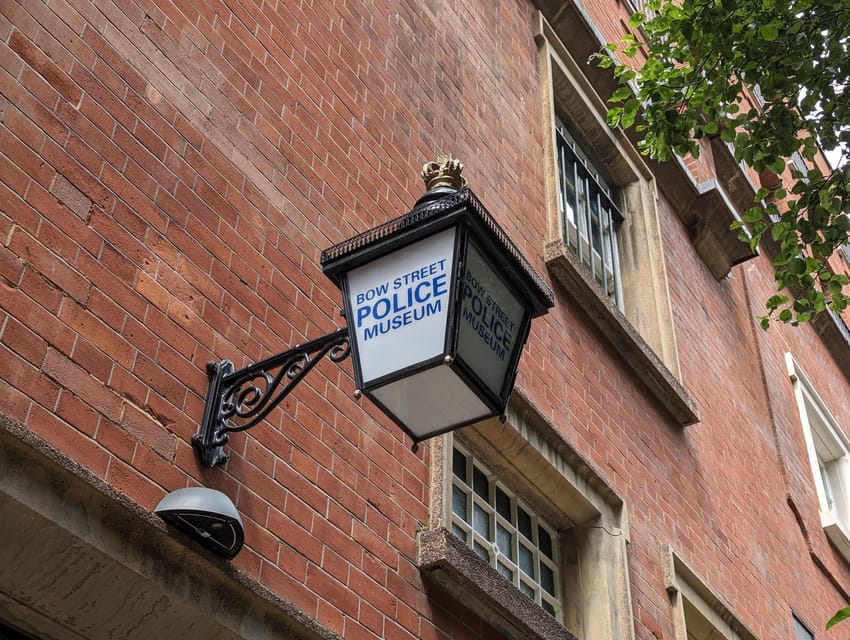
Bow Street Police Museum provides an early look at law enforcement in London. The Bow Street Runners became one of the city’s best-known early policing groups, and their work gives the tour a useful starting point for understanding crime and order.
The stop is listed as a short guided visit, around five minutes. That tells you what to expect: a quick introduction rather than a full museum session. I would pay close attention here because the guide’s explanation helps connect later stops, including the prisons and the Old Bailey.
This is also one of the points where the tour’s storytelling matters more than the building itself. You are not simply being shown a museum entrance. You are hearing how London tried to deal with theft, violence, and disorder before modern policing took shape.
Freemasons Hall and London’s ceremonial side
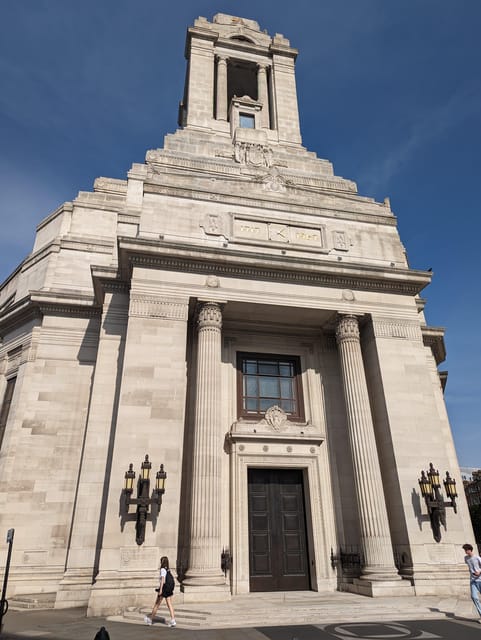
Freemasons Hall brings a sudden change in mood. The tour moves from policing and crime to one of central London’s grandest ceremonial settings. Its splendour gives you a reminder that Holborn has not only been a place of hardship. It has also been a district of influence, ritual, and public display.
The stop is brief, so you should expect an exterior-focused explanation or a short guided look rather than a full architectural tour. Still, even a short visit can make sense of the building’s role in the route. The contrast with Bow Street is the point.
I appreciate this kind of pairing. London’s impressive facades can hide complicated stories, while places associated with crime may have shaped the city just as much. The walk keeps putting those two sides next to each other.
Aldwych and the layers beneath modern London
Aldwych gives the guide another chance to show how the modern city sits on older ground. The tour presents the area as part of Holborn’s long story, linking the present streets to events and people from earlier periods.
Because the stop lasts only about five minutes, you will get a focused explanation rather than an extended area tour. The value comes from learning how to read the street around you. Afterward, an ordinary corner of London can carry more historical weight.
This is a good reason to choose a walking tour instead of a museum-only visit. You are moving through the actual streets where the stories belong. The setting changes as the guide speaks, and you can see how close the grand, grim, and commercial parts of the city remain to one another.
Elsewhere in London, a change of pace:
- London: Madame Tussauds London
★ 4.6 · 20,915 reviews - London: Warner Bros. Studio Tour with Transfers
★ 4.7 · 17,586 reviews - London: Tower Bridge Entry Ticket
★ 4.7 · 15,560 reviews - London: St Paul’s Cathedral Entry Ticket
★ 4.7 · 9,813 reviews
The Royal Courts of Justice and London’s legal quarter
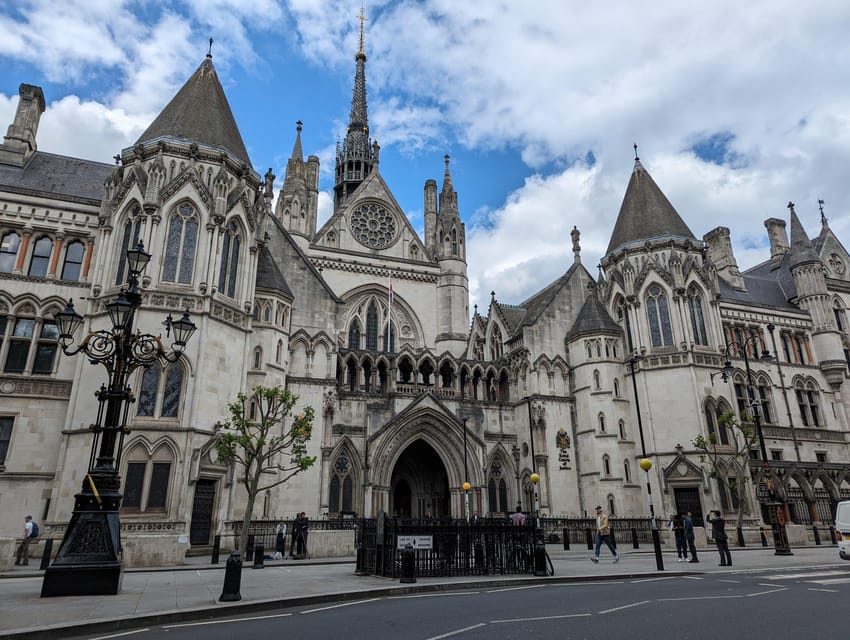
The Royal Courts of Justice adds another major piece to the route: law as a physical presence. Its impressive architecture suits a tour concerned with courts, prisons, police, and the people who passed through London’s justice system.
Again, the visit is short. You will not have time for a detailed tour of the courts, and the experience does not promise extended access inside. Instead, the guide uses the building as a landmark for explaining London’s legal world.
This stop works especially well for visitors who enjoy seeing how institutions shape a city. The route does not focus only on kings and battles. It also considers the systems that dealt with crime, punishment, disputes, and public order.
Temple Church and the Knights Templar
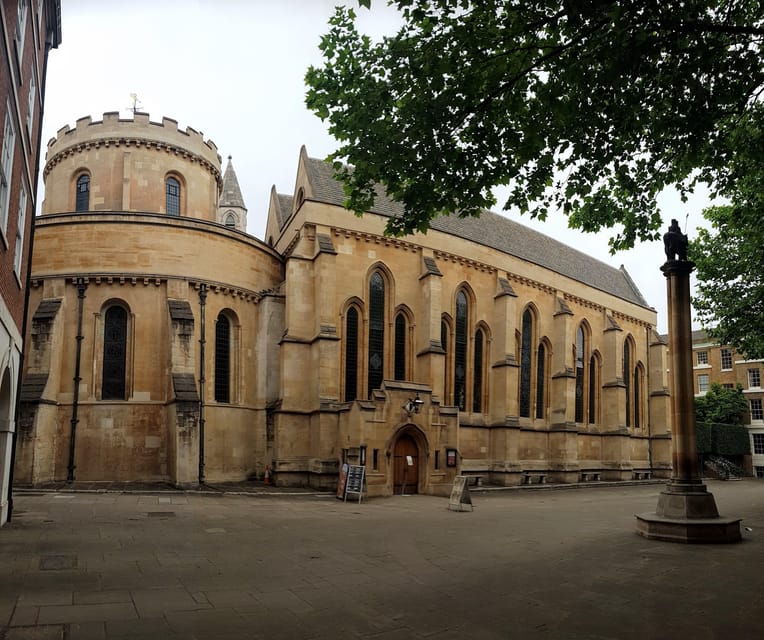
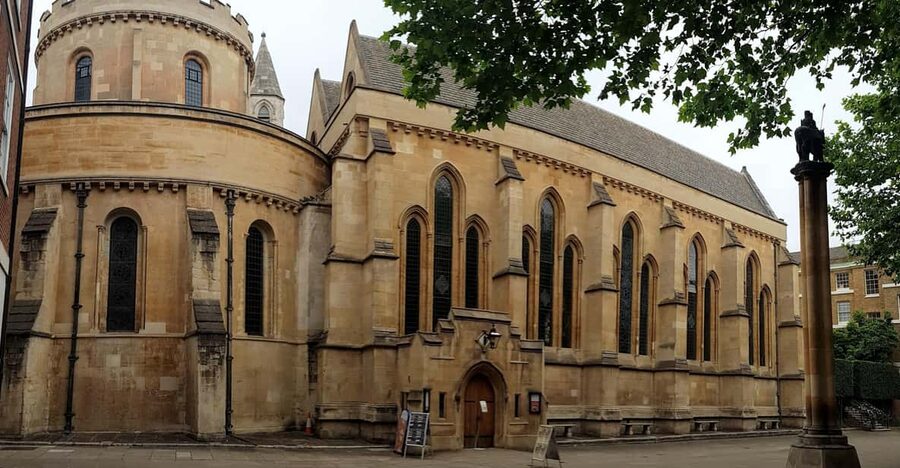
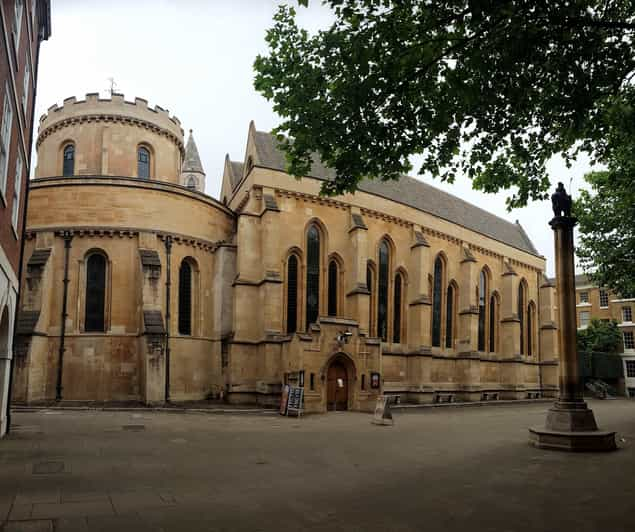
Temple Church is one of the walk’s most distinctive stops. The Knights Templar headquarters once occupied this part of London, giving the area a strong medieval connection. The church brings the tour back from Victorian and modern institutions to religious and military power in medieval England.
The guide’s focus is the Templars and their London headquarters. You should expect historical context and a look at the site, but not assume that the entire church will be open for a long interior visit. The supplied schedule allows about five minutes here.
That short stop can still be memorable. Temple Church is not just another old building on a map. It represents the way religious orders, finance, travel, and military campaigns connected London to events far beyond the city.
The London Silver Vaults and retail treasure
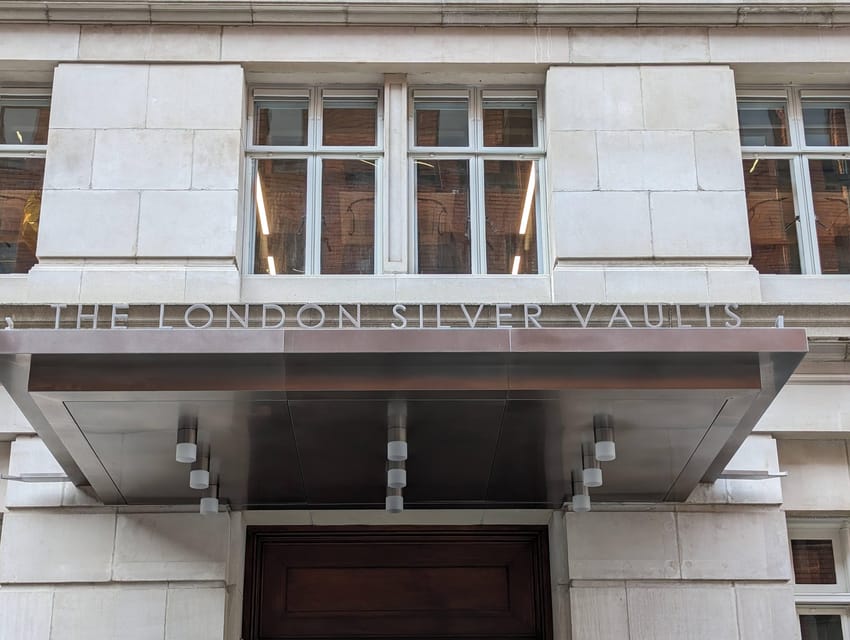
The London Silver Vaults is the route’s most unexpected turn. The experience introduces you to what is described as the world’s largest collection of retail silver. This is a very different kind of London history, based on trade, luxury, craftsmanship, and buying rather than prisons or medieval warfare.
I like that the tour includes this stop. It prevents the walk from becoming a steady march through gloomy crime stories. You get a glimpse of a specialist commercial world that many people would miss while visiting London’s better-known sights.
The stop is brief, so think of it as an introduction. You may want to return separately if silver, antiques, or retail history interests you. On the walk, the important point is how another side of London’s wealth fits into the broader story of Holborn.
Staple Inn, Hatton Garden, and the working city
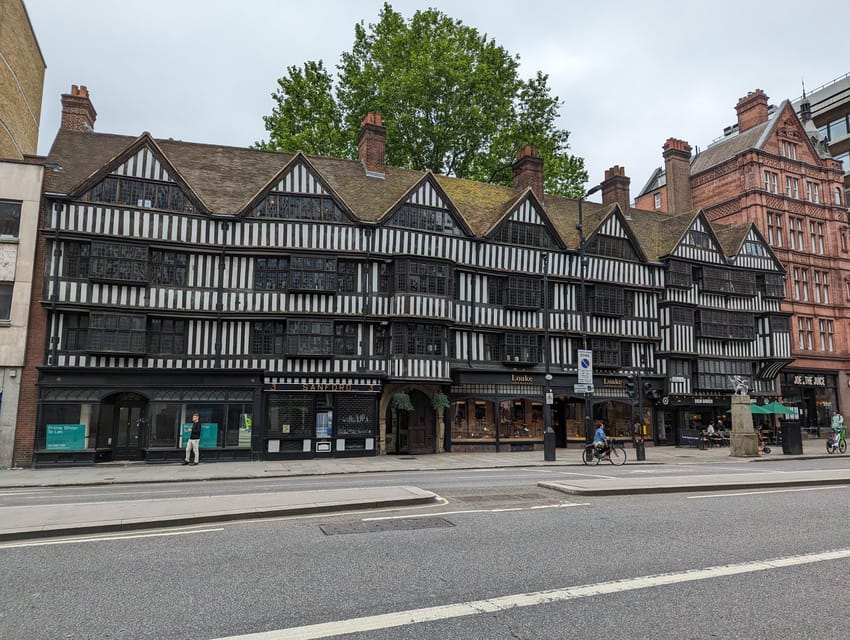
Staple Inn continues the architectural and commercial thread. It helps show how older buildings and institutions remain part of an active central district rather than sitting apart from daily life.
Hatton Garden brings another familiar London name into the route. The guide uses it as part of the area’s wider story, adding another layer to a walk that has already covered policing, law, religion, literature, and retail silver.
These stops are useful because they keep the tour grounded in streets you can revisit. You are not moving from one isolated monument to the next. The route links areas together, helping you understand Holborn as a connected quarter.
The five-minute format means you need to listen closely. If you enjoy taking photographs or reading every plaque, you may feel hurried. If you prefer moving at a steady pace with a guide providing the context, the rhythm should work well.
Holy Sepulchre Church and the Oliver Twist connection
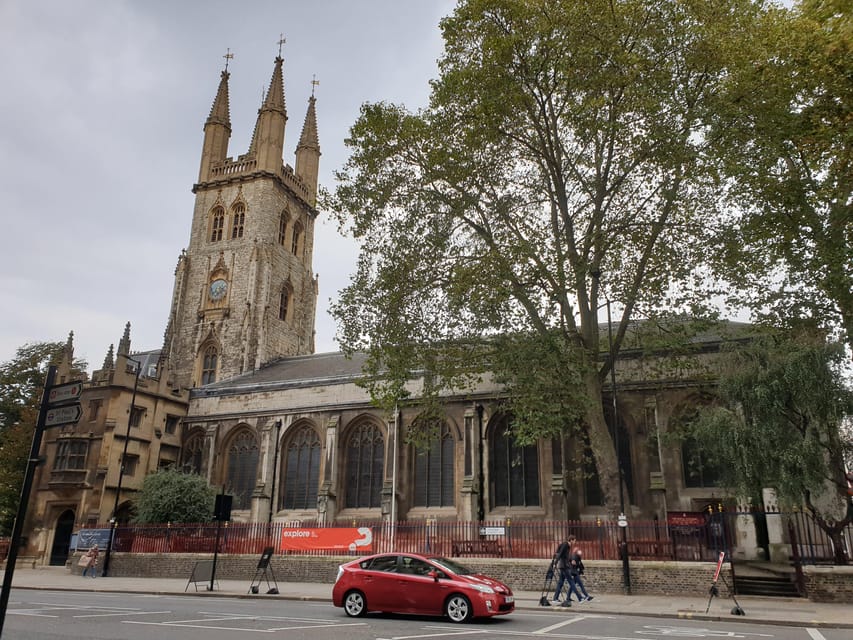
Holy Sepulchre Church is tied to the darker, more literary part of the tour. Here, the guide brings in Charles Dickens and the locations connected with Fagin’s den and execution in Oliver Twist.
This is not a theme-park version of Dickens. The appeal comes from comparing a fictional story with the real streets that helped shape its atmosphere. You hear about the setting and then look around at the actual urban space.
The Oliver Twist material gives the tour a strong human connection. Saxon disputes and medieval orders can feel distant. Dickens brings London’s poverty, crime, and moral tension much closer to home.
The subject matter is one reason the activity is not suitable for children under 13. The tour deals with prisons, execution, crime, and grim episodes from London’s past. Older teenagers may be fine, but the content is clearly aimed at adults and mature young people.
The Old Bailey and Bridewell’s hard lessons
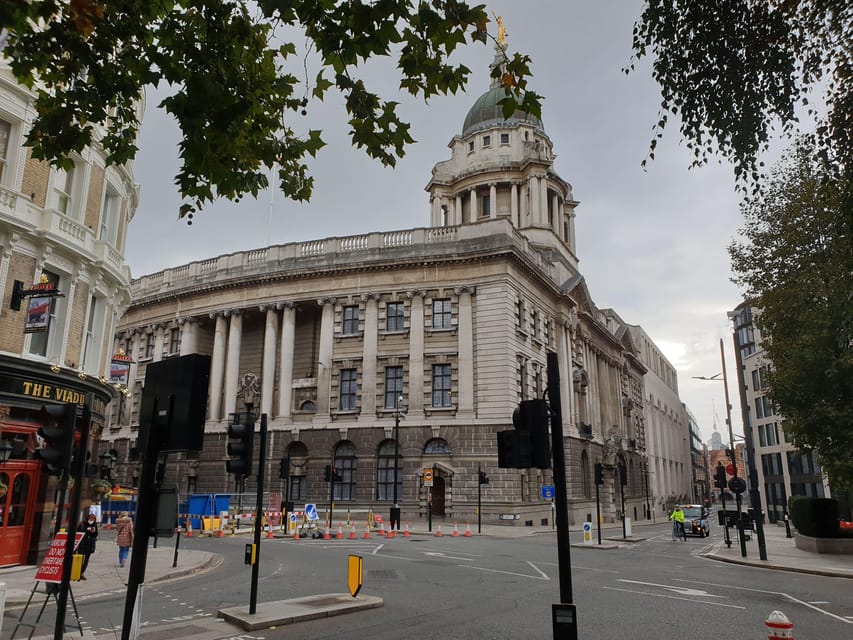
The Old Bailey is one of the route’s major legal landmarks. Its name carries the weight of London’s criminal courts, and it fits naturally after the earlier discussion of policing and the Royal Courts of Justice.
Bridewell Centre brings the prison story into sharper focus. The tour covers a couple of London’s most notorious prisons, and this stop helps explain the harsher side of punishment and confinement.
I find this part valuable because it avoids treating crime as mere entertainment. The guide connects famous names and dramatic stories to the institutions that controlled people’s lives. You get a picture of how London responded to poverty, lawbreaking, and public disorder.
The route ends near Blackfriars Station, at New Bridge Street. That is practical for continuing your sightseeing or reaching another part of the city. Since the finish is not at the starting point, check your onward plans before you set off.
What the two-hour format means for you
Two hours is a good length for a first look at Holborn. It is long enough to cover a large spread of history without taking over your whole day. The route also works well as a morning or afternoon addition to a central London schedule.
The tradeoff is depth. With thirteen listed stops and about 2.5 miles to cover, each location receives only a short presentation. You are sampling many stories, not receiving a detailed lecture on each building.
The group limit of 15 is important. A small group makes it easier to hear the guide on busy streets and to ask questions. It also avoids the anonymous feel of a large coach tour. The activity is still a walking tour, so wear comfortable shoes and be ready to keep moving.
The tour is conducted in English with a live guide. Guide Tom has been singled out for making the experience interesting and fun, while other feedback praises the guide’s clear answers and strong command of London’s past. If you enjoy asking questions, this format should suit you.
Is $26 a fair price?
At $26 per person, I see this as a reasonable value if you want a guided overview rather than individual admission to several major attractions. The price pays for two hours of local storytelling, a carefully linked route, and access to places that can be easy to overlook when exploring alone.
It is less attractive if you mainly want long indoor visits. The stops are short, and the included service is the guided walking tour. You should not read the price as a pass covering entry to every building along the way.
The strongest value is the connection between the stops. On your own, you might pass Freemasons Hall, the Old Bailey, Staple Inn, or the Silver Vaults without seeing how they fit into London’s wider story. The guide supplies that link.
Flexible booking also helps. You can reserve now and pay later, and cancellation is allowed up to 24 hours before the start for a full refund. That is useful when central London plans are still shifting.
Who should book this Holborn walk?
I would choose this tour if you like history with a darker edge, literary connections, and unusual city details. It is especially suitable for adults who have already seen London’s headline sights and want a more focused look at the streets between Covent Garden and Blackfriars.
It also suits first-time visitors who want a broad historical orientation. You will encounter enough subjects to decide which places deserve a return visit, from Temple Church to the London Silver Vaults.
I would skip it if you dislike walking, want a child-focused activity, or need extended time inside each attraction. The route is packed, the subject matter can be grim, and the English-language commentary moves at a steady pace.
Should you book Turmoil, Templars, Oliver Twist?
Book it if you want London presented as a city of contradictions. You will hear about Saxon unrest, medieval power, Dickensian crime, Victorian policing, legal institutions, Freemasons, prisons, and silver commerce in one compact walk.
The best reason to go is the storytelling. Tom and the other guides turn a route through Holborn into a series of connected questions: Who controlled London, who was punished, who profited, and how did the city change?
Choose another activity if you want grand interiors, a relaxed pace, or a tour built around one subject. For an adult audience seeking unusual history and a small group, though, $26 is a sensible price for two lively hours.
FAQ
Where does the tour begin?
The tour begins outside the exit of Covent Garden Station. The guide will be holding a Historic London Tours sign.
Where does the tour finish?
The walk finishes near Blackfriars Station at 36 to 37 New Bridge Street, London EC4V 6BJ, UK.
How long is the tour?
The guided walk takes around two hours.
How far does the group walk?
The total distance is about 2.5 miles.
What language is the tour conducted in?
The live tour guide speaks English, and English is the listed tour language.
How many people can join the tour?
Ticket sales are limited to 15 attendees.
Is the tour suitable for children?
The activity is not suitable for children under 13.
Can I cancel or pay later?
You can cancel up to 24 hours in advance for a full refund. You can also reserve your place and pay later.
New listings around London
- London: Bermondsey Craft Brewery Tour★ 5.0 · 3 reviews
- Colourful Notting Hill Photography Tour★ 5.0 · 3 reviews
- The London Historic Pubs Tour★ 4.0 · 3 reviews
- Ultimate Royal London, Thames River Boat Ride & Walking Tour★ 5.0 · 3 reviews
- London: Wallace Collection & National Gallery Private Tours★ 5.0 · 3 reviews
- London: The Birthplace of The Rolling Stones Private Tour★ 5.0 · 3 reviews
- Historic pub tour with Brazilian guide (in Portuguese)★ 5.0 · 3 reviews
- London: Royal Tour with Westminster Abbey & Afternoon Tea★ 3.0 · 3 reviews
London Tours, compared.

Westminster to Greenwich River Thames Cruise
Read our review →
Magical London: Harry Potter Guided Walking Tour
Read our review →