
Reviewed · LONDON TOURS
Churchill’s Wartime London Walking Tour
Churchill’s wartime London is not locked away in a museum. It is written across Westminster’s streets, from the Houses of Parliament where he shaped wartime speeches to Whitehall’s memorials and the scars left by the Blitz. This walk follows that story on foot, ending at the Churchill War Rooms without including museum admission.
I like the route’s concentration of important sights, especially Parliament Square and Downing Street, and I like that the guide connects Churchill with Franklin D. Roosevelt rather than treating British wartime history as a story of one man alone. The main drawback is the pace: this is a brisk walk, and the published information describes it inconsistently as 80 and 90 minutes.
Key points to know
- Churchill’s Westminster begins at the Boadicea and Her Daughters statue on Victoria Embankment, close to Westminster Tube station.
- The route combines famous sights with less polished wartime traces, including bomb damage and the remains of a church destroyed during the Blitz.
- You pass the Houses of Parliament, Big Ben, Parliament Square, Downing Street, and Whitehall in a compact stretch of central London.
- The guide uses a personal audio headset, so you can hear live commentary while walking through noisy streets.
- The walk ends at the Churchill War Rooms, but entry to the underground museum is not included.
- Comfortable shoes matter. One account describes the walk as more demanding than expected, particularly for anyone who is not steady on their feet.
Following Churchill from the Thames to Parliament
The meeting point is the Boadicea and Her Daughters statue on Victoria Embankment, London SW1A 2JH. Westminster Station is the nearest Tube stop, using Exit 2. This is a practical starting place because you are already beside the Thames and within a short walk of the political center of Britain.
The statue itself is easy to recognize, but give yourself time to find the correct place. Central London has several busy crossings, tour groups, and large landmarks competing for your attention. I would arrive a little early, especially if you are unfamiliar with Westminster.
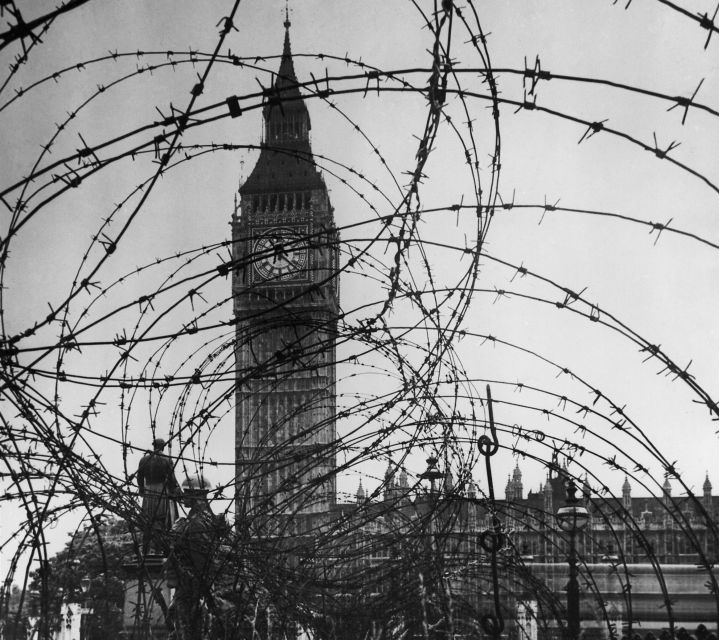
From here, the route moves toward Big Ben and the Houses of Parliament. Big Ben is technically the bell inside the Elizabeth Tower, but most people use the name for the tower itself. The important point for this tour is not only the photograph. The clock tower and Parliament create the setting for Churchill’s public wartime leadership.
Your guide can place Churchill’s speeches and decisions beside the buildings where British government worked through the Second World War. That makes the opening section more useful than a simple landmark walk. You are not just looking at the clock tower. You are hearing how a familiar public building connects to speeches, votes, pressure, and national morale.
The personal headset is a welcome touch here. Westminster can be noisy with traffic, buses, pedestrians, and general London commotion. A headset lets you look around without standing shoulder to shoulder with the guide or missing every other sentence.
More Walking Tours in London
- Magical London: Harry Potter Guided Walking Tour
★ 4.7 · 22,044 reviews - London: The Original Jack the Ripper Walking Tour
★ 4.7 · 7,833 reviews - London: Harry Potter Movies Walking Tour (Kids Go Free)
★ 4.7 · 3,071 reviews
Parliament Square and Churchill’s political home
Parliament Square is one of the most meaningful stops on the route. It brings together the Houses of Parliament, Westminster Abbey, and statues of major political figures. The tour focuses on Churchill’s relationship with the House of Commons and the wartime choices made there.
You should expect interpretation rather than a visit inside Parliament. The walk does not include entry to the Houses of Parliament, and the main value comes from the guide’s explanation of what happened within those walls. If you want interior access, you will need to arrange that separately.
This is also the place for a clear view of the statue of Sir Winston Churchill. It gives you a good photo opportunity, but the statue works best when paired with the guide’s account of Churchill’s public image and wartime role. The familiar pose can make him look like a finished legend. The stories help show the pressure and political risk behind that image.
I particularly like this part for visitors who have already seen Churchill on television, in books, or at the Churchill War Rooms. The walk gives you a street-level sense of where his public life unfolded. You are close to the buildings, squares, and routes that made Westminster the practical center of British wartime government.
The tradeoff is that Parliament Square can feel crowded and exposed. You may need to keep moving, stand to one side, or listen through the headset rather than gather around the guide in a quiet circle.
Downing Street and the wartime government
The walk continues toward 10 Downing Street, the official home of the British prime minister. You should not expect a house visit. The stop is about the location, its political importance, and the wartime leadership connected with it.
Downing Street is protected by security barriers, so the view is more controlled than the name may suggest. Still, this is an efficient stop on a walking route because it links the formal world of Parliament with the prime minister’s working residence and office.
The Churchill and Roosevelt connection also matters here. The tour traces the bond between Churchill and US President Franklin D. Roosevelt, giving the British story a wider Allied frame. That is useful context because Britain’s wartime position cannot be understood only through London landmarks. The relationship between the two leaders shaped cooperation, strategy, and public confidence.
The guide’s role is especially important at this point. A good storyteller can turn a brief view through security gates into a useful history lesson. The experience provides a live English commentary, and one guide connected with the tour is John Steel. He is praised for mixing wartime facts with wider trivia and for checking that people were keeping up. Guides can vary, so you should not assume he will lead every departure, but his approach gives you a sense of the kind of personal storytelling this walk aims to provide.
Whitehall’s Allied statues and wartime memorials
Whitehall provides the tour’s strongest cluster of wartime memorials. Here you see statues dedicated to Churchill, Eisenhower, Franklin D. Roosevelt, and Sir Arthur Harris. Each figure represents a different part of the Allied effort, and the group helps you think beyond a single national viewpoint.
The Roosevelt statue is especially useful because it reinforces the connection introduced near Downing Street. Churchill’s relationship with Roosevelt is not treated as a side note. It is part of the route’s main idea, showing how diplomacy and military planning worked alongside public speeches.
The statue of Eisenhower points toward the wider Allied command structure. Sir Arthur Harris represents the Royal Air Force’s bombing campaign. These memorials can raise difficult questions, and that is a strength of having a live guide. You can hear the basic context while standing in the places where Britain chose to honor its wartime leaders.
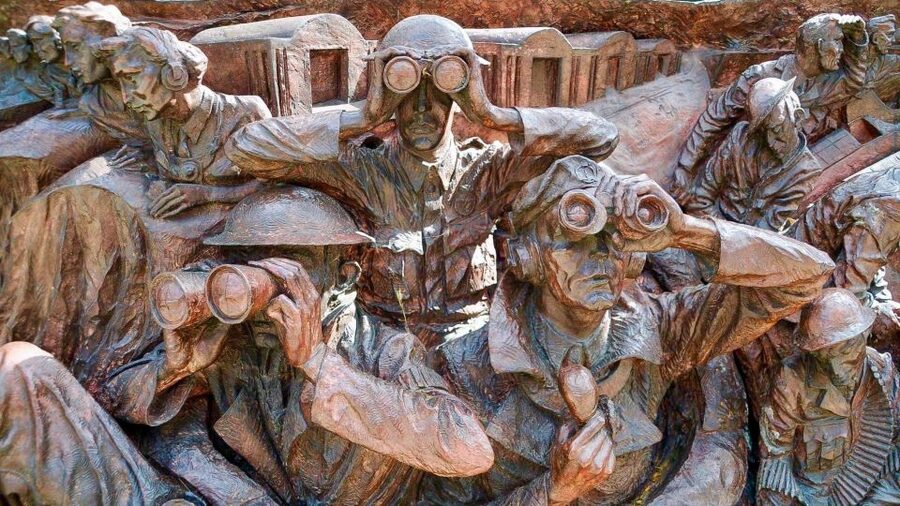
Whitehall also includes monuments connected with the Battle of Britain and the Women of World War II. These broaden the story beyond prime ministers and generals. The Battle of Britain monument recalls the air defense effort, while the Women of World War II memorial recognizes the women who filled military, industrial, civil defense, and support roles.
I like this section because it makes the walk feel less like a Churchill-only portrait. Churchill is the anchor, but the route points toward pilots, political allies, women working on the home front, and the national cost of war.
Elsewhere in London, a change of pace:
- From London: Harry Potter Warner Bros Studio Tour
★ 4.7 · 26,588 reviews - London: Westminster to Greenwich River Thames Cruise
★ 4.5 · 22,836 reviews - London: Madame Tussauds London
★ 4.6 · 20,915 reviews - London: Warner Bros. Studio Tour with Transfers
★ 4.7 · 17,586 reviews
Seeing the Blitz in the middle of modern London
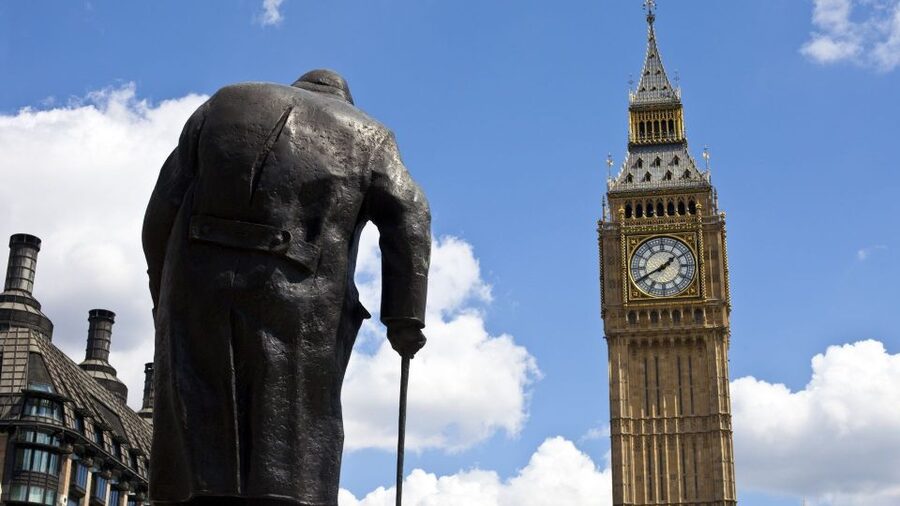
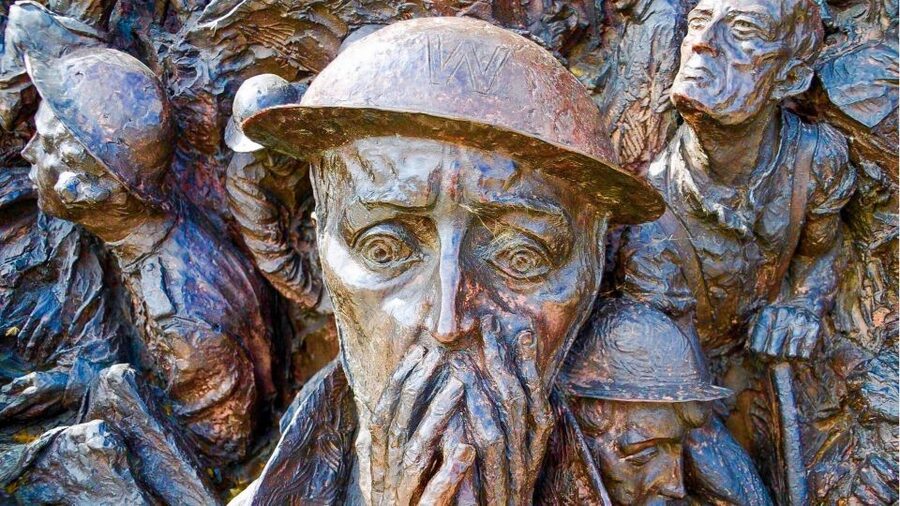
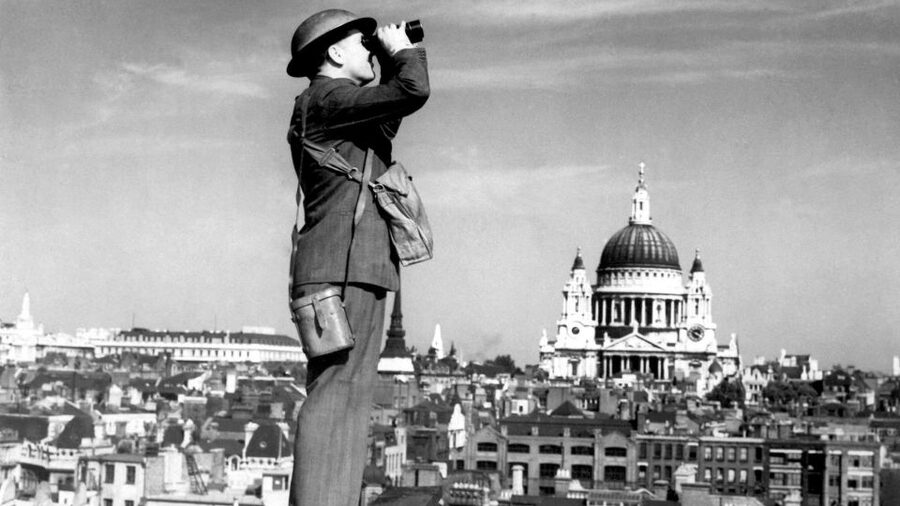
One of the most affecting parts of the walk is the chance to see visible signs of bomb damage and the remains of a church destroyed during the Blitz. These details can be easy to miss if you are racing between major sights on your own.
The church remains are not presented as a rebuilt attraction or polished museum display. Their value comes from the contrast between old destruction and present-day London. Office buildings, government traffic, tourists, and ordinary city life continue around a place that still shows what bombing did to the capital.
Your guide can help you notice damage that may not be obvious at first glance. That is one reason this walk offers something different from a standard Westminster sightseeing route. Big Ben and Parliament are easy to find without help. A half-hidden wartime scar is much easier to pass without realizing what you are seeing.
The route does not promise a large collection of surviving ruins. It gives you selected physical reminders along a compact walk. If you want a full account of London’s Blitz defenses, shelters, evacuation, or civilian life, you will need a longer museum visit or another specialized tour.
Still, the remains give the history weight. Churchill’s speeches can sound grand and distant when read on a page. Hearing about the war while looking at an actual damaged building brings the cost closer to street level.
The Cenotaph and the final approach
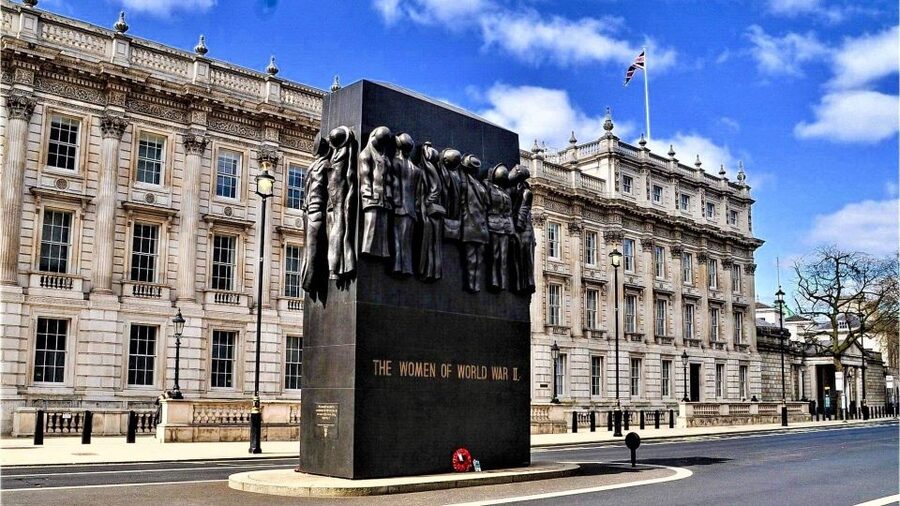
The Cenotaph is the key national war memorial on Whitehall. It commemorates Britain’s war dead and remains the site of major national remembrance ceremonies. It is a short but serious stop, and you should expect the guide to give it more than a quick photo pause.
The memorial links the Second World War to a longer tradition of national mourning. The tour includes it alongside the Battle of Britain and Women of World War II monuments, creating a progression from military action to public remembrance.
The route finishes at the Churchill War Rooms. This is a convenient ending if you plan to visit the museum afterward. The underground rooms preserve the wartime command center where Churchill and his government worked during the bombing and military crises.
Admission is not included, so you need a separate ticket if you want to continue inside. That separation can be useful. You can take the walking tour first, then decide how much time and money you want to spend in the museum. If you already have a museum ticket, the route gives you a strong outdoor introduction before you go below ground.
Do not assume the walking tour itself includes a guided visit through the Churchill War Rooms. The experience ends at the entrance area. Check your museum timing carefully if you are booking both activities on the same day.
How hard is the 80 to 90 minute walk?
The published duration is 80 minutes, while the practical information also calls it a 90 minute walking tour. I would plan for roughly an hour and a half, allowing a little extra time for gathering the group and crossing busy streets.
This is not a stroll with long seated breaks. You walk between Victoria Embankment, Parliament Square, Downing Street, Whitehall, and the Churchill War Rooms. The route is in central Westminster, where pavements can be busy and pauses may be brief.
The tour is not suitable for people with reduced mobility. One account specifically describes the amount of walking as greater than expected, and another notes that keeping up required effort for someone who was not very spry. That is useful warning, not a minor footnote.
Wear comfortable shoes. Bring an umbrella, since London weather can change quickly and much of the experience takes place outdoors. If you need frequent rests or find city walking difficult, you may prefer to visit the landmarks independently and use a museum audio guide or seated sightseeing option instead.
The guide’s headset helps, but it does not reduce the physical distance. If John Steel leads your departure, his habit of checking that people are doing okay would be helpful, but guide availability is not guaranteed.
What the 40 dollar price gets you
At $40 per person, this tour is priced as a focused guided walk rather than a full attraction package. You pay for an English-speaking professional guide, the Westminster route, and a personal audio headset for the live commentary.
The value depends on how much context you want. Big Ben, Parliament Square, Downing Street, Whitehall, and the Cenotaph are all free to view from public streets. You can walk past them without paying. The fee makes sense if you want the wartime links, Churchill’s speeches and decisions, Allied relationships, Blitz damage, and the stories behind the statues explained as you go.
The price does not include food, drinks, transportation, hotel pickup, or entry to the Churchill War Rooms. That keeps the package simple, but you should budget separately for the museum if it is part of your plan.
I see the strongest value in the guide’s interpretation. The route covers familiar landmarks, but the wartime details are not always obvious from the pavement. If you enjoy history told in place, $40 is reasonable. If you mainly want photographs of Big Ben and Downing Street, you can cover the public sights on your own for less.
Free cancellation is available up to 24 hours before the start time, with a full refund. You can also reserve now and pay later, which helps if your London plans are still shifting. The policy is strict inside the final 24 hours, so do not treat it as unlimited flexibility.
Who will get the most from this tour?
I would choose this walk if you are interested in Churchill, the Blitz, the Battle of Britain, or the political relationship between Britain and the United States during World War II. It also suits first-time visitors who want a guided introduction to Westminster before choosing which buildings and museums deserve more time.
The experience works best for people comfortable walking at a steady pace. Families with older children may find the statues and war stories more memorable than a standard sightseeing lecture, provided everyone can keep moving.
It is less suitable if you need step-free pacing, regular rest stops, or a quiet indoor setting. It is also not the right choice if your main goal is a detailed visit inside the Churchill War Rooms, since the museum ticket and interior tour are separate.
The route and points of interest can change. London has security restrictions, ceremonies, road closures, and public events, so you should treat the listed stops as the intended path rather than an absolute guarantee.
Should you book Churchill’s Wartime London Walking Tour?
Book it if you want a compact, story-led walk through Westminster that connects Churchill to Roosevelt, Eisenhower, the Battle of Britain, women’s wartime work, and the people remembered at the Cenotaph. The surviving Blitz damage and church remains add a physical edge that the grand monuments alone cannot provide.
Skip it if you want a slow walk, have reduced mobility, or only need landmark photographs. For most history-minded visitors who can manage 80 to 90 minutes on foot, the tour offers a useful outdoor preface to the Churchill War Rooms, with the guide’s storytelling doing the work that a map cannot.
FAQ
Where does Churchill’s Wartime London Walking Tour begin?
It begins at the Boadicea and Her Daughters statue on Victoria Embankment, London SW1A 2JH. The nearest Tube station is Westminster, using Exit 2.
Where does the walking tour finish?
The tour finishes at the Churchill War Rooms.
Is admission to the Churchill War Rooms included?
No. Admission to the Churchill War Rooms is not included in the $40 tour price.
How long does the tour take?
The stated duration is 80 minutes. The practical information also describes it as a 90 minute walking tour, so you should allow about 80 to 90 minutes.
What language is the tour in?
The live tour guide and commentary are in English.
Is transportation or hotel pickup included?
No. Hotel pickup, hotel drop-off, and transportation are not included.
What should I bring?
Bring comfortable shoes and an umbrella. The route is outdoors and requires walking through Westminster.
New listings around London
- London: Bermondsey Craft Brewery Tour★ 5.0 · 3 reviews
- Colourful Notting Hill Photography Tour★ 5.0 · 3 reviews
- The London Historic Pubs Tour★ 4.0 · 3 reviews
- Ultimate Royal London, Thames River Boat Ride & Walking Tour★ 5.0 · 3 reviews
- London: Wallace Collection & National Gallery Private Tours★ 5.0 · 3 reviews
- London: The Birthplace of The Rolling Stones Private Tour★ 5.0 · 3 reviews
- Historic pub tour with Brazilian guide (in Portuguese)★ 5.0 · 3 reviews
- London: Royal Tour with Westminster Abbey & Afternoon Tea★ 3.0 · 3 reviews
London Tours, compared.
Westminster to Greenwich River Thames Cruise
Read our review →
Magical London: Harry Potter Guided Walking Tour
Read our review →


Warner Bros. Studio Harry Potter Tour with Transfers
Read our review →Browse the lists this tour appears in