Reviewed · GUIDED
Classic Cotswolds: Online Road Trip Travel Guide
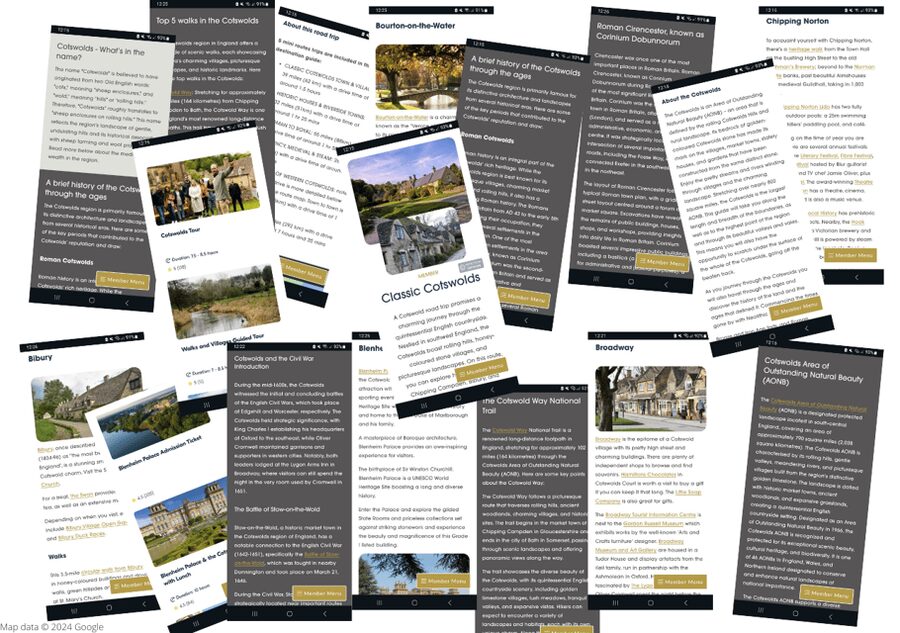
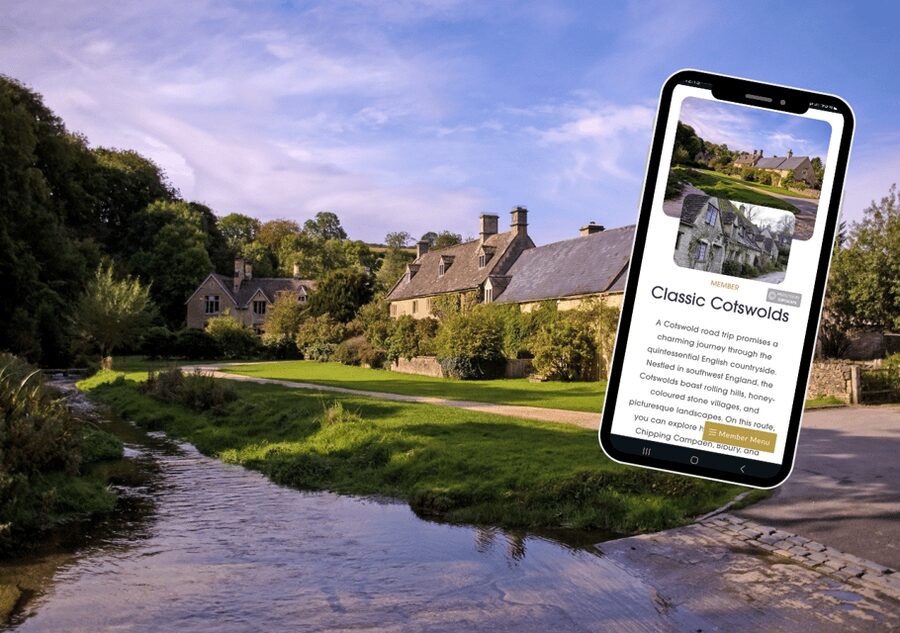
The best thing about this Cotswolds online road trip guide is its flexibility. Instead of forcing you through one fixed schedule, it gives you a 183-mile route linking 20 destinations, then lets you choose the villages, estates, riverside towns, and scenic roads that fit your trip.
I like the 12 months of access and the five smaller route ideas, which make the $17 group price useful for planning more than one visit. I also like the practical links for parking, getting there, places to stay, and suggested Google Maps routes. The main drawback is that this is a digital guide, not live navigation. One customer found it awkward to search and move between pages, so you need patience and your own transport.
Key points at a glance
- Five flexible route ideas: Choose from sections covering classic villages, country estates, riverside stops, valleys, and lesser-known places.
- 183 miles across 20 destinations: The guide gives you a broad Cotswolds plan rather than a single short outing.
- Useful for three to 14 days: Combine stops to suit a long weekend, a week, or a slower holiday.
- $17 for up to seven people: The group price can be excellent value if you are sharing the guide with family or friends.
- Online access for 12 months: Read it on a phone, tablet, or computer before and during your trip.
- Planning help, not a chauffeur: You arrange your own transport, accommodation, meals, entry tickets, and live directions.
What this Cotswolds guide really gives you
Think of this experience as a digital planning book with links, route suggestions, and destination notes. It does not take you anywhere by itself. You use it at home to shape a self-drive holiday, then keep it open on your phone while you travel.
The central plan covers about 183 miles, or 292 kilometres, from point to point. That sounds manageable, but you should not treat it as one long day out. The value lies in breaking it into smaller sections and allowing time to walk, browse, eat, and stop at places that catch your eye.
The guide is arranged around five themed ideas. This is helpful because the Cotswolds are not simply a list of pretty villages. You can build a trip around market towns, country houses, riverside places, old wool towns, scenic valleys, ancient sites, or walks in the Cotswolds Area of Outstanding Natural Beauty.
The route is also designed for different time frames, generally from three to 14 days. You can use a short version for a weekend, pick one regional section for several days, or spread the full route across a longer holiday.
A handful of other Britain outings to weigh up
- Magical London: Harry Potter Guided Walking Tour
★ 4.7 · 22,044 reviews - London: Emirates Stadium Entry Ticket and Audio Guide
★ 4.7 · 5,513 reviews - Liverpool: City & Beatles Tour with Live Guide & Live Music
★ 4.8 · 5,249 reviews
How the five route sections help you plan
The five sections are the guide’s main strength. They give you a starting point when the Cotswolds feel too full of choices.
One section focuses on the classic towns and villages. This is where you find the places most likely to appear in a first-time Cotswolds plan: Bourton-on-the-Water, Bibury, Castle Combe, Stow-on-the-Wold, Moreton-in-Marsh, and Chipping Campden.
Another section points you toward country estates, including Blenheim Palace, Highgrove House, and Snowshill Manor. These are not interchangeable stops. Blenheim Palace offers a large estate setting, while Snowshill Manor is a more intimate historic house experience. Highgrove House may require particular planning, so use the links to check current arrangements before building your day around it.
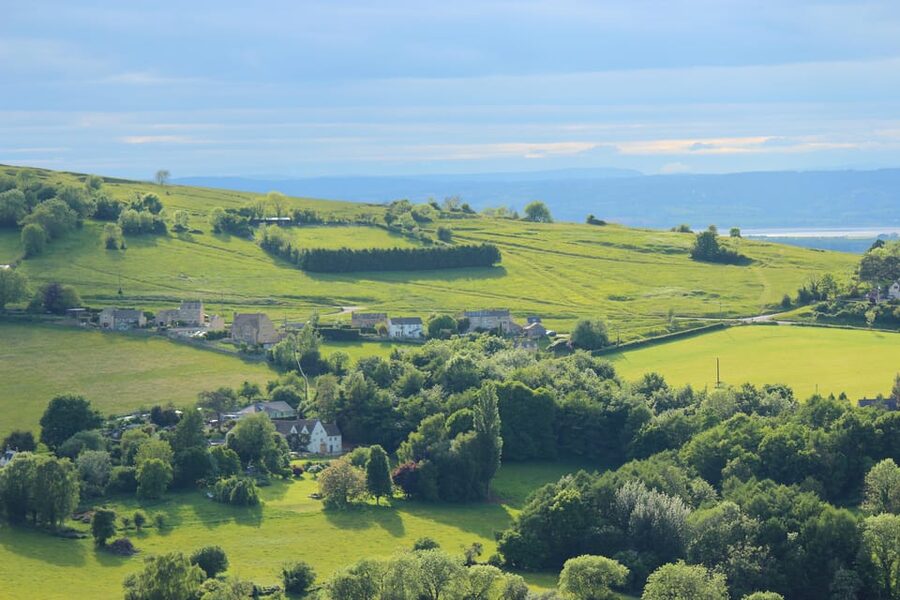
The riverside section includes Fairford and Lechlade. These give your trip a change of pace from stone villages and market squares. The guide also covers the Western Valleys, including Stroud and Slad Valley, Berkeley, and the Severn Valley, with a scenic driving option.
The final ideas include history and special-interest stops. You can follow the story of the wool trade, visit medieval wool churches, look for ancient sites dating from the Neolithic period to the Iron Age, ride a Victorian steam train, or spend time in Regency Cheltenham.
This structure helps you choose by interest rather than simply chasing famous names.
Bourton-on-the-Water, Bibury, and the classic village circuit
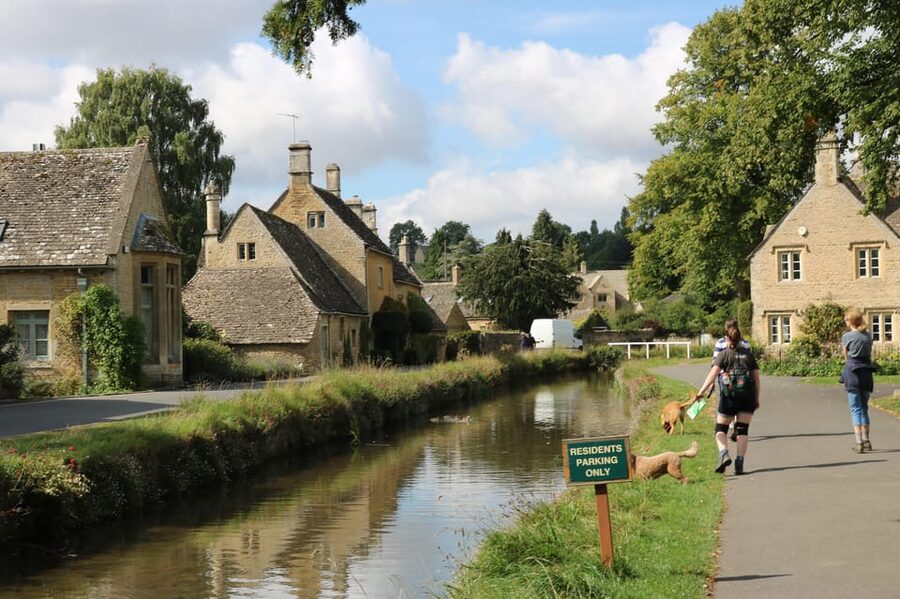
Bourton-on-the-Water is one of the easiest Cotswolds places to picture before you arrive. The River Windrush runs through the village, crossed by low stone bridges and lined with pale cottages. Its nickname, the Venice of the Cotswolds, tells you what the guide wants you to notice: water, bridges, and a compact village centre.
It is a strong first stop because it gives you the familiar Cotswolds look quickly. The trade-off is that its popularity makes parking and timing important. Use the guide’s parking links, and do not assume you can arrive at any hour and find a simple space close to the centre.
Bibury is another classic. William Morris described it as the most beautiful village in England, and the guide uses it as one of the key scenic stops. Its appeal is concentrated, so you may want to pair it with nearby destinations rather than give it an entire day.
Castle Combe offers a different mood. It is a medieval village with stone buildings and a very preserved appearance. This is the postcard stop, the place to visit when you want a compact historic setting that feels untouched by modern development.
The practical point is to avoid treating these villages as a race. The guide gives you ideas, but you decide how long to stay. A three-day trip may call for one or two classic villages each day. A week-long trip gives you room for walks, estates, valleys, and slower stops.
Stow-on-the-Wold, Moreton-in-Marsh, and Chipping Campden
Stow-on-the-Wold is not only a pretty stone village. Its historic market square, antique shops, and traditional inns give it a stronger town feel than some of the smaller stops. I would use it as a place to browse and pause, not just photograph.
Moreton-in-Marsh is another useful market town. It has antique shops, cosy inns, and a long-running Tuesday market. If your dates line up, the market can give the day a stronger local focus. If they do not, the town still works as a practical base or link between other destinations.
Chipping Campden is one of the most attractive stops in the guide. Its golden stone buildings and Arts and Crafts connections give it more than surface charm. You can look at the architecture, but the town also helps explain how the Cotswolds changed from a wool-producing region into a sought-after historic destination.
These towns are important for balance. If you visit only tiny villages, your trip can become a sequence of similar views. Stow-on-the-Wold, Moreton-in-Marsh, and Chipping Campden bring in shops, market history, inns, and a little more daily life.
Elsewhere in Britain, a change of pace:
- London: The London Eye Entry Ticket
★ 4.6 · 35,875 reviews - From London: Harry Potter Warner Bros Studio Tour
★ 4.7 · 26,588 reviews - London: Westminster to Greenwich River Thames Cruise
★ 4.5 · 22,836 reviews - London: Madame Tussauds London
★ 4.6 · 20,915 reviews
Winchcombe and the country estates
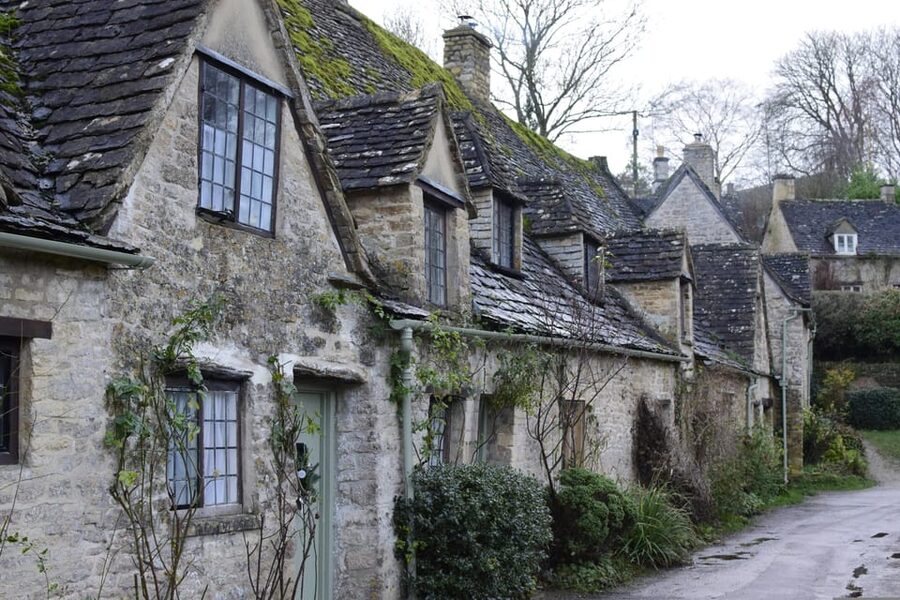
Winchcombe is a good choice if you want history without giving up the small-town feel. Expect timber-framed houses, historic trails, and access to Sudeley Castle. The town can work as a full stop or as a base for exploring nearby attractions.
Sudeley Castle adds a major historic site to the Winchcombe area. The guide also includes Blenheim Palace, Highgrove House, and Snowshill Manor, giving you several different kinds of estate visit.
Blenheim Palace is the grand option. Highgrove House is a well-known country residence, while Snowshill Manor offers a more personal and unusual historic house setting. Since the guide does not arrange admission or activities, you must check opening information and book anything required yourself.
This is where the online links earn their keep. Estate visits can have limited opening dates, seasonal schedules, or advance requirements. Use the guide for ideas, then confirm the details directly before setting your route.
Fairford, Lechlade, and the Western Valleys
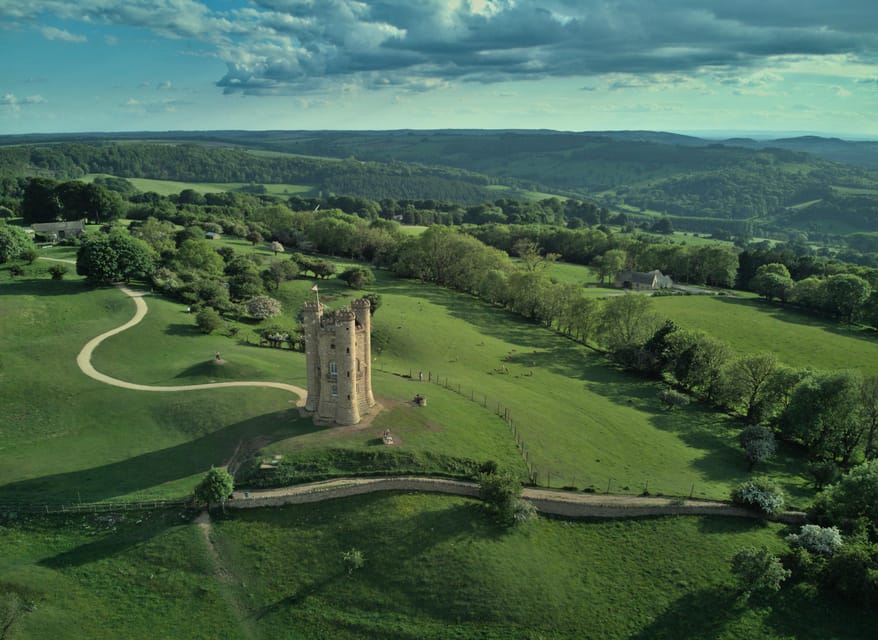
Fairford and Lechlade broaden the trip beyond the most photographed villages. Both are presented as riverside towns, so they suit a day when you want water, walking, and a less repetitive change of scene.
The Western Valleys section includes Stroud and Slad Valley, Berkeley, and the Severn Valley. It also suggests a scenic drive, which may appeal if you enjoy the journey as much as the destination.
Stroud and Slad Valley give you a different side of the region from the honey-coloured villages. Berkeley and the Severn Valley add more variety to the route. The supplied information does not promise detailed turn-by-turn directions for every road, so use the suggested maps as a starting point rather than your only navigation tool.
The guide’s strength here is range. You can build a Cotswolds visit around more than the standard circuit of Bourton, Bibury, and Castle Combe.
Walks, wool churches, trains, and ancient sites
The guide includes beautiful walks in the Cotswolds AONB, but it does not present itself as a specialist walking guide. That means you should use its walking suggestions for inspiration, then check the linked details and prepare your own route carefully.
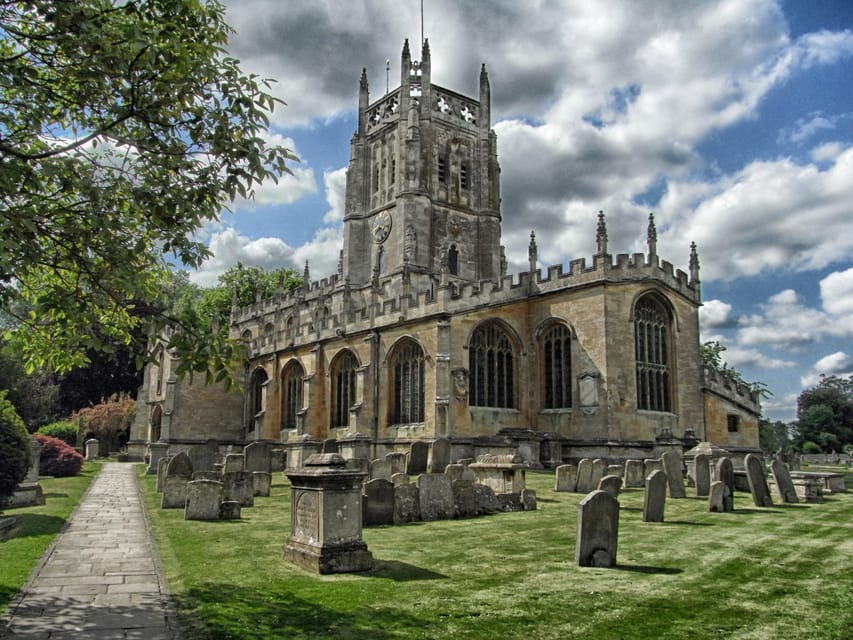
The wool trade section adds useful context. Many Cotswolds towns grew wealthy through wool, and medieval wool churches help explain why the region contains such impressive historic buildings in relatively small communities.
Ancient sites from the Neolithic period to the Iron Age add another layer. These stops are useful if you want your trip to include more than architecture and scenery.
You can also include Victorian steam trains and Regency Cheltenham. The steam train option will suit families and rail fans, while Cheltenham offers a more formal urban contrast through its Regency character.
These choices matter because they help you build a trip around your own interests. You do not have to visit all 20 destinations. The guide encourages you to take the parts that suit your time and leave the rest.
Using the Google Maps links without getting frustrated
Each route includes pre-populated Google Maps with suggested pins and directions. You can view those routes and adapt them on your own device, but the guide itself is not customisable.
That distinction matters. You are not entering your dates, hotel, preferred driving time, or chosen stops into a route planner that builds a new trip for you. You are reading a prepared plan and making changes yourself.
You also do not get live navigation from the guide. Keep a charged smartphone with you, and use your own mapping system for current directions. The guide can show you what to connect, but it is not a replacement for navigation.
The online layout may require some getting used to. One customer found there was no easy map to browse and that it was necessary to click through pages and return to the map. I would spend time with the guide before leaving home, save the key pages, and note the destinations you actually plan to visit.
Is $17 good value for a group of seven?
At $17 per group of up to seven, the price is low compared with a guided day tour. You are paying for planning material, not transport, admission, meals, hotels, or personal guiding.
For a group of friends or a family, the cost can be excellent. Even for one person, the 12-month access period gives you time to plan carefully and return to the guide if your first trip does not cover everything.
One customer specifically liked the one, three, five, and seven-day road trip options. Another noted that the guide would be even more useful with more time, since access lasts for a year. That is the right way to think about this product: it rewards planning time and repeated use.
The value drops if you already know the Cotswolds well or prefer to make every decision from scratch. It may also feel limited if you expect live help, personal recommendations, or full transport planning.
What you need to arrange yourself
You need your own transport to reach the suggested destinations. No one meets you, and any starting point shown in the material is only an example. You choose where to begin and end.
You also arrange accommodation, activities, and entry tickets yourself. The guide may point you toward useful links, but it does not book anything on your behalf.
Bring a charged smartphone and travel insurance. Since access is online, check that you can sign in before you leave. You receive a separate account link after booking, and it is not the same as your GetYourGuide login.
You can access the material on a smartphone, tablet, or desktop. There is no app to download.
Who should book this Cotswolds road trip guide?
I would recommend it most to a first-time visitor who wants a sensible starting framework but does not want a fixed group tour. It also suits families and friends sharing a car, since one purchase covers up to seven people.
It is especially useful if you have three to 14 days and want to mix famous villages with estates, valleys, riverside towns, walks, and historic sites. The long access period helps if your plans are still taking shape.
I would be cautious if you need detailed public transport information from London or another arrival point. One customer from Canada wanted more help with reaching the Cotswolds from London, and the supplied material does not promise a full transport guide.
I would also skip it if you need personal assistance during the trip or a fully custom route. This is a planning tool for an independent self-drive holiday.
Should you book it?
Book this guide if you want a low-cost way to organise a flexible Cotswolds road trip and you are happy to do some work yourself. Its best features are the five themed sections, the 20 suggested destinations, the 183-mile route, and the year of access.
Do not book it expecting a guided experience, live navigation, or bookings made for you. Prepare before departure, use the links selectively, confirm opening details directly, and treat the maps as planning aids.
For $17 per group, I think it is a sensible buy for a first visit, especially if you have several days and want to cherry-pick the Cotswolds that appeal to you most.
FAQ
How much does the online Cotswolds guide cost?
The price is $17 per group of up to seven people.
How long can I access the guide?
You receive access for 12 months, also described as 364 days.
Is this a guided tour with a person?
No. This is a self-guided online experience. No guide meets you in person.
Do I need my own transport?
Yes. You need your own transport to visit the suggested destinations.
How many destinations does the guide cover?
The guide includes ideas for 20 key destinations across the Cotswolds.
How far is the suggested route?
The recommended point-to-point route covers about 183 miles, or 292 kilometres.
Can I use the guide for a three-day trip?
Yes. The guide gives sample ways to shape trips from about three to 14 days.
Can I customise the guide itself?
No. The guide is not customisable, but its Google Maps routes can be viewed and adapted on your own device.
Does the guide provide live navigation?
No. It provides suggested routes, destination information, and map links, but not live navigation.
Can I cancel for a full refund?
Yes. You can cancel up to 24 hours in advance for a full refund.
New listings around Britain
- Loch Lomond & Trossachs National Park Drive Tour with an App★ 3.8 · 3 reviews
- London: Bermondsey Craft Brewery Tour★ 5.0 · 3 reviews
- Chawton: Village tour to discover its ties to Jane Austen★ 5.0 · 3 reviews
- Colourful Notting Hill Photography Tour★ 5.0 · 3 reviews
- The London Historic Pubs Tour★ 4.0 · 3 reviews
- Anglesey Tour App, Hidden Gems Game and Big Britain Quiz (7 Day Pass) UK★ 5.0 · 3 reviews
- Roybridge, Lochaber: CANYONING – Laggan Canyon★ 5.0 · 3 reviews
- Ultimate Royal London, Thames River Boat Ride & Walking Tour★ 5.0 · 3 reviews
Guided, compared.

Magical London: Harry Potter Guided Walking Tour
Read our review →
Emirates Stadium Entry Ticket and Audio Guide
Read our review →
City & Beatles Tour with Live Guide & Live Music
Read our review →
University and City Walking Tour with Alumni Guide
Read our review →

Christmas Lights Nighttime Bus Tour with Live Guide
Read our review →