Reviewed · LONDON TOURS
Clapham South: Subterranean Shelter Guided Tour
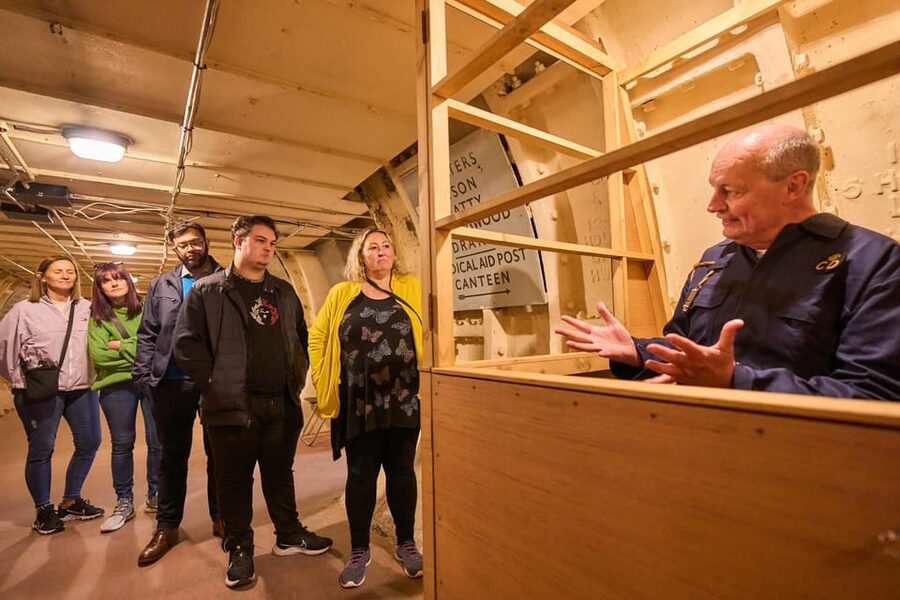
Beneath Clapham South station sits a mile-long wartime shelter built to protect more than 8,000 people. You descend about 30 metres underground, pass through dim tunnels, and see the original bunks where Londoners spent nights during air raids. I especially like the personal Windrush stories and the historical graffiti, which make this more than a military site. The main drawback is practical: the tour involves uneven ground, low light, and static escalators, so it is not suitable for anyone with claustrophobia or mobility problems.
I also like the way the guides bring the shelter to life rather than simply pointing at old walls. One guide takes the role of a 1940s ARP Warden, while the other adds context and personal accounts. The recreated warden’s cabin and canteen are useful touches, though visitors wanting a broad London sightseeing tour should know that this is a focused, underground experience lasting 75 minutes.
Key points to know before you book
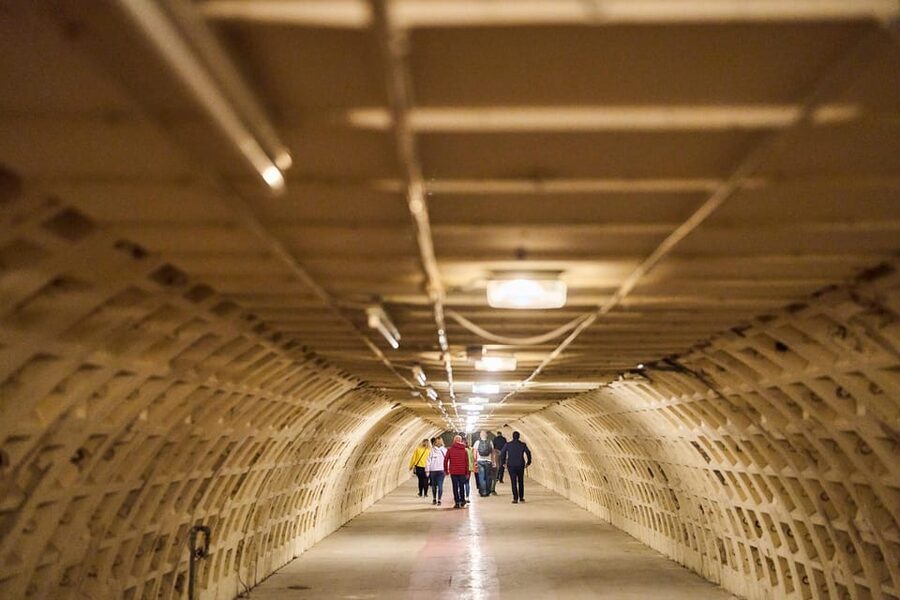
- Eleven stories below Clapham South: You enter a disused shelter hidden beneath a working Tube station and hear Northern line trains passing overhead.
- Original bunks and wartime fittings: The cramped sleeping quarters show how thousands sheltered during air raids.
- Windrush stories underground: Hear about Caribbean arrivals who stayed in the shelter after reaching Britain on HMT Empire Windrush.
- A guide in ARP Warden character: The role-play helps explain what a first night in the shelter might have felt like.
- Historical graffiti on the walls: Names and marks left by occupants give the tunnels a direct human connection.
- A demanding walk: Expect low lighting, uneven surfaces, stairs, and static escalators. Wear sturdy closed shoes.
Entering the shelter beneath Clapham South
Your meeting point is in front of the Marks & Spencer Food Hall on Balham Hill, postcode SW12 9EA. It is about a two-minute walk from Clapham South station. Exit the station, turn right, and arrive 15 minutes before the scheduled start.
That early arrival matters. This is not a turn-up-and-wander site. The shelter is normally closed, and the group enters together with the tour team. You should have your passport or ID card with you, and there is no cloakroom, so leave suitcases and large bags elsewhere.
The entrance sets the tone. You are not walking into a polished museum gallery with bright signs and wide floors. The tour leads you into a restricted underground space beneath an active part of London. The contrast between the Tube station above and the shelter below is one of the experience’s best ideas.
Once underground, the tour follows a network of passages stretching for more than a mile. You will not walk every inch of it, but the scale becomes clear as the route moves through long, functional corridors rather than a short exhibit room. Low lighting and enclosed walls make the setting feel serious without needing much decoration.
A handful of other London outings to weigh up
- From London: Harry Potter Warner Bros Studio Tour
★ 4.7 · 26,588 reviews - London: Westminster to Greenwich River Thames Cruise
★ 4.5 · 22,836 reviews - Magical London: Harry Potter Guided Walking Tour
★ 4.7 · 22,044 reviews
How a wartime shelter became an underground city
The shelter was constructed in the 1940s and opened in 1944. It was one of eight deep-level shelters built below London, designed to protect large numbers of people from air raids.
The idea was simple but demanding. London needed places far below street level, where people could sleep during bombing raids and remain safer than they would be in ordinary buildings. Clapham South’s shelter included sleeping areas, medical stations, and a canteen, so it functioned like a small underground community rather than a basic basement.
I find that scale useful because it changes how you picture wartime London. An air raid shelter can sound like a single room with benches and blankets. Here, the plan was much larger. More than 8,000 people could be accommodated, and the tunnels had to support food, first aid, movement, and overnight sleeping.
The guides explain how the site was built in secret and how it fitted into London’s wartime transport system. You also hear the Tube trains moving above your head. That sound is a small but powerful reminder that the shelter is not an isolated historic ruin. It remains physically tied to the city’s daily transport network.
The site was created for emergency use, but its story did not end with the war. The post-war chapters are just as important, especially the account of Caribbean migrants who arrived in Britain on HMT Empire Windrush. The shelter provided accommodation for some of the first arrivals, making this place part of both wartime and post-war London.
Original bunks and the reality of sleeping underground
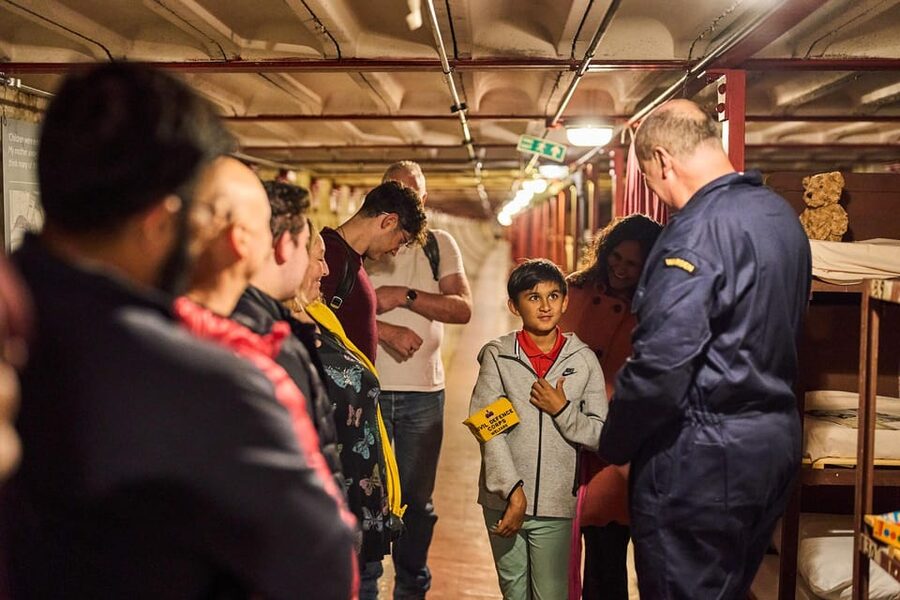
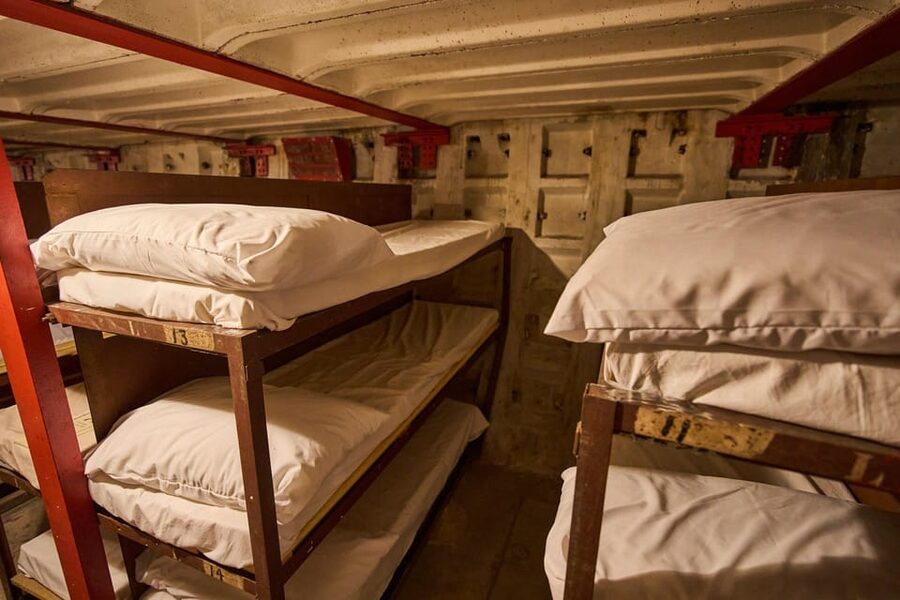
The sleeping quarters are among the most affecting parts of the tour. You see the original cramped bunks, arranged for people who needed somewhere safe to spend the night during air raids.
Do not expect a comfortable bedroom or a spacious dormitory. The bunks show how little privacy and personal space people had. Families and strangers had to share a large underground setting, with practical needs taking priority over comfort.
The tour helps you imagine the routine. People came down to shelter, found their allotted place, waited through the danger, and tried to sleep. The experience was protective, but it was hardly restful. The narrow beds and long rows make that plain without the need for dramatic effects.
Some of the original beds have been turned into benches for the tour. That is practical, as you may need to sit during parts of the presentation, but it also puts you close to the objects used by shelterers. You are not looking at a distant reconstruction behind glass. You are sitting on the same basic furniture.
Look carefully at the walls as you move through the sleeping areas. Historical graffiti left by shelter occupants is one of the most personal details here. Names, marks, and writing connect the shelter to the people who actually spent time inside it. These traces are easy to miss if you focus only on the larger displays, so keep your eyes on the tunnel surfaces.
An ARP Warden turns facts into a scene
The guided format is important at Clapham South. Without a guide, you would see bunks, tunnels, and old surfaces, but much of the human story would remain out of reach.
The tour includes a guide portraying a 1940s Air Raid Precautions Warden. This role-play element helps set the scene and gives the wartime section a clear point of view. You follow the footsteps of a South London family arriving for its first night in the shelter, while the warden explains the duties and pressures involved.
This is not simply a costumed greeting at the entrance. The character is used to show what shelter life required and how the site operated. The approach adds a little theatre, but it remains tied to the practical history of the shelter.
The other guide provides the wider explanation and helps connect the wartime account to the post-war years. Past tour performances have been praised for enthusiasm, clear explanations, and the effort to make the setting feel real. Since the experience is in English, you need enough English to follow spoken explanations and personal accounts.
I like this two-guide approach because it avoids making the whole visit depend on a single performance style. One guide can carry the role-play while the other supplies context, answers questions, and keeps the tour moving through the site.
Elsewhere in London, a change of pace:
- London: Madame Tussauds London
★ 4.6 · 20,915 reviews - London: Warner Bros. Studio Tour with Transfers
★ 4.7 · 17,586 reviews - London: Tower Bridge Entry Ticket
★ 4.7 · 15,560 reviews - London: St Paul’s Cathedral Entry Ticket
★ 4.7 · 9,813 reviews
Recreated 1940s spaces and genuine objects
The newly refurbished warden’s cabin and canteen are presented in their 1940s form. These spaces help explain the shelter as a working facility, not only as a place where people lay down to sleep.
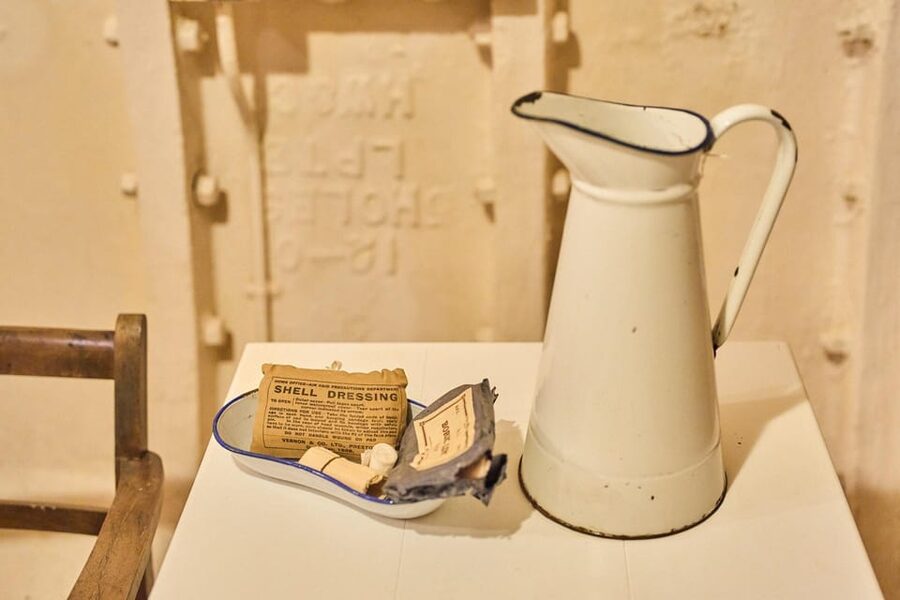
The warden’s cabin points to the organisation behind an emergency shelter. Someone had to manage arrivals, maintain order, pass on information, and deal with problems. The canteen shows another side of underground life: thousands of people needed food and drink while they waited out air raids.
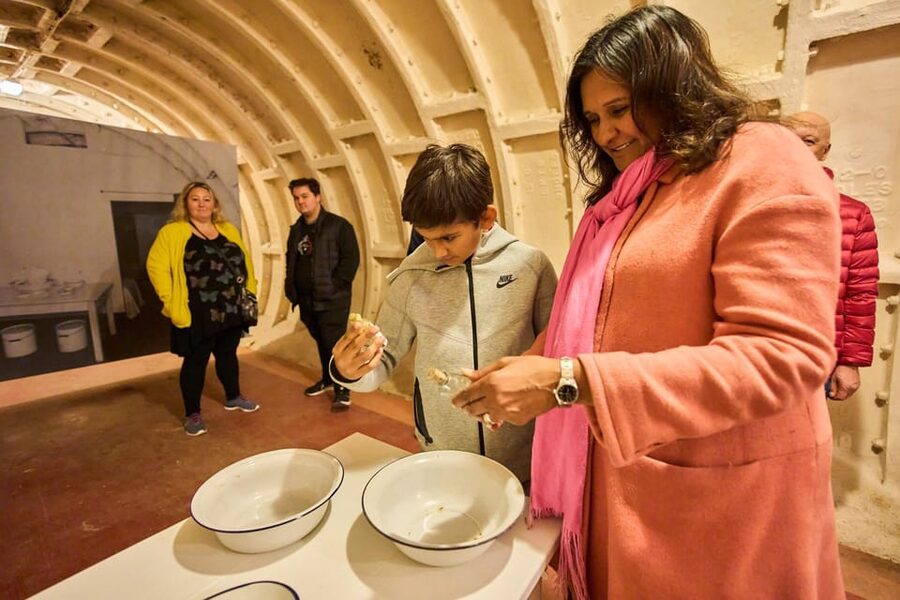
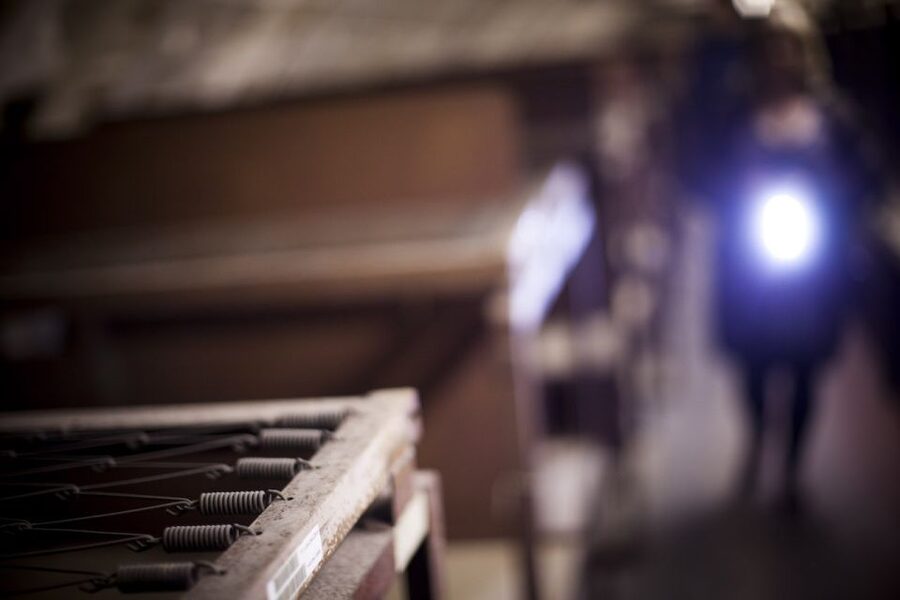
You also handle genuine Second World War artefacts, including period torches. There is an Anderson shelter display as well, giving you a chance to compare the large deep-level facility with a more familiar type of domestic air-raid shelter.
These objects matter because the shelter itself can feel abstract at first. A long corridor tells you about scale, but a torch shows how people moved through darkness. A bunk shows how they slept. A canteen explains how a large crowd could be supported underground.
The tour does not turn the site into a theme park. Its strongest moments come from plain objects and cramped spaces. You may find the recreated areas more accessible than the bare tunnels, while the original sections provide the stronger sense of age and use.
From wartime refuge to Windrush accommodation
The Windrush section gives the tour a wider reach. After the war, Clapham South was used in connection with the first Caribbean migrants arriving in Britain on HMT Empire Windrush.
You hear first-hand accounts from people who worked and sheltered at the site in the post-war period. You also learn about the beds where some arrivals spent their first nights in London. That shift in subject is valuable because it shows how one place can take on a new purpose as the city changes.
The shelter is often easy to picture as a wartime location only. The Windrush stories challenge that narrow view. They place the tunnels within the story of post-war Britain, migration, and the early experiences of Caribbean newcomers.
The Festival of Britain is also part of the site’s later story. These connections make the tour more than a study of bombing and civil defence. You are following the changing use of an underground space through several major moments in London’s twentieth-century life.
I would pay close attention here, especially if you already know something about Windrush or post-war migration. The accounts give the shelter a personal dimension, while the bunks show the basic reality of arriving in London and needing somewhere to stay.
What the 75-minute route feels like
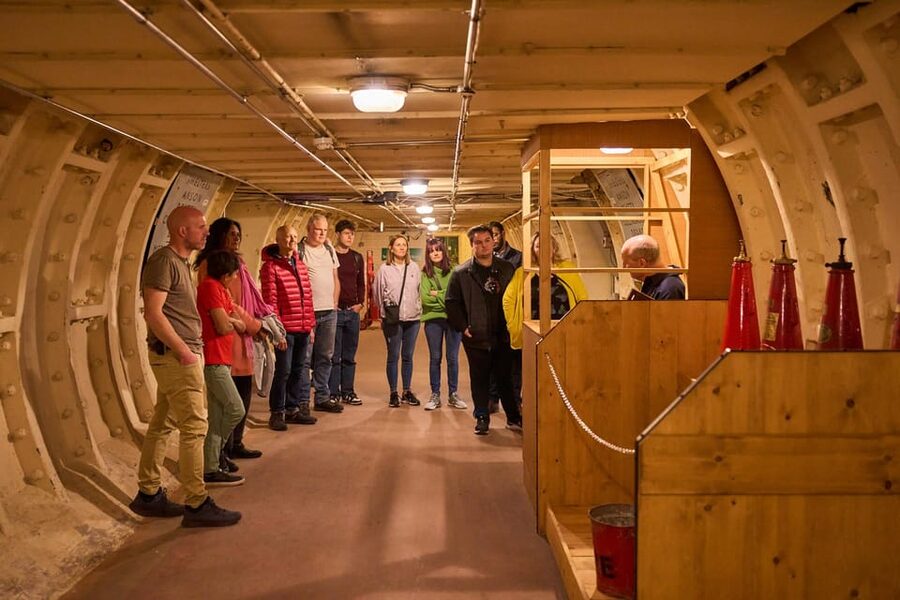
The tour lasts 75 minutes, which is long enough to cover the shelter’s main stories without taking up half a day. You spend the time walking, stopping for explanations, examining objects, and listening to the guides.
The route includes uneven ground and low lighting. It also involves walking up and down static escalators, so do not assume that the presence of an old Tube station makes the tour step free. The experience is not suitable for people with mobility impairments, and open-toed shoes are not allowed.
Wear sturdy, comfortable shoes and clothing suited to the weather. Even though most of the tour is underground, the meeting and entry process take place in the city, and you should be prepared for the conditions outside.
The enclosed setting is part of the point, but it will not suit everyone. If you are claustrophobic, the long tunnels, low light, and crowded sleeping areas could make the visit unpleasant. Children must be at least 10 years old.
Food and drinks are not allowed inside, and large bags or luggage are prohibited. Since there is no cloakroom, plan your day so you arrive with only what you need.
Is $51 a fair price?
At $51 per person, this is not a cheap stop in the way a self-guided museum room might be. You are paying for access to a normally closed site, a live English-language guide, archive-based interpretation, role-play, and a carefully structured route through an unusual location.
The value depends on what you want from London. If you are mainly looking for famous sights, the price may feel high for a 75-minute activity. If you enjoy transport history, wartime London, social history, or places normally closed to the public, the cost is easier to justify.
I think the personal accounts and original fittings make the price stronger than a simple underground walk. The shelter has genuine physical remains, but the guide is what turns them into a coherent story. The Windrush material also broadens the experience beyond military history.
Flexible booking helps if your plans are uncertain. You can reserve and pay later, and cancellation is free up to 24 hours before the tour for a full refund. That is useful in London, where weather, transport delays, and changing plans can disrupt a tightly packed day.
Getting there and fitting it into your day
The meeting point is near Clapham South station, so the tour is relatively easy to place into a South London itinerary. Meet at the Marks & Spencer Food Hall on Balham Hill, SW12 9EA, about two minutes from the station exit.
You should not cut the timing close. Arrive 15 minutes early, particularly if you are unfamiliar with the station or need to find the food hall. The tour does not include travel to or from Clapham South, so your Tube or other transport costs are separate.
The site’s location also helps explain its importance. You are not travelling to a remote military complex. You are meeting in an ordinary London neighbourhood and then going far below it, into a facility connected to the city’s transport system.
I would pair this with other South London plans rather than trying to squeeze it between distant central London bookings. The 75-minute duration is manageable, but the early arrival and travel time still need space in your schedule.
Who will enjoy this most
I would recommend Clapham South to adults and older children who like London’s less polished stories. It suits people interested in the Second World War, the Tube, architecture, social change, and the Windrush generation.
It is also a good choice if you have already visited London’s major museums and want a more physical experience. You walk through the setting itself, sit on original bunk furniture, hear trains above, and see marks left by people who used the shelter.
It may be less suitable if you prefer bright, spacious attractions with plenty of room to wander at your own pace. The tour is guided, the route is fixed, and the site has genuine physical limits.
The strongest praise has focused on the guides’ enthusiasm, preparation, and role-play. That matters here. The shelter is atmospheric, but a good explanation helps you understand why the tunnels were built, how they worked, and why they mattered after the war.
Should you book Clapham South?
Book this tour if you want to see a working part of London’s past that is both physical and personal. The original bunks, wall graffiti, recreated canteen, and Windrush accounts give you several ways into the story.
Skip it if you have claustrophobia, mobility concerns, or difficulty walking on uneven surfaces. Also think twice if $51 feels too high for a 75-minute activity and your main goal is a general city overview.
For the right visitor, I think it is a strong use of time. You get wartime shelter history, London Transport context, a post-war migration story, and a guide-led visit to a site most people pass over without knowing it is there.
FAQ
How long does the Clapham South shelter tour last?
The guided tour lasts 75 minutes.
Where is the meeting point?
Meet in front of the Marks & Spencer Food Hall on Balham Hill, SW12 9EA. It is about a two-minute walk from Clapham South station. Turn right after leaving the station.
What language is the tour in?
The live guided tour is in English.
How far underground does the tour go?
The route descends about 30 metres underground, described as 11 stories below street level.
Is the tour suitable for children?
Children under 10 are not permitted. The tour may suit older children, but it includes low lighting, uneven ground, and enclosed tunnels.
Can I join if I use a wheelchair or have mobility difficulties?
No. The tour is not step free and includes walking up and down static escalators. It is not suitable for people with mobility impairments.
What should I wear and bring?
Wear sturdy, comfortable closed shoes and weather-appropriate clothing. Bring a passport or ID card. Open-toed shoes, food, drinks, luggage, and large bags are not allowed, and there is no cloakroom.
New listings around London
- London: Bermondsey Craft Brewery Tour★ 5.0 · 3 reviews
- Colourful Notting Hill Photography Tour★ 5.0 · 3 reviews
- The London Historic Pubs Tour★ 4.0 · 3 reviews
- Ultimate Royal London, Thames River Boat Ride & Walking Tour★ 5.0 · 3 reviews
- London: Wallace Collection & National Gallery Private Tours★ 5.0 · 3 reviews
- London: The Birthplace of The Rolling Stones Private Tour★ 5.0 · 3 reviews
- Historic pub tour with Brazilian guide (in Portuguese)★ 5.0 · 3 reviews
- London: Royal Tour with Westminster Abbey & Afternoon Tea★ 3.0 · 3 reviews
London Tours, compared.
Westminster to Greenwich River Thames Cruise
Read our review →
Magical London: Harry Potter Guided Walking Tour
Read our review →