
Reviewed · NEWCASTLE TOURS
Durham History Tour
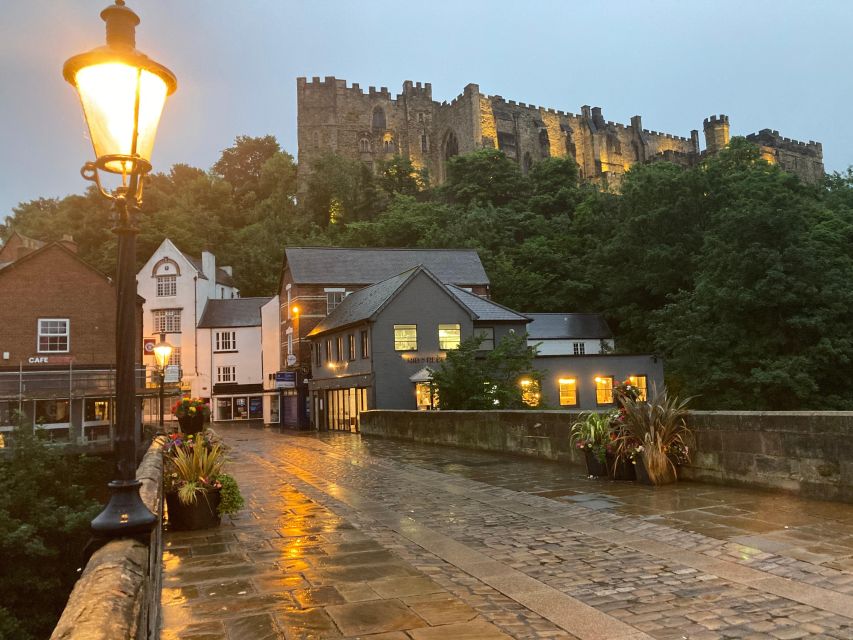
Durham’s castle and cathedral are the stars, but this tour does more than point at grand stone buildings. Starting in the Market Place, guide Peter links the city’s bridges, river, university streets, and medieval power struggles into one clear story. I like the easy pace and the way the route mixes famous sights with quieter paths you could easily miss alone.
I also like that you finish at Durham Cathedral, right in the UNESCO World Heritage Site, rather than simply circling back through busy streets. The main consideration is simple: you do not enter the castle or cathedral, so book this for outdoor history, views, and orientation, then allow extra time to visit the buildings separately.
Key points at a glance
- Meet under the black umbrella: Find the Man on the Horse statue in Durham Market Place.
- Follow the Prince Bishops’ story: Learn how religious and political power shaped the city.
- Walk two historic bridges: The route uses bridges and riverside paths to explain Durham’s setting.
- See Durham University up close: Stroll the South and North Bailey, where university life meets old city streets.
- Finish at Palace Green: The tour ends at the doors of Durham Cathedral, inside the UNESCO World Heritage Site.
- Enjoy a relaxed local guide: Peter is praised for clear storytelling, humor, patience, and useful food suggestions.
Why Durham makes sense on foot
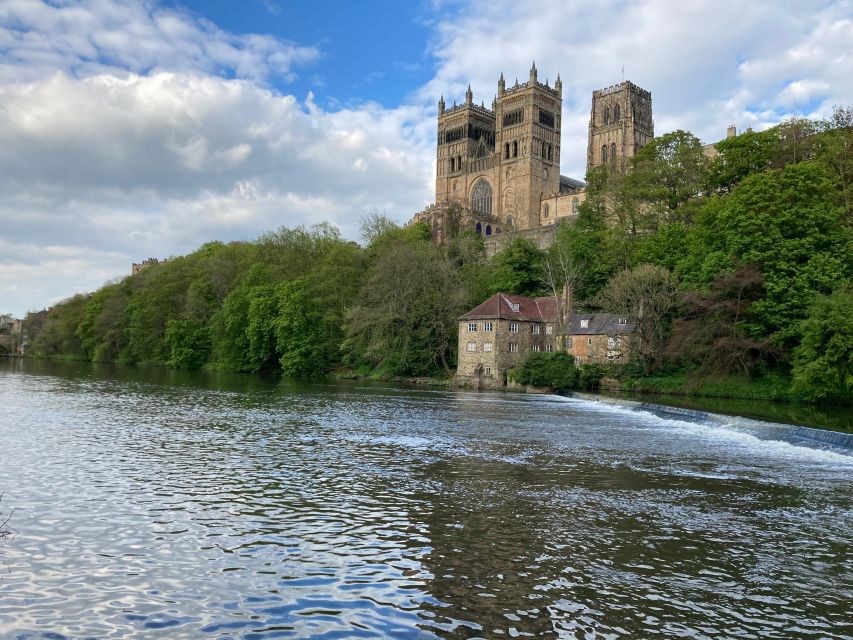
Durham is compact, but it is not always easy to understand at first glance. The cathedral sits high above the River Wear, the castle occupies the same dramatic hilltop, and the old city curls around the water in a way that can feel confusing on a first visit.
This 90-minute walk gives you the basic map in your head. You move from the Market Place toward the river, cross historic bridges, follow riverside paths, and then climb toward the university quarter and Palace Green. I like this order because the city’s shape becomes part of the story.
At $24 per person, the price is fair for a live, English-language tour lasting an hour and a half. You are paying for more than a stroll past buildings. Peter’s explanations connect places to people, legends, geography, and conflict, which gives the city a human scale.
The value is strongest if Durham is new to you. Several people who booked the walk used it as an introduction before exploring on their own. That is the smart way to use it: take the tour early, note the places that interest you, then return to the cathedral, castle, river, or university streets with a better sense of direction.
More History Tours in Britain:
- London: Historic Pubs of Central London Walking Tour
★ 4.9 · 1,065 reviews - Portsmouth: Historic Dockyard Ultimate Explorer Ticket
★ 4.8 · 1,052 reviews - York: Witches and History Old Town Walking Tour
★ 4.7 · 928 reviews
Starting at the Man on the Horse statue
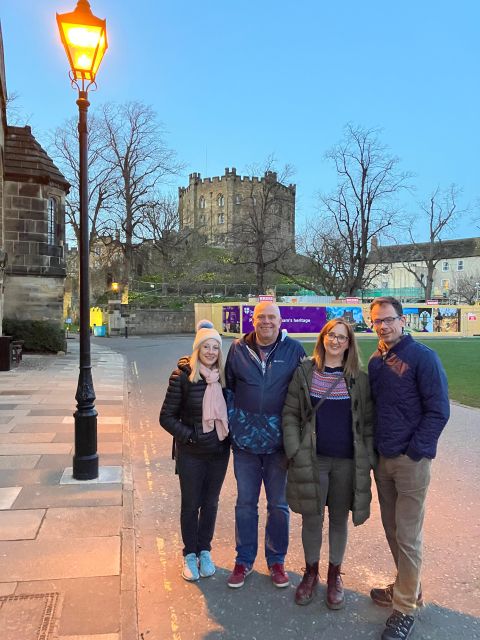
The meeting point is the Man on the Horse statue in the Market Place. Look for the black umbrella. That detail matters in a city center with plenty of people, signs, and passing activity, so arrive with enough time to find the statue rather than searching at the last moment.
The Market Place is a fitting start. It is Durham’s public heart, and the tour begins with the kind of setting where a city’s daily life and long past meet. From here, Peter sets up the story of Durham before leading the group away from the central streets.
Peter is the named guide associated with the tour, and his style comes through clearly in the feedback: relaxed, funny, patient, and easy to follow. He has a strong grasp of Durham city and the wider county, but he does not appear to treat the walk like a classroom lecture. You can ask questions, and the pace leaves room for conversation.
That makes this a good choice if you want history presented in plain language. It also suits families and mixed-age groups better than a tightly scripted walk filled with dates and names.
Bridges, river paths, and Durham’s beginnings
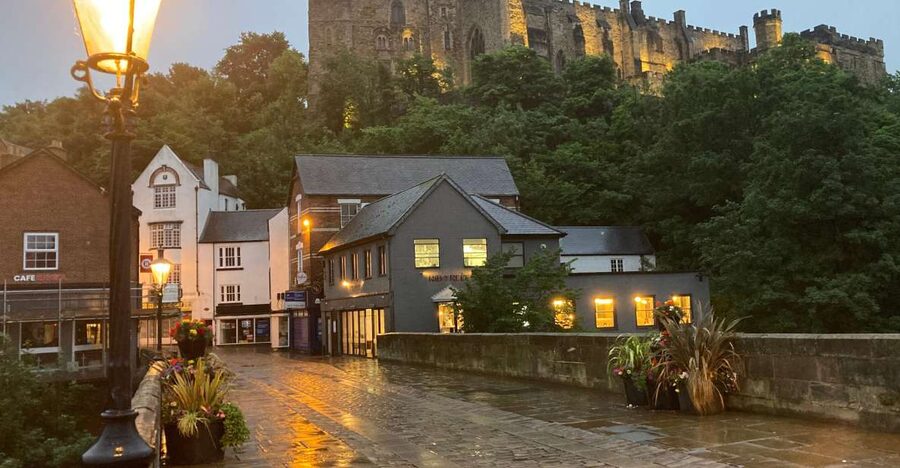
The route takes in two of Durham’s historic bridges and quiet stretches beside the River Wear. These are not just scenic pauses. They help explain why Durham developed where it did and why the city’s medieval story became so tangled with defense, religion, and authority.
The river wraps around the old center, giving Durham its distinctive setting. From the riverside, you can see how the water helped protect the hilltop and shaped movement through the city. Peter uses geography to make the history easier to picture, rather than treating the river as background scenery.
I especially like this part of the walk because it slows things down. Market Place can feel urban and busy, while the riverside paths offer a calmer view of the city. You get a change of mood without leaving the historic center.
The route is described as easy and relaxed, though it is still a walking tour in an old city. Durham has slopes and changing surfaces, so comfortable shoes are sensible. The pace is not presented as strenuous, but you should still expect regular walking between the Market Place, river, Bailey streets, and Palace Green.
The Prince Bishops and medieval Durham
Durham’s story becomes more unusual when you learn about the Prince Bishops. These church leaders held major religious power, but they also had political and administrative authority in the region. Their role helps explain why Durham has both the presence of a cathedral city and the feel of a fortified seat of power.
Peter’s storytelling centers on the people and events that shaped Durham, including legends and the city’s difficult medieval past. This is where a guided walk earns its keep. A building can look impressive on its own, but a guide can explain why it was built, who controlled it, and how ordinary life was affected by decisions made on the hilltop.
The tour does not promise a single narrow theme. You get history, local geography, characters from the past, and stories that connect Durham to the wider county. That variety suits you if you want a broad introduction rather than a specialist study of church architecture or medieval politics.
The strongest praise for Peter focuses on his ability to bring the past to life without losing the group. He is described as articulate and engaging, but also quietly effective and good-humored. That range matters. Some guides dominate the walk; Peter’s style seems more conversational.
A handful of other Britain outings to weigh up
- Hadrian’s Wall & Roman Britain 1-Day Tour from Edinburgh
★ 4.7 · 615 reviews - Best of Newcastle Highlights Walking Tour
★ 4.8 · 51 reviews - Northumberland: Full-Day Tour of Vera Filming Locations
★ 4.7 · 49 reviews - Hadrian’s Wall: 2-Hour Guided Tour
★ 5.0 · 47 reviews
South Bailey and North Bailey: a university quarter with an old-city feel
The walk continues along the South Bailey and North Bailey, home to Durham University. This section shows how the city’s historic core still functions as part of a living community.
The Baileys are useful for understanding Durham beyond its major monuments. You see streets tied to the university while remaining close to the medieval center, and the route gives you a sense of how old buildings and modern life share the same small area.
I like this part because it adds present-day character to the history. The tour is not only about bishops, battles, and cathedral stone. It also shows the city as a place where students, residents, cafés, and visitors use the same streets.
Several people found Peter’s local suggestions useful after the tour, including recommendations for cafés and restaurants. Those tips are not listed as a formal part of the experience, so do not book it solely as a food tour. Still, if you want a trusted starting point for the rest of your afternoon, a local guide’s suggestions can be handy.
Palace Green and Durham Cathedral
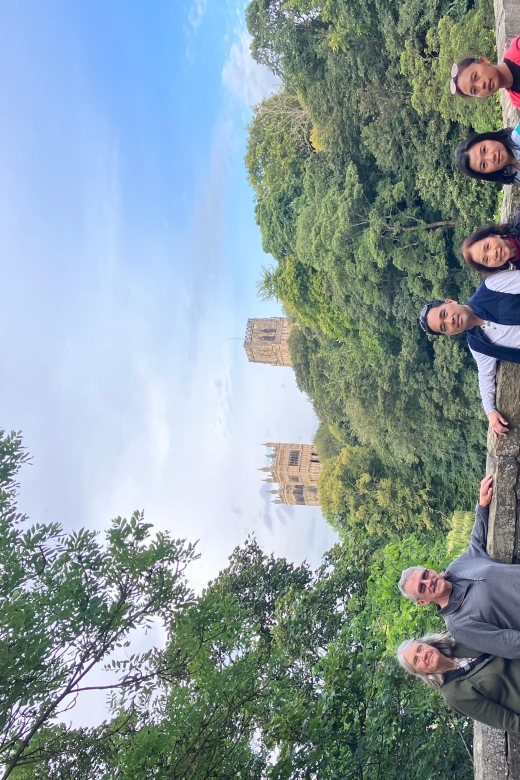
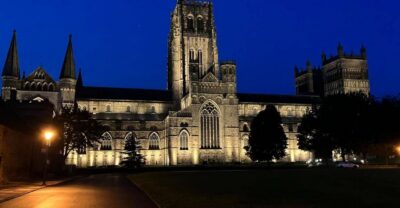
The walk finishes on Palace Green, at the center of Durham’s UNESCO World Heritage Site. This is the visual payoff: Durham Cathedral and Durham Castle face each other across the green, creating one of the city’s most memorable historic spaces.
The tour ends at the doors of Durham Cathedral. That finishing point is practical as well as dramatic. You can continue inside on your own, subject to the cathedral’s opening arrangements, or walk back to the Market Place in about four minutes.
Because the tour stays outside, you should think of the cathedral finish as an introduction, not a complete visit. The guide can explain the setting and its importance, but the walk does not replace time inside the cathedral or castle. If either building is a priority, check its separate admission and opening details before or after your tour.
The outdoor format has one advantage: you spend the full 90 minutes moving through Durham rather than waiting inside one attraction. You get changing views, river access, bridges, streets, and the hilltop setting. For a first look, that broad coverage is useful.
What the 90-minute length feels like
Ninety minutes is a good middle ground for Durham. It is long enough to cover the Market Place, bridges, riverside paths, Baileys, and Palace Green, but short enough to fit around a cathedral visit, lunch, or onward travel.
The feedback repeatedly points to the pace as a strength. The walk is described as easy, well paced, and relaxed. You should have time to listen, take in views, and ask questions without feeling pushed from one stop to the next.
There is a tradeoff. A broad route means no single building receives a long architectural lecture. If you already know Durham well or want detailed treatment of cathedral design, this may feel introductory. If you are seeing the city for the first time, the range is more likely to feel useful.
Weather will also shape the experience. This is entirely outdoors, and one person enjoyed the walk even in drizzle, but Durham’s weather can change. Bring a waterproof layer and wear shoes suited to an old city’s slopes and paths. Dogs are welcome, which is a useful advantage if you are exploring with a pet.
How the guide shapes the experience
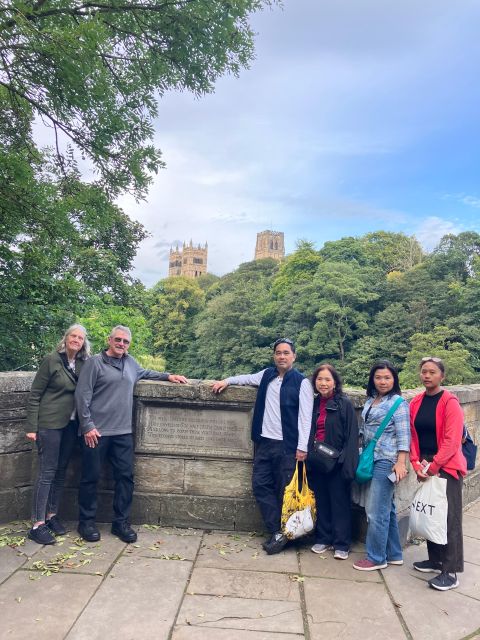
A good city walk depends heavily on the guide, and Peter receives especially strong marks for his delivery. The repeated themes are clear: he explains Durham well, keeps the mood light, answers questions, and shares his affection for the city and county.
That local connection adds something you cannot get from a map. Peter can move between the official story and the smaller details that give Durham its personality. He also brings geography into the explanation, helping you understand why the river, hill, bridges, and buildings fit together.
The group experience may vary, as with any guided walk. Some people want a steady stream of facts, while others prefer time for questions and informal conversation. This tour appears better suited to the second group. You can expect an accessible story rather than a formal academic presentation.
The 5/5 rating from 70 bookings supports the view that the guide is the central strength. Still, use that information sensibly. The tour’s quality depends on the live guide, the weather, and your own interest in outdoor history. The format is simple, and the value comes from how well the story is told.
Who should book this Durham walk
I would choose this tour if you are visiting Durham for the first time, have limited time, or want a clear introduction before exploring the city independently.
It is particularly suitable for:
- First-time visitors who want to understand the city’s layout
- History fans who enjoy people, legends, and political stories
- Families looking for a short outdoor activity
- University visitors who want context for the Baileys
- Couples or small groups who prefer a relaxed walking pace
- Dog owners, since dogs are welcome
- Anyone who wants restaurant and café ideas from a local guide
You may want something else if your main goal is to spend the entire visit inside Durham Cathedral or Durham Castle. Since neither building is entered, you will need to plan those visits separately.
It may also be less suitable if you want a highly specialized tour focused only on architecture, religious art, or one period of history. This walk covers a wider range, which is one of its strengths but also sets a limit on detail.
Booking value and useful planning tips
The $24 price is reasonable for a 90-minute guided walk in one of England’s most important historic cities. You get a live English-speaking guide and a route that covers much more than the central square.
To get the most from it, I would book the walk near the start of your Durham visit. Keep the rest of the day flexible enough to follow up on places that catch your attention. The cathedral doors are the final stop, and the Market Place is only about four minutes away on foot, so you can easily continue your sightseeing afterward.
Reserve and pay later is available, and cancellation is free up to 24 hours before the start time for a full refund. That helps if your Durham plans depend on weather or train schedules.
Check the starting time when booking, since the tour runs at set times based on availability. The meeting point is central, but the black umbrella is the key marker. Arrive ready to walk outdoors for the full 90 minutes.
Should you book the Durham History Tour?
Book it if you want Durham to make sense quickly. The route gives you the river, bridges, medieval core, university streets, Prince Bishops, and the cathedral setting in one manageable walk.
The best reason to choose it is Peter’s approach. He brings local knowledge, humor, and a strong sense of place without making the tour feel stiff. The main limitation is that every attraction is viewed from outside.
For $24, this is a smart first activity in Durham, especially if you have never visited before. Take the walk, finish at Palace Green, then decide which buildings and streets deserve more of your time.
FAQ
How long does the Durham History Tour last?
The tour lasts 1.5 hours, or 90 minutes.
Where does the tour meet?
Meet at the Man on the Horse statue in Durham Market Place. Look for a black umbrella.
Where does the tour finish?
The walk finishes at the doors of Durham Cathedral on Palace Green, within Durham’s UNESCO World Heritage Site. The Market Place is about a four-minute walk away.
Does the tour enter Durham Cathedral or Durham Castle?
No. The tour does not enter any buildings or attractions.
What language is the tour conducted in?
The live guided tour is conducted in English.
Are dogs allowed on the walking tour?
Yes. Dogs are welcome.
Can I cancel the booking for a refund?
Yes. You can cancel up to 24 hours in advance for a full refund. Reserve now and pay later is also available.
New listings around Britain
- London: Secrets of Freddie Mercury Tour with a Cocktail★ 4.1 · 15 reviews
- London: Hampton Court Private Guided Tour★ 3.4 · 15 reviews
- London: Jack the Ripper Tour and Underground Prison in Spanish★ 5.0 · 15 reviews
- Edinburgh: Isle of Skye, Highlands & Jacobite Steam Train★ 4.6 · 15 reviews
- Spanish Language : Original Harry Potter Walking Tour★ 4.5 · 15 reviews
- THE HANGOVER BRUNCH | Benidorm Bingo & Drag Queens★ 4.5 · 15 reviews
- London: Private Couples Photography Session with Landmarks★ 5.0 · 15 reviews
- London: The Saturday Supershow Cabaret at Phoenix Arts Club★ 4.5 · 15 reviews
Newcastle Tours, compared.

Hadrian’s Wall & Roman Britain 1-Day Tour from Edinburgh
Read our review →
Northumberland: Full-Day Tour of Vera Filming Locations
Read our review →


Browse the lists this tour appears in