Reviewed · TICKETS
Aerospace Bristol Entrance Ticket
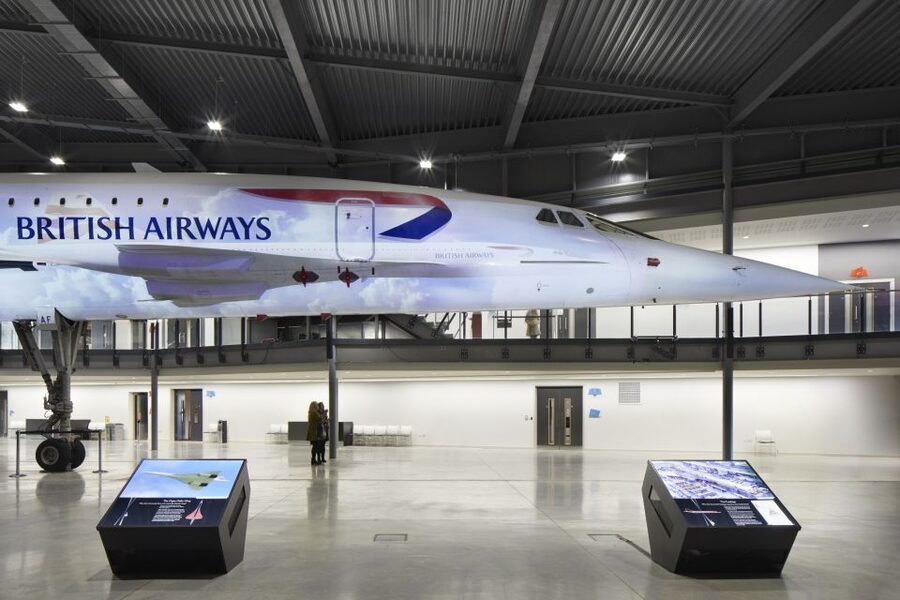
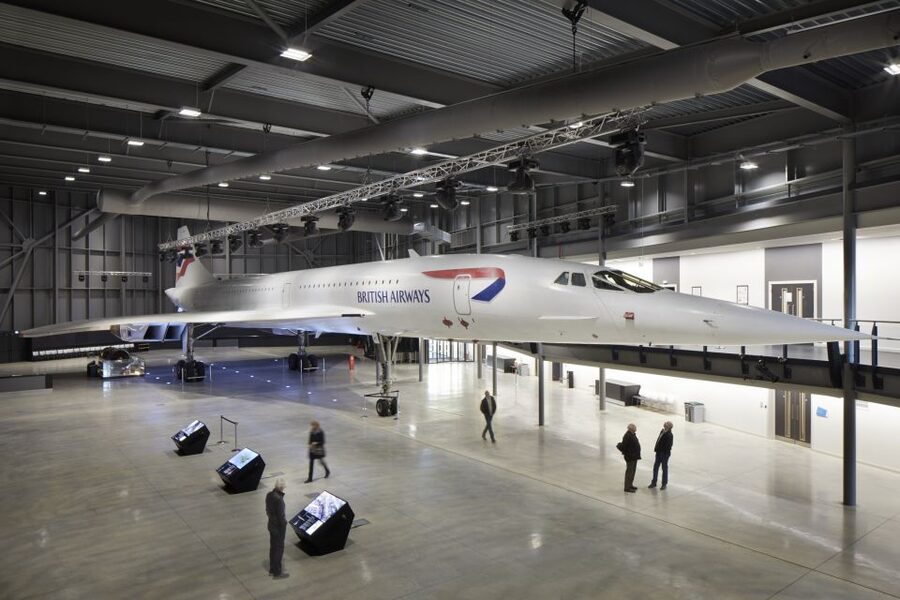
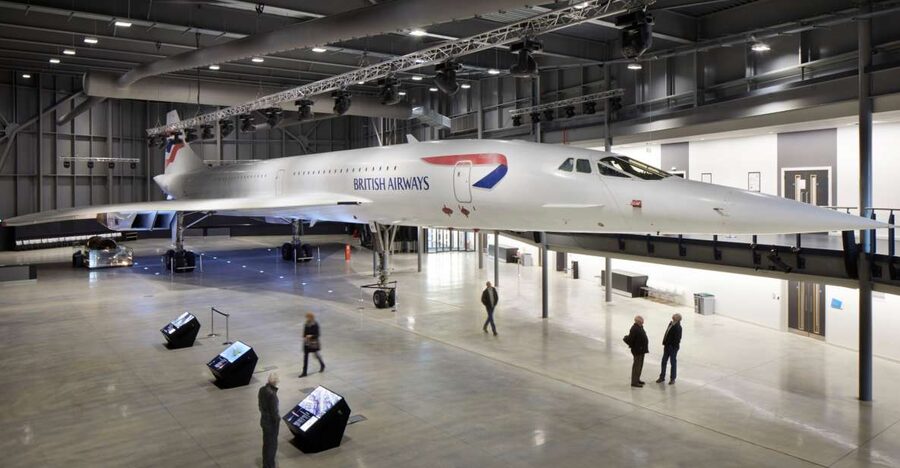
The star of Aerospace Bristol is the last Concorde ever to fly. You can look into the cockpit, walk through the narrow passenger cabin, and see how supersonic travel once worked at close range. A projection show on the aircraft adds drama without turning the visit into a dry museum lesson.
I like the hands-on exhibits, which give children something to do between aircraft displays, and I like the volunteers, including guides such as Colin and Daphne, who bring useful personal insight to the machines. The main drawback is time: the museum is larger than the Concorde hangar alone suggests, and a single visit can feel rushed, especially with young children.
- Walk through Concorde’s cockpit and passenger cabin, rather than viewing it only from behind a barrier.
- Watch a projected show on Concorde that explains the aircraft’s remarkable story.
- Trace more than a century of flight, from early aeroplanes to space technology and military aircraft.
- Use children’s trails and an aircraft-shaped outdoor play area to keep younger visitors involved.
- Ask the volunteer guides for extra detail, with Colin and Daphne singled out for especially strong storytelling.
- Take advantage of the generous return value, but check the booking terms because the activity information says one-day validity while several recent comments describe one-year re-entry.
Why Concorde deserves the first hour
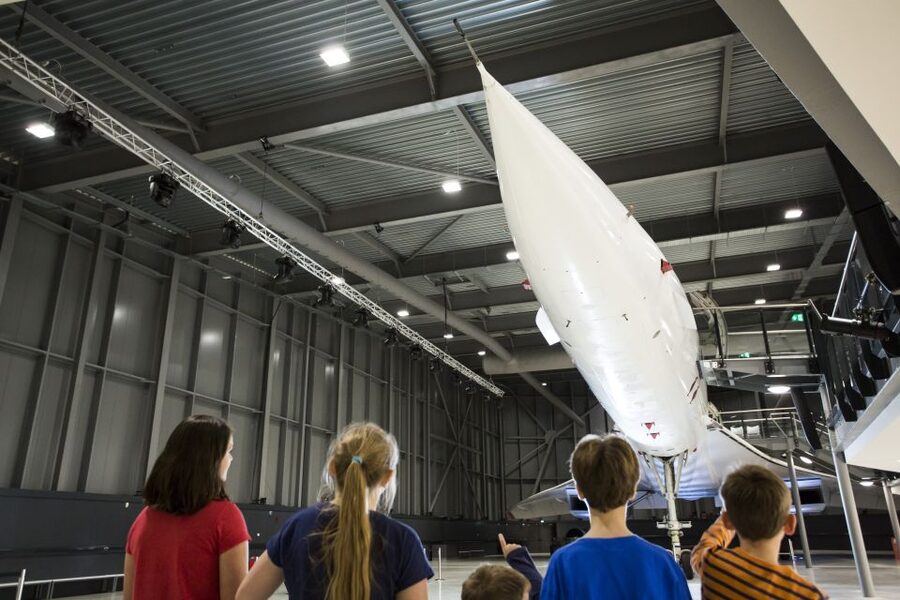
You do not need to be a lifelong aviation fan to understand the pull of Concorde. Its pointed nose and slim white body still look futuristic, and stepping inside explains the aircraft better than a photograph can.
The passenger cabin is narrow, compact, and surprisingly restrained for a machine that carried people at supersonic speed. You can walk through the seats and picture the polished style of the service. The cockpit gives you a closer look at the working end of the aircraft, where speed, altitude, and navigation became practical decisions rather than glamorous ideas.
Aerospace Bristol presents the aircraft as both engineering achievement and part of everyday memory. One recent visitor recalled hearing Concorde’s sonic booms while growing up and watching the aircraft on television. That detail matters: this is not just an old plane in a hangar. For many people, Concorde represents a time when commercial flight seemed to be moving toward a faster future.
Set aside at least an hour for this section if you want to read the displays and watch the show. One person spent about two hours in the Concorde hangar alone, which is easy to understand if the aircraft interests you. The projection show is a useful part of the visit because it turns the exterior of Concorde into a screen and tells its story in a way that works for children and adults.
If your time is limited, head here first. It is the most distinctive part of the museum and the section most likely to stay with you.
A century of flight under one roof
The museum is not simply a Concorde attraction. Its wider collection follows the development of aviation from early aircraft through later machines and space technology.
That timeline gives the visit its shape. You begin with the problems early aircraft designers had to solve, then see how aircraft became more capable, faster, and more specialized. The point is not only to admire large machines. The displays explain how changes in design affected the way people worked, fought, travelled, and imagined the future.
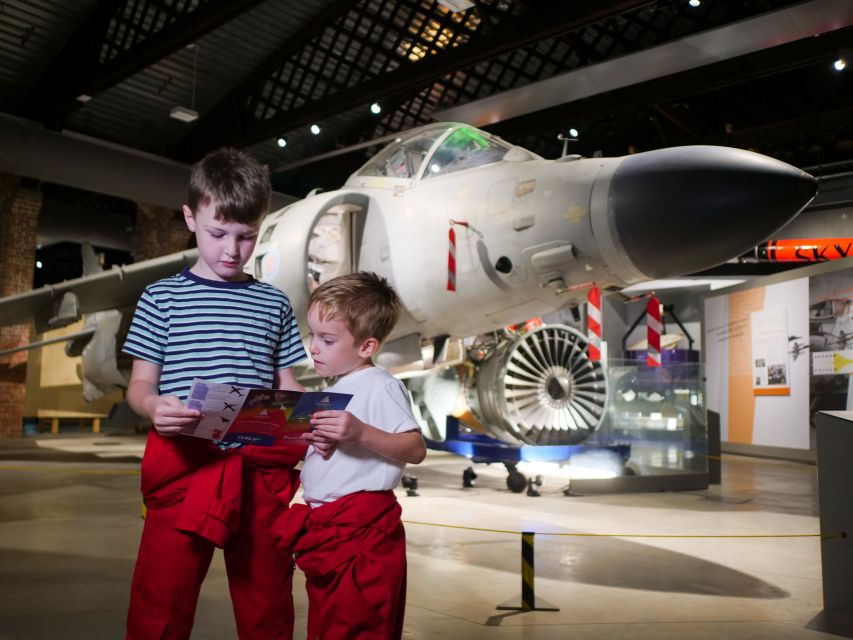
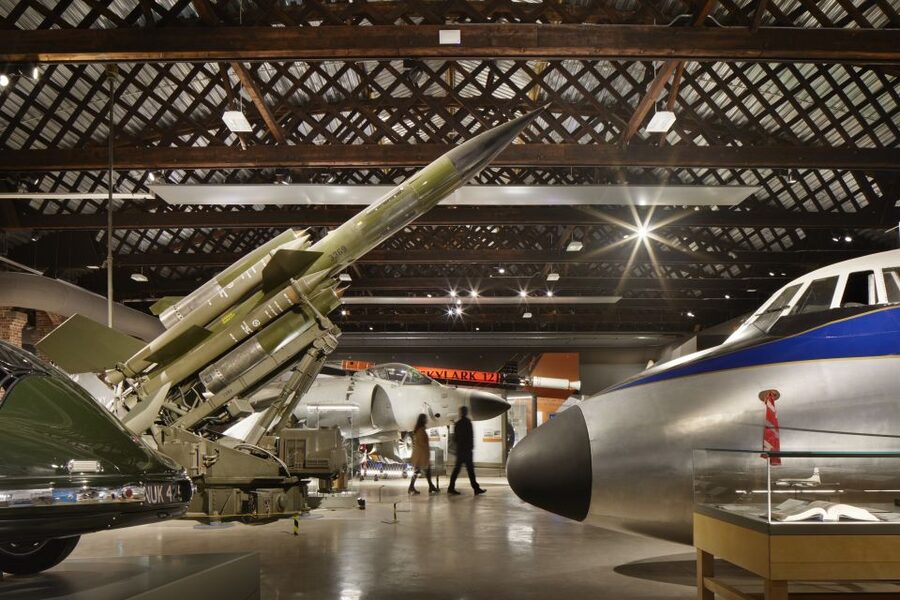
You can see aircraft and helicopters, as well as a Harrier jump jet. The Harrier adds a different kind of interest from Concorde. Instead of focusing on speed over long distances, it shows how aircraft design can solve the challenge of taking off and landing in unusual ways.
The museum also gives strong attention to Bristol’s part in British aircraft production. One of the most useful reasons to visit is that the displays connect local industrial history with major national achievements. The collection helps explain why Bristol became important in aircraft design and manufacture.
The amount of written information is a strength if you like to read at your own pace. Clear explanations let you visit without a guide, and the displays cover more ground than you might expect from a museum best known for one famous aircraft. The trade-off is that there is a lot to absorb. If you try to read every panel, you may need a return visit.
A handful of other Britain outings to weigh up
- London: The London Eye Entry Ticket
★ 4.6 · 35,875 reviews - London: Tower Bridge Entry Ticket
★ 4.7 · 15,560 reviews - London: Westminster Abbey Entrance Ticket
★ 4.6 · 11,254 reviews
The volunteers add the human details
Aerospace museums can feel cold when they rely only on labels. Here, the volunteer talks help put the machines into context.
Regular spotlight talks are included, and the English-speaking hosts and volunteers can explain the exhibits in a more direct way. Colin, associated with the Concorde presentation, received particular praise for his guidance. Daphne was also noted for sharing fascinating stories and insights.
I would make a point of checking the day’s talk times when you arrive. A short presentation can answer questions that a display panel cannot, especially when you want to understand what it was like to work on or operate the aircraft.
The personal element is useful for families, too. Younger children may not read every explanation, but a clear story about how an aircraft worked can hold their attention. Adults with a technical interest can ask more specific questions and get beyond the basic facts.
The guide service is not described as a single fixed tour with one route or one guide. Instead, expect regular talks and help around the exhibits. That gives you freedom, but it also means you should pay attention to the schedule rather than assume a guide will accompany you throughout the day.
One small presentation issue has been noted around some aircraft and engine displays. Low ropes can be easy to miss when you are looking up at a plane, and one visitor found them awkward and potentially hazardous. This is not a reason to skip the museum, but watch your footing and keep children close near barriers.
Interactive exhibits for children and curious adults
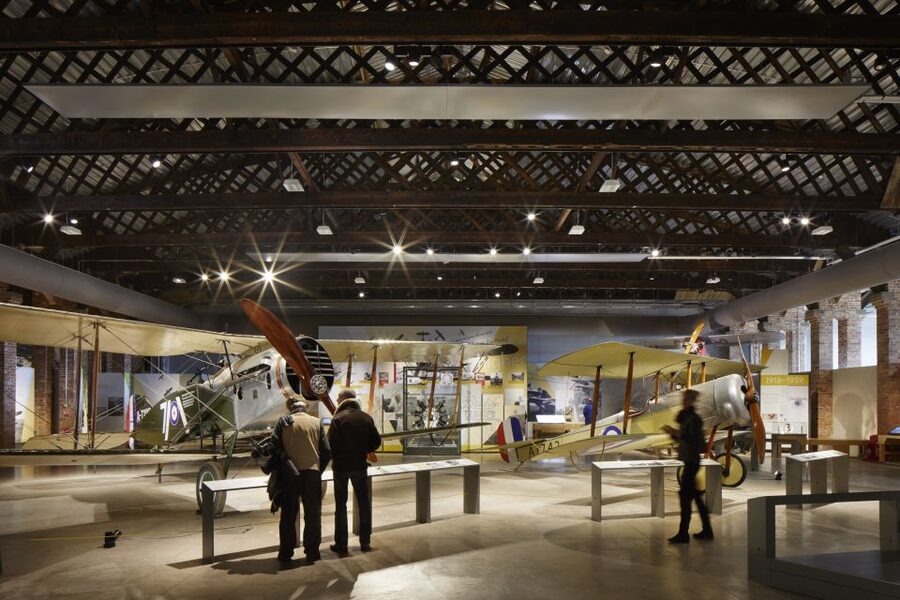
The museum works best when you treat it as a place to try things, not only a collection of aircraft to inspect.
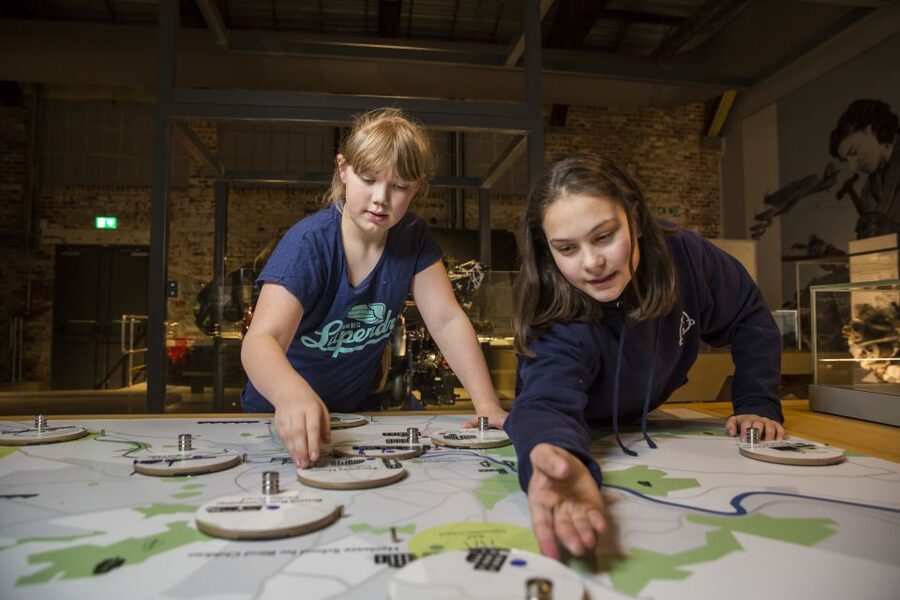
Interactive games and activities break up the reading. You can find hands-on sections aimed at helping children understand flight, design, and engineering. The children’s trails give younger visitors a simple task to follow, which can make a long museum visit feel more like a mission.
The outdoor play area is shaped like an aeroplane, giving children space to move after time indoors. That matters on a family day out. Aircraft displays are exciting at first, but even keen young pilots can lose patience after several halls of information. A play area gives you a practical reset.
Families with children aged two and four have found enough to keep both boys interested, including aircraft, helicopters, interactive features, pilot jackets, and headgear. That is a helpful guide to the age range. The museum is not only for older children who already know the difference between a jet engine and a propeller. Very young children can enjoy the visual scale and dressing-up elements, though they may not follow all the technical material.
The children’s activities also make the museum more flexible for mixed-age groups. One adult can spend time reading about an aircraft while another helps a child with a trail. You should still allow extra time if you are visiting with small children, since the play area and interactive displays can change your route.
A closer look at the engine and aircraft displays

The aircraft collection rewards patience, but the layout is not equally successful in every section.
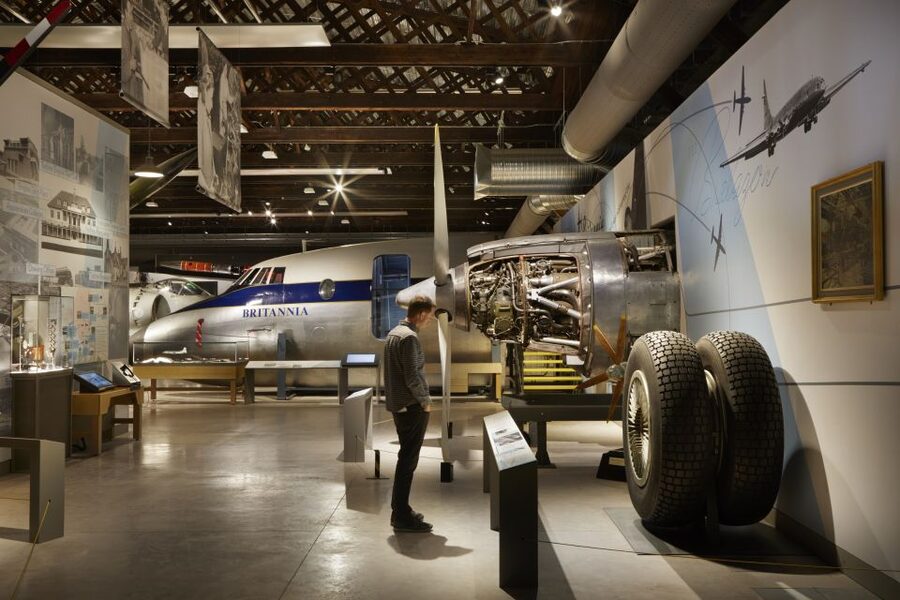
You can get close to several planes and helicopters, which helps you see details that disappear in photographs. Cockpits, wheels, wings, and engines become easier to understand when you are standing near them. The scale is part of the appeal. A display label may tell you how large an aircraft is, but standing beside it makes that fact real.
The engine display has been less satisfying at times. Access to some engines has been restricted, and one section appeared to be open before the planned guided coverage was fully in place. If engines are your main interest, check what is accessible on the day and do not assume every item can be inspected from close range.
This is a good example of why the museum suits a return visit. Your first day may focus on Concorde and the major aircraft. A second visit can give you time for the smaller displays, talks, and technical details.
The museum also shows how Bristol’s aviation role changed over time. The displays present a proud industrial story, but they also give you a sense that the old centre of British aircraft design and leadership is not as large or central as it once was. That contrast adds context rather than weakening the visit.
Elsewhere in Britain, a change of pace:
- From London: Harry Potter Warner Bros Studio Tour
★ 4.7 · 26,588 reviews - London: Westminster to Greenwich River Thames Cruise
★ 4.5 · 22,836 reviews - Magical London: Harry Potter Guided Walking Tour
★ 4.7 · 22,044 reviews - London: Madame Tussauds London
★ 4.6 · 20,915 reviews
How long should you allow?
The ticket covers one day, and you can reasonably spend most of that day at Aerospace Bristol.
For a quick visit focused on Concorde, allow around two hours. That gives you time to enter the aircraft, see the cockpit and cabin, watch the projection show, and read the main displays.
For the full museum, plan on several hours. Families may need longer because of the trails, interactive features, and outdoor play area. Older children and adults who want to read the technical material may also need more time than expected.
A useful plan is:
- Start with Concorde before energy and attention begin to fade.
- Check the spotlight talk times.
- Follow the main aviation timeline.
- Leave time for the Harrier, helicopters, engines, and interactive displays.
- Use the outdoor play area as a break for children.
- Return to any section you skipped before leaving.
Several people have found that they could not see everything in one visit, especially when children became tired. If the return policy attached to your booking gives one-year re-entry, the value improves sharply. However, the supplied activity details describe the ticket as valid for one day, while multiple recent accounts refer to tickets valid for a year. Confirm the exact terms before paying, especially if repeat visits are a major reason for booking.
Price, parking, and getting there
The listed price is $26 per person. That is not a bargain-priced museum entry, but it covers a substantial collection, the Concorde experience, interactive activities, children’s trails, regular talks, and free parking.
The value is strongest if you stay for most of the day. A short visit only to see Concorde makes the cost feel higher, while a full visit with children, talks, and play time makes it easier to justify. The reported UK price of £20 for a 12-month ticket also suggests that local pricing or ticket conditions may vary, so check the current booking page carefully.
Free parking is a real advantage. You do not need to add a separate parking charge to the day, and the site is described as being in a ULEZ-free area of Bristol, which may matter if you are driving from outside the city.
Approach signage could be better. If you do not know the area, allow a little extra time to find the entrance safely. Look for the large red Aerospace Bristol sign at the museum entrance.
Without a car, the site can be harder to reach by bus. That does not make a visit impossible, but public transport may require more planning than a central Bristol museum. The parking and easy site access make this a particularly practical stop for drivers.
Food and drinks are available to buy at the on-site cafe, but they are not included in the admission price. The cafe can be useful for a full-day visit, and smaller portions may be available for children. One adult group found the children’s portions good value when they wanted a lighter lunch.
Who will enjoy Aerospace Bristol most?
I would recommend it first to anyone interested in Concorde, aircraft design, engineering, or Bristol’s industrial past. The ability to walk inside Concorde gives the museum a clear focus, but the rest of the collection prevents the day from becoming a one-plane visit.
It also suits families well, particularly when children are old enough to enjoy trails, interactive games, dressing-up items, and the outdoor play area. Very young children can enjoy the size and shape of the aircraft, though adults should expect to manage tiredness during a long day.
It is less ideal if you want a short, central-city attraction that can be seen in an hour. The location is outside the heart of Bristol, bus access may be inconvenient, and there is enough material to make a rushed visit feel incomplete.
Accessibility is a positive point. The museum is wheelchair accessible, and free parking helps reduce the practical strain of arrival. English is the stated language for hosts, greeters, and displays, so visitors who are not comfortable with English should plan accordingly.
Should you book this one-day ticket?
Book it if stepping aboard Concorde is the main reason you are coming to Bristol, or if you want a full aviation day with children. The cockpit, cabin, and projection show give you a memorable centrepiece, while the wider collection provides enough substance for adults who want more than a photo opportunity.
I would also book if you can use the return option, but verify that condition first. The difference between a one-day ticket and a ticket valid for a year is significant.
Skip it if your interest in aircraft is slight and you have only a short time in Bristol. For everyone else, the combination of Concorde, local aviation history, hands-on exhibits, useful talks, free parking, and family facilities makes the admission price reasonable when you use the whole day.
FAQ
Where is Aerospace Bristol located?
Aerospace Bristol is in Bristol County, United Kingdom. The entrance is marked by a large red Aerospace Bristol sign.
How much does the entrance ticket cost?
The listed price is $26 per person. Prices and ticket conditions can change, so check availability and the current booking terms before purchase.
How long is the ticket valid?
The activity information states that the ticket is valid for one day. Several recent accounts describe tickets with one-year re-entry, so confirm the specific terms attached to your booking.
Can I step inside Concorde?
Yes. You can board the last Concorde ever to fly, look into the cockpit, and walk through the passenger cabin.
Is there a show about Concorde?
Yes. A show is projected onto the outside of Concorde and explains the aircraft’s story.
Are children’s activities included?
Yes. Children’s trails, interactive games and activities, and an outdoor play area shaped like an aeroplane are included.
Is parking available?
Yes. Free parking is included.
Are food and drinks included in the ticket?
No. Food and drinks are not included, but they are available to purchase at the cafe.
Is the museum wheelchair accessible?
Yes. Aerospace Bristol is wheelchair accessible.
New listings around Britain
- Brighton Delicious Donut Adventure by Underground Donut Tour★ 5.0 · 14 reviews
- From Cambridge: Guided Day Tour to Bath and Stonehenge★ 4.8 · 14 reviews
- From Southampton: Stonehenge & Salisbury Private Day Trip★ 4.9 · 14 reviews
- Edinburgh: Stirling, Whisky & St Andrews Tour in Italian★ 3.9 · 14 reviews
- Blackpool: Viva Decades Rewind Show Ticket★ 3.9 · 14 reviews
- Royal Horticultural Society: Harlow Carr Garden Ticket★ 4.7 · 14 reviews
- London: GoBoat Rental in Canary Wharf with London Docklands★ 4.2 · 14 reviews
- London Royal Tour – Buckingham Palace Entry – 12 guests 2,5h★ 4.9 · 14 reviews
Tickets, compared.



Buckingham Palace: The State Rooms Entrance Ticket
Read our review →