
Reviewed · ABERDEEN TOURS
Aberdeen’s Ancient Heritage and Folklore Tour
The most striking part of this day is how quickly Aberdeenshire’s quiet fields begin to speak. At Barra Hill Fort, ancient earthworks hint at a settlement built high above the ground. Later, Pictish symbols, burial-age stone circles, and medieval ruins fill in more pieces of the story.
I like two things here. First, the small group, limited to seven, gives guide Jacqueline room to explain symbols and folklore without turning the day into a rushed lecture. Second, the tour reaches places that are easy to miss without a vehicle, including Rhynie’s Pictish remains and the broad views from Tomnaverie Stone Circle.
The main tradeoff is the walking. You will cross grassy ground and unpaved paths, with some steep slopes, so this is not a soft sightseeing ride. The $134 price is fair for a 7.5-hour day with transport and no extra entry fees, but you should be comfortable outdoors and bring your own lunch.
Key points at a glance
- Pictish symbols up close: See carved stones at Rhynie, Inverurie, and Dyce, including animals, crescents, discs, and a mirror and comb.
- Barra Hill’s earthworks: Walk around the remains of an early hill settlement and consider how people lived and worked on high ground.
- A 5,000-person Pictish centre: Rhynie connects local stones and royal politics with one of Scotland’s largest ancient hillforts at Tap O’Noth.
- Stone circles older than castles: Visit Tomnaverie and the recumbent circles at Easter Aquhorthies and Loanhead of Daviot.
- A small, flexible day: With no more than seven people, the guide can adjust the pace, and you may skip a walk if needed.
- Good practical value: Transport, guiding, and site visits are covered, while food and drinks are your responsibility.
Why Aberdeenshire’s ancient sites reward a full day
Many people come to northeast Scotland for grand castles, whisky, or coastal scenery. This tour offers a different route into the region. You spend the day with stones, earthworks, old church sites, and stories passed down through generations.
The sites are not arranged like a museum. You may see a low mound in a field, a few carved stones in a protective case, or the foundations of a fort blending into the grass. That can be the charm, but it also means you need a guide who can explain what you are looking at.
Jacqueline is the named guide associated with the experience, and the feedback about her is unusually consistent. She is praised for her command of the subject, her warm manner, her driving, and her ability to adjust the day to suit the group. That matters here because Pictish symbols can be hard to read without context, and many monuments are subtle rather than dramatic.
The tour begins beside the William Wallace statue by Union Terrace Gardens on Rosemount Viaduct in Aberdeen. From there, you travel by van between the sites. The driving sections range from about 15 to 55 minutes, so you get a mix of conversation, rest, and rural views between walks.
More History Tours in Britain:
- London: Historic Pubs of Central London Walking Tour
★ 4.9 · 1,065 reviews - Portsmouth: Historic Dockyard Ultimate Explorer Ticket
★ 4.8 · 1,052 reviews - York: Witches and History Old Town Walking Tour
★ 4.7 · 928 reviews
Barra Hill Fort and the shape of an early settlement
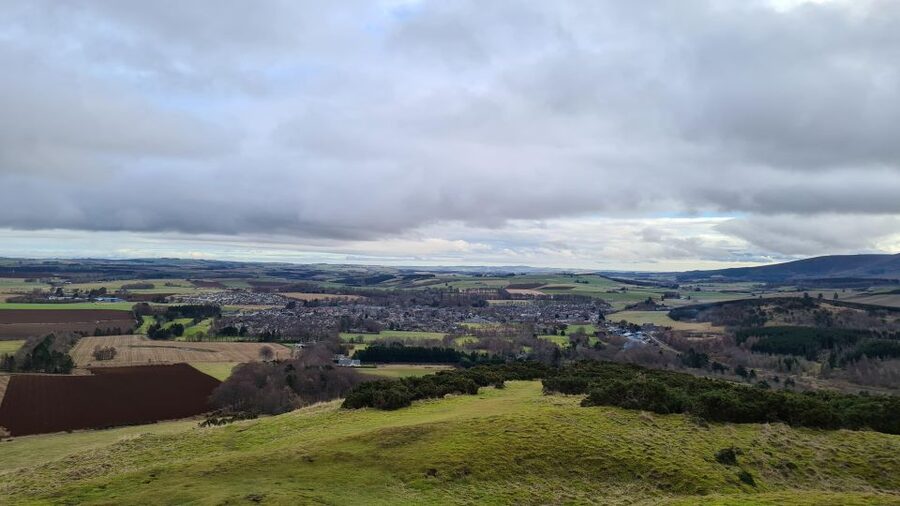
The first major stop is Barra Hill Fort, reached after about 35 minutes in the van. The walk lasts roughly an hour and follows fields and off-road paths.
Hillforts were built on raised ground and often enclosed with timber or stone defenses. Inside, people lived and worked in small communities. The remaining earthworks do not give you a complete picture, but walking along the banks and foundations helps you understand the size and position of the settlement.
I like this as an opening stop because it asks you to use your imagination before the carved stones appear. You are not simply looking at a single object. You are reading the shape of the ground and thinking about why a community chose this hill.
The drawback is practical. Field paths can be uneven, wet, or slippery depending on conditions, and some parts are steep. Wear proper hiking shoes rather than casual trainers. If you prefer to observe from the vehicle, the tour allows you to skip individual walks, but Barra Hill is one of the more active sections.
Dunnideer Castle and an older fort beneath it
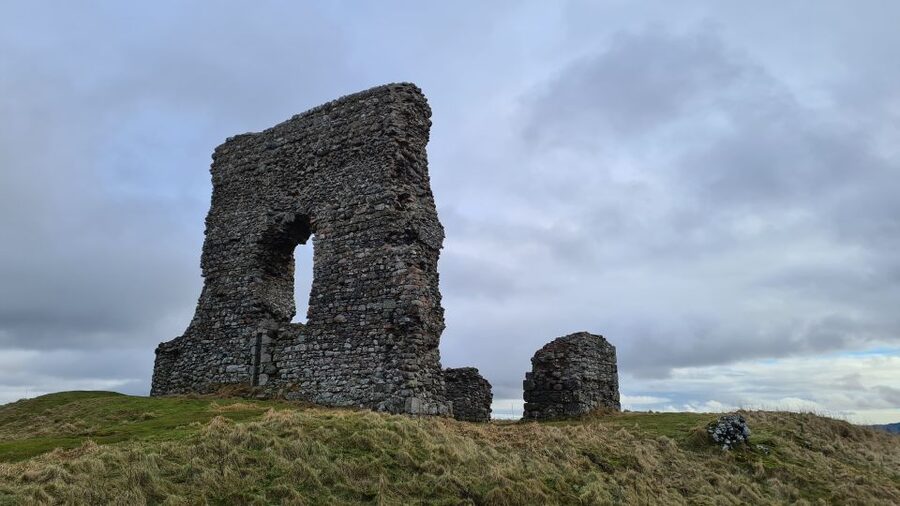
After another 35-minute drive, you reach the area near Insch for a short visit to Dunnideer Castle. This is mainly a 20-minute break and photo stop, with a short walk up a low hill.
Dunnideer was a tower house built around 1260. Its builders partly used the remains of an older vitrified hillfort on the same site. That layering is what makes the stop worthwhile. The medieval ruin is only one chapter. The hill had already served a defensive or community purpose centuries earlier.
Nearby, the remaining stones of Dunnideer Stone Circle add another time layer. The circle dates to a much earlier period than the castle, giving you a quick lesson in how one prominent site can be reused across very different eras.
This is not a long castle visit, and you should not expect intact rooms or a formal entrance. Think of it as a compact stop with good historical contrast: prehistoric stones, an early fort, and a medieval tower house, all within the same area.
Rhynie, Pictish power, and symbols with no simple answer
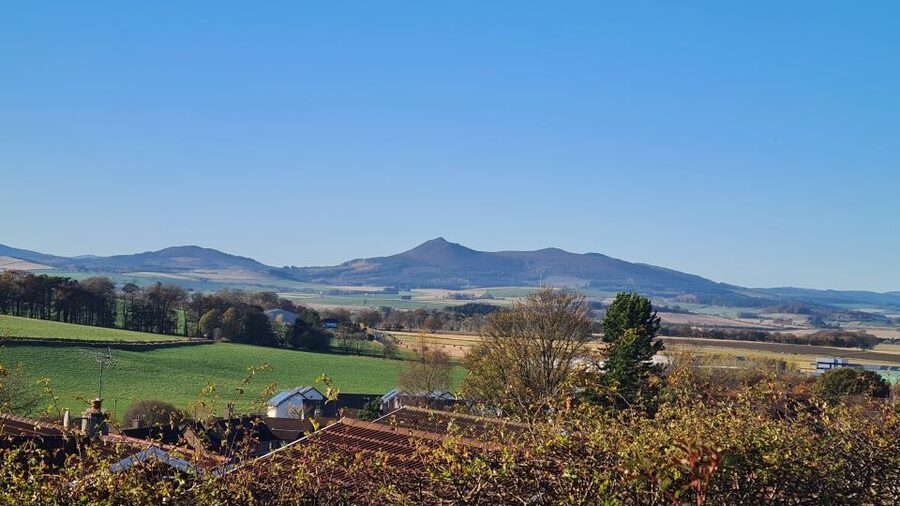
Rhynie is one of the day’s most important stops. After about 20 minutes on the road, you spend roughly 40 minutes here walking and viewing the remains.
The area around Rhynie was a Pictish stronghold. Tap O’Noth has Scotland’s largest hillfort, and researchers believe its settlement may have held more than 5,000 people at its peak. That figure gives the site a different scale. This was not simply an isolated farm or a tiny group on a hill. It may have been a major centre in the post-Roman north.
You will see a group of Pictish carved stones and hear about their symbols and possible meanings. One of the most memorable is the Crawstane, a lone standing stone once positioned at the centre of a settlement. Its links to trade, wealth, and contact reaching as far as the Mediterranean make it especially useful for correcting the idea that Pictish communities were cut off from the wider world.
The stories here also move into royal politics. You learn about the King of the Scots and the cultural changes that helped bring about the decline of the Picts. This is one reason a live guide adds real value. The stones do not explain their own symbols, and the evidence can be open to interpretation.
Take your time at this stop. The information is dense, and you may want to ask questions. The walk is not described as long, but it is still on outdoor ground, so sturdy footwear remains important.
A handful of other Britain outings to weigh up
- Loch Ness and the Highlands 1-Day Tour from Aberdeen
★ 4.8 · 340 reviews - From Aberdeen: Dunnottar Castle and Cairngorms Day Trip
★ 4.8 · 329 reviews - From Aberdeen: Balmoral Estate & Royal Deeside Tour
★ 4.9 · 243 reviews - From Aberdeen: Coastal Villages of Aberdeenshire Tour
★ 4.9 · 149 reviews
Lunch near Kildrummy and the rhythm of the day
The tour then allows about 40 minutes for lunch near Kildrummy. Food and drinks are not included, so bring money and water, and check what you want to carry before leaving Aberdeen.
This break is more than a practical pause. A full day of outdoor stops can become tiring, especially if the weather turns wet or windy. Forty minutes gives you time to eat without forcing the next part of the day into a sprint.
The schedule also helps explain the tour’s pace. This is not a single monument with a long guided talk. It is a sequence of short journeys and site visits. You should expect variety, but you should also expect to get back into the van several times.
Tomnaverie Stone Circle and wide Grampian views
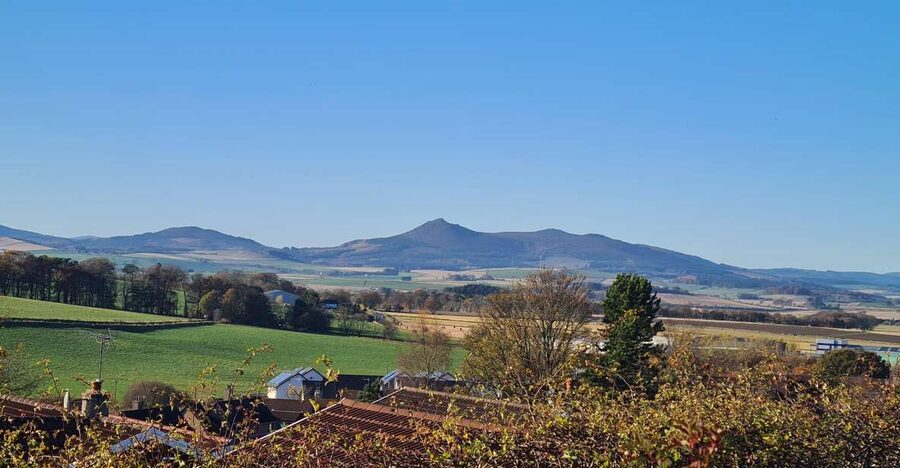
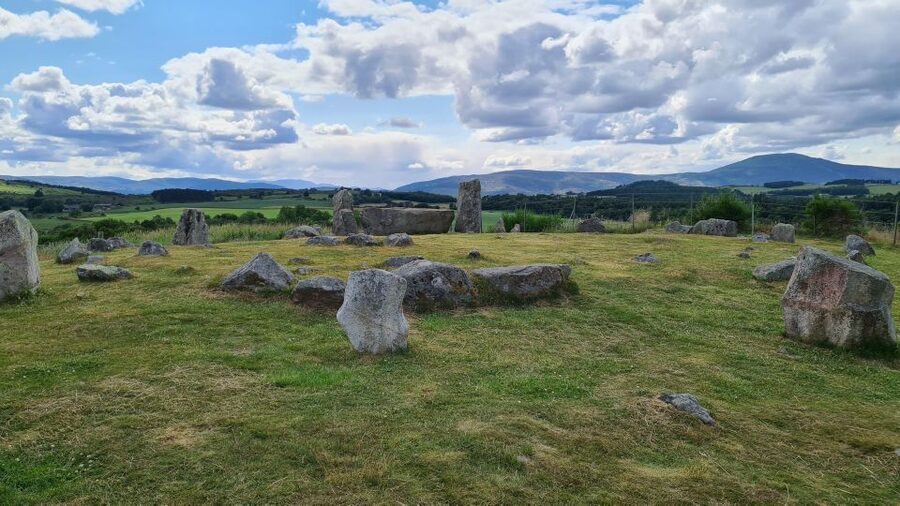
After lunch, a 15-minute drive brings you to Tomnaverie Stone Circle. The visit lasts about 35 minutes and includes a walk and photo stop.
Recumbent stone circles are a particular feature of northeast Scotland. Their design includes a large stone lying on its side, usually flanked by taller standing stones. Tomnaverie gives you a clear chance to see this arrangement in its setting rather than behind glass or fencing.
The elevated position is part of the appeal. Darren specifically singled out the panoramic view here, and I can see why this would become a high point of the day. The view helps you understand why ancient communities chose visible, carefully placed sites. You get both the monument and the wider setting.
This is another stop where weather can shape the experience. On a clear day, the outlook may be broad and dramatic. In rain or mist, the mood changes, but the stone circle remains the focus. Allow extra care on the walk if the ground is soft.
Easter Aquhorthies and Loanhead of Daviot
The wider route also includes Easter Aquhorthies and Loanhead of Daviot, two important recumbent stone circles near Inverurie. The supplied timing places the main recorded itinerary at Tomnaverie, so confirm the exact stops and order when booking, since the route can vary.
Easter Aquhorthies is one of Scotland’s best-preserved examples. It dates back more than 4,000 years, to the late Neolithic or early Bronze Age. The ring contains smaller stones, with a large recumbent stone and two tall stones forming the key feature.
Loanhead of Daviot provides another chance to compare stone-circle design rather than treating every ancient ring as the same. That comparison is useful. You begin to notice position, stone size, and the way the central feature changes the feel of each site.
These places are valuable because they are not only old. They show the planning and effort involved in moving and arranging heavy stone. You can appreciate the skill without needing every question about purpose to have a final answer.
Inverurie’s Bass and the Pictish symbol stones
The Bass in Inverurie adds medieval history to the day. This natural mound rises about 15 metres, or 50 feet, and was reshaped into a classic motte in the 12th century by the Earls of Garioch. The adjoining Little Bass formed the bailey.
You are looking at a layered site again. A natural mound became a medieval stronghold, while nearby Pictish stones reach back to the early medieval period. Four Class I Pictish stones are protected in a glass case between the Bass and Little Bass.
Class I stones usually carry symbols without a Christian cross. Here, the carved designs create a direct artistic link with the Pictish world, even though the people who made them left no written explanation for their symbols.
This stop suits anyone who enjoys comparing evidence. A mound, a medieval earthwork, and carved stone may seem unrelated at first, but together they show how the region was used and reused over many centuries.
Dyce’s stones and the small details worth noticing
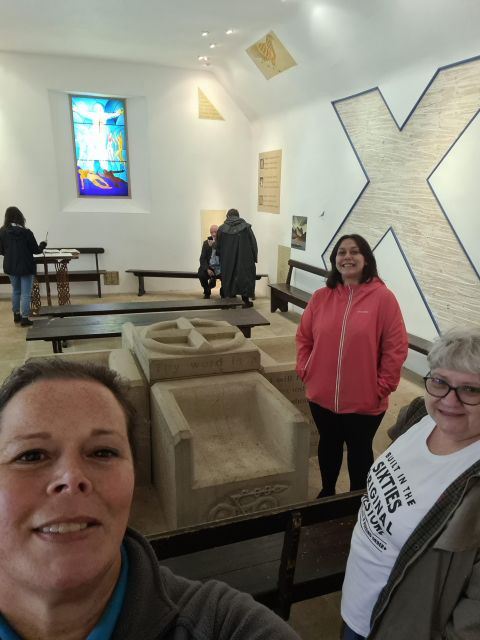
The Dyce Symbol Stones are located in the old churchyard of St. Fergus’ Chapel near Aberdeen. They date from around the sixth to eighth centuries and feature familiar Pictish designs, including a mirror and comb, a double-disc, a crescent, and animal figures.
The mirror and comb symbol is especially distinctive. It is easy to hurry past such carvings, but the small details are exactly why a guide helps. Jacqueline can point out the forms and explain how they fit within Pictish artistic traditions.
The setting in an old churchyard adds another layer, though the experience remains focused on the stones rather than a large building visit. If you enjoy close observation, this may be more rewarding than a grand ruin. You can study the lines, patterns, and wear on the stone instead of taking only a quick photograph.
What $134 includes, and what it does not
At $134 per person, the tour sits in the midrange for a full-day private-style excursion, but the group size changes the value. You are not paying only for a seat in a vehicle. The price covers transport, a live English-speaking guide, and access to the listed sites without additional entry tickets.
The van holds no more than seven people. That makes it easier to hear the guide and ask questions, and it gives the day a more personal feel than a large coach outing. It also means the experience depends quite a bit on the group. A relaxed group will make the driving and walking feel easy. A slower or more energetic mix may shape the pace.
Lunch and refreshments are extra. Bring water from the start, and plan for the 40-minute lunch break near Kildrummy. Since several stops involve grass and unpaved paths, sturdy shoes are not an optional extra.
Free cancellation is available up to 24 hours before departure, and you can reserve now and pay later. Those terms help if your Aberdeen plans are still changing, but they do not remove the need to check starting times and availability.
Who should book this day out
I would choose this tour if you want ancient Scotland explained through places rather than only through displays. It suits people interested in Picts, folklore, stone circles, early Christianity, medieval fortifications, and the way old communities shaped the northeast.
It is also a good choice if you have no rental car. The sites are spread across Aberdeenshire, and the van links them in one long day. The drive times are manageable, though you should be ready for several road sections.
I would not choose it if you want a polished castle tour with little walking. The route includes grass, uneven paths, and steep sections, and it is specifically not suitable for people with mobility impairments or a low level of fitness. Walking poles may be available, but bringing your own is sensible if you use one.
The tour is in English only. If you enjoy asking questions, the small group and flexible approach are a strong match. If you prefer silent sightseeing, the amount of explanation and folklore may feel like more than you want.
Should you book Aberdeen’s Ancient Heritage and Folklore Tour?
Book it if your idea of a good day includes standing beside a carved stone and asking what its symbols meant, then walking up a hill to see the remains of a settlement that may once have held thousands. The repeated praise for Jacqueline’s clear explanations, flexibility, and driving fits what this route needs.
The best reason to go is the range. You move from a hillfort to a castle ruin, from Pictish carvings to 4,000-year-old stone circles, then back toward medieval earthworks and an old churchyard. The main caution is the outdoor effort. Wear hiking shoes, bring water and lunch money, and expect Scottish weather to have an opinion.
FAQ
How long does the tour last?
The experience lasts 7.5 hours, including travel between the archaeological and historic sites.
Where does the tour begin and end?
It begins and ends next to the William Wallace statue by Union Terrace Gardens on Rosemount Viaduct in Aberdeen.
How large is the group?
The tour is limited to seven participants and travels by van.
Is lunch included?
No. Food and refreshments are not included, but the day includes a lunch break near Kildrummy. Bring money for your meal and carry water.
Are extra entry tickets required?
No additional entry tickets are required for the included visits.
What should I wear and bring?
Wear comfortable outdoor clothing and sturdy footwear or hiking shoes. Bring water, and consider bringing walking poles if you use them.
Is the tour suitable for people with mobility impairments?
No. The tour includes moderate walking on unpaved paths and grassy ground, with steep sections and some exertion. It is not suitable for people with mobility impairments or a low level of fitness.
New listings around Britain
- Loch Lomond & Trossachs National Park Drive Tour with an App★ 3.8 · 3 reviews
- London: Bermondsey Craft Brewery Tour★ 5.0 · 3 reviews
- Chawton: Village tour to discover its ties to Jane Austen★ 5.0 · 3 reviews
- Colourful Notting Hill Photography Tour★ 5.0 · 3 reviews
- Roybridge, Lochaber: CANYONING – Laggan Canyon★ 5.0 · 3 reviews
- The London Historic Pubs Tour★ 4.0 · 3 reviews
- Anglesey Tour App, Hidden Gems Game and Big Britain Quiz (7 Day Pass) UK★ 5.0 · 3 reviews
- Ultimate Royal London, Thames River Boat Ride & Walking Tour★ 5.0 · 3 reviews
Aberdeen Tours, compared.
Loch Ness and the Highlands 1-Day Tour from Aberdeen
Read our review →

Browse the lists this tour appears in