Reviewed · LONDON TOURS
London: Architecture Tour of Benjamin Franklin House
Benjamin Franklin’s only surviving home is tucked into 36 Craven Street, just off the Strand. He rented rooms here for 16 years, and this compact townhouse lets you connect his political life, scientific experiments, family ties, and London friendships to the actual rooms where they unfolded. The tour also covers the strange Craven Street bones, linked to surgeon William Hewson’s anatomy school.
I like the way the hour-long visit joins Franklin’s personal story to the building itself, instead of treating the house as a simple portrait museum. I also like the final chance to try a glass armonica, an unusual instrument Franklin invented. The main drawback is the five-storey layout: stairs are uneven and sloping, there is no wheelchair access, and getting into the house can occasionally interrupt the opening of the tour.
Key points at a glance
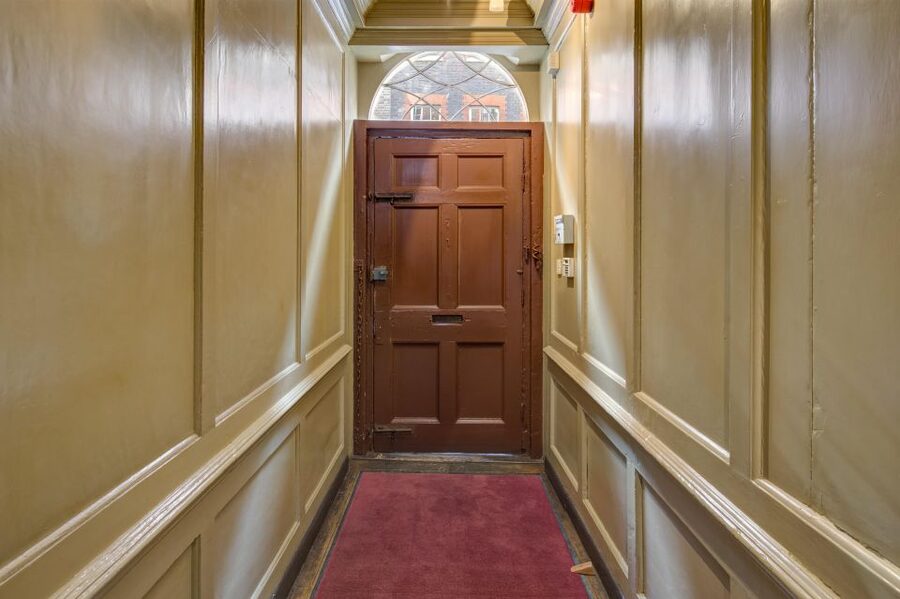
- Franklin’s only remaining London home: See the townhouse where he lived from the 1730s-era building’s later years through 1776.
- An hour with a live guide: English-speaking guides, including Ron and Brian, explain the house, Franklin’s work, and his London connections.
- The Craven Street bones: Learn how an anatomy school operated in the basement under surgeon William Hewson.
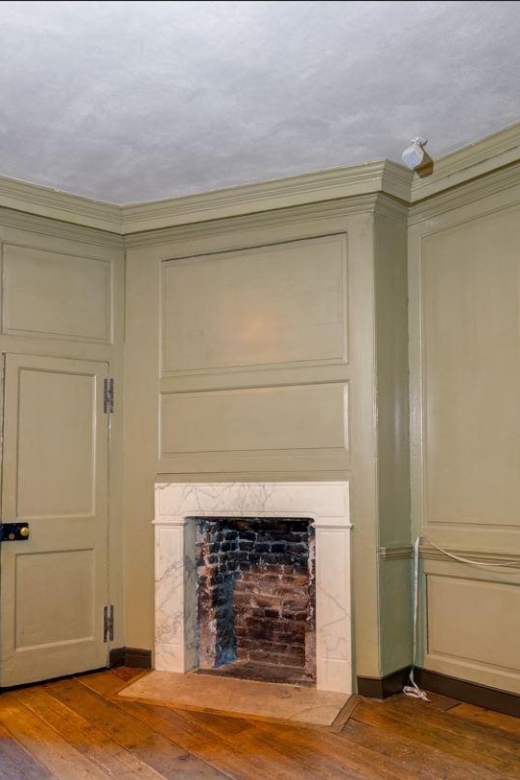
- Original historic fabric: The Grade I listed building retains notable Georgian and Victorian features.
- A hands-on finale: Try making a tune on Franklin’s glass armonica in the final room.
- A small, focused visit: At $16 per person, the tour is a reasonable add-on near the Strand, especially for history and architecture fans.
Finding 36 Craven Street near the Strand
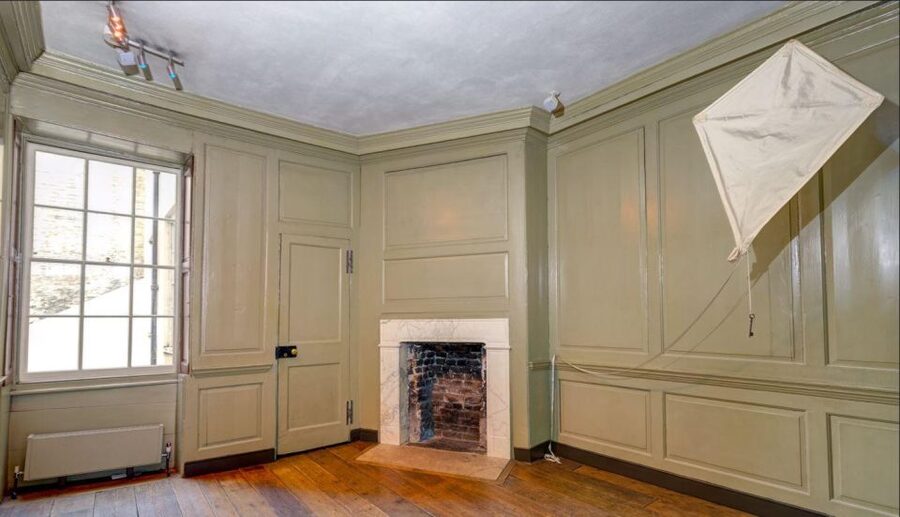
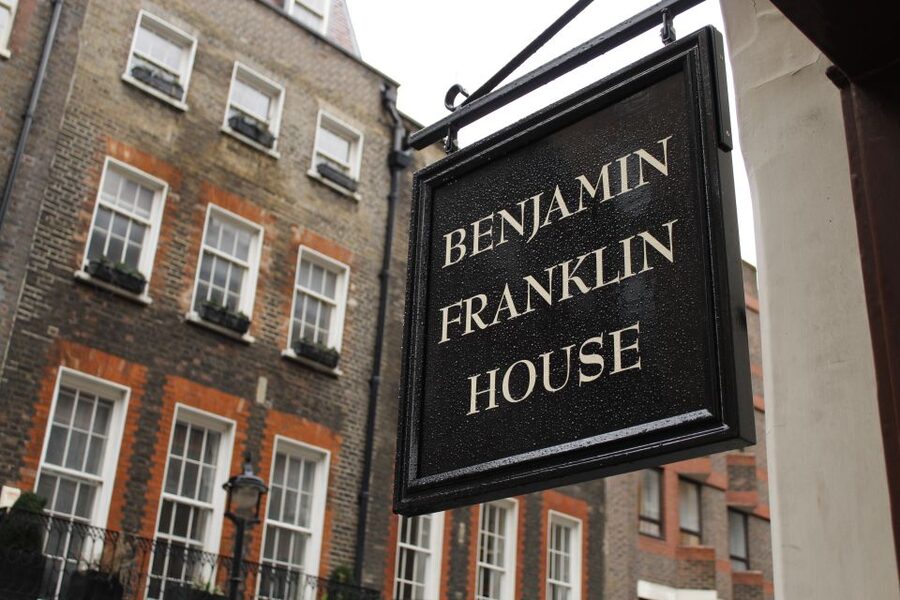
The meeting point is simple: go to 36 Craven Street and knock on the door below the Benjamin Franklin House sign. The building sits in South East England, in central London, close to the Strand, so it fits neatly into a day of sightseeing in this part of the city.
Allow a little patience at the entrance. One visitor found that the way into the house could interrupt the start of the tour. That is a practical point, not a reason to skip the experience, but it helps to arrive early and listen for instructions rather than rushing in at the last minute.
The visit lasts about one hour. It is short enough to fit between larger London sights, yet long enough to move through the house and give the rooms a clear purpose. You can take photographs, ask questions, and stay involved rather than simply walking past labels.
A handful of other London outings to weigh up
- From London: Harry Potter Warner Bros Studio Tour
★ 4.7 · 26,588 reviews - London: Westminster to Greenwich River Thames Cruise
★ 4.5 · 22,836 reviews - Magical London: Harry Potter Guided Walking Tour
★ 4.7 · 22,044 reviews
Why Franklin lived in London for 16 years
The tour begins with Franklin himself and the reason he came to London. You learn about his work, his political beliefs, and his place in the Atlantic world before moving through the house room by room.
Franklin remained in London for 16 years, eventually leaving the Stevenson family and the city in 1776. He returned to America to sign the Declaration of Independence and never came back to London. That departure gives the house a strong sense of a turning point: this was not only a rented address, but the setting for a major part of his adult life.
The visit is especially useful if your picture of Franklin begins and ends with the American Revolution. His London years reveal a more complicated figure. You hear about his experiments, his political work, his friendships, and his eccentric habits. The house gives those subjects a domestic setting, which makes them easier to picture than a list of dates in a museum gallery.
The guides bring different details to the hour. Ron has led the tour with strong enthusiasm for both Franklin and the building, while Brian has added extra information about Franklin’s life and work. The exact guide depends on the day, but the format allows time for questions at the end.
The kitchen, Georgian food, and Franklin’s London diet
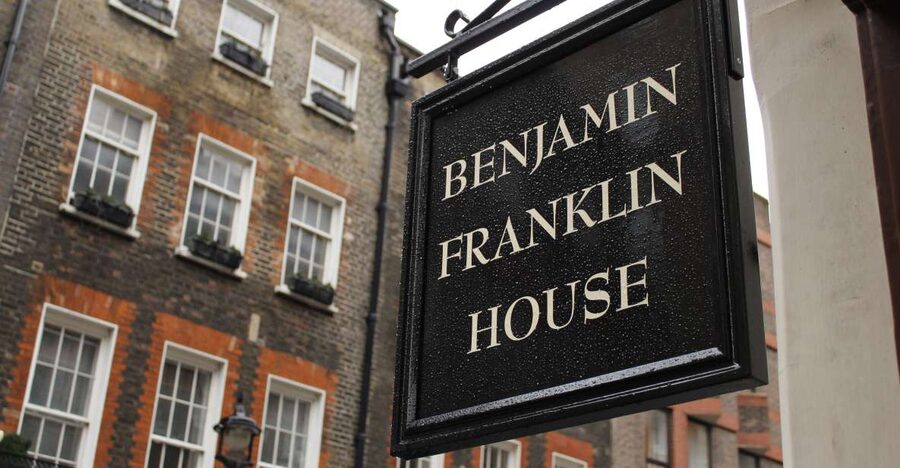
One of the first useful stops is the kitchen. Here the guide brings in Georgian food and Franklin’s thoughts about the London diet. This detail makes the house feel lived in rather than staged as a shrine to a famous name.
Food is a good way to understand daily life. Political ideas and scientific experiments can feel grand and distant, but a kitchen connects Franklin to ordinary routines. You can picture the practical side of renting a room in London, including what people ate and how they thought about food.
The kitchen also helps explain the architecture. The house was built and altered over different periods, and its Georgian and Victorian features reflect changing uses over time. You are not just looking at old walls. You are learning how a townhouse functioned, how its rooms related to one another, and how later changes affected the building.
Because this is a historic house, do not expect wide galleries or a large collection of objects. The reward comes from the setting and the guide’s explanation. If you prefer major museums with many displays, this will feel compact. If you like seeing the actual rooms connected to a person’s life, the small scale works in its favor.
Margaret Stevenson’s parlour and Franklin’s London circle
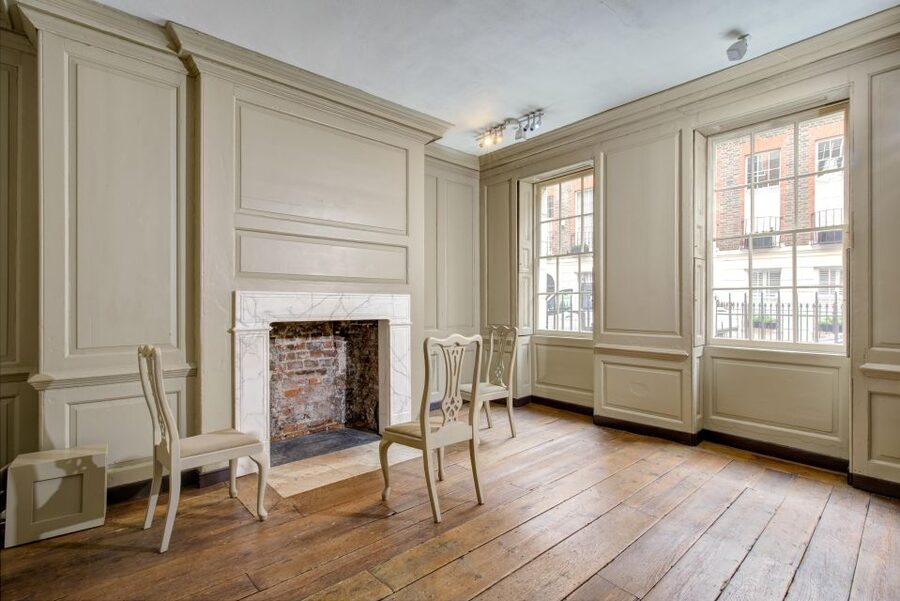
Upstairs, the tour reaches the parlour of Margaret Stevenson, the wealthy widow from whom Franklin rented. This room shifts the focus from Franklin as a solitary thinker to Franklin as part of a household and a social network.
You hear about the influential people he met there and the current affairs they discussed. The guide also explains Franklin’s relationship with the Stevenson family and his own family. That family connection matters because it gives the house a warmer, more personal character. Franklin was not simply occupying anonymous rented rooms. He was living within a household with its own relationships and expectations.
The parlour is also a useful reminder that historic homes are about more than famous occupants. Margaret Stevenson’s role helps you see the house from another angle. Franklin’s presence was important, but the building belonged to a wider domestic world.
Look closely at the room’s proportions and finishes rather than expecting theatrical decoration. The house is Grade I listed, and its uneven floors and sloping stairs are part of the experience. Handrails are provided on every staircase, and seating is available in the historic rooms, which helps if you need to pause.
Elsewhere in London, a change of pace:
- London: Madame Tussauds London
★ 4.6 · 20,915 reviews - London: Warner Bros. Studio Tour with Transfers
★ 4.7 · 17,586 reviews - London: Tower Bridge Entry Ticket
★ 4.7 · 15,560 reviews - London: St Paul’s Cathedral Entry Ticket
★ 4.7 · 9,813 reviews
Franklin’s parlour and the years before 1776
The central stop is Franklin’s Parlour, the floor he rented for 16 years. Here the guide brings together the major themes of the visit: his experiments, political beliefs, political actions, and eccentric personality.
This is where the tour’s architectural and biographical sides meet most clearly. The room is not presented as a grand state chamber. It was a rented part of a townhouse, and that modest setting helps you understand Franklin’s London life as practical and connected to other people.
The guide explains why Franklin came to London and what he was doing there. You also learn how his views and actions developed before he finally left for America. The date 1776 carries real weight here. Franklin departed London to sign the Declaration of Independence, leaving behind both the house and the Stevenson family.
I find this part most useful for putting the revolutionary period into context. The story does not begin with Franklin suddenly appearing as an American founder. It shows a man who spent many years in Britain, built relationships there, and worked through political questions before returning to America.
The room also covers his eccentric side. That is a welcome balance. Franklin was a political actor and scientist, but he was also a person with unusual interests and habits. The guide’s job is important here, since the house itself cannot explain every layer of his character.
The Craven Street bones and Hewson’s anatomy school
The most unexpected subject is the Craven Street bones. The tour explains their connection with surgeon William Hewson’s anatomy school, which operated in the house’s basement.
This is a striking part of the visit because it changes your idea of the building. The townhouse was not only a home and a place for political conversation. It was also linked to medical study and dissection. The bones add a darker, more curious layer to the address and show how eighteenth-century buildings could serve several purposes at once.
The subject may not suit very young children or anyone uncomfortable with anatomy. The supplied information does not describe a graphic presentation, but the topic itself is unusual and worth knowing about before you book. If you enjoy the less polished sides of history, this will likely be one of the most memorable parts of the hour.
The anatomy school also gives the guide a chance to explain the house beyond Franklin’s tenancy. You see how several lives and activities overlapped at 36 Craven Street. That broader view prevents the tour from becoming a narrow celebration of one famous man.
Trying Franklin’s glass armonica
The tour ends in the Glass Armonica Room, where you are invited to try playing a tune on Franklin’s instrument. This is the visit’s most direct hands-on moment.
The instrument is an unusual detail in Franklin’s story. It connects his scientific curiosity with sound and performance, and it gives you something to do rather than merely observe. Even a brief attempt helps make his experiments more memorable.
Do not expect a full concert or a long workshop. The activity is a short part of an hour-long guided tour. Its value comes from the chance to handle the idea of Franklin’s invention in a simple, physical way. After several rooms of listening, that small interaction gives the visit a pleasant finish.
Photography is allowed, but flash photography is not. Audio recording is also not permitted. Keep drinks, alcohol, and vaping materials outside, and assistance dogs are allowed where ordinary pets are not.
Is $16 a fair price?
At $16 per person, the visit is reasonably priced for central London, especially because admission to the house and the one-hour guided tour are included. Children under 12 enter free, which makes the cost more manageable for families.
The value depends on what you want from a museum visit. You are paying for a focused historic house experience, a live English-language guide, and access to a Grade I listed building with original Georgian and Victorian features. You are not paying for a large collection, a long self-guided route, or several hours of entertainment.
I would consider it good value if you already plan to be near the Strand and have an interest in Franklin, American history, Georgian London, architecture, or unusual medical history. The price is harder to justify if you want a broad London attraction with many rooms and displays.
The reserve-now, pay-later option and free cancellation up to 24 hours before the visit add useful flexibility. Starting times vary, so check availability for the date you want. The ticket is valid for one day.
Stairs, access, and practical comfort
Benjamin Franklin House is a five-storey townhouse. There is a staircase between each floor, and the stairs and floors are uneven and sloping. Handrails are fitted on all staircases, and seating is available in the historic rooms.
There is no wheelchair access because of the building’s Grade I listed character and different levels. The restroom is in the basement, with no accessible restroom. Carers enter free of charge, and visitors with disabilities can qualify for concessionary tickets.
Guide dogs and hearing dogs are permitted throughout the house. Other pets are not allowed. Smoking and vaping are prohibited indoors, as are drinks, flash photography, audio recording, bare feet, alcohol, and drugs.
These details matter more here than at a modern museum. You should be comfortable using stairs for the full visit, or contact the provider before booking if you need a specific arrangement. The seating helps, but it does not remove the need to move between floors.
Who will enjoy this one-hour visit?
I would recommend the tour to anyone who likes small museums with a strong sense of place. It suits history fans who want more than a famous name, architecture enthusiasts interested in Georgian and Victorian details, and visitors curious about the private side of a major political figure.
Families with older children may also enjoy the instrument and the unusual bones story. Children under 12 enter free, but the five-storey layout and anatomy subject may not suit every young child.
The visit is less suitable if you need step-free access, an accessible restroom, or a long, unhurried museum route. It is also not the best pick if your main goal is a large display of Franklin artifacts. The strength here is the house itself, supported by a guide who can explain what the rooms mean.
The five existing ratings are all five-star ratings, and the praise centers on the guides’ enthusiasm, friendliness, and useful extra details. That fits the format: the guide is central to the experience. Ron and Brian have both led particularly informative visits, but guide assignments can vary.
Should you book Benjamin Franklin House?
Book it if you want a one-hour London stop that combines an original home, political history, domestic life, architecture, and an odd medical story. The kitchen, Margaret Stevenson’s parlour, Franklin’s own rooms, the Craven Street bones, and the glass armonica give the visit a good range without making it feel scattered.
At $16, it is a sensible choice near the Strand, especially with free entry for children under 12 and cancellation up to 24 hours ahead. Arrive early, expect stairs, and choose it for its intimate historic setting rather than a large museum collection.
FAQ
Where does the Benjamin Franklin House tour begin?
Meet at 36 Craven Street. Knock on the door below the Benjamin Franklin House sign.
How long does the tour last?
The guided tour lasts about one hour.
What language is the tour in?
The live tour guide speaks English.
What is included in the ticket?
The price includes entry to Benjamin Franklin House and the hour-long guided tour, with an opportunity to ask questions at the end.
How much does the tour cost?
The listed price is $16 per person. Children under 12 enter free.
Can I cancel the booking?
Yes. You can cancel up to 24 hours in advance for a full refund.
Is the house wheelchair accessible?
No. The house has five storeys, with stairs between each floor, uneven and sloping floors, and no wheelchair access. There is also no accessible restroom.
Are assistance dogs allowed?
Guide dogs and hearing dogs are permitted in all areas of the house. Other pets are not allowed.
Can I take photographs inside?
Photography is allowed, but flash photography and audio recording are not permitted.
New listings around London
- London: Bermondsey Craft Brewery Tour★ 5.0 · 3 reviews
- Colourful Notting Hill Photography Tour★ 5.0 · 3 reviews
- The London Historic Pubs Tour★ 4.0 · 3 reviews
- Ultimate Royal London, Thames River Boat Ride & Walking Tour★ 5.0 · 3 reviews
- London: Wallace Collection & National Gallery Private Tours★ 5.0 · 3 reviews
- London: The Birthplace of The Rolling Stones Private Tour★ 5.0 · 3 reviews
- Historic pub tour with Brazilian guide (in Portuguese)★ 5.0 · 3 reviews
- London: Royal Tour with Westminster Abbey & Afternoon Tea★ 3.0 · 3 reviews
London Tours, compared.
Westminster to Greenwich River Thames Cruise
Read our review →
Magical London: Harry Potter Guided Walking Tour
Read our review →