
Reviewed · LONDON TOURS
ADVANCED GRAFFITI STREET ART TOUR / SHOREDITCH / EAST LONDON
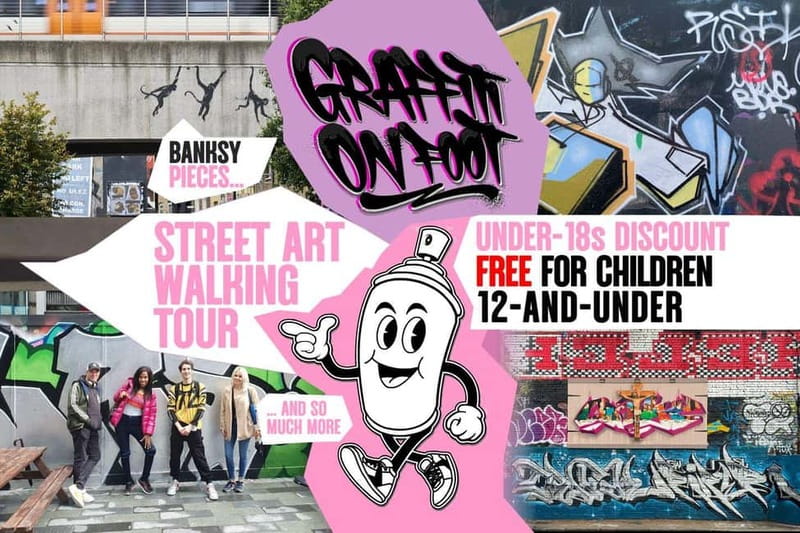
East London’s walls are not just colorful backdrops for holiday photos. They carry arguments about class, politics, ownership, fame, and who gets to shape a neighborhood. This two-hour Shoreditch tour uses Banksy, Brick Lane, and lesser-known writers to help you read those arguments.
I like the small groups of up to 15, which give you room to ask questions. I also like the focus on graffiti codes, rivalries, and artistic choices rather than simply pointing at famous pieces. The main drawback is that the exact Banksy count can change with access, and the accessibility information is inconsistent, so check before booking if that matters to you.
Key points at a glance
- Banksy beyond the stencil: Learn about several Banksy works, his influences, public arguments, and the Team Robbo conflict.
- Shoreditch and Brick Lane: Walk through two of East London’s best-known street-art areas, with plenty of photo stops.
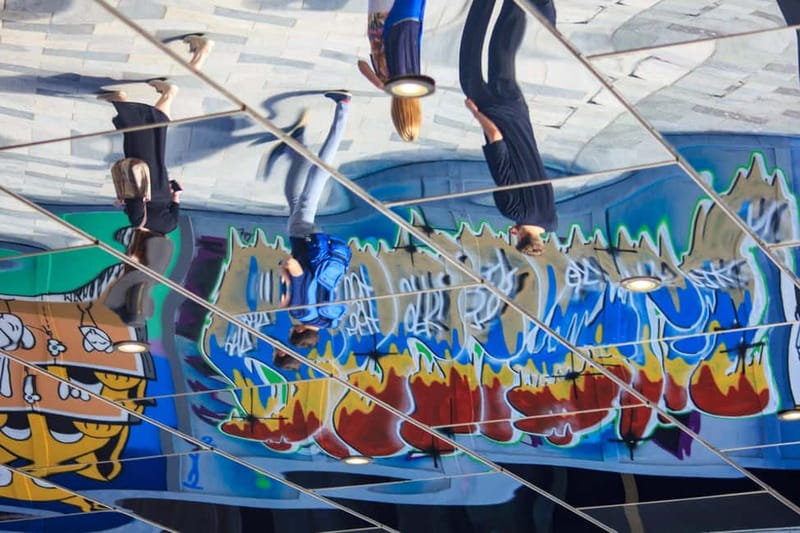
- Graffiti has rules: Study tags, styles, slang, status, and the codes that separate graffiti from commissioned street art.
- London artists get proper attention: Ben Eine and many other local writers are part of the story, not just background decoration.
- James leads the discussion: The guide is praised for explaining social and political themes clearly and answering every question.
- A flexible family option: Children aged 13 and under are free, with a youth discount for under-18s.
Why Shoreditch works as an open-air art lesson
Shoreditch is a useful place to study street art because the work changes constantly. Paint appears, fades, gets covered, or is removed. A wall you photograph today may look different on your next visit.
That temporary quality is part of the point. Unlike a museum picture, graffiti often competes with shop signs, traffic, construction, private property, and other artists. The tour shows you how to look at work in its setting, not as isolated decoration.
Brick Lane adds another layer. It is one of the best-known parts of East London for street art, but fame brings complications. As the area becomes more popular, street art can be used to attract visitors, advertise businesses, or signal that a neighborhood is changing. The walk connects graffiti with gentrification and social media, so you can think about who benefits when rebellious work becomes a local attraction.
I would not book this expecting a quiet gallery visit. You will be walking through public streets and alleys, stopping to examine walls and surfaces. The reward is a direct look at art that lives alongside ordinary city life.
More street art walks in London:
- London: Street Art and Graffiti Guided Walking Tour
★ 4.9 · 1,354 reviews - London: Landmarks & Secrets Bike Tour with Pub & Street Art
★ 4.9 · 314 reviews - London: East End Street Art Tour and Spray Painting Workshop
★ 4.8 · 297 reviews
The first lesson: graffiti is not one thing
A useful part of the tour is its introduction to the origins and development of graffiti in the United Kingdom. The guide explains how the movement changed over time and how different forms of writing and painting developed their own aims.
That distinction matters. A quick walk through Shoreditch can make every painted wall look like the same sort of work. It is not. A fast tag, a carefully worked letter piece, a stencil, a paste-up, and a large mural can carry different intentions and different levels of risk.
You will learn the language used to discuss this world. Graffiti has its own slang, codes, hierarchies, and rivalries. Once you understand some of those terms, you can look at a piece and ask better questions:
- Is the artist showing a name, a style, or a message?
- How much of the work depends on lettering?
- Does the piece respond to another artist?
- Is the work legal, commissioned, tolerated, or painted without permission?
- How does the location affect its meaning?
I like this approach because it gives you a way to keep exploring after the tour. The guide is not just identifying artists. He is giving you a set of tools for looking.
Finding Banksy, and looking past the famous name
Banksy is a major part of the walk. The route includes several of his works, with at least three described as part of the experience and the exact number depending on access. Another part of the published information refers specifically to two East London Banksy artworks, so you should confirm the expected number when you book.
That variation is worth noting. Street art is exposed to weather, construction, repainting, theft, and changes in access. A tour built around public walls cannot promise that every piece will be visible every time. The guide can explain the work and its place in Banksy’s story, but the physical stop may change.
The useful part is the context. You will look at Banksy’s history, inspirations, and controversies rather than treating each stencil as a simple photo opportunity. His work often depends on surprise, humor, political tension, or the contrast between an image and its setting. The guide helps connect those choices to the wider world of graffiti.
This is also a good chance to ask questions. If you want to know how Banksy relates to traditional graffiti, why his work became so widely accepted, or how street art changes once it gains a market, this is the sort of tour where those questions fit.
Team Robbo and the politics of a wall
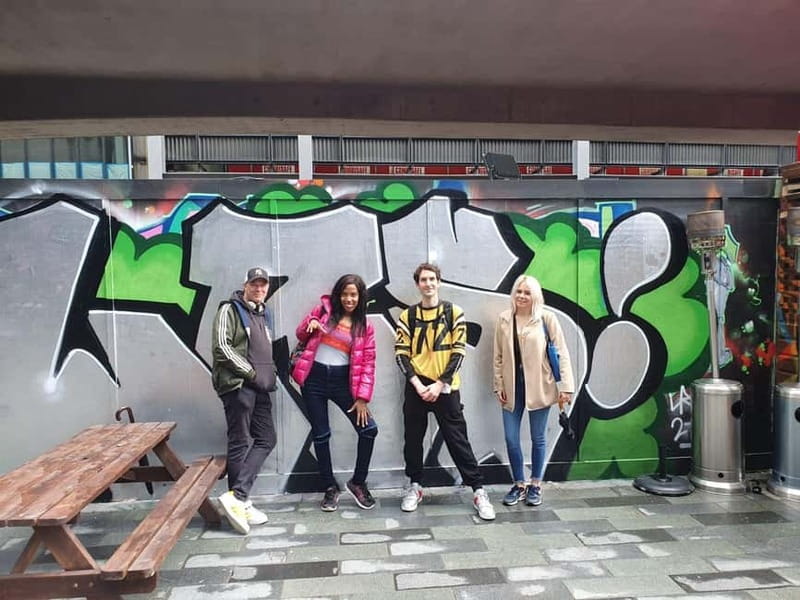
The Team Robbo versus Banksy conflict is one of the most distinctive subjects promised on the route. It gives the tour a sharper edge than a standard list of famous murals.
The dispute shows that a wall can have an ownership claim even when the law says otherwise. In graffiti culture, putting your name or image in a place can establish status. Painting over another artist’s work may be seen as an insult, a challenge, or an attempt to rewrite local history.
The conflict also helps explain why street art is full of tension. Artists may compete for visibility. Styles can be copied, challenged, or deliberately altered. A piece may be praised by the public while being viewed very differently by other writers.
I would pay close attention here. This section helps explain the hidden rules behind work that might otherwise look like random layering. It also makes clear that the debate is not only about Banksy’s fame. It is about respect, territory, artistic identity, and who has the right to alter a wall.
A handful of other London outings to weigh up
- From London: Harry Potter Warner Bros Studio Tour
★ 4.7 · 26,588 reviews - London: Westminster to Greenwich River Thames Cruise
★ 4.5 · 22,836 reviews - Magical London: Harry Potter Guided Walking Tour
★ 4.7 · 22,044 reviews - London: Madame Tussauds London
★ 4.6 · 20,915 reviews
Ben Eine and London’s wider cast
Banksy gets the headlines, but the walk also gives attention to Ben Eine, described as an artist who mastered both graffiti and street art. That distinction is useful because it shows how an artist can move between underground writing culture and work designed for a much wider public.
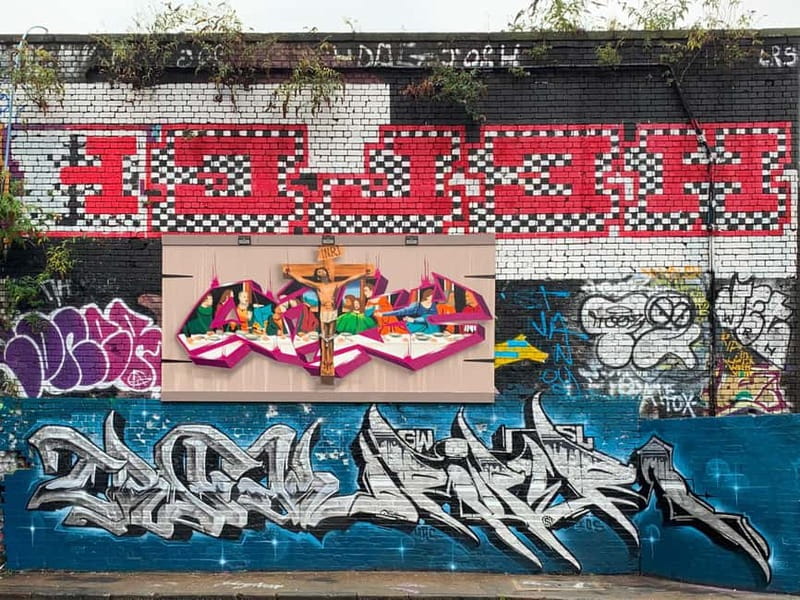
You will also encounter many other London writers. The point is not to memorize a long list of names. It is to see how different artists use letters, scale, color, repetition, characters, and placement.
This wider cast keeps the tour from becoming a Banksy-only hunt. Banksy is one part of East London’s story, not the whole story. If you are interested in the craft, the lesser-known work may be just as rewarding as the celebrated pieces.
The guide’s analysis is especially valuable for visitors who know they like street art but cannot yet explain why. You may begin noticing the balance of a letter, the rhythm of a tag, the way one image answers another, or how a wall’s position changes the effect of a piece.
James turns the walk into a conversation
James is the named guide associated with the tour, and the strongest praise centers on his ability to explain the London graffiti scene and handle questions. The walk is designed as an in-depth discussion, not a scripted procession from one photo stop to the next.
That matters in a small group. With a maximum of 15 people, you have a better chance to ask about a particular artist, technique, or controversy. The guide also makes an effort to include everyone, which is useful when the group has mixed levels of interest.
You should expect English-language guiding. The subject includes specialist slang and cultural references, so do not hesitate to ask James to explain a term or repeat a point. The tour is built for questions, and the chance to follow your own curiosity is one of its best features.
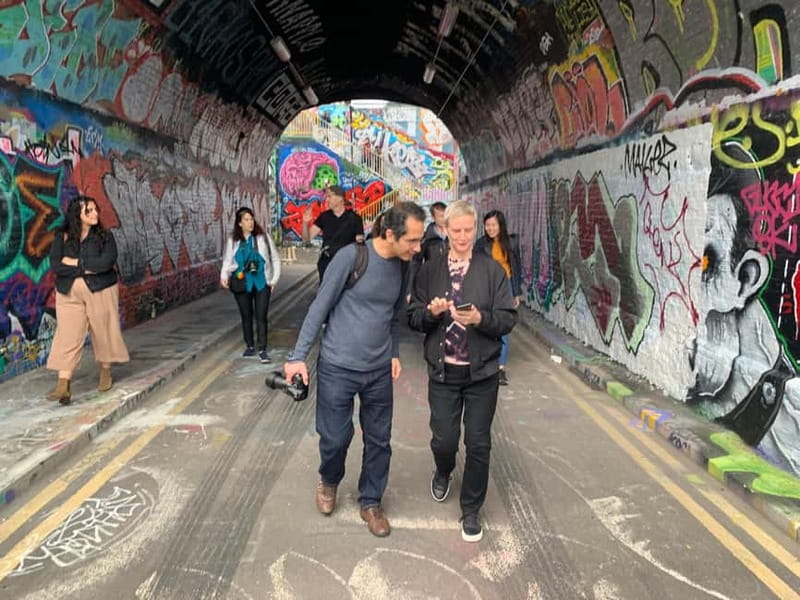
The route through hidden alleys and less obvious corners is another reason to use a guide. You can walk Brick Lane alone, but you may miss the small works, layered pieces, and tucked-away surfaces that give the area its character. A guide who knows what to look for saves you from spending the whole walk scanning every wall.
What the two hours feel like on foot
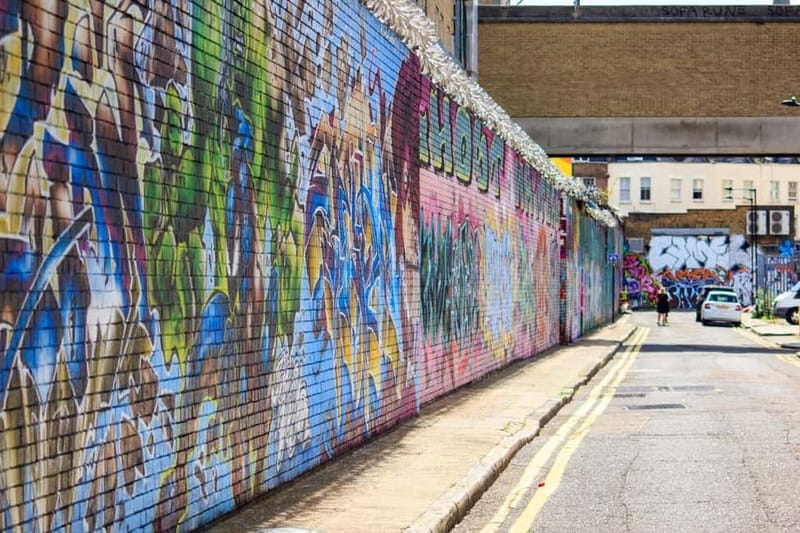
The route covers Shoreditch, Brick Lane, and other parts of East London, with stops for explanation and discussion. The supplied information does not give a fixed stop-by-stop sequence, so the precise order can change.
You can expect the walk to build from background into close reading. The early explanation of graffiti’s origins gives you a base. Later stops apply that knowledge to specific artists, Banksy pieces, styles, codes, and conflicts.
The two-hour length is well judged for this subject. It is long enough to move beyond quick identifications, but short enough to fit into a day of sightseeing. You will still need to remain attentive while walking and stopping on public streets.
Photography is allowed and encouraged. Bring a phone or camera, but keep your attention on the guide as well as the walls. If artists are working nearby, you are asked to act discreetly and not photograph them without clear permission. That is a sensible rule, and it reflects the difference between observing public art and intruding on someone’s work.
What you get for $16.16
At $16.16 per person, this is inexpensive for a two-hour guided walk in central London. The real value is not simply the number of walls you see. It is the interpretation.
You could walk through Shoreditch for free and take plenty of pictures. What you would miss is the explanation of why a piece looks the way it does, how artists respond to one another, and how politics, class, gentrification, and social media shape the scene.
The small group also improves the value. A large crowd can turn a street-art walk into a flag-following exercise. A maximum of 15 people gives the guide more room to answer questions and lets you pause without blocking the whole route.
Children aged 13 and under are free, and under-18s receive a youth discount. That makes it a sensible choice for families with teenagers, especially if your children are curious about drawing, design, music, politics, or city culture. The subject includes adult themes of conflict and public property, but it is presented as an art and social history lesson.
Free cancellation up to 24 hours before the start and a reserve-now, pay-later option also reduce the risk of fitting it into a busy London schedule. I would still check the starting time before planning other fixed activities around it.
Who will enjoy this walk most
I would recommend it most strongly to people who want context, not just photographs. It suits first-time visitors who want to see Shoreditch differently, as well as repeat London visitors who have already walked Brick Lane but never understood the work on its walls.
It is a good fit for:
- Visitors interested in Banksy but willing to look beyond him.
- Art students, photographers, and designers.
- Families with older children and teenagers.
- People curious about politics, social change, and public space.
- Anyone who likes asking questions during a tour.
- Visitors who want an active alternative to a museum afternoon.
It may be less suitable if you want a short, casual photo walk with little explanation. The tour takes its subject seriously. You will hear about artistic styles, slang, status, rivalries, and difficult questions about ownership and commercialization.
The accessibility details need care. One part of the information says the activity is wheelchair accessible, while another says it is not suitable for wheelchair users. Since the route uses public streets, alleys, and changing street-art locations, I would contact Jam Graffiti Tours before booking if you use a wheelchair or have mobility concerns.
Practical advice before you book
Wear comfortable shoes. The experience covers several areas on foot, and the useful stops may be on ordinary streets rather than in neat pedestrian squares.
Keep your camera ready, but do not let photography replace the discussion. The best part of the walk is learning what to notice in the first place.
If Banksy is your main reason for booking, ask about the expected number and condition of the works when you reserve. The advertised details indicate multiple Banksy pieces, but access can affect what you see.
Finally, arrive ready to participate. The tour is strongest when you ask why a work matters, how a style developed, or what a particular conflict says about the scene. James is there to answer those questions, and the small group makes that possible.
Should you book the Jam Graffiti Tours walk?
Yes, if you want a serious but approachable introduction to East London street art. The low price, two-hour length, small group, and strong guide-led discussion make it good value.
Book it especially if you want to understand the difference between graffiti and street art, place Banksy within a larger London story, and learn how to read pieces on your own. Skip it if you only want a quick Banksy checklist or if walking through changing urban spaces is difficult for you.
The best reason to go is simple: after two hours with James, the next wall you see in London is likely to hold more meaning than it did before.
FAQ
How long does the Shoreditch street art tour last?
The tour lasts two hours.
Where does the tour take place?
It covers Shoreditch, Brick Lane, and other parts of East London.
How many Banksy artworks will I see?
The experience includes multiple Banksy works. The information gives differing details, including at least three works and a specific reference to two East London artworks. The exact number can depend on access, so confirm before booking.
Is the tour conducted in English?
Yes. The live guide speaks English, and English is the listed language.
Who leads the tour?
James is the named guide associated with the experience. He explains London graffiti and street art and answers questions during the walk.
How large is the group?
Groups are limited to a maximum of 15 people.
Can children join the tour?
Yes. Children aged 13 and under are free, and an under-18 youth discount is available.
May I take photographs?
Yes. Photography is allowed and encouraged. If artists are working, you should be discreet and ask for express permission before photographing them.
Is the tour wheelchair accessible?
The supplied information is inconsistent. One section says wheelchair accessible, while another says it is not suitable for wheelchair users. Contact the provider before booking to confirm whether the current route meets your needs.
Can I cancel for a refund?
You can cancel up to 24 hours in advance for a full refund. A reserve-now, pay-later option is also available.
New listings around London
- London: Bermondsey Craft Brewery Tour★ 5.0 · 3 reviews
- Colourful Notting Hill Photography Tour★ 5.0 · 3 reviews
- The London Historic Pubs Tour★ 4.0 · 3 reviews
- Ultimate Royal London, Thames River Boat Ride & Walking Tour★ 5.0 · 3 reviews
- London: Wallace Collection & National Gallery Private Tours★ 5.0 · 3 reviews
- London: The Birthplace of The Rolling Stones Private Tour★ 5.0 · 3 reviews
- Historic pub tour with Brazilian guide (in Portuguese)★ 5.0 · 3 reviews
- London: Royal Tour with Westminster Abbey & Afternoon Tea★ 3.0 · 3 reviews
London Tours, compared.
Westminster to Greenwich River Thames Cruise
Read our review →
Magical London: Harry Potter Guided Walking Tour
Read our review →


Warner Bros. Studio Harry Potter Tour with Transfers
Read our review →Browse the lists this tour appears in