
Reviewed · CAMBRIDGE TOURS
Cambridge: The Original Uncomfortable Cambridge™ Tour
Cambridge is famous for grand colleges, polished courtyards, and centuries of academic tradition. This tour asks you to look again, especially at the stories left out of the usual city tour. It connects the university to local townspeople and examines race, class, gender, colonial objects, statues, names, and imperialism.
I like the sharp historical focus and the way guides invite you to discuss difficult subjects rather than simply recite dates. I also like the efficient route, which covers major sights in about 2 km and 1.5 hours. The main limitation is clear: you will not go inside any colleges, and busy weekend streets plus uneven cobblestones can slow the walk.
- A different reading of Cambridge: The route questions traditional university stories and gives attention to underrepresented voices.
- Six major sights in 90 minutes: You see King’s College, Great St Mary’s, the Old Schools, the Backs, Darwin College, and the Corpus Clock.
- Led by university researchers: Guides such as Ruari and Oscar bring an academic background without turning the walk into a lecture.
- Useful for a short visit: The tour starts and finishes at the Cambridge Tourist Information Centre.
- Accessible route: The walk is mostly flat, with no steps, though it includes cobblestones, street crossings, and one bridge ramp.
- Good value at $26: You receive a guided city walk, a souvenir sticker, and a university-researched reading list.
Cambridge Beyond the Pretty College View
The Original Uncomfortable Cambridge Tour is not a standard procession from one photogenic college gate to the next. It uses familiar sights as starting points for questions about who held power, who benefited from the university, and who was left outside its story.
That makes this a useful first tour if you want more than a quick orientation. You still see the central landmarks, but the guide adds social and political context. The emphasis is on race, class, gender, colonial objects, statues, names, and the lasting effects of imperialism.
I appreciate the tone suggested by the tour’s name. The aim is not to make Cambridge seem bad or to replace one simple story with another. It is to make the city harder to take for granted. A grand building may still be beautiful, but you also begin asking what institutions it served and whose experiences were not recorded in the traditional account.
The guides are university researchers, and that matters here. The walk depends on careful explanation, not just colorful anecdotes. Ruari led one highly praised outing, while Oscar was singled out for engaging discussion about the university’s relationship with local people, minorities, and women’s education.
Starting at the Tourist Information Centre
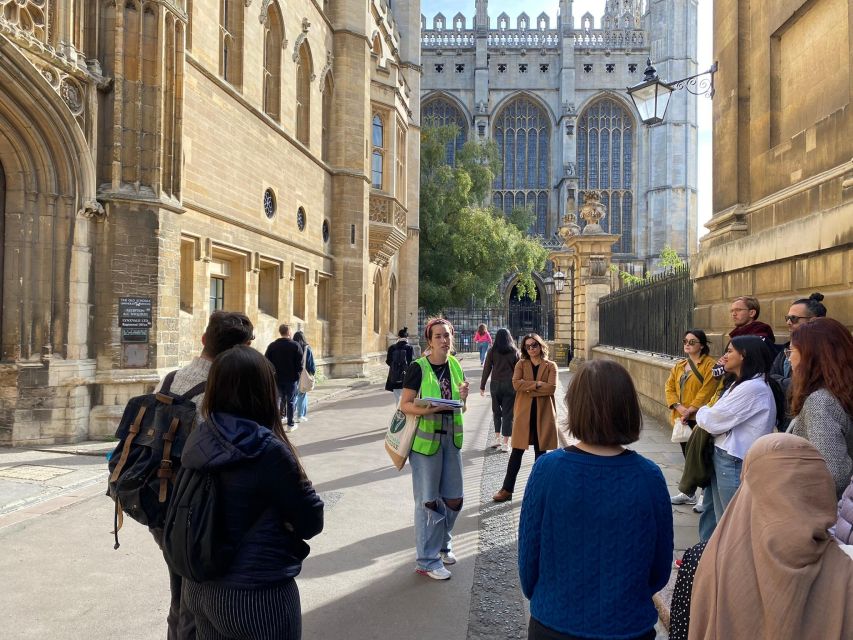
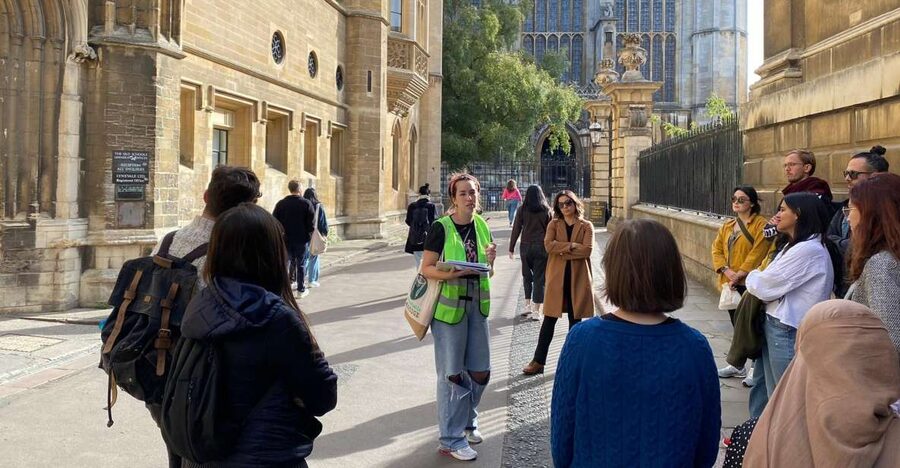
You meet outside the main entrance of the Cambridge Tourist Information Centre. Look for a guide wearing a badge and carrying a green Uncomfortable Cambridge branded tote bag.
This is a practical meeting point for a city-center walk. The tour returns to the same place, so you do not need to arrange transport back to a distant hotel or college. There is no hotel pickup or drop-off, which is normal for a central walking tour and helps keep the price down.
Try to arrive ready to walk rather than treating the meeting point as a place to linger. The outing lasts 90 minutes and covers roughly 2 km, so the pace should be manageable for most people, but the time goes quickly once the group begins moving between the main sights.
A handful of other Cambridge outings to weigh up
- Cambridge: Guided River Cam Punting Tour
★ 4.7 · 1,469 reviews - Cambridge: University Alumni Tour with Kings College Option
★ 4.7 · 1,282 reviews - Cambridge: Alumni-Led Walking Tour w/ King’s College Option
★ 4.8 · 1,177 reviews
King’s College and the Familiar Cambridge Image
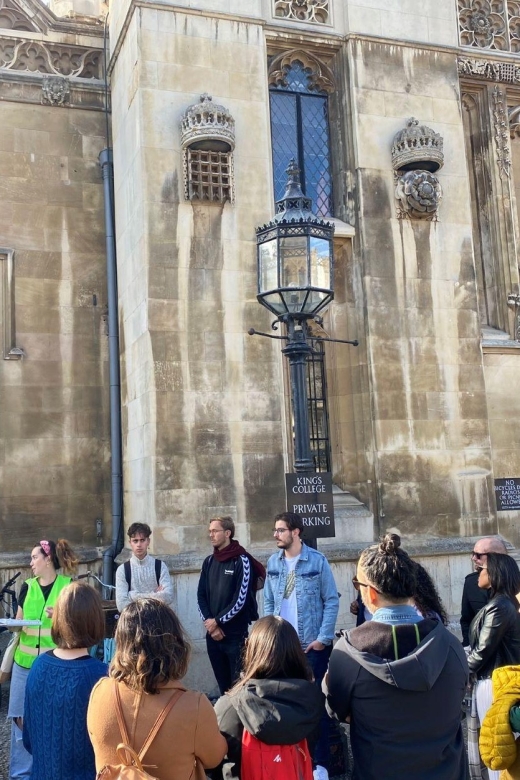
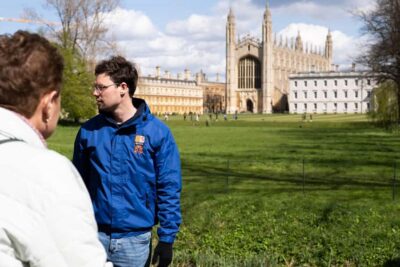
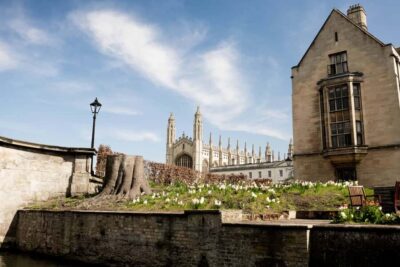
King’s College is one of the first major landmarks on the route. For many people, it represents the Cambridge they already expect: grand university buildings, old academic traditions, and a highly polished public image.
The value here is not simply seeing the college from outside. Since the tour does not enter any colleges, the guide uses the visible exterior and surrounding city streets to question how Cambridge presents itself. You get the landmark, but you also get help reading it as part of a wider institution.
This is a good example of how the tour works. The guide does not need access to a private interior to make the stop worthwhile. The public view is enough to open a discussion about status, education, power, and the difference between the university’s image and the experience of people connected to it.
If you have already taken a conventional Cambridge sightseeing walk, this stop should still feel useful because the focus is different. If this is your first visit, it gives you the famous view while warning you not to mistake the postcard for the whole city.
Great St Mary’s and the University’s Public Face
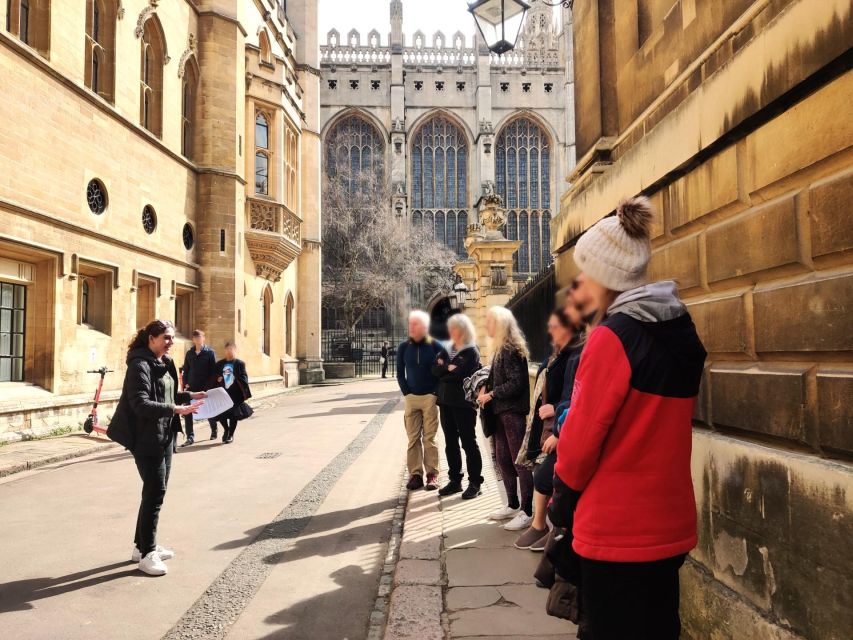
Great St Mary’s, The University Church, adds another important layer to the route. Its full name points to the connection between the university and the wider city, which is central to the tour’s approach.
You can expect the guide to use this stop to consider how university life and civic life overlap. The walk is concerned with the relationship between the university and local townspeople, rather than presenting Cambridge as a sealed academic world floating above the streets.
That approach is especially helpful because central Cambridge can look like a collection of separate monuments. The tour keeps bringing you back to the people and institutions behind the buildings. You are not only looking at an old church or a famous university setting. You are considering who had access, who made decisions, and how the city around the university was affected.
The stop also helps break up the heavier material with a major architectural and civic landmark. The tour is thoughtful, but it is still a walk through a beautiful city.
The Old Schools and Questions of Authority
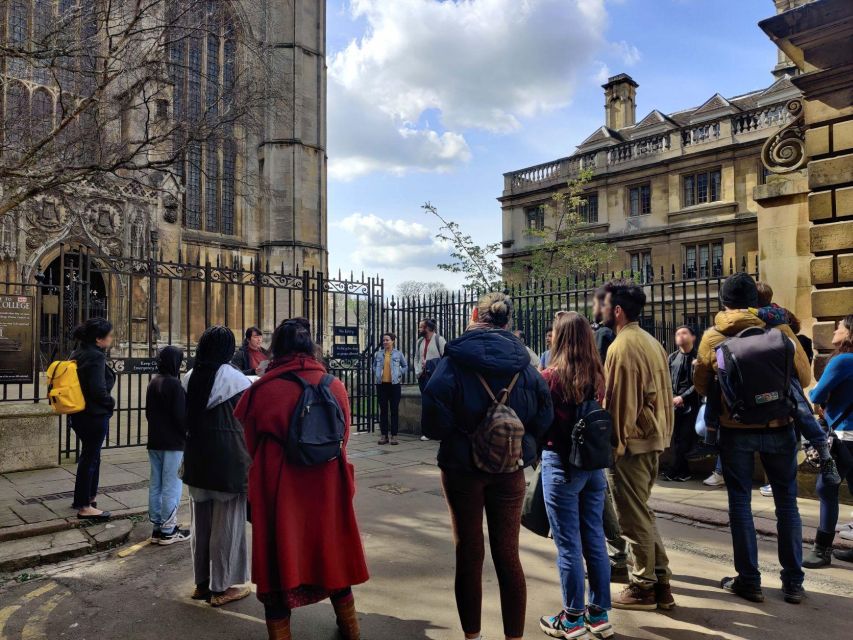
The Old Schools are another key stop. The name alone signals the long institutional life of the university, and the site gives the guide a strong place to discuss authority, tradition, and the way official stories are preserved.
This part of the walk should appeal to you if you enjoy seeing how an institution presents itself. The tour does not treat old names and buildings as neutral. It asks what they commemorate, what they conceal, and how modern Cambridge deals with difficult links to its past.
The themes are not limited to race or empire. Gender and class are also part of the discussion. One of the strongest reported guide interactions involved asking the group to consider the university’s attitude toward women’s education and other past difficulties. That format gives you room to think aloud instead of standing silently while facts are delivered.
The discussion may feel more demanding than a normal sightseeing tour. That is intentional. If you want only dates, architectural details, and famous alumni, this is not the most direct choice. If you want to test the familiar Cambridge story, the Old Schools is a particularly fitting stop.
Elsewhere in Cambridge, a change of pace:
- Cambridge: City Sightseeing Hop-On Hop-Off Bus Tour
★ 4.4 · 520 reviews - Cambridge: Shared Punting Tour with Guide
★ 4.7 · 427 reviews - Cambridge: Alumni-Led Walking & Punting Tour w/Kings College
★ 4.6 · 418 reviews - Cambridge: Guided Shared River Punting Tour
★ 4.8 · 298 reviews
The Backs, Darwin College, and the View Behind the Colleges
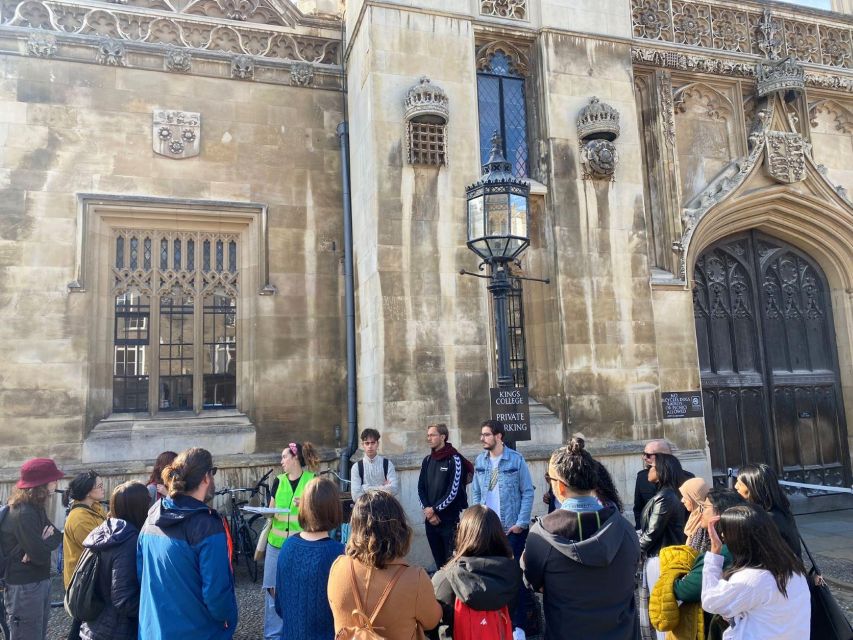
The route continues toward The Backs and Darwin College. The Backs provide some of the most scenic views on the walk, giving you a chance to see the quieter side of the central university area.
This is the point where the tour’s visual appeal and its critical purpose work well together. The view may look calm and timeless, but the guide encourages you to consider the institutions behind it and the social structures that shaped them. The scenery gives the group breathing room while the conversation continues.
Darwin College adds another named university setting without requiring entry inside. Remember that the tour stays outdoors at the colleges. If you have your heart set on seeing college interiors, you will need a separate ticket or another tour.
The route includes mostly flat ground, but The Backs area does not mean every surface will be smooth. Some cobblestoned streets are uneven, and you will cross streets along the way. On weekends, central Cambridge can be quite busy, so keep your attention on the guide and allow extra space around the group.
The Corpus Clock and Cambridge’s Modern Questions
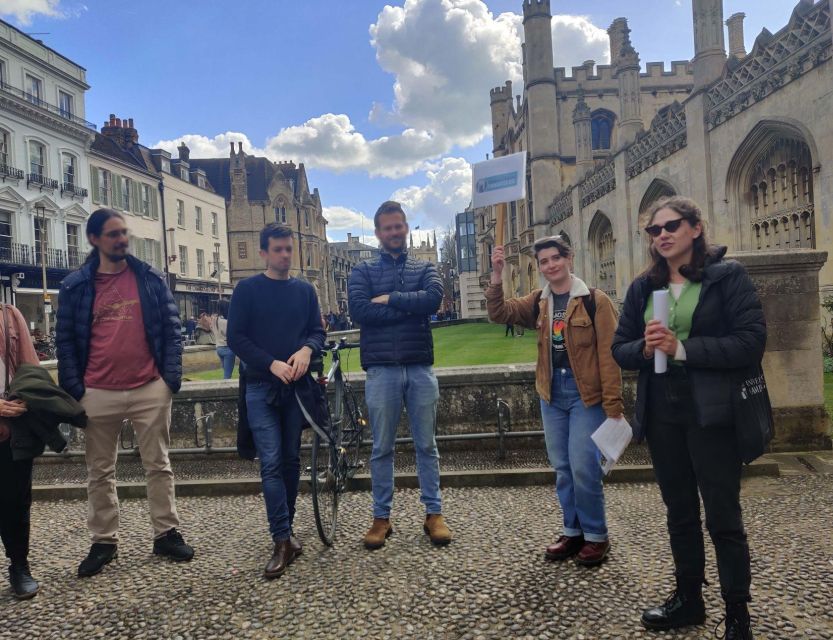
The Corpus Clock brings the walk back to one of Cambridge’s most recognizable modern sights. It is a natural final highlight because it links the city’s old university setting with a more recent object that invites curiosity and debate.
The tour’s broader themes make this more than a quick photo stop. The guide is likely to use the city’s public objects, names, and symbols to show how Cambridge continues to negotiate its past. The tour specifically addresses modern controversies involving statues, names, and colonial objects, so the Corpus Clock sits within a larger conversation about what the city chooses to display.
You should not expect every issue to be settled during a 90-minute walk. The point is to leave with better questions and a reading list for further study. That reading list, compiled by university researchers, is a useful extra for anyone who wants to continue beyond the tour.
The route then returns to the Cambridge Tourist Information Centre. Ending where you started makes it easy to continue sightseeing, find a cafe, or catch transport without retracing the entire walk.
What the Guides Add to the Experience
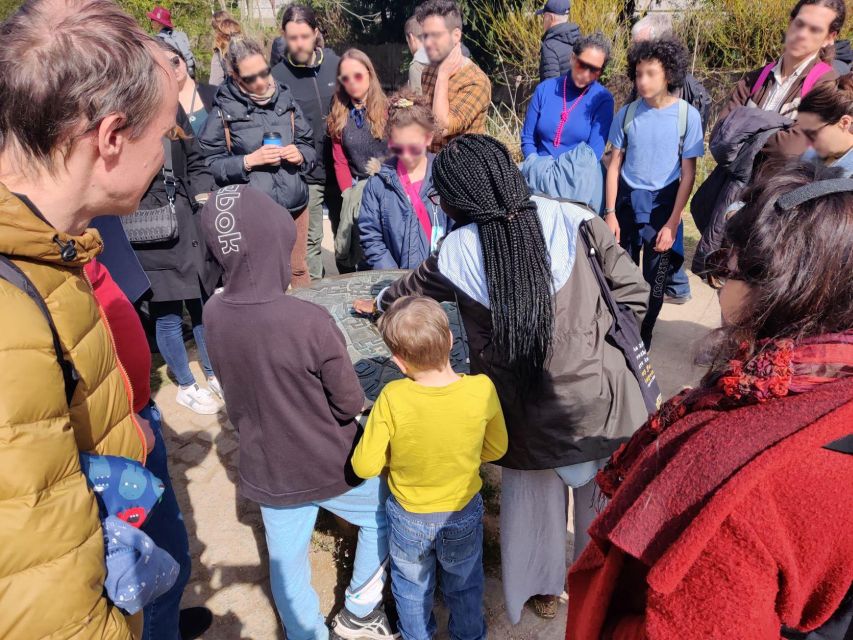
The guide makes or breaks any walking tour, and this one relies heavily on the person leading it. The available feedback points to a friendly, engaging style as well as strong command of the subject.
Ruari was praised for being extremely informed and approachable during a short Cambridge visit. Oscar was noted for drawing out discussion about local townspeople, minorities, and women’s education. Another guide, described as a young woman, encouraged the group to take part in conversations about difficult historical situations rather than simply listening.
That combination is important. The tour deals with serious material, but it is not designed as a scolding session. You can expect questions, interpretation, and conversation. The guide’s job is to make you think without losing sight of the city’s buildings and streets.
A small number of published ratings gave the experience a 4 rather than a 5, which is worth keeping in mind. The subject can feel thought-provoking and demanding, and one suggestion was to include more uncomfortable issues from the university’s present day. If you want a fully current political investigation, the tour may not go as far as you hope. It is mainly a historical introduction with links to modern controversies.
Is $26 a Fair Price?
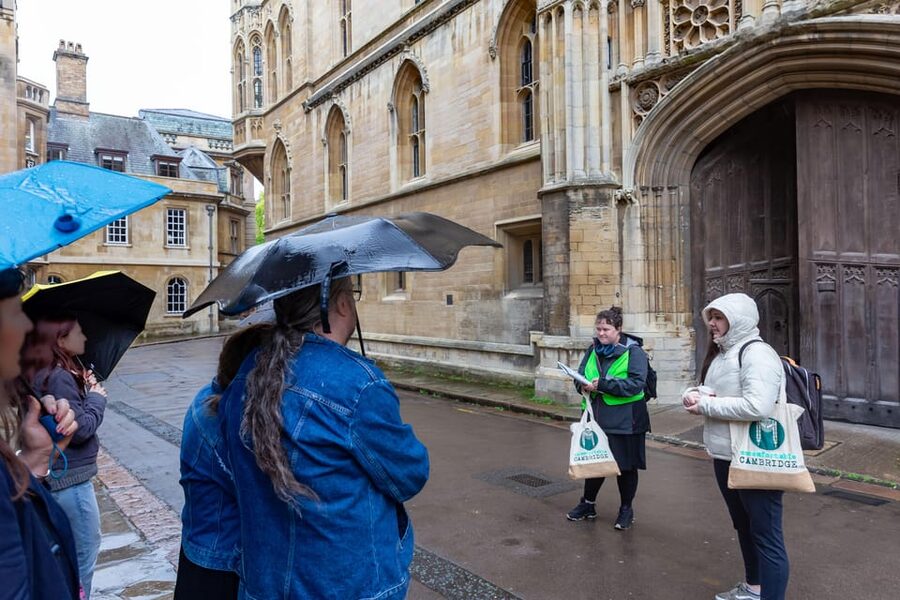
At $26 per person, I consider this good value if you want a focused introduction to Cambridge and its university culture. The tour lasts 1.5 hours, covers the main central sights, and offers an approach you will not get from a basic photo-and-facts walk.
You also receive an Uncomfortable Cambridge souvenir sticker and a reading list compiled by university researchers. The sticker is a small extra, but the reading list has real practical value. It helps turn a short walk into the beginning of further research.
The price is less attractive if your only goal is to see the college buildings quickly from the outside. You can walk through central Cambridge on your own, and the tour does not include college entry. You are paying for interpretation, structure, and access to a guide who can connect the places to questions of race, class, gender, and imperialism.
Free cancellation up to 24 hours before the tour and the option to reserve now and pay later also reduce the risk of fitting it into a changeable schedule. Starting times vary, so check availability when planning your day.
Access, Walking Conditions, and Who Should Book
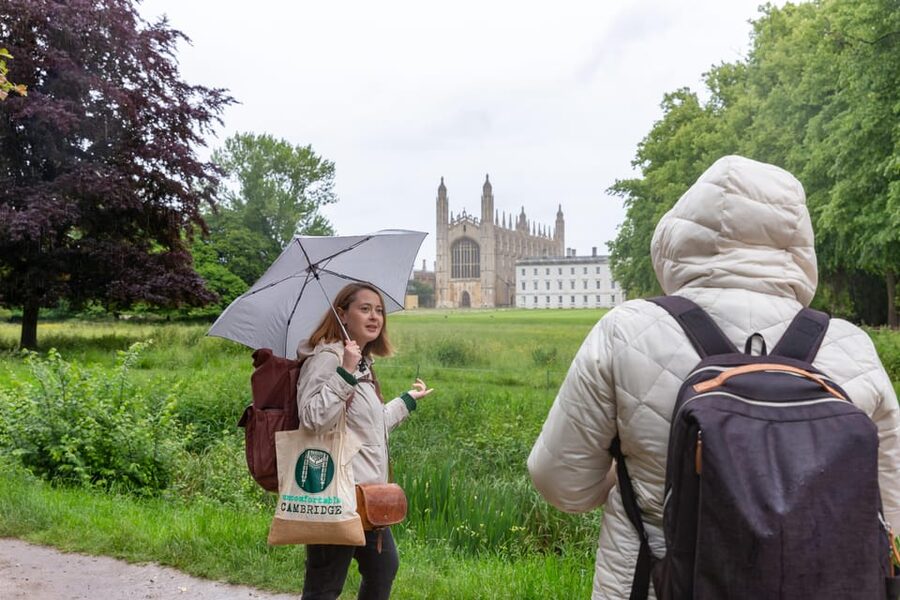
The route is wheelchair accessible and mostly flat. There are no steps, but you will encounter uneven cobblestones, several street crossings, and one ramp on and off a bridge. There are places to sit or lean if needed.
If you have a specific access requirement, contact the provider directly before booking. The organizers state that they will do their best to accommodate individual needs. Toilets are available in local pubs along the route, rather than as a dedicated tour facility.
Wear clothing suited to the weather. Cambridge walking tours are exposed to rain, wind, and sun, and there is no suggestion of indoor shelter during the route.
I would recommend this tour to:
- First-time visitors who want a quick, serious introduction to Cambridge
- People interested in how universities shape cities and local communities
- Families with older children who can take part in discussion
- Students, teachers, and anyone interested in race, gender, class, or empire
- Visitors with only an afternoon in Cambridge
- People who have already seen the standard sights and want a new angle
I would choose another activity if you mainly want college interiors, a short photo walk, or a tour focused on architecture alone. This experience asks you to listen, discuss, and reconsider familiar symbols.
Should You Book the Original Uncomfortable Cambridge Tour?
Book it if you want the major Cambridge sights tied to questions about power and memory. The tour is especially useful when your time is limited, since you see King’s College, Great St Mary’s, the Old Schools, The Backs, Darwin College, and the Corpus Clock in a compact 90-minute route.
The best reason to choose it is the subject matter and guide-led discussion. You will not simply collect landmarks. You will leave with a more questioning view of the university and a reading list to continue the conversation.
Skip it if entering a college is essential, or if you prefer a light sightseeing walk with no difficult historical material. For everyone else, $26 is a fair price for a well-organized introduction to the Cambridge behind the postcard.
FAQ
How long does the Original Uncomfortable Cambridge Tour last?
The tour lasts 1.5 hours.
How far does the tour walk?
The route covers about 2 km through central Cambridge.
Where does the tour start?
Meet your guide outside the main entrance to the Cambridge Tourist Information Centre.
How do I identify the guide?
The guide will wear a badge and carry a green Uncomfortable Cambridge branded tote bag.
Does the tour enter any colleges?
No. The tour does not go inside any colleges.
Which sights are included?
The route includes King’s College, Great St Mary’s, The Old Schools, The Backs, Darwin College, and the Corpus Clock.
Is the tour wheelchair accessible?
Yes. The route is mostly flat and has no steps, but it includes cobblestones, street crossings, and one ramp on and off a bridge.
Is the tour offered in languages other than English?
No. The listed tour language is English.
Can I cancel my booking?
Yes. You can cancel or change your ticket free of charge up to 24 hours before the tour for a full refund.
New listings around Cambridge
- Cambridge: Private Chauffeured Punting Tour★ 4.8 · 3 reviews
- Cambridge: Chinese University Student-Guided Walking Tour★ 3.3 · 3 reviews
- From Cambridge: Guided day trip to Stratford & The Cotswolds★ 4.7 · 4 reviews
- Cambridge: Sightseeing Walking Tour with a Local Guide★ 3.0 · 5 reviews
- From Cambridge: Guided Day Tour to Bath and Stonehenge★ 4.8 · 14 reviews
- Cambridge: Shared Chauffeured Punting Tour★ 4.8 · 18 reviews
- Cambridge: 2-Hour Private University Walking Tour★ 4.9 · 28 reviews
- Cambridge: Ghost Tour Led by University Alumni Guide★ 4.5 · 108 reviews
Cambridge Tours, compared.
University Alumni Tour with Kings College Option
Read our review →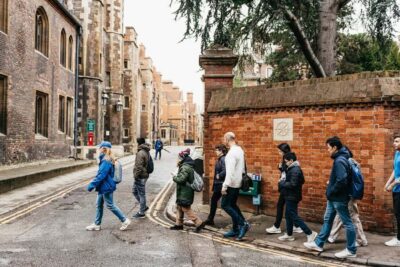
Alumni-Led Walking Tour w/ King’s College Option
Read our review →

Alumni-Led Walking & Punting Tour w/Kings College
Read our review →
Browse the lists this tour appears in