
Reviewed · LONDON TOURS
City of London Mystical and Dragons Walking Tour
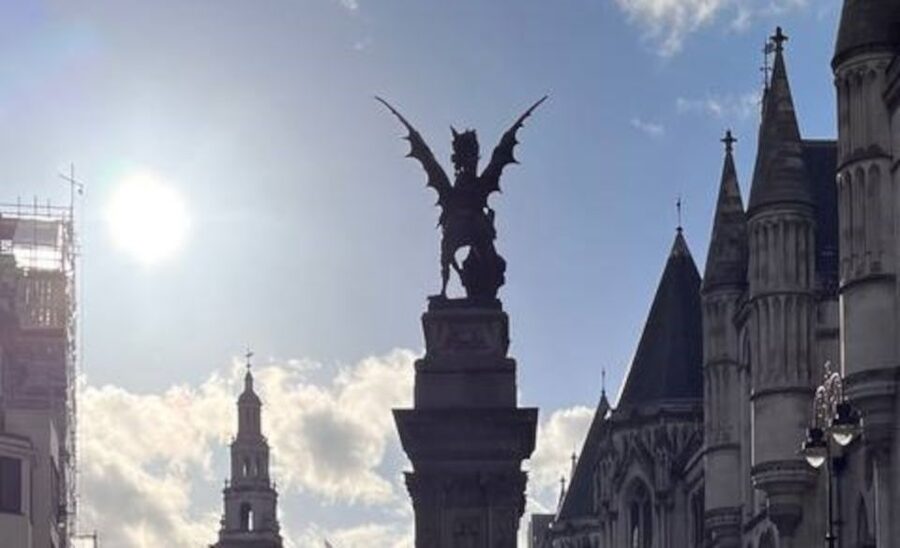
London’s old center is full of clues that are easy to miss: a surviving piece of London Stone, vanished streams beneath office blocks, church carvings, ancient mounds, and dragons woven into civic symbols. This small-group walk of up to eight people connects those fragments through mythology, archaeology, architecture, and the story of London’s growth from early settlements to St. Paul’s Cathedral.
I like the way the tour links physical places with old beliefs, rather than treating dragon lore as a string of unrelated ghost stories. I also like the compact route, which moves from the Bank area through St. Paul’s, Fleet Street, and Temple without asking you to spend a whole day on one theme. The main consideration is that this is an interpretive tour, not a standard sightseeing walk. If you want long interior visits or a detailed architectural survey, the brief stops may feel too short.
Key points to know before you book
- A dragon-themed route with real city landmarks: London Stone, the Bank of England, St. Paul’s Cathedral, Temple Church, and Temple Bar Memorial all feature in the walk.
- Arjun leads the tour: He is identified by longish hair, a beard, and a felt green dragon on his backpack.
- The route takes 2.5 hours: Most stops last from five to fifteen minutes, so expect a steady walking pace and focused explanations.
- The group is limited to eight: That suits travelers who prefer questions and conversation over a large crowd.
- The subject reaches beyond dragons: You’ll hear about Druids, ley lines, ancient mounds, sacred sites, forgotten waterways, and architectural symbols.
- A post-tour PDF is included: It gives you an overview of the locations and themes after the walk.
Why this City of London walk feels different
Many London walking tours work from famous building to famous building. This one uses those landmarks as pieces of a larger idea: the city has layers, and old stories often survive in odd corners rather than grand museums.
The dragon theme gives the route a clear thread. You are not simply told that London is old. You are asked to consider how different peoples and beliefs gave meaning to stones, springs, hills, churches, rivers, and civic buildings. Some parts are rooted in archaeology and visible architecture. Other parts involve ley lines, sacred geography, and folklore. I would enjoy that mix, but you should know where the tour sits: it is a guided interpretation of London’s mystical traditions, not a purely academic account.
Arjun’s role matters here. The available feedback repeatedly praises his command of the subject, his clear storytelling, and his friendly manner. One review describes the tour as a fresh way to see the City, while another highlights the way he joins story, myth, and iconography. That suggests you should expect an engaged guide who is comfortable moving between documented places and symbolic readings.
The 4.9 rating from seven reviews is encouraging, though it is still a small sample. The comments are consistent in praising the guide and the subject. A German participant called the tour informative, entertaining, and exciting, while an English-language review described it as a very good morning. A short Ukrainian review also records a wholly positive experience.
More Walking Tours in London
- Magical London: Harry Potter Guided Walking Tour
★ 4.7 · 22,044 reviews - London: The Original Jack the Ripper Walking Tour
★ 4.7 · 7,833 reviews - London: Harry Potter Movies Walking Tour (Kids Go Free)
★ 4.7 · 3,071 reviews
Meeting Arjun beside Joe & The Juice
The meeting point is outside Joe & The Juice Bar. Arjun’s longish hair, beard, and felt green dragon on his backpack are meant to make him easy to identify.
This is a useful arrangement in a dense part of central London. You do not need to search for an obscure monument before the walk begins, and the dragon on the backpack fits the theme without turning the start into a costume performance. Arrive ready to walk, since the route begins promptly with London Stone and then continues through the City.
The small group size is one of the better practical features. With no more than eight participants, you can ask about a carved symbol, a church detail, or a point that needs clarification. It also makes a mythology-heavy subject easier to follow, since the guide can adjust the explanation rather than delivering a one-size-fits-all speech.
The tour is in English. It is listed as wheelchair accessible, though the route includes several historic churches, streets, and outdoor sites. If you use a wheelchair, it is sensible to confirm the exact route and interior access before booking, especially because the information does not specify which sites are entered.
London Stone and the memory of old power
The remaining part of London Stone is the first major stop, with about ten minutes of guided explanation. The stone is a strong opening because it immediately raises questions about what makes a place important.
You can expect the guide to place this surviving fragment within the larger story of London’s origins and symbolism. The tour’s focus on sacred sites, ancient mounds, and the power assigned to particular locations begins here. The point is less about staring at a small piece of stone and more about considering how an object can gather stories over time.
This stop is brief, so do not expect a long archaeological lecture. It works best as a first clue, a compact object that sets up the theme of hidden meaning beneath an ordinary city street.
Bloomberg Arcade and the forgotten streams
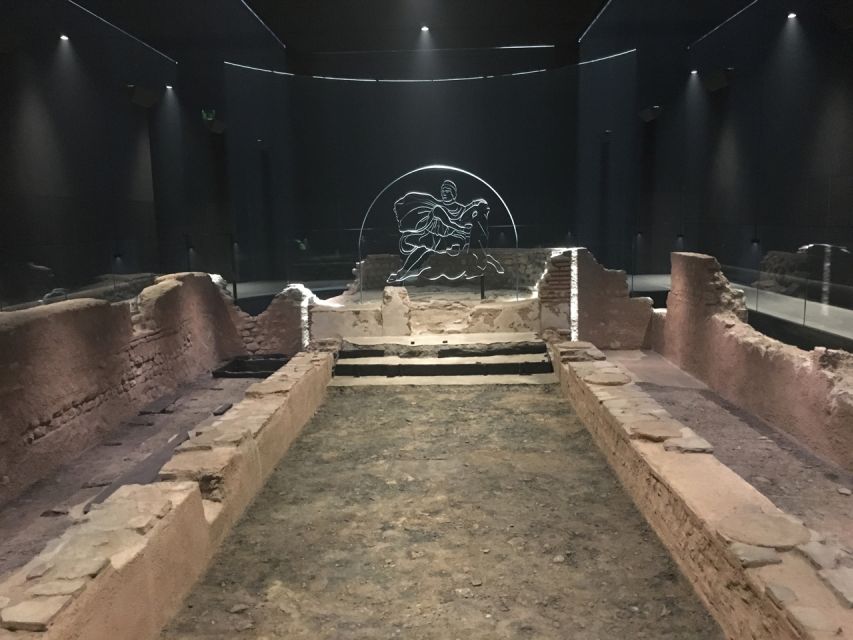
The next stop is the Forgotten Streams area at Bloomberg Arcade. It lasts about five minutes and shifts the focus from stone to water.
London’s waterways are easy to overlook because modern streets, offices, and plazas cover much of the old city. Here, the tour considers how streams once shaped settlement and how water can carry both practical and sacred meaning. That is a useful correction to the usual London sightseeing route, which tends to follow royal buildings, markets, and major churches.
The stop is short, so you will not spend time exploring a watercourse in the conventional sense. Instead, listen for how the guide connects vanished waterways with the city’s older patterns. This is one of the tour’s more unusual details and a good reason to choose it over a general City walk.
Elsewhere in London, a change of pace:
- From London: Harry Potter Warner Bros Studio Tour
★ 4.7 · 26,588 reviews - London: Westminster to Greenwich River Thames Cruise
★ 4.5 · 22,836 reviews - London: Madame Tussauds London
★ 4.6 · 20,915 reviews - London: Warner Bros. Studio Tour with Transfers
★ 4.7 · 17,586 reviews
The Mithraeum and the Bank of England
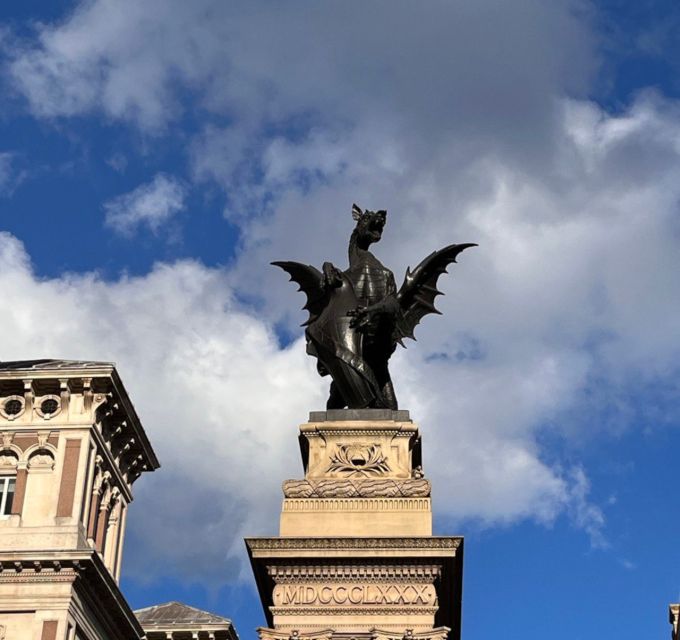
London Mithraeum receives about five minutes. Its inclusion brings Roman religious life into the story and helps show that London’s spiritual identity changed as different cultures arrived and settled here.
The tour then moves to the Bank of England for another five-minute explanation. The contrast is striking in concept: a modern center of finance is placed beside older ideas about power, ritual, protection, and civic authority. The walk is not simply a list of ancient sites. It asks you to notice how symbolic power can persist in a changing city.
The timing matters. Five minutes is enough for a focused introduction, but not enough for a full museum visit or extended architectural study. The listed route does not promise admission to the Mithraeum or any other paid attraction, so book this for the guide’s interpretation of the locations rather than for lengthy indoor sightseeing.
St Mary-le-Bow and the City’s symbolic center
St Mary-le-Bow gets one of the longer stops, about fifteen minutes. That gives Arjun more room to explain church symbolism, local tradition, and the way architecture can preserve older ideas.
This is where the tour’s method should be clearest. You are encouraged to look at the church not only as a historic building, but as part of a network of meanings. The discussion may suit you if you enjoy asking why a building faces a certain way, why a symbol appears in a particular place, or how later religious structures may occupy older sacred ground.
The tour then pauses at a tree described as the oldest tree in the City of London. This five-minute stop adds a living element to a route otherwise filled with masonry, monuments, and streets. The supplied information does not give the tree’s age or exact species, so treat the stop as a guided point of interest rather than a formal botanical visit.
St Paul’s Cathedral, Ludgate, and the old edge of the City
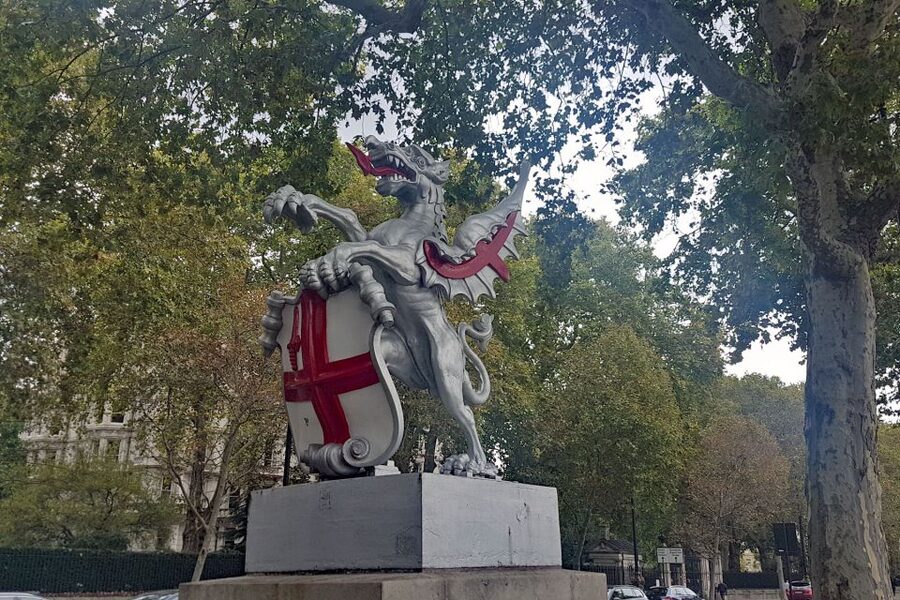
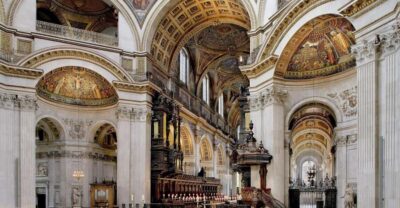
St. Paul’s Cathedral receives about ten minutes. You are unlikely to get a full cathedral tour in that time, but the stop lets the guide connect one of London’s best-known landmarks with the older layers traced throughout the morning.
The cathedral is especially useful in this tour because it represents a major stage in London’s religious and civic development. The route begins with prehistoric and Roman themes, then passes through medieval churches and reaches a building that dominates the modern City’s skyline.
The Church of St Martin Ludgate follows, with another ten-minute explanation. Then the walk passes through Ludgate Circus for about five minutes. These stops help link grand religious buildings with the streets and gateways that shaped movement through London.
I like this middle section because it keeps the route grounded. The mystical theme does not float away from the city itself. You continue walking through places where commerce, worship, travel, and civic power once met.
St Bride’s Church and Fleet Street stories
St Bride’s Church receives about fifteen minutes, one of the route’s more generous time slots. That suggests the guide has plenty to say about its architecture, location, and role in the symbolic story of the walk.
Fleet Street is an effective setting for this part of the route. It carries a strong sense of old London, and St Bride’s adds another church with layers of memory and meaning. Listen for the way the guide connects buildings with the city’s changing communities rather than treating each church as an isolated object.
This stop may be one of the best parts for travelers who enjoy architecture but do not want a conventional church crawl. The dragon theme remains present, yet the explanation also covers how symbols can be adapted, repeated, and reinterpreted across different periods.
As with the other churches, the listed timing is short. You should not assume that a fifteen-minute stop means an extended interior visit. The tour may focus on the building, its setting, or specific details visible along the route.
St Dunstan-in-the-West and the move toward Temple

St Dunstan-in-the-West gets about five minutes. This is a quick stop, but it keeps the church sequence moving toward the legal and religious district around Temple.
By now, the route has shown several ways that London’s past survives: in stone fragments, vanished streams, old trees, cathedral settings, church symbols, and street patterns. St Dunstan-in-the-West works as another link in that chain.
The walk then continues on foot for about five minutes before reaching Temple Church. Since the activity lasts 2.5 hours and includes many stops, you should wear comfortable shoes and expect to be walking between explanations rather than standing in one place for the whole tour.
Temple Church and the Knights Templar
Temple Church receives about ten minutes and brings Knights Templar associations into the route. Its inclusion suits the tour’s interest in sacred places, secretive traditions, symbols, and the way medieval institutions become part of later legend.
The stop also broadens the dragon theme. Dragons do not belong to one age or one culture. The tour’s larger point is that London’s lore grew as different groups added their own stories and symbols to the city.
Again, ten minutes means a concentrated look, not a full historical visit. The supplied details do not confirm interior access, so you should not book this walk mainly to see the church inside. Book it for the connections Arjun draws between the site and London’s wider mythic story.
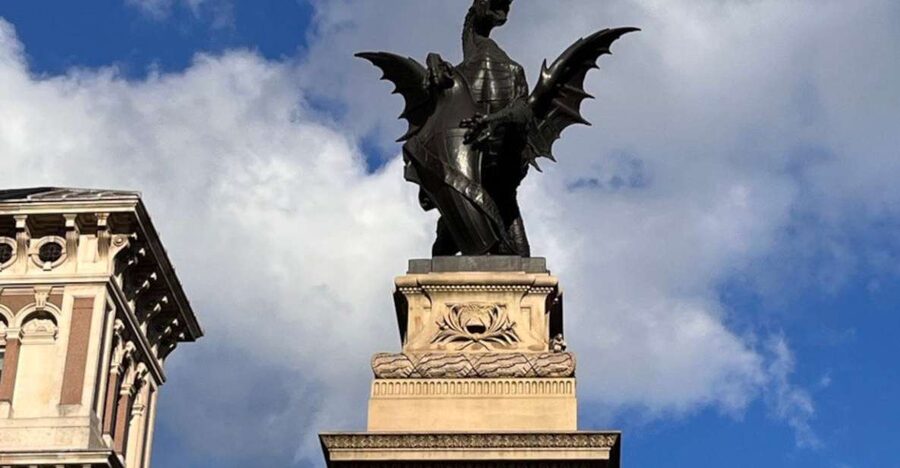
Temple Bar Memorial, the final dragon clue
The route ends at Temple Bar Memorial. This is a practical finish because the tour closes with a named landmark rather than leaving you somewhere vaguely near the last church.
A final stop at Temple Bar Memorial gives the walk a chance to gather its themes: old entrances, civic identity, protective symbols, changing borders, and the stories that give a city character. The tour begins with a surviving stone and ends with a public monument, creating a neat movement from ancient object to later urban memory.
The ending also lets you decide what to do next without having to return to the starting point. The activity includes a post-tour PDF covering the locations and themes, which should help you revisit the route later and sort documented history from folklore and interpretation.
What you get for $25
At $25 per person, this is reasonably priced for a 2.5-hour live walk in central London, especially with a maximum group of eight. The value comes from the route design and the guide’s subject knowledge, not from admissions or long visits inside attractions.
I would compare it with a standard City of London tour this way: a general walk may give you broader coverage of famous buildings, while this one gives you a narrower but more distinctive question to follow. You pay for the connections between sites, not just the sites themselves.
The tour is a good deal if you like mythology, archaeology, old religions, architecture, or symbolic readings of cities. It is less useful if you want a conventional timeline, extensive access to interiors, or a slow photographic tour. The many five-minute stops keep the pace lively, but they also limit how much detail any one location can receive.
The reserve-now, pay-later option and free cancellation up to 24 hours before the start make the booking flexible. The key decision is not the payment policy. It is whether the mystical approach matches the way you like to learn.
Who should book this walk
I would recommend it to history buffs who enjoy interpretation, mythology enthusiasts, curious first-time visitors, and London residents who want to look at familiar streets differently. The small group is also useful if you prefer a conversational guide rather than a large crowd with headphones.
Families may enjoy the dragon angle, but the supplied information does not give a minimum age or a child-focused format. Adults and older children who can follow a 2.5-hour walking tour are the safer match.
You should also choose it if you are comfortable with a blend of established history and less certain traditions such as ley lines and mystical symbolism. The tour does not present itself as a standard academic lecture, and that is part of its appeal.
Should you book the City of London Mystical and Dragons Walking Tour?
Book it if you want a small, focused London walk led by Arjun, with dragons as the thread linking stones, streams, churches, monuments, and old beliefs. At $25, it offers a distinctive angle on the City without taking up a full day.
Skip it if your priority is entering major attractions, spending an hour at St. Paul’s, or receiving a strictly chronological account of London. For everyone else, this is a thoughtful way to notice the city’s less obvious clues, especially if you enjoy leaving a tour with questions as well as answers.
FAQ
How long is the City of London Mystical and Dragons Walking Tour?
The tour lasts 2.5 hours.
How much does the tour cost?
The listed price is $25 per person.
Where does the tour start?
It starts outside Joe & The Juice Bar.
How will I recognize the guide?
The guide is identified as Arjun. You will recognize him by his longish hair, beard, and a felt green dragon on his backpack.
What language is the tour in?
The live tour is conducted in English.
How many people are in the group?
The group is limited to eight participants.
Is the tour wheelchair accessible?
Yes, the activity is listed as wheelchair accessible.
What locations are included?
The route includes London Stone, the Forgotten Streams area at Bloomberg Arcade, London Mithraeum, the Bank of England, St Mary-le-Bow, the oldest tree in the City of London, St. Paul’s Cathedral, St Martin Ludgate, Ludgate Circus, St Bride’s Church, St Dunstan-in-the-West, Temple Church, and Temple Bar Memorial.
Is anything included after the walking tour?
Yes. You receive a post-tour PDF with an overview of the tour locations and themes.
New listings around London
- London: Bermondsey Craft Brewery Tour★ 5.0 · 3 reviews
- Colourful Notting Hill Photography Tour★ 5.0 · 3 reviews
- The London Historic Pubs Tour★ 4.0 · 3 reviews
- Ultimate Royal London, Thames River Boat Ride & Walking Tour★ 5.0 · 3 reviews
- London: Wallace Collection & National Gallery Private Tours★ 5.0 · 3 reviews
- London: The Birthplace of The Rolling Stones Private Tour★ 5.0 · 3 reviews
- Historic pub tour with Brazilian guide (in Portuguese)★ 5.0 · 3 reviews
- London: Royal Tour with Westminster Abbey & Afternoon Tea★ 3.0 · 3 reviews
London Tours, compared.

Westminster to Greenwich River Thames Cruise
Read our review →
Magical London: Harry Potter Guided Walking Tour
Read our review →
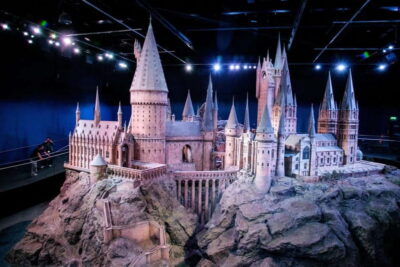


Warner Bros. Studio Harry Potter Tour with Transfers
Read our review →Browse the lists this tour appears in