Reviewed · LONDON TOURS
Handel Hendrix House Ticket
The remarkable thing here is the address: 25 Brook Street holds two very different musical lives, separated by almost two centuries. Upstairs, George Frideric Handel composed Messiah and lived for 35 years. On the top floor, Jimi Hendrix shared a small London flat with Kathy Etchingham in 1969.
I like the chance to hear a harpsichord played in Handel’s rooms, and I like the small domestic details in Hendrix’s flat more than a standard glass-case display. The main drawback is scale. Handel’s rooms are the larger part of the museum, while the Hendrix flat has been recreated with limited original furniture, so dedicated Hendrix fans may find it brief.
Key points to know
- Handel wrote Messiah here: See the rooms where he composed, rehearsed, performed, and entertained leading musicians of the baroque period.
- A 250-year-old stairway adds character: The wonky, Grade I listed staircase is part of the experience, though the building is old and compact.
- Hendrix’s only true London home: His top-floor flat was the first place he said he genuinely regarded as home.
- Kathy Etchingham helped recreate the flat: Her memories helped shape details such as the record collection and domestic setting.
- Live music may be part of your visit: Harpsichord practice is often heard in Handel’s rooms, and concerts take place at selected times for an extra fee.
- Plan on one to two hours: You can move through quickly, but two to three hours gives you time to read, ask questions, and listen.
Two musicians, one Mayfair address
Handel Hendrix House works because the contrast is so sharp. Handel represents royal London, court music, opera, and the baroque sound of the early 18th century. Hendrix represents the late 1960s, electric guitar, rock stardom, and a city that helped turn an American musician into a global name.
The museum does not try to pretend these lives were connected. They were not. The connection is the building itself, and that makes the visit pleasantly odd. You pass from Handel’s orderly Georgian rooms into a recreation of Hendrix’s colorful flat, moving from harpsichord strings to guitar pedals within the same narrow address.
That contrast gives you more to think about than a single-artist museum. You see how two musicians worked, lived, and made London part of their story.
The entrance is at 25 Brook Street in Mayfair, a short walk from Bond Street Station on the Central and Jubilee lines. It is easy to fit into a day in central London, especially if you are already visiting Mayfair, Oxford Street, Soho, or the West End.
A handful of other London outings to weigh up
- From London: Harry Potter Warner Bros Studio Tour
★ 4.7 · 26,588 reviews - London: Westminster to Greenwich River Thames Cruise
★ 4.5 · 22,836 reviews - Magical London: Harry Potter Guided Walking Tour
★ 4.7 · 22,044 reviews
Climbing the old staircase to Handel’s rooms
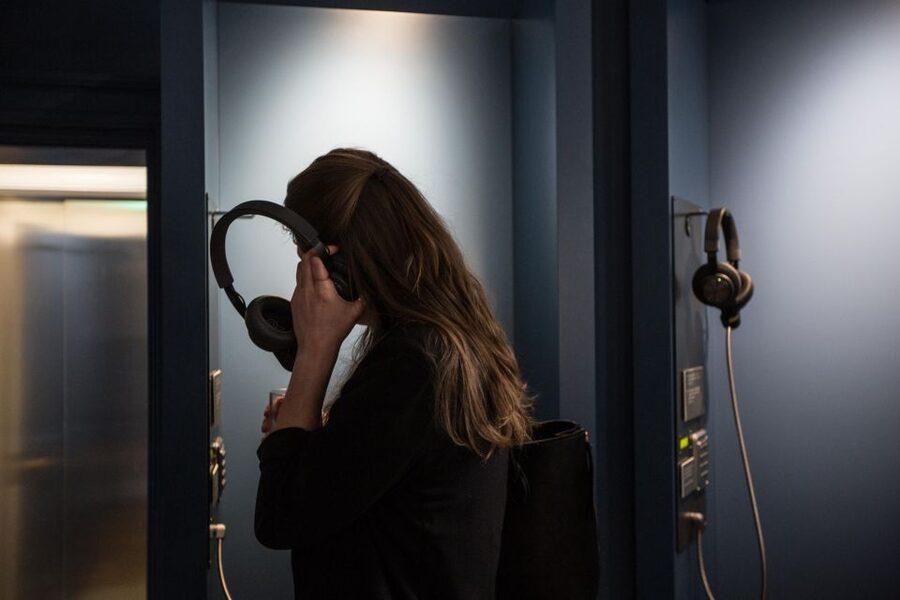
The visit begins with Handel, and the house itself immediately sets the tone. You make your way up a 250-year-old Grade I listed staircase, described as wonky rather than polished and modern. That is a small but useful warning: this is an old home, not a purpose-built museum.
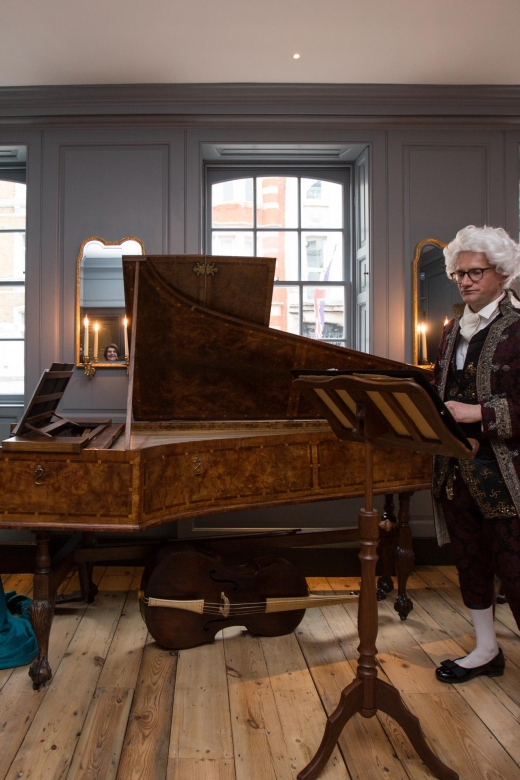
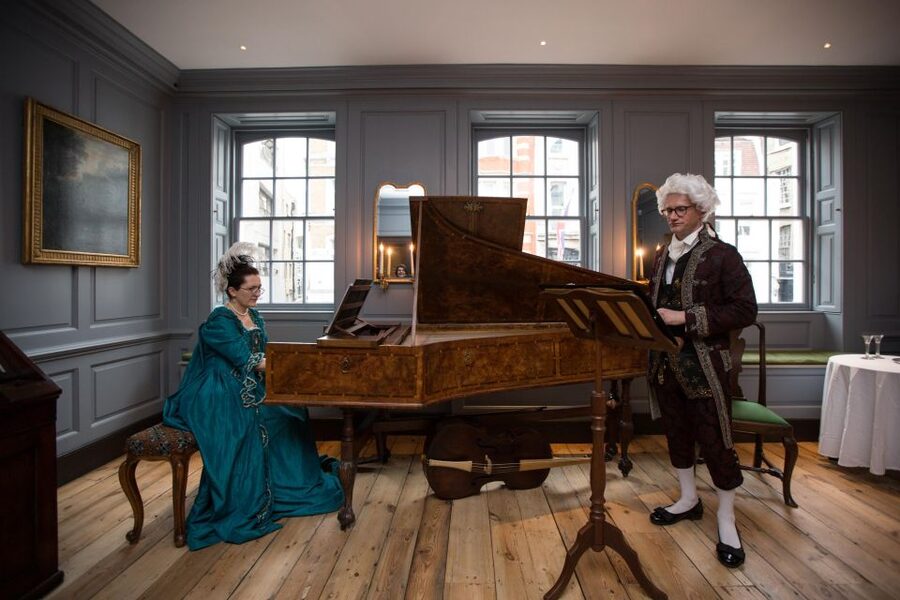
Handel’s rooms cover the first and second floors. Here he composed, rehearsed, performed, and met important musical figures of the baroque age. The rooms are presented as living and working spaces, so you get a sense of a musician who was not simply writing music in isolation. His home was also a place for business, rehearsal, conversation, and performance.
The best-known fact is that Handel wrote Messiah here. That alone gives the rooms unusual weight, but the setting becomes more memorable when you connect the famous work with the ordinary spaces around it.
Look toward the windows associated with the story of soprano Francesca Cuzzoni. Handel reportedly threatened to throw her out when she refused to sing one of his arias. It is a dramatic story, and the museum uses the setting to show that musical history was shaped by strong personalities, not just beautiful scores.
Let the harpsichord change the mood
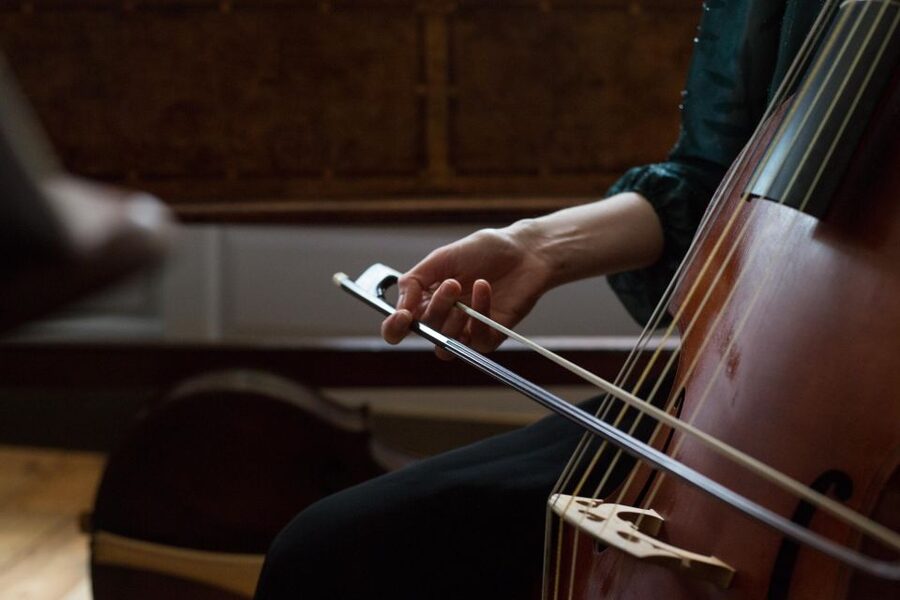
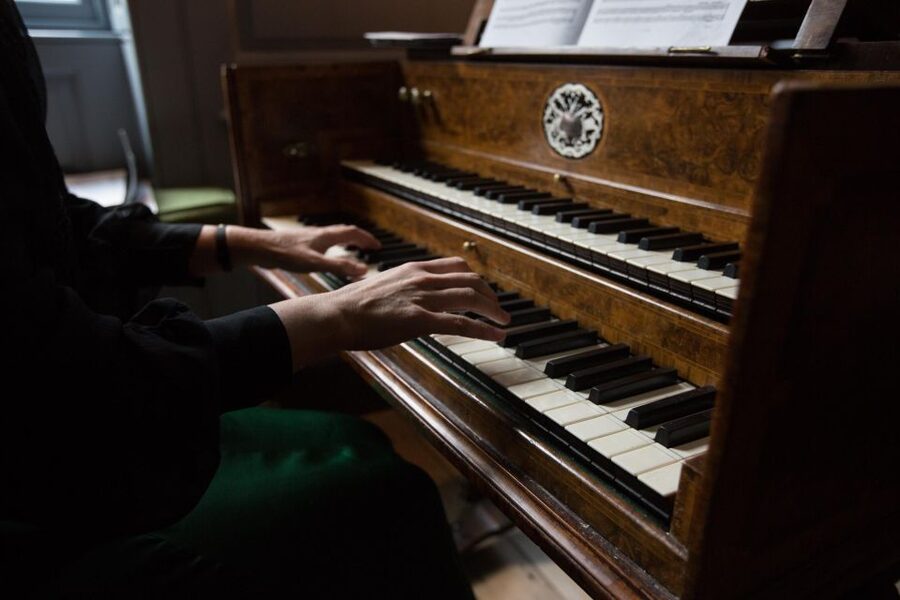
One of the strongest parts of the visit is the possibility of hearing a harpsichord in Handel’s rooms. Musicians are often present during the day, practicing on one of the antique instruments. You might hear baroque music as you move through the house, rather than encountering the instrument in silence behind a barrier.
That sound matters. A harpsichord is bright, precise, and more delicate than a modern piano. In a small historic room, it can make the past feel close without resorting to elaborate staging.
The music is not guaranteed at every moment, and this is not the same as booking a concert. Still, it is worth slowing down if someone is playing. One visitor specifically advised allowing two to three hours, partly because an unexpected rehearsal can become the high point of the visit.
Selected live concerts are also held at the museum, including Saturday afternoon performances. Event admission is separate from the standard museum ticket, so check the schedule if you want a planned performance rather than a chance encounter.
The bedroom and final years of Handel’s life
On the second floor, you reach Handel’s dressing room and bedroom. The bedroom is where he died in old age, after 35 years at the center of English court life and music.
This part of the house is quieter than the story of Messiah or the Cuzzoni episode. That is exactly why it deserves time. You are looking at the private end of a long working life, not only the public image of a famous composer.
Handel’s section is also more extensive than Hendrix’s. If you arrive mainly for rock music, do not rush through these rooms. The layout gives you a clearer sense of the size and structure of the original home, and the volunteers can add small details that are easy to miss on your own.
Volunteer guides are one of the practical strengths of the museum. They can answer questions as you move around, and they often add context beyond the written displays. The experience is in English, so visitors comfortable with English will get the most from informal conversations.
Elsewhere in London, a change of pace:
- London: Madame Tussauds London
★ 4.6 · 20,915 reviews - London: Warner Bros. Studio Tour with Transfers
★ 4.7 · 17,586 reviews - London: Tower Bridge Entry Ticket
★ 4.7 · 15,560 reviews - London: St Paul’s Cathedral Entry Ticket
★ 4.7 · 9,813 reviews
Crossing into 1960s London
The third floor makes a sudden change. You leave Handel’s 18th-century world and enter London at the height of the 1960s music scene.
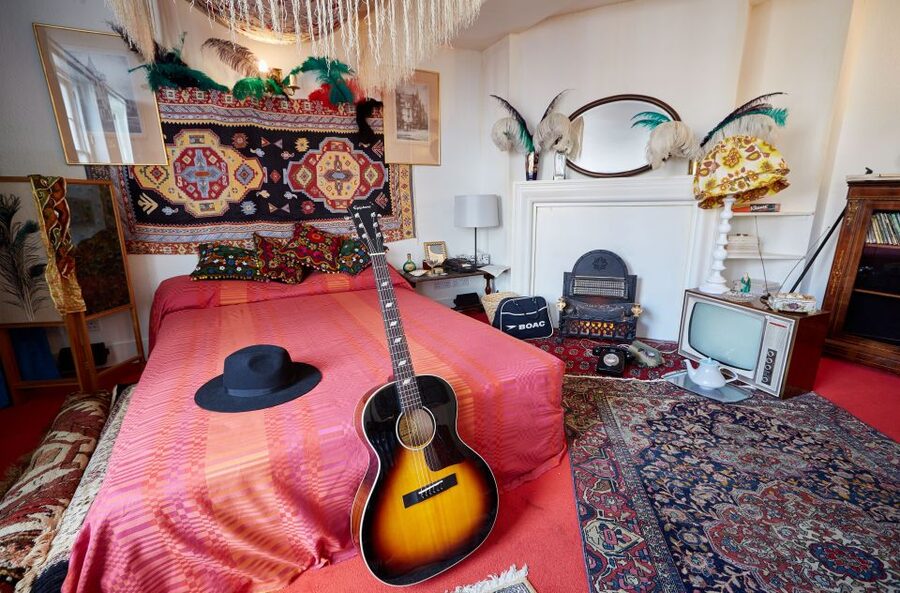
Jimi Hendrix lived here with his girlfriend Kathy Etchingham in 1969. The flat was important to him because he described it as the first place he had truly called home. That detail gives the room a more personal focus than a simple display of famous objects.
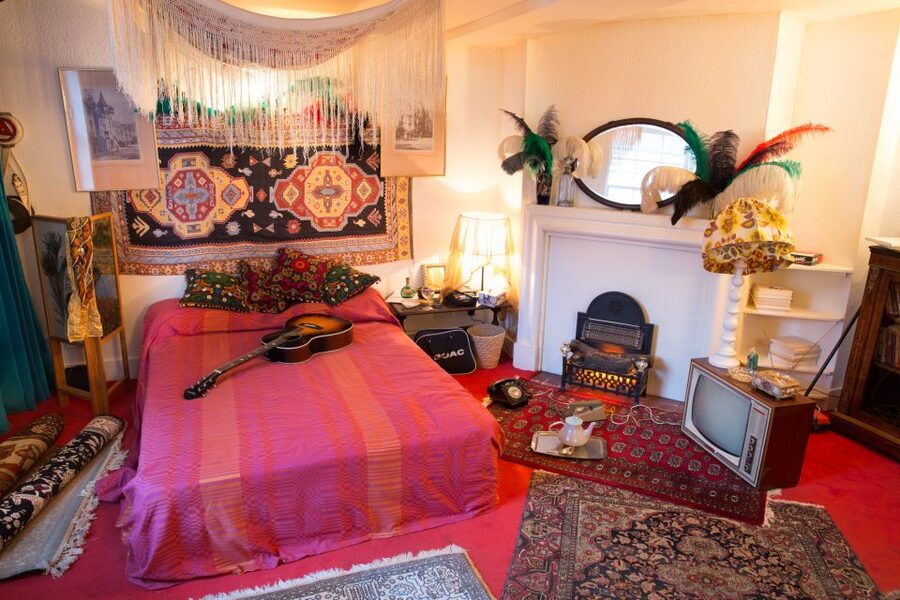
The flat has been recreated through detailed research, with Kathy Etchingham helping establish the small domestic touches. You can examine the room where Hendrix lived, loved, and played during a short but crucial period before his death in 1970 at the age of 27.
The recreation is colorful and evocative, but you should set your expectations correctly. Much of what you see is not original Hendrix furniture. The room includes limited authentic material, with a mirror noted as one of the few original items connected directly to the flat.
That does not make the display pointless. It simply means the value lies in the reconstruction and the story rather than in a room preserved exactly as Hendrix left it. If you want a large collection of original clothing, instruments, and personal objects, this is not that kind of museum.
Hendrix’s records, gear, and everyday habits
The Hendrix section works best when you focus on how he lived, not only on his fame. His record collection offers clues about the music he enjoyed and the influences around him. Kathy’s anecdotes help explain why individual albums mattered and add a human voice to what might otherwise be a static display.
You can also see equipment linked to his sound, including amps and pedals. These objects help explain how he produced the distorted, powerful guitar tone that became central to his reputation.
An acoustic guitar is also on display. Along with the electrical equipment, it shows that Hendrix’s music was not built from one famous instrument alone. The room presents a musician thinking about sound, listening to other artists, and making use of the tools around him.
For many people, this will be the most rewarding part of the museum. The space is small, so you can study the record collection and equipment without being separated from the room’s domestic setting.
How long should you allow?
The basic visit can take about an hour or two. That is enough to see both musicians’ rooms and read the main displays without lingering.
I would allow two to three hours if music is central to your interests. You may want to wait for a harpsichord rehearsal, speak with a volunteer, or take more time with the Hendrix records and sound equipment.
The ticket is valid for one day, but the attraction itself is not an all-day tour. Think of it as a focused museum visit that fits neatly between other London plans.
The small size is both a benefit and a limitation. You can concentrate without walking long distances, but you will not find the broad galleries of a national museum. A limited group size of up to nine people can make the visit feel calm, though the exact flow depends on how busy the house is.
Is $19 a fair price?
At about $19 per person, the ticket is reasonably priced for central London, especially if you care about music, historic homes, or both. You are paying for two compact museum experiences in one building, not for a long guided tour with a full-day schedule.
The value is strongest if you appreciate context. Handel’s rooms give you an original historic setting connected with Messiah, while the Hendrix area gives you a carefully researched recreation of a significant home. The live harpsichord practice, when available, adds something you cannot get from a label or photograph.
The value is weaker if you only want a large collection of original Hendrix belongings. The Hendrix display is smaller than Handel’s section, and some of its most important details are reconstructed rather than preserved.
There is also a gift shop with Hendrix-related items and other memorabilia. It is not a major reason to visit, but it gives you a chance to browse after the rooms.
Practical details before you go
The museum is at Handel Hendrix House, 25 Brook Street, Mayfair, London, W1K 4HB. Bond Street Station is the nearest Tube stop, served by the Central and Jubilee lines.
The experience is hosted in English, and the museum is wheelchair accessible. Do not bring luggage or large bags, since they are not allowed.
The standard admission covers entry to the museum. It does not cover separate events or concerts. If music performance is your priority, check availability and event details before booking.
You can cancel up to 24 hours before the visit for a full refund, and the reserve now, pay later option lets you keep your plans flexible. Starting times depend on availability, so check the selected date carefully.
A small practical tip: do not plan this as a rushed 30-minute stop. You can see the rooms quickly, but the museum rewards pauses. Ask the volunteer guides questions, listen if a harpsichord is being played, and give yourself time to notice how different the two homes feel.
Who will enjoy Handel Hendrix House most?
This is a particularly good choice for music lovers who enjoy seeing the private spaces behind public careers. Handel fans will find the larger share of the museum here, with original rooms, period atmosphere, and the chance of live baroque music.
Hendrix fans will appreciate the record collection, technical equipment, acoustic guitar, and the attempt to recreate the flat with Kathy Etchingham’s help. Just keep the smaller size and limited original furnishings in mind.
It also suits couples or families with mixed interests. One person can come for Handel and the other for Hendrix, and the visit gives both a clear reason to stay. The sharp change between the floors keeps the experience from feeling repetitive.
It may be less suitable if you dislike small historic buildings, stairs, or displays that rely partly on reconstruction. The old staircase is part of the charm, but the house is compact and cannot offer the wide-open circulation of a modern museum.
Should you book this ticket?
Book it if you want a thoughtful, compact London museum with two very different musical stories under one roof. The combination of Handel’s original rooms, Hendrix’s recreated home, volunteer conversation, and possible live harpsichord music gives the $19 ticket solid value.
Give it a miss if your only goal is a large collection of original Jimi Hendrix artifacts. You may find the Hendrix room too brief, especially since much of the furniture is reconstructed.
For the best visit, allow two hours or more, arrive without large bags, and check for concerts if you want live music. The museum is easy to reach from Bond Street and works well as a calm cultural stop in the middle of a busy London day.
FAQ
Where is Handel Hendrix House located?
It is at 25 Brook Street, Mayfair, London, W1K 4HB.
What is the nearest Tube station?
Bond Street Station is the nearest Tube station. It is served by the Central and Jubilee lines.
How much does admission cost?
The listed price is $19 per person.
How long does a visit take?
You can explore the museum in about one to two hours. Allowing two to three hours gives you more time to read, speak with volunteers, and listen to possible harpsichord practice.
What does the ticket include?
The ticket includes museum entrance fees.
Are concerts included with standard admission?
No. Entry to events is not included in the standard museum ticket. Some live concerts, including selected Saturday performances, require separate admission.
Is the museum wheelchair accessible?
Yes, the activity is listed as wheelchair accessible.
What language is the experience offered in?
The host or greeter and museum experience are in English.
Can I bring luggage or large bags?
No. Luggage and large bags are not allowed.
Can I cancel my booking?
Yes. You can cancel up to 24 hours in advance for a full refund. You can also reserve now and pay later.
New listings around London
- London Royal Tour – Buckingham Palace Entry – 12 guests 2,5h★ 4.9 · 14 reviews
- London: GoBoat Rental in Canary Wharf with London Docklands★ 4.2 · 14 reviews
- Windsor Castle & Hampton Court Palace VIP Black Taxi Tour★ 4.9 · 14 reviews
- London: Christmas Party Dinner Cruise★ 3.9 · 14 reviews
- London: Traditional Afternoon Tea Tour in a Luxury Coach★ 4.7 · 15 reviews
- Hobbledown Heath One-Day Entry Ticket★ 4.2 · 15 reviews
- Iconic London: Bard, Beatles, Bond & Baker Street★ 4.9 · 15 reviews
- London: Sherlock Holmes Tour by Black Cab★ 4.9 · 15 reviews
London Tours, compared.

Westminster to Greenwich River Thames Cruise
Read our review →
Magical London: Harry Potter Guided Walking Tour
Read our review →