
Reviewed · LONDON TOURS
London: Beatles In My Life Walking Tour with Richard Porter
The best part of this Beatles walking tour is the way it connects ordinary London streets with extraordinary music. You’ll visit homes, meeting places, film locations, and recording sites, then finish by walking across the famous Abbey Road crossing.
I like the personal storytelling and the smart route, which combines central London walking with a short Tube ride. I also like the value: at $26, you get two hours with a Beatles specialist, plenty of photo stops, and stories you would not pick up from a museum display.
The main drawback is practical rather than musical: there is quite a bit of walking, the group can reach about 20 people, and city traffic or Tube crowds can make the guide hard to hear. Bring comfortable shoes, skip the large bag, and expect the tour to run in rain or shine.
Key points at a glance
- Start at Marylebone Station: Meet by the main archway entrance, where your guide carries Beatles leaflets and wears Beatles-themed clothing.
- Walk through real Beatles addresses: See places linked with Ringo Starr, John Lennon, Paul McCartney, Jane Asher, and Jimi Hendrix.
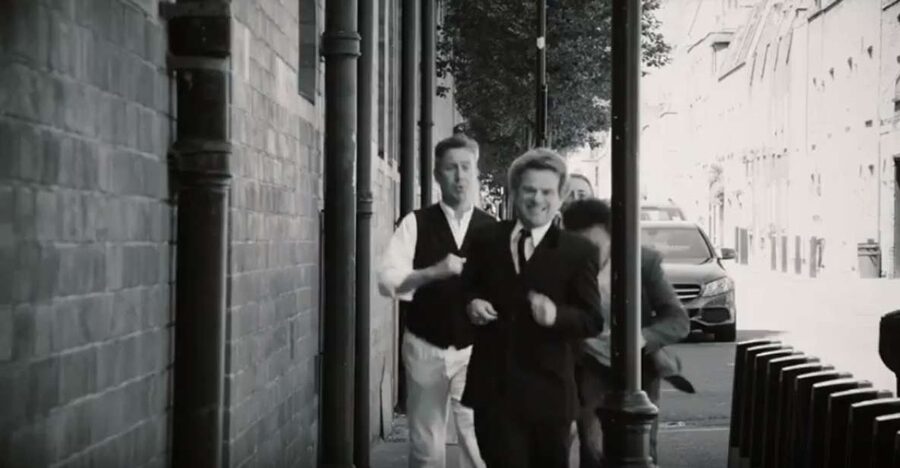
- Re-create A Hard Day’s Night: The tour includes a playful chance to follow the opening scenes of the film.
- Hear the stories behind the songs: Learn about I Want to Hold Your Hand, Yesterday, Hey Jude, and Lennon’s bigger than Jesus interview.
- Finish at Abbey Road: Take the Tube to St John’s Wood, see Abbey Road Studios, and photograph yourself on the crossing.
- Best for music fans who enjoy detail: The guide’s stories are the main attraction, while the locations provide the setting.
Why this Beatles walk works better than a list of famous addresses
A Beatles tour can easily become a string of blue plaques and quick photographs. This one aims for something more useful: it explains how the band’s London life fitted together.
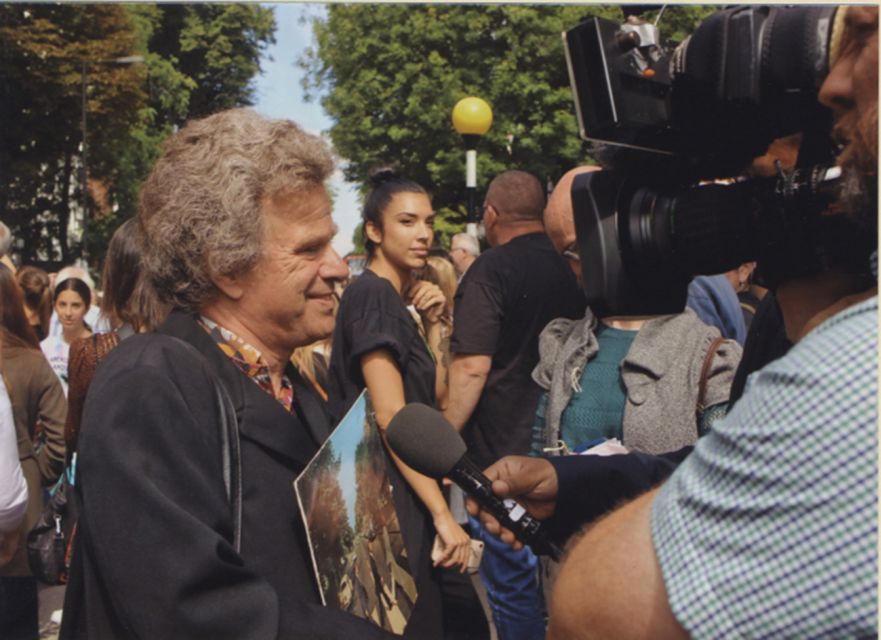
Richard Porter, author of Guide to the Beatles London, is the main guide, though sessions may also be led by Ian, Andrew, Adam, Ollie, or Alan. The strongest praise is aimed at the guides’ command of the subject and their ability to add side stories, photographs, music context, and humor.
That matters because many of the locations are not grand attractions. A former flat or a residential street may look quite ordinary. The story gives it meaning. You learn who lived there, who visited, what was written or recorded nearby, and how the place fits into the Beatles’ rise from local band to international force.
I especially like that the walk is not limited to the four Beatles. It also brings in John Lennon and Yoko Ono, Jane Asher, and Jimi Hendrix. Those links help you see London’s music scene as a connected world rather than a set of isolated Beatles facts.
More Walking Tours in London
- Magical London: Harry Potter Guided Walking Tour
★ 4.7 · 22,044 reviews - London: The Original Jack the Ripper Walking Tour
★ 4.7 · 7,833 reviews - London: Harry Potter Movies Walking Tour (Kids Go Free)
★ 4.7 · 3,071 reviews
Meeting at Marylebone Station
The tour begins outside the main archway entrance of Marylebone Station. Look for a guide holding Beatles Walks leaflets and carrying a Beatles bag. The guide may also be wearing a Beatles shirt or hat, which makes the meeting point easier to spot.
Marylebone is a useful starting place because the first section of the walk takes you into streets tied to the band’s London lives. You are not simply heading straight to Abbey Road for one famous photograph. Instead, the tour builds toward that finale by showing you the homes and social settings that shaped the group’s public and private story.
Arrive ready to walk. The activity lasts two hours, and the route includes a short Tube trip to St John’s Wood. The Tube fare is not included, so keep an Oyster card, contactless payment method, or suitable fare ready for that part of the journey.
Homes, marriages, and the private Beatles
One of the most appealing parts of the walk is its focus on domestic addresses. The tour visits places connected with where Beatles lived and where important personal events took place.
You’ll see locations associated with Ringo Starr and John Lennon, as well as a place where two Beatles were married and one Beatle married twice. These stops give the tour a more intimate feel than a standard rock-and-roll sightseeing route.
The stories surrounding Ringo’s former apartment are particularly useful. Ringo lived there with his first wife, and the location also connects with Paul McCartney’s demo recordings. You may find yourself looking at a quiet building while hearing about a period when the Beatles were still developing their sound and public identity.
Another address links Jimi Hendrix with the Beatles’ London circle. Hendrix lived there and wrote famous songs, while John Lennon and Yoko Ono used the apartment for the naked album-cover photograph. That is a striking example of how the tour moves beyond the narrow Beatles story and into the wider music culture of 1960s London.
These homes are not presented as preserved museums. That is both a strength and a limitation. You do not get a lavish interior visit or a display of original objects. What you get is the location itself, plus the guide’s explanation of what happened there.
Paul McCartney, Jane Asher, and two major songs
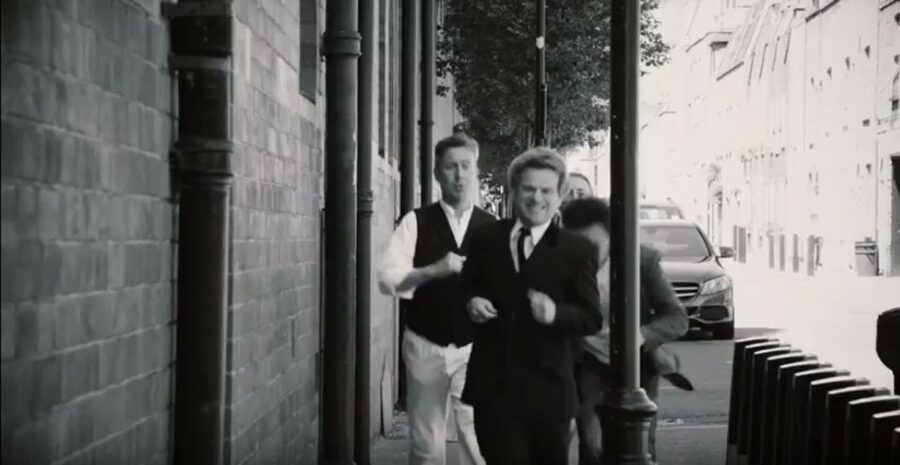
The stop at the house where Paul McCartney lived with his girlfriend Jane Asher brings together romance, songwriting, and domestic life.
It was here that McCartney and John Lennon wrote I Want to Hold Your Hand, one of the songs that helped carry the Beatles to a much larger audience. The same home is linked with McCartney dreaming the tune for Yesterday, a song that later became one of the most recorded pieces in popular music.
I like this stop because it shows how songwriting often grew out of everyday settings. There is no need for a grand studio or concert hall to tell the story. A home connected with a relationship, a writing partnership, and a melody appearing in a dream can say a great deal about McCartney’s creative life.
The guide may also use photographs during the walk. These are helpful because they let you compare the present-day streets with earlier images. They provide visual context where the buildings or streets have changed, or where the original event is difficult to picture from the pavement.
Further Beatles trails in London:
- London: Beatles and Abbey Road Tour with Richard Porter
★ 4.6 · 543 reviews - A Ticket to Ride: Beatles in London Tour
★ 4.6 · 272 reviews - Liverpool and The Beatles Day Tour from London
★ 4.4 · 157 reviews - The Beatles London Walking Tour
★ 4.2 · 147 reviews
A Hard Day’s Night on the street
The tour gives you a chance to re-create the opening scenes of A Hard Day’s Night. This is one of the more playful moments, and it breaks up the heavier facts about homes, interviews, and recording sessions.
You do not need to be a film expert to enjoy it. The appeal comes from standing in the same part of London and acting out a small piece of Beatles screen history. It works well for families and mixed-age groups, especially when one person is a new fan rather than a lifelong follower.
The tour has also kept younger participants engaged, including an 11-year-old and a 17-year-old who knew little about the band before arriving. That suggests the storytelling is not aimed only at people who can recite every album date. Still, the amount of detail may be more than casual fans want if they prefer a quick photo tour.
Lennon’s bigger than Jesus interview and its fallout
The discussion of John Lennon’s bigger than Jesus interview adds social and cultural context. The comment caused major controversy, especially in the United States, and the resulting backlash affected the Beatles’ public image and touring career.
This subject gives the walk some weight. You are not only hearing cheerful stories about famous songs and celebrity homes. You also learn how a remark in an interview could create anger, protests, and pressure on a band that had become far larger than its music alone.
The value here depends on the guide’s storytelling. Richard Porter is praised for explaining the background and for adding details beyond the most familiar Beatles facts. If you enjoy the social side of music history, this is one of the tour’s more worthwhile discussions.
Because the walk is only two hours, the topic cannot become a full study of the Beatles’ relationship with religion, media, and American audiences. It works better as a focused stop within a larger story.
The Tube ride to St John’s Wood
At some point, the group takes a short Tube ride to St John’s Wood for the Abbey Road section. This transition is simple but important. It allows the tour to cover two different parts of London without turning the whole experience into a long walk.
The Tube is also where group size can matter. A group of around 20 people may be harder to keep together on crowded streets and trains. Stay close to the guide, listen for instructions, and avoid drifting behind while taking photographs.
Traffic noise can also affect the experience. One person found the guide difficult to hear at times, while another noted that the guide’s voice carried well despite city noise. Your position in the group will make a difference. Stand near the guide when possible, particularly during the more detailed stories.
Abbey Road Studios and the famous crossing
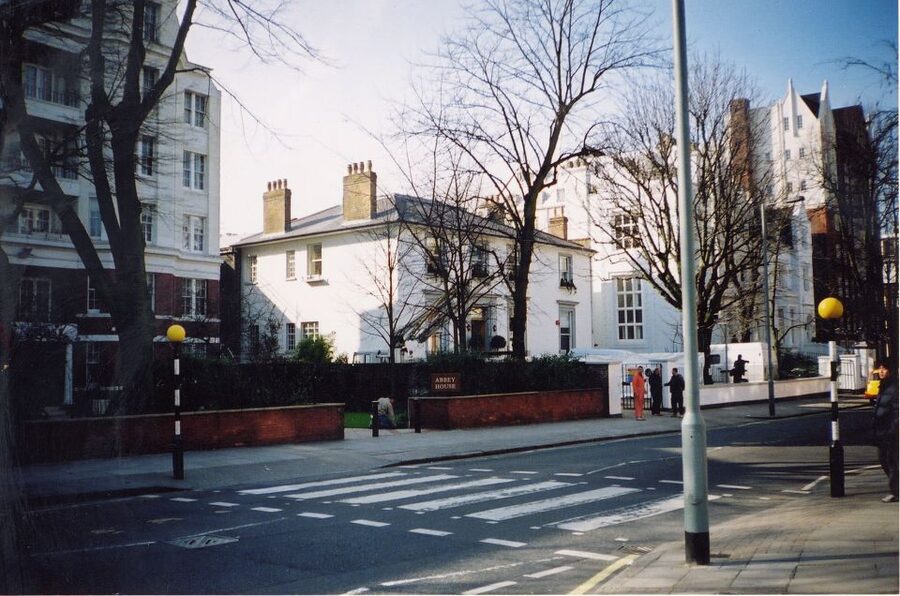
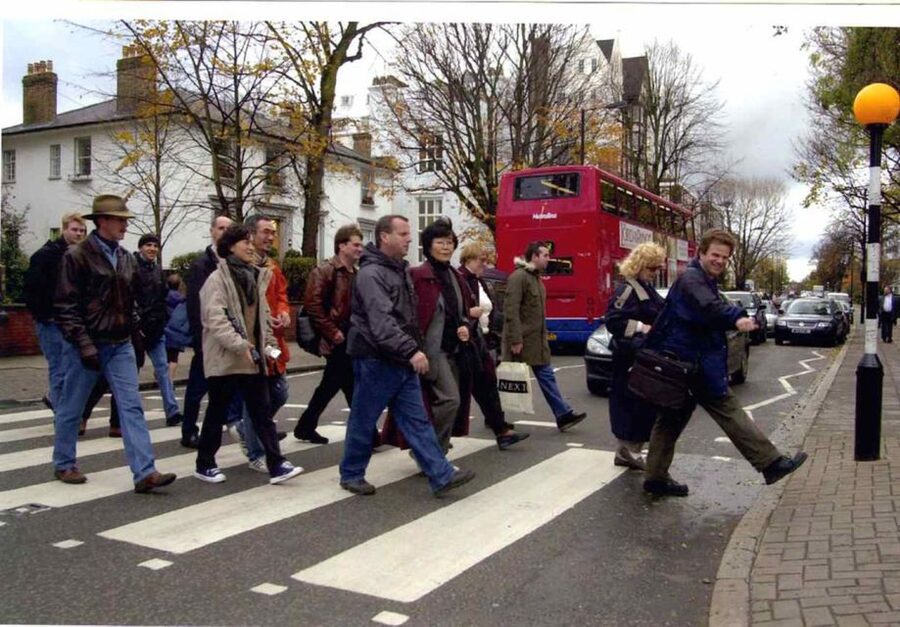
The final section visits Abbey Road Studios and the pedestrian crossing made famous by the Beatles album cover. You’ll have time for photographs and a chance to walk across the road yourself.
The studio is still a working recording facility, so this is an exterior visit rather than a studio tour. That distinction matters. You will not be going inside to see recording rooms or original equipment. The reward is standing outside the building and understanding why this address became part of music history.
The crossing can be busy, and it is an active road. Take care with photographs and follow the guide’s advice. You may need patience while other people cross, pose, or wait for a clear moment. The setting is less polished than a museum exhibit, but that is part of its appeal. You are using a real public road, not a recreated attraction.
Finishing here gives the tour a strong visual ending. Earlier stops may require imagination, but Abbey Road offers an instantly familiar image. The white lines, studio frontage, and crossing make the final photographs easy to recognize.
You should also plan your route home before the tour ends. The walk finishes near Abbey Road, not back at Marylebone Station. You can use public transport from the area, but finding your own way back is part of the deal.
How much walking and what to bring
Comfortable shoes are essential. The route covers several London streets, includes standing at stops, and ends with the Abbey Road visit. This is not a suitable choice if you want to minimize walking.
The experience is not suitable for wheelchair users, according to the activity information. Large bags and luggage are not allowed, so leave suitcases at your accommodation and bring only what you need for the walk.
London weather can change quickly, and the tour operates rain or shine. A light waterproof layer is sensible. Rain did not prevent one group from enjoying the walk, but wet pavement and crowded streets can make moving around less comfortable.
I would also bring a phone or camera with enough battery for the final crossing. The tour includes photo opportunities throughout, and the Abbey Road stop is the obvious place to use them.
The guide makes the difference
The main reason to book this tour is the guide rather than the buildings alone. Richard Porter is repeatedly praised for his memory, humor, personal enthusiasm, and command of Beatles and wider music history.
Ian, Andrew, Adam, Ollie, and Alan have also led highly rated sessions. Adam was noted for keeping the group safe and helping everyone find their way home after Abbey Road. Other guides were praised for speaking clearly, keeping an easy pace, and making time for questions and photographs.
The style is story-heavy. That is good news if you enjoy anecdotes, side facts, and context. It may be less appealing if you want a tightly scripted route with only the most famous stops. One person felt the guide sometimes went too far into side stories, and another wished the route included Paul’s London home, Royal Albert Hall, and the BBC.
That criticism helps set expectations. This is not a complete Beatles tour of London. It is a concentrated two-hour walk built around selected addresses and a finish at Abbey Road.
Is $26 a fair price?
At $26 per person, I consider this good value for a Beatles fan. The price covers a fully guided two-hour walk, the historical commentary, the A Hard Day’s Night activity, the selected addresses, the Tube ride as part of the route, and the Abbey Road photo stop.
You still pay the fare for the short Tube journey to St John’s Wood. That is a small extra cost, but you should know about it before booking.
The value is strongest if you would otherwise spend time searching for Beatles addresses on your own. A self-guided route might cost less, but you would need to research the locations, understand their importance, and connect the stories yourself. Here, the guide supplies that structure.
It is also a reasonable choice for families with different levels of Beatles interest. The film recreation, photographs, and famous crossing give newer fans something visual, while the detailed stories reward serious followers.
Who should book this tour?
I would choose this walk if you want the Beatles connected to real London places, not just a museum display. It suits fans of all ages, people interested in 1960s music culture, and visitors who enjoy walking tours led by a specialist.
It is especially useful early in a London visit because it introduces neighborhoods you might not otherwise visit. The route also leaves you at Abbey Road, where you can continue exploring or make your own way back by bus or Tube.
I would hesitate if you dislike long stories, have trouble walking for two hours, need wheelchair access, or want to visit inside Abbey Road Studios. I would also avoid carrying luggage and would not book it as a relaxed indoor activity for a wet afternoon.
Practical details before you book
The tour is in English and has a live guide. Meet outside the main archway entrance of Marylebone Station, and look for the Beatles leaflets, bag, shirt, or hat.
The activity allows free cancellation up to 24 hours before the start time, and you can reserve now and pay later. Starting times vary, so check availability for your chosen date.
For the smoothest experience, arrive with comfortable shoes, a small bag, a Tube payment method, and enough time to locate the meeting point. Keep close to the group during the station transfer, and remember that the tour finishes near Abbey Road rather than at the starting station.
Should you book the Beatles In My Life Walking Tour?
Book it if the idea of hearing Beatles stories while standing outside the homes, apartments, and streets connected with them sounds better than simply looking at exhibits. At $26, the combination of expert narration, selected London locations, film history, and Abbey Road makes a strong deal.
Choose another option if you want a shorter, less detailed outing or a tour that includes more major music venues such as the BBC and Royal Albert Hall. For most Beatles fans, though, the final walk across Abbey Road, backed by two hours of context, is a memorable way to put London into the band’s story.
FAQ
Where does the Beatles walking tour meet?
The tour meets outside the main archway entrance of Marylebone Station. The guide carries Beatles Walks leaflets and a Beatles bag and may wear a Beatles shirt or hat.
How long does the tour last?
The tour lasts two hours.
Does the tour include Abbey Road?
Yes. The route includes Abbey Road Studios and the famous Abbey Road crossing, with time for photographs.
Is the Tube fare included?
No. The short Tube journey to St John’s Wood for Abbey Road is not included in the tour price.
What should I bring?
Bring comfortable shoes. The tour involves quite a bit of walking and takes place rain or shine.
Can I bring luggage or a large bag?
No. Luggage and large bags are not allowed on the tour.
Is the tour suitable for wheelchair users?
No. The activity is not suitable for wheelchair users.
New listings around London
- London: Secrets of Freddie Mercury Tour with a Cocktail★ 4.1 · 15 reviews
- London: Hampton Court Private Guided Tour★ 3.4 · 15 reviews
- London: Jack the Ripper Tour and Underground Prison in Spanish★ 5.0 · 15 reviews
- Spanish Language : Original Harry Potter Walking Tour★ 4.5 · 15 reviews
- London: Private Couples Photography Session with Landmarks★ 5.0 · 15 reviews
- London: The Saturday Supershow Cabaret at Phoenix Arts Club★ 4.5 · 15 reviews
- London: 2-Hour Guided Tour of the British Museum★ 4.7 · 16 reviews
- London’s Ghosts & Gruesome Past Nighttime Walking Tour★ 4.8 · 16 reviews
London Tours, compared.

Westminster to Greenwich River Thames Cruise
Read our review →
Magical London: Harry Potter Guided Walking Tour
Read our review →



Warner Bros. Studio Harry Potter Tour with Transfers
Read our review →Browse the lists this tour appears in