Reviewed · LONDON TOURS
London: Churchill War Rooms & WW2 Westminster Private Tour
London’s most revealing wartime sights sit below its grandest streets. This private tour links Churchill’s statue, Whitehall, Westminster Abbey, Big Ben, and the underground War Rooms into one compact story about how Britain faced the Second World War.
I like the personal scale of a private guide, especially for a subject that can feel dense. I also like the contrast between the ceremonial streets above ground and the cramped bunker rooms below. The main consideration is time: 2.5 hours goes quickly, and the tour suits people who want a focused wartime introduction rather than a full day at the museum.
Guides such as Jeremy have earned special praise for clear stories, friendly delivery, and the ability to hold the attention of both adults and children. Wear good shoes, pack light, and expect security checks before entering the Churchill War Rooms.
Key points
- Start at Churchill’s statue in Parliament Square, with the Houses of Parliament and Westminster Abbey providing the setting for the wartime story.
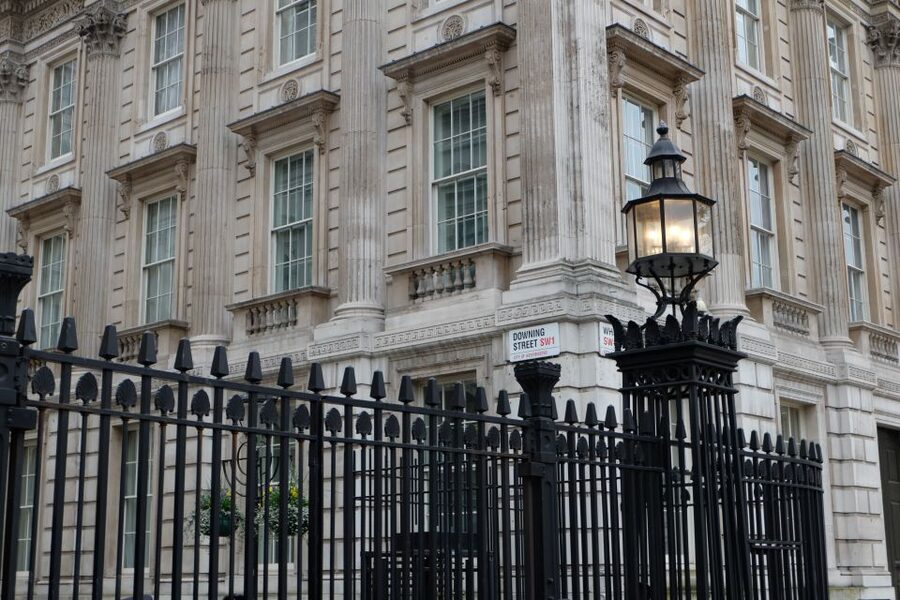
- Walk through Whitehall, passing the Cenotaph, Ministry of War, 10 Downing Street, and other places tied to Britain’s wartime government.
- Enter the original underground bunkers of the Churchill War Rooms, where staff worked, slept, and made decisions during air raids.
- See the Map Room and Cabinet War Rooms, preserved with wartime charts, furniture, and military equipment.
- Explore Churchill’s personal museum, including objects linked to his public and private life, from a baby rattle to his familiar cigar and bowler hat.
- Enjoy a private English-language tour, useful if you want to ask questions or adjust the pace for your group.
Beginning at Churchill’s statue in Parliament Square
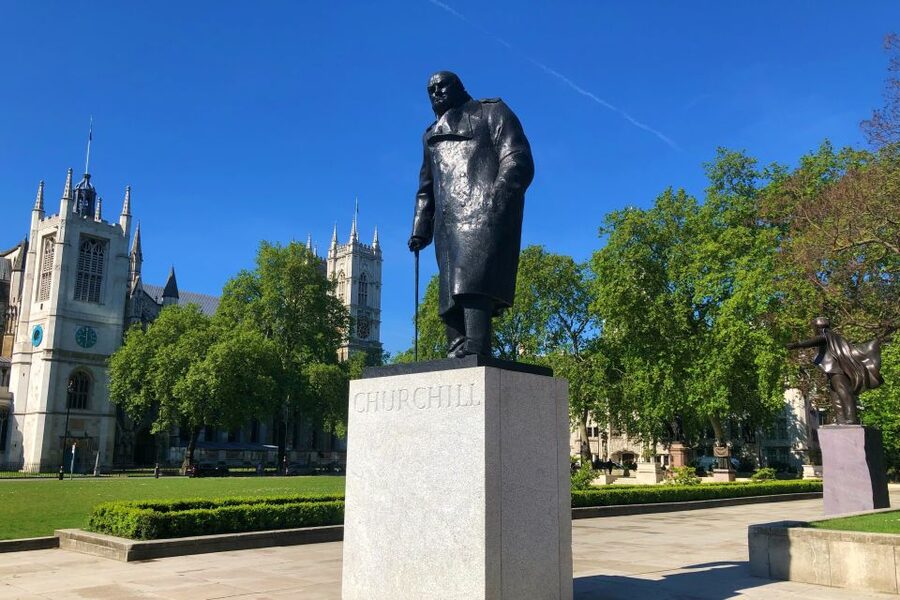
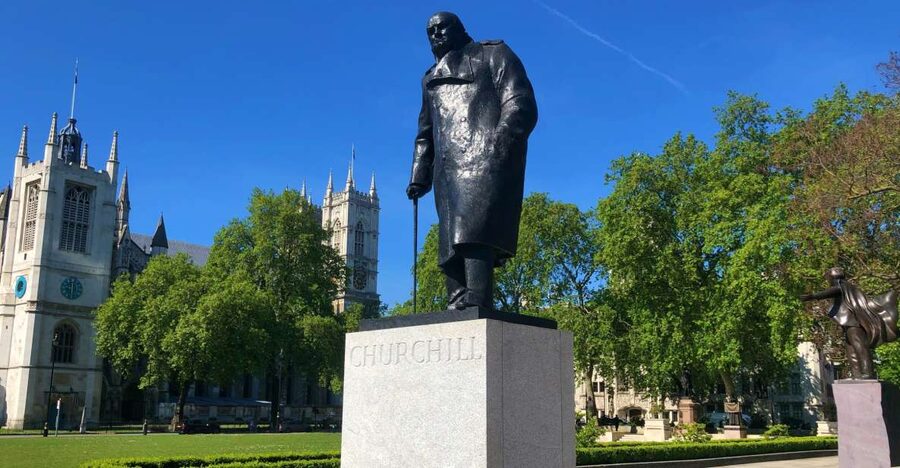
Your meeting point is the Winston Churchill statue on Parliament Square, close to Westminster Underground station. The guide will carry an Urban Saunters tour sign, so you have a clear landmark in one of London’s busiest sightseeing areas.
This is a smart place to begin. Churchill’s statue puts the central figure of the tour right in front of you, while the surrounding buildings show the machinery of British government. The Houses of Parliament and Westminster Abbey are not just grand photo stops here. Your guide uses them to explain Westminster during the war and the role these institutions played in national life.
I like tours that begin with a physical sense of place instead of a long indoor lecture. You can look at the statue, turn toward Parliament, and understand that the story is unfolding in the center of political power. It also gives you a useful orientation to Westminster before you head into the streets.
The walking portion is outdoors and takes place rain or shine. Comfortable clothing and shoes are important, particularly if the weather is wet or you plan to spend more time exploring Westminster after the tour.
A handful of other London outings to weigh up
- From London: Harry Potter Warner Bros Studio Tour
★ 4.7 · 26,588 reviews - London: Westminster to Greenwich River Thames Cruise
★ 4.5 · 22,836 reviews - Magical London: Harry Potter Guided Walking Tour
★ 4.7 · 22,044 reviews
Westminster Abbey, Big Ben, and the wartime city
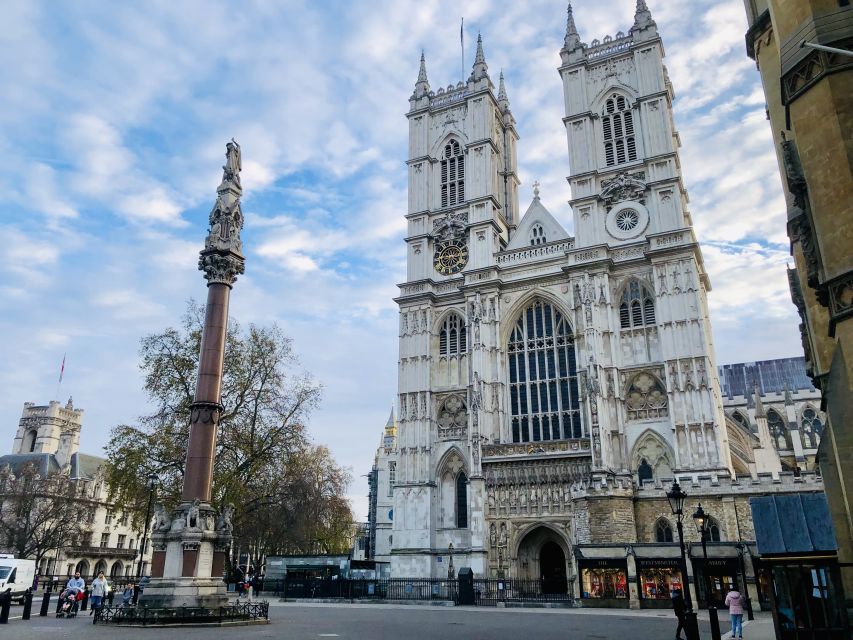
The tour treats Westminster Abbey and Big Ben through the lens of wartime London. You are not visiting the interior of the abbey as part of the stated program, but you do learn about its place in the story of Britain during the war.
That distinction matters. This is not a general Westminster sightseeing walk with a few wartime facts added at the end. The focus is on how familiar landmarks fit into the political and emotional life of the country during the conflict.
The opening date of the Blitz story is September 7, 1940, when German bombing of London began 57 consecutive nights of attacks. The numbers help, but the value of a live guide is in connecting that broad event to the streets around you and to the people who worked in government nearby.
You will hear about the reality of life in Britain during the war, including the pressure placed on civilians and officials as bombs fell on the capital. The supplied tour information does not promise a detailed reconstruction of every aspect of home life, so think of this section as a guided setting for the War Rooms rather than a complete social history of wartime Britain.
Whitehall and the buildings behind the decisions
Whitehall is the natural bridge between Westminster’s public monuments and the hidden command center below ground. The route includes the Cenotaph, the Ministry of War, 10 Downing Street, and other government buildings.
The Cenotaph brings a solemn note to the walk. It connects the Second World War with Britain’s wider military memory, while the Ministry of War and Downing Street point toward the people making decisions under intense pressure.
A private guide can make this section more useful than a self-guided stroll because you can ask why a particular building matters, how the wartime government functioned, or what Churchill’s role was in the chain of command. The tour is conducted in English, and the private format means your group does not have to follow the interests of a large mixed crowd.
This is also where you should keep your expectations in check. You will see these sites from the public streets, not enter every building along the route. Their value comes from the context your guide provides and from the way the walk prepares you for the underground rooms.
Going below Whitehall into the Churchill War Rooms
The strongest part of the experience begins when you descend beneath Whitehall. The Churchill War Rooms preserve the military bunkers used during the war, giving you a direct sense of the hidden workplace behind Britain’s public face.
The rooms are not presented as a modern recreation. They were left with wartime features and important military artifacts, which gives the visit a serious, workmanlike character. You are looking at the rooms where people planned, tracked, discussed, and reacted to events as the war unfolded.
The tour includes entry reservations and a live guided experience inside the War Rooms. All visitors must pass through security, and large bags or luggage are not allowed. Leave your suitcase elsewhere before arriving, since there is no room for it in this part of the visit.
The underground setting can be especially powerful because it changes your sense of scale. Above ground, Whitehall feels formal and open. Below it, corridors and workrooms show how much wartime government depended on a confined network of people operating under constant danger.
Elsewhere in London, a change of pace:
- London: Madame Tussauds London
★ 4.6 · 20,915 reviews - London: Warner Bros. Studio Tour with Transfers
★ 4.7 · 17,586 reviews - London: Tower Bridge Entry Ticket
★ 4.7 · 15,560 reviews - London: St Paul’s Cathedral Entry Ticket
★ 4.7 · 9,813 reviews
The Cabinet War Rooms and the pressure of command
The Cabinet War Room was where decisions could shape the direction of the war. Your guide explains how the space functioned and helps you think about the human pressure behind the furniture, maps, and military records.
I find this kind of room more useful when the guide does not treat it as a collection of objects alone. The important question is not only what is in the room, but what it meant to work there while news from the front changed by the hour.
The tour description emphasizes the possibility of victory or disaster. That is the right way to approach the space. The room does not need dramatic decoration to make an impression. Its importance comes from the decisions made there and the fact that the bunker supported a government during air raids.
Because the visit is private, you can ask for more detail if your group is especially interested in military planning or Churchill’s leadership. If your children are with you, a lively guide can also explain the stakes without turning the tour into a long academic talk. Jeremy is specifically noted for keeping both an eight-year-old and a 13-year-old interested, which is useful evidence for families considering the experience.
The Map Room, preserved since 1945
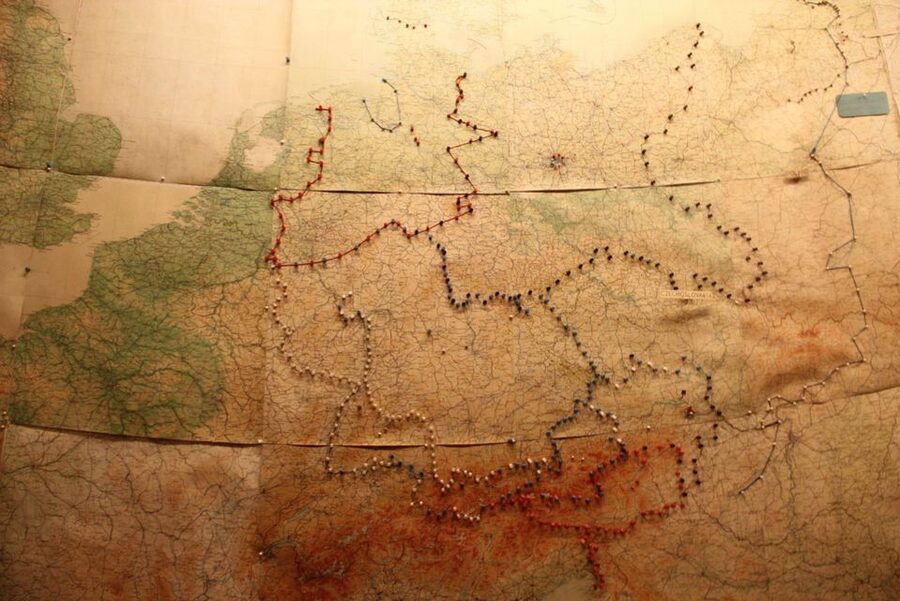
The Map Room is one of the tour’s most distinctive stops. It was left untouched since 1945, so the room offers a rare sense of wartime routine rather than a polished display built only for modern visitors.
Maps and military information were central to the work done here. Your guide helps you read the room as an operating center, where information had to be gathered, updated, and understood by the people directing the war.
You may find this stop more compelling if you already have some interest in military history, but you do not need specialist knowledge to appreciate it. The guide’s job is to explain what you are seeing and why the room mattered.
The preserved condition also makes the visit different from the outdoor portion. In Parliament Square and Whitehall, you are surrounded by present-day London. In the Map Room, the setting points back to the final year of the war with far less distance between you and the original working environment.
Churchill’s personal objects and public image
The War Rooms visit also includes a museum devoted to Winston Churchill. The collection reaches beyond speeches and military decisions, showing small personal objects alongside items tied to his public image.
A baby rattle may seem like an odd object to place beside wartime material, but that is exactly why it helps. It reminds you that Churchill was a person with a life before and beyond the famous photographs. His cigar and bowler hat, objects closely associated with how the public imagined him, add another layer to the picture.
This section is useful if you want more than a military tour. You gain an insight into the man who led Britain through its darkest period, while still seeing the limits of any single leader-centered story. The broader War Rooms also make clear that victory depended on many men and women who worked in the bunker, not only the prime minister whose name now defines it.
A good guide keeps these objects from becoming a parade of famous props. Jeremy’s approach, based on the available tour feedback, combines anecdotes with historical explanation and works well for mixed-age groups.
Life in the bunker during the air raids
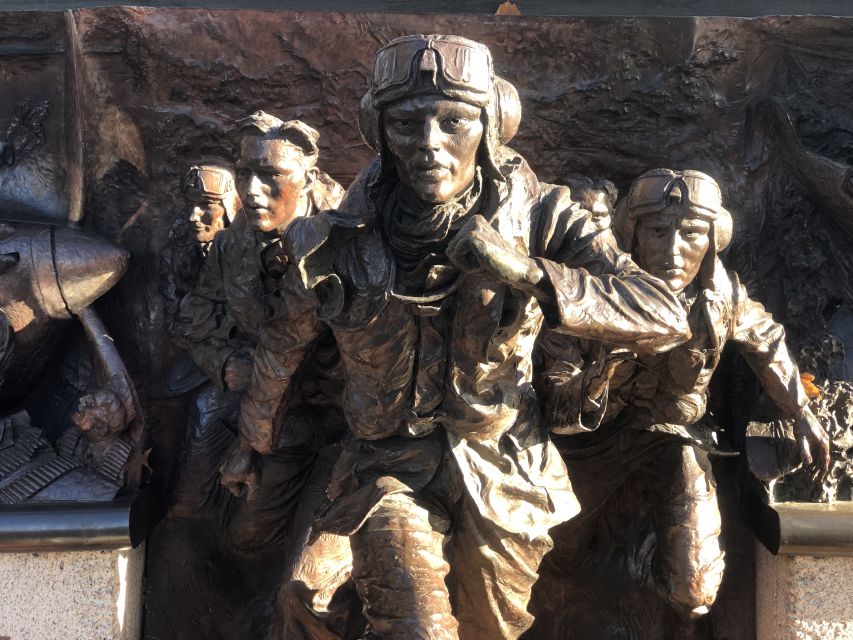
One of the most human parts of the experience is learning how staff lived below the streets. Men and women slept, ate, and worked in the bunkers while bombs fell above them.
The provided information does not give exact room dimensions or a full daily schedule, so I would not book this expecting a detailed reconstruction of every worker’s routine. You will, however, get a clear picture of the bunker as a functioning workplace and living environment.
That distinction is important. The rooms were not simply emergency shelters. They supported long hours, urgent decisions, and the practical needs of a large wartime staff. The atmosphere comes from the combination of work areas, corridors, artifacts, and the knowledge that the people inside were operating under attack.
For me, this is where the tour earns its emotional weight. The story moves from famous leaders and monuments to ordinary staff members who had to keep the system running. Their work helps explain how the government continued to function through 57 nights of bombing.
What $317 means for the experience
The listed price is $317 per person, which places this firmly in the premium sightseeing category. You are paying for a private Westminster walk, reserved admission to the Churchill War Rooms, and a live guide who stays with your group during the experience.
The price makes the most sense for a small group that values personal attention. If you are traveling with family or friends and want to ask questions freely, the private format can be worth more than joining a large group at a lower rate.
The 2.5-hour duration also keeps the commitment manageable. You can fit it into a busy London day, perhaps before or after other Westminster sights. At the same time, the short schedule means you should not expect to cover every Churchill site, every part of the Second World War, or all of the War Rooms at a slow museum pace.
I would compare the cost against your group size and interests. History fans, first-time visitors who want a strong Westminster orientation, and families who benefit from a guide may find the value reasonable. Solo visitors or couples on a tight budget may prefer to visit the museum on their own, though they would lose the connected story between the streets above and the bunker below.
Who should book this private Westminster tour
I would choose this tour if you want a focused introduction to Churchill and wartime London rather than a broad city tour. The route gives you political landmarks, military history, personal artifacts, and civilian experience in one carefully limited outing.
It is particularly suited to:
- Families with older children, since a strong guide can turn complex history into stories that hold attention.
- First-time London visitors, who want to understand why Westminster matters before exploring it on their own.
- Churchill and Second World War enthusiasts, who will appreciate the Map Room, Cabinet War Rooms, and personal collection.
- Small private groups, who want to ask questions and keep the discussion centered on their interests.
- Visitors with limited time, since the 2.5-hour format leaves room for other London plans.
It is not suitable for people with mobility impairments, according to the stated activity information. The tour includes outdoor walking and movement through underground museum areas, so consider that carefully before booking.
Practical advice before you go
Meet at Churchill’s statue on Parliament Square, near Westminster station. Look for the guide holding an Urban Saunters tour sign.
Wear comfortable shoes and clothing. The tour operates rain or shine, and part of the experience is outdoors. Bring only what you need, since large luggage and large bags are not allowed inside the Churchill War Rooms.
Plan extra time around the tour if you want to visit other Westminster attractions. The stated activity does not include food, drinks, hotel pickup, or hotel drop-off, so arrange those separately.
You can cancel up to 24 hours in advance for a full refund, and the reserve-now, pay-later option gives you some flexibility when planning a London itinerary.
Should you book it?
Book this tour if you want a personal, tightly focused story of wartime Westminster and value having a guide connect the major streets with the original underground command rooms.
I would skip it if you want a long, unhurried museum visit, a general tour of London, or a lower-cost entry-only experience. For everyone else, the combination of Whitehall landmarks, preserved bunkers, the Map Room, and Churchill’s personal objects makes this a strong choice, especially when your group can make good use of a private guide such as Jeremy.
FAQ
Where does the tour meet?
Meet your guide at the Winston Churchill statue on Parliament Square. The guide will be holding an Urban Saunters tour sign. Westminster is the nearest Underground station.
How long does the tour last?
The tour lasts 2.5 hours. Check availability for the available starting times.
Is the tour private?
Yes. It is a private group experience with a live English-speaking guide.
Does the price include Churchill War Rooms admission?
Yes. Tickets and entry reservations to the Churchill War Rooms are included, along with the private Westminster walking tour and live guided experience inside the War Rooms.
What should I bring?
Bring comfortable shoes and comfortable clothing. The tour takes place outdoors as well as inside the War Rooms, and it operates rain or shine.
Can I bring luggage?
No. Large luggage and large bags are not allowed into the Churchill War Rooms. All visitors must also pass through security.
New listings around London
- Windsor Castle & Hampton Court Palace VIP Black Taxi Tour★ 4.9 · 14 reviews
- London Royal Tour – Buckingham Palace Entry – 12 guests 2,5h★ 4.9 · 14 reviews
- London: GoBoat Rental in Canary Wharf with London Docklands★ 4.2 · 14 reviews
- London: Christmas Party Dinner Cruise★ 3.9 · 14 reviews
- London: Traditional Afternoon Tea Tour in a Luxury Coach★ 4.7 · 15 reviews
- Hobbledown Heath One-Day Entry Ticket★ 4.2 · 15 reviews
- Iconic London: Bard, Beatles, Bond & Baker Street★ 4.9 · 15 reviews
- London: Sherlock Holmes Tour by Black Cab★ 4.9 · 15 reviews
London Tours, compared.
Westminster to Greenwich River Thames Cruise
Read our review →
Magical London: Harry Potter Guided Walking Tour
Read our review →