Reviewed · LONDON TOURS
London: Hidden Tube Tour of Holborn’s Secret Platforms
Holborn station has a secret life behind its busy platforms. On this 85-minute guided walk, you pass through concealed doors into closed Tube spaces, including two Aldwych branch platforms that have been off limits for decades. The station becomes more than a place to change trains. It becomes a record of London at work, under attack, and constantly being rebuilt.
I like the tour for two clear reasons: the original Edwardian details and the way the guide connects them to real working life. Vintage posters, Leslie Green design, an early signalling cabin, wartime shelter space, and even a former model rail club give the visit a human scale. The main drawback is physical: expect stairs, uneven ground, low lighting, and no elevators.
Key points
- Closed Aldwych branch platforms: See two former platforms, preserved with vintage posters and early London Underground design.
- Behind-the-scenes Holborn: Step through concealed doors into areas most of the public has not seen for nearly 30 years.
- 1930s modernization: Learn how new plans led to the closure of nearby British Museum station.
- Wartime and working history: Hear how the spaces served as shelters for London Transport staff and as scientific laboratories.
- Original signalling equipment: Visit an early 20th-century signalling cabin and get an unusual view of the Piccadilly line.
- Practical limits: The tour is in English, lasts 85 minutes, and is not suitable for children under 10, people with mobility impairments, or people with claustrophobia.
Holborn Before the Crowd Arrives
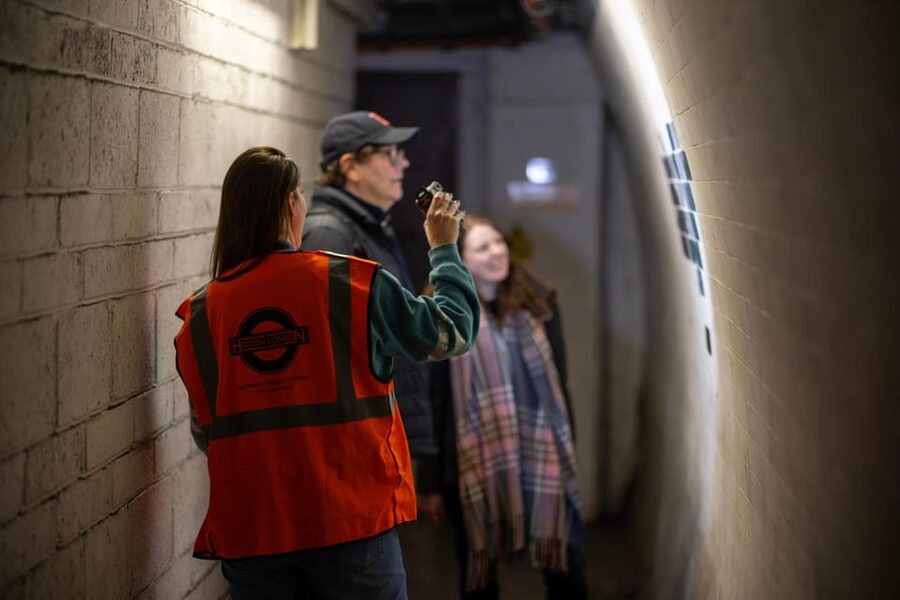
Holborn is one of central London’s most heavily used Tube locations, so the first surprise is how quickly the tour leaves the ordinary station behind. At the meeting point on the corner of Gate Street and Kingsway, you are close to the daily flow of buses, offices, shops, and Piccadilly line passengers. Then an expert guide leads you toward spaces that most people pass without noticing.
The station opened in 1906 as a four-platform complex serving the Piccadilly line. That detail matters because Holborn was not simply built to move people from one neighborhood to another. Its arrival helped change the character of the surrounding district, turning an area once associated with disrepute into a major business center.
I find that context useful at the start of the tour. It explains why the station was built on such a large scale and why its unused corners are worth seeing. You are not looking at random leftovers. You are looking at the remains of a transport project that helped reshape central London.
The tour ends where it begins, so you do not need to arrange a separate return transfer. Allow time to find Gate Street and Kingsway before your booked start time. The meeting point is listed as What3Words: towers.rift.forest.
A handful of other London outings to weigh up
- From London: Harry Potter Warner Bros Studio Tour
★ 4.7 · 26,588 reviews - London: Westminster to Greenwich River Thames Cruise
★ 4.5 · 22,836 reviews - Magical London: Harry Potter Guided Walking Tour
★ 4.7 · 22,044 reviews
Through Concealed Doors Into Holborn’s Back Rooms
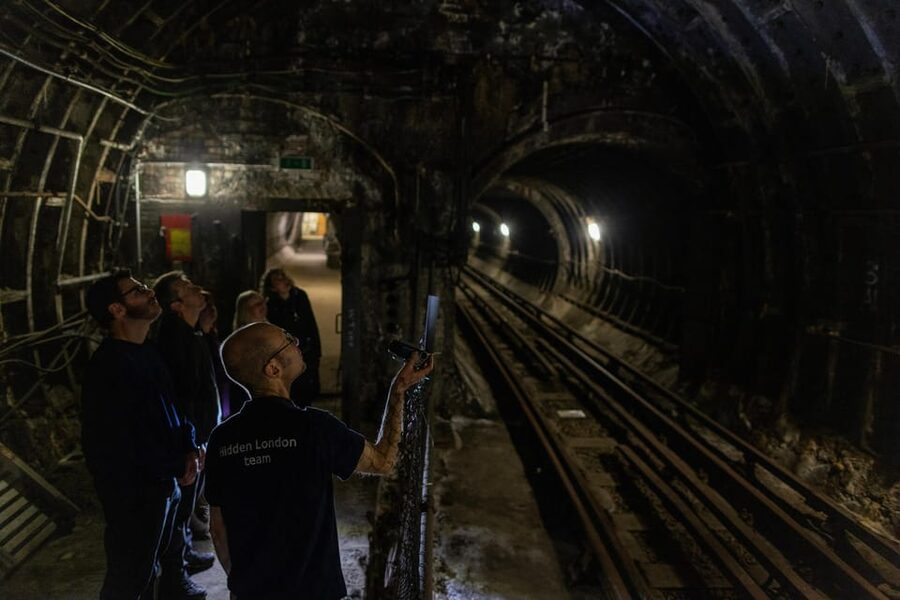
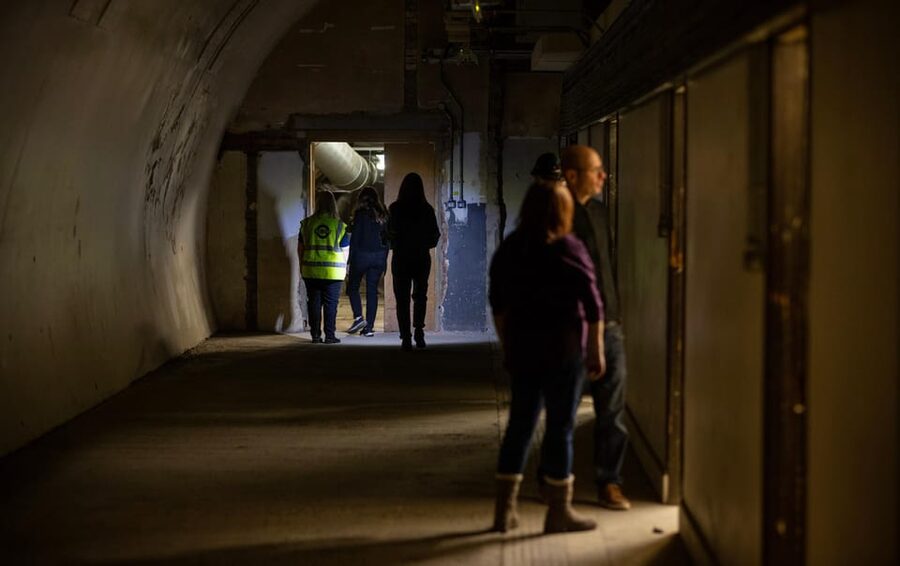
The central moment comes when you step behind concealed doors and leave the public station behind. The atmosphere changes quickly. Instead of tiled passages filled with commuters, you enter disused areas where the lighting is low and the ground can be uneven.
Some of these spaces have not been open to the public for nearly 30 years. That long period of limited access is part of their appeal, but it also explains why the tour is more like an exploratory walk than a polished museum display. You should expect working historic infrastructure, not wide galleries or smooth floors.
The guide keeps the visit focused on how the spaces were used. You may hear about scientific laboratories, wartime shelter arrangements for London Transport staff, and a model rail club that occupied part of the station’s afterlife. These stories make the empty rooms easier to understand. A bare platform can seem lifeless, but a room once used for experiments or a club tells you that closed Tube spaces continued to serve practical purposes.
This is also where the tour’s five-star score from seven reviews makes sense as a useful signal, though the sample is small. The praised feature is the quality of the guides. The tour depends heavily on clear explanation because many of the rooms are stripped of their original function. A strong guide helps you picture the staff, engineers, and passengers who once used them.
Two Aldwych Platforms Frozen in Time
The former Aldwych branch is the tour’s most distinctive stop. You visit two closed platforms from the branch line, which was connected to the Holborn station complex. The platforms have been closed for 30 years, leaving behind details that are easy to miss in the modern Tube network.
Here you can see vintage posters and original Leslie Green Edwardian design. Leslie Green stations are known for their bold early Underground appearance, and these surviving elements give the platforms a firm visual identity. The red-toned architectural style and period fittings help place the station in the first generation of London’s electric Underground system.
I like this part because it gives you something concrete to study. The story is not only delivered through dates and explanations. You can look at the walls, posters, platform arrangements, and surviving equipment while the guide explains why the branch existed and how it fitted into the wider network.
The Aldwych platforms also show the limits of old transport planning. Tube lines have never been fixed forever. Routes open, close, change purpose, or become unnecessary as passenger patterns shift. Seeing a branch that once formed part of the network makes those decisions feel physical rather than abstract.
Do not expect an active station experience here. The platforms are closed, and the setting is quiet and aged. That is the point, but anyone hoping for a broad collection of trains or a full museum exhibit may find the visit more atmospheric than object-filled.
An Unexpected View of the Piccadilly Line
One of the tour’s unusual details is an unexpected view of the Piccadilly line. You get to look at part of an active Tube route from an angle that ordinary passengers do not see.
This moment works because it connects the past to the present. The closed platforms are not isolated ruins. They sit beside a modern railway still carrying people across London. You can compare the disused areas with the working station and see how one transport system has accumulated layers over more than a century.
The contrast also helps explain the tour’s practical character. Holborn remains part of the Underground’s current story, not just its past. The station is involved in a major signaling upgrade program, so the guide can show how old infrastructure and new technology exist side by side.
That may appeal to you if you enjoy engineering, transport planning, or the ordinary machinery of city life. If your interest is limited to grand architecture, this section may feel more technical. Still, the guide’s explanation gives the station a broader purpose: London’s Underground is always being adjusted, even when the public sees only a platform and a train.
Elsewhere in London, a change of pace:
- London: Madame Tussauds London
★ 4.6 · 20,915 reviews - London: Warner Bros. Studio Tour with Transfers
★ 4.7 · 17,586 reviews - London: Tower Bridge Entry Ticket
★ 4.7 · 15,560 reviews - London: St Paul’s Cathedral Entry Ticket
★ 4.7 · 9,813 reviews
British Museum Station and the 1930s Rebuild
The tour also looks at the modernization program of the 1930s. One important result was the closure of nearby British Museum station.
This is the sort of detail that can be missed when you ride the Tube. Stations are often treated as permanent landmarks, but the network has repeatedly changed in response to new engineering plans, passenger demand, and improved connections. The closure of British Museum station was part of that wider modernization story.
At Holborn, the new plans helped make the station more important. The guide explains how the modernization work affected the surrounding network and why one station could replace another. You gain a clearer sense of how London’s Underground developed through decisions that sometimes meant abandoning older platforms and entrances.
I value this part because it prevents the tour from becoming a simple collection of spooky closed rooms. The abandoned spaces were shaped by practical choices. They reflect the pressure to make a large city’s transport system faster, safer, and more useful.
You will not receive a full architectural history of every nearby Tube station in 85 minutes. The focus stays on Holborn and the Aldwych branch. That narrow focus is helpful if you want a concentrated story, though it may leave you wanting a longer tour of London’s other closed stations.
From Blitz Shelter to Scientific Workspace
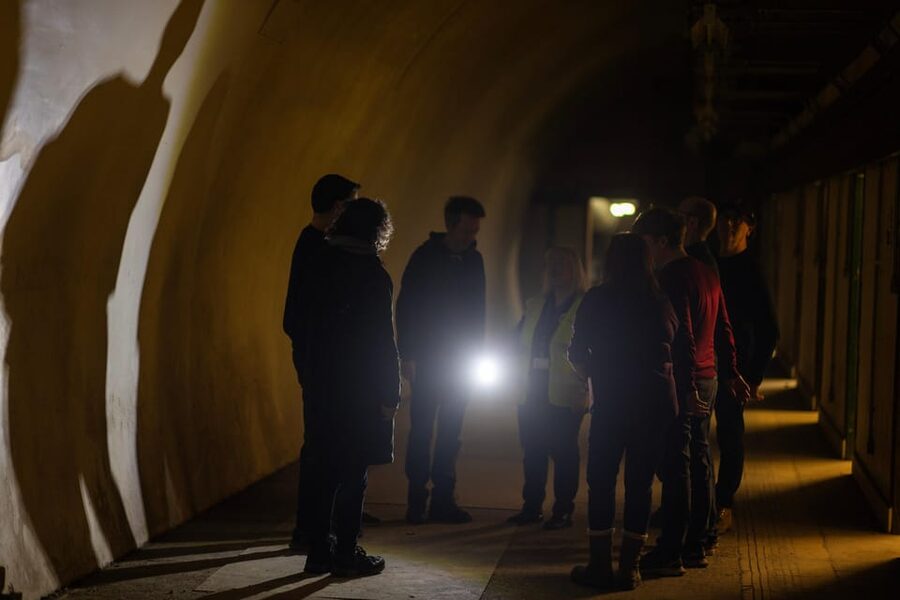
The disused areas have served surprisingly different purposes. The guide describes their use as scientific laboratories and as shelter for London Transport staff during wartime.
The wartime material gives the station a serious human dimension. Imagine staff working below ground while London faced the height of the Blitz. The tour considers how people who maintained the network may have felt and worked in those conditions. It shifts attention from famous wartime stories to the employees who kept the transport system functioning.
The shelter use also shows why Tube spaces mattered beyond passenger service. Underground rooms could offer protection, storage, and working space when the city above was under severe pressure. The station was part of London’s civil life, not merely a route beneath the streets.
The laboratory stories add a different note. Closed platforms and rooms could become useful work areas once they no longer served passengers. A scientific laboratory in an abandoned Tube space sounds unusual, but it follows the same practical London habit of finding a new use for an old room.
You may also hear about a model rail club that used part of the station. That small detail is easy to remember because it shows the place in a quieter period, after its major transport role had faded. The history moves from engineering to wartime survival to hobby use, which keeps the tour from feeling like a list of official dates.
Edwardian Design and the Early Signalling Cabin
The original early 20th-century signalling cabin is another strong point. Signalling equipment can look technical at first, but it explains how the Underground was controlled before modern systems took over much of the work.
The cabin gives the guide a chance to talk about the people behind the trains. Signals, switches, and operating procedures were essential to keeping trains apart and moving through complex stations. Seeing the equipment in its original setting helps you understand that the Tube was built from many small working systems, not just tunnels and platforms.
The Edwardian design adds visual interest. Leslie Green’s work is among the most recognizable early Underground architecture, and the surviving elements at the Aldwych branch make this part of the network feel distinct from the standardized stations you see today.
Bring a camera only if the tour rules and guide allow it, but do not build your expectations around a photo stop. The supplied details confirm the design features and signage, not specific photography permissions. The best approach is to pay attention to the guide and look closely at the surfaces, posters, cabin, and layout.
What the 85-Minute Format Feels Like
At 85 minutes, the tour is long enough to build a connected story but short enough to fit into a busy London day. You can pair it with nearby central London sightseeing without giving up half a day.
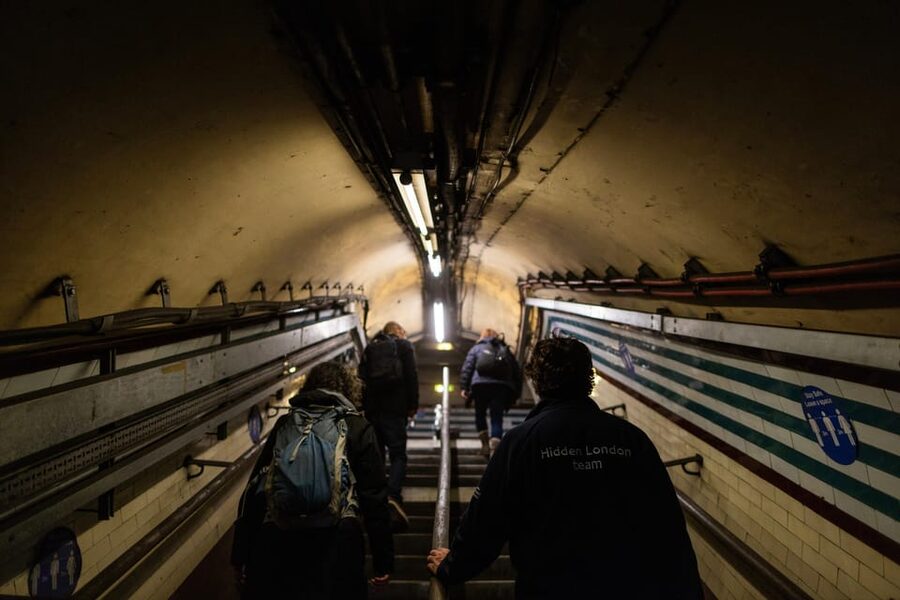
The pace is not a gentle museum stroll. You walk through areas with stairs, uneven ground, low lighting, and no elevators. Comfortable shoes are essential, and water is sensible before or after the tour. Food and drinks are not allowed during the activity.
Large bags and luggage are also not allowed. That matters if you are arriving directly from a train station or airport with a suitcase. Plan to store your belongings elsewhere before reaching the meeting point.
The tour is led in English. There are no other languages listed, so you should be comfortable following a spoken explanation in English while walking through dim and sometimes cramped areas.
Children under 10 cannot join. For children aged 10 to 15, there can be no more than four children per adult. The experience is best for older children and adults who enjoy unusual city history and can manage the physical setting.
Open-toed shoes are not allowed. That rule fits the conditions underground, where stairs and uneven surfaces make secure footwear important.
Is $60.61 a Fair Price?
The listed price is $60.61 per person. That is not a bargain Tube ride, but it is a specialist guided experience run by the London Transport Museum, one of the leading museums devoted to urban transport.
The value comes from access and interpretation. You are paying to enter areas not available during an ordinary station visit and to hear how they were used across different periods. The closed Aldwych platforms, original design features, signalling cabin, and behind-the-scenes view of Holborn give the tour more substance than a standard station walk.
I would see the price as fair if you have a strong interest in London’s transport system, engineering, architecture, wartime history, or unusual places normally closed to the public. It is less convincing if you want a broad overview of London or a low-cost activity for the whole family.
The small number of published reviews means you should not treat the perfect five-star rating as a guarantee of every guide’s style. Still, the repeated praise for the guides points to the main value of the experience: the spaces need good storytelling, and the tour appears to place that responsibility in expert hands.
Free cancellation is available up to 24 hours before the start, and you can reserve now and pay later. Those terms make it easier to fit the visit into a changing London schedule, but the physical restrictions remain the more important booking issue.
Who Should Book the Holborn Tour?
I would book this for someone who has already seen the major London sights and wants a more specific story. It suits you if you enjoy old infrastructure, forgotten routes, original design, and the way cities change over time.
It also works well for an Underground enthusiast. You see the Piccadilly line from an unusual angle, study part of the Aldwych branch, and learn how signaling and modernization shaped the network.
History-minded visitors should appreciate the wartime material and the discussion of staff life during the Blitz. Architecture fans will have clear details to examine in the Leslie Green design and early signalling cabin.
I would not choose it for anyone with limited mobility, claustrophobia, or difficulty with stairs. The tour has no elevators and includes uneven surfaces and low light. It is also not the right pick if you need a multilingual guide or want to carry a large bag.
Should You Book This Hidden Holborn Walk?
Book it if the idea of walking through closed Tube platforms sounds better than another standard London attraction. The strongest parts are the Aldwych branch, surviving Edwardian details, wartime stories, and the chance to see Holborn from behind its public walls.
Skip it if you want an easy, fully accessible visit or a wide-ranging London history tour. For the right audience, $60.61 buys access to a small but unusual part of the city, with an English-speaking guide who can explain why these abandoned spaces mattered.
FAQ
Where does the Holborn Hidden Tube Tour start?
The tour starts on the corner of Gate Street and Kingsway, WC2B 6AA. The What3Words location is towers.rift.forest.
Where does the tour end?
The activity ends back at the meeting point.
How long does the tour last?
The tour lasts 85 minutes. Starting times vary, so check availability when booking.
What language is the tour conducted in?
The live guided tour is conducted in English.
What can I see on the tour?
You can see closed areas of Holborn station, two former Aldwych branch platforms, vintage posters, original Leslie Green Edwardian design, an early 20th-century signalling cabin, and an unusual view of the Piccadilly line.
Is the tour suitable for children?
Children under 10 are not allowed. Children aged 10 to 15 are permitted, with a maximum of four children in that age range per adult.
Is the tour accessible for people with mobility impairments?
No. The tour includes stairs, uneven ground, low lighting, and no elevators. It is not suitable for people with mobility impairments.
Can I bring luggage or large bags?
No. Luggage and large bags are not allowed.
What should I wear and bring?
Wear comfortable, closed shoes and bring water. Open-toed shoes are not allowed. Food and drinks cannot be taken on the tour, and you should bring a passport or ID card.
New listings around London
- London: Bermondsey Craft Brewery Tour★ 5.0 · 3 reviews
- Colourful Notting Hill Photography Tour★ 5.0 · 3 reviews
- The London Historic Pubs Tour★ 4.0 · 3 reviews
- Ultimate Royal London, Thames River Boat Ride & Walking Tour★ 5.0 · 3 reviews
- London: Wallace Collection & National Gallery Private Tours★ 5.0 · 3 reviews
- London: The Birthplace of The Rolling Stones Private Tour★ 5.0 · 3 reviews
- Historic pub tour with Brazilian guide (in Portuguese)★ 5.0 · 3 reviews
- London: Royal Tour with Westminster Abbey & Afternoon Tea★ 3.0 · 3 reviews
London Tours, compared.
Westminster to Greenwich River Thames Cruise
Read our review →
Magical London: Harry Potter Guided Walking Tour
Read our review →