
Reviewed · LONDON TOURS
London: Secrets of the London Underground Walking Tour
The London Underground is not just a way to cross town. It is a city beneath the city, with steam trains, wartime shelters, abandoned platforms, ghost stories, and some of London’s oldest transport architecture. This 2.5-hour walking tour begins at Baker Street, one of the original stations opened in 1863, and follows the Tube’s long transformation from an experiment in underground travel into the system London depends on today.
I like the way the tour turns ordinary commutes into history lessons, especially the stories of how the Underground protected people during the Blitz and stored treasures from the British Museum. I also like the use of audio headsets, which helps you hear guides such as John, Aaron, Angela, and Peter above the noise of stations and city streets.
The main catch is expectation. This is a guided history walk using public stations, not an open-door expedition into abandoned tunnels. You may see a disused station or traces of one, but you should not book it expecting to enter a sealed ghost station. You also pay your own Tube fare, and there are plenty of stairs.
Key points to know before you book
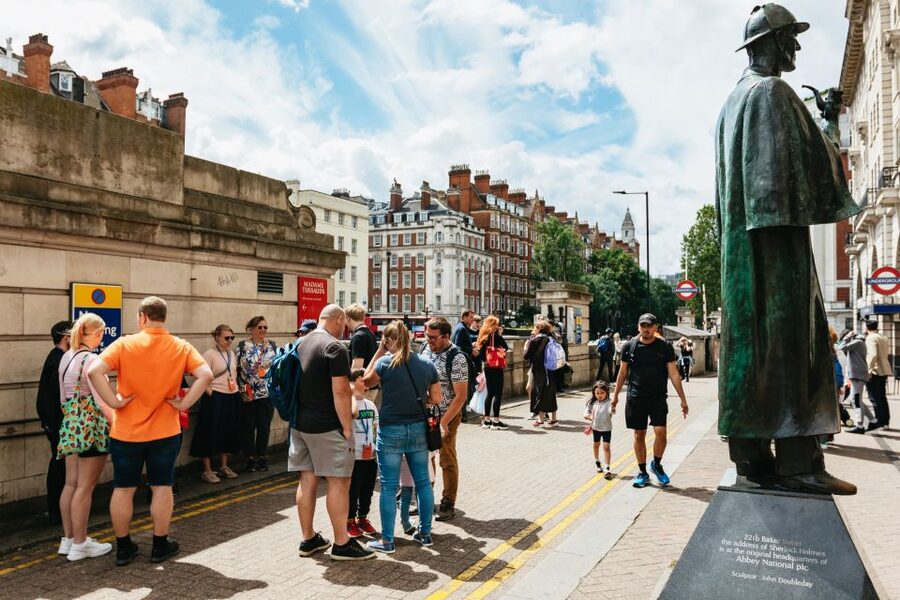
- Start at Baker Street Station: Meet by the Sherlock Holmes statue outside the station, close to one of the Underground’s original stops.
- Hear how the Tube changed: Learn about the first steam trains, the move to electric railways, tunnel construction, and the famous roundel symbol.
- Look beyond transport: The Underground has served as a Blitz refuge, aircraft factory, and storage place for British Museum treasures.
- Expect ghost stories and abandoned stations: More than 40 stations have been left out of service, with tales linked to a Pharaoh’s daughter and a nun.
- Budget for transport: The $40 tour price does not include your Underground ticket, Oyster card, or travel card.
- Plan for stairs: The route involves a moderate amount of walking and is not suitable for wheelchair users or people with reduced mobility.
Baker Street and the Tube’s first chapter
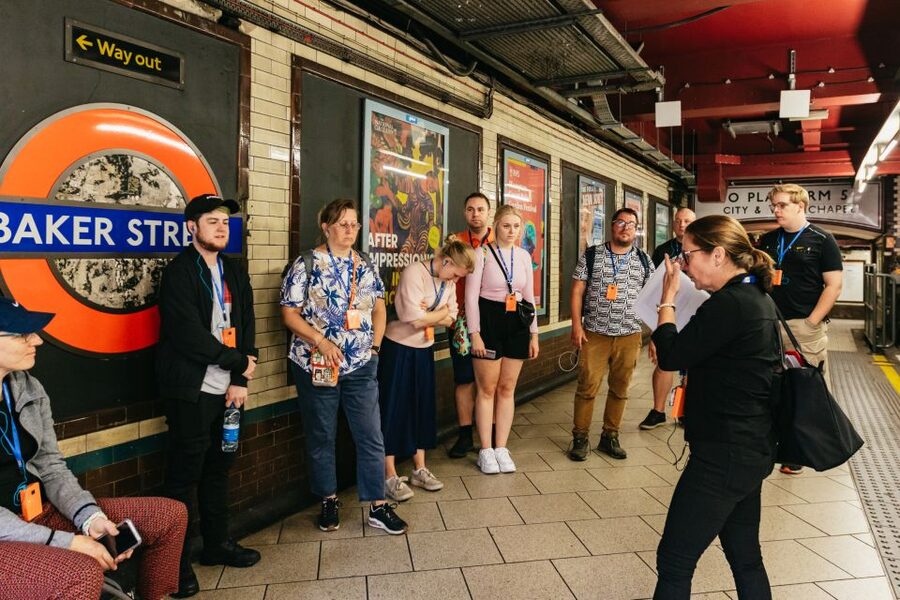
Begin outside Baker Street Station, meeting your guide by the Sherlock Holmes statue. This is a sensible starting point because Baker Street belongs to the Metropolitan Railway, the world’s first underground railway.
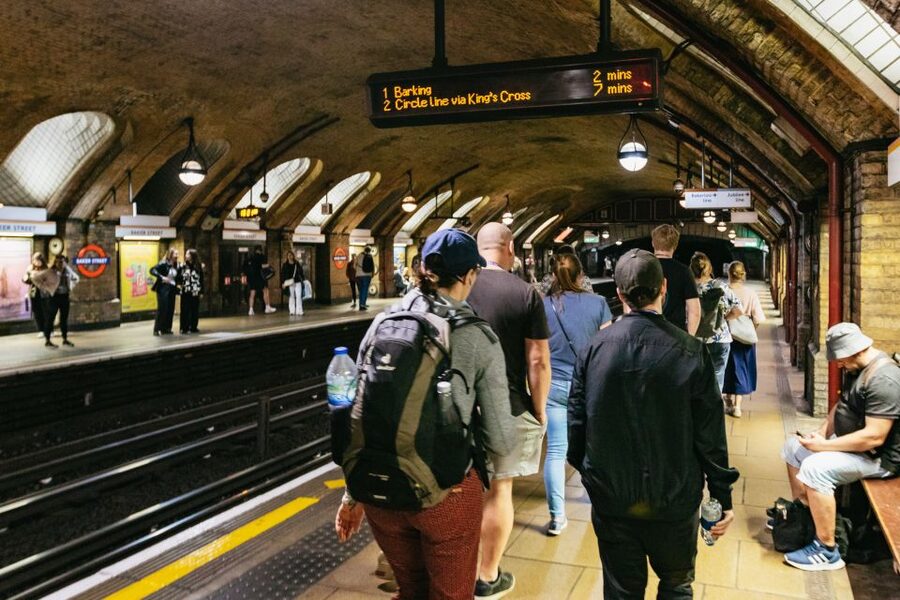
The station opened in 1863, when underground rail travel was still a bold idea. The early railway did not look or feel like the modern Tube. Steam trains ran through the first tunnels, filling the underground with smoke and heat. Your guide explains how those early tunnels were built and how engineers gradually moved the system toward electrification.
I find this opening especially useful because it gives meaning to the station around you. Instead of simply passing through Baker Street on the way to another sight, you begin to notice its age, design, and role in the birth of urban rail travel. Guides regularly point out details that are easy to miss, both inside stations and on the streets above them.
The tour also introduces the growth of the Underground. London’s rail network expanded in stages, with different companies, lines, stations, and engineering methods shaping the system. That helps explain why the Tube can feel like a patchwork of different eras rather than one neatly planned railway.
Your guide speaks in English and leads the group on foot, with short Tube journeys built into the route. Recent guides have included John, Aaron, Angela, Peter, and Andrea. The strongest part of the experience depends on presentation, and the recurring pattern is clear: the guide does much of the work, connecting technical facts with stories about London life.
More Walking Tours in London
- Magical London: Harry Potter Guided Walking Tour
★ 4.7 · 22,044 reviews - London: The Original Jack the Ripper Walking Tour
★ 4.7 · 7,833 reviews - London: Harry Potter Movies Walking Tour (Kids Go Free)
★ 4.7 · 3,071 reviews
What the tunnels reveal about London
The best reason to take this tour is that the Underground is a record of London’s changing needs. It was built to move people, but its roles soon expanded.
You hear about the shift from steam-powered trains to electric rails, a change that made underground travel cleaner and more practical. You also learn about the construction of the earliest tunnels. These stories give you a better sense of the physical challenge involved in building railways below a crowded city.
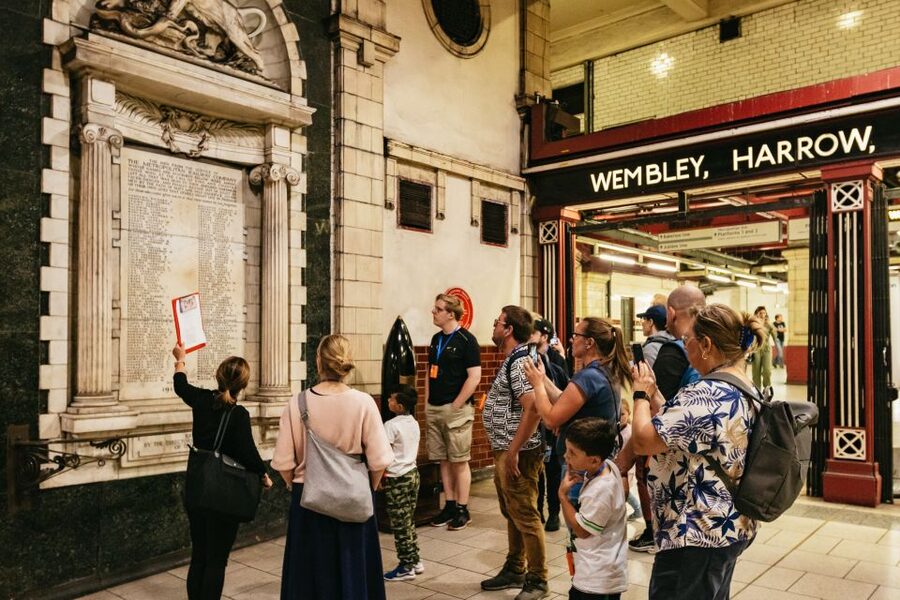
The tour explores the famous Underground roundel, too. The symbol is now one of the most recognizable signs in London, but it began as part of a practical system for identifying stations. Learning how it developed adds a small but satisfying layer to the city’s visual identity.
The stories go beyond engineering. During the Blitz, Tube stations became refuges for Londoners sheltering from bombing raids. The network also served as an aircraft factory and a storage site for treasures from the British Museum. These uses show how quickly an ordinary transport system could be repurposed during a national emergency.
One particularly striking story concerns a station above the remains of 1,000 bodies. The tour also covers stations said to be haunted by a Pharaoh’s daughter and a nun. These tales give the walk a touch of dark folklore, but they are mixed with transport history rather than treated as a pure ghost tour.
That balance matters. If you enjoy London’s unusual stories but still want solid background on the railway itself, the mix should suit you. If you want only technical details, the ghost stories may feel like a detour. If you want a full paranormal investigation, the experience is not designed for that either.
Riding the Tube as part of the tour
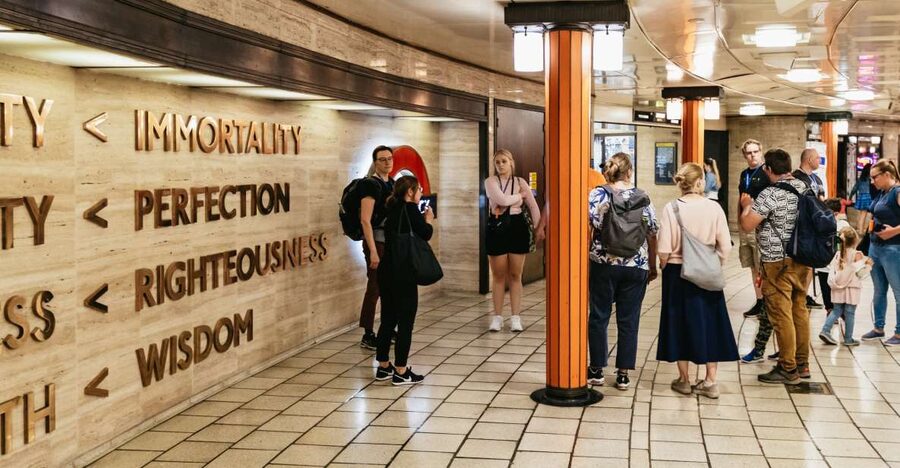
This is not a museum talk followed by a short stroll. You use London’s public transport during the tour, with a listed public transport section of about 10 minutes. The route takes you through working stations, so the pace can be affected by train delays, closures, crowds, or maintenance.
That unpredictability is part of the setting, but it can also be a drawback. One tour had to change course because of delays and closed lines. The guide managed the detour and continued the history lesson while walking through the city, but you should allow some flexibility rather than expecting every movement to run like clockwork.
Bring a valid public transport ticket before you arrive. A Zones 1 to 2 day travel card or an Oyster card is recommended. Your fare is separate from the $40 tour price, and this extra cost is easy to overlook when comparing bookings.
Using a contactless bank card may be possible for Tube travel, but one participant was charged £17 after relying on a card rather than arranging a cheaper travel option. The exact fare depends on the journey and payment method, so the practical lesson is simple: check your transport costs before meeting the guide.
The headset is a real help. Underground stations are noisy, and a guide speaking to a moving group can otherwise be hard to follow. The equipment has worked especially well underground, though one person found the headset crackly above ground. Keep the receiver close and tell the guide if the sound cuts out.
Disused stations, sealed platforms, and realistic expectations
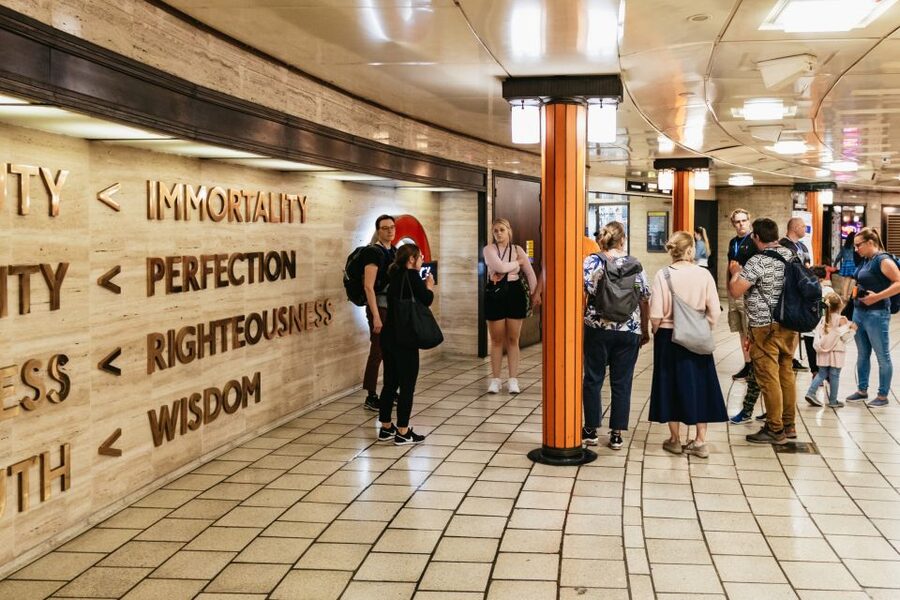
The abandoned-station stories are among the tour’s biggest attractions. More than 40 Underground stations have been left unused, and their absence raises natural questions. Why was a station closed? Did a new line make it unnecessary? Was it too close to another stop? What remains behind the locked doors?
The tour explains some of these stories and may show you evidence of a former station or a ghost station from the active network. You might notice old signs, architectural details, sealed entrances, or other traces hiding in plain sight.
But you generally do not go inside a disused station. Several people arrived expecting a behind-the-scenes visit and felt disappointed when the experience remained on public routes. That is the most important booking note in the entire description.
I would frame the experience this way: you are learning how forgotten stations fit into the Tube’s story, not exploring underground ruins. The guide’s explanations are the main attraction. If you want to enter abandoned stations, you need a different kind of specialist access tour, not this public walking route.
The same applies to the haunted locations. You hear the stories and visit the relevant public areas, but you should not expect a theatrical ghost show or access to closed platforms. The atmosphere comes from knowing what happened, or what is said to have happened, in places you are still able to see.
Elsewhere in London, a change of pace:
- From London: Harry Potter Warner Bros Studio Tour
★ 4.7 · 26,588 reviews - London: Westminster to Greenwich River Thames Cruise
★ 4.5 · 22,836 reviews - London: Madame Tussauds London
★ 4.6 · 20,915 reviews - London: Warner Bros. Studio Tour with Transfers
★ 4.7 · 17,586 reviews
From Baker Street to the London Transport Museum
The tour eventually reaches the London Transport Museum, which is the final visit on the route. The experience finishes at 10B Bridge Street in Westminster, near the museum area.
This ending works well because the walk starts with the Underground’s first chapter and ends near an institution devoted to London transport. The museum gives context to the objects and design details you have been hearing about, although the provided tour information does not specify how long you spend inside or which exhibits are included.
You should treat the museum visit as part of the closing section rather than assume you will have a full independent museum visit with unlimited time. If the museum is a major priority for you, check the exact schedule when booking and consider returning separately if needed.
The finish near Westminster also makes the tour practical for the rest of your day. You can continue sightseeing from central London, though the activity itself does not include hotel pickup, food, drinks, or return transport.
How much walking and stair climbing to expect
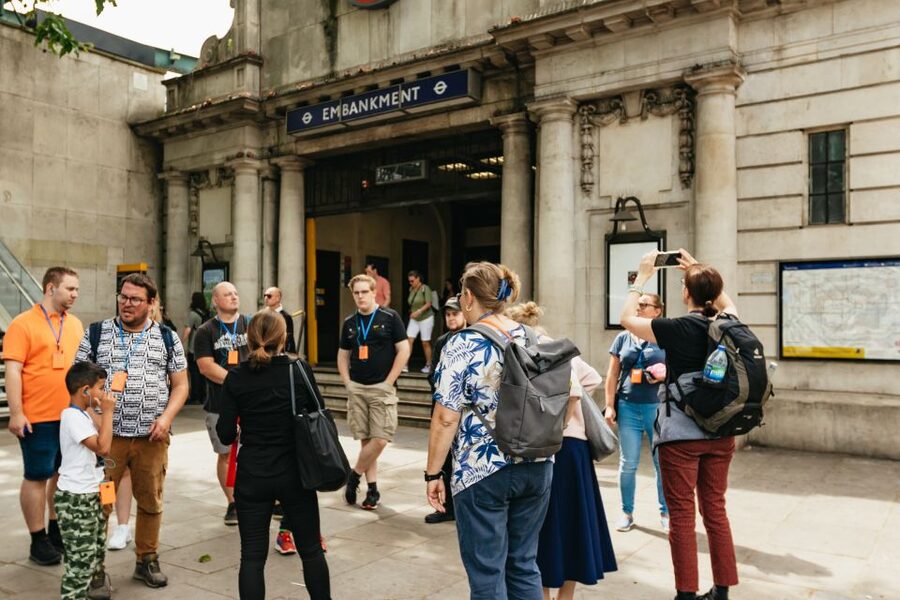
The route involves a moderate amount of walking, both through stations and above ground. You may need to move between platforms, exits, streets, and connecting stations, so comfortable shoes are essential.
Stairs are a serious consideration. The Underground is not uniformly step-free, and this walking tour is specifically not suitable for wheelchair users or people with reduced mobility. Baby strollers and luggage or large bags are not allowed.
An 89-year-old participant completed the tour with family, which shows that age alone is not the issue. The key question is how comfortably you manage stairs, station corridors, and a steady walking pace. If you have knee, balance, or breathing problems, ask the provider for current route details before paying.
The audio equipment helps people stay with the group because you can hear the guide while walking, but it does not reduce the physical demands. You still need to keep moving through active transport spaces.
The guides make the difference
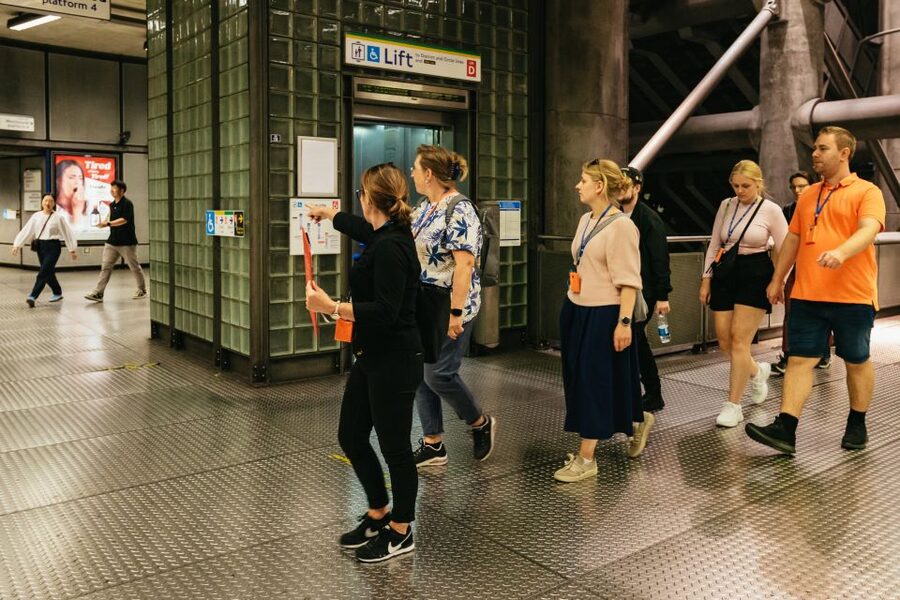
The tour’s strongest feature is the guide. John is often praised for a funny, patient, and clear presentation. Aaron is known for bringing the Underground’s story to life and adding details about landmarks above ground. Angela has led engaging tours with a strong grasp of both the railway and London’s wider story.
Peter and Andrea have also guided recent departures. The exact guide depends on the date, and a particular person cannot be guaranteed, but the repeated pattern is an English-speaking guide who does more than recite dates. The better guides answer questions, manage the group, and adjust when trains or toilets create delays.
That last point is worth noting. One guide held the group together when a participant needed a toilet and two stations with facilities were out of order. Another negotiated a detour during line closures. These are small moments, but they matter on a walking tour that uses a working railway.
The headsets also let the guide speak while the group is spread along a platform or street. For a subject based in noisy stations, that is more than a minor extra.
Is $40 a fair price?
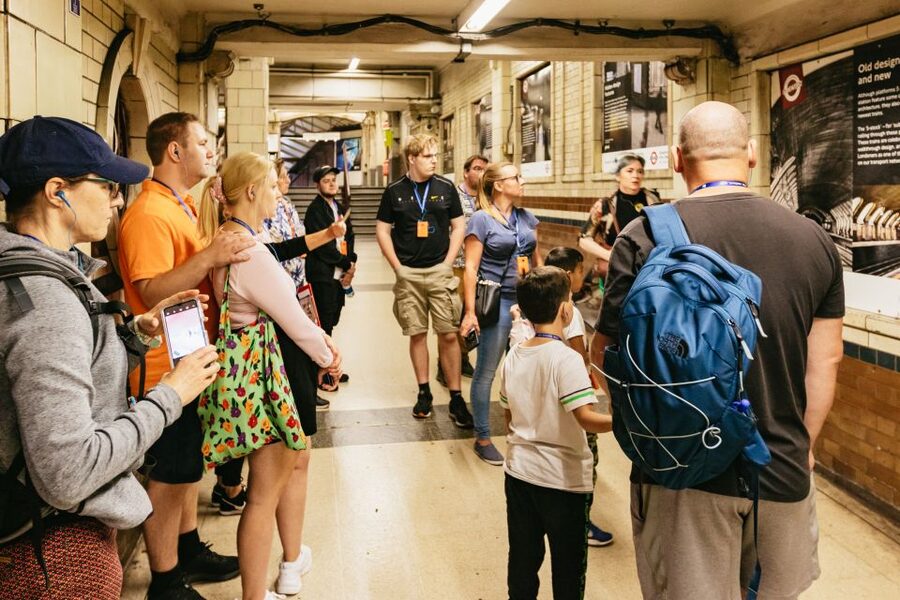
At $40 per person, the tour is reasonably priced if you want interpretation rather than simply a Tube ride. You are paying for 2.5 hours of guiding, route planning, historical research, and the chance to notice details you would likely pass without understanding.
The value is strongest for first-time visitors, transport fans, families with older children, and London residents who use the Tube but know little about its beginnings. One guide even handled a child’s many questions, which suggests the format can work well for curious families.
The price feels less attractive if you already know London transport history or mainly want access to restricted areas. Add your Zone 1 to 2 travel card or Oyster fare, and remember that food, drinks, hotel transfers, and museum extras are not included.
Free cancellation up to 24 hours before the start and the option to reserve now and pay later make it easier to fit into a changing London schedule. Still, the main value comes from the guide, not from special access. Book it for stories, connections, and overlooked details.
Who should take this Underground walk?
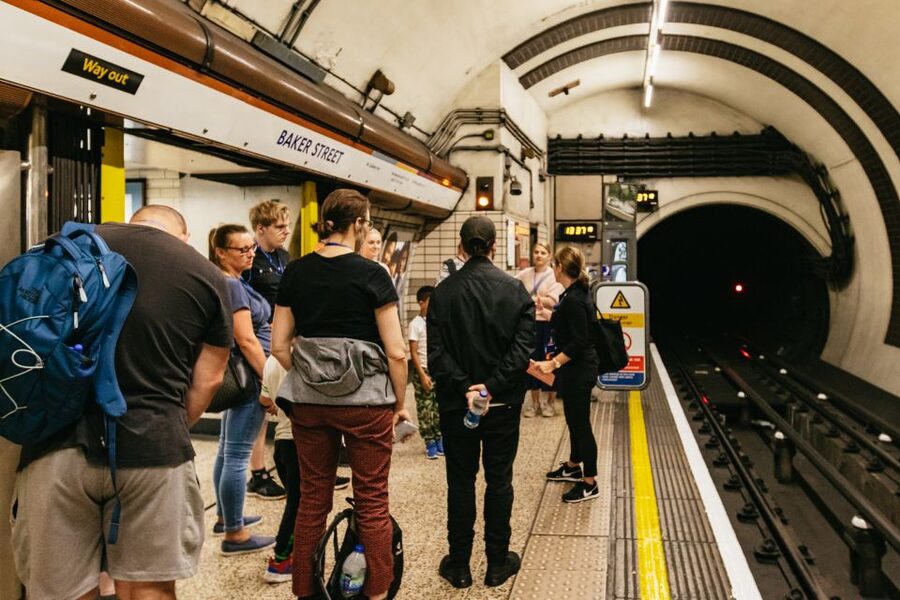
I would recommend it to you if you like city history told on location. You see the stations where events and changes took place, then connect them with streets and landmarks above ground.
It is also a good choice if you have already ridden the Tube and want to understand what you have been using. The tour can change the way you read the roundel, station architecture, abandoned platforms, and even the long corridors between lines.
Families can enjoy the mix of engineering, wartime history, hidden stations, and ghosts. Children who like trains or unusual facts may find plenty to keep them interested, though the walking and stairs still need to be manageable.
I would skip it if you need step-free access, want a relaxed sightseeing pace, or expect to enter closed stations. I would also skip it if you dislike changing plans around live public transport. The Tube is the setting, and a working railway sometimes refuses to follow the script.
Should you book the Secrets of the London Underground tour?
Book this tour if you want the London Underground explained by a lively guide while you walk through the real stations. The stories about steam trains, Blitz shelters, museum treasures, aircraft production, haunted stations, and the abandoned network give the Tube a personality most passengers never see.
Go in with the right expectations. You will not get a secret tunnel expedition, and the $40 price excludes your transport fare. You will get a focused history walk, clear narration through a headset, and a fresh way to look at one of London’s most familiar institutions.
For many visitors, that is a good bargain. The Underground may carry more than 1.3 billion passenger journeys each year across 270 stations, but this tour shows you that every platform has a past.
FAQ
Where does the London Underground walking tour start?
The tour starts at Baker Street Station. Meet the guide by the Sherlock Holmes statue outside the station.
How long does the tour last?
The tour lasts 2.5 hours, including walking and public transport during the route.
Where does the tour finish?
The tour finishes at 10B Bridge Street, Westminster, London SW1A 2JR, near the London Transport Museum.
Is a Tube ticket included in the tour price?
No. You need to bring your own public transport ticket. A Zones 1 to 2 day travel card or an Oyster card should be purchased before the tour.
Is the tour suitable for wheelchair users?
No. The tour involves a moderate amount of walking and many Underground stairs, so it is not suitable for wheelchair users or people with reduced mobility.
What language is the tour conducted in?
The tour is conducted in English by a live guide. Audio headsets are included to help you hear the guide in noisy stations.
Can I cancel the booking?
Yes. You can cancel up to 24 hours in advance for a full refund. You can also reserve the activity and pay later.
New listings around London
- London: Hampton Court Private Guided Tour★ 3.4 · 15 reviews
- London: Secrets of Freddie Mercury Tour with a Cocktail★ 4.1 · 15 reviews
- London: Jack the Ripper Tour and Underground Prison in Spanish★ 5.0 · 15 reviews
- Spanish Language : Original Harry Potter Walking Tour★ 4.5 · 15 reviews
- London: Private Couples Photography Session with Landmarks★ 5.0 · 15 reviews
- London: The Saturday Supershow Cabaret at Phoenix Arts Club★ 4.5 · 15 reviews
- London: 2-Hour Guided Tour of the British Museum★ 4.7 · 16 reviews
- London’s Ghosts & Gruesome Past Nighttime Walking Tour★ 4.8 · 16 reviews
London Tours, compared.

Westminster to Greenwich River Thames Cruise
Read our review →
Magical London: Harry Potter Guided Walking Tour
Read our review →



Warner Bros. Studio Harry Potter Tour with Transfers
Read our review →Browse the lists this tour appears in