
Reviewed · LONDON TOURS
London: Serial Killers of London Guided Walking Tour
London’s dark side is not locked away in a museum. It sits in ordinary streets, near busy stations and familiar neighborhoods. This two-hour walking tour traces the crimes of 11 serial killers, including Dennis Nilsen and Peter Sutcliffe, while showing you places most sightseeing routes skip.
I like the mix of crime stories and social history, plus the way guide Declan keeps the group involved with questions and discussion. I also like the use of old photos and crime-scene locations to connect past events with the streets around you. The subject is grim, and some of the storytelling can feel theatrical rather than strictly academic, so this tour suits curious adults who can handle disturbing material.
Key points to know before you go
- Eleven serial killers: The tour covers a broad selection of notorious London cases rather than focusing only on Jack the Ripper.
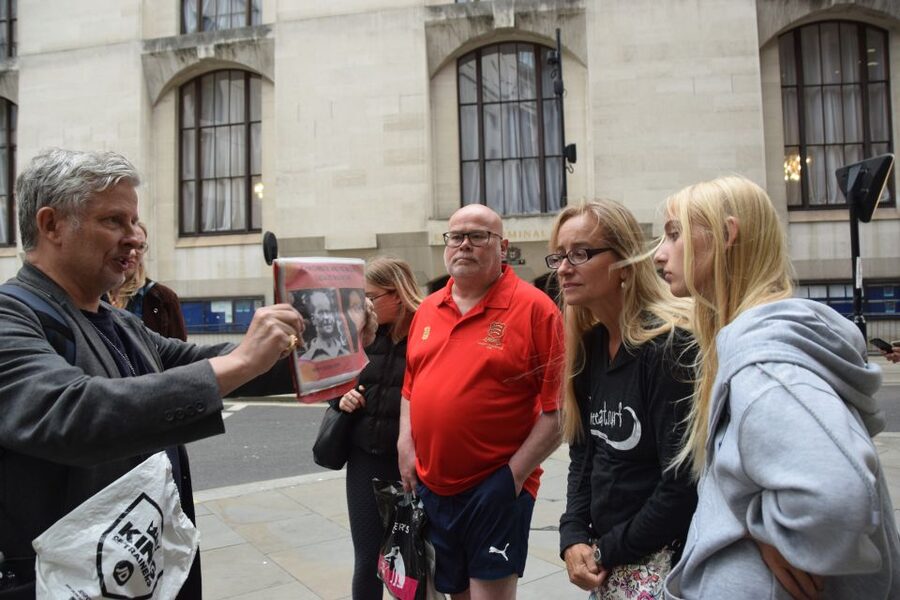
- Declan leads the walk: He uses questions, stories, photos, and discussion to keep the group involved.
- Former crime scenes: You visit places linked to killings and hear what happened there, although the exact stops can vary with the route.
- Police work matters here: The tour also looks at investigations, manhunts, and the officers who brought killers to justice.
- A serious subject: Murder details and violence are central to the experience, so consider your comfort level before booking.
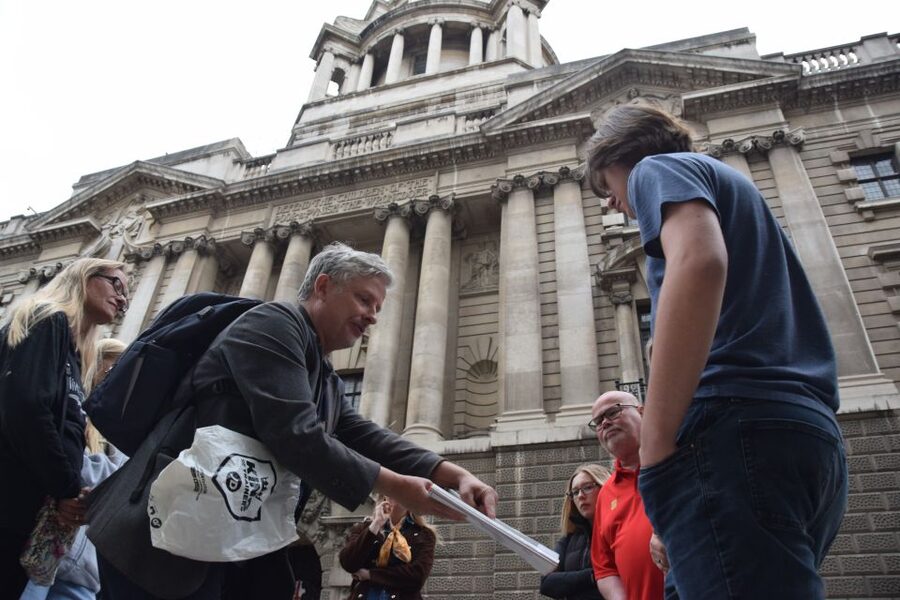
- Barbican meeting point: Wait outside the only exit at Barbican Underground Station, where you will find Declan’s sign on his rucksack on the ground.
Why this London crime walk feels different
Many London tours guide you through royal ceremonies, famous writers, or grand buildings. This one takes a less polished route. You hear about murders committed in and around the city, then look at the streets and buildings connected with those crimes.
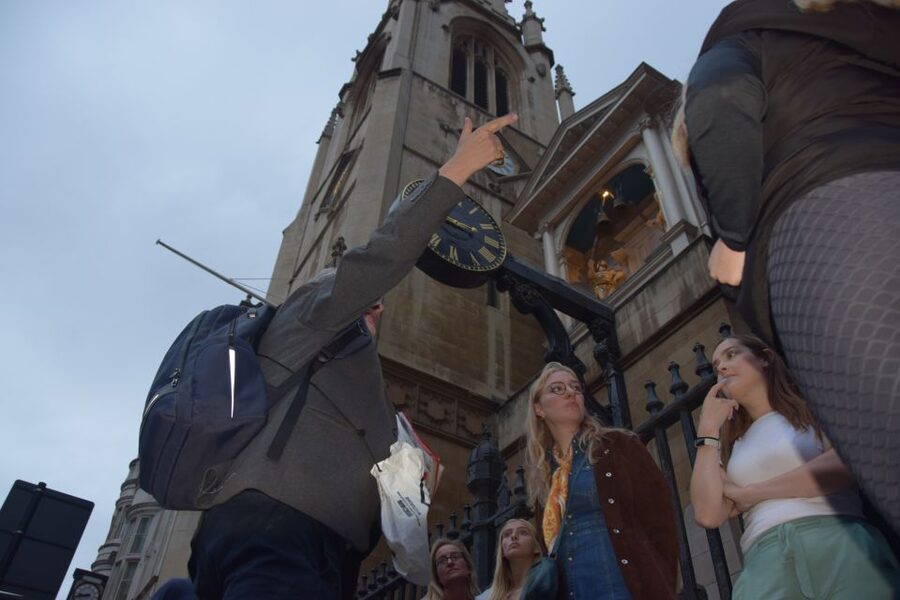
That contrast is the main appeal. A normal walk might take you past an unremarkable corner without a second thought. Here, the guide adds a disturbing layer of history. The setting is not dressed up as a museum display. You are standing in the city, with modern life continuing around you, while Declan explains what happened in an earlier period.
The tour covers 11 serial killers, so it offers more range than a walk built around one famous case. Dennis Nilsen and Peter Sutcliffe are specifically included, along with other notorious figures. The emphasis is not only on who committed the crimes, but also on methods, motives, police work, and the effect of these cases on local people.
That broader approach matters. If you already know the basic headlines, you may appreciate the attention to investigations and social conditions. If you are new to the subject, the variety gives you a useful introduction to London’s criminal past without requiring previous reading.
More Walking Tours in London
- Magical London: Harry Potter Guided Walking Tour
★ 4.7 · 22,044 reviews - London: The Original Jack the Ripper Walking Tour
★ 4.7 · 7,833 reviews - London: Harry Potter Movies Walking Tour (Kids Go Free)
★ 4.7 · 3,071 reviews
Meeting Declan outside Barbican station
The practical starting point is easy to understand, but you need to follow the directions closely. Meet outside the only exit at Barbican Underground Station at least 15 minutes before departure. Look for Declan’s sign on his rucksack on the ground.
The tour leaves promptly, so arriving late could mean missing the group. Barbican is in central London, but large stations can still cause confusion if you rush through them. I would allow extra time to find the exit, especially if you are unfamiliar with the Underground.
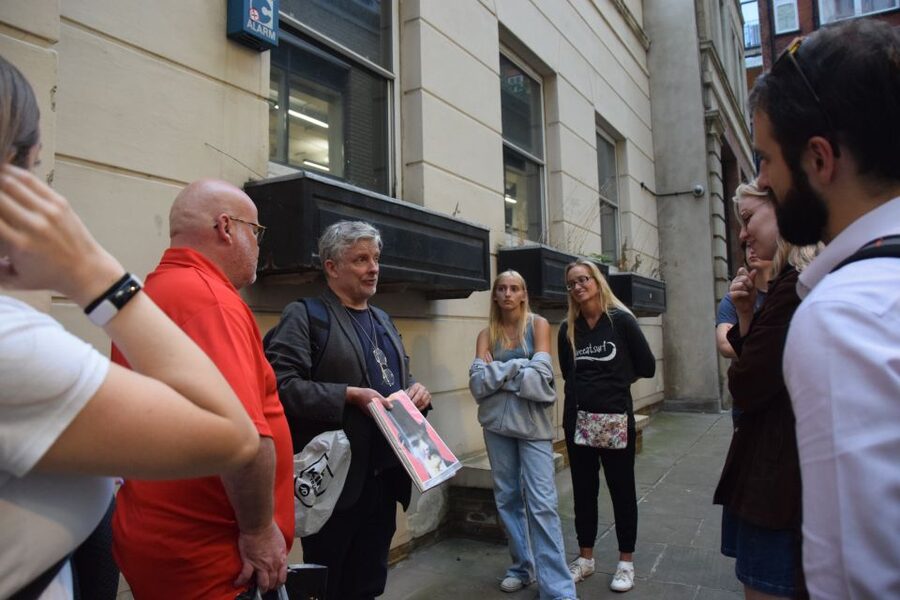
Declan is the named guide, and the tone of the walk depends heavily on his presentation. He uses questions to keep you alert and invites the group into the discussion. Several people praised his ability to make the experience interactive, and that is useful on a walking tour dealing with difficult material. Listening to two hours of grim cases can become flat if the guide simply recites facts.
His approach includes storytelling, social history, and supporting images. That makes the walk feel more like a guided talk in the open air than a silent procession from one address to another.
The first crime stories in central London
The tour begins in the heart of London and introduces the cases before moving through locations tied to them. You can expect the opening section to establish who the killers were, how they operated, and why their crimes caused such fear.
The stories include Dennis Nilsen and Peter Sutcliffe, two names that carry very different associations in British criminal history. The tour examines their motivations and methods, rather than simply listing victims and dates. The guide also explains the wider impact of the crimes on London and its residents.
This is where the tour’s social-history angle becomes important. Serial-killer cases are often presented as isolated tales of evil. A more useful account also asks how people lived, how information spread, what the police knew, and why investigations took time. The supplied description promises that kind of context, and several comments praised the guide for discussing social history alongside the murders.
Still, you should expect the subject matter to remain central. This is not a gentle history walk with one or two spooky anecdotes. The killings are the reason for the tour, and the descriptions can be gruesome.
Visiting places connected with the crimes
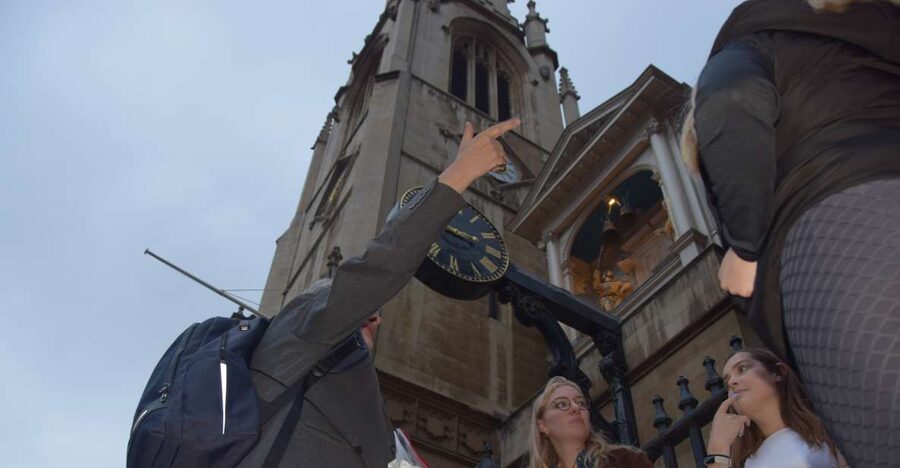
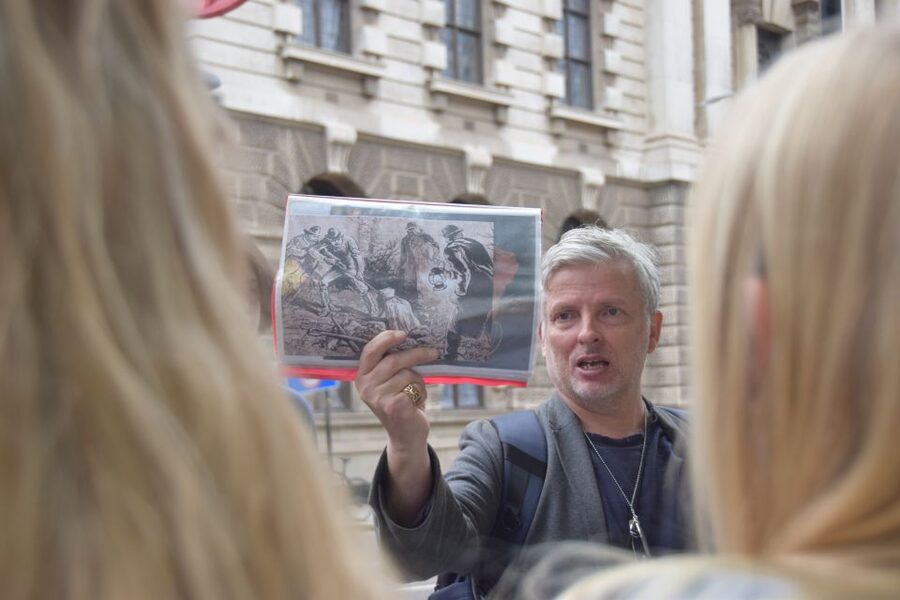
The strongest part of the experience is the use of real locations. You visit sites connected with former crime scenes and hear detailed descriptions of the events. Historical photos help show how the places looked at the time, although the images may be old and unclear.
Do not expect every location to look exactly as it did when the crimes occurred. London changes constantly. Buildings can be altered, streets can be redeveloped, and a place that once felt isolated may now sit beside offices, shops, or transport routes.
That change is part of the point. Seeing a present-day street while hearing about its past creates a sharper connection than reading a case in a book. You are not being shown a preserved crime scene. You are being asked to imagine what happened in a location that has continued to evolve.
The walk does not promise access inside private buildings or a preserved forensic site. The value comes from the guide’s explanation and the connection between the address and the case. If you want elaborate exhibits, recorded effects, or a theatrical set, this may feel spare.
Some stops may also seem only loosely connected to the main story. One critical assessment described a weak thread between certain locations and the overall subject. Keep that possibility in mind. The walk’s success depends on how clearly Declan links each stop to the larger account.
Elsewhere in London, a change of pace:
- From London: Harry Potter Warner Bros Studio Tour
★ 4.7 · 26,588 reviews - London: Westminster to Greenwich River Thames Cruise
★ 4.5 · 22,836 reviews - London: Madame Tussauds London
★ 4.6 · 20,915 reviews - London: Warner Bros. Studio Tour with Transfers
★ 4.7 · 17,586 reviews
Historical photos, stories, and audience participation

The supporting material includes historical photos and other visual aids. These are meant to help you picture the people and places involved, especially when modern London has changed beyond recognition.
Declan also uses questions throughout the walk. That can make the experience more alert and personal. You are not simply following a guide who speaks without pause. You may be asked to think about a case, recall a detail, or consider how police work unfolded.
This style was praised for working well across a wide age range, from 17 to 52. That does not mean every group will respond in the same way. Some people enjoy a lively guide who uses performance and humor to keep attention. Others want a quiet, carefully sourced lecture.
A small but important caution: some descriptions of the tour found the delivery too theatrical and felt that opinions or disputed details were presented too firmly. If factual precision matters most to you, treat the walk as an introduction and not your final authority on every case. You may want to check important details later in books or reputable historical sources.
That criticism should not be ignored. A guide can know the subject well and still make the experience less useful by leaning too hard on drama. The best parts of this tour appear to be the interaction, place-based storytelling, and social context. The weaker parts may come when performance takes priority over careful explanation.
The police investigations behind the headlines
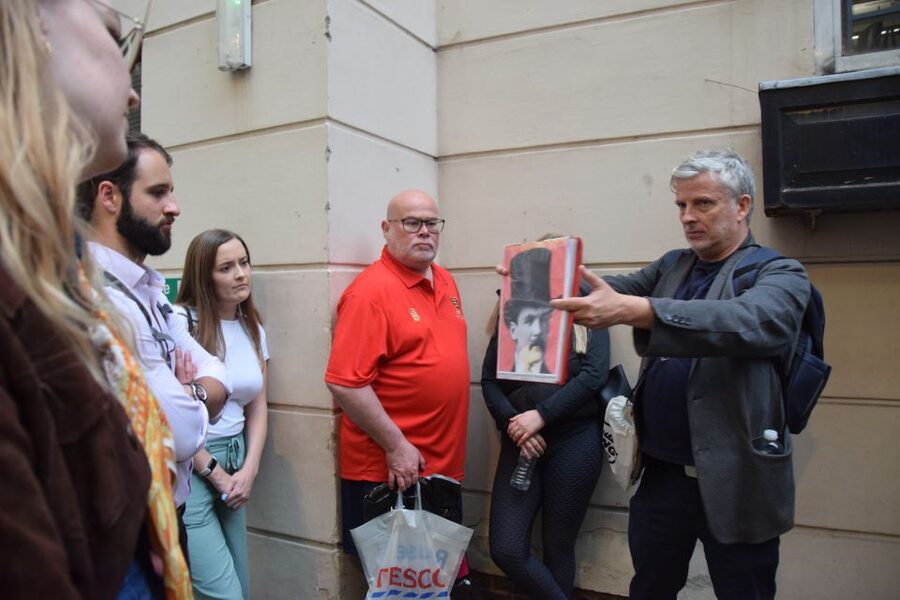
The tour also gives attention to the police officers and detectives who worked to identify and arrest the killers. This is a welcome balance. Crime walks can sometimes focus so much on the murderer that victims, investigators, and communities fade into the background.
Here, you hear about investigations and manhunts, as well as the steps that eventually brought the killers to justice. That helps explain why these cases mattered beyond the sensational headlines.
The police section may be especially useful if you are more interested in investigative history than in graphic crime details. It shifts the focus from the killer’s identity to the work of solving the crimes. You gain a clearer sense of how evidence, witness accounts, police effort, and public pressure shaped the outcome.
The available details do not provide a case-by-case breakdown of every stop or investigation. That means I would not book this expecting a forensic master class. It is a guided overview, delivered on foot, with the streets themselves acting as the backdrop.
What the two-hour format gives you
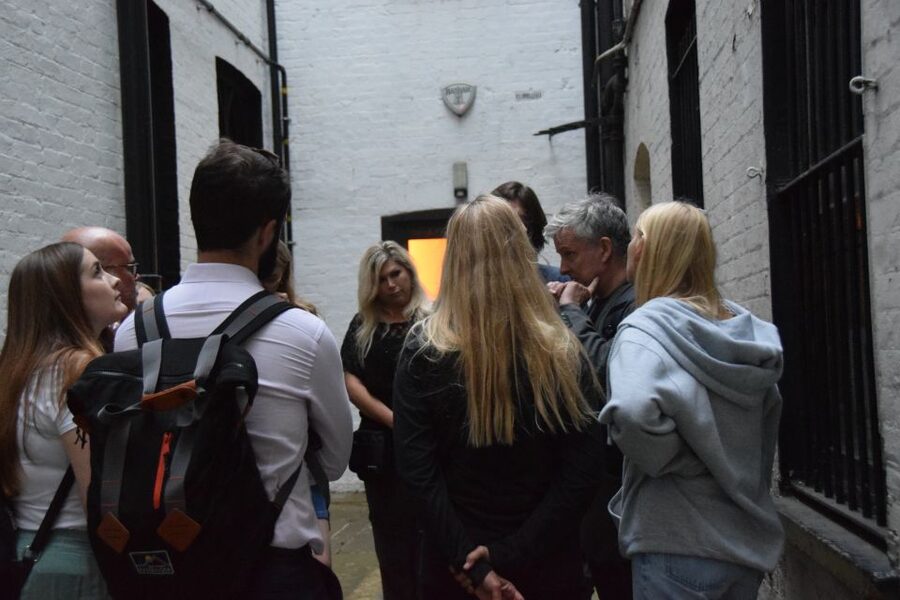
Two hours is a good length for this kind of subject. It gives Declan enough time to introduce 11 cases without turning the tour into an all-day commitment. You can fit it into a London itinerary before dinner or another evening plan, though the material may leave you wanting quiet time afterward.
The short format also means the stories must be selective. You will not receive every detail about all 11 killers. The guide has to move between cases, locations, police work, and social context.
That is a strength if you want a broad introduction. It is a limitation if you already know the cases well and want new archival material or long discussions of individual investigations.
The tour takes place rain or shine. Wear shoes suitable for walking and bring clothing for the forecast. The exact distance is not stated, but it is a walking experience through central London and is listed as unsuitable for people with mobility impairments. If uneven streets, standing, or a steady walking pace could be difficult for you, choose another activity.
The guide speaks English, and no other language is listed. You will need to follow spoken explanations and group discussion in English to get the full value from the walk.
Is $22 a fair price?
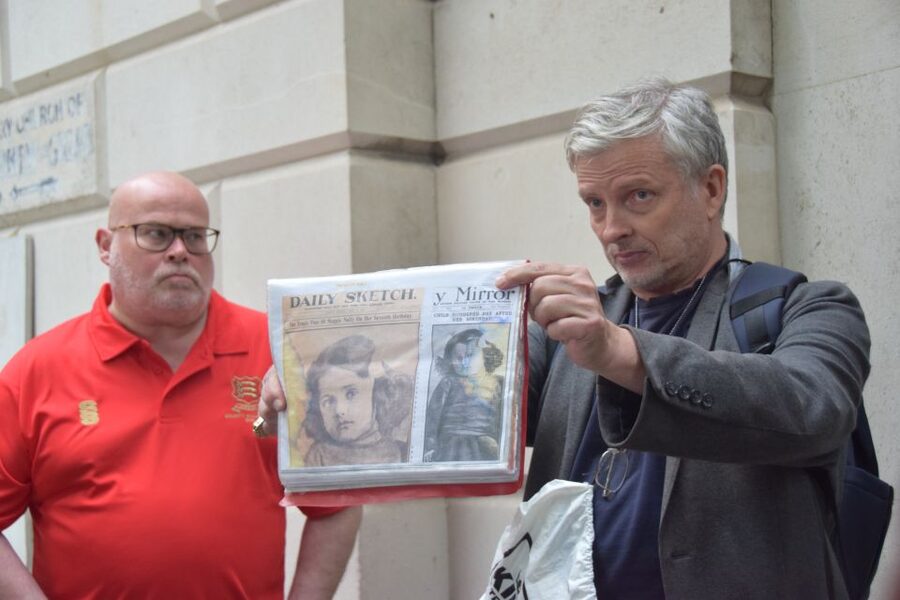
At $22 per person, this is reasonably priced for a two-hour guided activity in central London. You are paying for a live guide, a planned route, location-based storytelling, and visual material, rather than admission to a major attraction.
The value depends on what you want from a crime tour. If you enjoy being shown lesser-known parts of London and prefer a human guide to an audio app, the price makes sense. You are also getting a wider subject range through the 11 cases.
If you want a polished museum presentation, detailed documents, or a tightly academic account, you may feel the price is less convincing. The tour’s quality rests on Declan’s delivery and on how clearly he connects the sites to the cases.
The booking terms are helpful for uncertain plans. You can reserve now and pay later, and cancel up to 24 hours before the start for a full refund. That flexibility is useful in London, where weather, transport delays, and changing plans can affect an evening.
Who will enjoy this tour most
I would recommend this walk to adults and older teenagers who have a real interest in criminal history, policing, or the less familiar side of London. It is also a good fit if you have already visited the main landmarks and want to see a different side of the city.
You will probably enjoy it most if you like:
- Guided storytelling rather than self-guided sightseeing
- Real locations connected with difficult historical events
- Social context alongside crime details
- Interactive questions and discussion
- A broad introduction to several cases
You may want to skip it if graphic descriptions upset you, if you prefer a strictly academic tone, or if mobility makes a two-hour city walk uncomfortable.
Families should think carefully before booking. The age range that worked well for one group included a 17-year-old, but the subject remains disturbing. The activity information does not set a minimum age, so your own judgment matters.
What to know about the tone
The tour aims for a chilling atmosphere, but it is not described as a haunted walk with ghosts or supernatural stories. The focus is on real murders, real investigations, and real locations.
Declan’s style appears lively and sometimes dramatic. That can help keep the group focused, particularly during a long series of cases. It can also divide opinion. Some people may find the performance engaging, while others may find it too showy or too close to entertainment.
I would go in expecting a strong storyteller, not a courtroom historian. Listen closely when the guide separates established facts from interpretation. If a claim sounds disputed, make a note and check it later.
That approach lets you enjoy the atmosphere without accepting every statement uncritically. It is also a sensible way to handle any walking tour built around crimes that have been retold in books, films, and television.
Should you book the Serial Killers of London tour?
Book it if you want a dark, place-based introduction to London crime, led by an interactive guide who adds police work and social history to the usual murder stories. The real locations, old photos, and range of 11 cases give the two hours a clear purpose.
Think twice if you need a tightly sourced academic tour or dislike theatrical storytelling. The strongest experience will come from treating it as an atmospheric guided walk and a starting point for further reading, not as the final word on every case.
At $22, with free cancellation up to 24 hours ahead and the option to pay later, it is a manageable way to spend two hours in London. Just arrive early at Barbican, dress for the weather, and be ready for disturbing material.
FAQ
How long is the Serial Killers of London walking tour?
The tour lasts two hours.
How much does the tour cost?
The listed price is $22 per person.
Where does the tour meet?
The meeting point is outside the only exit at Barbican Underground Station. Look for Declan’s sign on his rucksack on the ground.
How early should I arrive?
You should arrive at least 15 minutes before the scheduled start because the tour leaves promptly.
Who guides the tour?
The live English-speaking guide is Declan from Brit Icon Tours.
Which serial killers are discussed?
The tour covers 11 notorious serial killers, including Dennis Nilsen and Peter Sutcliffe.
Does the tour visit former crime scenes?
Yes. The walk visits locations connected with former crime scenes and uses descriptions, historical photos, and other supporting material.
Is the tour available in languages other than English?
No. English is the listed tour language.
Is the tour suitable for people with mobility impairments?
No. The activity is listed as unsuitable for people with mobility impairments.
Can I cancel the booking?
Yes. You can cancel up to 24 hours in advance for a full refund.
Does the tour run in bad weather?
Yes. The tour takes place rain or shine, so bring suitable clothing.
New listings around London
- London: Bermondsey Craft Brewery Tour★ 5.0 · 3 reviews
- Colourful Notting Hill Photography Tour★ 5.0 · 3 reviews
- The London Historic Pubs Tour★ 4.0 · 3 reviews
- Ultimate Royal London, Thames River Boat Ride & Walking Tour★ 5.0 · 3 reviews
- London: Wallace Collection & National Gallery Private Tours★ 5.0 · 3 reviews
- London: The Birthplace of The Rolling Stones Private Tour★ 5.0 · 3 reviews
- Historic pub tour with Brazilian guide (in Portuguese)★ 5.0 · 3 reviews
- London: Royal Tour with Westminster Abbey & Afternoon Tea★ 3.0 · 3 reviews
London Tours, compared.

Westminster to Greenwich River Thames Cruise
Read our review →
Magical London: Harry Potter Guided Walking Tour
Read our review →

Warner Bros. Studio Harry Potter Tour with Transfers
Read our review →Browse the lists this tour appears in