
Reviewed · LONDON TOURS
London: Sunday Markets Guided Walking Tour
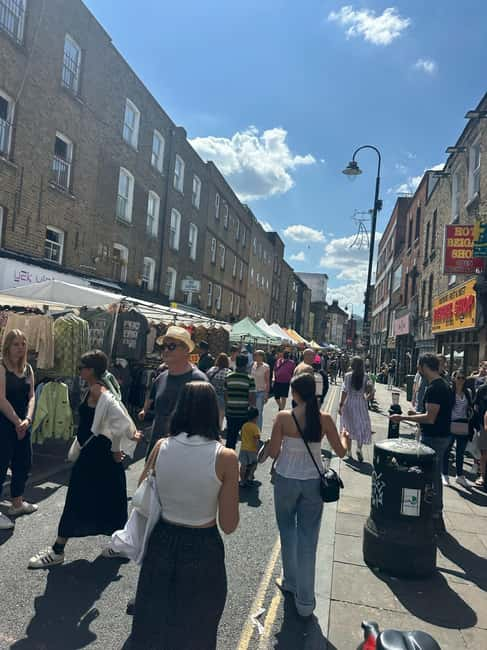
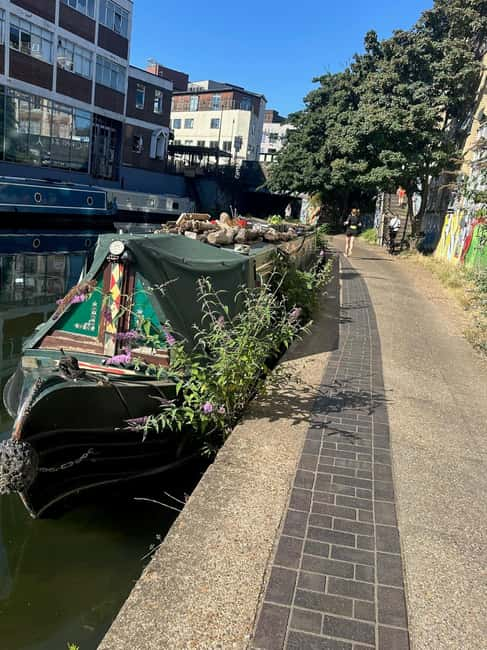
East London’s Sunday markets give you a sharper sense of local life than a quick pass by Big Ben ever will. This two-hour walk takes you from Cambridge Heath through Broadway Market, Columbia Road Flower Market, Brick Lane, and Spitalfields, with the Regent Canal and Hackney City Farm along the way.
I like the mix of markets, from flowers and food to vintage clothing and handmade goods. I also like the balance between guided stories and free time, so you are not simply marched from stall to stall. The main drawback is the pace: four markets in two hours means plenty of orientation, but not much time for a long meal or careful shopping.
The guide, Rich, keeps the walk friendly and well timed, adding stories about the districts and their past. Bring money for food and purchases, and wear shoes suited to a good deal of walking.
Key points to know before you book
- Four Sunday markets in one compact route: Visit Broadway Market, Columbia Road Flower Market, Brick Lane, and Old Spitalfields Market.
- Rich leads the walk: Expect an English-language tour with local stories, practical pacing, and time to explore on your own.
- Food is extra: Street food is part of the fun, but meals and drinks are not included in the $33.67 price.
- A changing East London scene: See traditional market habits alongside vintage finds, handmade crafts, fashion, and newer food stalls.
- Two hours, with plenty packed in: The tour gives you a useful overview, but serious shoppers may want to return later.
- Easy planning: Meet at Cambridge Heath Station forecourt, with the route finishing at Spitalfields Market according to the stated itinerary.
Why East London markets make a good Sunday walk
Sunday is a fine time to see East London in motion. The markets bring together people shopping for lunch, flowers, clothes, small gifts, and household items. You get more than a row of stalls. You see how different parts of London spend a weekend morning or afternoon.
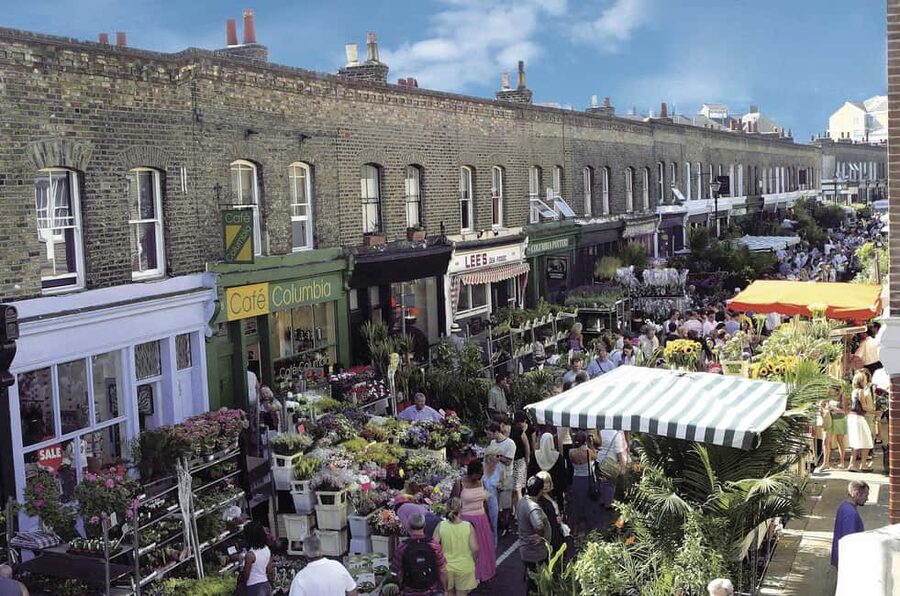
I especially like this route because it does not stick to one market style. Broadway Market has a food-and-neighborhood feel. Columbia Road adds flowers and color. Brick Lane brings vintage goods, street food, and fashion. Spitalfields gives you a more organized market setting with shops and stalls under one roof.
That variety gives the walk a useful shape. You can compare the tone of each place instead of deciding that all London markets are alike. The guide also adds context about the districts, which helps you understand why the markets feel different.
There is a practical tradeoff. The tour lasts only two hours, and four markets cover a fair amount of ground. You will see the key areas and learn how they fit together, but you will not have time to inspect every vintage rail, eat a full meal at each stop, or wait for the perfect photograph.
More Walking Tours in London
- Magical London: Harry Potter Guided Walking Tour
★ 4.7 · 22,044 reviews - London: The Original Jack the Ripper Walking Tour
★ 4.7 · 7,833 reviews - London: Harry Potter Movies Walking Tour (Kids Go Free)
★ 4.7 · 3,071 reviews
Starting at Cambridge Heath Station
The meeting point is the forecourt of Cambridge Heath Station. This is a useful starting place because you begin in the middle of East London rather than at a major sightseeing landmark. You should arrive ready to walk, with your phone, wallet, and any food or shopping budget easy to reach.
The tour is conducted in English. Rich, the guide named in the experience details, leads the group through the market districts with stories about local history and neighborhood change. The tone is designed to be friendly rather than formal, which suits a route based on eating, browsing, and street life.
You will want to pay attention to the guide at the start. Once you reach the markets, it is easy to get distracted by food smells, clothing racks, and flower stalls. The explanations give you a framework for the rest of the walk, while the later free time lets you look around without feeling watched every second.
Broadway Market: food first, shopping second
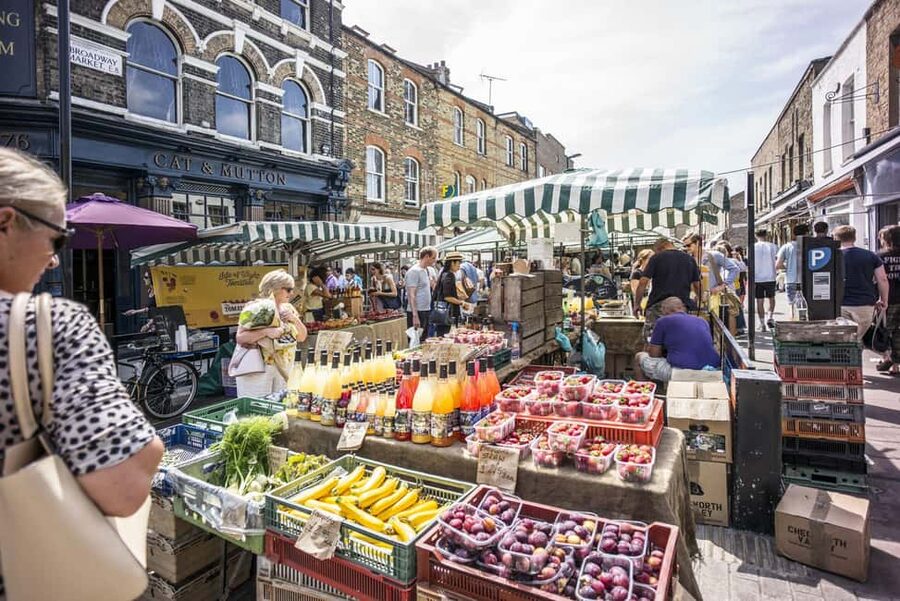
Broadway Market is one of the first major stops. The experience describes it as a shopping stop, but food is an important part of the visit. You might find street food, snacks, and stalls selling goods that are hard to classify neatly as either practical or decorative.
This is a good place to notice the difference between a market visit and a restaurant meal. You can sample something small, keep walking, and save room for another stop. Food and drinks are not included, so you should treat the $33.67 tour price as payment for the guide and walking experience, not as a food package.
I like having a guide here because a market can otherwise feel like a pile of unrelated stalls. Rich’s stories help connect the street scene with the wider district. You get a sense of how the market fits into local Sunday routines instead of simply hunting for the most attractive dish.
Broadway Market is also a sensible place to begin your own shopping. If you see something bulky or fragile, think twice before buying it at the start. You still have several stops ahead, and carrying purchases for the rest of the walk could become annoying.
Columbia Road Flower Market and the pleasure of slowing down
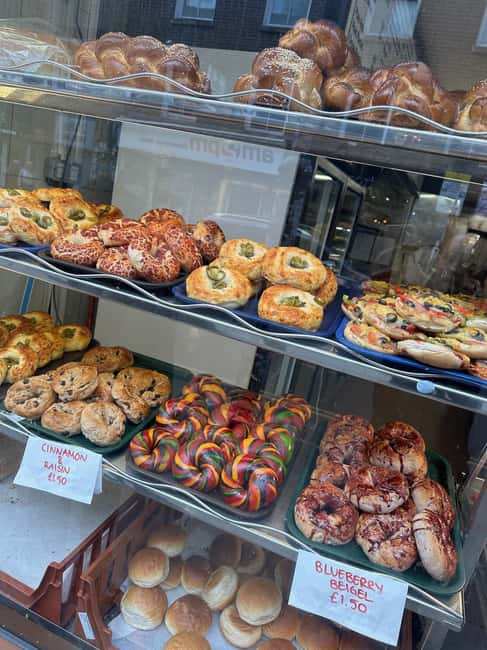
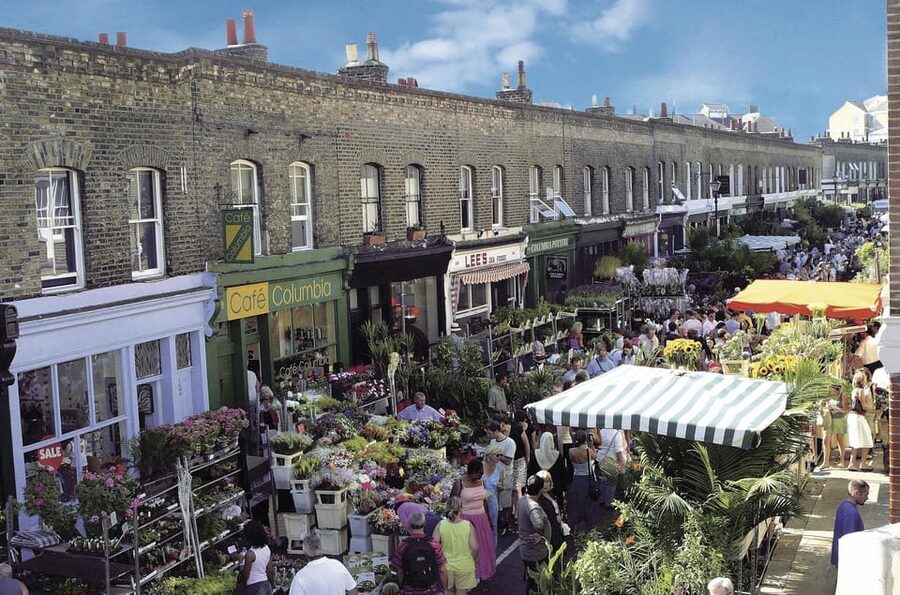
Columbia Road Flower Market changes the mood. The focus shifts from prepared food and general shopping to flowers and plants, with sightseeing as the main reason for the stop. The market’s appeal is visual, but it also gives the walk a calmer pause between food and fashion districts.
You can expect plenty to look at, from cut flowers to plants and displays. The information provided does not promise a specific flower stall, seasonal item, or purchase, so keep your expectations flexible. The market is worth seeing for its atmosphere and color even if you are not planning to buy anything.
This stop shows why a guided route is useful. The markets are not interchangeable, and Columbia Road offers a different piece of East London life. A guide can point out the character of the area and explain how it fits into the route, while you use your free time to browse.
The main limitation is time. Flower shopping often rewards a slow look, especially if you are comparing plants or arranging a bouquet in your mind. On this tour, you get an introduction rather than an afternoon devoted to the market.
Elsewhere in London, a change of pace:
- From London: Harry Potter Warner Bros Studio Tour
★ 4.7 · 26,588 reviews - London: Westminster to Greenwich River Thames Cruise
★ 4.5 · 22,836 reviews - London: Madame Tussauds London
★ 4.6 · 20,915 reviews - London: Warner Bros. Studio Tour with Transfers
★ 4.7 · 17,586 reviews
Hackney City Farm and the spaces between markets
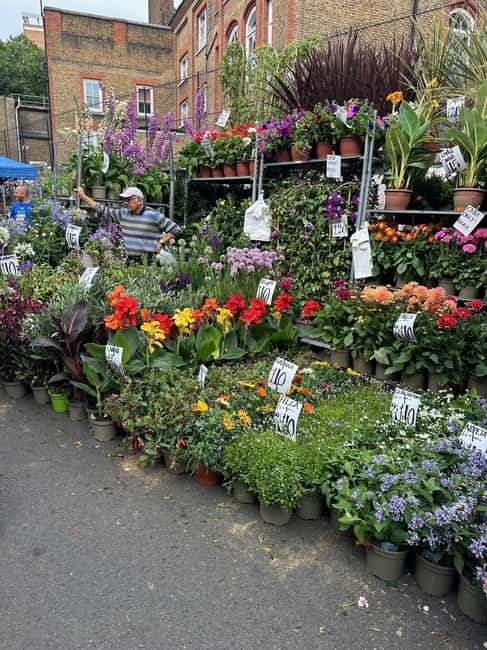
Hackney City Farm appears as a sightseeing stop between the market visits. The supplied details do not specify a farm tour, animal encounters, or entry inside the site, so do not book this experience expecting a separate farm activity. It is part of the walk and adds a change of scene to the route.
That change matters. Market tours can become tiring when every stop asks you to look at more stalls. A sightseeing pause gives you a chance to reset and notice the neighborhood itself. You are not only moving between shopping areas. You are seeing the streets and places that connect them.
This is also where the pace may feel most important. Rich is described as managing the timing well, and that skill matters when the route includes several distinct locations. A poorly timed market walk can leave you rushing at the end. Here, the aim is to give each stop a useful taste without letting one section consume the whole tour.
Brick Lane: vintage finds, food, and East London style
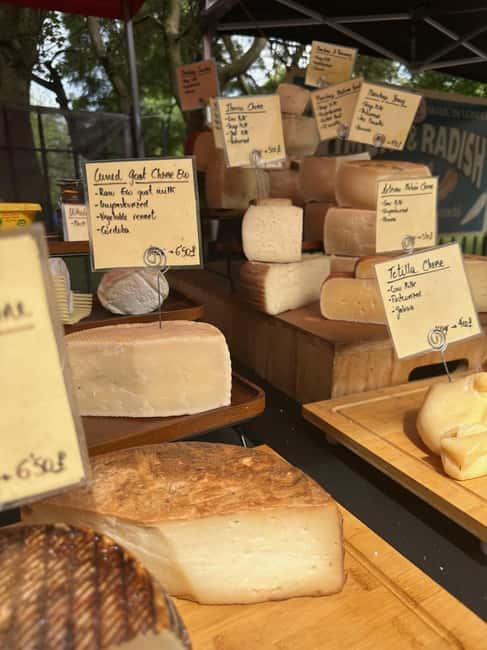
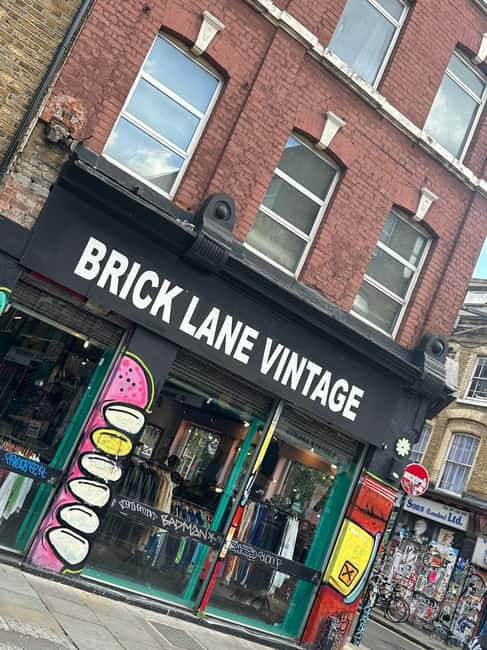
Brick Lane brings together several of the experience’s main themes: shopping, street food, vintage treasures, handmade goods, and fashion. It is likely to be one of the most stimulating sections of the walk, especially if you enjoy looking through items that do not appear in standard high-street shops.
You might find vintage clothing, unusual gifts, handmade crafts, and food stalls with different flavors. The details do not guarantee specific vendors or dishes, so avoid arriving with one exact item in mind. The fun is in seeing what is available on the day.
Brick Lane also helps explain the phrase true essence of London without reducing the city to one postcard image. The area brings together older market traditions and newer creative businesses. The guide’s stories about local districts give this mixture some context, so you can look beyond the obvious food stalls and fashion racks.
I would save room for a snack here, but remember that the tour does not cover food or drinks. If you are traveling on a strict budget, set a spending limit before you arrive. It is easy to add several small purchases when each one seems inexpensive.
The drawback is that Brick Lane can be distracting. If you stop at every stall, you may lose track of the group. Listen for the guide’s instructions and agree on a meeting point if the group spreads out during browsing time.
Old Spitalfields Market: a more organized finish
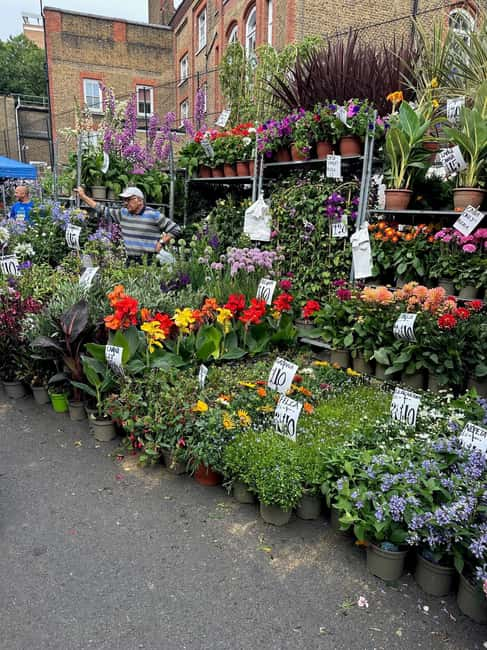
The walk ends at Old Spitalfields Market, listed as both a shopping stop and the finishing point. Compared with the more street-based parts of the route, this gives you a clearer place to finish browsing, eat, or continue exploring on your own.
Spitalfields is useful as the final stop because you can decide how to spend the rest of your day. You may want to look through the market stalls, find something to eat, or simply use the area as a convenient end to the tour. The activity details state that the experience ends at Spitalfields Market, while the meeting information also says the activity ends back at the meeting point. Because those descriptions do not fully match, confirm the exact end point when booking.
Ending here also makes sense for shoppers. You have already seen the other markets and can make a final purchase without carrying it through the whole route. If you are not shopping, the final stop still gives you a chance to review the day and decide which market deserves a return visit.
What the $33.67 price really covers
At $33.67 per person, this is a modestly priced guided walk for a two-hour introduction to four well-known East London markets. You are paying for Rich’s time, the route planning, local explanation, and the convenience of linking several areas that would take more effort to organize alone.
The value is strongest if you want orientation. A first visit to London can feel scattered, and a guide helps you understand how the markets relate to one another. You also avoid spending your limited sightseeing time working out where to go next.
The value is weaker if you want a full shopping day. Food, drinks, and purchases are extra, and two hours is not enough for a slow inspection of every market. Independent visitors who already know East London may prefer to spend the same money on lunch and browse at their own pace.
I see this as a good first-market experience rather than a complete market holiday. It gives you ideas. You can then return to the market that best matches your interests, perhaps with more time for food at Broadway, flowers on Columbia Road, vintage goods on Brick Lane, or stalls at Spitalfields.
Who will enjoy this walk most
I would recommend the tour to you if you want local market culture without planning a complicated route. It suits first-time visitors, couples, friends, and solo visitors who enjoy walking with a small amount of structure.
It is also a good fit if you like learning through stories. Rich adds background about the districts, and that can make the streets more memorable than a simple self-guided shopping trip. The friendly group atmosphere is another plus if you enjoy meeting people while sightseeing.
You may want to skip it if your main goal is serious shopping. The route has a lot packed into two hours, and you may feel hurried if you want to bargain, try several foods, or spend a long time choosing flowers.
It is also less suitable if you dislike walking between stops or prefer a tour built around one fixed venue. The experience is a walking tour first, with markets as the subject.
Practical ways to get more from the two hours
Wear comfortable shoes and keep your belongings easy to manage. You will be moving through several market areas, and bags become awkward when you are also carrying food or purchases.
Bring a payment method and budget for extras. Food and drinks are not included, and the route is designed to give you chances to sample street food. You do not need to buy at every stop, but it helps to decide in advance how much you want to spend.
Keep an open mind about the stalls. Market stock changes, and the information does not promise particular vendors, dishes, flower varieties, or clothing labels. The strongest part of the experience is seeing the range from one Sunday to the next, not chasing a guaranteed product.
Finally, ask Rich for suggestions during the walk. The tour includes time for your own exploration, and that is when a local guide can help you choose where to return later. The combination of explanation and independence is one of the better features of this experience.
Should you book the London Sunday Markets walk?
Book it if you want a friendly, story-led introduction to East London’s Sunday market scene. For $33.67, you get four market districts, a local guide, street-level history, and a route that would take more work to plan alone.
Do not book it expecting included food, a long shopping session, or a quiet stroll. The pace is brisk, and the experience works best when you see it as a sampler. Rich’s good timing, lively stories, and room for personal browsing make it a practical choice for curious first-time visitors.
If that sounds like your kind of Sunday, this tour should help you find the market you want to revisit on your own.
FAQ
Where does the tour start?
Meet at the Cambridge Heath Station forecourt.
Where does the tour finish?
The stated itinerary finishes at Spitalfields Market. The meeting information also says the activity ends back at the meeting point, so confirm the exact end point when booking.
How long does the walking tour last?
The tour lasts two hours. Starting times vary, so check availability for the date you want.
Which markets are included?
The route includes Broadway Market, Columbia Road Flower Market, Brick Lane, and Old Spitalfields Market. It also includes sightseeing near Hackney City Farm and the Regent Canal.
Is food included in the price?
No. Food and drinks are not included, so you pay separately for street food, meals, and drinks.
What language is the tour conducted in?
The live tour guide speaks English, and English is the listed tour language.
New listings around London
- London: Bermondsey Craft Brewery Tour★ 5.0 · 3 reviews
- Colourful Notting Hill Photography Tour★ 5.0 · 3 reviews
- The London Historic Pubs Tour★ 4.0 · 3 reviews
- Ultimate Royal London, Thames River Boat Ride & Walking Tour★ 5.0 · 3 reviews
- London: Wallace Collection & National Gallery Private Tours★ 5.0 · 3 reviews
- London: The Birthplace of The Rolling Stones Private Tour★ 5.0 · 3 reviews
- Historic pub tour with Brazilian guide (in Portuguese)★ 5.0 · 3 reviews
- London: Royal Tour with Westminster Abbey & Afternoon Tea★ 3.0 · 3 reviews
London Tours, compared.

Westminster to Greenwich River Thames Cruise
Read our review →
Magical London: Harry Potter Guided Walking Tour
Read our review →


Warner Bros. Studio Harry Potter Tour with Transfers
Read our review →Browse the lists this tour appears in