
Reviewed · LONDON TOURS
London’s Ghosts & Gruesome Past Nighttime Walking Tour
London’s darkest stories are not tucked away in a remote castle. They sit beside tube stations, hospitals, churches, and busy city streets. This two-hour evening walk takes you from Farringdon Station through old Smithfield, past plague pits and haunted churchyards, and on to the Old Bailey, where you hear about England’s most prolific serial killer. The mix of ordinary modern London and gruesome old tales gives the tour its bite.
I like the route’s strong sense of place. You are not simply hearing ghost stories in a dark room. You are standing at the sites of public executions, grave-robbery, ancient burials, and harsh medical treatment. I also like the guide-led storytelling, especially when Matt is leading the walk. His style is described as lively, informed, and passionate. The main drawback is clear: this is as much a gruesome history tour as a ghost walk. If you want nonstop apparitions, you may find the medical horrors and criminal stories take up more time than the supernatural tales.
Key points to know before you book
- Farringdon begins the ghost story: Start outside Farringdon Underground Station and hear about the girl said to haunt the station.
- Smithfield adds the grim public record: The market area was used for executions for centuries, involving heroes, martyrs, and ordinary people.
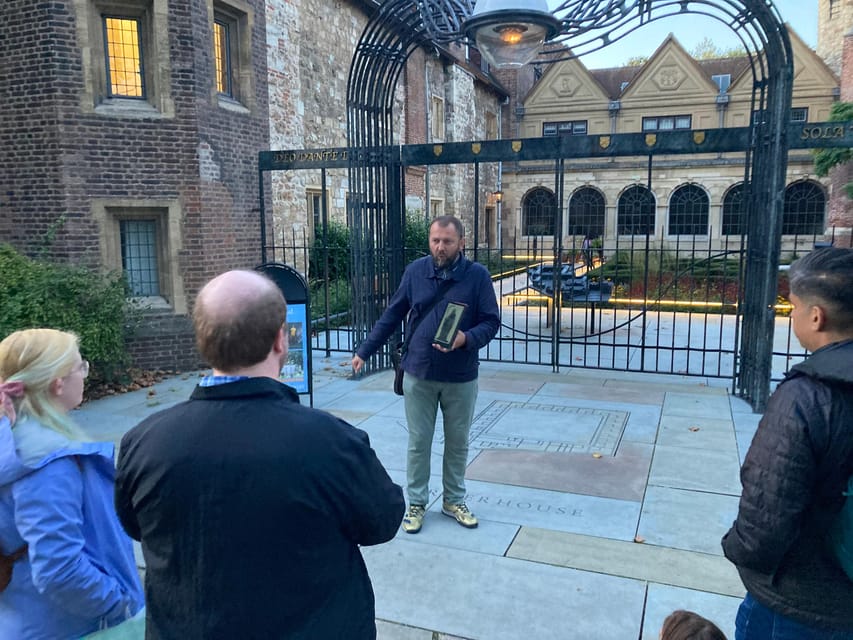
- Plague pits and old churchyards shape the route: Charterhouse Square and Holy Sepulchre Church connect disease, burial, and grave-robbery.
- The medical stories are unusually graphic: St. Bartholomew’s Hospital reveals old treatments involving things people drank, ate, or put on their bodies.
- Jack the Ripper is not the final villain: The Old Bailey introduces a killer presented as England’s worst, or most prolific, serial killer.
- The price is fair for a focused city walk: At $49 per person, you pay for a professional guide and a tightly themed two-hour route, not entry to attractions.
Why this London walk feels different after dark
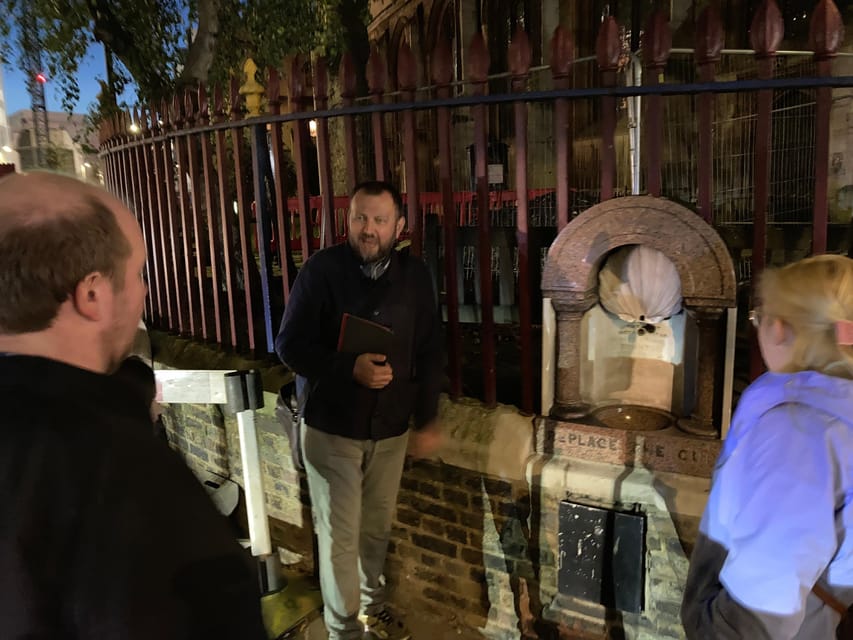
Many London walking tours focus on kings, grand buildings, and famous writers. This one follows the city’s less polished side: disease, punishment, anatomy, burial, and crime. The stories are rooted in places you can see, which gives the evening a useful structure.
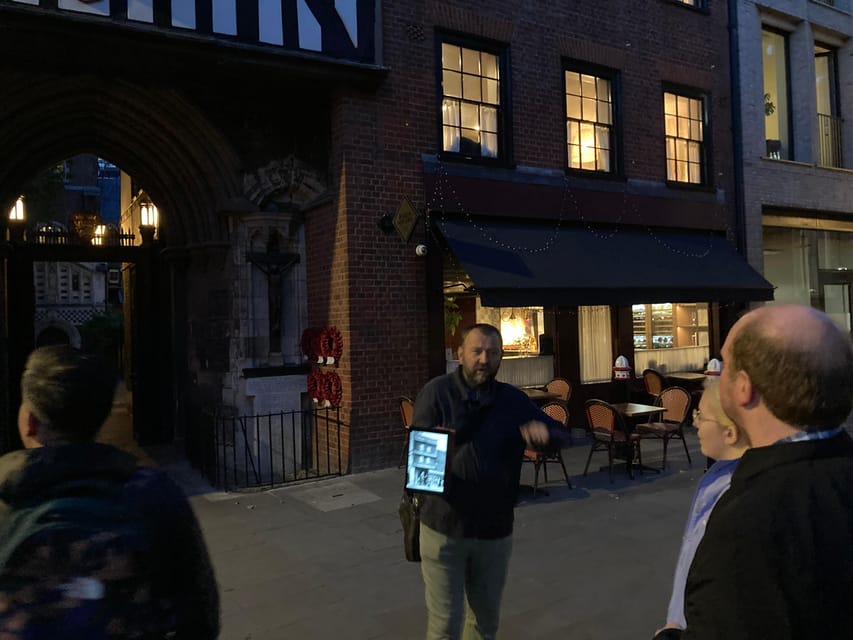
You begin outside Farringdon Underground Station at 42 Cowcross Street, meeting the guide at the main station entrance or exit between the old and new stations. That meeting point matters. Farringdon is not just a convenient transport stop. It is the first setting for one of the walk’s ghost stories.
The guide introduces the ghost of a girl said to haunt the Underground station. From there, the tour moves on foot through one of central London’s oldest quarters. You should expect frequent stops for stories and photos rather than a fast march from sight to sight.
The walk is conducted in English with a live professional guide. The guide is described as a certified storyteller and scholar, so the tone aims for more than simple campfire scares. Matt, one guide associated with the experience, receives particular praise for his storytelling, energy, and command of the subject.
More Walking Tours in London
- Magical London: Harry Potter Guided Walking Tour
★ 4.7 · 22,044 reviews - London: The Original Jack the Ripper Walking Tour
★ 4.7 · 7,833 reviews - London: Harry Potter Movies Walking Tour (Kids Go Free)
★ 4.7 · 3,071 reviews
Farringdon Station and the girl beneath London
Farringdon is a clever starting point because it puts modern London directly beside old London. Commuters enter and leave the station while you hear about a ghostly presence linked to the Underground.
The phrase mind the gap takes on a darker meaning here. Instead of treating the tube as background scenery, the guide uses it to explain how ghost stories attach themselves to familiar public spaces. You are still in a working transport hub, but the station becomes part of the evening’s eerie mood.
This opening stop also sets expectations. The tour is not built around special effects or actors. It uses a real location, a local story, and the guide’s delivery. If your group responds well to a good storyteller, the format works. If you prefer a formal museum presentation or a theatrical haunted-house show, this will feel more restrained.
Smithfield Market and centuries of public executions
Smithfield Market is one of the route’s strongest stops because it connects a familiar London place with a brutal public past. For centuries, this area was associated with executions. The people killed here included heroes, martyrs, and those who were simply caught on the wrong side of power.
Your guide explains the different ways people were tortured and put to death. The subject is grim, but it helps explain why this part of London carries so many lingering legends. Public punishment was not hidden away. It happened in front of crowds, turning death into a civic spectacle.
I like this stop because it gives the ghost stories a firm historical base. You are not asked to accept every haunting as fact. Instead, you hear how repeated suffering, public fear, and old stories became attached to the streets.
The drawback is that Smithfield is not presented as a quiet ruin. It remains part of the city. Expect an urban setting and a photo stop, not an abandoned execution ground. The contrast is part of the point, but it can soften the spooky mood for a moment.
Charterhouse Square and London’s plague pits
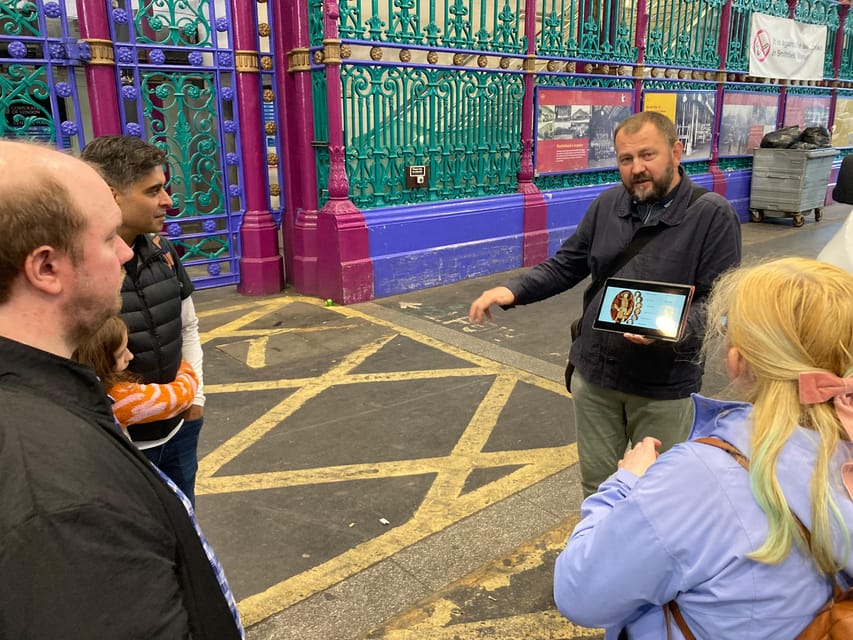
Charterhouse Square offers a calmer setting. This green space sits in the middle of the city, and the tour uses it to explain how plague changed London.
Here, you hear how deadly outbreaks were, how doctors tried to stop them, and what happened to people who survived. The subject is less about one famous ghost and more about the fear that shaped daily life. Disease changed where people lived, how they buried the dead, and how they understood illness.
The reference to plague pits gives the stop a physical weight. You are walking over ground connected with mass burial, even as modern London carries on around you. That contrast makes the story more effective than a general lecture about medieval or early modern disease.
I would pay attention to the medical details here, since they prepare you for the later stop at St. Bartholomew’s Hospital. The tour builds a chain: plague created fear, doctors tried strange remedies, and the dead later became part of the city’s medical trade.
Elsewhere in London, a change of pace:
- From London: Harry Potter Warner Bros Studio Tour
★ 4.7 · 26,588 reviews - London: Westminster to Greenwich River Thames Cruise
★ 4.5 · 22,836 reviews - London: Madame Tussauds London
★ 4.6 · 20,915 reviews - London: Warner Bros. Studio Tour with Transfers
★ 4.7 · 17,586 reviews
St. Bartholomew the Great and a haunted churchyard
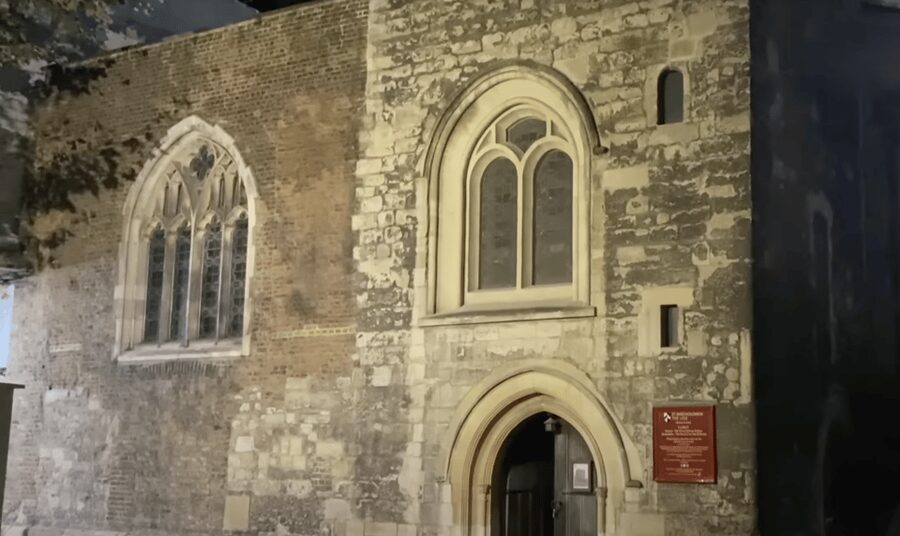
St. Bartholomew the Great has served London for about 900 years, and the tour uses both the church and its surrounding burial ground. This is one of the route’s most atmospheric locations.
You hear stories about famous burials, including one connected with the church’s founder. The exact appeal is not simply age. Tombstones, church walls, and a long record of people living and dying in the same small area give the place a strong sense of continuity.
The churchyard also supports the tour’s ghostly side. Ancient burial sites naturally invite stories about restless spirits, but the guide links those tales to documented changes in London life. You get old religious history, burial customs, and haunting lore in one stop.
The tour description identifies this as one of London’s most haunted graveyards. That should not make you expect a guaranteed supernatural encounter. The value is the setting and the storytelling, not a promise that something will appear.
The William Wallace Memorial and an older conflict
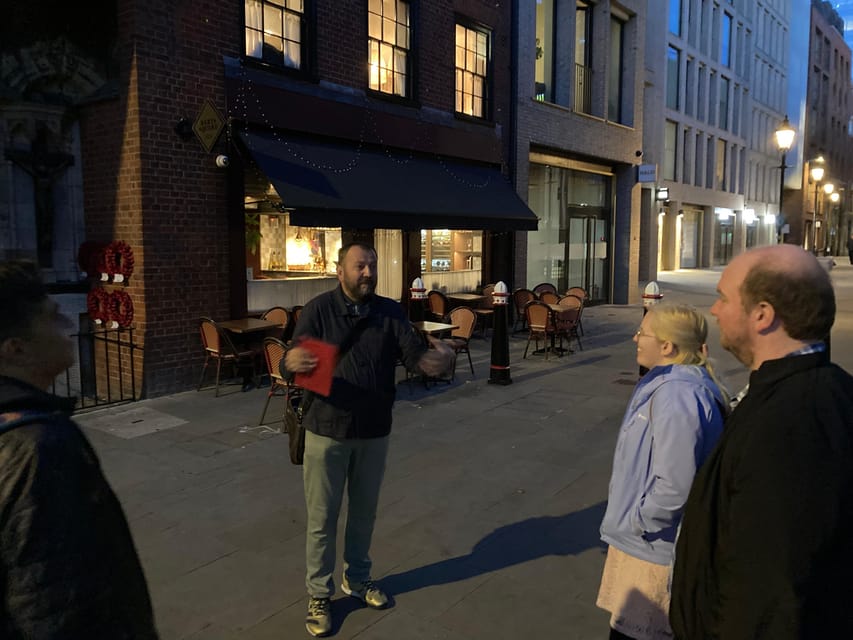
The William Wallace Memorial shifts the story away from plague and burial. Here, the guide goes back to the wars between England and Scotland and explains why this Scottish freedom fighter remains important to his people.
This stop adds political history to the evening. It also shows how the route moves through several centuries rather than sticking to one period. You go from the Underground and Victorian medicine to medieval conflict, all within a short walk.
The memorial is a photo stop, but it is more than a quick monument pause. It gives the guide a chance to show how London preserves memories of people who were executed, defeated, or remembered as heroes. The city’s macabre past is not limited to nameless victims.
If your main interest is ghosts, this is likely one of the quieter parts of the route. If you enjoy understanding why a particular statue or memorial exists, it is a worthwhile change of pace.
St. Bartholomew’s Hospital and frightening old medicine
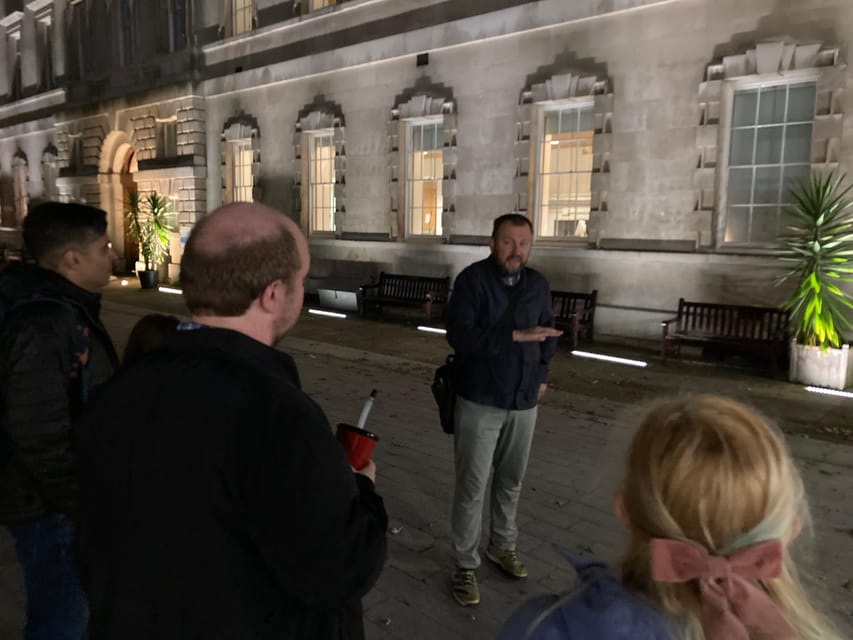
The hospital section is likely the most unusual part of the tour. St. Bartholomew’s Hospital has cared for the living and dealt with the dead for centuries, and the guide explains the medical methods, instruments, and remedies used in earlier times.
You learn what people once drank, ate, or smeared on their bodies in the hope of getting well. The stories are deliberately unpleasant, but they also show how limited medical knowledge could be. A treatment that sounds absurd now may have seemed reasonable when doctors had few reliable tools.
This is where the tour’s title earns its gruesome side. The material is not only about murder or ghosts. It is about the body, illness, surgery, and the desperate choices people made when facing disease.
I appreciate this focus because it gives you something more substantial than a list of spooky legends. You leave with a sharper sense of how London’s hospitals operated and why the dead became important to medical teaching. Still, anyone sensitive to graphic medical subjects should be prepared. One four-star assessment specifically noted a wish for more ghosts and less gruesomeness, and that is a fair warning about the balance.
Holy Sepulchre Church and the grave-robbers
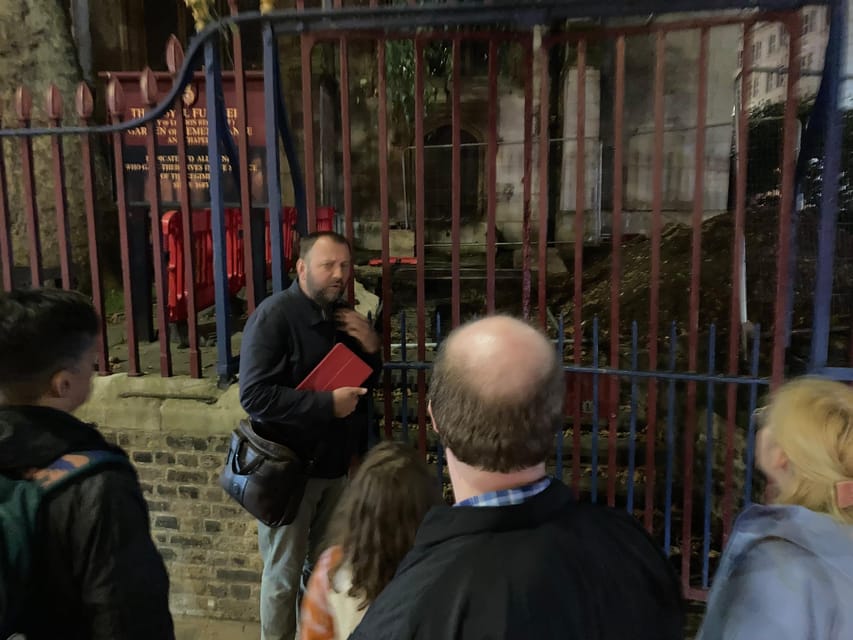
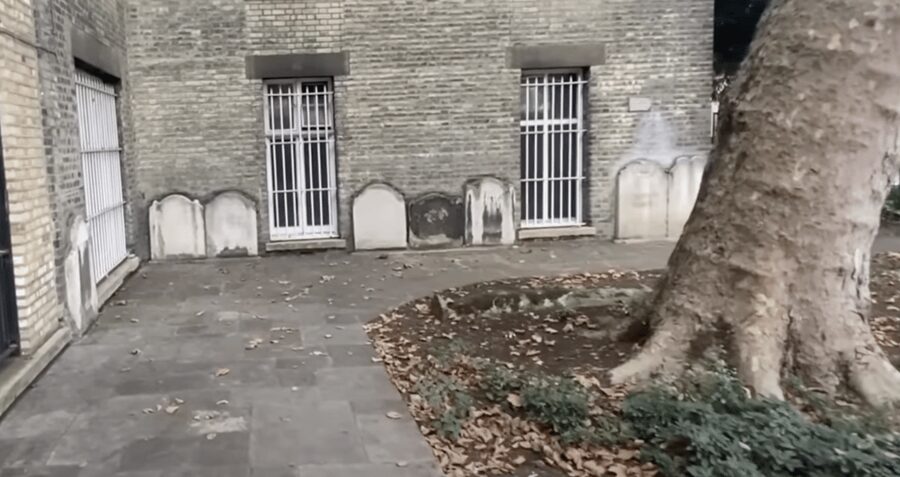
At Holy Sepulchre Church, the empty burial pits tell a particularly unsettling story. More than two centuries ago, people made money by removing bodies from graves and selling them.
The natural question is who would buy a dead body. The answer connects directly to the hospital and the medical stories you have just heard. Doctors and students needed bodies for anatomical study, while the law made legitimate access difficult. That gap created a market for grave-robbers.
The guide links the churchyard, hospital, and nearby pub into one chain of events. You see how a burial place, a medical institution, and an everyday social space could sit close together while serving very different purposes.
This stop is valuable because it explains the practical side of a macabre trade. Grave-robbery was not simply a tale of villains sneaking through fog. It grew out of demand, money, medicine, and weak legal supply. The empty pits become evidence of a system, not just a spooky prop.
The Old Bailey and the killer beyond Jack the Ripper
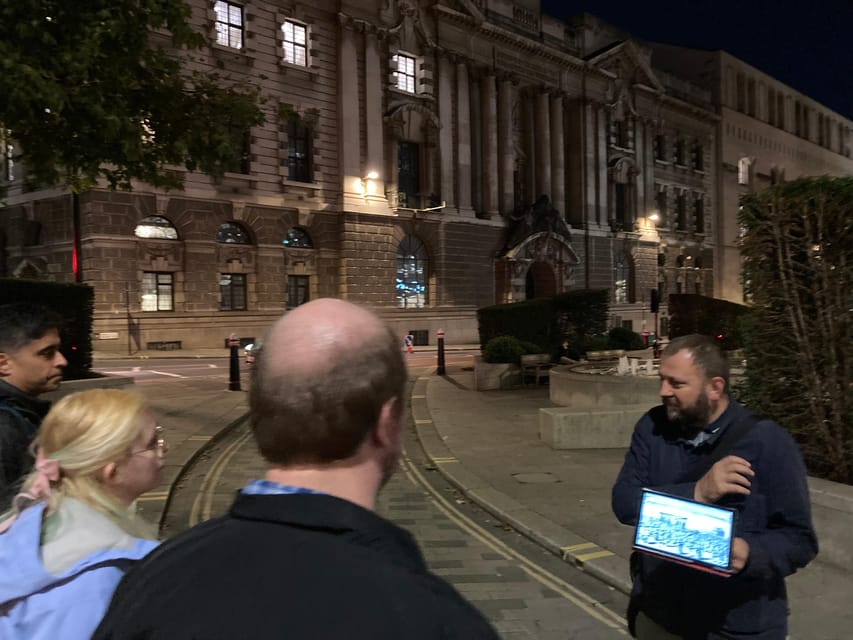
The Old Bailey provides the final major story and saves the most notorious criminal for the end. Your guide introduces the person described as England’s worst or most prolific serial killer, with an important twist: it is not Jack the Ripper.
That setup works because most people arrive with Jack the Ripper already in mind. The tour uses that familiar name as a reference point, then redirects attention to another criminal whose story is presented as even more disturbing in terms of the number of victims.
The courthouse also brings the evening back to law and punishment. You began with public executions at Smithfield and finish beside one of London’s best-known criminal courts. The route therefore moves from crime and punishment in the open air to the legal machinery that later tried to deal with serious crime.
The exact impact of this final stop depends on the guide’s delivery. With a strong storyteller such as Matt, the ending can feel like a carefully timed last chapter rather than a random fact. It is also the point most likely to appeal to true-crime fans.
How much walking and what the two hours feel like
The experience lasts two hours and is built as a walking route through central London. You should expect to remain outdoors for most of the evening, with stops for explanations and photos.
The supplied itinerary lists Farringdon Station as the start, then Smithfield Market, Charterhouse Square, St. Bartholomew the Great, the William Wallace Memorial, Holy Sepulchre Church, and the Old Bailey. It lists St. Paul’s Cathedral as the finish, while the meeting information also says the activity ends back at the meeting point. Because those details do not match perfectly, confirm the final stopping point when you book.
The tour is listed as wheelchair accessible, which is helpful, though the route still passes through city streets, churchyards, and public areas. If you have specific mobility needs, ask the operator to confirm the current path and surface conditions.
Starting times vary, so check availability for your date. The evening setting suits the subject, but darkness and cool weather can make a noticeable difference. Wear comfortable shoes and bring a layer. Those are simple choices, but they matter more on a two-hour walk than on a short indoor attraction.
Is $49 a fair price?
At $49 per person, this is not the cheapest way to hear London stories. It is also not priced like an attraction with multiple admission fees. The cost covers a professional certified guide and an escorted walk through several historic areas.
The value comes from the route and the interpretation. You see Smithfield Market, ancient churches, hospital surroundings, a memorial, a churchyard, and the Old Bailey in one focused outing. You are paying for the connections between those places: plague to burial, medicine to grave-robbery, and execution to criminal justice.
I would consider the price reasonable if you want a guide to turn ordinary streets into a themed experience. It is less appealing if you mainly want entry inside major buildings or a long list of supernatural encounters. The tour’s best material comes from its storytelling and setting, not from included admissions.
Free cancellation up to 24 hours before the activity and reserve-now, pay-later booking add flexibility. Those terms are useful when your London schedule is still shifting.
Who should book this walk?
I would choose this tour for adults and older teens who enjoy true crime, old medical practices, burial customs, ghost stories, and the less comfortable side of city history. It also suits repeat visitors who have already seen the Tower, Westminster, and the major royal sights.
The walk is a good fit if you want a guide to explain why places matter. The stops are not random spooky locations. They form a story about how London treated the sick, the dead, the condemned, and the accused.
I would think twice if you dislike graphic descriptions of illness, execution, or grave-robbery. I would also choose another tour if your main goal is a purely supernatural evening. This one gives equal weight to documented history and folklore, with the gruesome material often taking the lead.
Should you book London’s Ghosts & Gruesome Past?
Book it if you want a compact, story-led walk that reveals a side of London most standard sightseeing routes skip. The strongest reasons are the connected itinerary, the unusual medical and grave-robbery stories, and the guides’ ability to make old places feel immediate.
Do not book it expecting a haunted-house performance or constant ghost sightings. At $49, the best value comes from the guide, especially if you enjoy a lively storyteller such as Matt, and from seeing how plague, punishment, hospitals, and crime shaped the city.
If that balance sounds right, this is a smart evening choice. You may not look at Farringdon, Smithfield, or an old churchyard quite the same way afterward.
FAQ
Where does the tour start?
Meet your guide outside Farringdon Underground Station at the main station entrance or exit between the new and old stations. The listed starting address is 42 Cowcross Street.
How long does the tour last?
The walking tour lasts two hours. Starting times vary, so check availability for your chosen date.
What language is the tour in?
The live tour is conducted in English.
How much does the tour cost?
The listed price is $49 per person.
What places are included on the route?
The route includes Farringdon Station, Smithfield Market, Charterhouse Square, St. Bartholomew the Great Church, the Sir William Wallace Memorial, Holy Sepulchre Church, the Old Bailey, and St. Paul’s Cathedral as the listed finish.
Is the tour only about ghosts?
No. It includes ghost stories, but also covers public executions, plague pits, old medical practices, grave-robbery, historic churches, and serial crime.
Is Jack the Ripper the serial killer discussed?
No. The final story introduces a different person described as England’s worst or most prolific serial killer.
Is the tour wheelchair accessible?
Yes, the activity is listed as wheelchair accessible.
Can I cancel the booking?
You can cancel up to 24 hours in advance for a full refund.
Do I have to pay when I reserve?
No. The activity allows you to reserve now and pay later.
New listings around London
- London: Hampton Court Private Guided Tour★ 3.4 · 15 reviews
- London: Secrets of Freddie Mercury Tour with a Cocktail★ 4.1 · 15 reviews
- London: Jack the Ripper Tour and Underground Prison in Spanish★ 5.0 · 15 reviews
- Spanish Language : Original Harry Potter Walking Tour★ 4.5 · 15 reviews
- London: Private Couples Photography Session with Landmarks★ 5.0 · 15 reviews
- London: The Saturday Supershow Cabaret at Phoenix Arts Club★ 4.5 · 15 reviews
- London: 2-Hour Guided Tour of the British Museum★ 4.7 · 16 reviews
- London: Private Walking Tour in Spanish★ 5.0 · 16 reviews
London Tours, compared.

Westminster to Greenwich River Thames Cruise
Read our review →
Magical London: Harry Potter Guided Walking Tour
Read our review →


Warner Bros. Studio Harry Potter Tour with Transfers
Read our review →Browse the lists this tour appears in