
Reviewed · CORNWALL TOURS
Newquay: 2 hour Surf Experience – For Beginners/Improvers
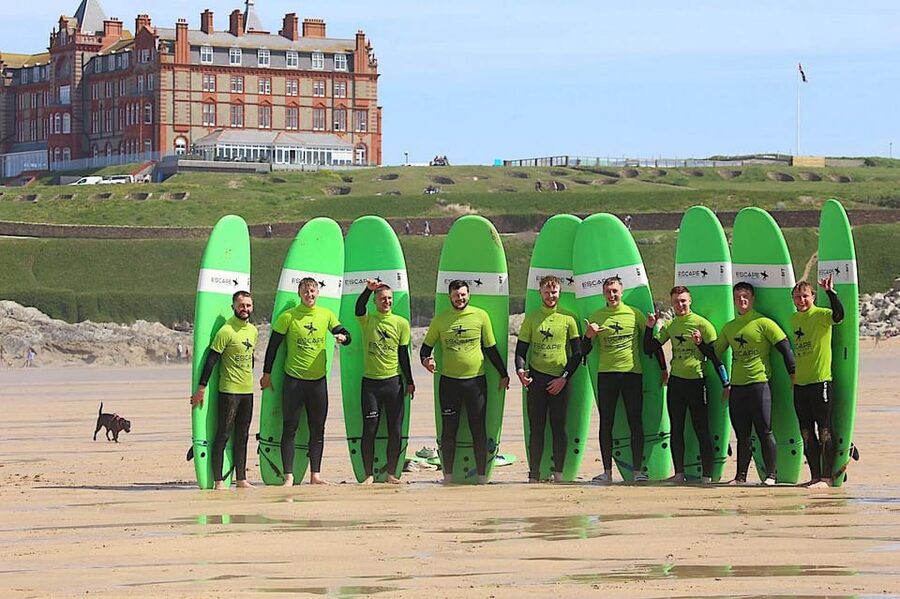
Newquay’s Escape Surf School gets you from beach briefing to actual wave riding in one focused two-hour session. The most useful touch for first-timers is the instructor holding the tail of your board as you stand, giving you a stable start instead of leaving you to wrestle with the board alone.
I like the small groups of no more than seven, which gives the coach room to offer real corrections. I also like the clear split between beginners and improvers, so you are not stuck watching advanced surfers while you still work out which way your feet go. Richard Pigeon, one of the instructors praised for his friendly coaching, has helped make the lesson both practical and fun.
The main thing to consider is the sea itself. Lesson times change with tides and conditions, and non-swimmers or people with mobility impairments cannot take part. You will need to stay flexible about the start time, especially if you book during winter.
Key points for your Newquay surf lesson
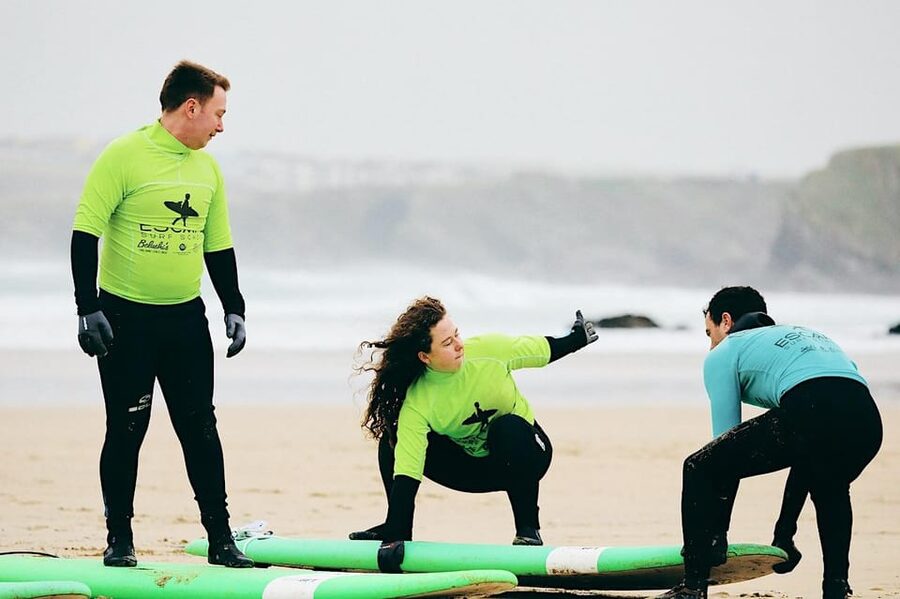
- A hands-on first stand: Your instructor can hold the board’s tail while you get to your feet, helping you find balance before riding independently.
- Separate ability groups: Complete beginners and improvers receive different coaching, with more advanced work on paddling, turning, and reading waves.
- Only seven people per group: The small class size makes individual advice more likely during the water session.
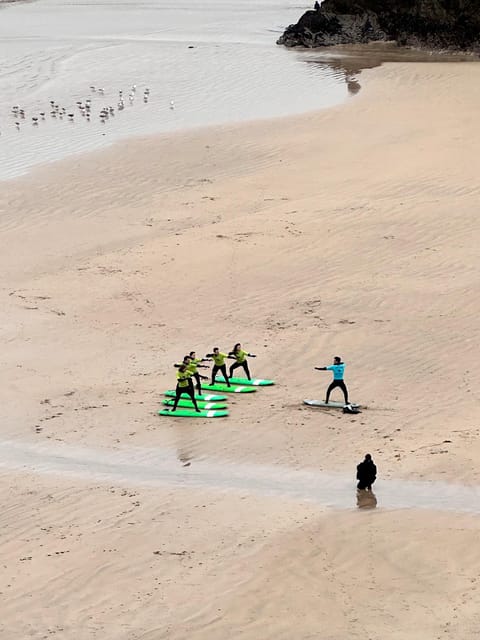
- About 20 minutes on the beach: You cover safety, technique, skills, and basic surf knowledge before entering the water.
- Winter-ready equipment: Wetsuits and boards are included, with boots, gloves, and hoods supplied in colder months.
- Useful facilities afterward: You get secure changing rooms, storage, hairdryers, hot showers, shampoo bars, and 25% off food at the on-site restaurant.
Starting beside Belushi’s in Newquay
You meet at Escape Surf School, on the sea-facing terrace beside Belushi’s Bar and Restaurant. This is a handy setup because your start and finish point are the same, and the on-site facilities are part of the experience rather than an afterthought.
Bring swimwear, a towel, and sandals. You do not need to arrange a board or wetsuit separately. The school supplies the main equipment, which keeps the cost and planning simple, especially if you are trying surfing for the first time and do not own any gear.
The class is taught in English. Group size is limited to seven, a useful number for a sport where a small correction to your stance can make the difference between standing up and sliding off the side.
Before you book, check the meeting time carefully. Surf schools work around the tide, and this one does too. You may initially select a time online, but the school will contact you to confirm the actual start time. It may shift slightly.
More two hour outings in Britain:
- Dochgarroch: Loch Ness and Caledonian Canal 2-Hour Cruise
★ 4.7 · 1,959 reviews - Loch Lomond: Island Discovery 2-Hour Cruise
★ 4.6 · 1,576 reviews - London: Ghastly Ghosts 2-Hour Walking Tour
★ 4.9 · 794 reviews
The first 20 minutes: learning on dry sand
The lesson starts on the beach, with roughly 20 minutes devoted to basic skills and safety. This may sound short, but it is enough time to cover the information you need before the board enters the water.
For a first lesson, that groundwork matters. You learn the movements needed to get from lying on the board to standing, along with the control and safety points that keep the session manageable. Surfing looks simple from shore, but the timing of the pop-up, the position of your feet, and the direction of the board all need attention.
Escape Surf School uses a helpful beginner method. As you prepare to stand, the coach holds the tail of the board. That support steadies the board while you find your feet, then the instructor lets go so you can feel the board carry you.
This method does not remove the challenge. You still have to listen, move quickly, and balance. It does give you a better chance to understand the feeling of standing on a wave rather than spending every attempt sliding off before you get upright.
I especially like this approach for a first-ever lesson or for anyone who feels nervous about being in the water. A successful first stand can turn a confusing hour into a clear, physical lesson: this is the movement, this is the balance, and this is what a ride feels like.
The main session: from instruction to wave riding
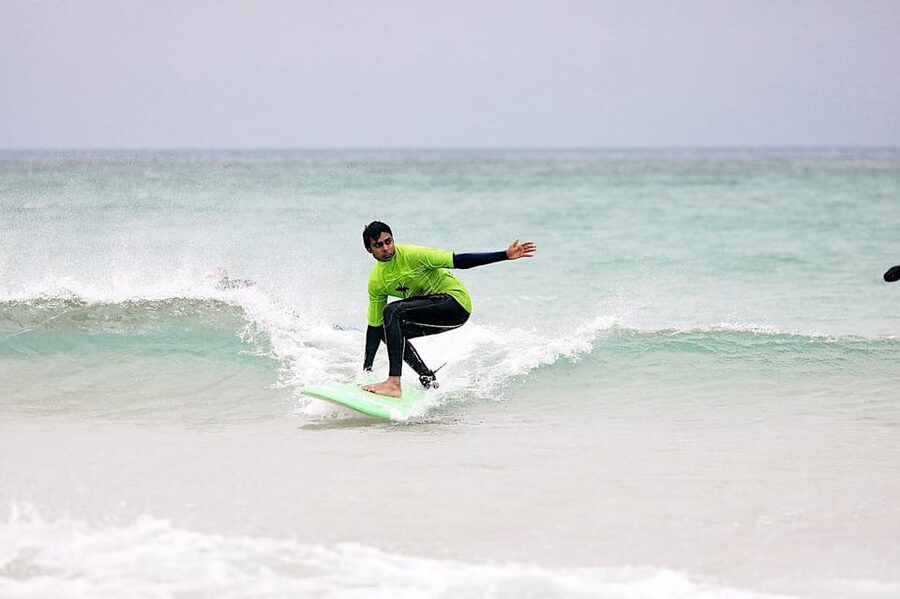
After the beach briefing, most of the two-hour session takes place in the water. Allow roughly 100 minutes for catching waves, trying the technique, and receiving hands-on coaching from the instructors.
That amount of water time is the heart of the lesson. Surfing cannot be learned from a long talk on the sand. You need repeated attempts, and the coach needs to see what happens when you paddle, stand, and ride.
For beginners, the focus is on control and safety. You work through the basic sequence, then try to repeat it as waves come toward you. The instructor can help position the board and give corrections as you go.
You should expect a mixture of successful rides, near misses, and attempts where your timing is not quite right. That is normal for a first session. The useful part is getting enough turns to see what changes when you adjust your stance or movement.
One family booking produced a particularly clear result: a mother and daughter were both standing and surfing by the end of the lesson. That does not mean every participant will have the same result, since sea conditions and individual confidence vary, but it shows what the teaching format is designed to achieve.
The water time also builds a sense of progress. Richard Pigeon has been praised for helping participants improve steadily across the two hours, offering advice on what to change rather than simply cheering from the beach. That kind of feedback is valuable because you can apply it on the next wave, while the mistake is still fresh.
Improver coaching: more than just standing up
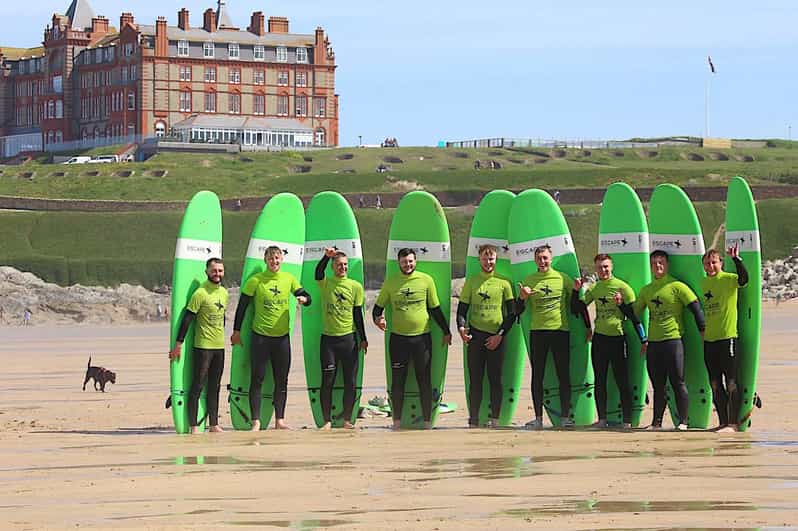
If you have surfed a few times before, you will be placed in an improver group rather than starting again with complete beginners. This is an important detail when you are booking with a mixed-ability family or group of friends.
The improver session can focus on paddling, turning, and reading the ocean. Those skills take you beyond the first goal of standing up. You begin to think about choosing a wave, getting into the right position, and directing the board once you are riding.
Paddling is not just a way to reach the beach. It affects your timing and your ability to catch a wave. Turning helps you control where the board goes. Reading the ocean helps you understand which waves are suitable and when to make your move.
You should not expect an advanced coaching clinic in two hours. The lesson is aimed at beginners and intermediate surfers, so the instruction remains accessible. Still, an improver who has had a few uneven sessions can get useful help by having an instructor watch the details closely.
The small class size works particularly well here. With no more than seven people, the coach has a better chance to see how you paddle and stand, then offer one clear adjustment. That is more useful than receiving a long list of technical points all at once.
A handful of other Britain outings to weigh up
- Penzance: Land’s End Boat Tour with Wildlife Guides
★ 5.0 · 127 reviews - Falmouth: Vibrant Historical Walking Tour (award-winning)
★ 4.9 · 75 reviews - Newquay: Coasteering
★ 4.9 · 21 reviews - Newquay: Paddleboarding Lesson & Tour
★ 5.0 · 3 reviews
Why the small group matters
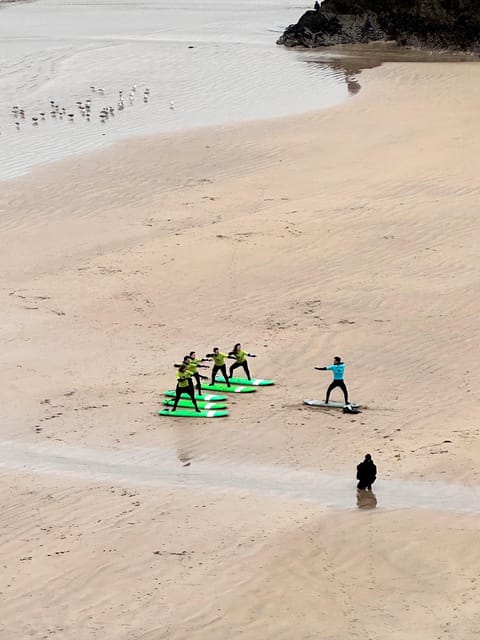
A maximum of seven people is one of the strongest practical features of this experience. Surf lessons are active, and everyone needs time with a board, space in the water, and a chance to ask questions.
A large class can leave you waiting while other people take their turns. This format limits that problem. It cannot guarantee that every wave works for every person, but it gives the instructor fewer surfers to manage.
The group is also split by ability. Beginners can concentrate on the first stand and safe board control. Improvers can spend more time on paddling, turns, and wave choice.
That split makes the lesson a better fit for families or friends who do not have the same level of experience. You may not receive identical coaching, but you should receive instruction that matches your starting point.
The presence of ex-professional surfers as head instructors adds further experience to the school’s coaching team. The lesson is not only about handing out equipment and sending you into the sea. The stated focus is active coaching, with instructors working beside you in the water.
Equipment, showers, and the useful extras
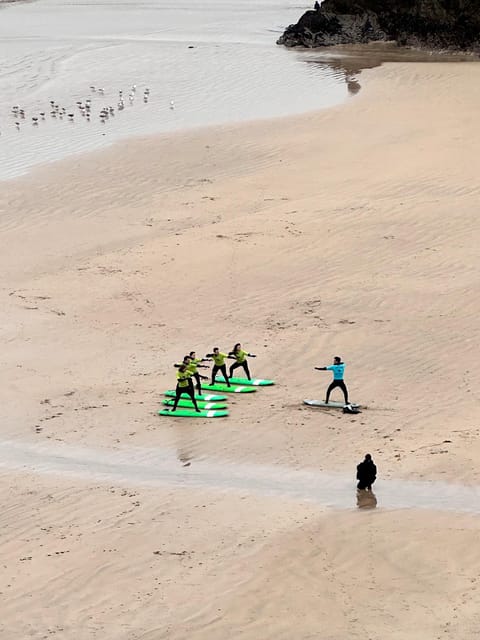
The $60.61 price includes the surfboard and wetsuit. In winter, boots, gloves, and a hood are included as well. That is good value if you are new to surfing because buying or hiring each item separately can make a short lesson more expensive and less convenient.
You should still bring your own swimwear, towel, and sandals. The school provides the equipment needed for the lesson, but the personal items remain your responsibility.
The changing setup is better than the bare minimum. Secure changing rooms give you a place to change, storage helps protect your belongings, and hairdryers are available for after the session. Hot showers and eco-friendly shampoo bars are included, which will be welcome after time in cold seawater.
There is also a water station for refilling bottles. That is a small detail, but it helps you avoid relying on single-use bottles during a physical activity.
After the lesson, surfers receive 25% off food at the on-site restaurant. This discount does not make the meal free, and food is not included in the lesson price, but it can make the venue more useful as a place to warm up and recover.
Photos are not included. A freelance photographer is available for a separate fee, so ask about the photo option if you want a record of your first ride. Otherwise, plan on enjoying the moment without assuming pictures are part of the package.
Timing, tides, and the season
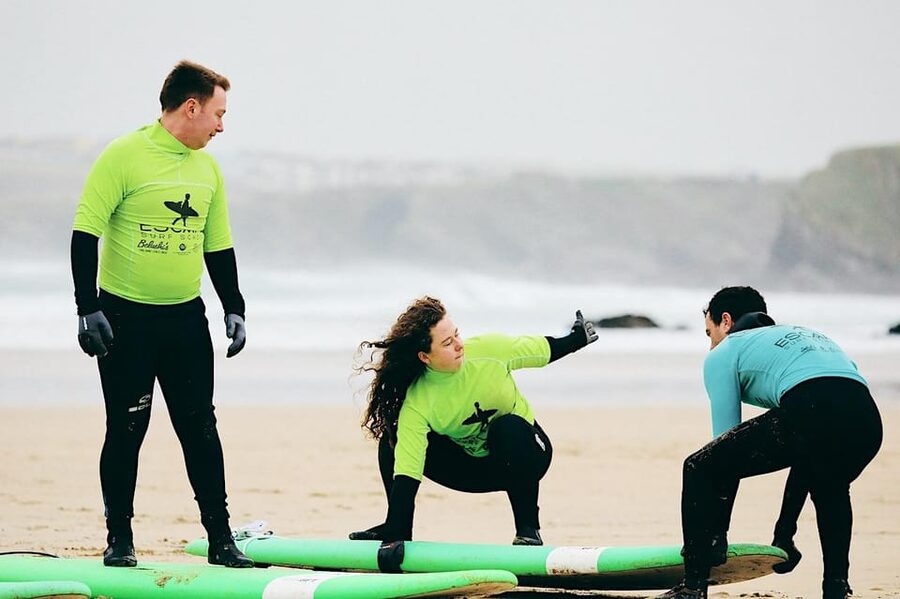
The school runs morning and afternoon lessons during spring and summer. In winter, it runs one lesson per day. The schedule is set around tide times and sea conditions, so you do not have complete control over the exact start time.
This is not a weakness unique to this school. Surfing depends on the ocean, and a fixed appointment can be less useful than a lesson timed for suitable conditions. Still, you should avoid booking this activity if your Newquay plans leave no room for a schedule change.
Once you book, the school confirms the start time with you. It may be slightly different from the time you first selected. Keep your phone available and allow flexibility around the lesson.
The two-hour duration is long enough to offer more than a quick introduction, but not so long that a first-time surfer is likely to become exhausted before the session ends. Surfing takes effort, particularly when paddling and repeatedly getting back onto the board.
Winter brings extra equipment, including boots, gloves, and a hood. Even so, you should come prepared with a towel and warm clothes for afterward. The hot showers help, but you will still want something dry and comfortable once you have changed.
Who should book this experience?
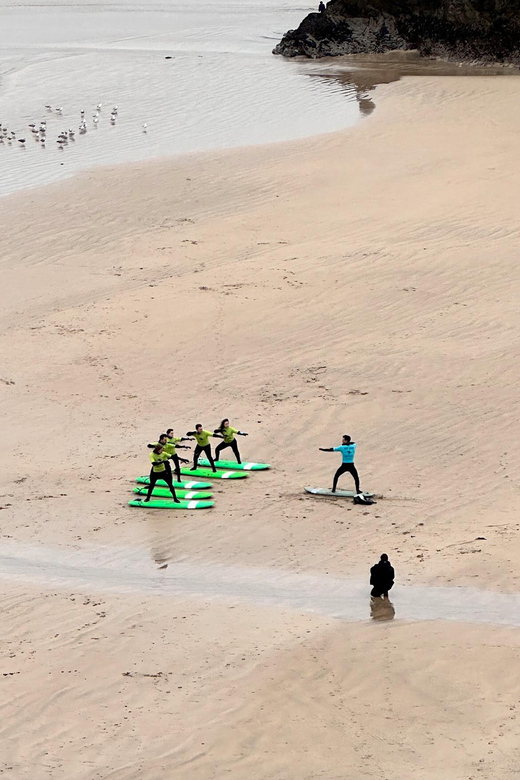
This lesson is best for a first-time surfer who wants proper instruction rather than simply hiring a board. The beach briefing, board support, equipment, and small group give you a clear introduction without requiring previous knowledge.
It also suits someone who has surfed a few times and wants help with the next stage. The improver group allows you to work on paddling, turning, and reading waves instead of repeating only the most basic standing exercise.
Families can also find it useful, though the general activity is not suitable for non-swimmers or people with mobility impairments. During school holidays, the provider runs children-only sessions for ages 8 to 13, giving children a chance to surf with others in their age range and make friends.
The activity is less suitable for someone who needs a guaranteed schedule or a dry, low-effort outing. The lesson is in the ocean, the start time may change, and surfing requires physical effort. You also need to be comfortable following instructions in the water.
Is $60.61 good value?
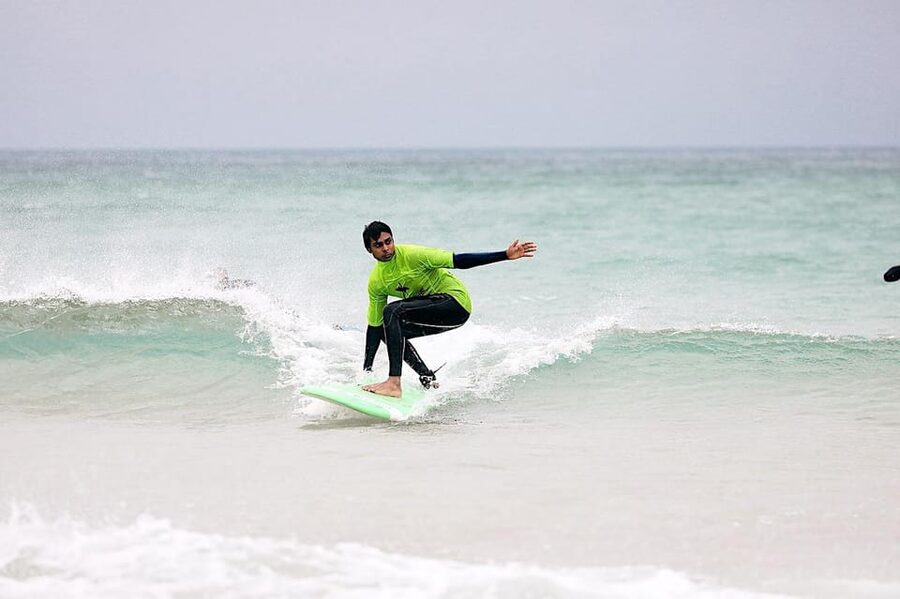
At $60.61 per person, the price covers two hours, a surfboard, a wetsuit, coaching, and use of the school’s changing and shower facilities. Winter equipment is included when needed, and the restaurant discount adds a practical extra.
The value comes mainly from the water time and the small group. A cheap lesson with little time in the sea would not offer much help, while a larger class might limit personal advice. Here, around 20 minutes is spent on the beach and the rest of the session on practical coaching.
You should factor in the separate cost of photos if you want them. Food at the restaurant is also extra, though the 25% discount applies to surfers.
For a beginner, the package removes several common barriers. You do not need to own equipment, work out which board to hire, or find a place to shower afterward. You pay for an organized lesson with an instructor who can help you through the first difficult attempts.
The final call
Book this Newquay surf experience if you want a structured first lesson, a small group, and a real chance to stand on a board during the session. It is also a sound choice for improvers who want coaching on paddling, turning, and reading waves.
The best reasons to choose it are the hands-on beginner method, the ability split, the experienced coaching team, and the useful facilities at the end. Richard Pigeon’s friendly, practical style has made a strong impression, and the format gives you repeated chances to improve.
Skip it if you cannot swim, have mobility limits, or need a fixed start time. For everyone else, leave room in your Newquay schedule, bring a towel and sandals, and be ready for a wet, tiring, satisfying two hours.
FAQ
How long is the surf experience?
The lesson lasts two hours. About 20 minutes is spent on the beach discussing safety, technique, and skills, with the remaining time spent in the ocean.
Where does the lesson start?
It starts at Escape Surf School, on the sea-facing terrace at the same premises as Belushi’s Bar and Restaurant in Newquay.
Where does the activity finish?
The lesson ends back at the original meeting point.
Is equipment included?
Yes. A surfboard and wetsuit are included. Boots, gloves, and a hood are also provided during the winter months.
What should I bring?
Bring swimwear, a towel, and sandals.
Are lesson times fixed?
No. Lesson times vary with tides and sea conditions. Morning and afternoon sessions operate in spring and summer, while winter has one lesson per day. The school confirms the final start time after booking.
Is this suitable for beginners?
Yes. The lesson is designed for beginners and improvers. Beginners learn the basic skills needed to surf with control and safety, including a method where the instructor holds the board’s tail while they stand.
Can improvers receive different coaching?
Yes. Groups are split by ability. Improvers can work on paddling, turning, and reading the ocean.
Is the activity suitable for children?
Children aged 8 to 13 can join kids-only lessons during school holidays. The general activity is not suitable for non-swimmers or people with mobility impairments.
New listings around Britain
- London: Secrets of Freddie Mercury Tour with a Cocktail★ 4.1 · 15 reviews
- London: Hampton Court Private Guided Tour★ 3.4 · 15 reviews
- Edinburgh: Isle of Skye, Highlands & Jacobite Steam Train★ 4.6 · 15 reviews
- London: Jack the Ripper Tour and Underground Prison in Spanish★ 5.0 · 15 reviews
- Spanish Language : Original Harry Potter Walking Tour★ 4.5 · 15 reviews
- THE HANGOVER BRUNCH | Benidorm Bingo & Drag Queens★ 4.5 · 15 reviews
- London: Private Couples Photography Session with Landmarks★ 5.0 · 15 reviews
- London: The Saturday Supershow Cabaret at Phoenix Arts Club★ 4.5 · 15 reviews
Cornwall Tours, compared.



Browse the lists this tour appears in