Reviewed · TICKETS
Portsmouth: The D-Day Story Entry Ticket
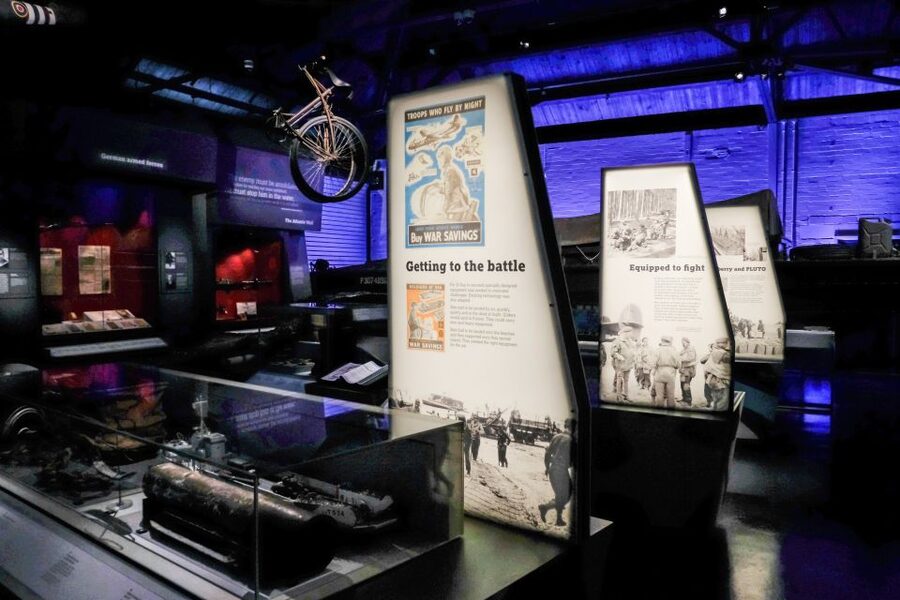
The most powerful part of Portsmouth’s D-Day Story is its focus. This is not a general Second World War museum. It follows the Allied invasion of 6 June 1944, from secret planning and deception to the landing itself and its human cost. The visit also includes the LCT 7074, the last surviving landing craft tank used on D-Day.
I like the mix of personal stories and physical objects, especially the veteran films and the huge collection of more than 10,000 artifacts and personal possessions. I also like that you can walk aboard a real landing craft and see Sherman and Churchill tanks packed inside it, an experience that makes the scale and danger of the crossing easier to grasp.
The main consideration is time. Two hours can feel rushed, and three hours is a more sensible minimum if you want to listen to the films, read the displays, examine the Overlord Embroidery, and visit the landing craft without hurrying. Some display cases may feel repetitive, and the embroidery room is kept quite dim.
Key points to know before you go
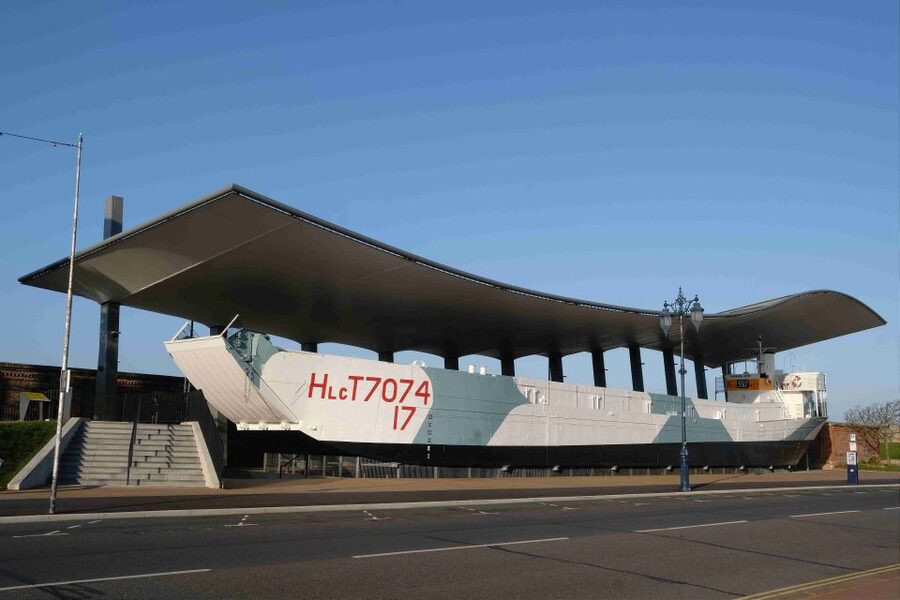
- Walk aboard LCT 7074: See the last surviving landing craft tank from D-Day, with Sherman and Churchill tanks inside.
- Follow the invasion in three parts: The museum covers personal experiences, military planning, and the events of 6 June 1944.
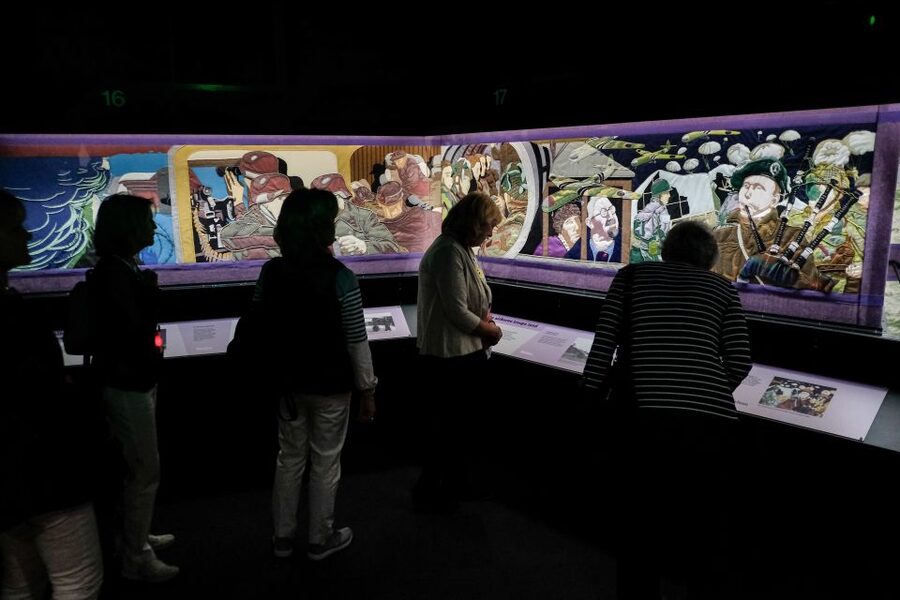
- See the Overlord Embroidery: Thirty-four hand-stitched panels tell the story of D-Day and the Battle of Normandy.
- Allow two to three hours: You can move through quickly, but the films, audio material, and detailed displays reward extra time.
- Use the free audio guide: It adds useful background and helps you make sense of the exhibits.
- Plan around seasonal closing times: LCT entry ends earlier than gallery entry, especially from October through March.
Portsmouth’s D-Day museum tells one story well
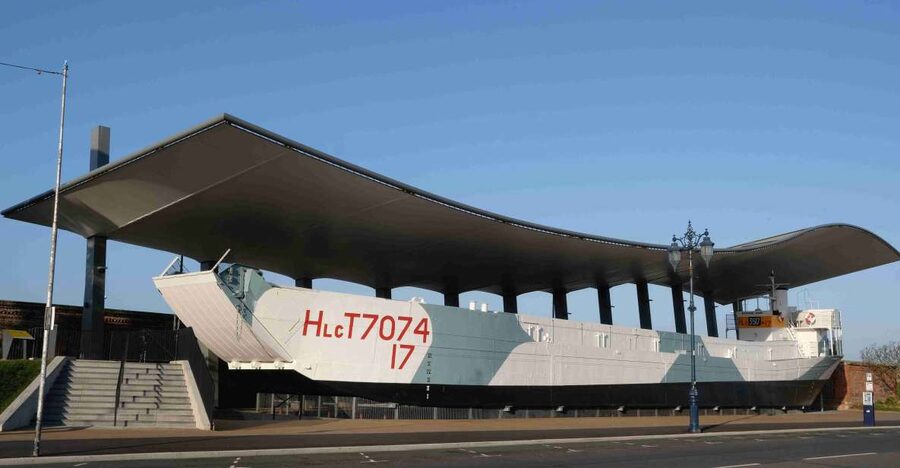
The D-Day Story sits on Clarence Esplanade in Southsea, Portsmouth. Its setting matters. Portsmouth was one of the major British bases connected with the preparations for the Normandy landings, so this is a fitting place to examine the invasion before visiting the beaches themselves.
The museum is built around three connected parts. You begin with the human story and the objects left behind, move into the planning and execution of the invasion, and finish with the Overlord Embroidery. The LCT 7074 is also part of the visit, giving you a chance to step out of the gallery and onto a real military vessel.
I find the museum strongest when it connects large military decisions to ordinary lives. Maps and dates explain the operation, but personal possessions, filmed memories, and accounts from civilians show what those decisions meant to the people who carried them out or waited at home.
This balance also makes the museum useful for families and school-age children, though very young children may not get much from the material. The subject is serious, and much of the value comes from reading, listening, and taking time with the displays.
A handful of other Britain outings to weigh up
- London: The London Eye Entry Ticket
★ 4.6 · 35,875 reviews - London: Tower Bridge Entry Ticket
★ 4.7 · 15,560 reviews - London: Westminster Abbey Entrance Ticket
★ 4.6 · 11,254 reviews
Start with the people behind the invasion
The opening displays introduce D-Day through the men, women, and children who experienced it. You will encounter personal accounts, photographs, objects, and possessions from the people involved in the invasion and those affected by the war.
This approach avoids presenting D-Day as only a sequence of troop movements. You get a sense of the nerves, confusion, hard work, and waiting that surrounded the operation. The stories also help explain the role of people away from the front line, including planners, support workers, families, and members of the French Resistance.
The museum’s collection includes more than 10,000 objects. You will not study every item in one visit, but the range gives the galleries plenty of texture. Some cases contain equipment and military objects. Others bring the subject closer through private belongings and firsthand accounts.
I recommend using the free audio guide if it is available during your visit. It adds information beyond the labels and can help you follow the museum’s intended sequence. Several films feature veterans speaking about their experiences, and these clips are among the most affecting parts of the visit.
Give yourself time to watch them. It is easy to walk past a screen while concentrating on the next display, but the personal testimony changes the pace of the visit and gives emotional weight to the objects around it.
Understand The Plan before seeing the landing
A major strength of the museum is its attention to the preparation for D-Day. The invasion was not simply a matter of sending troops across the English Channel. Commanders had to decide when and where to cross, coordinate huge numbers of people and vehicles, and keep the operation secret.
The section on The Plan explains how these decisions were made. It also covers the deception needed to mislead German forces about the invasion’s location and timing. This is valuable because it shows why D-Day depended on planning and misdirection as much as courage under fire.
You can also see how many different groups had to work together. Military leaders made the broad decisions, but success required sailors, soldiers, engineers, vehicle crews, communications staff, and civilians supporting the effort. The displays help connect these pieces without turning the visit into a dry military briefing.
I especially like this part for visitors who already know the basic outline of D-Day. The invasion itself is familiar from films and textbooks, but the weeks and months of preparation are less often explained in such clear terms. If you are new to the subject, the planning section gives you the background needed to understand the displays that follow.
The amount of written information can feel heavy at times. If you read every label, watch every film, and stop at each numbered object, you will need more than two hours. That is not a flaw, but it is worth planning for.
Step aboard the LCT 7074
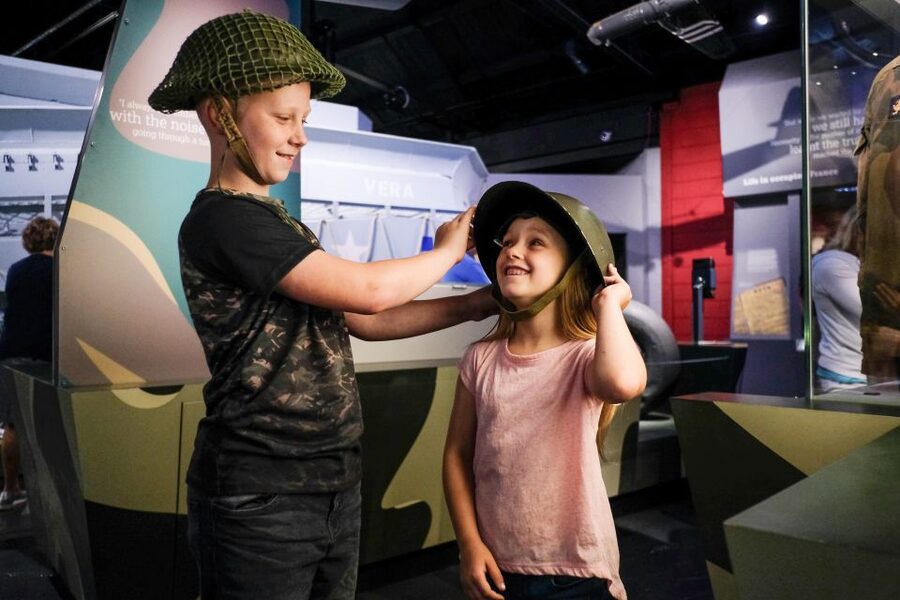
The LCT 7074 is the visit’s most immediate physical experience. LCT means landing craft tank, a vessel designed to carry armored vehicles across the Channel and land them close to shore. This particular craft carried ten tanks to Normandy on D-Day.
Inside, you can see Sherman and Churchill tanks arranged to show what an LCT loaded with vehicles would have looked like. The sight is striking because the space feels practical rather than comfortable. The tanks occupy the vessel’s working area, leaving you to imagine the noise, crowding, movement, and uncertainty of a crossing under wartime conditions.
A visit to the craft adds something that display cases cannot. You are not just looking at a tank or reading about landing craft. You are standing inside the kind of vessel that carried men and machines toward the Normandy beaches.
Volunteer staff on board have been particularly helpful during visits, explaining how the craft worked and answering questions about the sailors who served there. Their explanations can make the vessel easier to understand, especially if you are unfamiliar with naval equipment.
The LCT is also the part of the visit most affected by timing. From April through September, last entry on board is at 4pm. From October through March, last entry is at 3:30pm. Gallery entry continues later, but arriving late could mean seeing the museum and missing the craft.
Elsewhere in Britain, a change of pace:
- From London: Harry Potter Warner Bros Studio Tour
★ 4.7 · 26,588 reviews - London: Westminster to Greenwich River Thames Cruise
★ 4.5 · 22,836 reviews - Magical London: Harry Potter Guided Walking Tour
★ 4.7 · 22,044 reviews - London: Madame Tussauds London
★ 4.6 · 20,915 reviews
Finish with the Overlord Embroidery

The Overlord Embroidery is displayed in 34 hand-stitched panels. It tells the story of D-Day and the Battle of Normandy, from the buildup to the invasion through the fighting that followed.
The work is large and detailed, and it provides a visual ending to the visit. Instead of focusing only on weapons, vehicles, and commanders, it presents the invasion as a sequence of human events. Look closely at the scenes and you will find that the panels reward patience more than a quick glance.
The room is kept at low light, which protects the work but can make some details harder to see. If you have difficulty reading in dim conditions, take your time and avoid treating this as a final item to rush through before closing.
Some visitors find the embroidery the most memorable section of the museum. I can understand why. After the maps, vehicles, cases, and filmed testimony, these panels bring the whole story together in a single visual account.
Do not mistake the work for a simple decorative display. It was commissioned to remember the people who took part in D-Day, and its scale makes it an appropriate final chapter for a museum devoted to an operation involving so many individuals.
How long should you spend inside?
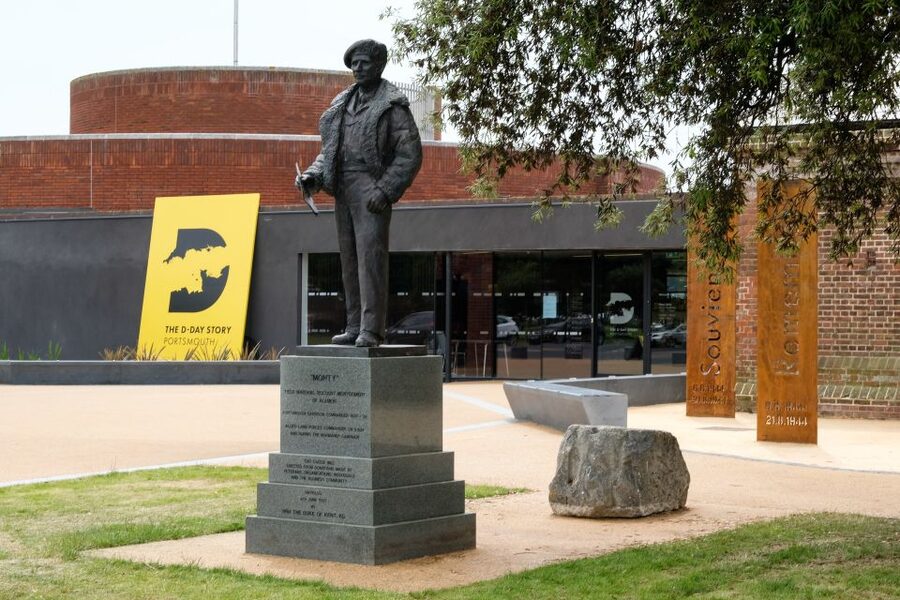
The official ticket is valid for one day, so you are not forced into a short timed visit. In practical terms, plan on two to three hours.
Two hours may be enough if you read selectively and move at a steady pace. It is unlikely to be enough if you want to watch the veteran films, use the audio guide, study the planning displays, inspect the tanks, and spend time with the Overlord Embroidery.
I would allow closer to three hours for a first visit. The museum is more detailed than its modest size may suggest, and several people have found that they needed longer than expected. The main risk is not boredom. It is reaching the last section and realizing you have too little time to appreciate it.
The museum is open from 10am to 5:30pm from 1 April through 30 September. From 1 October through 31 March, it is open from 10am to 5pm. Gallery last entry is 4:30pm in the warmer months and 4pm in the colder months.
Arrive earlier if you want the most relaxed experience. If you are visiting Portsmouth as part of a packed sightseeing day, protect at least two and a half hours rather than treating the museum as a quick stop.
Is the $19 admission good value?
At about $19 per person, the ticket offers solid value for a specialist museum. Admission includes the galleries, the Overlord Embroidery, and access to LCT 7074. You are paying for a focused historical visit rather than a short exhibit that takes half an hour to complete.
The value improves if you care about military history, family history, or the planning behind major events. It is also a useful stop before a Normandy trip because it gives you a clearer idea of what the invasion required and what the landing craft and armored vehicles were designed to do.
You may find the price less appealing if you prefer museums with many large objects or a broad collection of vehicles. One criticism is that the galleries rely heavily on display cases, text, film, and interactive material. The LCT and tanks provide the largest physical displays, while much of the rest is smaller personal and military material.
For me, that focus is part of the point. The museum is not trying to recreate a complete wartime arsenal. It tells one operation through evidence, memory, and planning. If that subject interests you, the admission fee is reasonable.
Free cancellation up to 24 hours before the visit and a reserve-now, pay-later option also make the ticket useful when your Portsmouth plans are still changing.
Practical details at Southsea
The meeting point is The D-Day Story, Clarence Esplanade, Southsea, Portsmouth PO5 3NT. The site is wheelchair accessible.
There is a cafe for a drink or meal and a gift shop with books and other Second World War material. Parking is available directly outside, and it has been described as inexpensive, which helps if you are driving to the museum.
The building can feel cold, particularly in the colder months, so bring an extra layer even if you plan to spend most of your time indoors. This is a small practical point, but it matters when you are standing still to watch films or read long panels.
Staff are friendly and ready to help with questions. The volunteer guides aboard the landing craft can add useful context, so do not rush away if someone is explaining the vessel.
Photography rules and other current visiting details can change, so check the museum’s own website before setting out. The key timing point remains the earlier closing of the LCT compared with the galleries.
Who will get the most from this visit?
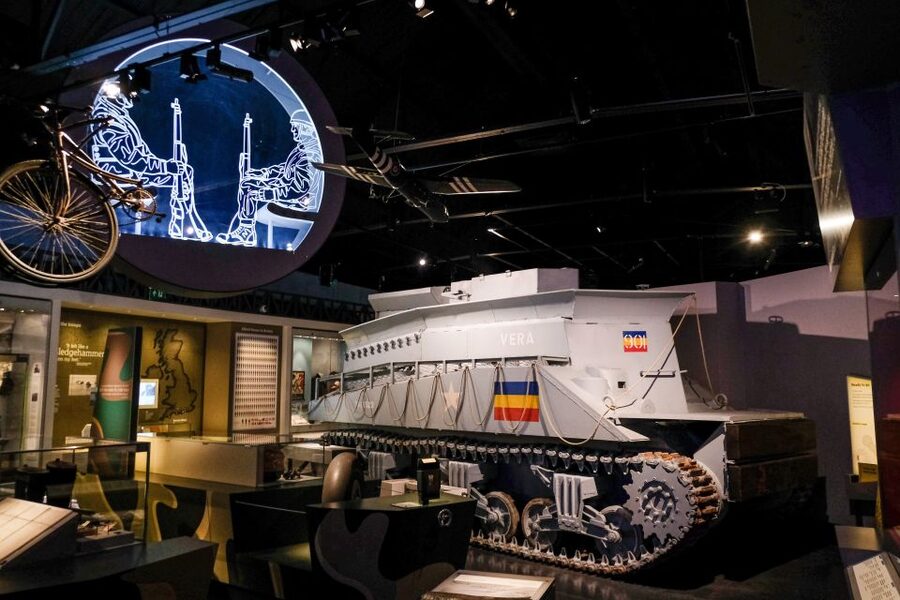
I would recommend The D-Day Story to anyone with an interest in the Second World War, military planning, naval history, or personal wartime stories. It also works well for families with older children who can engage with serious subject matter and extended reading.
It suits visitors who want context before visiting Normandy. Portsmouth’s museum does not replace seeing the beaches, but it can help you understand the people, equipment, decisions, and secrecy behind the landings.
You should allow extra time if you are researching a relative who served during the invasion. The personal possessions and recorded memories may give you a more human starting point than a purely military museum.
Very young children may struggle with the amount of text and the sombre subject. The visit is educational and accessible, but it is not designed mainly as a hands-on attraction for small children.
I would also be cautious about visiting if you have only one hour before another booking. You can see the main sections, but you will miss much of what makes the museum worthwhile.
Should you book The D-Day Story?
Book it if you want a focused, carefully presented account of D-Day, especially one that combines military planning with personal testimony. The LCT 7074 and its Sherman and Churchill tanks give the visit a strong physical centre, while the veteran films and Overlord Embroidery add feeling and perspective.
Allow three hours, arrive early enough to board the landing craft before its earlier last entry, and use the audio guide if available. Bring a coat in winter and do not leave the embroidery until the final few rushed minutes.
Skip it only if your Portsmouth schedule is too tight for at least two hours or if you are looking mainly for a large collection of vehicles. For everyone else, the $19 ticket is a sensible way to understand what D-Day demanded from the people who planned, fought, supported, and endured it.
FAQ
Where is The D-Day Story located?
The museum is at Clarence Esplanade, Southsea, Portsmouth PO5 3NT, in South East England.
What does the admission ticket include?
The ticket includes admission to The D-Day Story, including the museum galleries, the Overlord Embroidery, and access on board the LCT 7074.
How long is the ticket valid?
The admission ticket is valid for one day.
What are the museum opening hours?
From 1 April through 30 September, the museum is open from 10am to 5:30pm. From 1 October through 31 March, it is open from 10am to 5pm.
When is the last entry to the landing craft?
From April through September, the last entry to LCT 7074 is 4pm. From October through March, the last entry is 3:30pm.
Is the museum wheelchair accessible?
Yes. The activity information states that The D-Day Story is wheelchair accessible.
Can I cancel my booking?
Yes. You can cancel up to 24 hours in advance for a full refund. A reserve-now, pay-later option is also available.
New listings around Britain
- Brighton Delicious Donut Adventure by Underground Donut Tour★ 5.0 · 14 reviews
- From Cambridge: Guided Day Tour to Bath and Stonehenge★ 4.8 · 14 reviews
- From Southampton: Stonehenge & Salisbury Private Day Trip★ 4.9 · 14 reviews
- Edinburgh: Stirling, Whisky & St Andrews Tour in Italian★ 3.9 · 14 reviews
- Blackpool: Viva Decades Rewind Show Ticket★ 3.9 · 14 reviews
- Royal Horticultural Society: Harlow Carr Garden Ticket★ 4.7 · 14 reviews
- London: GoBoat Rental in Canary Wharf with London Docklands★ 4.2 · 14 reviews
- London Royal Tour – Buckingham Palace Entry – 12 guests 2,5h★ 4.9 · 14 reviews
Tickets, compared.





Buckingham Palace: The State Rooms Entrance Ticket
Read our review →