
Reviewed · SALISBURY & STONEHENGE TOURS
Salisbury: Old Sarum Entry Ticket
Old Sarum tells a striking story from the top of a grassy hill: an Iron Age stronghold became a Roman and Saxon site, then a Norman power base with a castle and cathedral. Today, you walk through foundations and earthworks, but the setting helps you picture a town that once carried real political and religious weight.
I like the wide views toward Salisbury Cathedral and the clear information signs, which help turn scattered stones into a readable story. I also like the simple ticket arrangement: $13 covers a group of up to four, and entry is valid for one day.
The main drawback is that much of Old Sarum survives as outlines, foundations, and banks rather than complete buildings. If you expect rooms you can enter or a long guided tour, the visit may feel brief for the price.
Key points to know before visiting
- Iron Age beginnings: Old Sarum’s massive earthworks began as a fortified settlement more than 2,000 years ago.
- Two cathedral sites: You can see the footprint of Salisbury’s original cathedral and learn how the first and second cathedrals shaped the site.
- Royal castle remains: The castle on the central mound reflects Old Sarum’s importance under William the Conqueror and later medieval rulers.
- Best view: The ramparts look across the Wiltshire plains toward Salisbury Cathedral.
- Self-guided format: Informative signage carries much of the explanation, with no named guide or guided commentary included.
- Uneven walking: Comfortable shoes and weather-ready clothing matter, even though the site is wheelchair accessible.
Why Old Sarum is more than a pile of stones
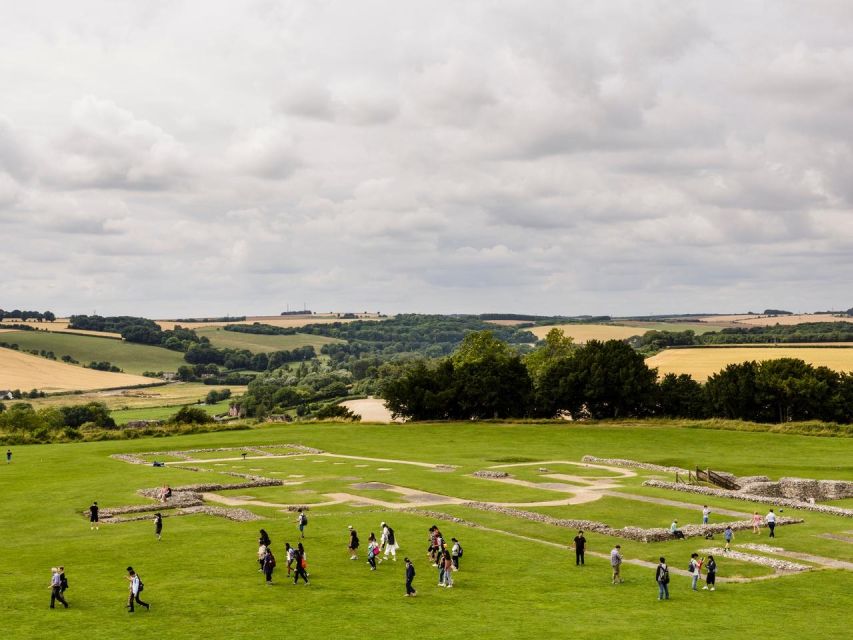
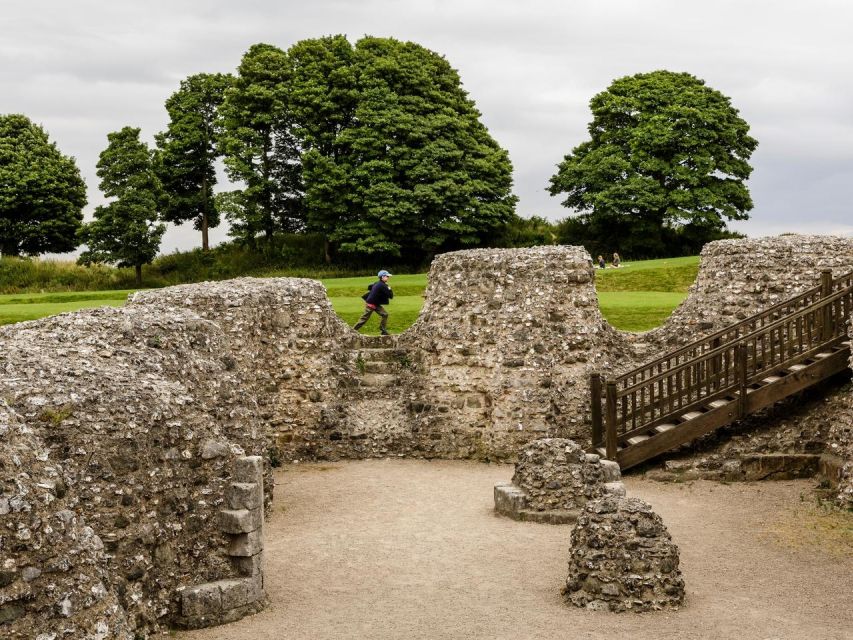
Old Sarum is easy to underestimate from its surviving remains. You do not arrive at a complete castle town with furnished rooms, shopfronts, or tall cathedral walls. Instead, you find banks, foundations, earthworks, and low fragments spread across an exposed hill.
That is precisely what makes the place interesting. The site asks you to read its shape. A broad defensive ring marks the earlier settlement, while the central mound and cathedral area reveal the later medieval plan. Once you understand where the walls and buildings were, the empty spaces begin to feel purposeful.
I find Old Sarum especially useful for understanding how power moved through British history. The site began as an Iron Age stronghold, then took on Roman, Saxon, and Norman influences. Later, William the Conqueror recognized its strategic value and made it an important center of government.
This is not just a ruined castle visit. It is a lesson in why people choose certain places, how religious and political authority share the same ground, and why even powerful towns can fade away.
A handful of other Britain outings to weigh up
- Stonehenge Admission Ticket
★ 4.6 · 6,388 reviews - London: Stonehenge Morning or Afternoon Tour Optional Lunch
★ 4.4 · 3,966 reviews - From London: Stonehenge Morning Day Trip with Admission
★ 4.8 · 3,423 reviews
Entering through the Iron Age earthworks
Your visit begins at the entrance to Old Sarum, marked by informational signage. From there, you move into a large fortified enclosure defined by the Iron Age ramparts.
These earthworks are among the most impressive parts of the site because they survive on such a large scale. They give you an immediate sense of defense, height, and separation from the surrounding plains. The raised banks are not decorative ruins. They are the shape of the original stronghold.
The signage is an important part of the experience. It explains the site’s development and helps you connect the visible banks with the people who used them. If you walk in without reading, Old Sarum can seem like a pleasant open field with fragments. If you pause at the information panels, the same view becomes a sequence of military, civic, and religious decisions.
You should allow time to walk around the enclosure rather than heading straight for the central castle mound. The outer earthworks establish the scale of Old Sarum and show why this location mattered long before the medieval period.
Because the ground is uneven, your pace will be slower than on a paved city attraction. The exposed setting also means weather can shape the visit. Bring clothing suited to the conditions and wear shoes with a firm sole.
The medieval castle on the central mound
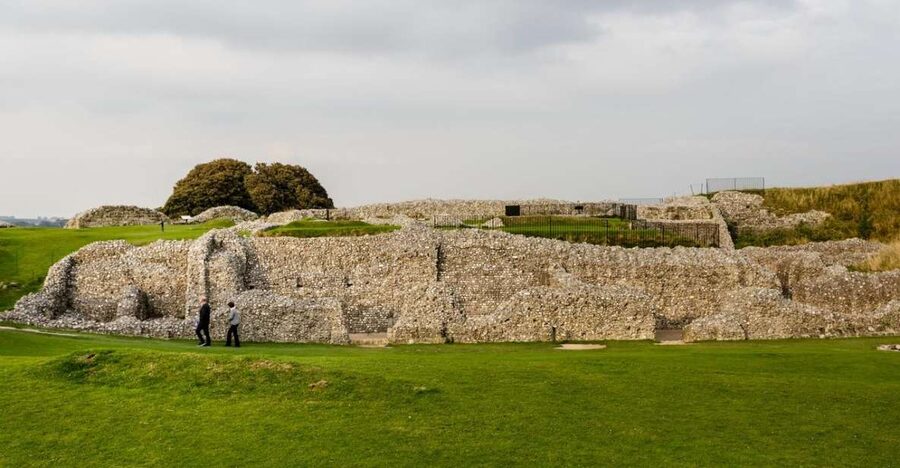
The royal castle is the clearest reminder that Old Sarum was once a place of government. The remains are not intact enough to give you a full interior tour, but the surviving architecture and layout show the presence of a formidable medieval stronghold.
This is where the site’s political story comes into focus. Old Sarum was not simply a settlement protected by old banks. It became a center connected with Norman rule and William the Conqueror’s government. From a defensive hilltop, rulers could control movement and project authority across the surrounding area.
As you examine the castle remains, try to picture the difference between the stonework you see and the completed medieval complex. The foundations indicate rooms and walls, but the original buildings would have been taller, busier, and more imposing. The attraction works best when you use the signs and the ground plan together.
I would not choose Old Sarum for detailed castle interiors. You will not get the same sense of furnished chambers or preserved domestic life found at a more complete fortress. I would choose it for the setting and the chance to see how a royal castle fitted into a much older fortified site.
The central mound also gives you a useful pause in the visit. From here, you can look back toward the earthworks and understand that the medieval castle occupied only part of a much larger defended town.
The first cathedral and the second cathedral
The cathedral remains give Old Sarum its most distinctive story. The site includes the footprint of Salisbury’s original cathedral, along with information about the first and second cathedrals connected with the location.
A cathedral footprint can sound modest on paper, but it is one of the most revealing parts of the visit. The outline lets you judge the building’s position and scale, even though the walls no longer rise above you. It also shows how closely religion and government were linked here. Old Sarum brought royal power, military strength, administration, and church authority into one hilltop complex.
The site’s later change is just as important as its original success. Salisbury’s cathedral moved to the new city, and Old Sarum gradually lost its central role. That decision changed the future of both places. Salisbury developed below, while Old Sarum became a place of remains and memory.
The signage explains the importance of the first and second cathedrals, so take time to read it rather than treating the foundations as a quick photo stop. This is where the visit moves from physical archaeology to a story about relocation and decline.
You should also expect a contrast between Old Sarum and Salisbury Cathedral. Old Sarum offers foundations and open air views. Salisbury offers the surviving cathedral in the modern city. Seeing the two sites from the ramparts helps you understand the relationship between the old settlement and the newer one.
Elsewhere in Britain, a change of pace:
- London: The London Eye Entry Ticket
★ 4.6 · 35,875 reviews - From London: Harry Potter Warner Bros Studio Tour
★ 4.7 · 26,588 reviews - London: Westminster to Greenwich River Thames Cruise
★ 4.5 · 22,836 reviews - Magical London: Harry Potter Guided Walking Tour
★ 4.7 · 22,044 reviews
The ramparts and the best views toward Salisbury
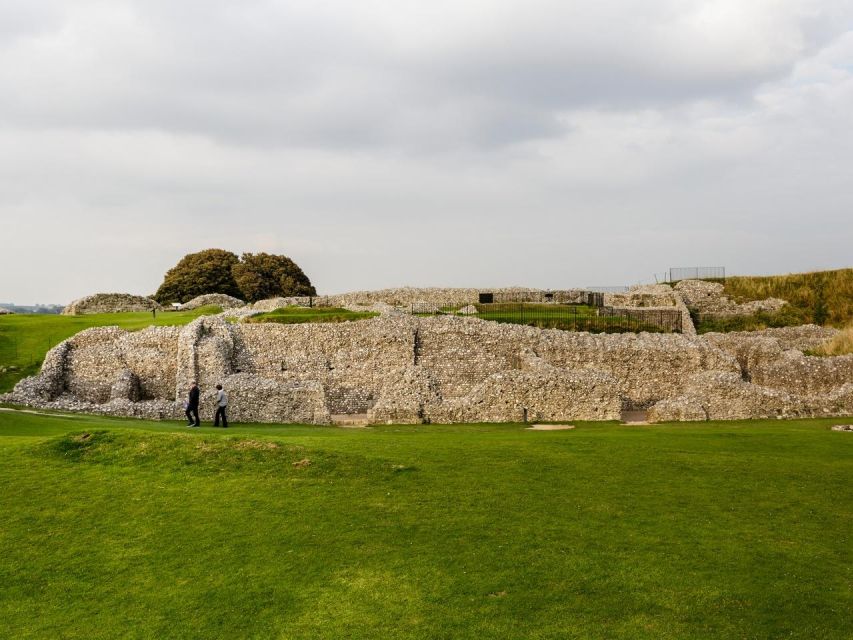
The ramparts are the visual payoff. From the higher ground, you can look over the Wiltshire plains and toward Salisbury Cathedral.
The view gives the site a useful sense of place. Old Sarum is not an isolated ruin with no connection to modern life. The city below reflects the decision to move the cathedral and administrative center away from the old hilltop. You can see, in one glance, how the old and new locations relate to each other.
I like this part of the visit because it combines scenery with history. The view is not just attractive. It explains the site’s decline. Old Sarum once held power from its high position, but its importance did not last forever. The newer Salisbury became the stronger center, leaving the old settlement behind.
The ramparts are also the best place to stop and let the story settle. You can reflect on the rise and fall of authority without needing a long lecture. The open view does much of the work.
Do take care on the uneven ground. Wheelchair access is available, but the walking surfaces remain a practical consideration for anyone with limited mobility. The attraction is accessible, but it is not the same as a fully level indoor museum.
Roman, Saxon, Norman, and medieval layers
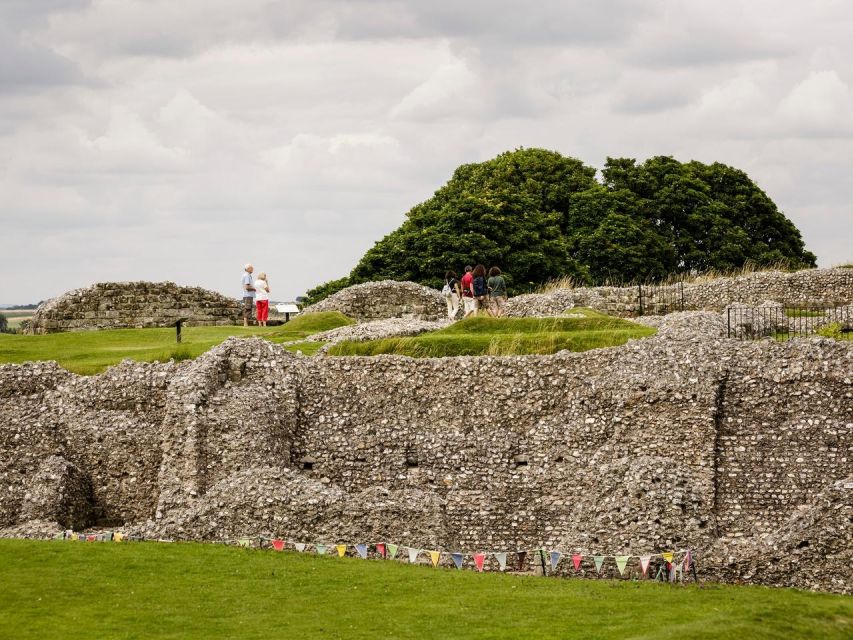
Old Sarum’s appeal comes from the number of eras represented in one compact site. The Iron Age beginnings form the base, while Roman, Saxon, and Norman influences add later layers.
The Roman and Saxon connections help you see that Old Sarum was not created in a single moment. People continued to use and reshape the site as political conditions changed. Then the Norman period gave it a stronger royal and administrative role.
That long sequence is useful if you are visiting other historic places in southern England. Old Sarum shows how a strategic site could be reused rather than abandoned after one period ended. Fortifications, government, and religious buildings all took advantage of the same high ground.
The information panels are your main source of interpretation. They are described as informative and well explained, and they matter because the physical remains need context. One strong point of the visit is that you can move at your own pace, stopping when a particular period interests you.
This is not a guided walk with a named expert leading you from stop to stop. If you want to ask detailed questions as you go, you may find the self-guided format less satisfying. If you prefer quiet exploration, the signs give you enough structure without forcing a schedule.
How much time should you allow?
The ticket is valid for one day, so you do not need to rush through the site. You can make the visit a short historical stop or give it a slower walk around the earthworks, castle, cathedral area, and ramparts.
The experience is listed as lasting one day rather than giving a fixed tour duration. That makes sense for an open historic site. Your visit length will depend on how closely you read the signs, how long you spend on the views, and how comfortable you are walking on uneven ground.
I would plan enough time to cover all the main areas instead of treating Old Sarum as a ten-minute photo stop. The history unfolds in stages, and skipping the outer ramparts or cathedral footprint weakens the overall picture.
The one-day validity also helps if the weather changes. You have more flexibility than you would with a timed guided activity. Check availability and starting information before you go, since the site may not operate like a fixed departure tour.
Is the $13 group price good value?
At $13 per group of up to four, the ticket can be good value for families or small groups. Split four ways, the cost is modest for access to a major historic site with more than 2,000 years of use.
For a solo visitor, the value is harder to judge. You are paying for the setting, the preserved earthworks, the castle and cathedral remains, the information panels, and the chance to walk through a site tied to major changes in Salisbury’s history. You are not paying for a long guided tour, a museum collection, or complete medieval buildings.
That distinction matters. If you value archaeology, historic settings, and wide views, the price is reasonable. If you want interiors, dramatic reconstruction, or many intact rooms, you may feel the ticket is steep for what remains. One practical opinion puts the site in exactly that middle ground: charming, quiet, and worthwhile, but perhaps expensive if you judge it only by the amount of standing stone.
The strongest value comes when you combine Old Sarum with time in Salisbury. The view from the ramparts and the story of the cathedral’s move make more sense when you see the old site and the modern city as parts of one historical change.
Who will enjoy Old Sarum most?
I would recommend Old Sarum to you if you like open-air history, archaeological remains, and places where the setting is part of the evidence. It suits visitors who enjoy reading signs, forming a picture of vanished buildings, and walking at an unhurried pace.
It is also a good choice for families with older children who can follow a story about forts, kings, cathedrals, and abandoned towns. The large earthworks make the site easier to picture than a small ruin, even though the individual buildings are mostly gone.
The visit may be less satisfying if you need a tightly guided schedule or want constant activity. There is no included souvenir purchase, no named guide, and no promise of a long live commentary. The attraction relies on your curiosity and the information provided around the site.
The quiet setting is part of its appeal. You can take in the views, read at your own speed, and think about the changes that moved power from Old Sarum to Salisbury.
Practical advice for a smooth visit
Go to the Old Sarum entrance, which is recognizable by informational signage. The ticket lets you skip the ticket line, and the small-group booking is limited to four participants.
Wear comfortable shoes. The site involves uneven surfaces, and the walking is more demanding than a visit to a level indoor attraction. Weather-appropriate clothing is also a must because much of the experience takes place outdoors.
Wheelchair access is available, but you should still consider the ground conditions when deciding how much of the site to explore. Accessibility does not remove every challenge created by historic earthworks and open ground.
The strongest information comes from the signs, so give them proper attention. They explain the castle, the two cathedrals, the earlier settlement, the Norman period, and Old Sarum’s eventual decline.
You can cancel up to 24 hours in advance for a full refund, and the reserve-now, pay-later option keeps your plans flexible. Those terms are useful if your Salisbury schedule depends on weather or changing plans.
Should you book the Old Sarum ticket?
Book it if you want a calm, open-air history stop with strong views and a clear story about how a powerful site can lose its role. The ramparts, cathedral footprint, and informative signage are the highlights, especially for anyone interested in Salisbury’s origins.
Think twice if you want a complete castle, preserved cathedral interiors, or a guided tour led by an expert. Old Sarum is a place of outlines and remains, so its value depends on how much you enjoy reconstructing the past in your mind.
For a group of up to four, the $13 price makes the decision easier. For a solo visitor, pair the visit with Salisbury and take time to read the signs. That is when Old Sarum feels less like a ruin and more like a record of changing power.
FAQ
What does the Old Sarum ticket include?
The ticket includes entry to Old Sarum for one group of up to four participants.
How long is the ticket valid?
The ticket is valid for one day.
Where do I enter Old Sarum?
Go to the entrance of Old Sarum. It is recognizable by informational signage.
Can I cancel the booking?
Yes. You can cancel up to 24 hours in advance for a full refund.
Can I reserve now and pay later?
Yes. The reserve-now, pay-later option lets you book without paying immediately.
Is Old Sarum wheelchair accessible?
Yes, the site is wheelchair accessible. However, the visit involves walking on uneven surfaces.
What should I bring?
Bring comfortable shoes and clothing suited to the weather.
New listings around Britain
- London: Secrets of Freddie Mercury Tour with a Cocktail★ 4.1 · 15 reviews
- London: Hampton Court Private Guided Tour★ 3.4 · 15 reviews
- Edinburgh: Isle of Skye, Highlands & Jacobite Steam Train★ 4.6 · 15 reviews
- London: Jack the Ripper Tour and Underground Prison in Spanish★ 5.0 · 15 reviews
- Spanish Language : Original Harry Potter Walking Tour★ 4.5 · 15 reviews
- THE HANGOVER BRUNCH | Benidorm Bingo & Drag Queens★ 4.5 · 15 reviews
- London: Private Couples Photography Session with Landmarks★ 5.0 · 15 reviews
- London: The Saturday Supershow Cabaret at Phoenix Arts Club★ 4.5 · 15 reviews
Salisbury & Stonehenge Tours, compared.
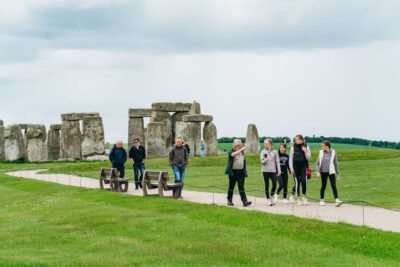
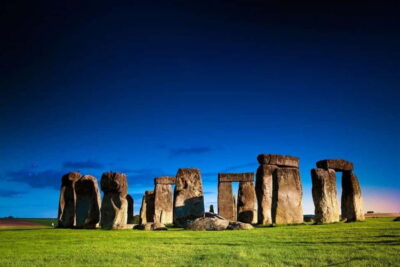
Stonehenge Morning or Afternoon Tour Optional Lunch
Read our review →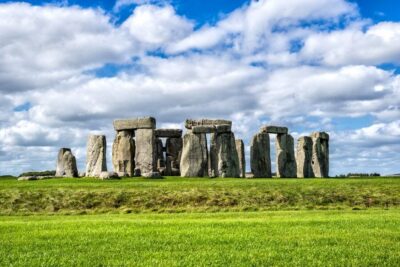

Stonehenge, Glastonbury & Avebury Small Group Tour
Read our review →
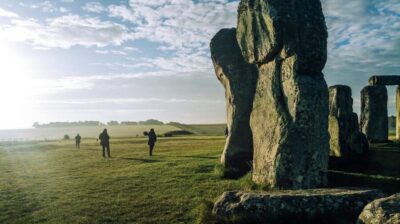
Stonehenge: App Guided Tour + Admission Included
Read our review →
Glastonbury Day Tour – ‘The Quest’ – Magdalene, King Arthur
Read our review →Browse the lists this tour appears in