
Reviewed · ST ANDREWS TOURS
St Andrews: Golf Origins and Old Course History Tour
The best part of this 75-minute walk is that it treats the Old Course as a living piece of golf history, not just a famous patch of turf. You follow the story from early St Andrews to the modern Open while seeing the 1st tee, 18th green, fairways, Road Hole memories, and the Swilcan Bridge up close.
I like the mix of old photographs, course facts, and local stories, especially the picture showing how low the bridge once was. I also like the personal touch: Richard, a former caddie and golf historian, is known for taking photos at the key spots and using humor to keep the talk moving.
The main drawback is that the tour depends on fluent English and steady walking. The guide may speak quickly, and you cross part of the 1st and 18th fairway at your own risk while golf is being played, so this is not a good fit for anyone with walking or hearing difficulties.
Key points at a glance
- See the Old Course from the 1st tee to the 18th green: The route gives you the classic views without requiring a round of golf.
- Walk across part of the 1st and 18th fairway: You get close to the course, but must watch for golf balls during live play.
- Hear how golf developed in St Andrews: The talk covers the game, the Old Course, the Open, and the town’s earlier story.
- Finish with photos on Swilcan Bridge: The guide helps take pictures, except on tournament days when access is restricted.
- Meet an entertaining local guide: Richard is a former caddie and golf historian whose stories and humor are a major part of the walk.
- Pay about $20 for a focused introduction: It is good value if you want context and views rather than a full museum visit or a round of golf.
Starting at Hotel du Vin on The Scores
You meet outside Hotel du Vin at 40 The Scores, St Andrews KY16 9AS. The group leaves promptly, and the tour does not wait for late arrivals, so arrive early enough to find the hotel and gather yourself before the scheduled start.
The meeting point is useful because The Scores places you close to the Old Course and the historic center of St Andrews. You do not waste time on a bus or taxi transfer. The tour begins on foot and stays focused on the course and its setting.
Wear comfortable shoes. This is a short walk, but the route is not designed for people using crutches, walking frames, mobility scooters, or wheelchairs. Baby strollers and walking frames are not allowed, and unaccompanied minors cannot join. Children under 16 must have an adult with them, and the tour is not suitable for children under 5.
More History Tours in Britain:
- London: Historic Pubs of Central London Walking Tour
★ 4.9 · 1,065 reviews - Portsmouth: Historic Dockyard Ultimate Explorer Ticket
★ 4.8 · 1,052 reviews - York: Witches and History Old Town Walking Tour
★ 4.7 · 928 reviews
The opening view across six courses
The guide begins with a broad view of the links land, where six golf courses are located, including four on links land. This opening helps you understand that St Andrews is not only about one celebrated course. It is a whole golfing setting, shaped by the coast, open ground, and centuries of play.
The guide uses this view to set up the main idea of the tour: the Old Course did not arrive fully formed. Its important features developed over time as players, course designers, clubs, rules, and major competitions shaped the game.
That makes the first portion useful even if you do not know golf well. You are not expected to identify every hole or understand tournament strategy right away. Instead, you get the basic story before the tour moves closer to the famous playing areas.
The introduction can feel a little slow if you arrive wanting instant photographs. Give it a few minutes. The early St Andrews background explains why the Old Course matters, and it gives meaning to the features you see later.
The 18th green and the final approach
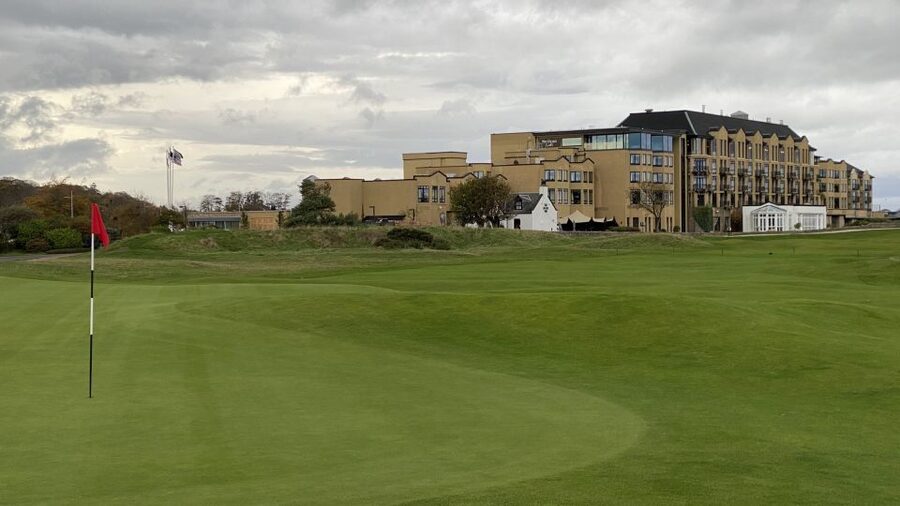
The 18th green is one of the clearest places to feel the drama of the Old Course. It is not simply another putting surface. It is the closing scene for a course known around the world, and the guide connects the green with the events, players, and traditions that made it famous.
You see the final part of the course in relation to the town and nearby buildings. This is important because the Old Course does not feel shut away behind a private boundary. It sits beside public paths, hotels, roads, and town life. The relationship between the course and St Andrews is part of what makes the visit different from looking at a golf course from a distant viewing area.
The guide also points out facts about adjoining locations. These details expand the tour beyond golf statistics and help you understand how the course fits into the town. I found this kind of information especially useful for planning the rest of a visit, since the guide can also suggest places to eat or see afterward.
The 18th fairway itself offers a nice surprise. One guide explained how uneven it is, in contrast to the flatter 1st fairway. That is the sort of detail you may miss when watching televised golf. Walking near the course lets you notice the ground instead of seeing only a carefully framed image.
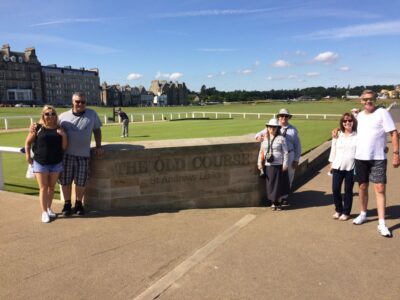
The 1st tee with the Royal and Ancient Clubhouse behind it
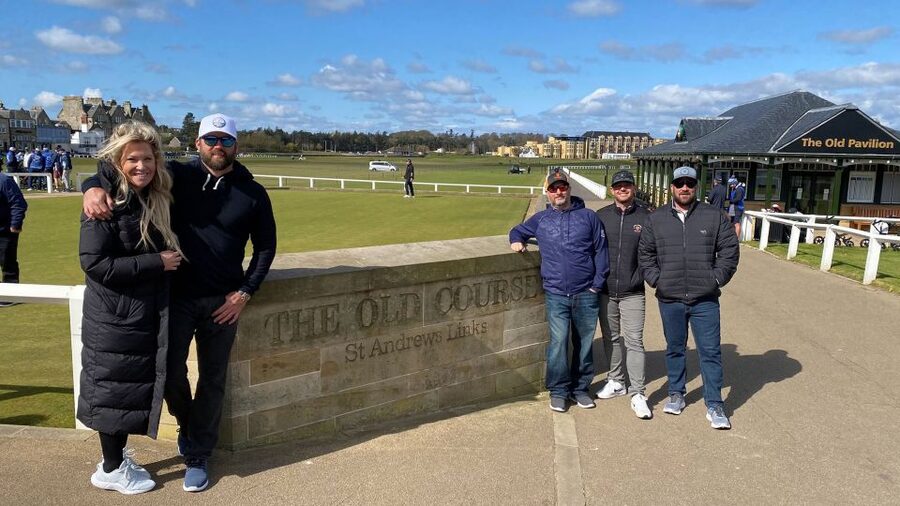
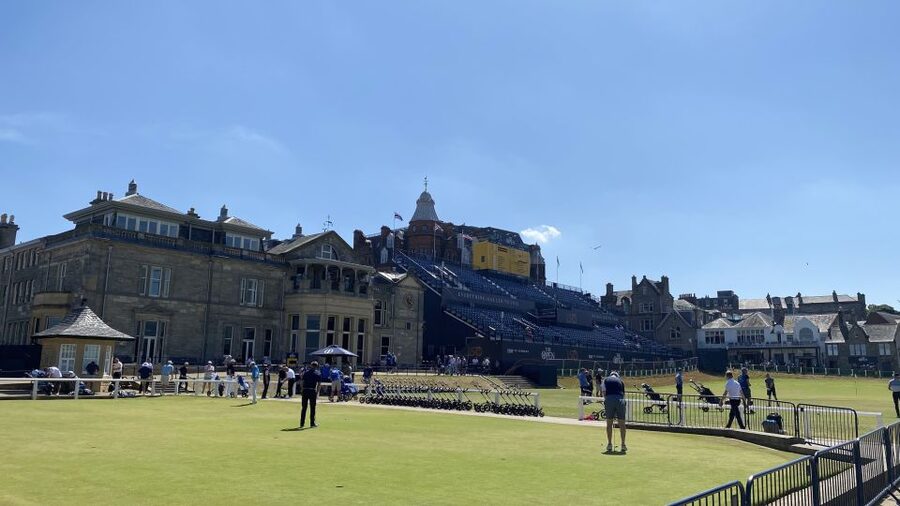
The 1st tee is one of the tour’s strongest photo locations. With the Royal and Ancient Clubhouse as a backdrop, you get the picture most closely tied to the public image of St Andrews golf.
The guide explains how the opening hole works within the wider development of the Old Course. You also hear about the relationship between St Andrews, the rules of the game, and the Open. The subject can become technical, but the best guides keep it grounded in stories about people and actual events.
This is where a former caddie’s experience helps. Richard is associated with the tour and is described as a former caddie, or looper, with a strong command of course details. He does not simply recite names and dates. He connects the ground under your feet with the way the course is played and remembered.
You should have time to ask questions and take pictures, though the exact pace can depend on the group. The tour is information-packed, so it helps to listen closely rather than assume every stop will be a long, quiet photo break.
A handful of other Britain outings to weigh up
- St Andrews: Top Sights Guided Walking Tour
★ 4.7 · 223 reviews - St Andrews: Town, Golf, and Old Course History Tour
★ 4.7 · 162 reviews - Private St Andrews: Home of Golf Old Course Tour
★ 4.9 · 113 reviews - St Andrews: Guided Walking Tour, 12pm, 2pm daily
★ 5.0 · 28 reviews
Walking the 1st and 18th fairways safely
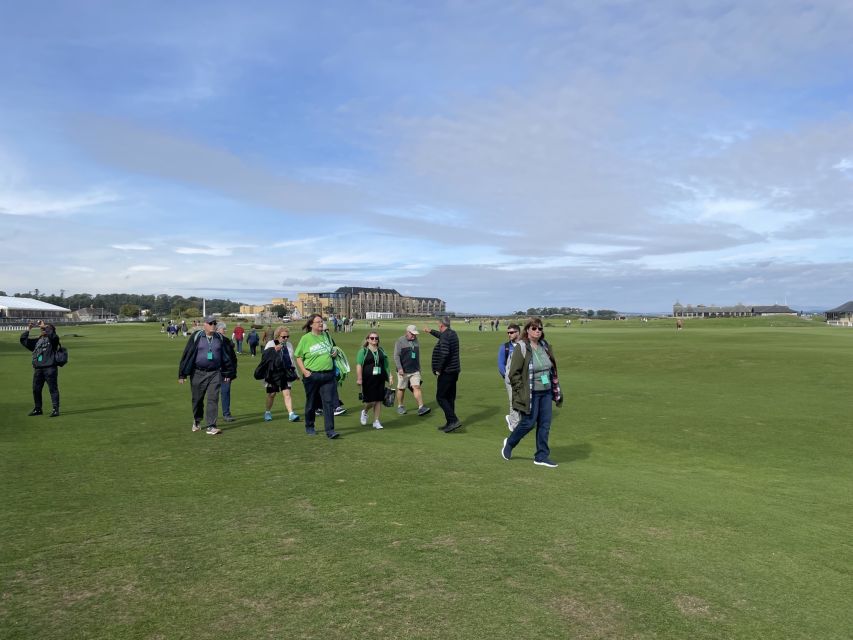
A particularly appealing part of the tour is getting onto part of the 1st and 18th fairways. This is not a round of golf, a caddie experience, or permission to wander across the course whenever you like. You walk the permitted section with the guide, and you do so at your own risk.
Keep your eyes open for golf balls during live play. This is an important practical point, not a minor footnote. The fairway is an active playing area, and the tour’s closeness to the action brings a real safety concern.
The walk gives you a physical sense of the course that photographs cannot provide. You can notice the width of the fairway, the changing ground, and the scale of the famous holes. It also helps explain why the Old Course can look simple from a distance yet demand careful play.
If you are not a golfer, this section still has value. You can understand why certain positions, angles, and sight lines matter without needing to know every rule. The guide’s role is to explain the place in plain terms and tell the stories that make the space memorable.
Road Hole memories and the Swilcan Bridge
The route includes memories connected with the Road Hole, one of the Old Course’s best-known areas. The supplied tour details do not promise a complete walk of every famous hole, so you should think of this as a guided look at key landmarks rather than a full circuit of all 18 holes.
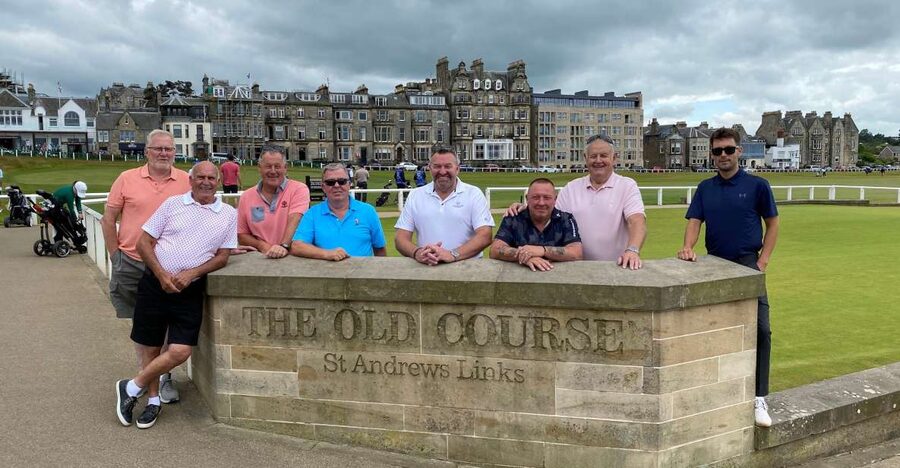
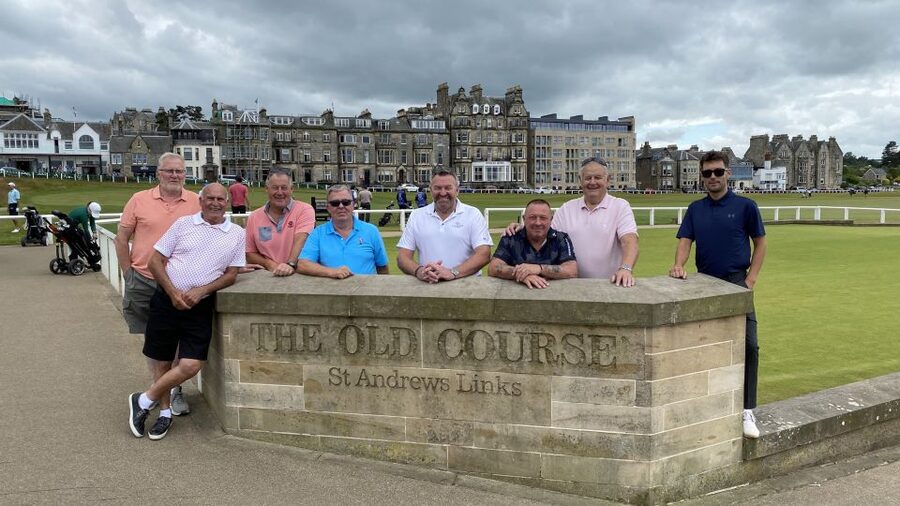
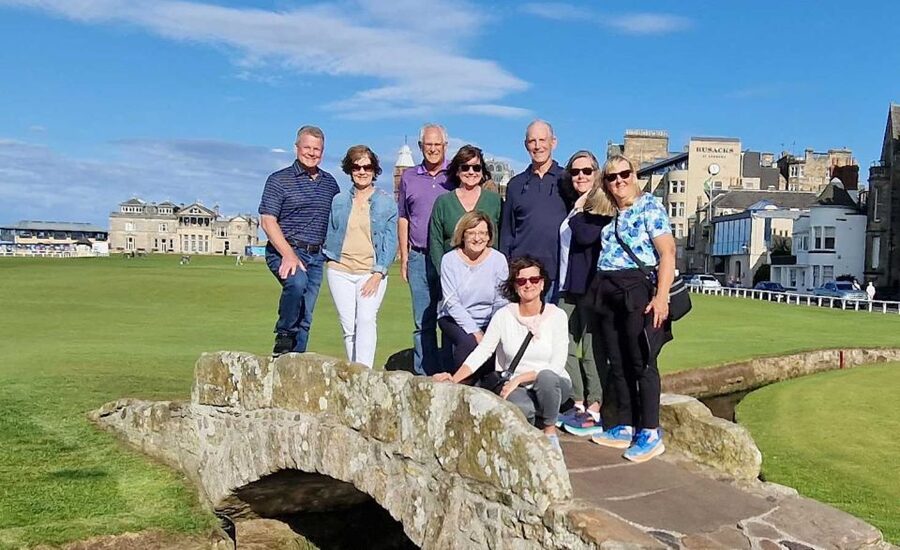
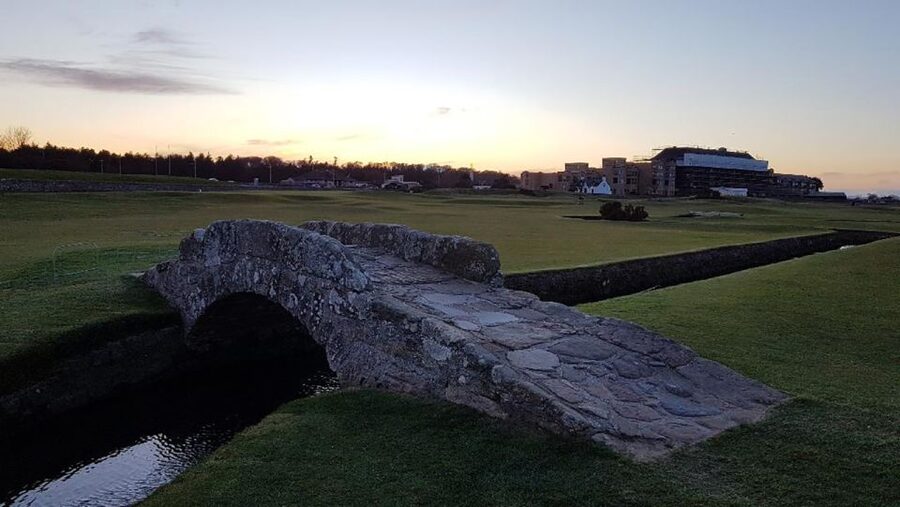
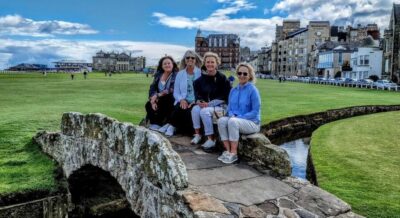
The final photo stop is the Swilcan Bridge, except on tournament days. This small bridge has become one of St Andrews’ most recognizable symbols, and getting a photograph there gives the tour a clear ending.
The guide may take pictures for each person or couple in the group. That extra help matters because it means you are not forced to choose between standing in the frame and asking a stranger to use your phone. Several visitors specifically appreciated having photos taken at the bridge and other key locations.
The old photographs add another layer. One unusual image shows the original height of the Swilcan Bridge, giving you a quick lesson in how familiar course features change over time. Bring a phone or camera, but do not expect tournament-day access to the bridge. If your visit coincides with a major event, this part of the route may be limited.
A guide who mixes facts with stories
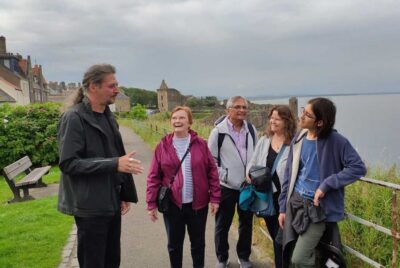
The guide makes a big difference here. Richard receives the most consistent praise in the supplied material, with descriptions of him as a former caddie, golf historian, and friendly storyteller. Alan is also named in one account, so the exact guide may vary by departure.
The strongest part of the guiding style is the blend of golf and St Andrews history. You hear about the origins of the game, the Old Course’s development, the Open, religious connections, and figures who helped shape golf. The talk also covers the town around the course, rather than treating the fairways as an isolated attraction.
The humor helps. One account described the first 15 minutes as slow, but the rest of the tour as excellent. That is fair advice: the opening context may take time to build, while the later course stops tend to feel more immediate.
English fluency is essential. The tour is delivered in English, and the instructions are clear that speaking slowly or translating does not work. One person found the guide spoke too quickly and was hard to hear, so if you have difficulty following spoken English, this is not the right tour.
Finishing at the Jigger Inn
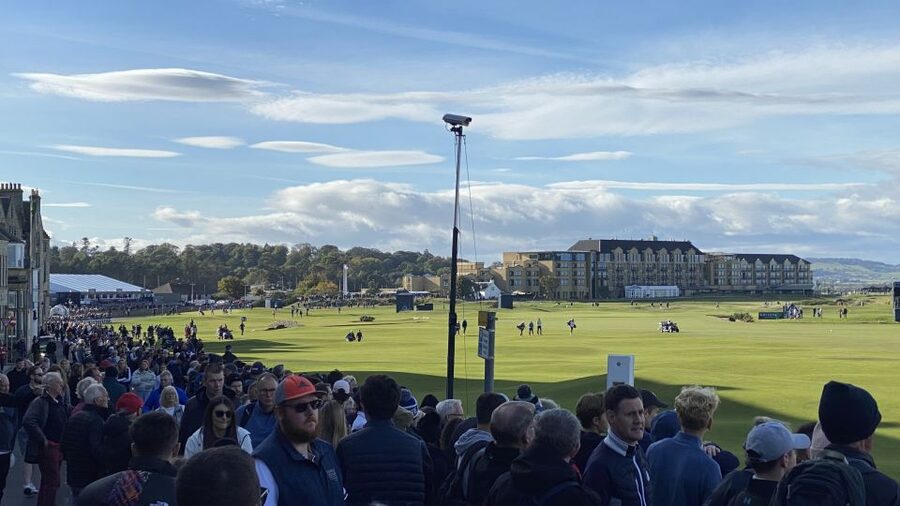
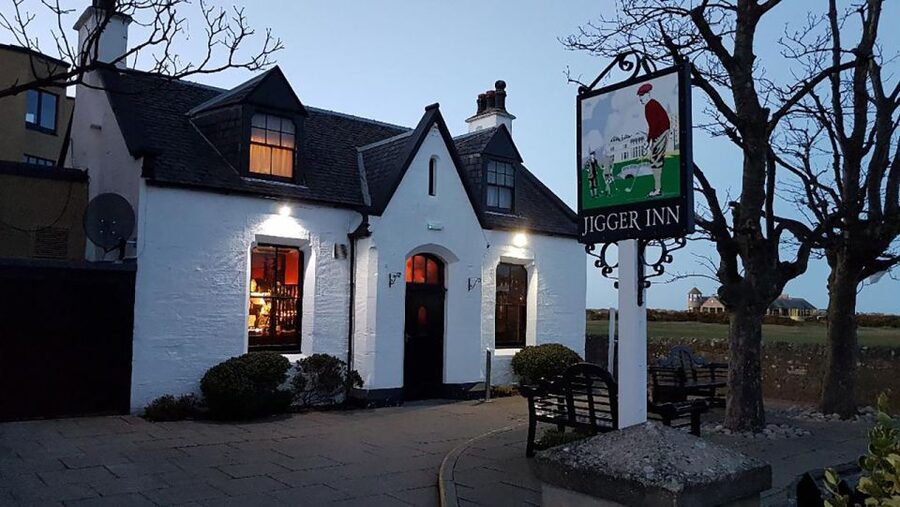
The walk finishes at the Jigger Inn, beside the Old Course and overlooking the 17th fairway. Refreshments are not included, but this is a convenient place to continue the visit with a drink or meal if you choose.
The ending works well because it leaves you near one of the course’s best-known viewing points. You can sit down after the walk, look toward the 17th fairway, and continue talking about what you have seen.
Do not read the Jigger Inn stop as a hosted pub visit. The guide is included, but food and drinks are not. The value is in finishing near a classic St Andrews spot, with the option to spend more time there on your own.
Is $20 a fair price?
At $20 per person, this is a strong value for a focused introduction to the Old Course. You receive 75 minutes with a professional local guide, course access at selected points, historical explanation, and help with photographs at the most famous locations.
The price is especially reasonable if you are not playing the Old Course. A round there is a major commitment and requires planning, while this tour lets you understand the setting in just over an hour. It also costs less than many long sightseeing walks and stays tightly focused on a subject that St Andrews does better than almost anywhere else.
The value drops if you want to enter buildings, play a hole, or walk the entire course. None of those is promised. You are paying for a guided outdoor history walk with views of important parts of the course.
Free cancellation up to 24 hours before the tour and the option to reserve now and pay later add useful flexibility. Still, the tour leaves on time, so flexibility with booking does not mean flexibility after the departure hour.
Who should book this St Andrews walk?
Golf fans should put this high on their St Andrews list. You hear about the origins of golf, the Old Course, the Open, famous figures, and the small details that are easy to miss when you visit alone. The chance to walk on part of the fairway and pose on Swilcan Bridge gives the history a physical connection.
Partners and family members who are less interested in golf may also enjoy it. The guide includes town history, local stories, humor, and unusual facts, rather than speaking only about club selection or tournament scores. One important advantage is that the tour can give a non-golfer a sense of place without requiring technical knowledge.
It is less suitable for young children. The official age guidance says no children under 5, and anyone under 16 needs an adult. The content is information-heavy, so older children who can follow fluent English may get more from it than very young ones.
Skip it if you have mobility limits, use walking aids, need wheelchair access, or have hearing difficulties. The route is not designed for those needs, and the English-only presentation may be hard to follow if you cannot comfortably hear a guide speaking outdoors.
Plan for changeable Scottish weather. The tour runs outdoors, and one group still enjoyed it during a passing shower, but comfortable shoes and weather-ready clothing will make the walk easier. There is no need to bring alcohol, and anyone under the influence or behaving disruptively may be asked to leave without a refund.
Final decision: a smart first look at the Home of Golf
Book this tour if you want the story behind St Andrews, not just a photograph of the clubhouse. For $20, you get a compact walk led by a local guide, with strong photo stops, course access, and a clear explanation of how the Old Course helped shape modern golf.
I would choose it early in a St Andrews visit. The opening overview gives you useful bearings, and the guide’s local suggestions can help with the rest of your day. Just arrive early, wear sensible shoes, listen closely, and check whether your date falls during a tournament, when the Swilcan Bridge photo stop may not be available.
FAQ
How long does the St Andrews Old Course history tour last?
The tour lasts 75 minutes.
Where does the tour meet?
All tours meet outside Hotel du Vin, 40 The Scores, St Andrews KY16 9AS, United Kingdom.
Where does the tour finish?
The walk finishes at the Jigger Inn, overlooking the 17th fairway.
Is the Swilcan Bridge photo stop always available?
No. The photo stop at Swilcan Bridge is not available on tournament days.
Is the tour suitable for people with mobility impairments?
No. The tour is not suitable for people with walking difficulties, wheelchair users, or people using crutches, walking frames, or mobility scooters.
What language is the tour conducted in?
The tour is conducted in English, and participants need a fluent command of English. Speaking slowly or translating is not considered suitable for this tour.
New listings around Britain
- London: Hampton Court Private Guided Tour★ 3.4 · 15 reviews
- London: Secrets of Freddie Mercury Tour with a Cocktail★ 4.1 · 15 reviews
- Edinburgh: Isle of Skye, Highlands & Jacobite Steam Train★ 4.6 · 15 reviews
- London: Jack the Ripper Tour and Underground Prison in Spanish★ 5.0 · 15 reviews
- Spanish Language : Original Harry Potter Walking Tour★ 4.5 · 15 reviews
- THE HANGOVER BRUNCH | Benidorm Bingo & Drag Queens★ 4.5 · 15 reviews
- London: Private Couples Photography Session with Landmarks★ 5.0 · 15 reviews
- London: The Saturday Supershow Cabaret at Phoenix Arts Club★ 4.5 · 15 reviews
St Andrews Tours, compared.
Browse the lists this tour appears in