Reviewed · TOURS
Torquay: Coasteering 5* Geopark Tour in Torquay
Maidencombe’s rocky shore turns a short Torquay outing into a proper coastal adventure. You’ll swim through sea channels, scramble over slippery rock, and jump into cold water, all within Devon’s UNESCO Geopark. The guides, including Tom, keep the session friendly and safety-minded without pushing you past your limits.
I like the choice of easy and challenging routes, since a nervous first-timer and a confident jumper can take part together. I also like the free photos and full equipment, which make the $60 price feel fair. The catch is simple: you must be comfortable in the water, reasonably fit, and ready for physical work in cold conditions.
Key points to know before you book
Geopark Tour in Torquay – Key points to know before you book’ />
- Maidencombe’s natural course: Explore caves, rock ledges, channels, and geological formations just outside Torquay.
- Tom and the guide team: Expect calm safety instruction, encouragement, and help for anyone who feels unsure.
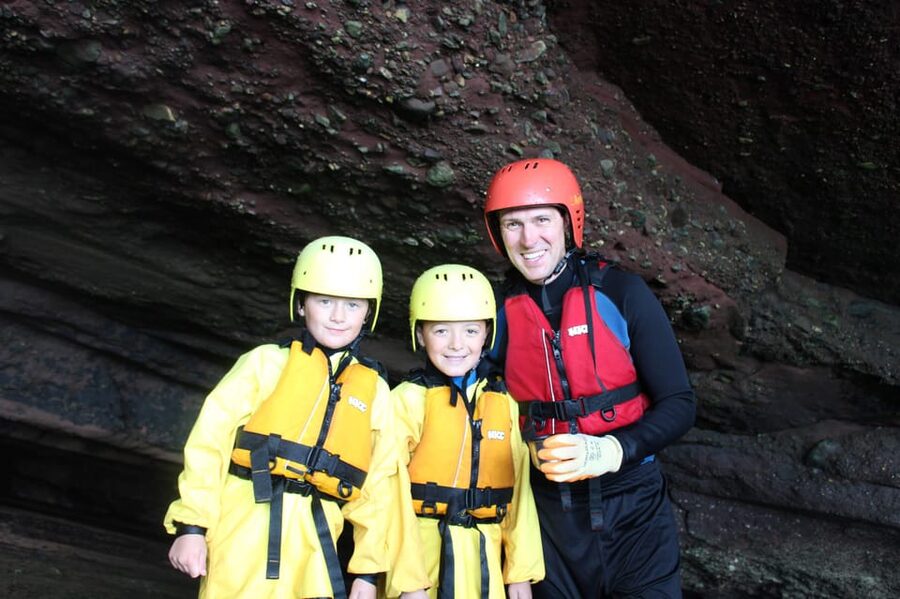
- All the main kit included: Wetsuit, helmet, buoyancy aid, gloves, old shorts, hot drinks, secure storage, and photos are provided.
- Jumps are not all-or-nothing: Routes and challenges can be adjusted to match your comfort level.
- Bring the right basics: Pack swimwear, a towel, a change of clothes, sunscreen, long socks, and old trainers or water shoes.
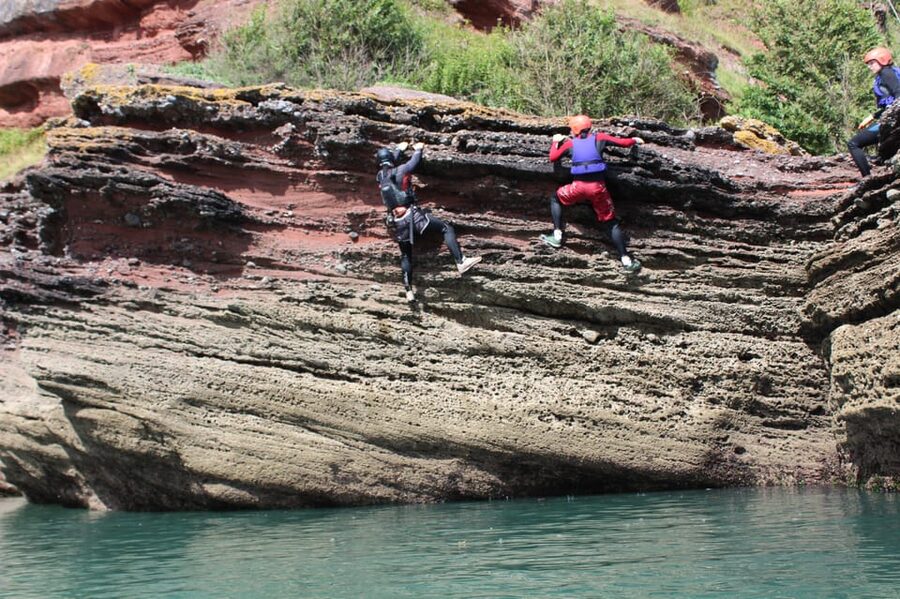
- Know the physical demands: You will swim, climb, scramble, and enter cold water from rocky ledges.
Maidencombe makes a better playground than a swimming pool
Geopark Tour in Torquay – Maidencombe makes a better playground than a swimming pool’ />
The activity meets outside The Thatched Tavern Pub, where you should look for the orange van. From there, the session moves down to the coast around Maidencombe, a scenic area just outside Torquay with rock formations shaped by long geological forces.
That setting matters. Coasteering is not simply a swim with a few jumps added. You use the shore as your route, working around the intertidal zone where land and sea meet. A cave becomes a short passage. A rock shelf becomes a climbing problem. A narrow channel becomes a swim, and a ledge becomes a possible jump.
You’ll see the coast at close range, not from a promenade or boat. The water, rock faces, and sea channels are all part of the course. Guides also explain the area’s geological past and point out local wildlife along the way, adding some sense of place to what could otherwise be just a physical activity.
The setting is scenic, but it is not polished or gentle in the way a beach day can be. Rocks may be slippery, water is cold, and the route calls for careful movement. That contrast is part of the appeal, but you should come ready for a real outdoor activity rather than a relaxed coastal walk.
Also worth an afternoon while you are in Britain:
- London: The London Eye Entry Ticket
★ 4.6 · 35,875 reviews - From London: Harry Potter Warner Bros Studio Tour
★ 4.7 · 26,588 reviews - London: Westminster to Greenwich River Thames Cruise
★ 4.5 · 22,836 reviews
What happens during the 2.5-hour session