
Reviewed · BRITAIN
Torquay: Kents Cavern Prehistoric Cave
Kents Cavern takes you into a world of Ice Age shelters, firelight, and prehistoric tools, set inside rock formed roughly 400 million years ago. The one-hour guided walk is the main event, but the Stone Age Zone and Woodland Trail give you reasons to stay longer.
I like the way the guide turns geology into something you can picture, especially when the cave is briefly shown in near-total darkness. I also like the family-friendly extras: children can dig for gemstones, while the woodland area adds shelter building and Ice Age animal sculptures.
The main drawback is that this is an educational cave tour rather than a thrill ride. Most paths are level, but there are steep gradients, narrow sections, and nine shallow steps, and the experience may feel slow if you want dramatic underground adventure.
Key points to know before you go

- 400-million-year-old rock: See the geological setting behind one of Britain’s best-known showcaves.
- A one-hour guided walk: An English-speaking guide explains cave formation, Ice Age life, and Victorian excavations.
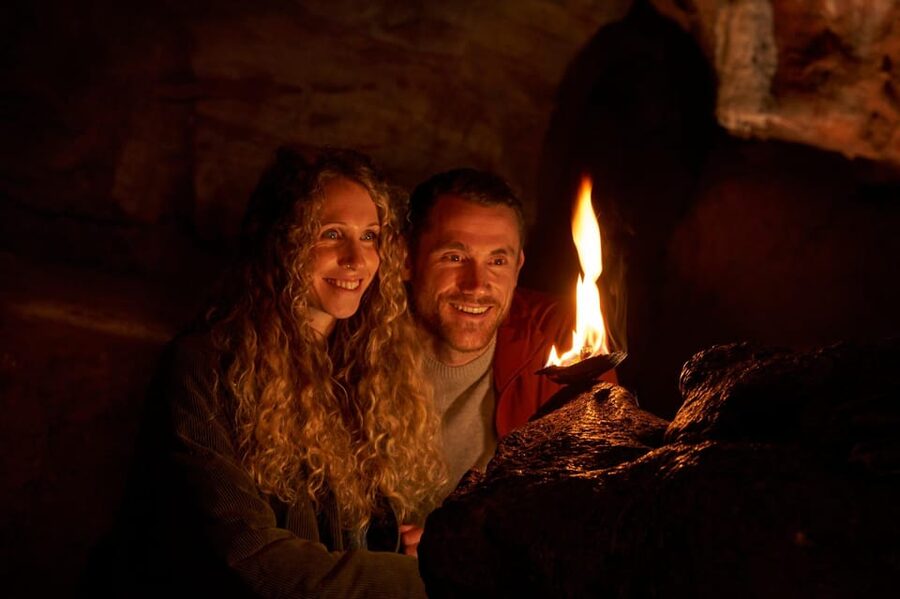
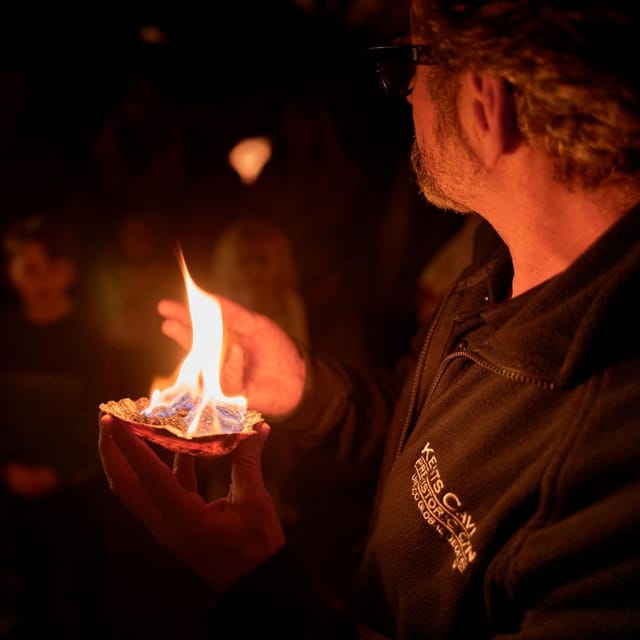
- A striking firelight demonstration: Guide James has used shell candles to show how early light could fill a cavern.
- The Stone Age Zone: View early tools, bones, and other objects connected with prehistoric life.
- More than a cave tour: Your ticket also includes the Woodland Trail, site facilities, and gemstone digging.
- Mostly easy walking: Expect flat concrete paths, nine shallow steps, a few steep slopes, and some narrow sections.
Why Kents Cavern feels different from a standard cave visit
Many cave attractions focus on formations alone. Kents Cavern gives you two stories at once: the story of the rock beneath your feet and the story of people who used these chambers during severe Ice Age conditions.
That human connection is the strongest reason to book. You are not simply looking at stalactites and stalagmites. You are hearing how ancient people sheltered from bad weather, made fires, shaped tools, and hunted animals during a very different period of British history.
The cavern itself formed about 2.5 million years ago, while the rock is far older. That contrast is worth keeping in mind. The walls and floor belong to deep geological time, but the evidence of human activity trapped beneath stalagmite floors is much more recent.
I find this kind of setting easier to understand with a guide. A bare chamber can look impressive but confusing. Once someone explains how deposits formed and sealed layers of evidence, the cave becomes a record of changing climate, animals, and human activity.
Also worth an afternoon while you are in Britain:
- London: The London Eye Entry Ticket
★ 4.6 · 35,875 reviews - From London: Harry Potter Warner Bros Studio Tour
★ 4.7 · 26,588 reviews - London: Westminster to Greenwich River Thames Cruise
★ 4.5 · 22,836 reviews
Starting in the Vestibule Chamber
You begin at the ticket desk, where staff provide your tour passes and direct you onward. All cave visits are guided, and the tour starts in the Vestibule Chamber.
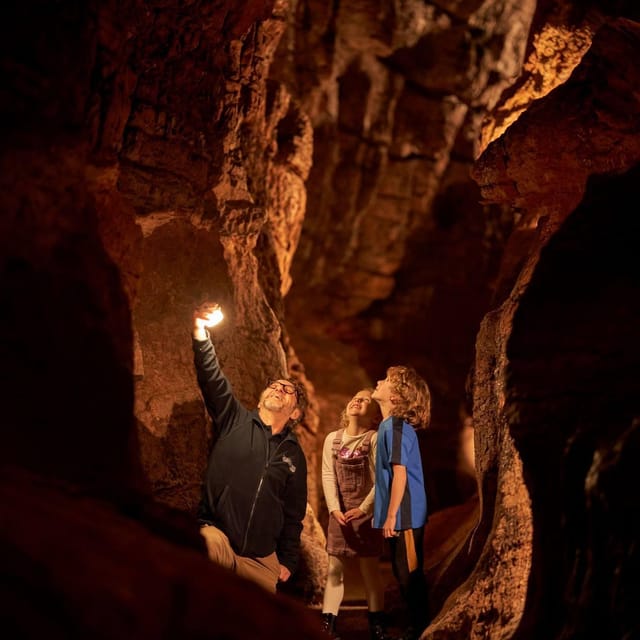
The temperature inside stays around 14°C. That is cool enough to make a light jacket or warm layer worthwhile, even if the weather outside is mild. Comfortable shoes matter more than fancy walking gear, since the route uses concrete surfaces but includes slopes and a few uneven or narrow portions.
The first moments are useful for adjusting your eyes and getting a sense of the cave’s scale. You will have plenty of headroom, so there is no need to stoop, but the cave is still a confined underground setting. If you dislike enclosed spaces, this is not the right outing for you.
The tour needs at least two people to operate. Solo visitors should contact Kents Cavern before booking rather than assume a departure will run for one person.
Seeing the stalactites and stalagmites

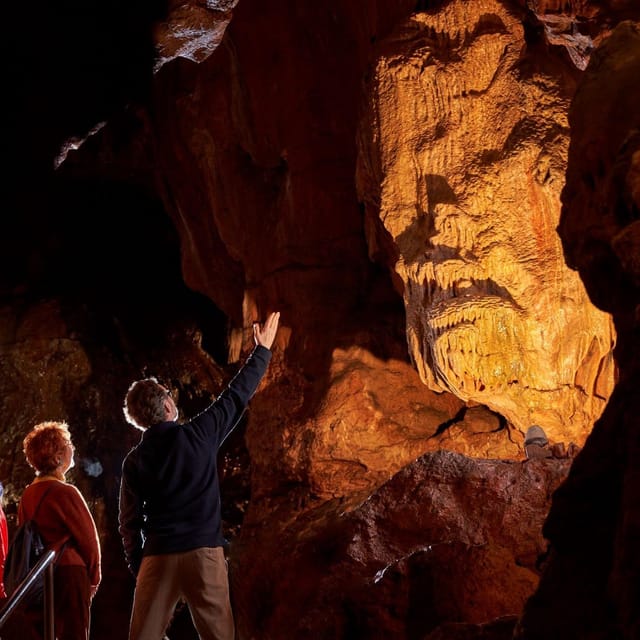
The cave chambers contain an abundance of stalactites and stalagmites. These formations are the visual highlight, but the guide’s explanations give them more meaning than a quick photo stop would.
You will learn how water and mineral deposits shaped the cave and how stalagmite floors eventually sealed evidence of Ice Age occupation. That detail is particularly important. The floor is not just a surface for walking. It helped preserve traces of what happened in the cave long after people and animals were gone.
The formations are lit for viewing, so you can study their shapes as you move through the chambers. Bring a camera if you like taking underground photographs, but video recording is not allowed.
One memorable part of the guiding style has been the use of shell candles. James, one of the guides, has demonstrated how wax and moss packed into a shell could provide a surprisingly steady light. With the electric lighting turned off, two shell candles were enough to illuminate a large chamber.
That moment connects the cave to the practical problem early humans faced. Without fire or another light source, the darkness is total. You cannot see your hand in front of your face. It is a simple demonstration, but it makes the importance of fire feel immediate rather than abstract.
Guide quality can shape this tour. James has been singled out for mixing geological facts with humor, while Liv has handled a group of 38 people of different ages with clear explanations and strong pacing. Charlie has also been praised for making the cave visit engaging. Guides vary, but the experience depends heavily on their ability to bring the rooms to life.
The Ice Age story under the surface
Kents Cavern is one of Europe’s important Stone Age sites. Inside, the emphasis is on how people lived through extreme weather rather than on a single dramatic discovery.
As you move through the cave, the guide explains how people made fires, produced tools, and used the shelter while Ice Age animals roamed outside and, at times, inside the wider cave system. The setting helps you picture survival as a daily task: finding light, staying warm, preparing food, and making useful objects from limited materials.
This is also where the tour may feel more like a lesson than entertainment. If you enjoy archaeology and geology, the steady explanations are a strength. If you want constant spectacle, the hour may seem less exciting, particularly since the route is fairly easy and does not involve climbing or crawling.
For families, the subject matter works best when children are old enough to listen to a guide for an hour. One ten-year-old was reported to have followed the presentation closely, and the guide’s humor helps keep the material accessible. Younger children may be more interested in the activities outside the main cave.
Elsewhere in Britain, a change of pace:
- Magical London: Harry Potter Guided Walking Tour
★ 4.7 · 22,044 reviews - London: Madame Tussauds London
★ 4.6 · 20,915 reviews - London: Warner Bros. Studio Tour with Transfers
★ 4.7 · 17,586 reviews - Edinburgh: Loch Ness, Glencoe & the Scottish Highlands Tour
★ 4.6 · 17,446 reviews
The Stone Age Zone and early tools
After or around the cave tour, you can visit the Stone Age Zone. This area displays an extensive collection of artefacts and bones belonging to creatures that once occupied or passed through the cave.
The earliest tools found in Britain are a major draw here. They help turn the broad idea of prehistoric people into something concrete. Instead of hearing only that early humans made tools, you can see the kind of objects linked to that skill and consider how much work went into shaping even a basic implement.
Bones add another layer. They connect the cave to the animals of the Ice Age and show that this was part of a much larger setting, not simply a human shelter. The displays are especially useful if you have children who want to know what lived here and how archaeologists piece together the past.
Gemstone digging is included. Children can search for stones to take home, which gives families an easy activity after the more formal cave presentation. It is a small feature, but it can prevent the visit from ending the moment the guided hour is over.
The Woodland Trail adds time outdoors
Your ticket also covers the Woodland Trail, so you can extend the visit beyond the underground chambers. The trail includes shelter building and Ice Age animal sculptures.
The shelters give children a practical way to think about prehistoric life. Instead of only viewing tools and bones behind displays, they can consider the basic problem of making protection from the elements. The animal sculptures offer straightforward photo opportunities and help younger visitors connect the cave story with the creatures described by the guide.
This outdoor section also changes the pace. After an hour underground, the fresh air and open woodland can be welcome. It is not a replacement for the cave tour, but it makes the admission feel more like a small attraction visit than a single guided walk.
Plan for extra time if you want to use the trail, look around the Stone Age Zone, and stop at the cafe. The advertised cave portion lasts one hour, while the additional facilities let you shape the rest of the visit at your own speed.
What the $22 price gets you

At $22 per person, the value depends on how much of the site you use. If you arrive only for the one-hour cave walk, the price is reasonable for a guided visit to an important prehistoric site, but it is not a bargain attraction with a full day of activities.
The ticket includes more than admission to the cavern. You receive the expert guided tour, access to the Stone Age Zone, the Woodland Trail, site facilities, and gemstone digging. Families can make better use of the price by allowing time for these extras rather than leaving directly after the cave.
Food and drinks cost extra at the Firestone Kitchen. The cafe serves sweet treats, lunch choices, and beverages, giving you a practical place to rest before or after the tour.
Free cancellation is available up to 24 hours before the visit, and you can reserve now and pay later. Those terms are useful if your South West England plans are still shifting, though the most important practical step is checking the available starting time.
Access, clothing, and who should skip it
Kents Cavern is described as a relatively easy walk, with mostly flat concrete surfaces, plenty of headroom, and only nine shallow steps. Sensible shoes are enough for most people, but the route also includes gradients as steep as 1:4 to 1:5 and some narrow sections.
Wheelchair users cannot get beyond the first chamber. A film of the cave tour is available free in the visitor centre, which provides an alternative for people unable to negotiate the route.
Standard pushchairs can use the cave footpath. Double pushchairs and all-terrain pushchairs are too wide to enter the caves. Assistance dogs are allowed when under their owners’ control, but other pets are not.
Warm clothing is a good idea because the cave remains at 14°C. People with claustrophobia should avoid the tour, even though the route has headroom and does not require stooping.
How the guiding affects the experience
The strongest praise has focused on the guides, not just the cave itself. A good guide makes the geology easier to grasp, gives the Stone Age material a human angle, and controls the pace for a mixed-age group.
James has used humor and a shell-candle demonstration to show how people once managed without electric light. Liv has been effective with a large group, keeping 38 people focused while explaining the site. Charlie has also been praised for adding to the experience with clear, engaging commentary.
These details matter because a guided cave visit can go two ways. With a strong guide, each chamber has a purpose. With a weaker presentation, the hour could feel like a slow walk past rocks. The overall rating is high, but one low score described the experience as not very exciting, so you should book with the right expectations.
This is a thoughtful history and geology tour with visual highlights, not a fast-paced attraction. The humor and demonstrations help, but the core appeal remains learning how the cave formed and how people used it.
Is Kents Cavern worth booking?
Book it if you like archaeology, geology, prehistoric Britain, or family attractions that mix learning with simple hands-on activities. The combination of a guided cave walk, Ice Age evidence, early tools, woodland activities, and gemstone digging gives you more value than the one-hour duration suggests.
It is especially suitable for families with school-age children, couples who enjoy local history, and anyone looking for an indoor activity in Torquay. The constant 14°C temperature can also be welcome on a hot day, though you still need a warm layer.
Skip it if you want underground climbing, dramatic adventure, or a short self-guided visit. The cave has steep sections, narrow areas, and access limits for wheelchairs, while the presentation asks you to listen and think.
For most people who are comfortable underground, I would book it and leave time for the Stone Age Zone, Woodland Trail, and Firestone Kitchen. The cave formations catch your eye, but the firelight demonstration and evidence of human life are what make the visit worth remembering.
FAQ
How long does the Kents Cavern experience last?
The guided cave tour lasts one hour. Your ticket also includes the Stone Age Zone, Woodland Trail, gemstone digging, and site facilities, so you can spend additional time at the attraction.
What language is the tour conducted in?
The live guided tour is conducted in English.
What temperature is it inside Kents Cavern?
The cave stays at a constant temperature of about 14°C. Bring warm clothing, even during warmer weather.
What does the ticket include?
The ticket includes the expert guided cave tour, access to site facilities, the Woodland Trail, the Stone Age Zone, and gemstone digging.
Is food included in the ticket?
No. Food and beverages are not included, but the on-site Firestone Kitchen serves sweet treats, lunch options, and drinks.
Can wheelchair users take the full cave tour?
No. Wheelchairs cannot negotiate beyond the first chamber because of the gradients and route conditions. A film of the cave tour is available free in the visitor centre.
Can I bring a pushchair or assistance dog?
Standard pushchairs can use the cave footpath, but double and all-terrain pushchairs are too wide. Assistance dogs are welcome under their owners’ control, while other pets are not allowed.
Can I cancel or pay later?
You can cancel up to 24 hours in advance for a full refund. A reserve-now, pay-later option is also available.
New listings around Britain
- London: Secrets of Freddie Mercury Tour with a Cocktail★ 4.1 · 15 reviews
- London: Hampton Court Private Guided Tour★ 3.4 · 15 reviews
- Edinburgh: Isle of Skye, Highlands & Jacobite Steam Train★ 4.6 · 15 reviews
- London: Jack the Ripper Tour and Underground Prison in Spanish★ 5.0 · 15 reviews
- Spanish Language : Original Harry Potter Walking Tour★ 4.5 · 15 reviews
- THE HANGOVER BRUNCH | Benidorm Bingo & Drag Queens★ 4.5 · 15 reviews
- London: Private Couples Photography Session with Landmarks★ 5.0 · 15 reviews
- London: The Saturday Supershow Cabaret at Phoenix Arts Club★ 4.5 · 15 reviews