
Reviewed · LONDON TOURS
London: British Museum Guided Tour Private Group
The Rosetta Stone is the star of this private British Museum visit. You will also see Parthenon sculptures, Roman statues and mosaics, Sutton Hoo treasures, and Hoa Hakananai’a, the striking moai from Easter Island. A licensed guide ties these objects together into one human story.
I like the private group format, which lets you see the museum’s major pieces without following a large crowd. I also like the broad sweep, from Egyptian writing to Anglo-Saxon burial treasures and Pacific Island sculpture. The main caution is timing: one review found the tour more rushed and shorter than expected, so two hours may feel tight for so many collections.
Key points to know before you book
- The Rosetta Stone anchors the Egyptian section, offering a clear way to understand how hieroglyphics were deciphered.
- The private group includes up to five people, making the $331 group price more reasonable when shared by a full party.
- The route covers several major cultures, including Egypt, Greece, Rome, Anglo-Saxon England, and Easter Island.
- Guide Filomena earned special praise for her enthusiasm, while the tour is also offered in French and Italian.
- Tickets arrive by WhatsApp one hour before the tour, and you meet inside the museum after security, not outside the gates.
- The advertised visit lasts two hours, but you should be prepared for a brisk pace through a very large museum.
A fast route through the British Museum’s greatest hits
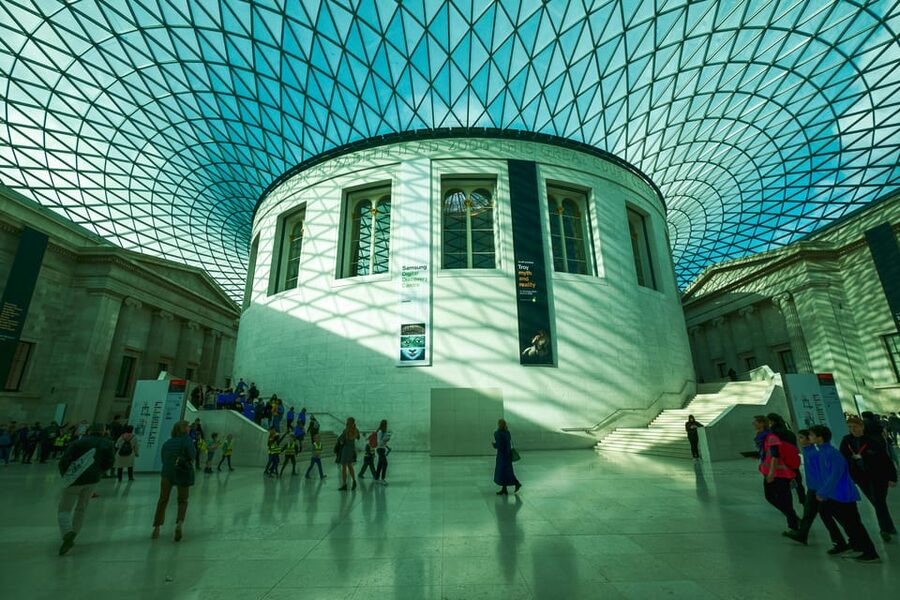
The British Museum can feel like a small city of objects. Its galleries cover far more ground than you can absorb in one visit, and a private guide gives you a practical way to focus on major pieces instead of wandering without a plan.
This tour is built around the museum’s most recognizable works. You move from Egypt to Greece and Rome, then on to Sutton Hoo, Easter Island, and other parts of the collection. That order gives the visit a clear rhythm, though it also means you will not have time for a slow look at every room.
I would think of this as an introduction rather than a complete museum visit. You get the broad picture, learn why certain objects matter, and can return later to spend more time with the sections that catch your eye.
More Museum Tours in London
- London: Chelsea Football Club Stadium and Museum Tour
★ 4.8 · 4,576 reviews - London: British Museum Guided Tour
★ 4.3 · 1,182 reviews - London: Jack the Ripper Museum Tickets
★ 4.2 · 894 reviews
Starting with Egypt and the Rosetta Stone
The Egyptian portion begins with pharaohs, ancient objects, and the problem of understanding a written language that had puzzled scholars for centuries. The Rosetta Stone provides the key moment. Its inscriptions helped researchers compare different scripts and make progress in reading Egyptian hieroglyphics.
That makes the stone more than an ancient slab behind glass. Your guide can use it to explain how the same message in different forms helped connect modern observers with ancient Egypt. It is one of the museum’s most useful objects for showing how historical evidence works.
You should expect a short explanation rather than a full course in Egyptian civilization. The tour has many stops ahead, so the value lies in seeing the object in context and understanding why it changed the study of Egypt.
The Egyptian section also gives you a first look at the tour’s wider theme: human beings recording beliefs, power, daily life, and memory in different ways. That idea carries through the rest of the visit.
Ancient Greece and the Parthenon sculptures
The Greek section shifts from written evidence to sculpture, architecture, and ideas that influenced later European art and thought. The Parthenon sculptures are the main attraction here, with their carved figures and architectural fragments offering a glimpse of the temple’s original visual program.
The objects are also tied to a long-running dispute over ownership and removal. The description specifically calls attention to the controversial Elgin Marbles, so your guide may provide useful context on why these works remain a sensitive subject. This is an important part of seeing them in London. You can admire the carving while also thinking about how the sculptures arrived here and who should hold them.
The Greek galleries also touch on philosophy and inscriptions. That gives the stop more depth than a simple art appreciation lesson. You can consider how sculpture, writing, public buildings, and ideas worked together in ancient Greek society.
The drawback is that the Greek material deserves time. If you are especially interested in the Parthenon sculptures, two hours for the entire museum will not allow a long, quiet examination of every piece. The guide’s job is to select the essentials and keep the group moving.
Roman power in statues, mosaics, and engineering
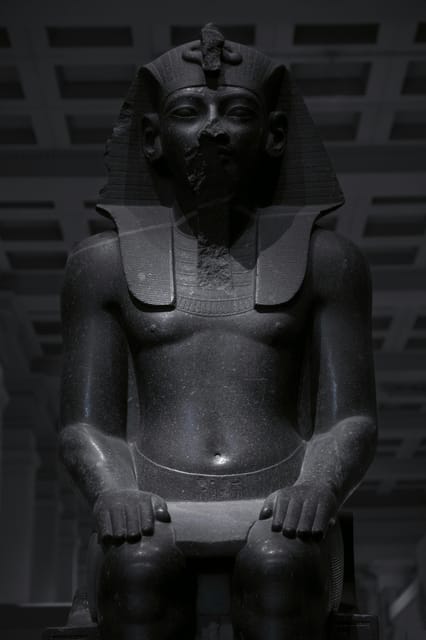
The Roman section adds a different tone. Greek art often invites you to think about proportion, myth, and public ideals. Roman objects can bring you closer to empire, religion, engineering, and the way rulers presented themselves.
You will see intricate mosaics and statues of gods and heroes. These pieces help show how Roman visual culture borrowed from Greece while giving those forms a new political setting. A statue was not just decoration. It could express authority, religious devotion, or the identity of an emperor and his world.
Mosaics are especially useful for understanding Roman craftsmanship. Small pieces of colored material were arranged into detailed scenes and patterns, creating durable floors and decorative surfaces. Your guide can point out the skill involved and explain what these objects reveal about Roman life.
Again, expect highlights rather than a full survey. The tour repeats the Greek focus in part because Roman culture built so heavily on Greek models. That connection is valuable, but it can also make the middle of the tour feel packed if you want equal time in every section.
Further British Museum visits:
- London: Tour of the British Museum
★ 4.1 · 678 reviews - London: British Museum Audio Tour & Priority Entrance Ticket
★ 4.5 · 631 reviews - Afternoon Tea at the British Museum
★ 4.2 · 511 reviews - London: British Museum Guided Tour
★ 4.5 · 267 reviews
Sutton Hoo and early English life
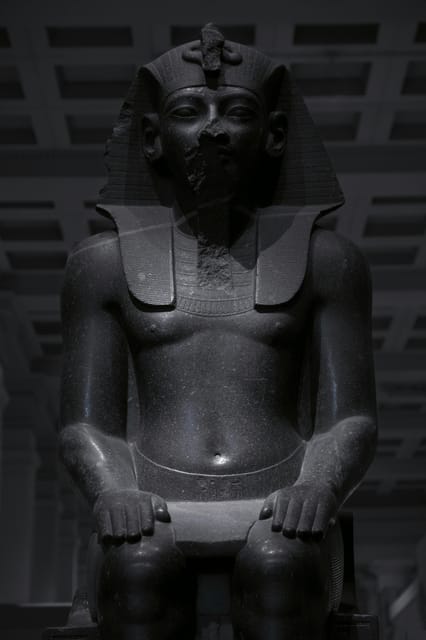
Sutton Hoo changes the subject and the setting. The Anglo-Saxon treasures offer clues about early English life through objects connected with status, belief, craftsmanship, and burial customs.
This is one of the most distinctive stops because it brings the story closer to England itself. After Egypt, Greece, and Rome, you are looking at evidence from early medieval England rather than the better-known civilizations of the Mediterranean.
The appeal of Sutton Hoo is in the questions the objects raise. What did power look like? How were important people remembered? What can metalwork, weapons, and burial goods tell us about a society that left fewer written records?
The guide’s explanation matters here. Without context, a collection of old objects can seem disconnected. With a short account of Sutton Hoo and its significance, the display becomes a window into a particular period of English life.
You may find this portion especially rewarding if you have already seen the museum’s best-known Egyptian and Greek pieces. It gives the tour a more local connection and keeps the route from becoming a parade of only classical Mediterranean artifacts.
Hoa Hakananai’a, a moai far from Easter Island
The tour then reaches Hoa Hakananai’a, a moai from Easter Island. This sculpture brings a Pacific Island culture into the same conversation as Egypt, Greece, Rome, and Anglo-Saxon England.
The moai is powerful because of its scale, form, and spiritual meaning. The tour description presents it as an expression of the beliefs of a distant civilization, so you will get a chance to consider how communities represent ancestors, authority, or sacred power in very different visual forms.
This stop also reinforces one of the visit’s strongest ideas: human creativity is not limited to the cultures most often taught in European art surveys. The museum’s collection lets you compare objects made for very different purposes and places.
As with the Elgin Marbles, the moai also prompts questions about how objects from faraway societies came to be displayed in London. The tour is not presented as a specialist debate on museum ownership, so do not expect a long discussion of those issues. Still, the object itself adds welcome range to the itinerary.
A private format with a brisk two-hour pace
The tour costs $331 per private group of up to five people. If five people join, that works out to about $66.20 per person. For a couple, the per-person price is much higher, but you are paying for a private experience rather than a shared group tour.
The real value depends on how you use the guide. If you want a carefully selected route through famous objects, with the chance to ask questions in a small group, the price can make sense. It is less attractive if you prefer to wander freely, read every label, or spend an entire morning with one collection.
Two hours is a useful length for a first look. You can fit a visit into a busy London day without giving up half a day to the museum. The tradeoff is pace. There are at least six major cultural stops in the plan, plus other objects from around the globe, so you should expect focused explanations and regular movement.
One verified booking described the tour as good but somewhat rushed and shorter than expected. That is the most important practical warning here. Set your expectations around a highlights tour, not a leisurely inspection of the museum.
Comfortable shoes are a sensible choice. You will be inside a large public museum, moving between sections, and standing at major displays while the guide explains them.
Meeting your guide inside the museum
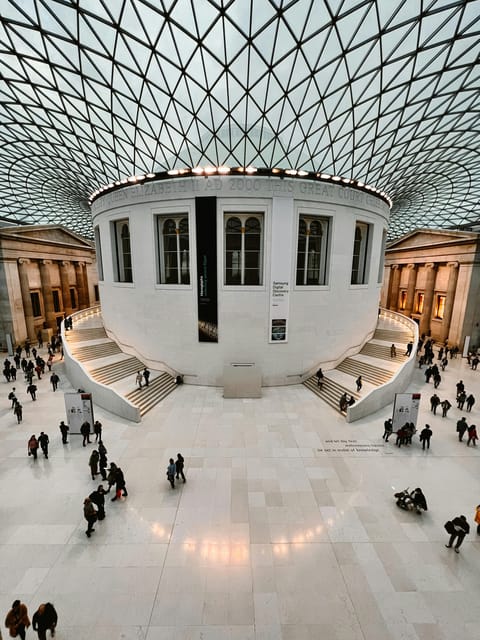
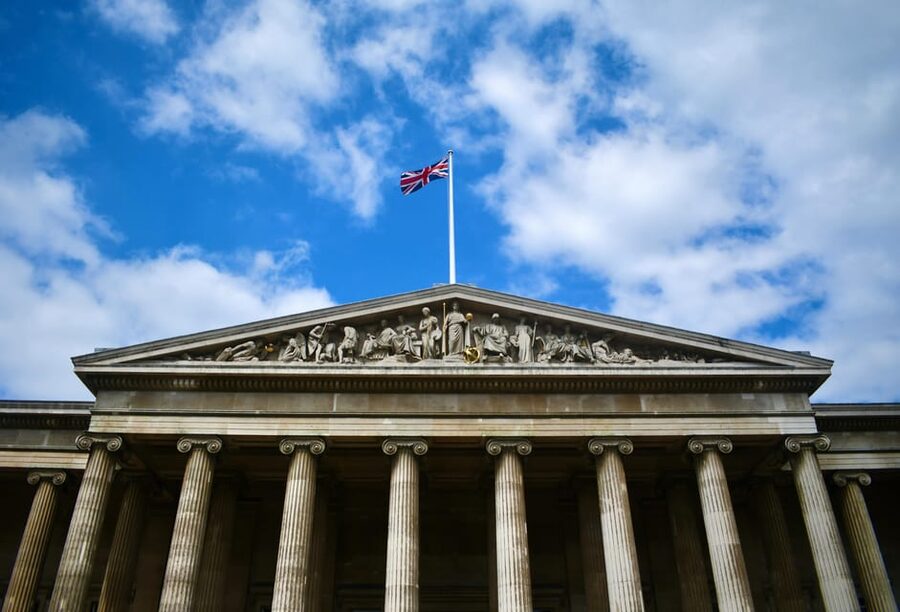
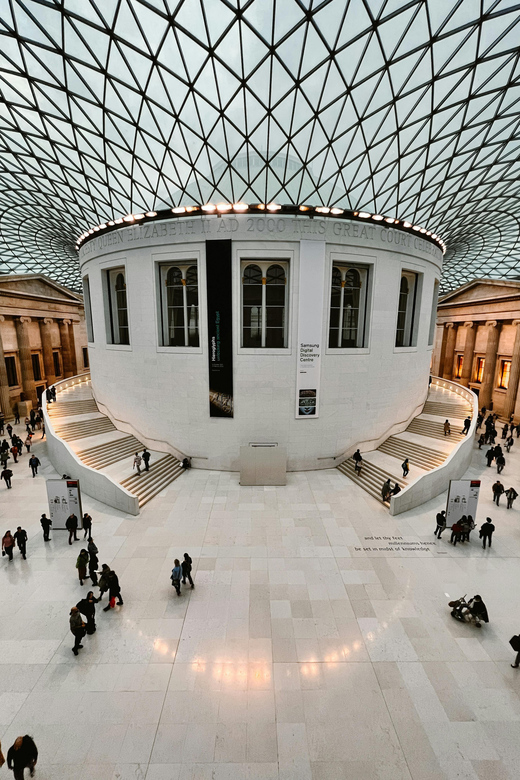
The meeting point requires attention. First pass through security, then find your guide on the stairs near the pillars in front of the British Museum portals. The instructions specifically say this is not outside the gates.
Tickets are provided through WhatsApp one hour before the tour. If you do not use WhatsApp, you need to contact the provider by email so the entry tickets can be sent that way. I would not leave this detail until the last minute. Check that your contact information is correct and make sure you know how you will receive the tickets before heading to the museum.
There is no separate transportation involved in the experience. You make your own way to the British Museum, meet the guide inside, and spend the tour on foot. The museum is wheelchair accessible, and the private format may be helpful if someone in your group needs a little more control over the pace, though the short duration still limits how much can be covered.
The tour is available in English, French, and Italian. If language is important to your group, confirm your preferred option when booking.
What the guide adds to familiar masterpieces
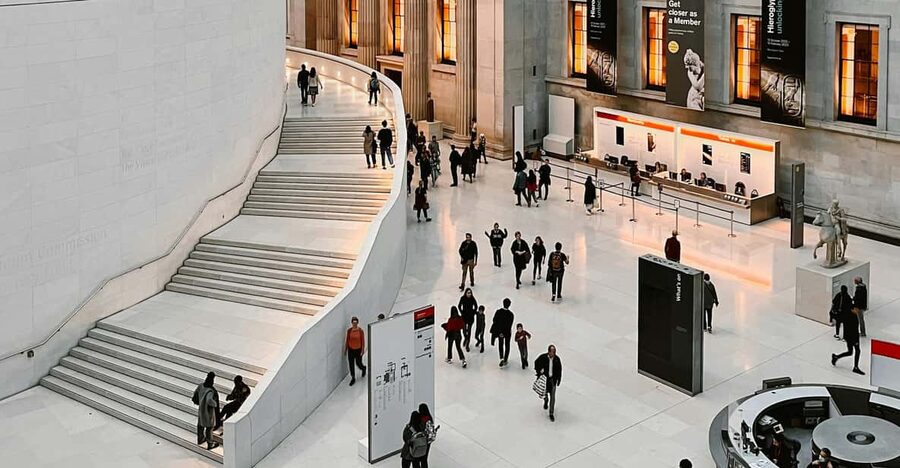
Many people can recognize the Rosetta Stone or the Parthenon sculptures. The guide’s value is in explaining why they matter and connecting them to less familiar objects.
A strong guide can make the transitions work. Egypt introduces writing and interpretation. Greece brings sculpture, architecture, and philosophy. Rome shows how ideas and images served empire. Sutton Hoo shifts attention to early England, and Hoa Hakananai’a widens the story to the Pacific.
Filomena received specific praise for her infectious enthusiasm, and two other reviews also gave the guide top marks, describing the guide as amazing. That points to the human side of this experience. The collection can be overwhelming, so energy and clarity count, especially when the pace is quick.
The guide is also likely to be most useful for families, first-time visitors, and anyone who wants a clear route through the museum. If you already know exactly which galleries you want and enjoy researching objects on your own, you may prefer an independent visit.
Who will get the most from this tour
I would recommend this experience to you if you want to see several famous British Museum objects in one organized visit. It is a good match for a small family, two couples, or a group of friends who want a private guide and can share the group price.
It also suits a first London visit when your schedule is tight. You can cover major Egyptian, Greek, Roman, Anglo-Saxon, and Pacific highlights without trying to plan a route through the entire museum yourself.
You may want another option if you are a serious Egyptology, Greek art, Roman history, or museum studies enthusiast. Two hours will not give you enough time for detailed study. The same applies if you dislike brisk sightseeing or want to spend long periods with a single object.
The private setup is a better fit for people who value personal attention. You can ask questions suited to your group rather than listen to a general talk meant for a large crowd. Still, the itinerary appears to be built around a set of major highlights, so private does not mean fully open-ended.
Should you book this British Museum tour?
Book it if you want a focused first visit with a licensed guide, especially if you can fill most or all of the five-person group. The route includes some of the museum’s most important objects and gives you a useful way to connect distant cultures across time.
Before booking, accept the two-hour limit and the possibility of a fast pace. If the Rosetta Stone, Parthenon sculptures, Roman art, Sutton Hoo, and Hoa Hakananai’a all appeal to you, this is an efficient introduction. If you want quiet study, choose a longer independent visit or plan to return after the tour.
The strongest reason to choose this experience is the guide-led structure. Filomena’s enthusiasm received the clearest praise, and the private group keeps the visit personal. The main reason to hesitate is value for a small party, since $331 is easier to justify when shared by five people.
FAQ
How long does the British Museum tour last?
The stated duration is two hours. One review found the visit shorter than expected, so you should allow for a brisk experience rather than assume you will have extra time.
How many people can join the private group?
The price covers a private group of up to five people.
What is the price of the tour?
The price is $331 per group of up to five people.
Which languages are available?
The tour is offered in English, French, and Italian.
Where do I meet the guide?
Meet the guide inside the British Museum, on the stairs near the pillars in front of the museum portals after passing security. Do not wait outside the gates.
How will I receive the entry tickets?
The tickets are provided through WhatsApp one hour before the tour. If you do not have WhatsApp, contact the provider by email to receive them there.
Is the tour wheelchair accessible?
Yes, the activity is listed as wheelchair accessible.
What should I bring?
Bring comfortable shoes, since the tour involves moving through the museum and standing at displays.
New listings around London
- London: Bermondsey Craft Brewery Tour★ 5.0 · 3 reviews
- Colourful Notting Hill Photography Tour★ 5.0 · 3 reviews
- The London Historic Pubs Tour★ 4.0 · 3 reviews
- Ultimate Royal London, Thames River Boat Ride & Walking Tour★ 5.0 · 3 reviews
- London: Wallace Collection & National Gallery Private Tours★ 5.0 · 3 reviews
- London: The Birthplace of The Rolling Stones Private Tour★ 5.0 · 3 reviews
- Historic pub tour with Brazilian guide (in Portuguese)★ 5.0 · 3 reviews
- London: Royal Tour with Westminster Abbey & Afternoon Tea★ 3.0 · 3 reviews
London Tours, compared.

Westminster to Greenwich River Thames Cruise
Read our review →
Magical London: Harry Potter Guided Walking Tour
Read our review →


Warner Bros. Studio Harry Potter Tour with Transfers
Read our review →Browse the lists this tour appears in