
Reviewed · LONDON TOURS
London: British Museum Guided Tour
The British Museum is so large that the main challenge is not finding something interesting. It is deciding what to skip. This two-hour guided tour gives you a clear route through major highlights, from the Rosetta Stone and Egyptian mummies to the Parthenon Sculptures and Sutton Hoo treasures.
I like the way a good guide turns famous objects into connected stories, rather than leaving you to read a wall of dates. I also like the $23 price, which is modest for a focused introduction to one of London’s biggest museums. The catch is simple: two hours can only give you a sample, and the meeting instructions may require close attention, especially for early starts and entrance queues.
Key points to know before you book
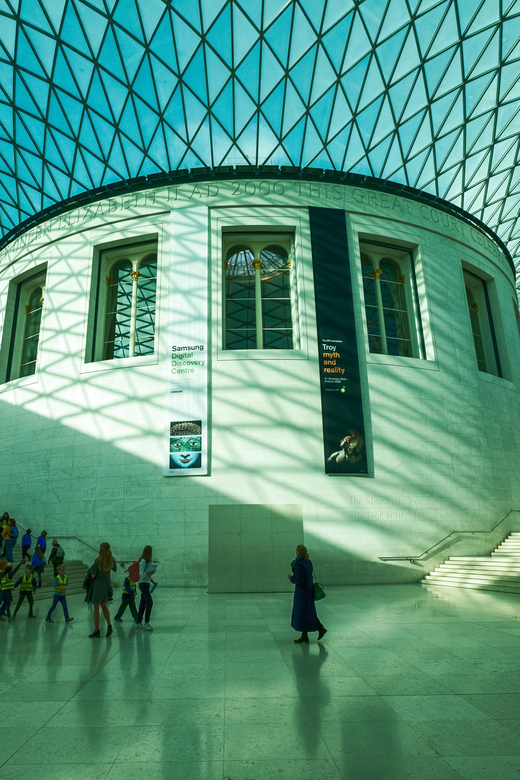
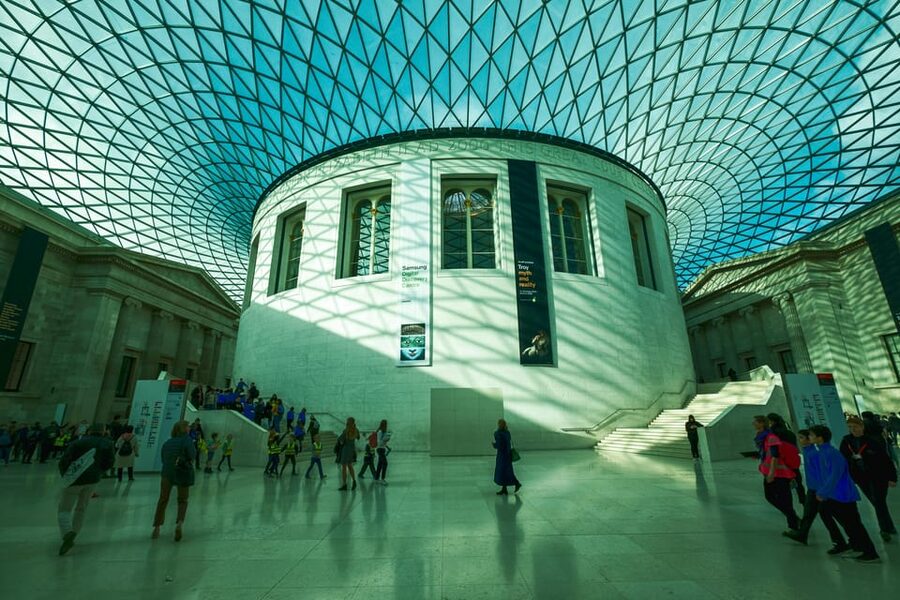
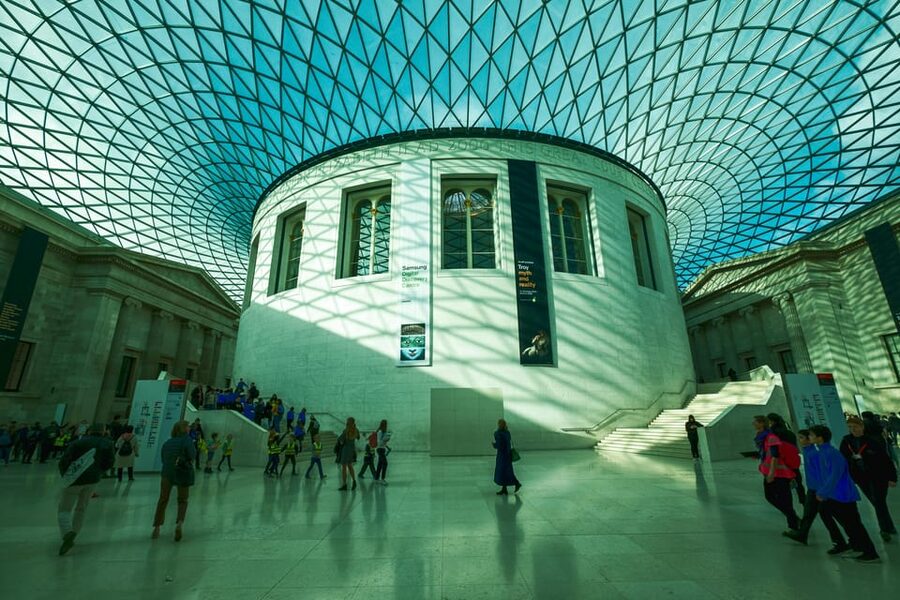
- The Great Court is your visual opening: The glass roof and Reading Room provide an impressive first look before the objects take over.
- The Rosetta Stone anchors the tour: You see the object that helped scholars read Egyptian hieroglyphics.
- The route covers several cultures: Expect Ancient Egypt, Greece, Rome, Anglo-Saxon England, and Assyria in one compact visit.
- The guide makes the difference: Joe, Denise, Paul, Filomena, and others have been praised for clear explanations, humor, strong pacing, and family-friendly storytelling.
- You will not see everything: The museum is far too large for a complete visit in two hours, so plan to return on your own if you want more time.
- Check the meeting details carefully: The meeting point can vary by booking option, and some early tours create confusion because the museum opens at 10 a.m.
Why a guide helps inside such a huge museum
The British Museum can feel like several museums joined together. Its displays range across continents and thousands of years, with famous objects often separated by long corridors and different floors. If you walk in without a plan, you may spend much of your visit trying to work out where to go next.
A guide gives you a route and a reason for each stop. Instead of seeing an Egyptian object, a Greek sculpture, and a medieval burial hoard as unrelated pieces, you get a basic framework for understanding how societies recorded power, religion, trade, death, and daily life.
I find this especially useful if the British Museum is your first large European museum. A two-hour introduction helps you get your bearings fast. You can then decide if you want to return for Egyptian sculpture, Assyrian reliefs, Greek art, or another section in greater detail.
The strongest part of this experience is the human element. Guides named in the feedback include Joe, Denise, Paul, Filomena, Daniel, Chiara, Andi, Selena, and Dionysia. Their styles differ, but the praise is consistent: clear speaking, strong subject knowledge, humor, patience, and the ability to adjust explanations to the group.
That flexibility matters. One guide connected particularly well with a teenager who had not wanted to visit a museum, while another kept children engaged with stories about gods, mummies, and ancient fortunes. Families with older children may get the most from the tour, though younger children can lose interest during long explanations.
More Museum Tours in London
- London: Chelsea Football Club Stadium and Museum Tour
★ 4.8 · 4,576 reviews - London: Jack the Ripper Museum Tickets
★ 4.2 · 894 reviews - London: Tour of the British Museum
★ 4.1 · 678 reviews
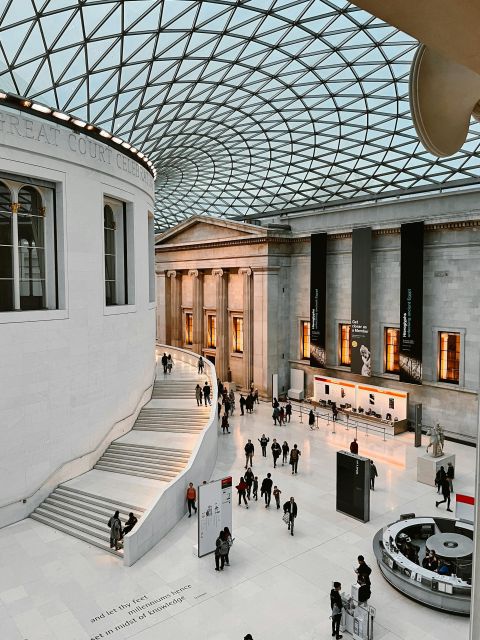
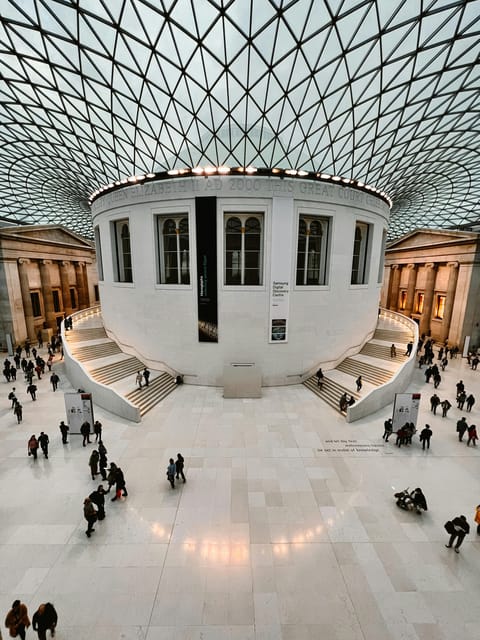
Starting beneath the Great Court’s glass roof
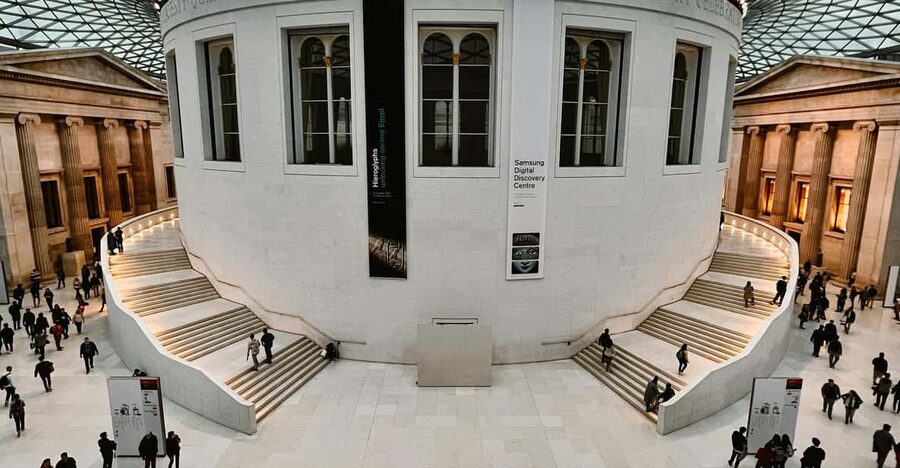
The Great Court is one of the most memorable spaces in the building. Its broad glass ceiling fills the center of the museum with light, while the famous Reading Room sits within the court like a grand circular centerpiece.
This is a smart place to begin because it gives you a sense of the museum as a building, not just a collection of cases. Your guide may explain how the space functions and point out details you might otherwise walk past on your way to the galleries.
Do not expect the Great Court itself to be the main event. It is an orientation point and a striking architectural stop. The real value comes from using it as a launch point for the objects that follow.
The entrance process deserves care. Several bookings involve meeting inside or near the museum after security, and the exact point can vary with the option you choose. Some people had trouble locating the guide because of queues and limited phone service. If your phone does not have roaming, save the meeting instructions and the guide’s contact details before you arrive.
An early booking can also be confusing. The museum opens at 10 a.m., yet some instructions ask you to arrive 15 minutes before a 10 a.m. start. You cannot enter before the doors open, so check the current instructions carefully and allow time for the queue.
The Rosetta Stone and the power of a single object
The Rosetta Stone is the tour’s clearest lesson in how one object can change our view of the past. It carries the same decree in three forms of writing, including Egyptian hieroglyphics. Comparing those versions gave scholars the key they needed to read the ancient Egyptian script.
The stone is famous, and it can be crowded. A guide helps by giving you the story before you reach the case, then directing your attention to the details that matter. You are not simply looking at a dark slab. You are looking at a tool that opened access to thousands of years of Egyptian writing.
This is also a good example of why context beats a checklist. Without an explanation, the Rosetta Stone is an important object. With the story of decipherment, it becomes a turning point in the study of ancient Egypt.
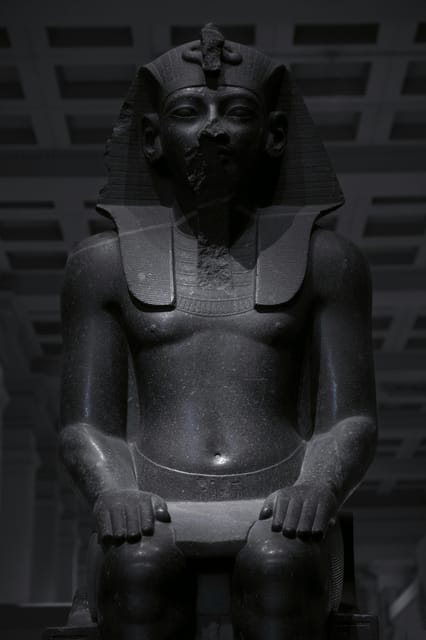
The Egyptian galleries include a large collection of mummies. That gives the tour a more immediate human focus after the larger story of writing and royal power. A mummy is not just an old body. It raises questions about belief, burial, medicine, family, and the way a society imagined life after death.
Parents should judge the mummy section based on their children. One family found that even younger children became interested when they saw a body thousands of years old. Other children aged six to nine found parts of the tour harder to follow. The guide can help, but a museum visit still requires patience.
Parthenon Sculptures and the difficult side of museum collections
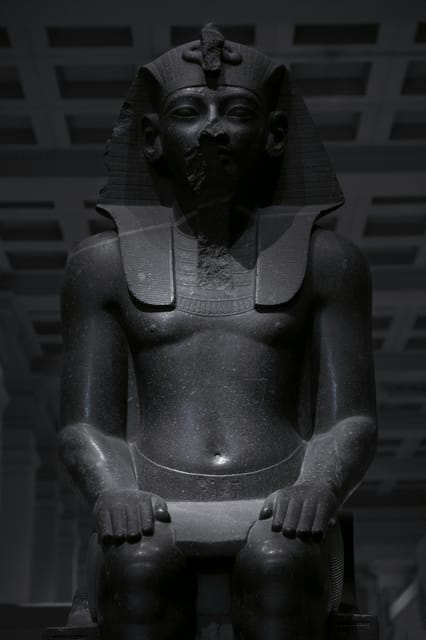
The Parthenon Sculptures, also called the Elgin Marbles, bring a modern argument into an ancient gallery. The sculptures were taken from the Parthenon in Athens by Lord Elgin, who was British ambassador to the Ottoman Empire.
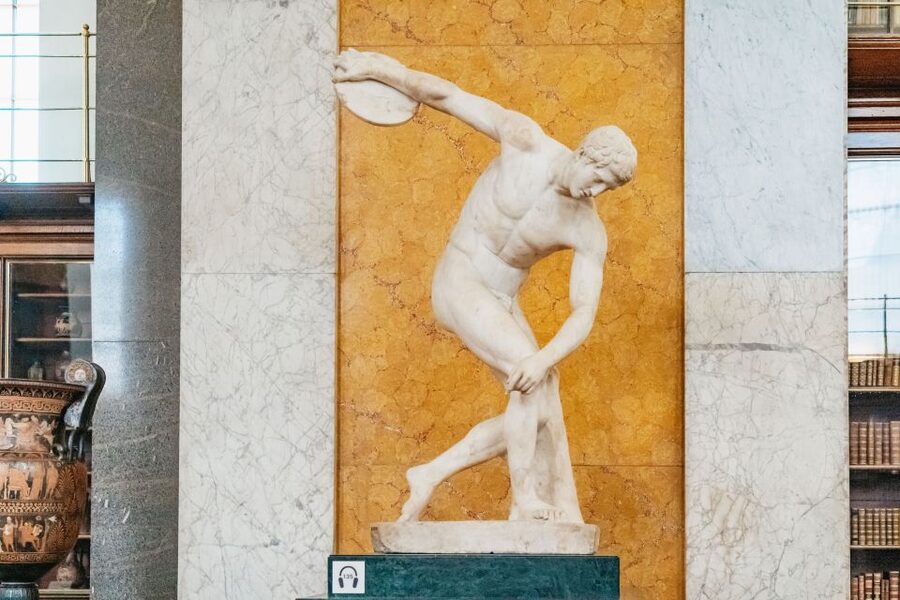
The objects are beautiful, but their presence in London is controversial. A good guide can explain both the artistic importance of the sculptures and the dispute over how they were removed and where they belong today.
This is one of the tour’s more valuable stops because it shows that museums are not neutral storage rooms. Their collections are shaped by empire, diplomacy, collecting, excavation, money, and changing ideas about ownership. You get more from the sculptures when you understand that present-day questions are part of their story.
The drawback is time. The Parthenon gallery can easily absorb an hour on its own if you stop to examine the figures, architectural details, and explanations. On a highlights route, you will probably get the main points rather than a long study of individual sculptures.
If this is your main reason for visiting, use the guided tour as an introduction and return later. The guide can show you where to continue, but the two-hour schedule is not designed for a specialist look at every piece.
Further British Museum visits:
- London: British Museum Audio Tour & Priority Entrance Ticket
★ 4.5 · 631 reviews - Afternoon Tea at the British Museum
★ 4.2 · 511 reviews - London: British Museum Guided Tour
★ 4.5 · 267 reviews - London: British Museum Archaeology Course and Guided Tour
★ 4.7 · 113 reviews
Sutton Hoo and the story of Anglo-Saxon England
The Sutton Hoo burial objects provide a change of pace. After the monumental art of Greece and the royal and religious displays of Egypt, you see treasures linked to Anglo-Saxon England.
The material includes burial relics connected with a ship burial. The appeal here is not only the craftsmanship of individual pieces, but also what the burial suggests about status, travel, belief, and power in early England.
A guide helps you read the display as evidence. What was placed in a burial? What might the objects say about the person being honored? What do they reveal about contact between different parts of the world? These questions make the case more meaningful than a quick look at glittering metalwork.
The stop also helps balance the usual British Museum highlights. Many first-time visitors head straight for Egypt, Greece, and Rome. Sutton Hoo gives you a strong British connection and shows that the museum’s story is not limited to Mediterranean civilizations.
Still, you should expect a selective visit. The tour may pass through several sections quickly so you can see the major objects promised in the route. If Anglo-Saxon England interests you most, note the location and return after the guide finishes.
Assyrian Winged Bulls and the scale of ancient power
The Winged Bulls from Khorsabad are among the objects that make the British Museum feel larger than life. These huge guardian figures were made for an Assyrian setting and combine a human face, animal body, and wings.
Their size matters. You understand ancient power differently when you stand beside a sculpture built to guard an entrance or impress everyone who approached it. A guide can point out the details and explain how the figures worked within a palace or ceremonial space.
This is also where a good route saves time. Large objects can be spread through galleries that are easy to miss if you wander without a plan. A guide who knows the museum can move the group efficiently and keep the story moving between stops.
One of the praised guides, Joe, was especially good at maintaining themes throughout the visit and returning to them as the group moved between galleries. That approach helps the museum feel less like a random collection and more like a series of connected questions about rulers, religion, writing, and death.
What the two-hour pace feels like
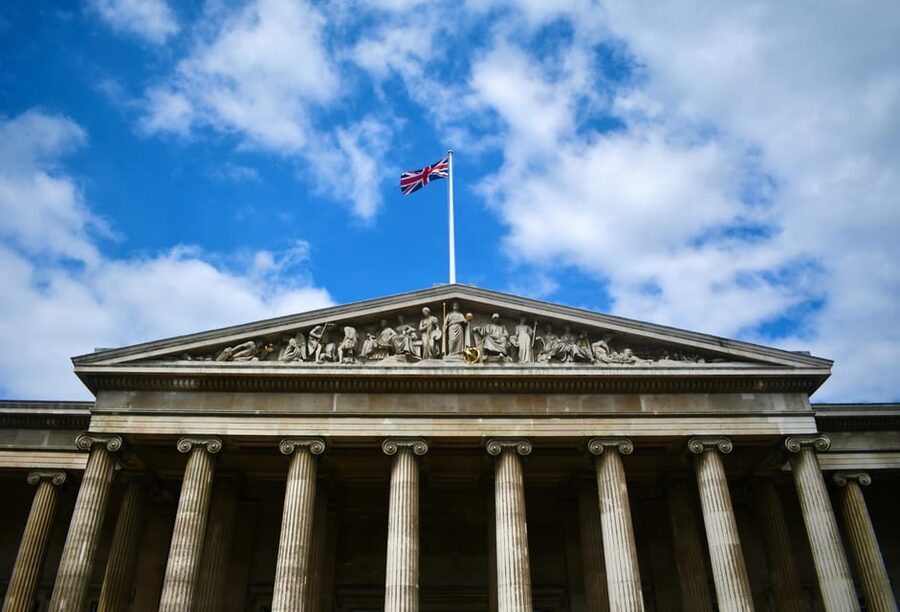
Two hours sounds generous until you look at the list: the Great Court, Rosetta Stone, Egyptian mummies, Parthenon Sculptures, Sutton Hoo, and Winged Bulls. Add walking time, crowding, questions, and short pauses, and you can see why the route must stay focused.
The best guides use the spaces between exhibits well. Several guides were praised for continuing to explain objects and themes while walking from one stop to another. That makes the pace feel fuller without forcing every stop into a rushed speech.
You should expect to stand for much of the tour, though guides may find seats for people who need them. One guide made sure a visitor using a cane always had a place to sit while the group listened.
Headsets are included when the group has more than six people. That can make a real difference in crowded galleries. In a small group, you may be able to hear the guide directly, but do not count on quiet surroundings.
The group size is not fixed in the information provided. One particularly well-liked tour had six people, which allowed the guide to cover ground while still answering questions. Larger groups can work well with headsets, but a small group usually feels more personal.
Price, value, and who should take this tour
At $23 per person, this is a good-value introduction if you want structure and explanation. Admission to the public museum is not the main cost here. You are paying for a guide who chooses the route, supplies context, handles the pace, and helps you avoid getting lost.
I would especially consider it if you have only one visit planned, if you are traveling with older children, or if major ancient civilizations are new to you. The tour gives you enough range to understand why the museum is famous without requiring you to plan a route through a complicated building.
It is less useful if you already know exactly which galleries you want to study. In that case, you may prefer to visit independently and spend your full time at one collection.
Do not book this expecting a complete British Museum visit. You will see selected highlights, not every gallery or object. The ideal plan is to take the tour early in your museum visit, then stay on afterward and explore the sections that caught your interest.
The booking includes free cancellation, but the supplied terms give both 24 hours and 72 hours as the cutoff in different places. Check the exact cancellation rule for your selected option before paying. Reserve now and pay later is available, and transportation to the museum is not included.
The tour is listed as wheelchair accessible. The live guide information names English and Italian, while the activity details also mention commentary in German, French, Spanish, Russian, and Portuguese. Confirm your preferred language before booking if it is important to you.
Should you book the British Museum guided tour?
Book it if you want the museum’s biggest stories explained by a lively person rather than discovered by guesswork. The Rosetta Stone, Parthenon Sculptures, mummies, Sutton Hoo, and Winged Bulls make a strong first route, and guides such as Joe, Denise, Paul, and Filomena have shown that warmth and storytelling can matter as much as facts.
Skip it if you want a slow, single-subject museum visit or already have a detailed personal plan. For most first-time visitors, though, $23 is a sensible price for two hours of direction inside an enormous collection. Bring your curiosity, arrive with the meeting instructions saved, and leave time afterward to explore on your own.
FAQ
How long does the British Museum guided tour last?
The tour lasts two hours. Starting times depend on availability and the option you book.
How much does the tour cost?
The listed price is $23 per person.
Which exhibits are included in the route?
The tour highlights the Great Court, Rosetta Stone, Parthenon Sculptures, Ancient Egyptian mummies, Sutton Hoo burial relics, and Winged Bulls from Khorsabad.
Is transportation included?
No. Transportation to and from the British Museum is not included.
What languages are available?
The live guide information lists English and Italian. The activity details also list commentary in German, French, Spanish, Russian, and Portuguese. Confirm the language attached to your selected option.
Is the tour wheelchair accessible?
Yes. The activity is listed as wheelchair accessible.
Are headsets provided?
Headsets are provided for groups of more than six people.
Is the tour suitable for children?
Children can enjoy the tour, especially if they like history, stories, mummies, or ancient cultures. Younger children may find some of the explanations harder to follow.
Can I reserve now and pay later?
Yes. The reserve now and pay later option lets you hold a place without paying immediately.
What is the cancellation policy?
The supplied booking information lists free cancellation up to 24 hours in advance, while another note gives 72 hours as the no-penalty cutoff. Check the exact terms for your chosen option before booking.
New listings around London
- London: Secrets of Freddie Mercury Tour with a Cocktail★ 4.1 · 15 reviews
- London: Hampton Court Private Guided Tour★ 3.4 · 15 reviews
- London: Jack the Ripper Tour and Underground Prison in Spanish★ 5.0 · 15 reviews
- Spanish Language : Original Harry Potter Walking Tour★ 4.5 · 15 reviews
- London: Private Couples Photography Session with Landmarks★ 5.0 · 15 reviews
- London: The Saturday Supershow Cabaret at Phoenix Arts Club★ 4.5 · 15 reviews
- London: 2-Hour Guided Tour of the British Museum★ 4.7 · 16 reviews
- London’s Ghosts & Gruesome Past Nighttime Walking Tour★ 4.8 · 16 reviews
London Tours, compared.

Westminster to Greenwich River Thames Cruise
Read our review →
Magical London: Harry Potter Guided Walking Tour
Read our review →


Warner Bros. Studio Harry Potter Tour with Transfers
Read our review →Browse the lists this tour appears in