
Reviewed · LONDON TOURS
London: British Museum Guided Tour with Priority Entrance
The British Museum holds more than 8 million objects, so a two-hour guided route is a sensible way to get your bearings. You’ll move from the Great Court and Parthenon Sculptures to Egyptian mummies, the Rosetta Stone, and the Sutton Hoo burial, with the guide supplying the links between them.
I like the small group of up to 10 because it gives you a better chance to hear the commentary and ask questions. I also like the broad route, which includes famous highlights but gives time to Anglo-Saxon England, China, Southeast Asia, and the Enlightenment Room. The main caution is the advertised priority entrance: you may still face a queue, sometimes as long as 45 minutes, before reaching the museum.
Key points
- The route covers several major cultures: Ancient Egypt, Greece, Anglo-Saxon England, China, Southeast Asia, and the 18th-century Enlightenment collection.
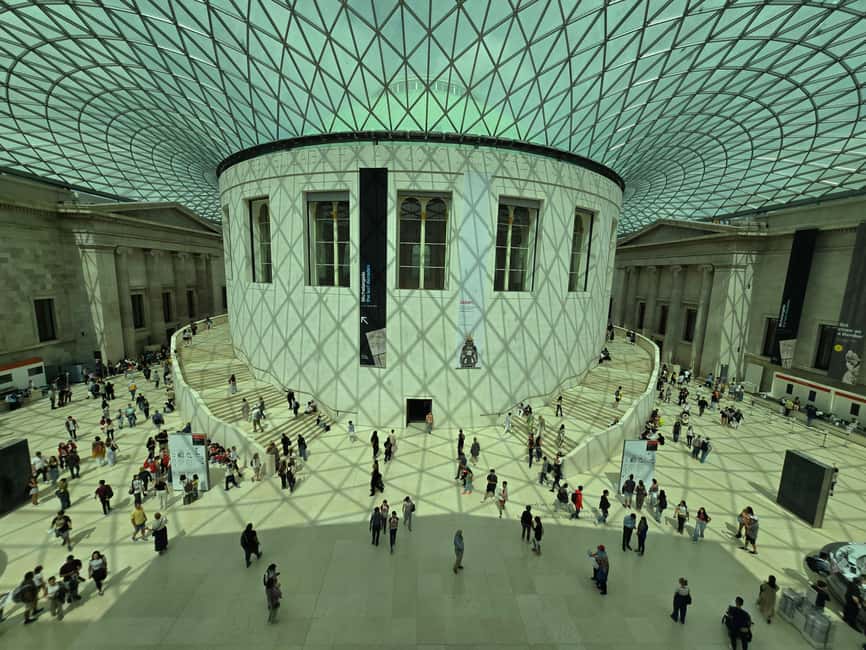
- The Great Court begins the visual show: Its glass roof is one of the museum’s most memorable sights, even before the objects come into view.
- Parthenon Sculptures provide a strong Greek focus: You’ll see classical marble works alongside stories of gods, heroes, and ancient Athens.
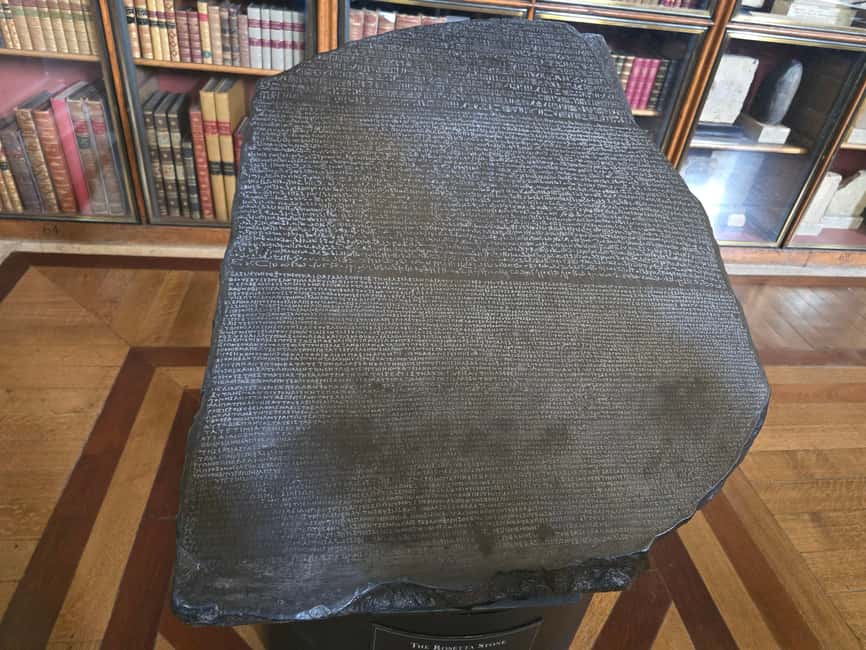
- Egypt gets more than a quick glance: The route includes mummies, the Book of the Dead, Ramesses II, and the Rosetta Stone.
- Sutton Hoo adds a distinctly British chapter: The helmet, shield, and burial objects reveal the skill and beliefs of early medieval England.
- The guide makes the difference: Tony, Tara, Stuart, Alex, and Mira have all led tours here, with especially strong praise for clear, engaging commentary.
Starting beneath the British Museum’s glass roof
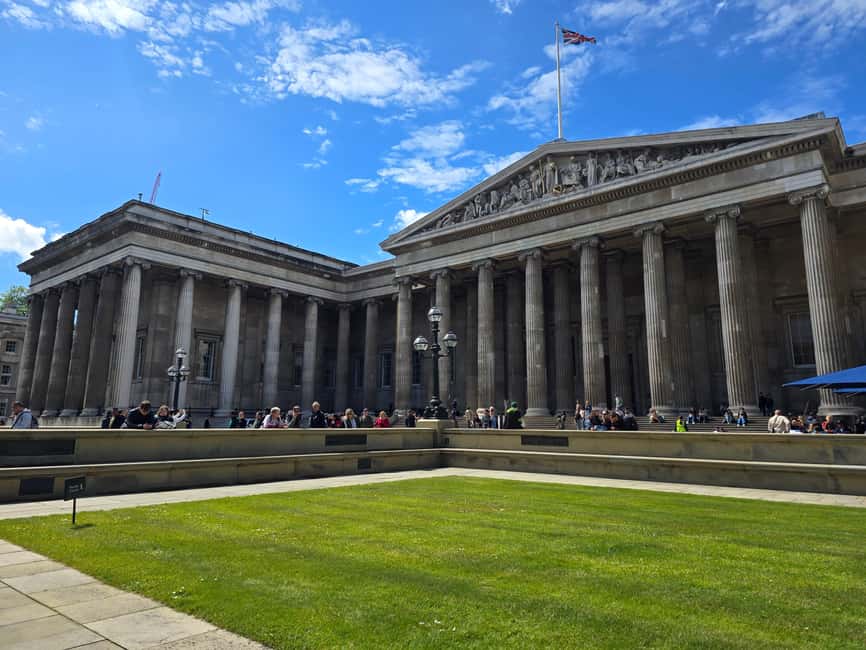
Your meeting point is inside the British Museum, next to the information desk. That detail matters. You are not meeting on a nearby pavement and hoping to identify a guide in a crowd. Once inside, you return to the same spot after the tour.
The Great Court is the natural opening scene. Its broad central space is covered by a striking glass roof, and the ceiling gives you an immediate sense of the museum’s scale. This is more than a passageway between galleries. It is a work of architecture that helps explain why the building itself deserves attention.
The museum’s size can work against a casual visit. With more than 8 million objects and over 70 galleries, even a full day would leave large sections unseen. A guide-led route helps you spend your limited time on objects with the strongest stories, rather than wandering until the closing announcement.
The group is limited to 10 people. That is small enough to make a real difference in a large public museum, though the experience still depends on the pace of the group and the guide’s ability to find space around popular displays.
More Museum Tours in London
- London: Chelsea Football Club Stadium and Museum Tour
★ 4.8 · 4,576 reviews - London: British Museum Guided Tour
★ 4.3 · 1,182 reviews - London: Jack the Ripper Museum Tickets
★ 4.2 · 894 reviews
Why the Parthenon Sculptures matter
The Parthenon Sculptures, also called the Elgin Marbles, are one of the museum’s best-known displays. They offer a close look at classical Greek sculpture, but they also open a larger discussion about mythology, architecture, collecting, and ownership.
A guide can help you read the figures instead of simply admiring pale marble shapes. Look for the way bodies, clothing, movement, and expression were handled. The route uses these works to explain myths and legends from ancient Greece, giving the objects a story framework that is hard to build on your own during a short visit.
This stop also has a practical advantage. The sculptures are famous enough to attract attention, but a guide can point out details you might miss when moving through the gallery alone. You will not have time to study every figure at length, so expect an introduction to the most important pieces rather than a complete art-history lesson.
The name Elgin Marbles also carries political and ethical weight. The tour description identifies the two common names, but it does not promise a long debate about contested ownership. If that subject is central to your interest, use the tour as an introduction and allow extra museum time afterward.
Egyptian mummies, the Rosetta Stone, and Ramesses II
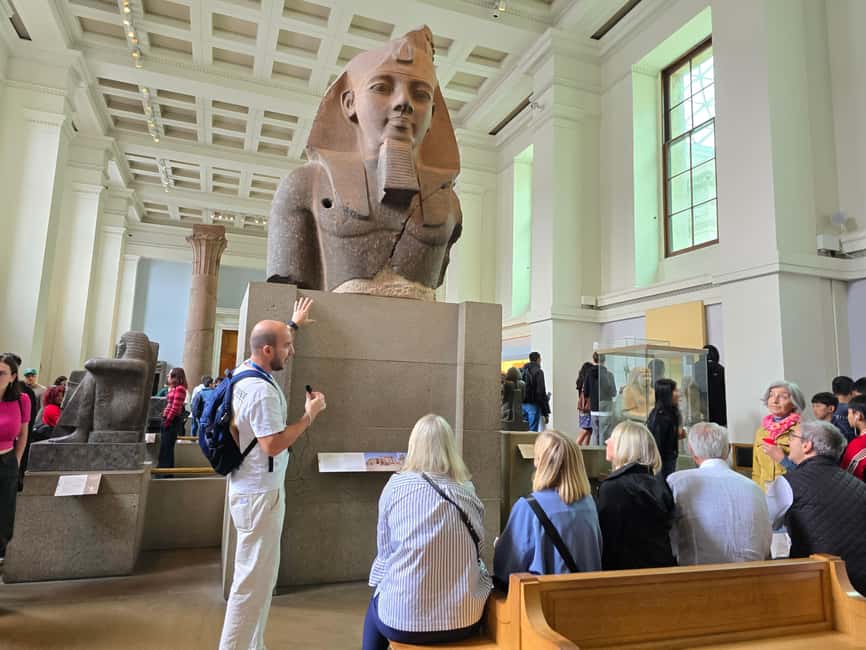
The Egyptian section gives the tour some of its most immediately recognizable objects. You’ll see Egyptian mummies, the Book of the Dead, and the large bust of Ramesses II.
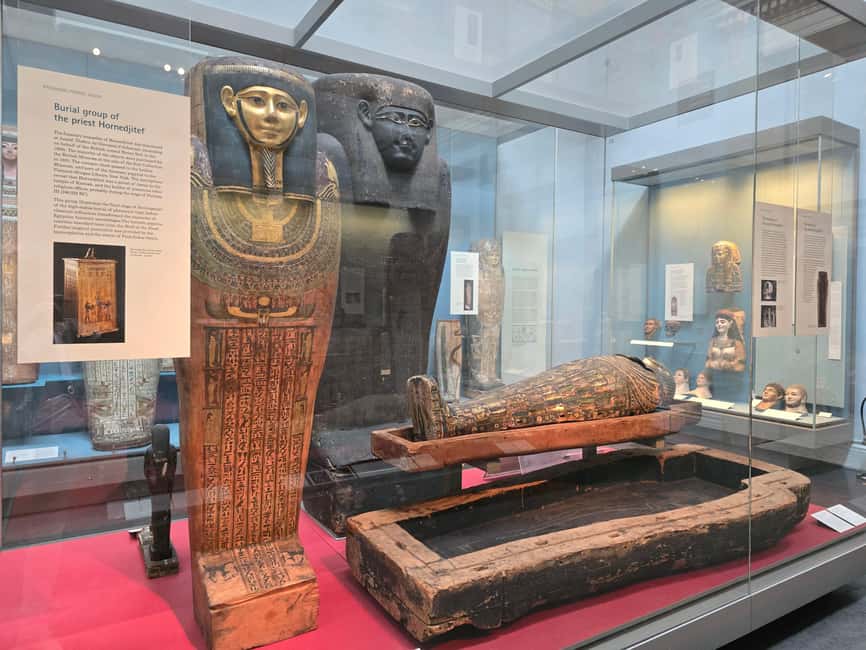
The mummies make ancient burial practices personal. Instead of thinking only about pyramids and pharaohs, you get a look at how people prepared for death and imagined the next life. The Book of the Dead helps connect burial objects to religious beliefs, while the guide can explain why these items were placed with the dead.
The Rosetta Stone is another essential stop. Its importance comes from the role it played in understanding Egyptian hieroglyphs. Seeing it in person is different from seeing a photograph, not because it is visually enormous, but because its surface represents a major step in reading an ancient writing system.
Ramesses II adds the royal scale. The bust gives you a direct encounter with the image of pharaonic power, and it balances the more intimate material connected with ordinary burial practices.
You should expect a brisk presentation here. Egypt alone could fill several hours, and the tour must also reach Greece, Britain, Asia, and the Enlightenment collection. The benefit is range. The tradeoff is that each stop receives an introduction rather than a long scholarly discussion.
The Enlightenment Room and the museum as a place of ideas
The Enlightenment Room shifts the mood. Here, the focus is not one ancient civilization or one famous object, but the collecting habits and intellectual curiosity of the 18th century.
The room includes varied objects linked to science, study, exploration, and the organization of knowledge. That makes it useful for understanding how museums developed. You are not only looking at individual artefacts. You are also seeing how people in another period tried to classify and understand the world.
This section can be easy to overlook if you visit alone with a short list of famous sights. Including it gives the tour a wider purpose. The British Museum is not just a display of old things. It is also a record of how later generations gathered, labeled, compared, and interpreted those things.
The guide’s explanation matters here because the objects may not carry the instant visual punch of a mummy or a monumental sculpture. Clear commentary can turn a room of assorted items into a story about learning and discovery.
Further British Museum visits:
- London: Tour of the British Museum
★ 4.1 · 678 reviews - London: British Museum Audio Tour & Priority Entrance Ticket
★ 4.5 · 631 reviews - Afternoon Tea at the British Museum
★ 4.2 · 511 reviews - London: British Museum Guided Tour
★ 4.5 · 267 reviews
Sutton Hoo and early medieval England
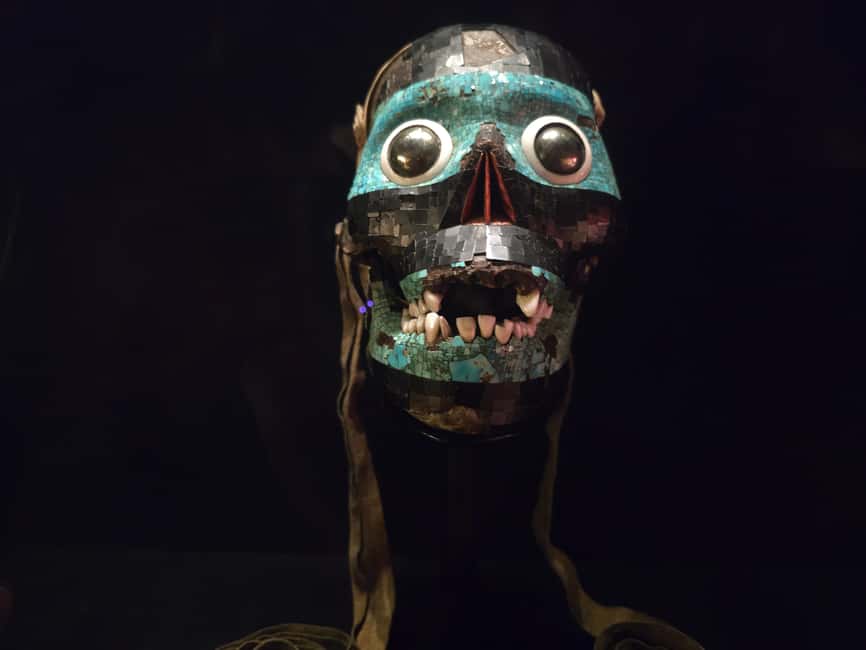
The Sutton Hoo ship burial gives the route a strong British chapter. The display centers on an Anglo-Saxon burial discovered in Suffolk, with objects that include an intricately made helmet, a shield, and other grave goods.
The helmet is the natural star. Its design shows the high level of craft in early medieval England, while the burial itself raises questions about status, ceremony, trade, and belief. You get a picture of a society that is often reduced to a few stereotypes about warriors and kings.
The ship burial also helps correct the idea that Britain’s early medieval period was culturally isolated. The objects point to skilled metalwork and connections beyond a single local community. Your guide will place the finds in the wider story of Anglo-Saxon England.
This is one of the tour’s most valuable choices because many short British Museum routes focus almost entirely on Egypt and Greece. Sutton Hoo gives you a closer connection to Britain itself. If you have limited time in London, that local focus adds balance to the international collections.
Chinese and Southeast Asian collections
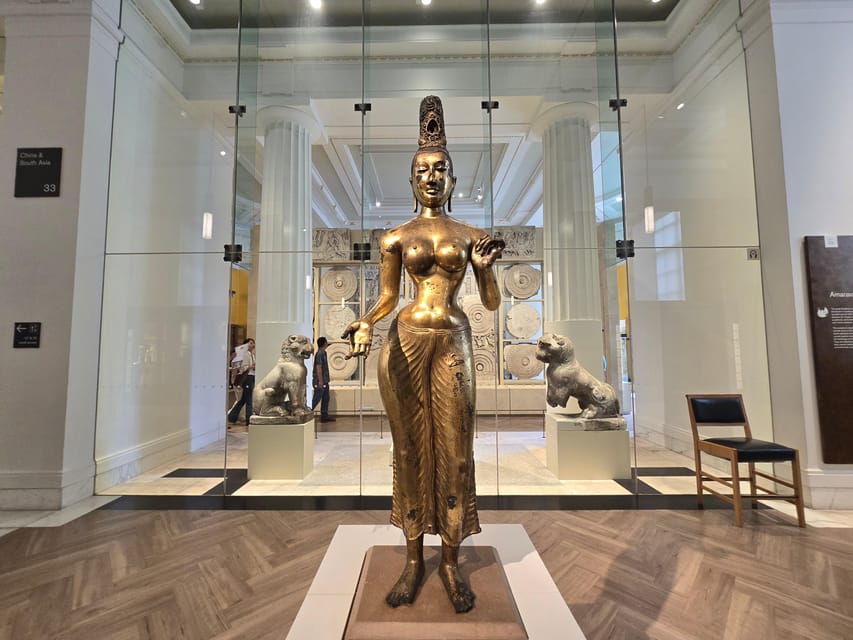
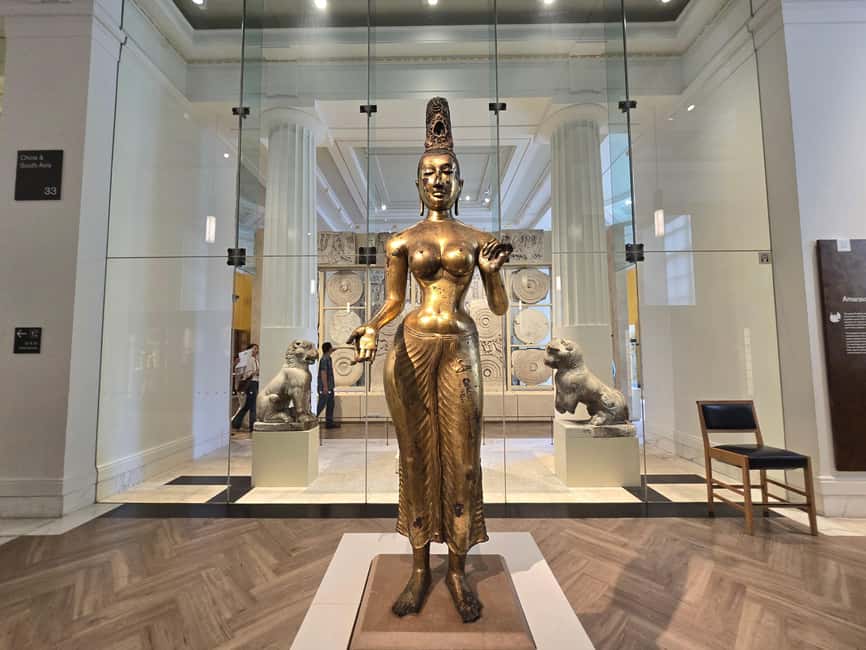
The Asian displays extend the tour beyond the best-known western galleries. You’ll see Chinese objects and finely made artefacts from Southeast Asia, with attention to the artistic traditions and past societies represented by the collection.
The information provided does not list exact objects or a fixed gallery sequence for this part of the visit. You should therefore treat it as a guided introduction rather than a promise to see every major Asian display.
That flexibility may be useful. The British Museum’s collections are too large for a short, fixed route to cover in detail. A guide can select objects that fit the group’s pace and connect them to the broader story of Asian art and culture.
If China or Southeast Asia is your main reason for visiting, this two-hour tour may not be enough on its own. You will likely want to return independently for a longer look. If you want a broad first visit, these sections stop the experience from becoming only an ancient Egypt and Greece checklist.
What the guide adds in two hours
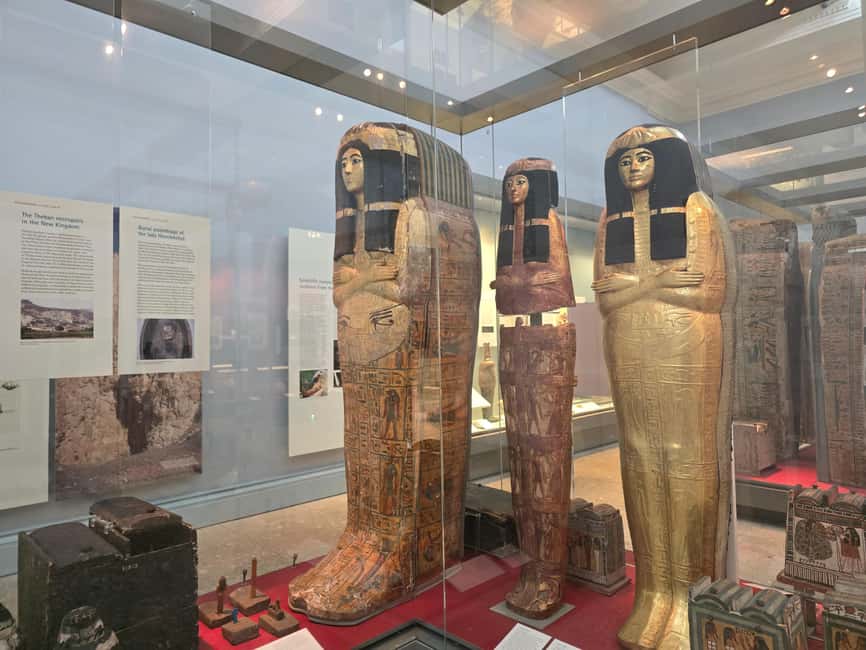
The strongest part of this experience is the human explanation. The museum’s labels can tell you dates, names, and basic facts. A live guide can decide what deserves attention, explain why an object matters, and connect one gallery to the next.
Tony is specifically praised for commentary that was interesting and enjoyable. Tara is described as enthusiastic and passionate about the museum, with fascinating stories and a respectful manner. Stuart also received warm praise, including for waiting when a visitor was delayed by the entrance queue. Alex and Mira led another tour described as very interesting and informative.
Those details tell you what to look for. You want a guide who can keep the route moving without making it feel like a race. You also want commentary that goes beyond reciting labels. The best moments should help you understand how an object was made, used, buried, collected, or interpreted.
Headsets are available as an option. Ask about them if the galleries are crowded or if you have trouble hearing. The listed languages are English and Italian, so check the selected departure carefully if language is important to your booking.
The priority entrance needs a clear warning
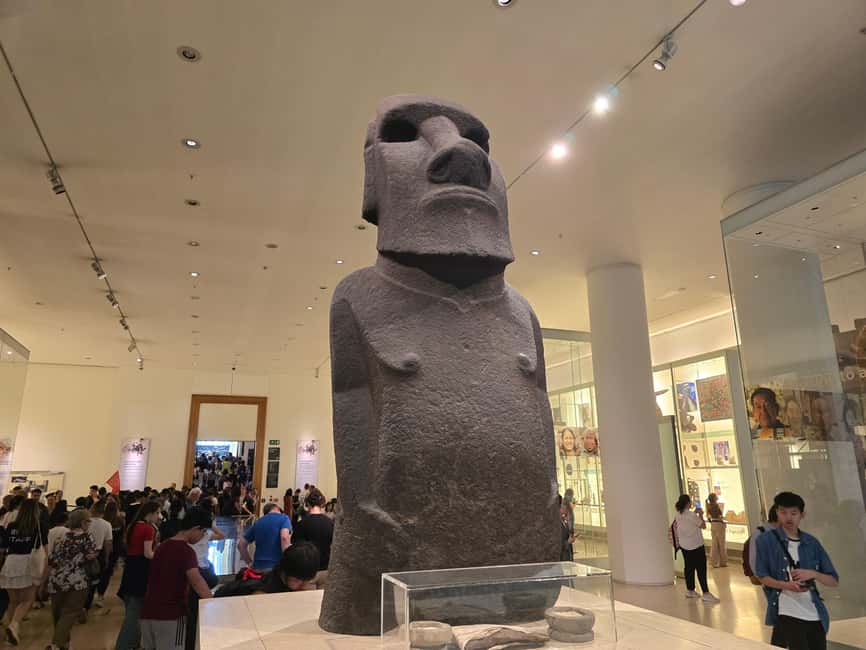
The ticket includes priority tickets for the main entrance with allocated timeslots, and the activity is described as using a separate entrance. In practice, you should not assume you will walk straight inside.
One detailed account says the supposed priority access was not really priority access. The British Museum is free to enter, but you may still need to wait in line for a ticket or security process. On a busy day, the queue may take up to 45 minutes.
This is the most important practical issue in the booking. Arrive early, even though the guide waits inside next to the information desk. If you arrive at the last minute and meet a long queue, you risk missing the start of the tour. Stuart reportedly waited for a delayed participant, but you should not depend on that courtesy.
The price is $39.05 per person. Since entry to the British Museum itself is free, the fee is mainly paying for the guided route, organization, and allocated entry arrangement. That can be fair value if you have only two hours and want a clear introduction. It is less attractive if you already know the museum well or plan to spend several days studying the collections alone.
The small group improves the value compared with a large coach-style tour. Still, the entrance wording means you should judge this as a paid guide service with timed access, not as a guaranteed way to bypass every queue.
Timing, meeting point, and what is not included
The tour lasts two hours, and starting times depend on availability. The activity begins and ends inside the museum at the information desk meeting point.
Transportation is not included, and neither are food or drinks. That is easy to manage because the tour is short, but plan your route to the museum before the appointment. The meeting instructions are unusually important here: your guide waits inside, not outside the building.
The tour does not provide a full day in the museum. Think of it as a well-planned first visit. Afterward, you can decide which galleries deserve a return visit, if your schedule allows.
Free cancellation is available up to 24 hours before the start for a full refund. You can also reserve now and pay later, which helps if your London plans are still shifting.
Who will get the most from this route
I would recommend this tour to a first-time British Museum visitor who wants context without committing to a full day. It suits couples, families with older children, and anyone who prefers a guide to set the pace.
It is also a good choice if you feel overwhelmed by very large museums. The route gives you several anchor points: the Great Court, Greece, Egypt, the Enlightenment Room, Asia, and Sutton Hoo. You leave with a map of the collection in your head.
You may want a different plan if your main interest is one narrow subject. An Egypt specialist, Greek art student, or Asian art enthusiast will probably need more than two hours and may prefer an independent visit focused on one wing.
The tour is offered in English and Italian. Check the language and time before paying, since the live commentary is central to the experience.
Should you book this British Museum tour?
Book it if you value clear stories, a small group, and a broad first look at one of London’s biggest museums. The route combines famous objects with less obvious choices, especially Sutton Hoo and the Enlightenment Room. Guides such as Tony, Tara, and Stuart have been praised for making the collections engaging and easy to follow.
Book with realistic expectations about entry. The museum is free, and the paid advantage is the guide plus timed access, not a guaranteed escape from every queue. Arrive early and allow up to 45 minutes for waiting on a busy day.
At $39.05, this is good value for a visitor who might otherwise lose time wandering through 70 or more galleries. If you already have a detailed museum plan and plenty of time, save the money and explore independently. For a focused two-hour introduction, the tour earns its place on a London schedule.
FAQ
How long does the British Museum guided tour last?
The guided tour lasts two hours. Starting times depend on availability when you check the booking calendar.
Where does the tour begin?
Your guide waits inside the British Museum next to the information desk. The activity also ends back at this meeting point.
Is entrance to the British Museum included?
The experience includes priority tickets for the main entrance with allocated timeslots. The museum itself is free to enter, but you may still face a queue before entering or completing the admission process.
Does the tour really skip the line?
The activity is described as using a separate entrance, but you should not assume there will be no wait. One detailed account reports a queue of up to 45 minutes on busy days, so arrive early.
What languages are available?
The live guide provides commentary in English or Italian. Check the available language when selecting your time.
How large is the tour group?
The group is limited to 10 participants. Headsets may be available as an option.
Which British Museum objects are included?
The route includes the Great Court, Parthenon Sculptures, Egyptian mummies, the Book of the Dead, the bust of Ramesses II, the Rosetta Stone, the Enlightenment Room, Chinese and Southeast Asian collections, and Sutton Hoo objects.
Can I cancel for a full refund?
You can cancel up to 24 hours in advance for a full refund. The activity also offers a reserve-now, pay-later option.
New listings around London
- London: Hampton Court Private Guided Tour★ 3.4 · 15 reviews
- London: Secrets of Freddie Mercury Tour with a Cocktail★ 4.1 · 15 reviews
- London: Jack the Ripper Tour and Underground Prison in Spanish★ 5.0 · 15 reviews
- Spanish Language : Original Harry Potter Walking Tour★ 4.5 · 15 reviews
- London: Private Couples Photography Session with Landmarks★ 5.0 · 15 reviews
- London: The Saturday Supershow Cabaret at Phoenix Arts Club★ 4.5 · 15 reviews
- London: 2-Hour Guided Tour of the British Museum★ 4.7 · 16 reviews
- London’s Ghosts & Gruesome Past Nighttime Walking Tour★ 4.8 · 16 reviews
London Tours, compared.

Westminster to Greenwich River Thames Cruise
Read our review →
Magical London: Harry Potter Guided Walking Tour
Read our review →


Warner Bros. Studio Harry Potter Tour with Transfers
Read our review →Browse the lists this tour appears in