
Reviewed · LONDON TOURS
London: British Museum Guided Tour with Free Entrance Ticket
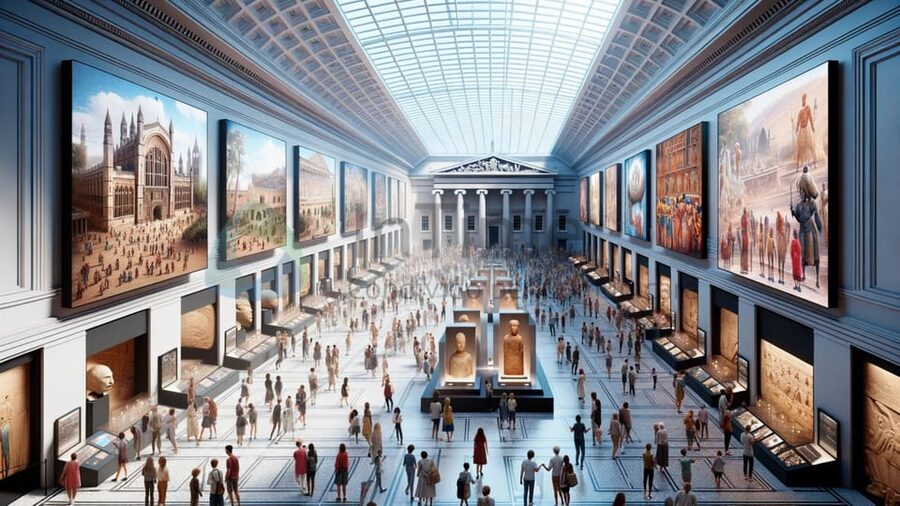
The Rosetta Stone is only the beginning. In two hours, this guided walk takes you from ancient Egypt to Roman Britain, Easter Island, Assyria, the Aztec world, and medieval Scotland, with the guide explaining why each object matters. I like the tight route through famous highlights and the chance to hear the stories that labels often leave out.
I also like the fast-track entry and the sensible $35 price for a guided visit of this scale. The main drawback is the meeting point: busy entry conditions can force groups, especially those larger than eight, to use Montague Place instead of the front entrance. Check WhatsApp before leaving, and arrive 15 minutes early.
Key points to know before booking
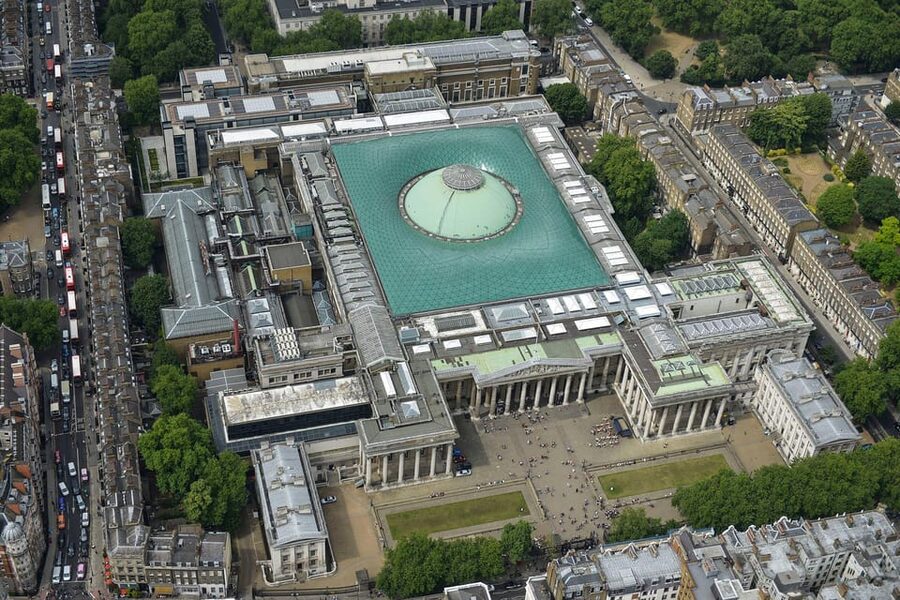
- See major objects in two hours: The route includes the Rosetta Stone, Ramses II, Elgin Marbles, Moai, Sutton Hoo, and more.
- Fast-track entry is included: You still pass security, but online booking helps you avoid the longest entrance wait.
- The guide adds the context: You hear stories and explanations instead of simply walking past display cases.
- Expect a busy meeting point: The museum can be difficult to enter at peak times, and the entrance may change.
- Choose comfortable footwear: The visit involves walking through a large museum, with stairs at the stated meeting point.
- Language choices are useful: Tours are offered in English, Spanish, and Italian, with private groups available.
Why this two-hour British Museum tour works
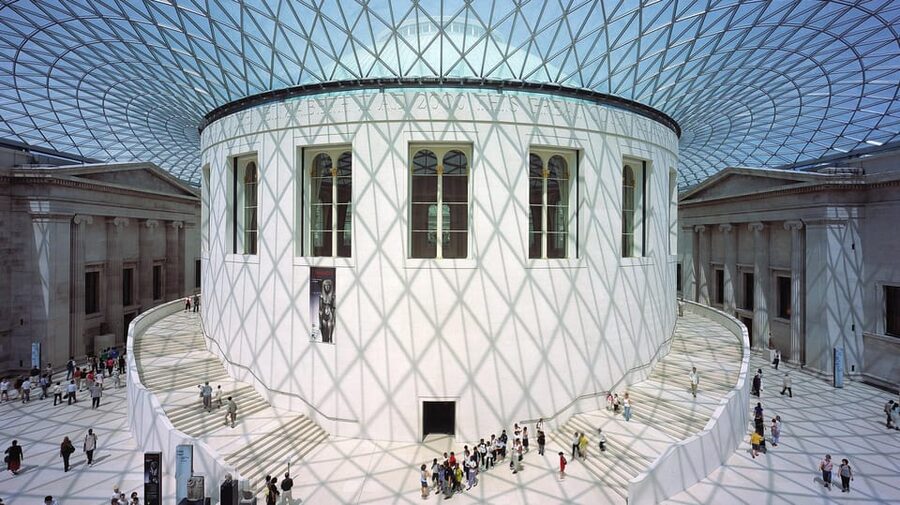
The British Museum is too large for a casual, complete visit. You could spend hours wandering and still miss the objects that define the collection. This tour solves that problem with a clear route and a guide who keeps the focus on the museum’s best-known pieces.
I see the two-hour length as a practical choice. It is long enough to cover major galleries but short enough to fit before dinner, a West End show, or another London sight. You will not see everything, and that is the point. You get a strong first look rather than an exhausting march through every room.
The price is $35 per person. That includes fast-track entry, a live guide, and access to the selected objects. For a museum visit built around famous pieces, I find that fair value, particularly if you want explanations instead of a self-guided walk. The value drops if you prefer to read every label at your own pace or spend half a day on one period.
The tour is also offered with English, Spanish, and Italian-speaking guides. Private groups are available, which may suit families or friends who want a more personal pace. The named guide Angel has been praised for strong stories and clear communication, including getting in touch when a train delay affected the meeting time.
More Museum Tours in London
- London: Chelsea Football Club Stadium and Museum Tour
★ 4.8 · 4,576 reviews - London: British Museum Guided Tour
★ 4.3 · 1,182 reviews - London: Jack the Ripper Museum Tickets
★ 4.2 · 894 reviews
Starting after security at the British Museum
Your instructions are to arrive at the main entrance at least 15 minutes before the scheduled start. Meet the guide after the security check, on the staircase. This sounds simple, but the museum’s popularity can make the first few minutes the least predictable part of the tour.
At busy times, entry can be tough. If your group has more than eight people, you may be directed around to the entrance on Montague Place. One practical lesson is clear: do not treat the front staircase as guaranteed. Check your WhatsApp messages shortly before arrival for any change to the entrance or meeting point.
The fast-track arrangement helps, but it does not mean you walk past every control. Security still applies, and you need to arrive with enough time to find the correct entrance. Do not bring a backpack, and avoid flash photography inside.
This is not the place to arrive at the exact start time with a large bag and a coffee in hand. Wear comfortable shoes, bring water, and keep your camera ready without using its flash. These small choices make the start less stressful.
The Rosetta Stone and the story of ancient Egypt
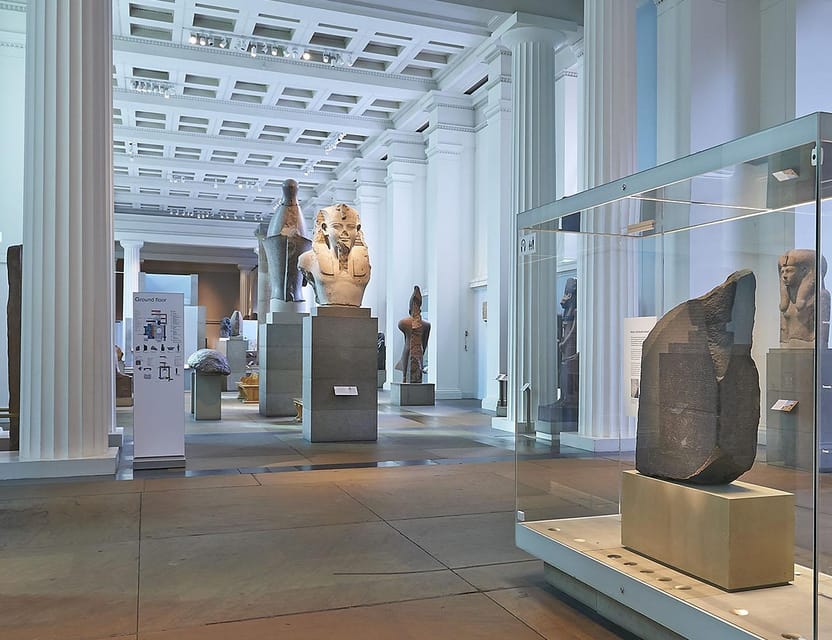
The Rosetta Stone is the natural first headline object. Its importance comes from the inscriptions written in different scripts, which helped scholars understand Egyptian hieroglyphs. A guide can turn the stone from a famous slab into a clue in a much larger story about language and ancient Egypt.
The tour also includes the colossal statue of Ramses II. The scale gives the object immediate impact, but the useful part of the stop is the link to Ramses as one of Egypt’s most powerful pharaohs. A guide helps you look beyond size and ask what the statue was meant to communicate.
These stops are especially useful if you are new to Egyptian collections. You get a basic framework for reading the objects, rather than a string of names and dates. The drawback is time. Two hours means you will hear the central story and move on, not study every nearby case.
If Egypt is your main reason for visiting, you may want to return on your own after the tour. The guided route gives you orientation, but it is not designed as a specialist Egyptian archaeology visit.
The Elgin Marbles and the museum’s difficult questions
The Parthenon sculptures, commonly called the Elgin Marbles, bring a different kind of interest. These objects are not only admired for their artistic quality. Their removal from Athens remains controversial, and the tour presents a chance to consider how museums acquired major works and why ownership can still be disputed.
I like that this stop adds a modern question to an ancient collection. The museum is not simply a room of beautiful things. Its objects also raise issues about empire, collecting, national identity, and who should hold cultural property.
The tour description promises a glimpse at the sculptures, not a long seminar on their legal and political history. You should expect a focused explanation rather than a complete debate. That is suitable for a first visit, though visitors already familiar with the controversy may want more time afterward.
The sculptures also help break up the tour’s geographic range. After Egypt, you shift to ancient Greece and see how different cultures used monumental art to express power, memory, and public life.
Further British Museum visits:
- London: Tour of the British Museum
★ 4.1 · 678 reviews - London: British Museum Audio Tour & Priority Entrance Ticket
★ 4.5 · 631 reviews - Afternoon Tea at the British Museum
★ 4.2 · 511 reviews - London: British Museum Guided Tour
★ 4.5 · 267 reviews
Assyrian lions and an Aztec snake
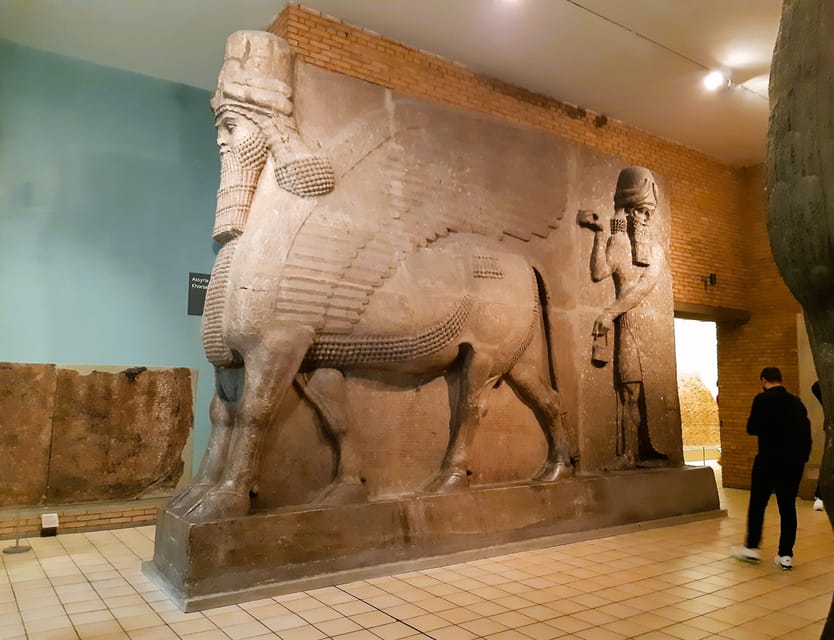
The Assyrian human-headed winged lions are among the route’s most memorable images. Their hybrid form combines a human head, wings, and the body of a lion, creating a guardian figure that feels both powerful and watchful.
This is where a guide earns the admission price. A label can identify the sculpture, but the explanation of its role and design helps you understand why it was made in this unusual form. Look closely at the details rather than treating it as another large stone figure.
The Aztec double-headed mosaic snake offers a sharp change in scale and style. It is described as one of the museum’s rarest objects, and its surface gives you something very different from the stone monuments elsewhere on the route.
These two stops make the tour varied. You move from monumental Assyrian sculpture to a finely worked Aztec object, with no need to build the route yourself. For families and first-time museum visitors, that variety helps hold attention. For specialists, the short visit may leave you wanting a longer look.
Moai, Sutton Hoo, and the range of the collection
The Moai sculpture from Easter Island is another major stop. Its familiar face and monumental form make it easy to recognize, but the guide’s role is to place it within the wider collection and explain why it belongs in a museum that also holds Egyptian, Greek, and European objects.
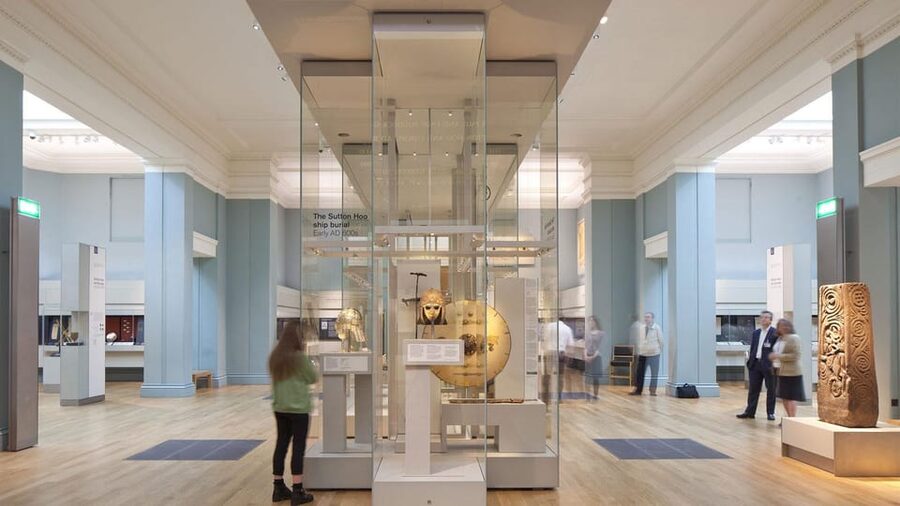
The Sutton Hoo burial ship gives you a very different view of the past. It is described as one of the most spectacular discoveries in British archaeology. The object connects the museum to early medieval Britain and shows that the collection is not limited to the civilizations most people first associate with the building.
You also see material linked to Roman Britain. This section adds local context for a London visit. Instead of treating Britain as separate from the rest of the world, the route places Roman Britain alongside objects from Egypt, Assyria, the Americas, and the Pacific.
The Mold Cape from Stonehenge continues that British focus. It is a chance to see an object associated with prehistoric Britain, while Sutton Hoo takes you into a later period. The contrast is useful because it shows how much time the museum covers in a short walk.
Lewis Chessmen and the final stretch
The medieval Chessmen from the island of Lewis are a lighter and more approachable stop. Their carved faces make them instantly appealing, but they also offer a way to think about medieval life, games, craftsmanship, and trade.
I like having these pieces near the end of the route. After the scale of Ramses, the lions, and the burial ship, the chess pieces bring the tour down to a human size. You can look at individual expressions and details rather than only monumental forms.
The listed route covers an enormous geographic and historical spread. That is its strength, but also its limit. You get an intelligent sample of the collection, not a complete argument about world history. A good guide keeps the transitions clear, while you should accept that some galleries will pass by without a stop.
If one object catches your attention, note its location and return later. The tour is built for movement, so you may not have enough time to linger during the first pass.
What the guide adds to the experience
A guided museum visit succeeds or fails on the quality of its explanations. Here, the stated focus is on secrets and lesser-known stories behind famous objects. That matters because many of these pieces are easy to recognize but harder to understand.
Angel is one named guide connected with the experience. He has been praised for good stories and for keeping communication open when a train delay affected the meeting. That detail is useful because delays can happen in London, and prompt updates make a late start less frustrating.
The available languages are English, Spanish, and Italian. If you book a private group, you can expect a more personal format than a large shared group, though the available details do not specify the exact maximum size or private-group schedule.
Do not expect a quiet museum during peak periods. The British Museum is highly visited, and famous objects can draw crowds. A guide can help you reach the important displays and keep the route moving, but you will still be in a public museum with other people around you.
Practical limits, access, and what to bring
This experience is not suitable for wheelchair users or people with mobility impairments. The meeting instructions include a staircase, and the visit involves moving through a large museum. If you need step-free access or extra assistance, this tour is not a safe choice based on the available information.
You should bring comfortable shoes, water, and a camera. Flash photography is not allowed, and backpacks are not allowed. Keep your belongings simple so security and entry do not slow you down.
The tour does not include hotel pickup or drop-off, food, drinks, or personal expenses. You make your own way to the museum and arrange anything you want before or after the visit.
The activity allows cancellation up to 24 hours before the scheduled tour for a full refund. You can also reserve now and pay later, which gives you some flexibility when your London plans are still changing.
Who will get the most from this museum visit?
I would choose this tour for a first visit to the British Museum, especially if you have only two hours. It suits you if you want the famous objects, a clear route, and enough explanation to understand why they matter.
It is also a good fit for families, couples, and small groups who might lose time deciding where to go. The private-group option may work well if you want a more tailored outing, while the language choices make it easier for Spanish and Italian speakers to follow the commentary.
I would not choose it if you want a slow, specialist study of one culture. The route moves across continents and centuries, so the coverage is broad rather than deep. I would also avoid it if stairs and extended walking are a problem, or if you cannot manage the bag restrictions.
Should you book the British Museum guided tour?
Book it if you want a well-planned introduction to the museum’s biggest objects and prefer stories to silent label reading. At $35, fast-track entry and a live guide make the cost reasonable for a focused two-hour visit.
Skip it if you want complete freedom to linger, sketch, or build your own route. The key practical step is to arrive early and check WhatsApp, since large groups may be sent to Montague Place. For most first-time visitors with limited time, this is a useful way to meet the Rosetta Stone, Ramses II, the Elgin Marbles, and a wide sweep of world culture without getting lost.
FAQ
How long does the British Museum guided tour last?
The tour lasts two hours. Starting times vary, so you need to check availability when booking.
What languages are available?
Live tours are available in English, Spanish, and Italian.
Where do I meet the guide?
Meet at the main entrance after the security check, on the staircase. During busy periods, the entrance may change to Montague Place, so check WhatsApp messages before arriving.
How early should I arrive?
Arrive at least 15 minutes before your scheduled tour.
Is fast-track entry included?
Yes. Fast-track entry is included, along with the expert guide and access to the British Museum’s most famous objects. You still need to pass security.
Can wheelchair users join the tour?
No. The experience is not suitable for wheelchair users or people with mobility impairments.
New listings around London
- London: Hampton Court Private Guided Tour★ 3.4 · 15 reviews
- London: Secrets of Freddie Mercury Tour with a Cocktail★ 4.1 · 15 reviews
- London: Jack the Ripper Tour and Underground Prison in Spanish★ 5.0 · 15 reviews
- Spanish Language : Original Harry Potter Walking Tour★ 4.5 · 15 reviews
- London: Private Couples Photography Session with Landmarks★ 5.0 · 15 reviews
- London: The Saturday Supershow Cabaret at Phoenix Arts Club★ 4.5 · 15 reviews
- London: 2-Hour Guided Tour of the British Museum★ 4.7 · 16 reviews
- London’s Ghosts & Gruesome Past Nighttime Walking Tour★ 4.8 · 16 reviews
London Tours, compared.

Westminster to Greenwich River Thames Cruise
Read our review →
Magical London: Harry Potter Guided Walking Tour
Read our review →


Warner Bros. Studio Harry Potter Tour with Transfers
Read our review →Browse the lists this tour appears in