
Reviewed · LONDON TOURS
London: British Museum Private Guided Tour with Tickets
The British Museum can feel like a whole city under one roof. This private tour gives you a clear route through its greatest treasures, from the Rosetta Stone and Egyptian mummies to the Parthenon sculptures, Roman glass, and Sutton Hoo. Anthony Matthews, the guide most closely associated with this experience, is a retired archaeologist who brings both academic skill and a storyteller’s timing.
I like two things right away. First, the tour tackles the museum’s biggest questions, not just its biggest objects: how the Rosetta Stone helped scholars read hieroglyphics, how Rome spread around the Mediterranean, and what Sutton Hoo tells us about early England. Second, the private format lets you ask questions and shift attention toward the displays your group cares about most.
The main trade-off is time. Two and a half hours is enough for a well-chosen introduction, but not enough to see the British Museum properly from end to end. You are paying for focus and interpretation, not an exhaustive visit.
Key points at a glance
- Rosetta Stone explained in context: Learn why one inscribed stone changed the study of ancient Egypt.
- Anthony Matthews as your guide: His background as a retired archaeologist adds depth, while his conversational style works well with adults and children.
- Major civilizations in one route: Move from Egypt and Greece to Rome and Anglo-Saxon England without getting lost in the museum’s huge collection.
- Private group of up to six: The guide can shape the visit around your interests and answer questions as you go.
- Express security entry: Arrive 15 minutes early at the meeting point so the group can make use of the quicker entry process.
- Strong family appeal: Children from about eight years old through the teenage years have been kept involved by the stories and questions.
Why a private guide helps at the British Museum
The British Museum is free to enter in general, yet the sheer size of the collection can make a casual visit oddly hard work. You may know you want to see the Rosetta Stone, Greek sculpture, Egyptian objects, and Sutton Hoo, but the route between them is not always obvious. A private guide solves that problem before museum fatigue sets in.
I find the value here less about getting through a door and more about knowing what deserves your attention. An object behind glass can look impressive for ten seconds. A good explanation gives it a purpose, a date, a dispute, or a human story.
This is also a useful choice if your group has mixed interests. One person may want pharaohs, another may prefer Rome, and a child may need a story rather than a lecture. Anthony’s style, based on the supplied experience details, is conversational and flexible. He can explain the main point, take questions, and adjust the emphasis without turning the tour into a fixed script.
The private setup also matters for sound and pace. You do not have to keep quiet while a guide addresses a large crowd, and you can ask why an object matters rather than simply hearing its label read aloud. For families, that freedom can make the difference between a good museum visit and a long afternoon of glazed expressions.
More Museum Tours in London
- London: Chelsea Football Club Stadium and Museum Tour
★ 4.8 · 4,576 reviews - London: British Museum Guided Tour
★ 4.3 · 1,182 reviews - London: Jack the Ripper Museum Tickets
★ 4.2 · 894 reviews
Meeting Anthony outside the Great Russell Street entrance
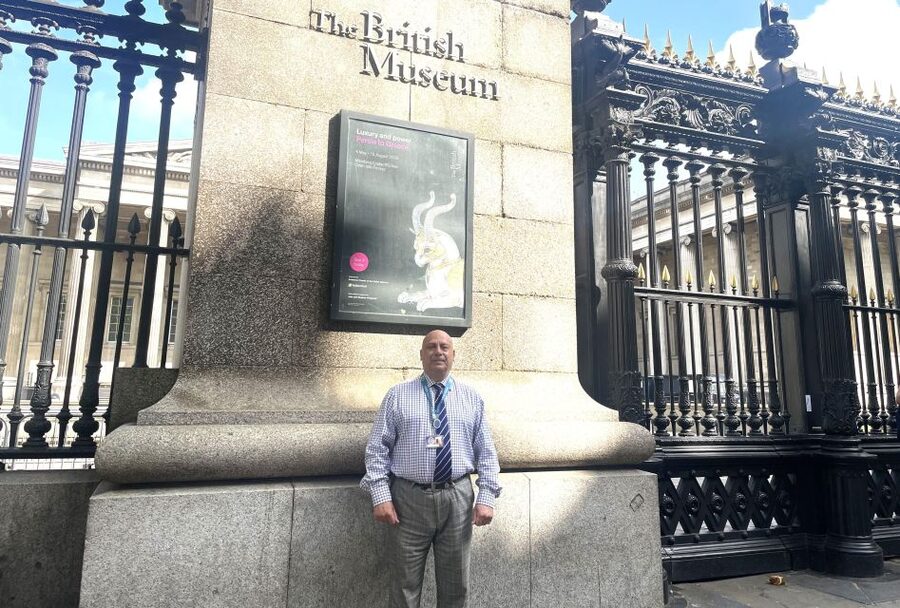
Your meeting point is on Great Russell Street, to the left of the main entrance gates, to the right of the red telephone boxes, and opposite Starbucks. The directions are specific because the area around the entrance can be busy and the museum frontage is broad.
Arrive 15 minutes early. This is not a suggestion to treat casually. The tour uses an express security check, and being late can disrupt a private appointment that has a fixed length. The experience takes place rain or shine, though the tour itself is inside once you pass security.
Transportation is not included, so you make your own way to Great Russell Street. Food and drinks are also not included. Plan a snack or meal before or after the tour rather than expecting to stop during the guided route.
The tour is in English and is wheelchair accessible. Audio recording is not allowed. You receive entry tickets as part of the booking, so the practical work is mainly finding the guide and arriving on time.
The Rosetta Stone and the Egyptian galleries
The Rosetta Stone is an obvious first target, but it deserves more than a quick photograph. Its importance comes from the same decree being written in three scripts, including hieroglyphics, which gave scholars the clues needed to read ancient Egyptian writing.
That is the useful distinction a guide can make. The stone is not simply famous because it is old or attractive. It became a bridge between a written language that could no longer be read and the modern study of Egyptian civilization.
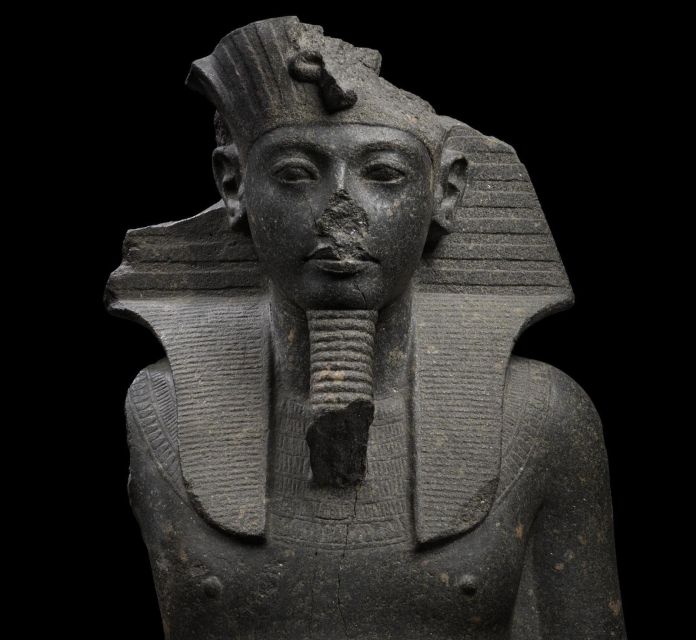
The route then moves into the wider Egyptian collection. You can expect discussion of Tutankhamun, including how he died and why the location of his burial has long been treated as a mystery. The supplied tour description uses an intriguing phrase, the only pharaoh’s grave never discovered, so your guide may frame Tutankhamun’s story through the puzzle of royal burials and what archaeologists can and cannot prove.
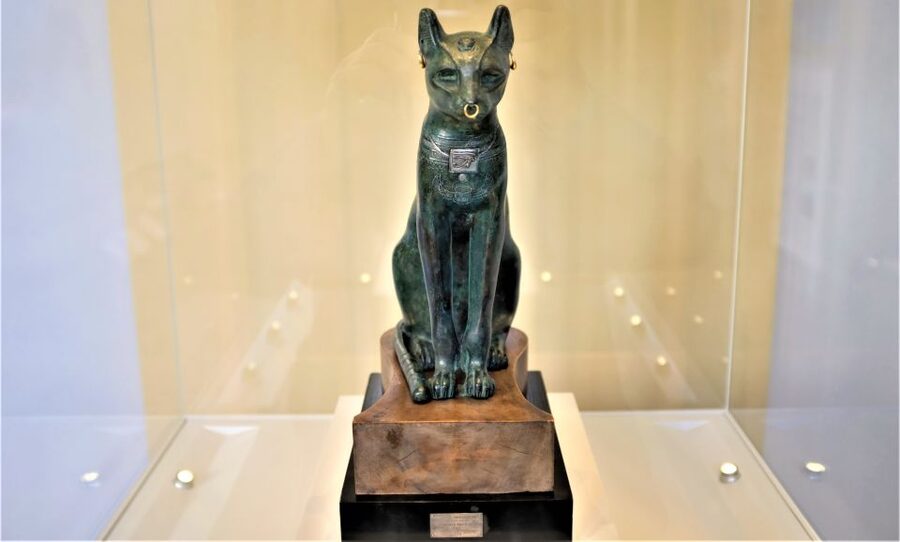
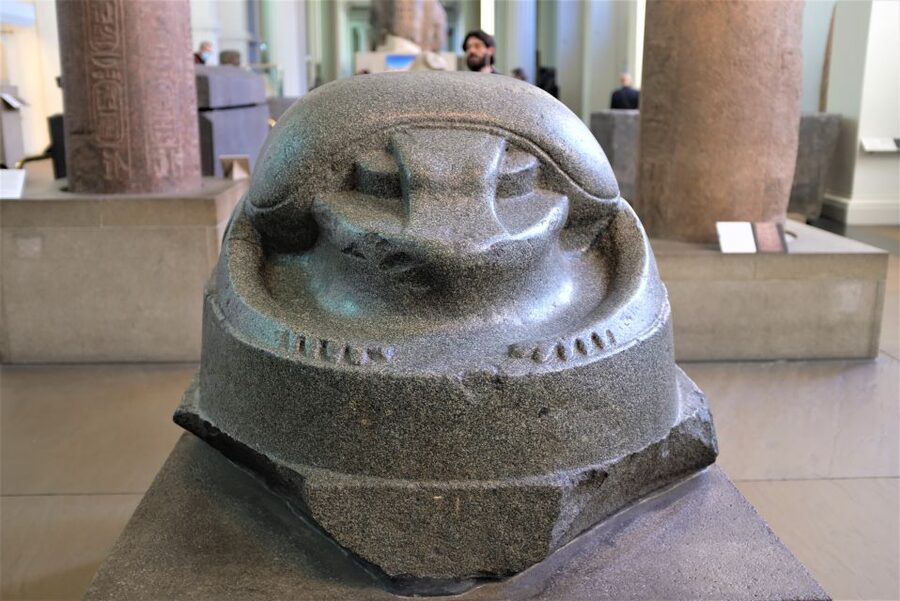
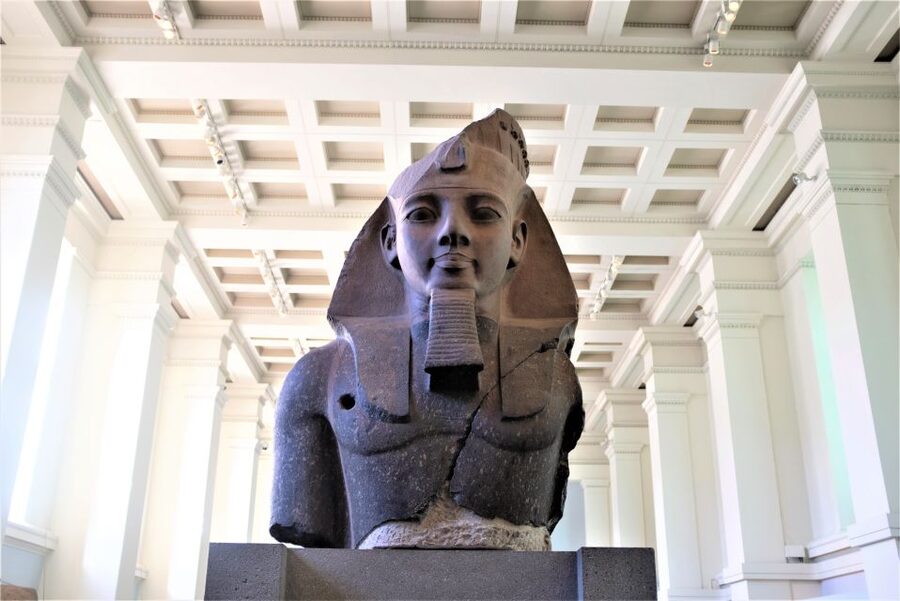
Other planned sights include a large statue of Ramesses II, a sacred metal cat, and a giant scarab beetle. These objects give the tour range. You are not looking only at royal portraits. You see how animals, religious belief, kingship, and everyday materials all appear in the ancient Egyptian record.
Anthony is also described as being able to read several languages on the Rosetta Stone, including hieroglyphics. That is a rare skill and a good example of what you are buying with a specialist guide: not just directions to the object, but access to details that would otherwise remain behind the glass and label.
Greek sculpture and the Parthenon rooms
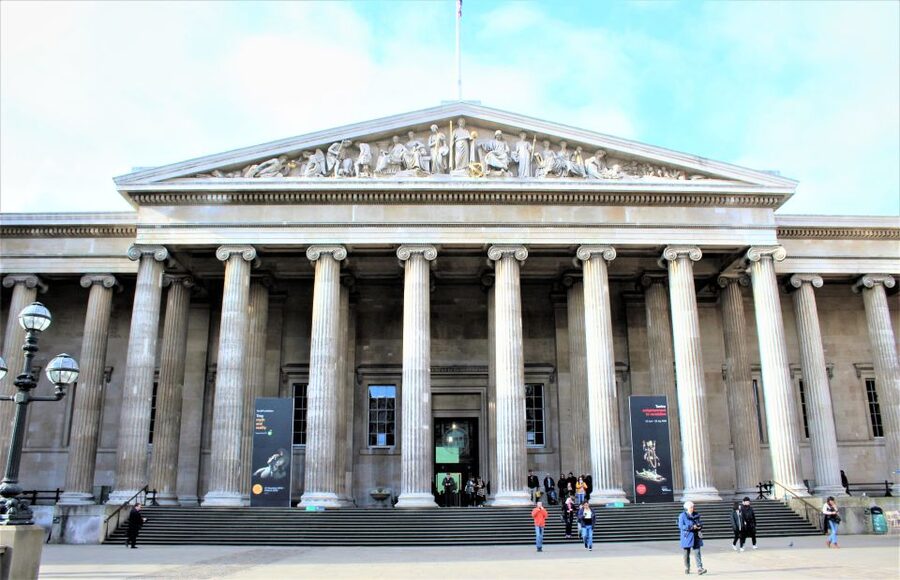
The Greek section is one of the tour’s major anchors. The Parthenon sculptures offer a chance to discuss classical Athens, artistic ideals, architecture, and the continuing arguments surrounding the removal and display of these works.
The tour description also points to the architecture of the room itself, asking why it is so carefully designed. That is a smart detail. Museum displays often disappear from your attention when the object is famous, yet the setting changes how you understand the sculpture. Here, the room becomes part of the conversation.
You will also hear about Sparta and Athens. That comparison helps put the objects into a wider political and social setting. Rather than treating ancient Greece as one smooth civilization, the guide can show that different city-states had different values and ambitions.
The phrase part of one of the seven wonders of the ancient world points toward the Parthenon’s place in the story of ancient achievement. Expect the focus to be on what the building and its sculptures reveal about Greek culture and ambition, rather than on a simple list of famous monuments.
This section may be especially rewarding if you have seen Greek ruins elsewhere in Greece or Rome. A guide can connect the museum objects to buildings and societies, helping you see the sculpture as part of a larger program rather than as isolated marble figures.
Further British Museum visits:
- London: Tour of the British Museum
★ 4.1 · 678 reviews - London: British Museum Audio Tour & Priority Entrance Ticket
★ 4.5 · 631 reviews - Afternoon Tea at the British Museum
★ 4.2 · 511 reviews - London: British Museum Guided Tour
★ 4.5 · 267 reviews
Rome, from conquest to everyday objects
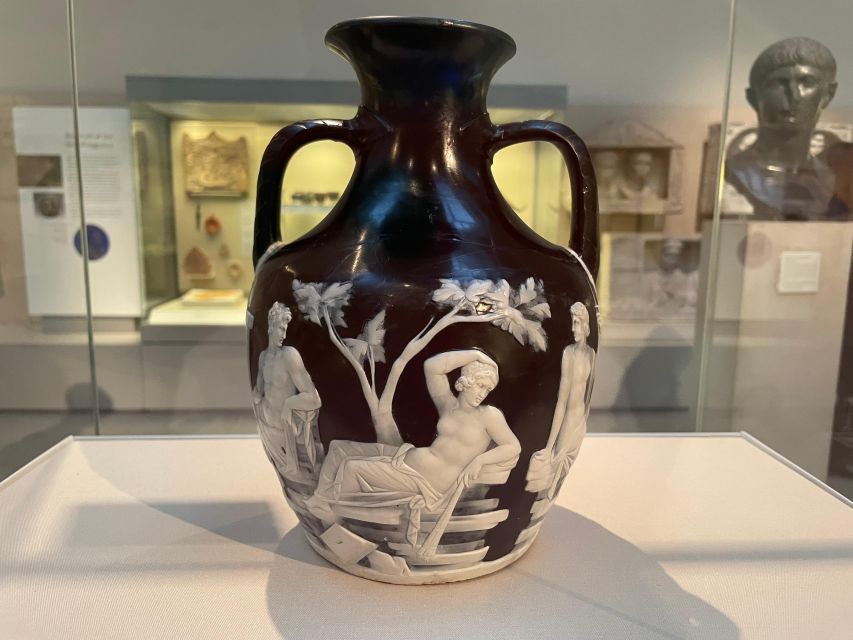
The Roman section broadens the story from art to power. The tour asks how Rome conquered every country bordering the Mediterranean, a question that opens the door to military organization, politics, infrastructure, and the Roman ability to absorb and reshape the cultures it encountered.
You can expect to see a gladiator’s helmet, Roman glass, and a bust of a major Roman emperor. Together, these objects offer three different angles on Roman life. The helmet points toward spectacle and combat. The glass shows technical skill and daily use. The imperial bust presents the carefully managed image of political authority.
That mix is one reason the tour works better than a simple parade of famous names. You are not only told that Rome was powerful. You see how power was presented, how ordinary goods were made, and how public entertainment fit into society.
The Roman portion also gives the guide room to connect Greece and Rome. Rome conquered Greek territory, but Roman culture borrowed heavily from Greek art and ideas. This is the sort of link that can vanish when you wander alone from one gallery to another.
If your group is most interested in Egyptian objects, you may find the Roman section less immediately familiar. Still, the progression from Egypt to Greece to Rome creates a useful story about influence, conquest, and cultural exchange.
Sutton Hoo and the making of England
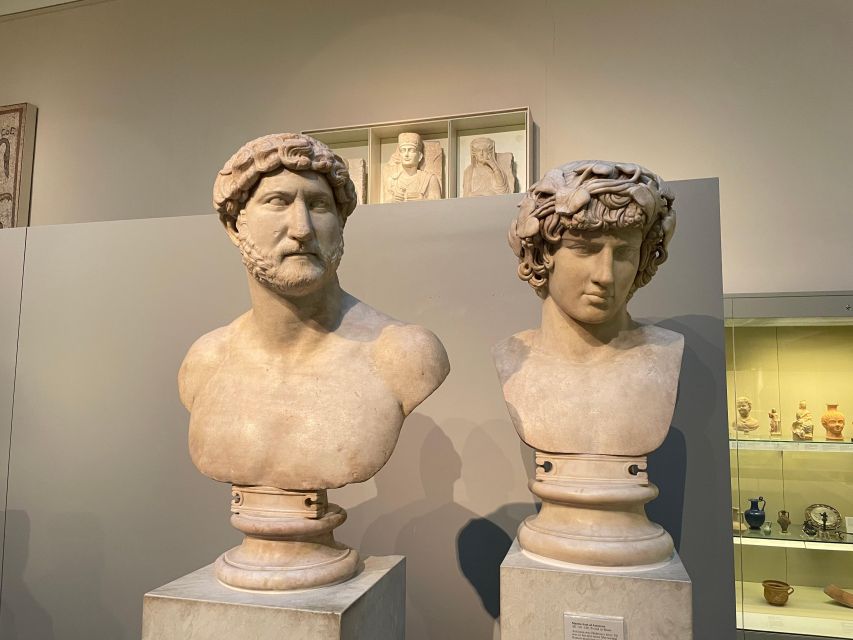
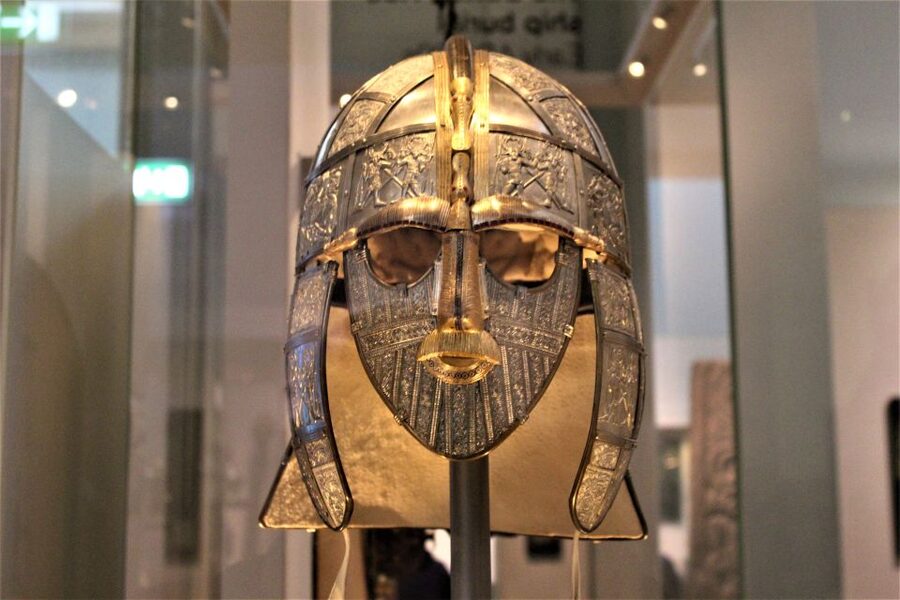
Sutton Hoo changes the tone of the tour. After the grand empires of Egypt, Greece, and Rome, you turn to an Anglo-Saxon burial that helps explain the early world from which England developed.
The Sutton Hoo display raises mysteries of its own. What was the burial for? Who was buried there? What can the objects tell us about rank, belief, trade, and contact with other parts of Europe? The tour promises a glimpse into the Anglo-Saxon world, not just a look at a famous helmet or burial find.
This is a valuable final chapter because it connects the museum to Britain itself. The British Museum is often treated as a place for foreign antiquities, yet Sutton Hoo shows that the country’s own past is also represented through objects recovered from the soil.
Children can respond well to this part because burial discoveries naturally create questions. Adults may appreciate the harder issue underneath: how archaeologists reconstruct a society from objects when written evidence is limited. Anthony’s archaeological background is particularly relevant here.
The exact order of the galleries can change according to museum conditions and your group’s interests. The important point is that the tour reaches beyond the standard Egyptian and Greek checklist and includes a British collection with a very different kind of evidence.
How the 2.5-hour pace feels
Two and a half hours is a sensible length for a first visit. It is long enough to cover several major collections without demanding a full day of standing, walking, and listening. It also gives the guide time to explain an object rather than rushing from case to case.
Still, the pace will be active. You are crossing a large museum and concentrating for most of the visit. The private format helps because the guide can judge when your group needs a pause, but you should not expect a slow, room-by-room inspection.
Parents should note the strong record with children. Families with children aged eight, nine, ten, eleven, thirteen, and sixteen have found the tour engaging, and teenagers have been included in the conversation rather than treated as reluctant baggage. The guide’s humor and stories appear to be as important as the facts.
The tour has also been used successfully by groups that included older adults and someone with limited mobility. It is wheelchair accessible, but a private tour does not mean there is no walking or standing. If mobility is a concern, tell the guide your needs at the start so the route and pace can be handled sensibly.
The guide’s style and the personal value
Anthony Matthews is the central reason to choose this particular experience. He is presented as a licensed Blue Badge professional guide and a retired archaeologist. That combination matters: Blue Badge training supports clear guiding and London context, while archaeology gives him a professional relationship with the objects themselves.
His approach is described as personable, energetic, witty, and easy to follow. Those qualities are not just pleasant extras. Museum information can become a blur when every room contains dates, names, and unfamiliar terms. A guide who can tell a story and answer a question keeps the material usable.
You can also ask for more time in a particular section. One family used the chance to shape the route around its interests, and that is exactly where a private tour earns its fee. You are not paying to follow strangers’ priorities.
One caution: a lively guide may cover a lot of ground. If you prefer long, quiet periods with each object, tell Anthony at the beginning. This experience is built around explanation, conversation, and a broad set of highlights.
Is $337 good value for up to six people?
The listed price is $337 per private group of up to six, not per person. At full capacity, that works out to about $56 per person, before considering that museum entry tickets are included. For a family or group of friends, that is a much stronger proposition than it first appears.
For two people, the per-person cost is much higher. You are paying for Anthony’s time, the private format, ticket arrangements, and a planned route through one of London’s hardest museums to tackle efficiently. If your priority is simply entering the museum and wandering for an hour, the price will feel high.
I would consider it good value for a first-time visitor with limited time, a family that wants help holding children’s attention, or anyone who cares about the meaning behind the objects. It is less compelling for a repeat visitor who already knows the galleries and prefers to explore independently.
The 4.9 rating from 100 reviews supports the idea that the guide’s delivery is consistently strong. The praise centers on his ability to explain difficult subjects in an accessible way, answer questions, and keep both adults and children involved. The clearest value is not the speed of entry. It is the quality of the two and a half hours inside.
Booking details worth knowing
You can cancel up to 24 hours before the experience for a full refund. The reserve-now, pay-later option lets you hold the booking without paying immediately, which is useful when your London schedule is still shifting.
The tour runs rain or shine. You should arrive early, use the meeting-point photographs if needed, and look for the guide near the red telephone boxes and Starbucks. Since the tour is private, lateness is particularly awkward: the guide cannot simply begin with a larger group and catch you later.
No transportation, food, or drinks are included. English is the only listed tour language, and audio recording is not permitted. Entry tickets and the guide are included.
Who should book this British Museum tour?
I would choose this tour for a first British Museum visit, especially if you have only one London morning or afternoon available. It gives you a useful framework, then leaves you better prepared to return on your own.
Families are a particularly good match. The route includes famous objects, mysteries, ancient religions, warfare, emperors, and burial discoveries, while the guide’s style has worked with children and teenagers. A private group also means you can ask basic questions without feeling self-conscious.
It suits adults who want substance without a dry academic lecture. Anthony’s background can take the discussion into archaeology and historical evidence, but his delivery remains conversational.
You may want to skip it if you plan to spend several full days in the museum, have a very narrow specialist interest outside the advertised route, or simply enjoy getting lost among the galleries. The tour is a highlights visit with room for customization, not a complete survey of the collection.
Should you book it?
Book it if the British Museum feels too large to tackle alone, if your group includes children, or if you want the Rosetta Stone, Egypt, Greece, Rome, and Sutton Hoo tied into one understandable story. Anthony Matthews appears to be a strong choice for visitors who value clear explanations, humor, and archaeological context.
Skip it if you want maximum solitude or a cheap entrance-only visit. At $337 for up to six people, the cost makes most sense when you fill the group and take advantage of the private itinerary. Arrive early, bring your questions, and let the guide know which galleries matter most to you.
FAQ
How long is the British Museum private tour?
The tour lasts 2.5 hours.
How many people can join the private group?
The price covers a private group of up to six people.
Who is the guide?
The experience is provided by Anthonys Tours. The guide associated with the tour is Anthony Matthews, a licensed Blue Badge guide and retired archaeologist.
What language is the tour conducted in?
The live tour is conducted in English.
Are British Museum entry tickets included?
Yes. Entry tickets are included with the private tour.
Where is the meeting point?
Meet to the left of the British Museum’s main entrance gates on Great Russell Street, to the right of the red telephone boxes, opposite Starbucks.
How early should I arrive?
Arrive 15 minutes early. The tour uses an express security check, and punctuality is important.
Is the tour wheelchair accessible?
Yes, the activity is listed as wheelchair accessible.
Are food, drinks, or transportation included?
No. Transportation, food, and drinks are not included.
Can I cancel the booking for a refund?
Yes. You can cancel up to 24 hours in advance for a full refund. You can also reserve now and pay later.
Can I record the tour?
No. Audio recording is not allowed.
New listings around London
- London: Secrets of Freddie Mercury Tour with a Cocktail★ 4.1 · 15 reviews
- London: Hampton Court Private Guided Tour★ 3.4 · 15 reviews
- London: Jack the Ripper Tour and Underground Prison in Spanish★ 5.0 · 15 reviews
- Spanish Language : Original Harry Potter Walking Tour★ 4.5 · 15 reviews
- London: Private Couples Photography Session with Landmarks★ 5.0 · 15 reviews
- London: The Saturday Supershow Cabaret at Phoenix Arts Club★ 4.5 · 15 reviews
- London: 2-Hour Guided Tour of the British Museum★ 4.7 · 16 reviews
- London’s Ghosts & Gruesome Past Nighttime Walking Tour★ 4.8 · 16 reviews
London Tours, compared.

Westminster to Greenwich River Thames Cruise
Read our review →
Magical London: Harry Potter Guided Walking Tour
Read our review →


Warner Bros. Studio Harry Potter Tour with Transfers
Read our review →Browse the lists this tour appears in