
Reviewed · LONDON TOURS
London: British Museum Private Tour for Kids & Families
The British Museum can feel like a small city of ancient objects, and this private family tour gives you a clear route through it. In 2.5 hours, you’ll move from Egyptian mummies to Greek sculpture, Anglo-Saxon treasure, Roman writing tablets, and medieval chess pieces without asking your children to read every label in sight.
I like two things right away: the guide shapes the visit for children, and the private format lets your family ask questions or pause when something catches your eye. I also like the range of objects, from the famous Rosetta Stone to the less expected Vindolanda Tablets and Lewis Chessmen. The main drawback is the price, $312 per person, which is a serious outlay for a short museum visit.
Key points about this British Museum family tour
- A 2.5-hour route through 6,000 years: The tour gives you a focused introduction instead of leaving you to face millions of objects alone.
- Stories built for children over six: Your guide uses anecdotes to make ancient people and objects easier for kids to follow.
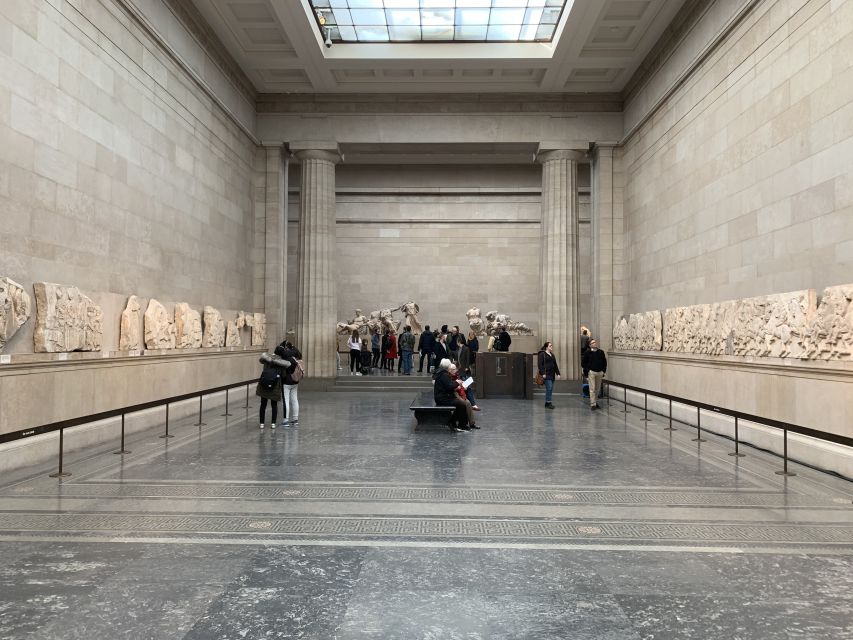
- Major pieces and lesser-known treasures: Expect the Parthenon sculptures, Rosetta Stone, Ginger the mummy, Sutton Hoo treasure, Vindolanda Tablets, and Lewis Chessmen.
- Private family format: You have a guide dedicated to your group rather than joining a large general tour.
- Separate entrance access: The experience includes museum tickets and entry through a separate entrance.
- A useful meeting point: Meet at the main gate opposite the Museum Tavern, next to Starbucks at 49 Great Russell Street.
Why a family guide matters in an eight-million-object museum
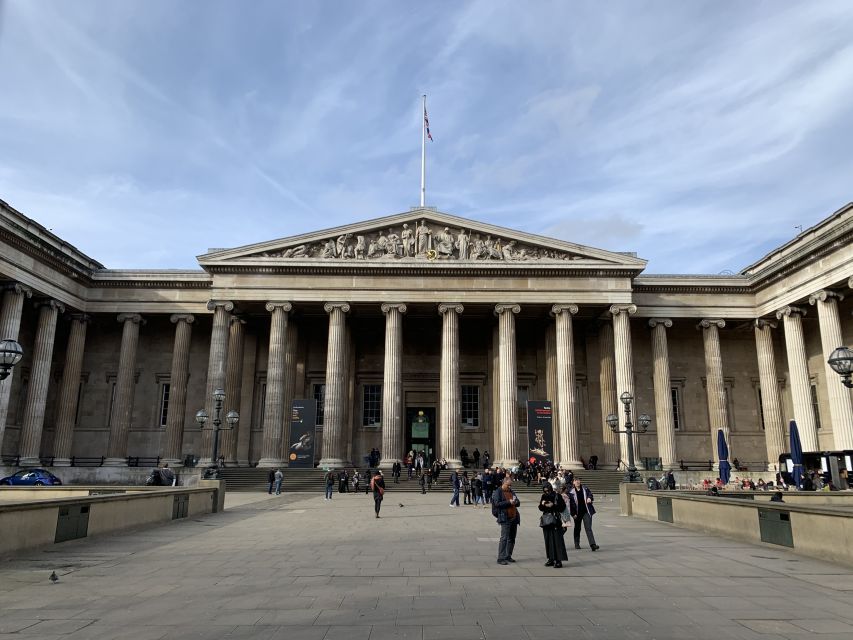
The British Museum holds more than 8 million artifacts. That number sounds impressive, but inside the building it can create a practical problem: you cannot see everything, and children can lose interest long before you reach the rooms you came to find.
A guide gives the museum a story line. Instead of treating each gallery as a separate stop, you follow human life across thousands of years. You might begin with ancient Egypt, move to Greece, and then reach objects linked to Roman Britain, Anglo-Saxon England, and medieval Europe.
That approach matters for children. A long label about a tablet or sculpture may not hold their attention, but a story about what the object was used for, who made it, or how it survived can give the object a reason to matter.
The tour is tailored for children older than six. Younger children are welcome, but the activity information makes it clear that they may be harder to engage for the full 2.5 hours. If you are bringing a preschooler, expect to manage your own child’s breaks and attention span.
More Museum Tours in London
- London: Chelsea Football Club Stadium and Museum Tour
★ 4.8 · 4,576 reviews - London: British Museum Guided Tour
★ 4.3 · 1,182 reviews - London: Jack the Ripper Museum Tickets
★ 4.2 · 894 reviews
Meeting your guide at Great Russell Street
You meet outside the museum at the main gate, opposite the Museum Tavern and next to Starbucks at 49 Great Russell Street, Bloomsbury, Greater London, WC1 B3BA. Your guide will hold a sign with your name.
That detail is useful in a busy central London setting. You are not searching through the entrance hall for a person holding a generic tour placard. Still, arrive with enough time to find the correct side of the building and gather your family before the start.
The tour includes museum admission. It also uses a separate entrance, described as skip-the-line access. That does not mean every security or entry procedure disappears, but it should reduce the hassle of joining the main visitor flow.
There is no hotel pickup or drop-off. Plan your own route to Great Russell Street and remember that the meeting point is outdoors.
Ancient Egypt, where objects become personal
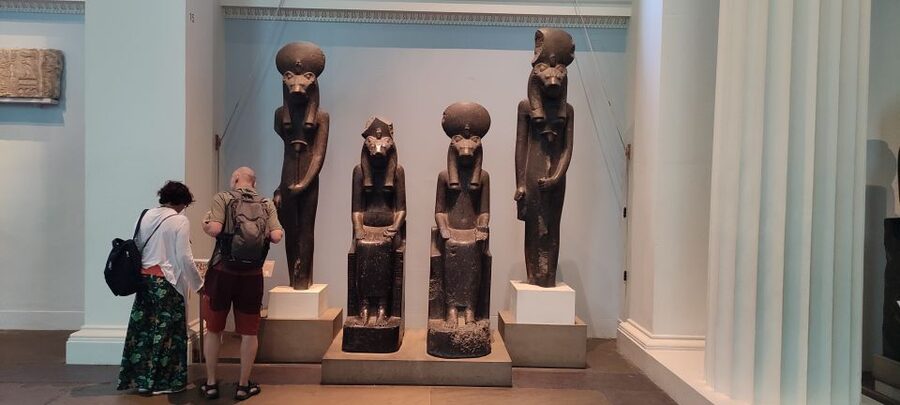
Egypt is one of the best places to begin a museum visit with children because the objects are instantly recognizable. Mummies, writing, rulers, and burial customs give a guide plenty of ways to connect a large subject to a human story.
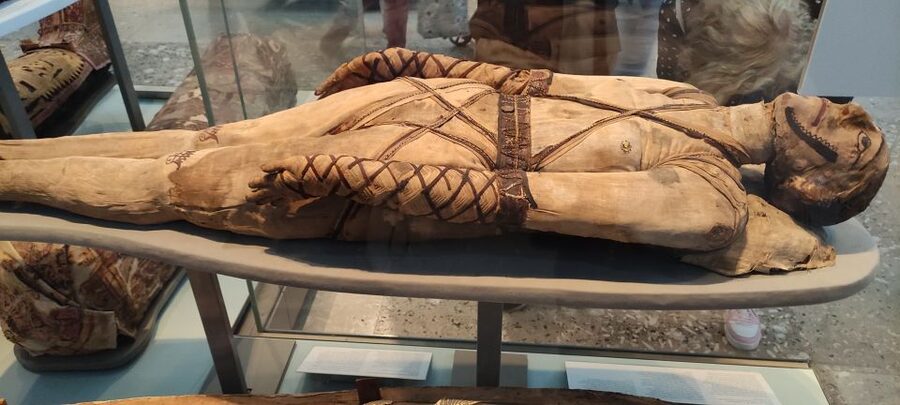
Ginger, the Egyptian mummy named in the tour plan, gives the family a specific person to look at rather than an abstract lesson about ancient burial practices. The name itself is memorable for children, and a guide can use the mummy to explain what the ancient Egyptians believed about death and the body.
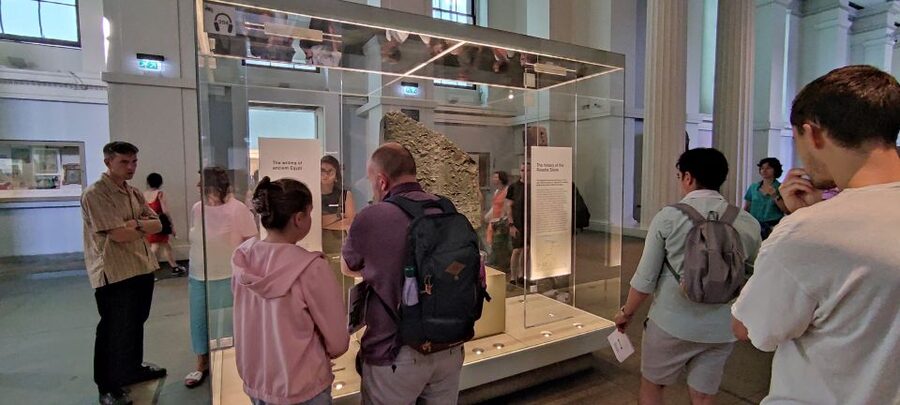
The Rosetta Stone is another major stop. Its importance comes from the same message being written in different scripts, which helped scholars understand Egyptian hieroglyphs. You do not need a long academic lecture to see why this object matters: it helped open a door into a civilization whose writing had been difficult to read.
Expect this section to be popular. The drawback is that the most famous objects can attract crowds, and your viewing time may depend on how much space is available around them. A private guide can help you focus, but you should not expect an empty gallery.
Ancient Greece and the Parthenon sculptures
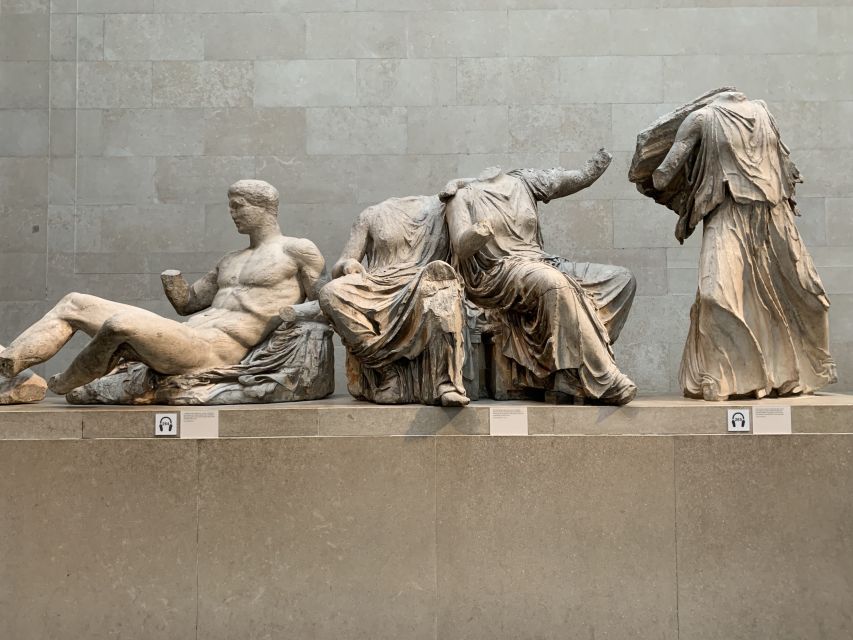
The Parthenon sculptures from Athens give the tour a chance to move from Egyptian beliefs to Greek art and architecture. These pieces once formed part of the Parthenon, a temple on the Acropolis, and they show how sculpture was used to decorate a major public building.
For children, the value is visual. Marble figures, carved movement, and details from a temple are easier to grasp than a general explanation of classical Greece. Your guide can also explain how the pieces fit into the larger building and why the museum’s possession of them remains a subject of debate.
That last point is important for families. A museum visit does not need to present the past as a simple parade of beautiful objects. The Parthenon sculptures can introduce questions about ownership, removal, and where cultural objects should be displayed.
You may find this stop more rewarding if your children already know a little about Greek gods, temples, or mythology. If not, the guide’s anecdotes should help give the sculptures a clear setting.
Further British Museum visits:
- London: Tour of the British Museum
★ 4.1 · 678 reviews - London: British Museum Audio Tour & Priority Entrance Ticket
★ 4.5 · 631 reviews - Afternoon Tea at the British Museum
★ 4.2 · 511 reviews - London: British Museum Guided Tour
★ 4.5 · 267 reviews
Roman Britain through the Vindolanda Tablets
The Vindolanda Tablets offer a different kind of ancient evidence. Rather than looking at a grand statue or royal monument, you are looking at written messages connected to everyday life in Roman Britain.
That change of scale is one of the tour’s strongest features. Children can see that the past was not made only by kings, emperors, and famous artists. People also wrote notes, handled supplies, made plans, and dealt with ordinary concerns.
The tablets are especially useful for showing how fragile material can survive and still tell a story. Your guide can use them to connect a distant Roman site with people who lived on the edge of the empire.
This may be a quieter stop than the Rosetta Stone or the mummy. That is not a flaw, but it does mean younger children may need the guide’s storytelling to keep the object engaging.
Sutton Hoo treasure and early English history
Sutton Hoo brings the tour closer to England. The treasure is linked to an Anglo-Saxon burial ship and gives you a look at elite life in early medieval Britain through metalwork, weapons, and burial objects.
For children, treasure is an easy hook. The objects suggest a buried ship, a powerful figure, and a discovery that changed how people understood early English culture. Your guide’s stories can make this section feel like a mystery rather than a list of display cases.
It also helps break up the museum’s ancient Mediterranean focus. After Egypt, Greece, and Rome, you see that important objects were being made and buried in Britain too.
The tour only lasts 2.5 hours, so do not expect every part of the Sutton Hoo display to receive equal attention. The guide will likely use a few key pieces to explain the larger story, which is the sensible choice in a museum this large.
The Lewis Chessmen and the pleasure of a surprise stop
The Lewis Chessmen are a welcome change of mood. These medieval chess pieces are carved figures, many with expressive faces and distinctive poses. They are serious archaeological objects, but they also have an immediate personality that children can understand.
This is the sort of stop that makes a family museum visit work. Your child may not care much about dates or dynasties, but a small carved figure that looks worried, proud, or ready for battle can hold attention.
The chessmen also show that the tour is not limited to the museum’s biggest and most famous objects. You get a broader sense of how people played, created art, and represented themselves.
Ask your guide to explain how the pieces relate to the game of chess and why they are important. The tour promises anecdotes, and this is exactly the kind of object that benefits from a short story rather than a long technical explanation.
What the private format changes
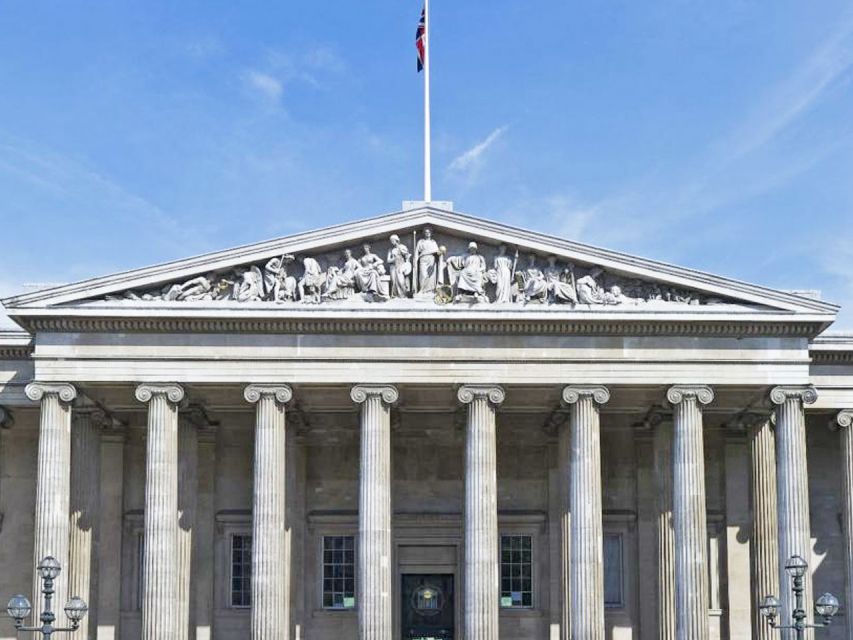
A private tour gives your family a guide dedicated to your group. That matters because children ask unpredictable questions, and a private guide can respond without worrying about holding up a large party.
You also avoid the common problem of a child asking to leave just as the guide reaches the most interesting object. Your guide can adjust the pace, simplify an explanation, or spend more time on the pieces that attract attention.
The format is also useful for mixed ages. One child may prefer mummies, while another cares about treasure or chess pieces. A private guide can connect the route to those different interests.
There is a limit, though. Private does not mean unlimited time. The tour covers around 6,000 years in 2.5 hours, so you will see selected highlights rather than receive a full museum education. If your family wants a slow look at one collection, a self-guided visit may offer more freedom.
Is $312 per person good value?
At $312 per person, this is not a budget museum outing. The price includes a private guide and museum entrance tickets, but not meals, drinks, transportation, or hotel pickup.
The value depends on how much structure your family needs. For a first visit with children, a guide can save you from wandering through galleries without a plan. You pay for a focused route, child-friendly explanations, and the ability to keep the visit moving at a family pace.
The cost is harder to justify for adults who already know the museum well or for older children who enjoy reading labels independently. You may get better value if your family has limited time in London and wants to see major objects without spending a full day inside.
Children under five go free, according to the tour information. The experience is designed mainly for children older than six, so families with toddlers should consider the free admission alongside the fact that the tour may be difficult for them to follow.
Practical details for a smoother visit
The activity is conducted in English with a live guide. Since the guide uses stories and explanations to engage children, children need enough English to follow the conversation.
The tour is wheelchair accessible. If anyone in your group has specific mobility needs, you should still confirm the meeting and entry arrangements when booking, since the supplied information does not describe the exact route through each gallery.
Wear comfortable shoes. Two and a half hours in a museum involves standing and walking, and the museum’s size means you will cover more ground than the short duration suggests.
You can cancel up to 24 hours before the tour for a full refund. You can also reserve now and pay later, which is useful when your London schedule is still shifting.
Who should book this British Museum tour?
I would choose this tour for a family making a first visit to the British Museum, especially with children aged six to early teens. It is also a good fit if you want the major objects but do not want to spend hours planning a route through millions of artifacts.
The tour suits families who enjoy stories more than formal lectures. The strongest praise attached to this experience focuses on the dedicated guide’s ability to hold family attention and explain the objects at a child-friendly level.
I would think twice if your children are very young, dislike museums, or need frequent movement breaks. I would also compare the price carefully if you have a large family, since $312 per person can quickly become a major part of your London budget.
Should you book it?
Book this private tour if you want a short, guided introduction to the British Museum and your children are old enough to follow stories for 2.5 hours. The mix of Ginger the mummy, the Rosetta Stone, Parthenon sculpture, Sutton Hoo treasure, Vindolanda Tablets, and Lewis Chessmen gives you far more variety than a single-theme museum visit.
Skip it if you prefer to wander at your own pace or if the per-person price feels too high. For the right family, the real benefit is not seeing every gallery. It is leaving with a few strong stories your children can remember.
FAQ
How long is the British Museum family tour?
The tour lasts 2.5 hours.
Where does the tour meet?
Meet at the main gate of the British Museum, opposite the Museum Tavern and next to Starbucks at 49 Great Russell Street, Bloomsbury, Greater London, WC1 B3BA.
How will I recognize the guide?
The guide will hold a sign with your name written on it.
Is museum admission included?
Yes. Museum entrance tickets are included, along with the private kid-friendly tour.
Is the tour suitable for young children?
The tour is tailored for children older than six. Younger children are welcome, but the information says they may be difficult to engage for the full tour. Children under five go free.
Is the tour wheelchair accessible?
Yes, the activity is listed as wheelchair accessible. It is conducted in English by a live guide, and the group is private.
New listings around London
- London: Bermondsey Craft Brewery Tour★ 5.0 · 3 reviews
- Colourful Notting Hill Photography Tour★ 5.0 · 3 reviews
- The London Historic Pubs Tour★ 4.0 · 3 reviews
- Ultimate Royal London, Thames River Boat Ride & Walking Tour★ 5.0 · 3 reviews
- London: Wallace Collection & National Gallery Private Tours★ 5.0 · 3 reviews
- London: The Birthplace of The Rolling Stones Private Tour★ 5.0 · 3 reviews
- Historic pub tour with Brazilian guide (in Portuguese)★ 5.0 · 3 reviews
- London: Royal Tour with Westminster Abbey & Afternoon Tea★ 3.0 · 3 reviews
London Tours, compared.

Westminster to Greenwich River Thames Cruise
Read our review →
Magical London: Harry Potter Guided Walking Tour
Read our review →


Warner Bros. Studio Harry Potter Tour with Transfers
Read our review →Browse the lists this tour appears in