
Reviewed · LONDON TOURS
London: British Museum Tour with Archaeologist Guide
The best thing about this British Museum tour is its sense of direction. Instead of wandering through one of London’s biggest museums and tiring out before you find the famous pieces, you follow archaeologist Rossa, who connects major objects to the people, beliefs, and events behind them.
I like the careful selection of highlights and the guide’s use of stories rather than dry label reading. I also like that the tour includes less familiar objects, such as the Sutton Hoo treasure and Lewis Chessmen. The main drawback is simple: two and a half hours cannot cover the whole museum, and Rossa’s detailed explanations can sometimes mean seeing fewer displays.
Key points
- Meet at Russell Square Station: Find the guide at the station entrance, holding a tablet marked Spirit of Discovery.
- See the museum’s headline pieces: The Rosetta Stone, Parthenon Marbles, Ramses II, Assyrian palace sculptures, and more are part of the route.
- Get expert context: Rossa explains how objects were made, used, found, and interpreted.
- Hear stories beyond the labels: Sutton Hoo, the Lewis Chessmen, Moai statues, and ancient Egyptian treasures bring several eras into one visit.
- Plan for a prompt start: The group leaves at 9:45 a.m. and cannot wait for late arrivals.
- Use your time well: The tour ends inside the museum, leaving you free to continue exploring on your own.
Why a guide matters in a museum this large
The British Museum can easily swallow an entire day. Its galleries cover ancient Egypt, Greece, Assyria, the Viking Age, the Americas, and many other cultures. The problem is not finding something interesting. The problem is choosing what deserves your limited time.
That is where this tour earns its keep. Rossa focuses on important objects and explains why they matter. You are not simply shown a stone, statue, or fragment. You learn who made it, what purpose it served, how it reached the museum, and what remains uncertain.
I especially like this approach for a first visit. You get a working map of the museum in your head. Afterward, you can return to the galleries that caught your attention instead of spending your first hour wandering in circles.
The guide also helps place distant cultures in a wider story. Ancient Egypt is not treated as an isolated collection of impressive monuments. Greek sculpture, Assyrian power, Viking trade, Anglo-Saxon burial customs, and Indigenous traditions all become part of a larger look at how societies expressed belief, authority, memory, and identity.
More Museum Tours in London
- London: Chelsea Football Club Stadium and Museum Tour
★ 4.8 · 4,576 reviews - London: British Museum Guided Tour
★ 4.3 · 1,182 reviews - London: Jack the Ripper Museum Tickets
★ 4.2 · 894 reviews
Starting at Russell Square at 9:45 a.m.
The meeting point is the entrance to Russell Square Station. Look for a guide holding a tablet with Spirit of Discovery displayed on its screen. From there, the group walks for about five minutes to the British Museum.
This short walk is easy, but the timing matters. The group must leave promptly at 9:45 a.m. to reach its museum entry slot, so do not treat the meeting time as a loose suggestion. If you are delayed, call the tour provider for directions to the group. Late arrivals cannot expect the guide to wait.
Starting near Russell Square is practical for anyone already in Bloomsbury or arriving by Underground. You should wear comfortable shoes and bring water. Leave large bags and luggage behind, since large bags and sharp objects are not allowed.
The museum tour lasts about two and a half hours. It finishes at the British Museum rather than returning you to the station, which is useful because you can continue exploring afterward.
The Rosetta Stone and the power of written language
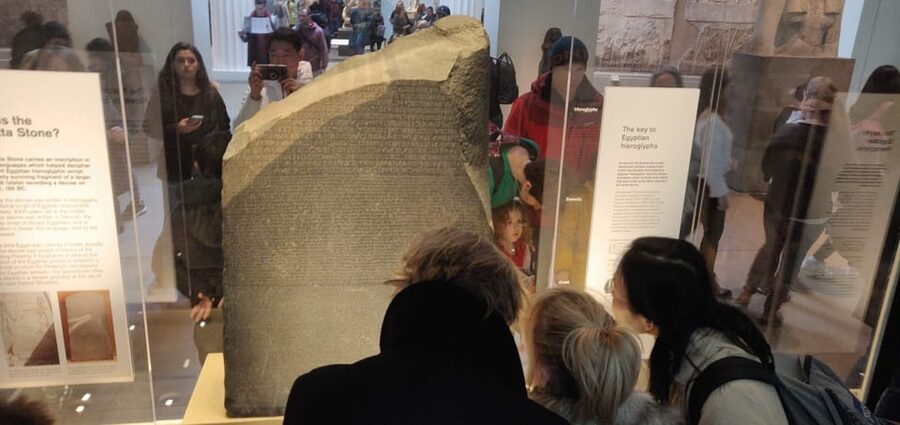
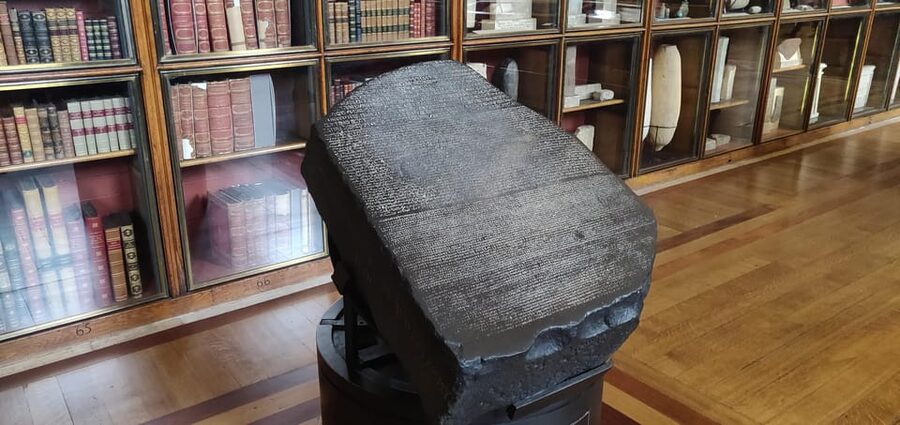
The Rosetta Stone is one of the museum’s essential stops. Its importance is not only its appearance, but the fact that the same decree was written in three scripts, including Egyptian hieroglyphs. Comparing the versions helped scholars work out the meaning of hieroglyphic writing.
A guide can make this famous object more than a quick photograph. You hear why the stone mattered, how scholars approached it, and why written language changes the way we understand an entire civilization.
This is also a good early lesson in how the tour works. Rossa does not rely only on the object’s fame. He uses it to explain a larger question: how can historians recover the thoughts and actions of people who lived thousands of years ago?
Ramses II and the scale of ancient Egypt
The colossal statue of Pharaoh Ramses II gives you a more physical sense of Egyptian power. Large royal statues were not casual decoration. They projected authority, permanence, and a connection between the ruler and the gods.
You can appreciate the size on your own, but the surrounding meaning is easier to grasp with an expert guide. Rossa links the statue to Egyptian ideas about kingship and the way rulers presented themselves to their own people and to later generations.
The Egyptian galleries can be crowded, especially around the most famous displays. A guide with a strong speaking voice is useful here. Several visitors specifically valued Rossa’s clear voice in noisy rooms, which means you are less likely to miss the explanation while people move around you.
Further British Museum visits:
- London: Tour of the British Museum
★ 4.1 · 678 reviews - London: British Museum Audio Tour & Priority Entrance Ticket
★ 4.5 · 631 reviews - Afternoon Tea at the British Museum
★ 4.2 · 511 reviews - London: British Museum Guided Tour
★ 4.5 · 267 reviews
Assyrian palaces and imperial power
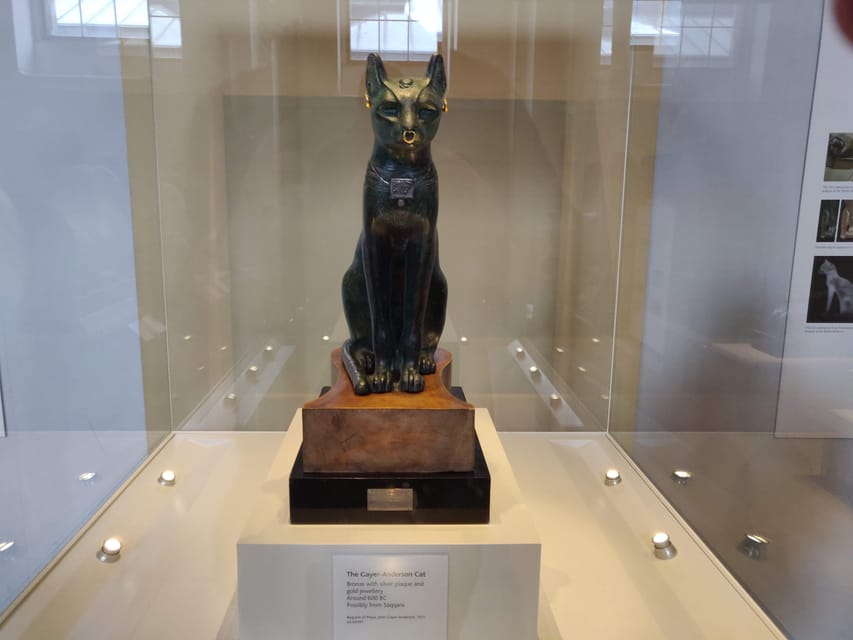
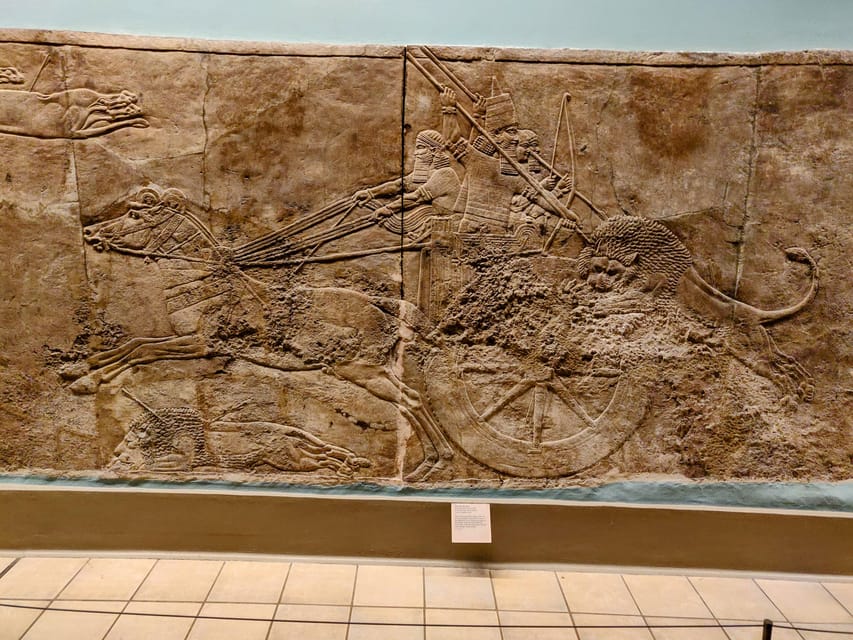
The Assyrian galleries offer a change of mood. Instead of the smooth, idealized look associated with some Egyptian and Greek art, you encounter huge reliefs and sculptures tied to the military power of the Assyrian Empire.
The palace remains help show how rulers used art to tell political stories. Hunting scenes, royal figures, animals, and battle imagery were part of a carefully planned message about strength and control.
This is the kind of section that can pass quickly if you only read a label or two. Rossa’s role is to slow the important moments down. You can look closely at details that are easy to miss and understand how a palace wall communicated with anyone who entered it.
The Parthenon Marbles and a difficult museum question
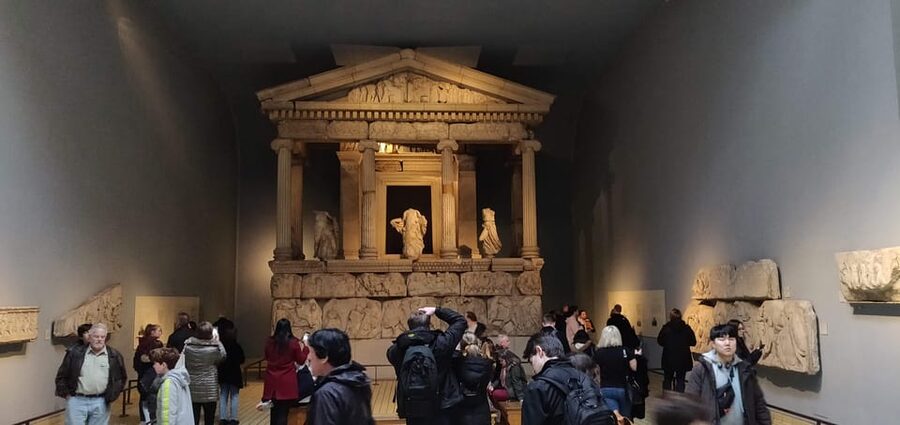
The Parthenon Marbles are among the British Museum’s most famous holdings. These sculptures came from the Parthenon in Athens and are admired for their movement, anatomy, and workmanship.
They also raise questions about ownership, removal, and the responsibilities of museums holding objects from other countries. The experience presents the art, but it is worth remembering that these displays are not separate from modern debate.
A guided visit gives you a chance to understand the sculptures as works of ancient Greek art while also placing them in the story of how they reached London. This is more useful than treating them as an isolated collection of beautiful figures.
The room can be busy, and the scale of the museum means you may not linger everywhere. If the Parthenon sculptures are your main reason for visiting, tell the guide early and pay close attention when the group reaches them.
Sutton Hoo and the world of King Raedwald
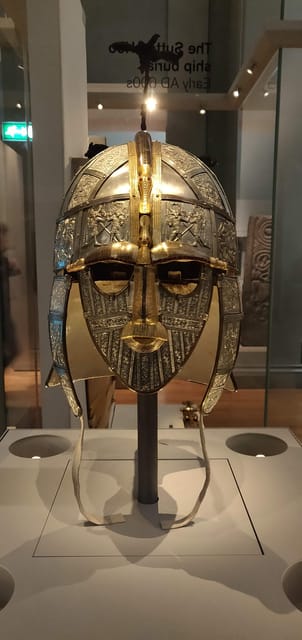
The Sutton Hoo hoard is one of the most rewarding parts of the route because it takes you into the early medieval period, often called the Dark Ages. The burial site revealed an extraordinary collection of objects connected with a powerful Anglo-Saxon ruler, commonly identified as King Raedwald.
The display includes the famous helmet and other objects that show the reach and skill of the society that produced them. This was not a poor or empty period between better-known civilizations. The treasure points to skilled metalwork, long-distance connections, ceremony, and social rank.
I like the way Sutton Hoo balances the famous ancient collections. You get a glimpse of a society closer to home, but still separated from you by centuries of uncertainty. The objects are impressive, while the unanswered questions make them even more compelling.
Rossa also discusses the people involved in finding and interpreting the hoard. That adds another layer to the visit. Archaeology is not only about old objects. It is also about excavation, evidence, argument, and the limits of what can be known.
Lewis Chessmen and the Viking Age
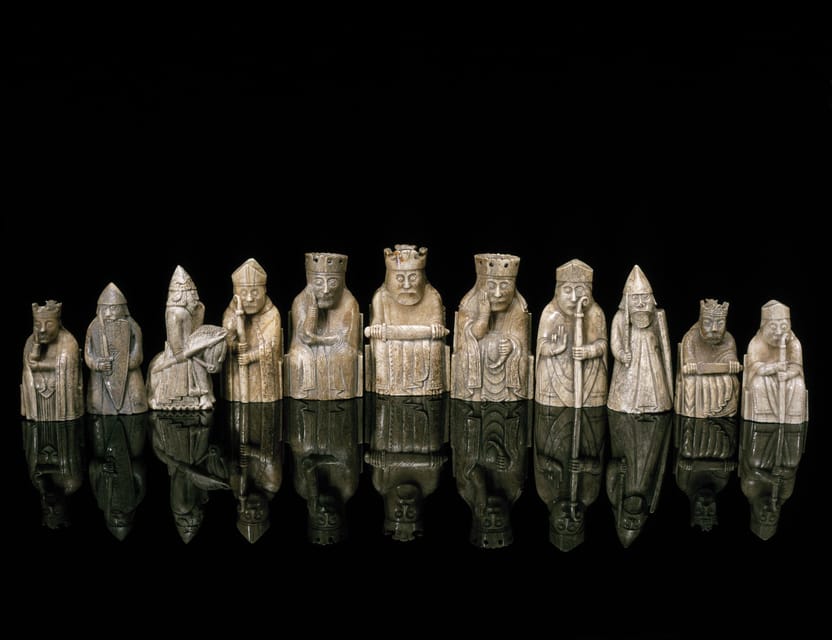
The Lewis Chessmen are small, but they have an outsized presence. These carved chess pieces are among the most recognizable objects associated with the Viking Age, and their faces make them unusually easy to connect with as people rather than abstract historical figures.
The pieces offer a way into medieval trade, games, craftsmanship, and social life. Their size also makes them a good reminder that the museum’s best stories are not always attached to the largest objects.
Rossa’s storytelling style suits this display. His aim is not to rush past every piece in the case. He gives you enough background to understand why a set of gaming objects can tell you something about status, leisure, travel, and artistic skill.
Families with children and teenagers should find this section especially approachable. The objects are visually memorable, and the stories help younger visitors stay involved when a long museum visit might otherwise lose their attention.
Moai statues and Aztec treasures
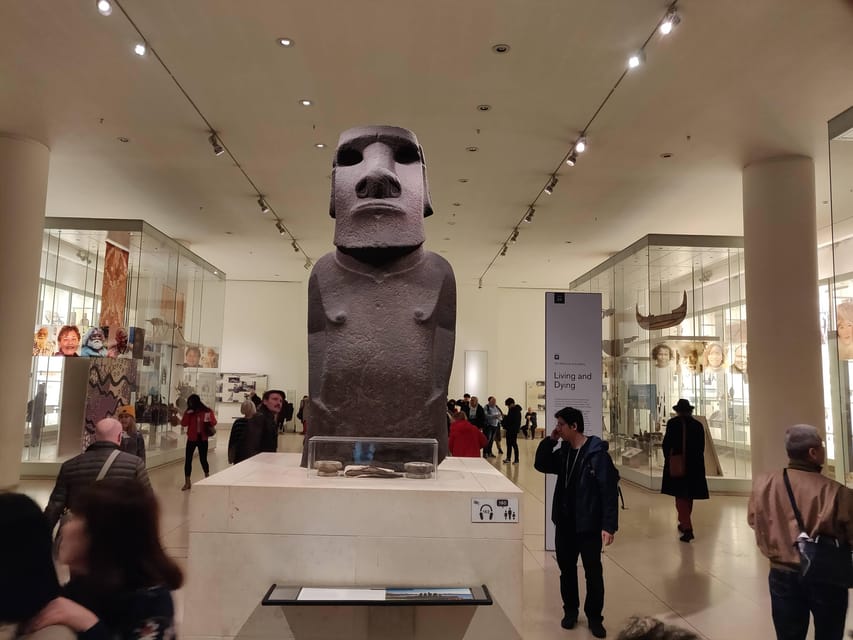
The tour also reaches beyond Europe and the Mediterranean. The Moai statues of Easter Island introduce questions about monument building, community effort, belief, and the way outsiders have interpreted another culture’s achievements.
These statues are familiar from photographs, but seeing one in a museum raises a different question: what changes when a sacred or culturally important object is removed from its original setting? That makes the display useful not only as a piece of art, but also as a prompt to think about museums and cultural ownership.
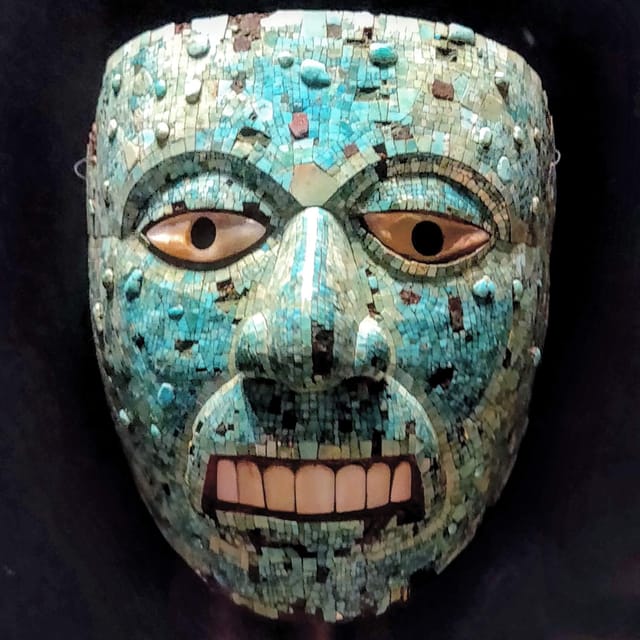
The Aztec collection adds another strong contrast. Gold and other precious objects can attract immediate attention, but their real value comes from understanding their role in Aztec society and the circumstances that brought them into European collections.
The tour does not attempt to give every civilization equal time. That is a strength and a limitation. You get a broad sample of cultures, but the guide must keep moving to maintain the overall shape of the visit.
A focused pace, not a complete museum survey
At $58 per person, the tour is not the cheapest way to enter the British Museum, since general admission to the museum is free. The price pays for the guide, the organized route, and entry through a separate entrance that helps you skip the main line.
The value depends on how you use your London time. If you have several hours and enjoy planning your own route, you can visit the museum independently without paying for a tour. If you have never been before, feel overwhelmed by large museums, or want historical context without reading every label, the added cost can make sense.
The two and a half hour length is well judged for many people. It gives you a strong introduction without requiring a full day of concentration. Several comments point to the pacing as a major strength, especially for families and people visiting London on a tight schedule.
Still, you should know what you are buying. This is a highlights tour, not a complete survey of the museum. You will not see every gallery, and Rossa may spend several minutes on one object when a faster guide might rush ahead.
One visitor felt that some explanations ran a little long. That is a fair tradeoff to consider. If you prefer to see as many rooms as possible, the detail may feel slow. If you prefer a few memorable stories to a blur of display cases, the pace should suit you.
Why the storytelling makes the difference
The strongest feature here is the guide’s ability to connect facts with people and decisions. Rossa has been praised for his enthusiasm, preparation, clear voice, and skill at holding the attention of both adults and teenagers.
That matters in a crowded museum. You are often standing among other groups, competing with general noise and a steady flow of people. A guide who can keep the group together and speak clearly saves you from missing half the explanation.
Rossa also uses personal favorites alongside the headline objects. That gives the route some character. You see the pieces most people expect, but you may also encounter an object you would have walked past without help.
The best museum guides do not try to prove how much they know. They help you remember a few ideas. Here, the focus is on stories about ancient societies, discovery, power, belief, and the uncertain work of archaeology.
Families, first-time visitors, and history fans
I would recommend this tour most strongly to first-time British Museum visitors. You get the major rooms and objects without having to prepare a route in advance.
It also suits families with older children and teenagers. The age range mentioned in the feedback includes children of 12 and 14, and the storytelling style is designed to keep the visit moving. Young people may respond especially well to the Rosetta Stone, Viking chess pieces, treasure hoards, enormous statues, and unexplained details.
History teachers, archaeology fans, and museum regulars may also enjoy the added context, though they should be comfortable with a highlights format. Even someone who recognizes the major objects can gain something from hearing how they were found and how scholars interpret them.
This may not be the right choice for someone who wants a quiet, self-directed visit or plans to spend the entire day in one collection. The tour is social, guided, and time-limited. You need to follow the group and accept that the guide sets the pace.
Practical details before you book
The tour is conducted in English. It is wheelchair accessible, and the museum entry is included. Food and drinks are not included, so plan to eat before or after the tour rather than expecting a break during the two and a half hours.
Bring water and comfortable shoes. Do not bring weapons, sharp objects, luggage, or large bags. These rules matter more at a major museum than they might on a short neighborhood walk.
Free cancellation is available up to 24 hours before the activity for a full refund. You can also reserve now and pay later, which helps if your London schedule is still changing.
The current rating is 4.9 from 68 reviews, with particularly strong praise for Rossa’s storytelling, voice, preparation, and command of archaeology across different periods. One practical tip comes through clearly: leave enough time after the tour to revisit the galleries that interest you. The tour gives you a starting point, not the final word on the museum.
Should you book the British Museum archaeologist tour?
Book it if the British Museum feels too large to tackle alone, or if you want the famous objects to make sense rather than simply appear in front of you. At $58, you are paying for focus, expert interpretation, and a useful route through a very large collection.
I would choose it for a first London visit, a family outing with older children, or a short stay when two and a half hours is all you can spare. I would skip it if you prefer to move slowly on your own, want to spend all day in one gallery, or are looking only for free museum admission.
The smart plan is to take the guided tour early, then stay at the museum afterward. Let Rossa introduce the Rosetta Stone, Sutton Hoo, the Parthenon Marbles, and the other major stops, then use the rest of your visit to follow your own interests.
FAQ
Where does the British Museum tour meet?
Your guide meets you at the entrance of Russell Square Station. The guide will hold a tablet displaying Spirit of Discovery.
What time does the tour begin?
The group leaves promptly at 9:45 a.m. to reach the museum entry slot. The guide cannot wait for late arrivals.
How long does the experience last?
The full activity lasts about two and a half hours, including the short walk from Russell Square to the British Museum.
Is British Museum admission included?
Yes. Entry to the British Museum and the guided museum tour are included in the price.
Who leads the tour?
The tour is led in English by an archaeologist guide. The guide identified in the supplied information and praised most often is Rossa.
What objects can I expect to see?
The route includes the Rosetta Stone, the statue of Ramses II, Assyrian palace remains, the Parthenon Marbles, Moai statues, Aztec treasures, the Lewis Chessmen, and the Sutton Hoo hoard.
Does the tour skip the main line?
Yes. The activity includes access through a separate entrance to skip the line.
Is the tour wheelchair accessible?
Yes, the activity is listed as wheelchair accessible.
What should I bring?
Bring comfortable shoes and water. Weapons, sharp objects, luggage, and large bags are not allowed. Food and drinks are not included.
New listings around London
- London: Hampton Court Private Guided Tour★ 3.4 · 15 reviews
- London: Secrets of Freddie Mercury Tour with a Cocktail★ 4.1 · 15 reviews
- London: Jack the Ripper Tour and Underground Prison in Spanish★ 5.0 · 15 reviews
- Spanish Language : Original Harry Potter Walking Tour★ 4.5 · 15 reviews
- London: Private Couples Photography Session with Landmarks★ 5.0 · 15 reviews
- London: The Saturday Supershow Cabaret at Phoenix Arts Club★ 4.5 · 15 reviews
- London: 2-Hour Guided Tour of the British Museum★ 4.7 · 16 reviews
- London’s Ghosts & Gruesome Past Nighttime Walking Tour★ 4.8 · 16 reviews
London Tours, compared.

Westminster to Greenwich River Thames Cruise
Read our review →
Magical London: Harry Potter Guided Walking Tour
Read our review →


Warner Bros. Studio Harry Potter Tour with Transfers
Read our review →Browse the lists this tour appears in