
Reviewed · LONDON TOURS
London: Brutalist Architecture & History Walking Tour
London’s Brutalist buildings can look like concrete fortresses, stern, bulky, and hard to love at first glance. This 2.5-hour walk gives you the tools to understand why they were built, what they meant after the Second World War, and why some are now protected rather than demolished.
I like the small group of no more than six, which gives guide Evan room to adjust the discussion to your interests. I also like the mix of architecture and social history: you will hear about concrete, European Modernism, post-war politics, and the arguments now shaping the future of buildings such as the National Theatre.
The main drawback is that this is an exterior walking tour. You will not enter the buildings, and the route includes one short Tube journey, so bring a Zone 1 ticket or enough credit. The tour is also aimed at adults and older teenagers, not children under 16 or people with mobility impairments.
Key points at a glance
- Meet outside Russell Square Station: The tour begins on the Piccadilly Line and uses the Tube once during the walk.
- See major Brutalist landmarks: The Institute of Education and National Theatre are among the key buildings discussed.
- Learn the forces behind the concrete: The guide connects architecture with post-war rebuilding, politics, economics, and social change.
- Keep the group personal: Six participants is the maximum, useful for questions and close discussion.
- Expect an outdoor experience: Interiors are not visited, so the value lies in the buildings, street views, stories, and details.
- Budget $47 per person: For 2.5 hours with a specialist guide, the price is fair if you have a real interest in architecture and London’s post-war past.
Why London’s concrete deserves a closer look
Brutalism is often reduced to a matter of taste. You either like raw concrete and heavy forms, or you do not. This tour makes a stronger case: these buildings are records of a particular time, when London was rebuilding, public institutions were expanding, and architects wanted a clean break from older styles.
The name comes from béton brut, the French term for raw concrete. The style is not simply about making a building look rough. It is also about showing structure, using strong geometric shapes, and making large public buildings feel solid and direct.
That approach produced some of the most dramatic architecture of the 1960s and 1970s. It also produced buildings that could be expensive to maintain, difficult to alter, and unpopular with people who preferred London’s older brick and stone streets.
Evan’s strength is connecting those two sides. He brings clear enthusiasm to the subject, but the walk is not just a fan club for concrete. You will look at the admiration, rejection, and later protection of these buildings. That makes the experience more useful than a simple photo hunt.
More History Tours in London
- London: Historic Pubs of Central London Walking Tour
★ 4.9 · 1,065 reviews - London: Soho Music and Historic Pubs Walking Tour
★ 4.9 · 836 reviews - London: Rock ‘n’ Roll History Tour
★ 4.6 · 645 reviews
Starting at Russell Square Underground Station
The meeting point outside Russell Square Underground Station is practical for a central London tour. Russell Square is on the Piccadilly Line, making it a straightforward place to reach from several parts of the city.
Allow time to find the correct station exit and arrive ready to walk. The tour uses the Tube once for a short journey, and public transport is not included in the price. You need enough credit for one Zone 1 trip, or a valid ticket that covers it.
The start also places you near the Institute of Education, one of the notable Brutalist buildings connected with the route. You can expect the first part of the walk to establish the basic ideas behind Modernist and Brutalist design before moving into the wider political and social setting.
This is a good format for the subject. If you begin with an isolated building and no context, concrete can seem like a collection of strange shapes. Once you understand why architects and public bodies made those choices, the forms become easier to read.
The Institute of Education and the art of the bold public building
The Institute of Education gives the tour an early chance to discuss the relationship between public purpose and architectural expression. Brutalist buildings were often designed for universities, schools, government bodies, cultural institutions, and other organizations serving large numbers of people.
Their scale could make them feel important, even imposing. Supporters saw that weight as a sign of seriousness and public ambition. Critics saw oversized structures that could dominate the people using them.
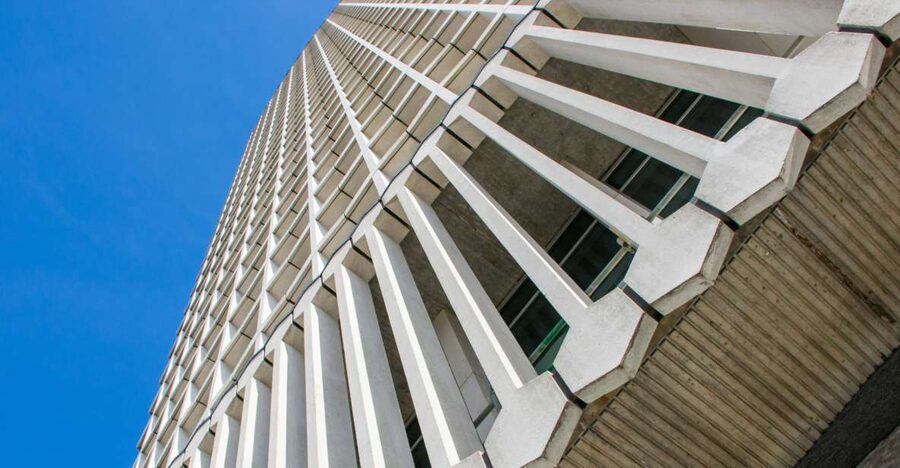
At this stop, pay attention to more than the main silhouette. Look at the way concrete frames entrances, directs movement, and creates patterns of light and shadow. Brutalist architecture can reward a close look, especially when you stop noticing the overall mass and start examining smaller details.
One useful feature of this tour is the attention to compromises and construction choices. The walk is not a technical building inspection, and you should not expect to handle materials or enter restricted spaces. Still, Evan has been praised for noticing design details, particularly at the Brunswick, and for explaining how buildings respond to practical demands.
If you already read about architecture, you may want a more technical discussion of construction methods and materials than the tour always provides. The strongest fit is for someone who wants a well-explained introduction with enough detail to sharpen the eye.
The National Theatre and London’s most famous Brutalist view
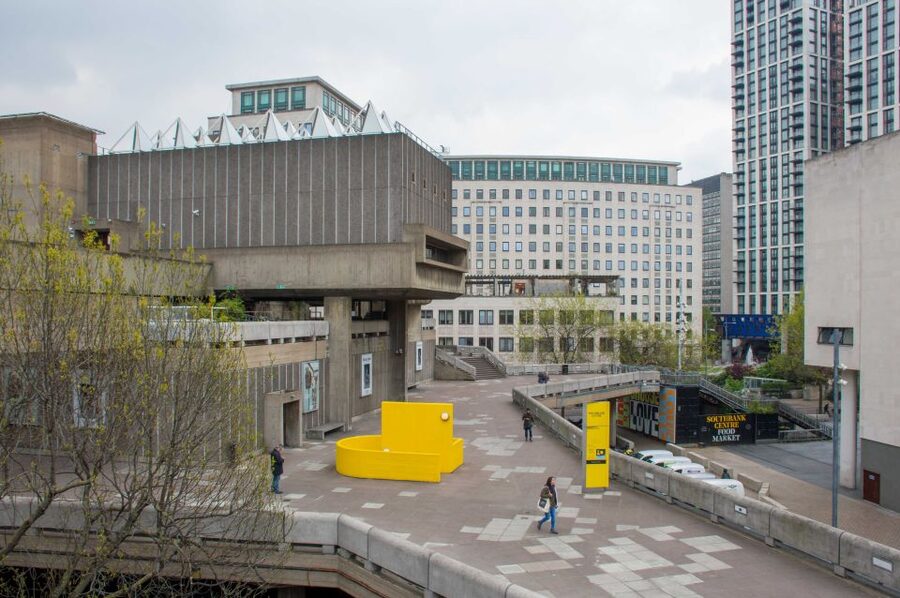
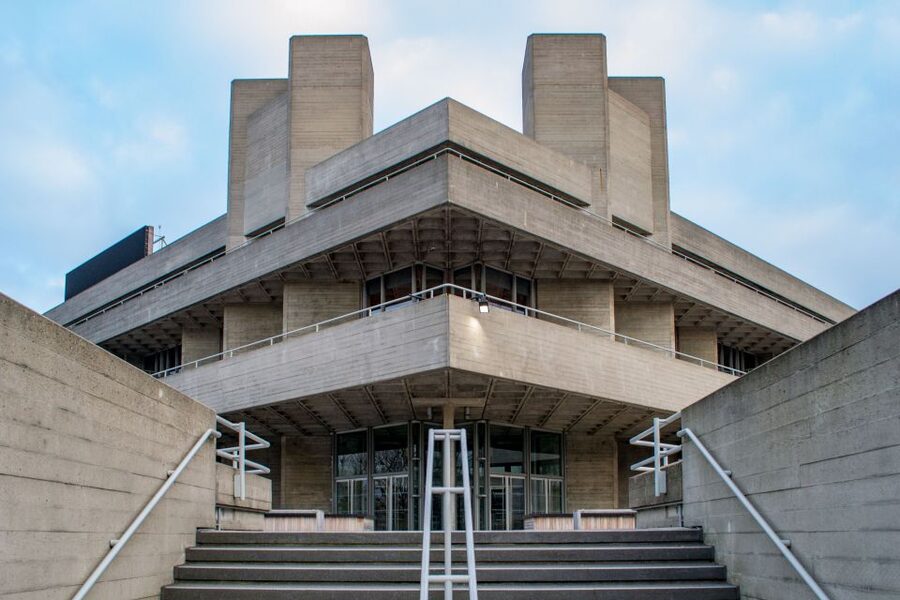
The National Theatre is likely to be the visual centerpiece of the experience. Its broad terraces and stacked concrete forms make it one of London’s clearest examples of monumental Brutalism.
It is also a useful building for discussing public reaction. The theatre was intended as a major cultural institution, yet its appearance has long divided opinion. Some people see a powerful civic building with a strong sense of purpose. Others see a forbidding mass that turns its back on the river and surrounding city.
That disagreement is part of the point. Brutalist architecture often asks you to think about access, scale, and public space. Does a building welcome you? Does it make its function clear? Does its size help a public institution feel important, or does it make the institution feel remote?
The National Theatre also makes excellent material for photographs. You can frame the repeating terraces, sharp edges, exposed concrete, and strong shadows. The tour is not presented as a dedicated photography walk, but the route gives you time to see the buildings as images as well as historical evidence.
Do not expect a visit inside the theatre. Interiors are not included, and the focus remains on exterior architecture and the stories attached to it. If you want a performance or interior tour, you will need to arrange that separately.
More Walking Tours in London
- Magical London: Harry Potter Guided Walking Tour
★ 4.7 · 22,044 reviews - London: The Original Jack the Ripper Walking Tour
★ 4.7 · 7,833 reviews - London: Harry Potter Movies Walking Tour (Kids Go Free)
★ 4.7 · 3,071 reviews - London: The Great British Rock and Roll Music Walking Tour
★ 4.9 · 1,783 reviews
From post-war rebuilding to European Modernism
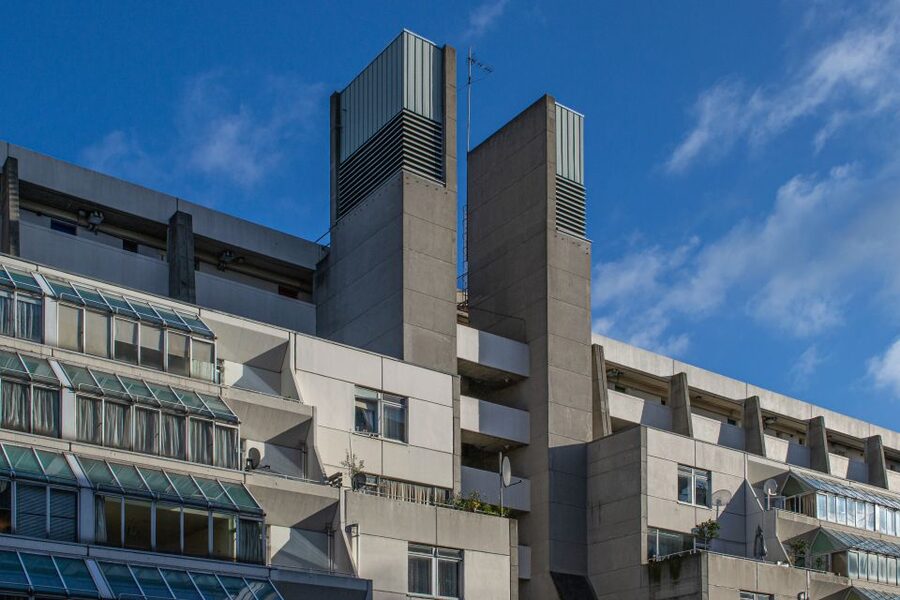
The walk becomes more rewarding when it moves beyond individual buildings. London’s Brutalist period did not happen in isolation. Evan discusses key figures in European Modernism and the international events that influenced post-war architecture.
You will look at the period after the Second World War, when cities faced rebuilding needs, housing pressures, changing public services, and limited resources. Concrete offered architects a material that could be used for large structures and expressive forms.
It also carried a political meaning. New schools, offices, theatres, and civic buildings could signal a more open and modern society. In practice, many of these projects faced budget limits, maintenance problems, and changing public tastes.
This is where the tour gains its wider value. You are not only learning to identify a style. You are considering why a city makes certain visual choices, who benefits from major public construction, and how decisions made decades ago affect daily life now.
The social and economic side is especially helpful if you are new to architecture. You do not need to arrive knowing the difference between every Modernist movement. Evan can adapt the level of explanation to the group, and one participant specifically valued the way he adjusted the tour to suit different levels of knowledge.
What the tour says about concrete
Concrete is not treated as a decorative surface alone. The tour introduces its role in engineering and modern construction, along with the reasons it became so important during the post-war period.
You will consider how concrete allows buildings to reach large spans, support heavy structures, and create forms that would be difficult in traditional materials. You will also encounter the compromises. Concrete can weather badly, require costly repairs, and make later changes complicated.
That practical side matters. Brutalist buildings are often judged as if their appearance were the only issue, but their future depends on maintenance, use, ownership, and public money. A building can be architecturally significant and still be awkward to operate.
The discussion also touches on environmental impact. Concrete enabled ambitious projects, but its production has a major environmental cost. That gives the tour a current edge without turning it into a simple celebration of 1960s design.
If you are hoping for a hands-on materials workshop, this is not that experience. You will learn through observation and explanation. The best way to get more from it is to ask direct questions about surface, structure, repair, and the trade-offs behind the buildings you see.
The Brunswick and the value of seeing small details
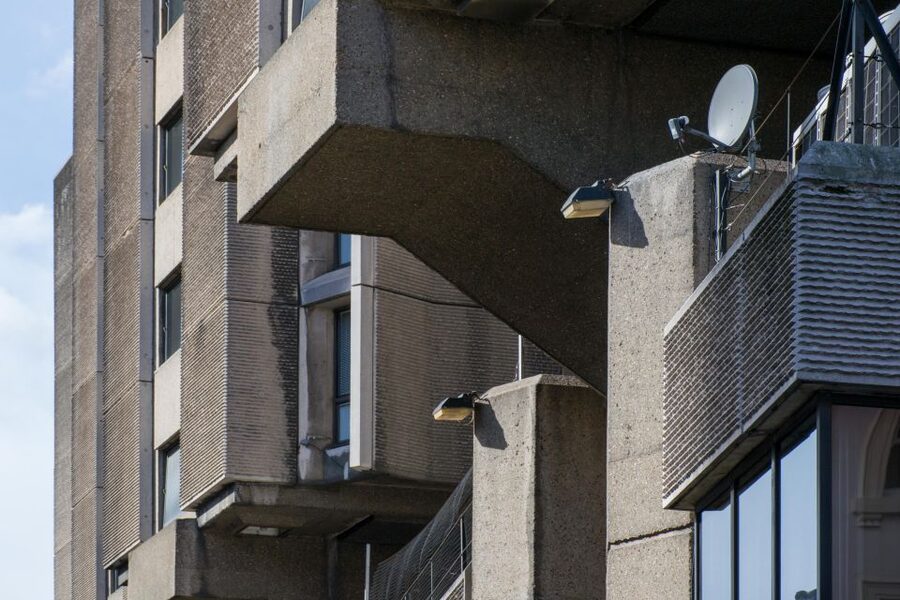
The Brunswick is singled out as a particularly strong moment for close observation. Its design gives Evan a chance to point out details that may be missed when you judge a Brutalist building only from a distance.
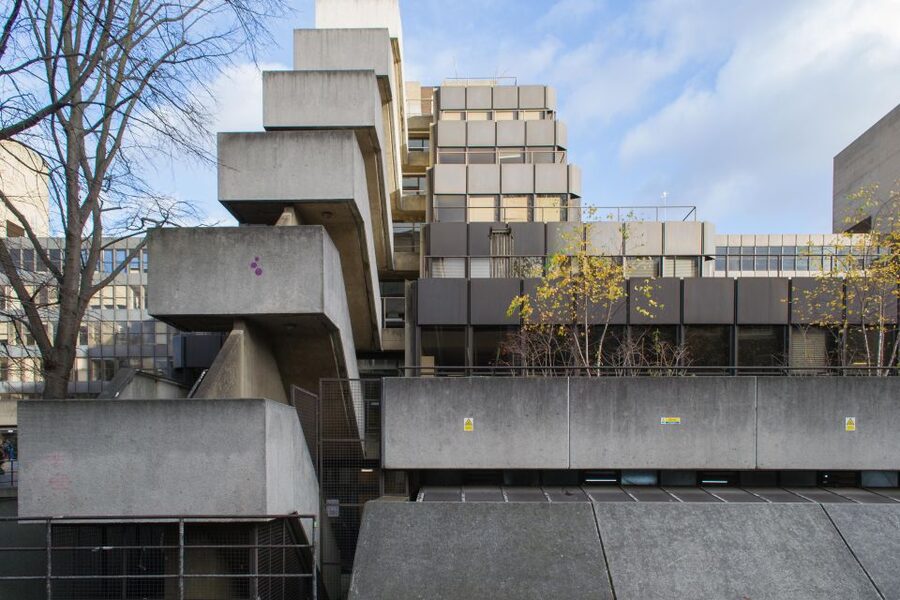
This is an important part of the walk. Large concrete buildings can appear blunt and uniform until you notice the repeated modules, angled surfaces, walkways, windows, and ways that shops or homes fit into the whole.
The Brunswick also helps show that Brutalism was not limited to isolated civic monuments. It could shape mixed-use developments and everyday urban settings. That raises practical questions about how people live with large Modernist projects, rather than simply visiting them as landmarks.
The stop may be especially useful for beginners. You can practice looking for structure and pattern instead of asking only if you find the building attractive. At the same time, people with a strong architecture background may want more sustained discussion of construction and material behavior.
One honest limitation is that the tour sometimes uses buildings as visual examples while the guide gives a broader account of Modernism and Brutalism. That approach works well if you want the big picture. It may feel less satisfying if you want every stop treated as a detailed architectural case study.
Preservation, demolition, and the future of Brutalism
London’s Brutalist buildings have had an uneven life. Some were disliked, altered, neglected, or threatened. Others gradually gained recognition as important works that deserve protection.
The tour explains the continuing dispute among local authorities, preservation groups, residents, and building users. The central question is not simply if a building is beautiful. It is how the structure can remain useful, affordable, safe, and relevant.
That is a worthwhile way to end a walk through this style. Preservation can keep important architecture alive, but listing or protecting a building does not solve repair bills or accessibility problems. Demolition may remove a difficult structure, but it can also erase a major piece of London’s post-war story.
You will leave with a more practical view of architectural preservation. The issue is not about keeping every concrete building untouched. It is about deciding which buildings matter, how they can serve people now, and what a city loses when it replaces them.
A small group led by Evan
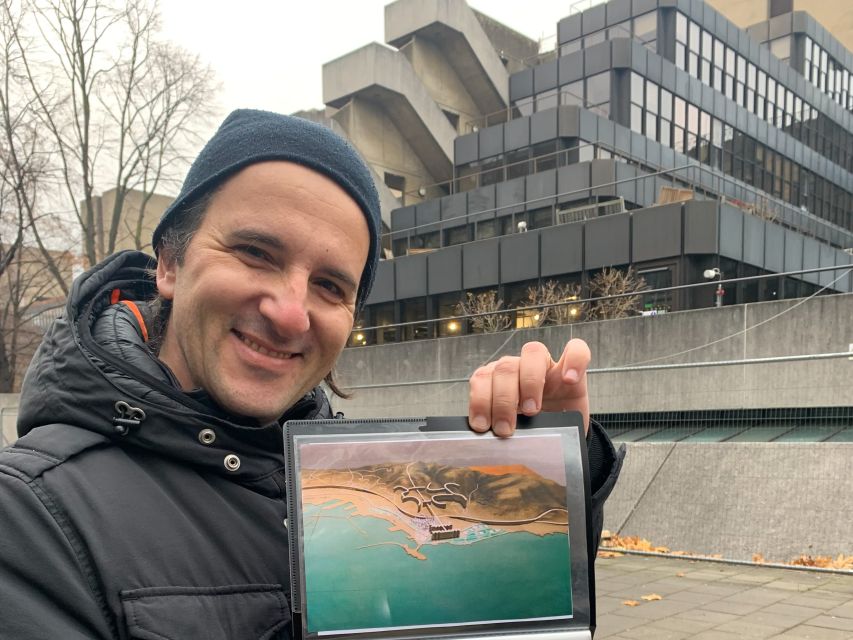
Guide Evan is the clearest reason to book this particular walk. He brings strong subject knowledge, an easy manner, and obvious affection for the built environment. His style is described as informal as well as informative, which suits a subject that can become dry if presented as a lecture.
He also appears comfortable with different types of participants. If you and a companion have unequal levels of interest, he can adapt the explanation rather than leaving one person behind.
The best praise concerns his ability to link buildings with history, politics, and economics. That is a useful distinction. You will not just hear dates and architect names. You will learn about the forces that made these projects possible and the reasons people later fought over their future.
There is one caution. Two participants flagged occasional factual oversimplifications, including comments about window tax and the political description of Isaac Hayward. If you have advanced historical training, you may want to check some side points independently and ask for clarification when something sounds too neat.
That does not cancel out the value of the walk, but it is worth knowing what kind of guide you are getting. Evan is an engaging specialist who explains a complex subject for a general audience, not an academic seminar with every claim qualified.
Is $47 a fair price?
At $47 per person, this is good value if you have a genuine interest in architecture, urban history, or post-war London. You receive 2.5 hours with a live English-speaking guide in a group capped at six. That is a more personal format than a large general city walk.
The price is less attractive if you are only mildly curious about Brutalism or want a broad introduction to famous London sights. The tour focuses on a specific architectural period, and much of the enjoyment comes from listening closely and looking carefully.
You should also allow a little extra for the Tube trip. It is only one short journey within Zone 1, but public transport is not included. Wear comfortable shoes, bring water, and carry weather protection. The walk may be postponed or canceled in poor conditions, which is sensible given that the experience takes place outside.
Free cancellation up to 24 hours before the start and reserve-now, pay-later booking make the arrangement fairly flexible. Those terms are useful if your London schedule is still shifting.
Who should book this walk?
I would choose this tour if you want to see a side of London beyond medieval churches, royal palaces, and Victorian streets. It suits architecture students, photographers, urban planners, Modernism fans, and curious visitors who enjoy asking why a city looks the way it does.
It is also a good choice for people who already know a little about Brutalism but want a guided route through central London. The small group makes it easier to ask about individual buildings and test your own impressions.
I would skip it if you dislike extended discussion, need indoor shelter, or want to enter the buildings. It is not suitable for children under 16 or people with mobility impairments, and the outdoor route may be postponed in unfavorable weather.
FAQ
Where does the London Brutalist architecture tour begin?
The tour meets outside Russell Square Underground Station on the Piccadilly Line.
How long does the walking tour last?
The tour lasts 2.5 hours.
What language is the tour conducted in?
The live tour guide speaks English.
How large is the group?
The group is limited to six participants.
Is public transportation included?
No. The tour uses the Tube once for a short journey, and you need enough credit or a ticket for one trip within Zone 1.
Do I visit the interiors of the buildings?
No. The tour visits the exterior areas, and building interiors are not included.
What should I bring?
Bring a public transport ticket or enough credit for the short Zone 1 Tube journey.
Is the tour suitable for children or people with mobility impairments?
The tour is not suitable for children under 16 or people with mobility impairments.
Should you book it?
Book this walk if you want London explained through concrete, public policy, and post-war change rather than through its usual old-town highlights. Evan’s enthusiasm, the six-person limit, and the chance to study buildings such as the Institute of Education, the National Theatre, and the Brunswick make the $47 price sensible for the right audience.
Go in expecting an outdoor architecture discussion, not an interior tour or construction workshop. Bring Tube credit, dress for the weather, and stay open to buildings that may look severe before their stories make them more interesting.
New listings around London
- London: Secrets of Freddie Mercury Tour with a Cocktail★ 4.1 · 15 reviews
- London: Hampton Court Private Guided Tour★ 3.4 · 15 reviews
- London: Jack the Ripper Tour and Underground Prison in Spanish★ 5.0 · 15 reviews
- Spanish Language : Original Harry Potter Walking Tour★ 4.5 · 15 reviews
- London: Private Couples Photography Session with Landmarks★ 5.0 · 15 reviews
- London: The Saturday Supershow Cabaret at Phoenix Arts Club★ 4.5 · 15 reviews
- London: 2-Hour Guided Tour of the British Museum★ 4.7 · 16 reviews
- London’s Ghosts & Gruesome Past Nighttime Walking Tour★ 4.8 · 16 reviews
London Tours, compared.
Westminster to Greenwich River Thames Cruise
Read our review →
Magical London: Harry Potter Guided Walking Tour
Read our review →

Warner Bros. Studio Harry Potter Tour with Transfers
Read our review →Browse the lists this tour appears in