
Reviewed · LONDON TOURS
London: Jack the Ripper Museum Tickets
The Jack the Ripper Museum takes you through six floors of Victorian crime, from a recreated Mitre Square murder scene to a Whitechapel police office and Mary Jane Kelly’s bedroom. The museum’s strongest point is its focus on the women who were murdered, not just the mystery of the man who killed them.
I like the careful period detail, especially the police notebook, whistle, handcuffs, crime letters, and domestic items linked to the victims. I also like the freedom to move at your own speed, with eerie sound effects and rooms that reward slow reading. The main drawback is size: this is a small museum, and visitors who rush may finish in about 45 minutes.
Key points to know before you go
- Six floors in a compact East End building: Expect a self-guided walk through recreated rooms rather than a large modern museum.
- Mitre Square crime scene: See a waxwork scene showing P. C. Watkins discovering Catherine Eddowes’s body.
- Whitechapel Police Station: Examine crime boards, letters, newspapers, and police equipment tied to the investigation.
- Mary Jane Kelly’s bedroom: A somber recreation that shifts attention toward the lives and poverty of the victims.
- Actual autopsy photographs: The morgue contains graphic material, so this is not a light attraction.
- Flexible visit length: Most people need around 45 minutes, while careful readers can spend about 90 minutes.
Entering 1888 London at 12 Cable Street
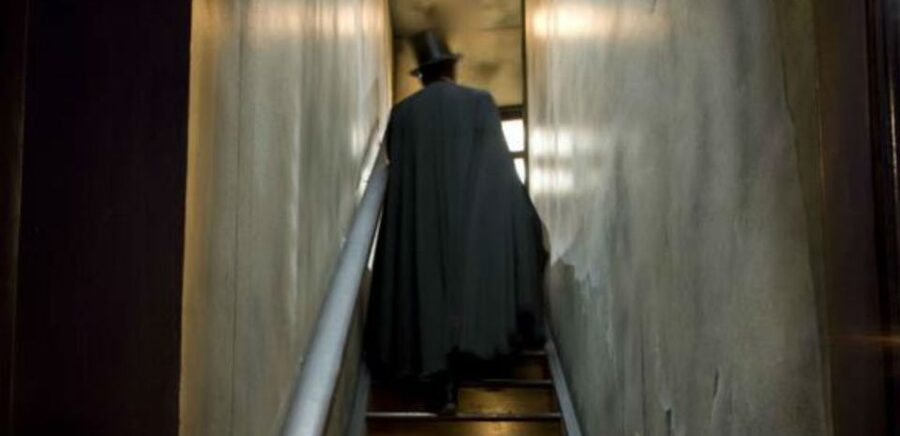
The museum is at 12 Cable Street in East London, close to Tower Gateway, Tower Hill, and Aldgate East stations. It is easy to mistake the building for an ordinary house at first, which fits the experience nicely. Once inside, the rooms turn the familiar Jack the Ripper story into a physical walk through Victorian Whitechapel.
This is not a grand national museum with wide galleries and polished exhibits. It is a narrow, theatrical attraction built around recreated rooms, wax figures, written displays, sound, and period objects. I find that scale useful. You move from scene to scene without losing the thread of the story.
The visit is self-guided, so you can stop when a display catches your attention. Staff members explain the best route through the floors, and some visits include help from people such as Jasony or George. The main experience, however, lets you read and explore independently rather than follow a fixed lecture.
Plan on about an hour. A quick walk can take roughly 45 minutes, while a slower visit with time for the written material and photographs can last around 90 minutes. If you enjoy true crime, social history, or Victorian London, you will get more from taking your time.
More Museum Tours in London
- London: Chelsea Football Club Stadium and Museum Tour
★ 4.8 · 4,576 reviews - London: British Museum Guided Tour
★ 4.3 · 1,182 reviews - London: Tour of the British Museum
★ 4.1 · 678 reviews
Mitre Square and the discovery of Catherine Eddowes
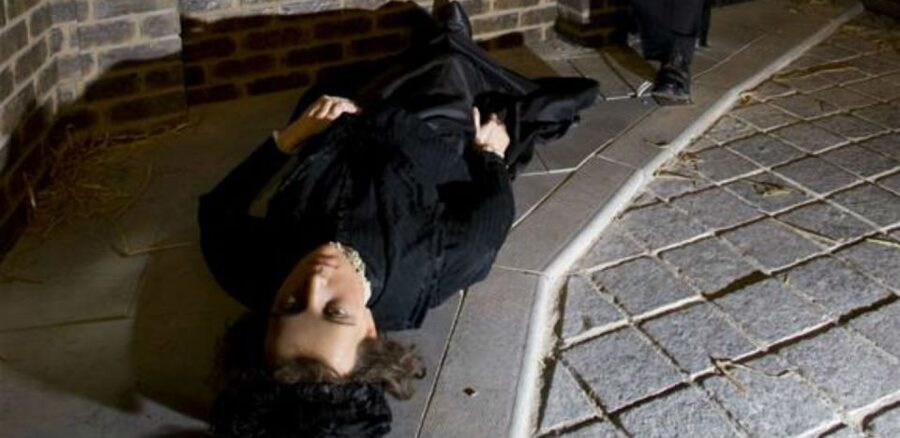
One of the first major scenes is a recreation of Mitre Square, where P. C. Watkins discovered Catherine Eddowes. The waxwork shows the moment of discovery in a way designed to unsettle you. It is theatrical, but it gives the case a clear physical setting instead of leaving it as a list of names and dates.
The scene also introduces one of the museum’s recurring strengths: it keeps the police investigation close to the murders. You are not simply shown a sensational crime display. You are placed near the confusion and urgency faced by the officers who found the bodies and tried to make sense of a killer who was never identified.
Sound effects help set the mood. In other rooms, voices and music add to the feeling of a Victorian building after dark. This atmosphere is a major part of the attraction, though it may feel too staged if you prefer a strictly academic museum.
The exhibit can be disturbing. The waxwork is intended to frighten, and the subject itself involves real violence against women. I would not choose this as a casual stop for anyone who dislikes horror-style displays or graphic crime material.
Jack the Ripper’s sitting room and the suspects
After the crime scene, you enter a recreation of Jack the Ripper’s sitting room. Medical instruments, books, maps, letters, and Victorian Ripper objects fill the space. The room tries to show the imagined private world of the unidentified murderer, while also presenting the theories that have surrounded the case for more than a century.
A highlighted object is a drawing of a woman’s body on a metal bed, attributed to prime suspect Walter Sickert and signed in red ink. Displays like this show how much of the Ripper story rests on clues, suspicions, and disputed connections rather than a proven identity.
That distinction matters. The museum is built around a famous unsolved case, so its rooms naturally encourage speculation. You should treat the presentation as an atmospheric account of the case and its theories, not as a final answer to who Jack the Ripper was.
I like this room best when you view it as part of the period setting. The maps and letters help you picture the cramped, anxious world of the investigation. The medical objects also underline how closely the case was tied to Victorian ideas about anatomy, policing, and crime.
Whitechapel Police Station and the case evidence
The recreated Whitechapel Police Station is one of the museum’s most useful rooms. Crime scene boards lay out evidence from the investigation, while copies or displays of the From Hell and Dear Boss letters show how the killer’s name became linked to the case.
Original newspapers and police artifacts add context. They help you see how the murders were reported and how the investigation grew into a public sensation. The display does not just rely on wax figures. It gives you written material to study, which makes the museum more rewarding for anyone interested in the facts behind the horror.
Among the most striking objects are a whistle, notebook, handcuffs, and truncheon associated with P. C. Watkins. The whistle was used to call for help after the body was found in Mitre Square. These small objects are easy to overlook, but they are exactly the sort of details that make the police work feel real.
The room is also a good place to slow down. Read the boards in order, then return to any letter or newspaper that interests you. Since the museum is self-guided, you do not have to keep pace with a group.
Further Ripper walks after dark:
- London: The Original Jack the Ripper Walking Tour
★ 4.7 · 7,833 reviews - London: Jack the Ripper Small Group Tour
★ 4.7 · 3,159 reviews - German Language : Original Jack the Ripper Tour
★ 4.6 · 1,805 reviews - London: Jack the Ripper Walking Tour – Ripper Vision Tours
★ 4.5 · 1,752 reviews
Mary Jane Kelly’s bedroom and the women behind the case
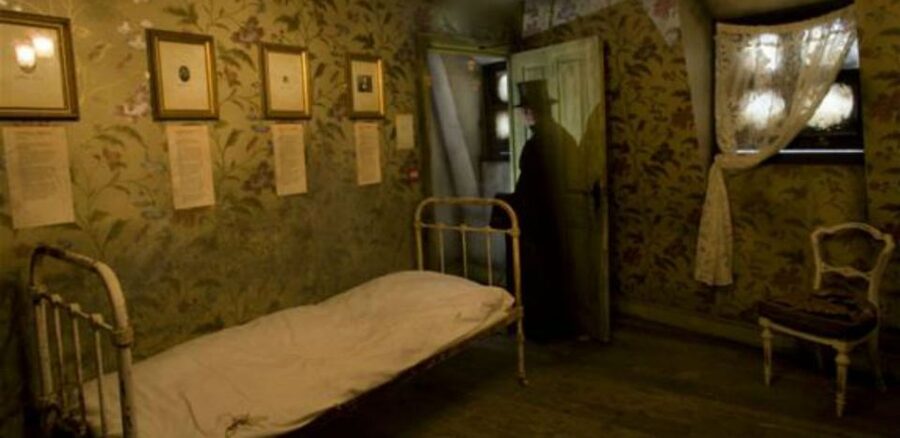
The attic recreation of Mary Jane Kelly’s bedroom changes the tone. It represents the setting of the most horrific of the murders, but it also shows how the women lived. A metal-framed bed, straw mattress, boots, bonnets, family photographs, and modest personal belongings make the room feel domestic rather than purely criminal.
This is where the museum is most effective. Jack the Ripper is often treated as a puzzle or horror character, while his victims become footnotes. Here, the displays give attention to the nine women who were killed and to the difficult lives of poor Victorian East London.
The attic includes photographs of the women and their families, along with descriptions of their lives. A woman singing through a speaker adds a haunting sound to the room. It is a simple effect, but it can be more moving than the wax figures because it suggests the ordinary human lives behind the case.
I recommend spending extra time here. The room is not just a recreation of a murder site. It shows poverty, limited possessions, and the fragile circumstances in which many working-class women lived. That social setting gives the murders more meaning and keeps the museum from being only a horror attraction.
The morgue and the most graphic material
The final major room is the morgue. Here you can study actual autopsy photographs and read reports about the mutilation and murder of the nine victims linked to Jack the Ripper.
This section is the clearest reason to think about your own comfort level before booking. The material is graphic and genuinely grim. You can approach it as historical evidence, but it is not softened into a family-friendly display.
The morgue also gives the visit a documentary edge. The recreated rooms are theatrical, while the photographs and reports confront you with the physical reality of the crimes. If you want the full museum experience, this room is important. If you are sensitive to graphic images, you may prefer to move through it quickly or avoid it.
The museum does not provide transportation, and the ticket covers admission only. That is worth noting because the attraction is best treated as a focused one-hour stop, perhaps combined with other East London sightseeing rather than planned as a full-day activity.
How much time and value you get for $18.86
At about $18.86 per person, the museum is priced like a short London attraction rather than a major all-day museum. The value depends on how you visit it.
If you hurry through the rooms, you may spend only 45 minutes inside. At that pace, the price can feel high for a compact museum. If you read the evidence boards, look closely at the objects, listen to the audio effects, and consider the information about the victims, you can spend about an hour and a half.
I would consider it fair value for people already interested in the Ripper case, Victorian crime, or atmospheric history. You are paying for a concentrated, staged experience with six floors of displays, not a huge collection of artifacts.
The admission also works better if you value mood and presentation. The museum’s recreated rooms, sound effects, wax figures, and dim setting create an experience that a book or walking route cannot provide. On the other hand, visitors seeking a large collection of verified historical objects may find the museum too small.
Free cancellation up to 24 hours before the visit and a reserve-now, pay-later option make it easier to fit into a changing London schedule. The museum is closed on Christmas Day. A person accompanying someone with a disability receives free admission.
Who will enjoy this museum most
I would recommend the museum to you if you enjoy:
- Jack the Ripper investigations and unsolved crimes
- Victorian London and East End social history
- Horror attractions with historical material
- Self-guided museums where you can read at your own speed
- Atmospheric rooms, wax figures, and sound effects
It works particularly well for adults and older children who are comfortable with grim subject matter. Some families have found it interesting, but the graphic morgue photographs and murder scenes require parental judgment. The material is not suitable for anyone looking for a gentle London history stop.
You may prefer a walking tour if your main goal is to see the actual streets of Whitechapel. This museum gives you recreated interiors and evidence displays, but the ticket does not include a guide or transportation around the area.
You may also want a different museum if you dislike speculation. The Ripper case includes disputed suspects, letters, and theories. The museum presents that world of mystery, but it cannot provide a proven solution.
Practical details for planning your visit
The meeting point and ending point are the same: Jack the Ripper Museum, 12 Cable Street, London E1 8JG. The closest named stations are Tower Gateway, Tower Hill, and Aldgate East.
Admission is valid for one day, with starting times based on availability. Check the schedule before you go, especially if you are building a tight London itinerary.
Allow at least 60 minutes if you want to read properly. The small rooms can feel crowded if many people stop at the same display, so a quieter time may make the self-guided format more enjoyable, though no specific quiet period is guaranteed.
Wear comfortable shoes if you plan to combine the museum with other East London sights. The museum itself is compact, but reaching it by Underground or train involves walking from the nearby stations.
Staff at the entrance explain the suggested route, which helps because the building is arranged over several floors. You are free to take your time rather than follow a guide from room to room.
Should you book the Jack the Ripper Museum?
Book it if you want a short, atmospheric London experience that mixes crime investigation, Victorian life, and horror-style presentation. The strongest reasons to go are the police artifacts, the detailed recreation of Mary Jane Kelly’s bedroom, and the attention given to the victims rather than only to the killer.
Skip it if graphic autopsy photographs will upset you, or if you expect a large museum with extensive collections and a long guided tour. At $18.86, it offers reasonable value for about an hour of focused viewing, but it is not an all-day attraction.
My advice is to reserve it when you are already planning time around Tower Hill, Aldgate, or Cable Street. Go slowly, read the police evidence, and give the attic room your attention. That is where the museum becomes more than a scary stop and gives you a clearer sense of the people and place behind the famous case.
FAQ
Where is the Jack the Ripper Museum?
The museum is at 12 Cable Street, London E1 8JG, in Greater London.
Which stations are near the museum?
The nearest Underground and train stations listed are Tower Gateway, Tower Hill, and Aldgate East.
How long does a visit take?
The visit can take about 45 minutes if you move quickly. Allow around 90 minutes if you read the displays and take your time.
Is the museum guided or self-guided?
It is primarily a self-guided walking visit. Staff explain the best route, and some visits may include assistance from guides such as Jasony or George.
What is included in the ticket?
The ticket includes museum admission. Transportation is not included.
Does the museum contain graphic material?
Yes. The morgue contains actual autopsy photographs and reports describing the murders and mutilation of the victims.
Can I cancel my booking?
You can cancel up to 24 hours in advance for a full refund.
Is the museum open on Christmas Day?
No. The museum is closed on Christmas Day.
New listings around London
- London: Secrets of Freddie Mercury Tour with a Cocktail★ 4.1 · 15 reviews
- London: Hampton Court Private Guided Tour★ 3.4 · 15 reviews
- London: Jack the Ripper Tour and Underground Prison in Spanish★ 5.0 · 15 reviews
- Spanish Language : Original Harry Potter Walking Tour★ 4.5 · 15 reviews
- London: Private Couples Photography Session with Landmarks★ 5.0 · 15 reviews
- London: The Saturday Supershow Cabaret at Phoenix Arts Club★ 4.5 · 15 reviews
- London: 2-Hour Guided Tour of the British Museum★ 4.7 · 16 reviews
- London’s Ghosts & Gruesome Past Nighttime Walking Tour★ 4.8 · 16 reviews
London Tours, compared.

Westminster to Greenwich River Thames Cruise
Read our review →
Magical London: Harry Potter Guided Walking Tour
Read our review →


Warner Bros. Studio Harry Potter Tour with Transfers
Read our review →Browse the lists this tour appears in