
Reviewed · MUSEUMS
London Transport Museum Entrance Ticket
London Transport Museum tells London’s story through the machines that made the city work. You can see the world’s first underground steam train, an early electric Tube railway, historic buses, trams, posters, maps, and hands-on displays in one visit. The Elizabeth line driving simulator is a hit with children, while the old vehicles give adults plenty of reasons to slow down.
I like two things in particular: the museum links transport to the growth of modern London, and it gives equal weight to practical engineering and stylish design. The Global Poster Gallery, included with admission, adds more than 100 poster artworks and explains how posters were made before computers. The main drawback is noise and crowding, especially on weekends and during school holidays, when the play areas can make a quiet museum visit less likely.
Key points to know before you go
- See the first underground railway in context: Steam trains, electric Tube cars, buses, and trams show how London moved from horse power to modern rail.
- Try the Elizabeth line simulator: The Future Engineer display lets you take the controls of a modern train.
- Study London’s famous visual identity: The bullseye logo, diagrammatic Tube map, and historic posters explain how transport branding became part of city life.
- Plan for a family-friendly visit: Hands-on activities, puzzles, play spaces, and vehicle displays work well for children from toddler age upward.
- Allow more time than the minimum: A quick visit takes about 1 to 1.5 hours, but detailed viewing can take 3 to 4 hours.
- Use the Covent Garden location wisely: The museum sits in central London, making it easy to pair with other time in the area.
Why the museum matters to London
Many transport museums focus on machines. This one uses machines to explain a city.
London grew quickly in the 1800s, and its transport system helped turn separate districts into one connected capital. Horse-drawn buses carried people across busy streets. Underground railways moved commuters beneath them. Electric Tube trains then made frequent urban travel faster and more practical.
That link between transport and city growth is the museum’s main idea. You are not simply looking at an old bus. You are seeing how Londoners travelled to work, how suburbs expanded, how technology changed daily routines, and how the capital built a shared identity around its transport system.
I find this approach useful because it gives the exhibits a clear purpose. The collection is not just a parade of old vehicles. Each object helps explain how London became the city you use today.
The museum also shows that London transport is an international brand. The roundel, the familiar Tube map, and the strong poster designs are not minor details. They are part of the way London presents itself to the world.
More Museum Tours in Britain:
- Liverpool: Liverpool Football Club Museum and Stadium Tour
★ 4.8 · 10,764 reviews - London: Chelsea Football Club Stadium and Museum Tour
★ 4.8 · 4,576 reviews - Manchester: National Football Museum Admission Ticket
★ 4.4 · 1,243 reviews
Starting with steam and early underground travel
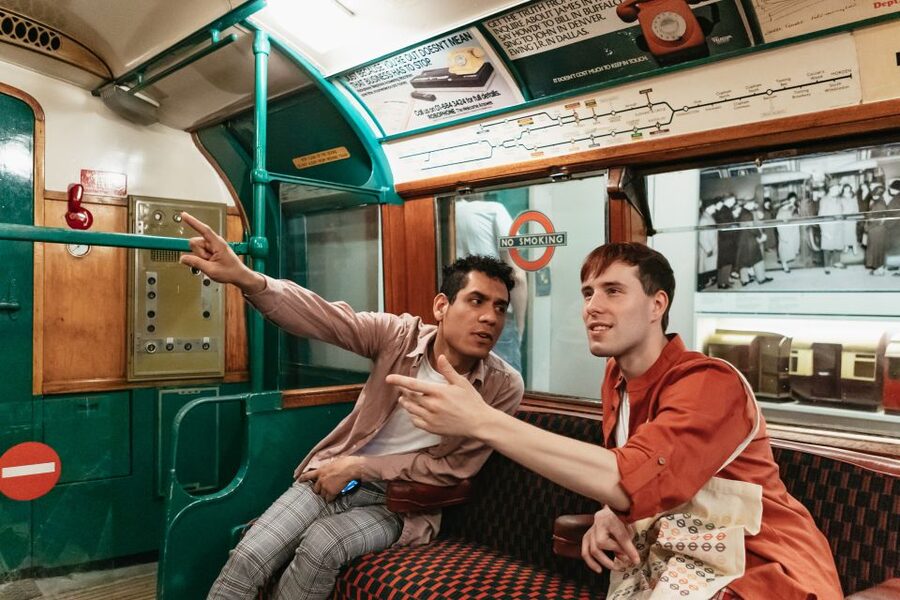
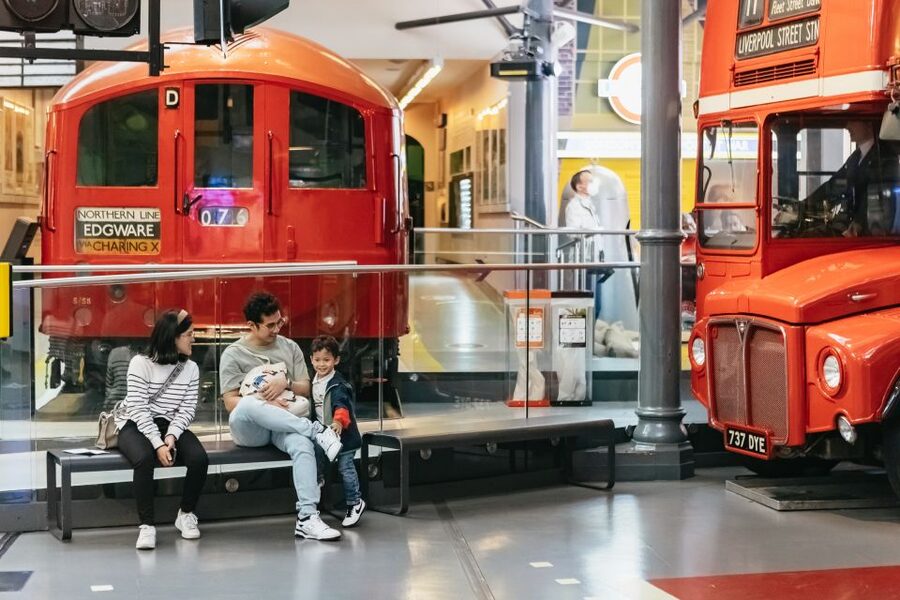
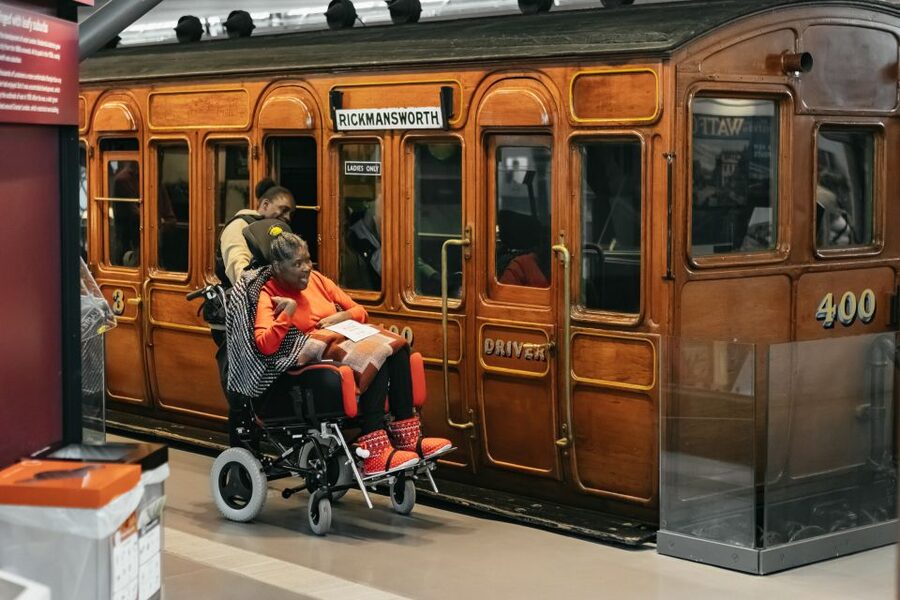
The historic railway exhibits provide the clearest opening to the story. You can see the world’s first underground steam train and an electric Tube railway, two vehicles that represent a major change in urban travel.
The steam train helps you picture the early underground system as something very different from today’s Tube. Early railway travel involved smoke, heat, noise, and engineering problems that modern passengers rarely consider. The electric railway points to the next stage, when underground travel became more suited to regular city commuting.
These displays are especially helpful if you use the Underground every day during a London trip. A Tube journey can feel routine, but the museum shows how unusual the idea once was: putting trains beneath a crowded city and using them to reshape the way people lived.
Historic vehicles also help children connect the past with something they can recognize. A train or bus is easier to understand than a date on a wall. The museum uses vehicles, photographs, videos, and objects to make the changes visible.
Some visitors spend only a short time in this section, then move on to the interactive exhibits. I suggest pausing here first. It gives you the basic timeline, so later displays about maps, branding, and modern rail make better sense.
From horse buses to the London buses you know
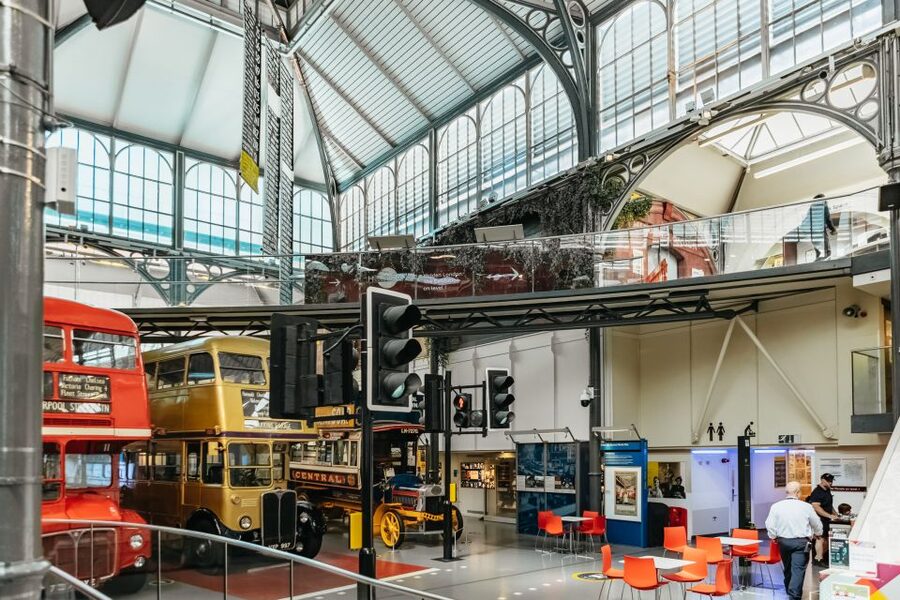
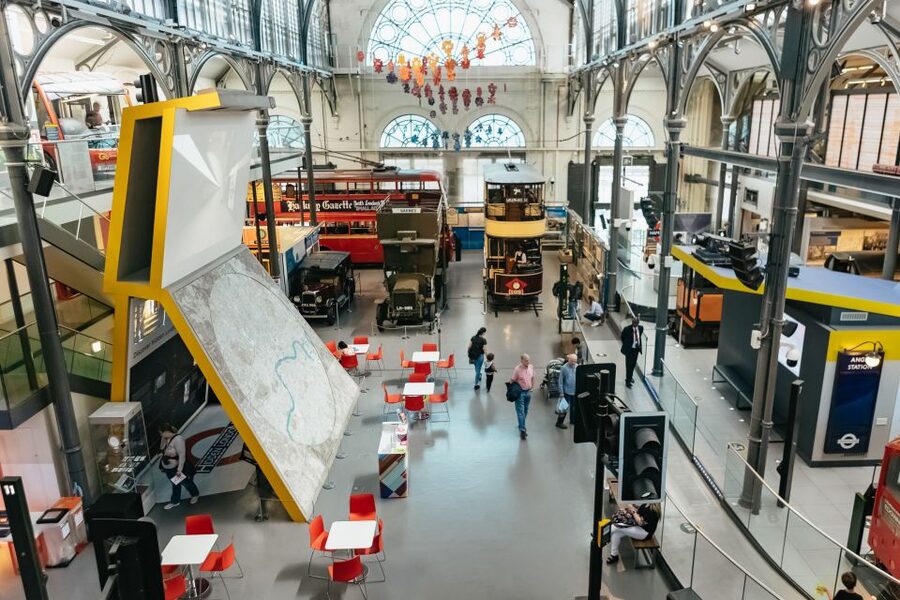
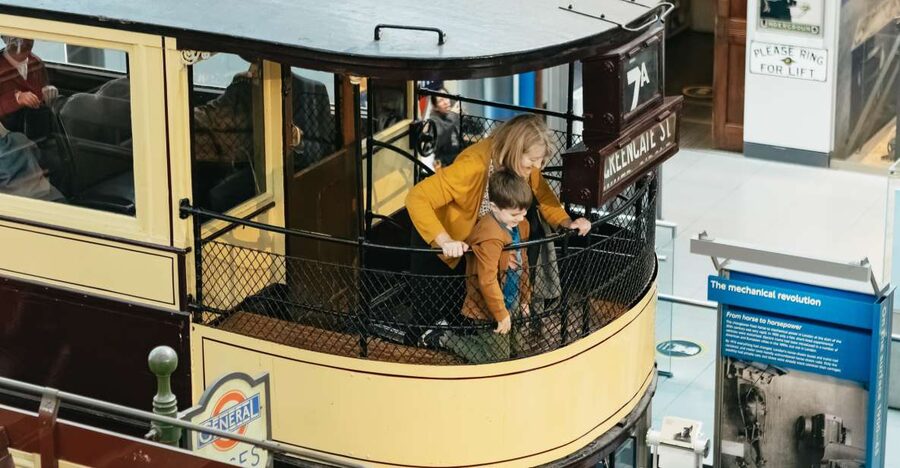
The transport story continues through horse-drawn buses, trams, and older London buses. These exhibits show how the city moved before the modern Tube network became the main symbol of London travel.
The vehicles are the stars, but the surrounding information adds the social side. Transport affected who could live where, how far people could travel for work, and how quickly London spread beyond its older center.
You also get a sense of how much London’s identity is tied to its buses. The red bus is not just a vehicle. It is one of the city’s most recognizable public symbols, and the museum traces the design and working history behind it.
This section works for mixed-age groups. Children can focus on size, shape, and moving parts. Adults may recognize vehicles from their own childhood or from older photographs. Several families have found the museum particularly enjoyable because grandparents, parents, and children can each connect with different periods.
The museum is not large enough to feel like an all-day industrial complex for every visitor. That is a benefit if you want a focused central London activity. It is also a limitation if you expect a huge collection requiring an entire day. For most people, the main galleries take around 1 to 1.5 hours at a brisk pace.
Learning the story behind the Tube map
The Tube map is one of the museum’s most interesting design subjects. Its diagrammatic style changed how people understood London transport. Instead of copying every curve and street exactly, the map gives you a simple network that helps you decide where to change trains and how lines connect.
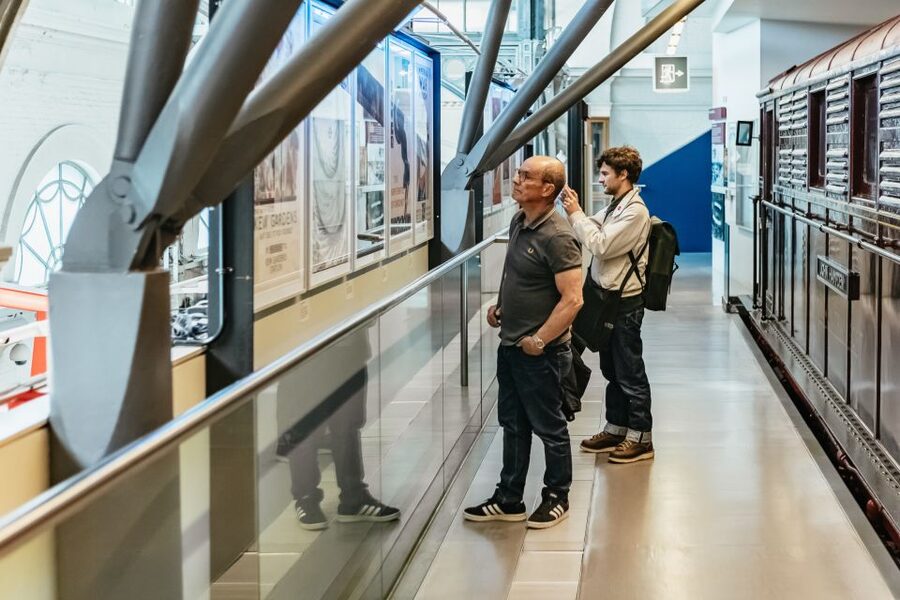
The museum places the map within the wider story of London transport’s visual identity. You can see how symbols, colors, lettering, and layout made a complicated system easier to use.
I like this part because it moves the visit beyond engineering. London transport succeeds not only because trains run, but also because people can understand the system. A clear sign or map saves time, lowers stress, and gives the city a common visual language.
Look for the famous bullseye Tube logo as part of this story. It is a small design element with a large effect. You see it across London, and the museum explains how such symbols became linked with the city itself.
This section is a good reason for adults without children to visit. You can take your time with the graphic design, social history, and development of the network while younger visitors move toward the hands-on displays.
A handful of other Britain outings to weigh up
- London: The London Eye Entry Ticket
★ 4.6 · 35,875 reviews - London: Tower Bridge Entry Ticket
★ 4.7 · 15,560 reviews - London: Westminster Abbey Entrance Ticket
★ 4.6 · 11,254 reviews - London: St Paul’s Cathedral Entry Ticket
★ 4.7 · 9,813 reviews
The Global Poster Gallery and pre-digital design

The Global Poster Gallery opened in October 2023 and is included with museum admission. It is dedicated to commercial poster art and design, with more than 100 poster artworks and posters on display.
The gallery explains how posters were commissioned and created from around 1900, before digital design tools changed the process. That gives you a useful look at the relationship between transport advertising and public life.
Posters had to catch your eye quickly. They promoted destinations, services, events, and ideas in an age when a printed image on a wall or station platform did much of the work now handled by screens. The museum uses the collection to show the creative choices behind that process.
The exhibition called How to Make a Poster focuses on poster-making and creativity in the pre-digital age. It is a strong addition for anyone interested in illustration, typography, advertising, or the history of design.
You do not need to be a design specialist to enjoy it. The displays are visual, and the connection to London transport remains clear. A Tube station poster was both an advertisement and part of the passenger’s surroundings.
If your visit begins to feel heavy on machinery, this gallery changes the pace. You move from metal, wheels, and railway technology to color, lettering, and image-making. I would make time for it rather than treating it as an optional extra.
Interactive displays for children and curious adults
The museum’s hands-on features are a major reason it works so well for families. Children can explore transport through activities rather than only reading labels.
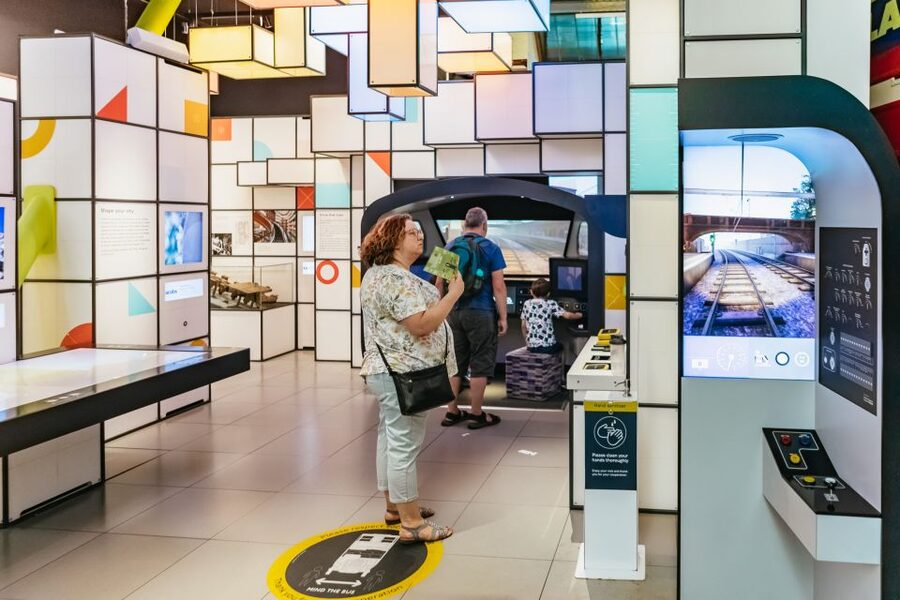
The Future Engineer’s simulation lets you drive a modern Elizabeth line train. It gives children a direct connection to a system they may have seen during their London visit. The simulator is also useful for adults who want to understand the feel of operating a train without a technical lecture.
Other interactive activities include train controls, rail track switches, and a brake pad change. These displays explain how transport works through simple tasks. They are especially useful for children who lose interest when a museum becomes mostly text.
There are also puzzles, drawing activities, and play areas for younger children. Stroller and buggy parking is available, which helps if you are visiting with a toddler but do not want to move through every gallery with a large buggy.
The family focus does affect the atmosphere. On busy Saturdays, weekends, and school holidays, the museum can be noisy. Young children may run between activities, and some areas can feel crowded. If you are visiting as a couple or alone and prefer quiet galleries, choose a weekday or arrive in the morning when possible.
That said, the interactive displays do not make the museum childish. Adults still have plenty to study in the vehicles, maps, posters, and social history sections. The museum simply gives families more ways to stay engaged.
How long should you spend here?
The official ticket is valid for one day, so you do not need to rush through the building. In practice, your ideal visit depends on how closely you look at the exhibits.
A brisk visit takes about 1 to 1.5 hours. That is enough to see the main vehicles, understand the basic story of London transport, try some interactive displays, and visit parts of the poster gallery.
Allow around 3 hours if you are travelling with children, reading the displays, or taking your time with the interactive activities. One detailed visit can take 3 to 4 hours, particularly if you stop at each period of the collection.
A useful plan is to start with the historic railway story, continue through buses and Tube development, then spend time on the map and poster displays. Finish with the children’s activities or the modern train simulator. This gives you a clear chronological path without treating the museum like a checklist.
There is no need to force a full day unless your family enjoys every activity. The one-day entry gives you flexibility, but the museum itself is usually best viewed as a substantial half-day or shorter central London stop.
Price, location, and practical details
At about $33 per person, admission is not the cheapest museum ticket in London. The value depends on how long you stay and who is with you.
For a quick adult visit of about an hour, the price may feel high. For a family that spends several hours using the interactive displays, viewing the vehicles, and visiting the Global Poster Gallery, it becomes easier to justify. The range of ages it serves is another part of the value. A group with children from about age 2 through grandparents can find something to do at the same time.
The museum is in Covent Garden, in the heart of London. That central location makes it practical on a sightseeing day, especially if you are already visiting the area. You can use it as a weather-proof break rather than planning a separate journey across the city.
The museum closes at 6:00 PM, with last entry at 5:00 PM daily. I would not arrive near closing time, particularly with children. Give yourself enough time to reach the galleries and use the interactive displays without watching the clock.
Large bags and luggage are not allowed, so leave suitcases elsewhere before you arrive. Stroller and buggy parking is available. The museum is wheelchair accessible.
Free cancellation up to 24 hours before the visit and a reserve-now, pay-later option make the ticket easier to fit around changing London plans. If you are considering a longer-term relationship with the museum, ask about current annual membership or upgrade arrangements. Some past visitors have converted admission into an annual pass, but you should confirm the present terms at the museum.
The gift shop is worth a look if you like London transport design. It carries transport-themed gifts and books, and it adds another chance to see how the Tube logo and classic vehicle shapes have become part of London culture.
Who will enjoy it most?
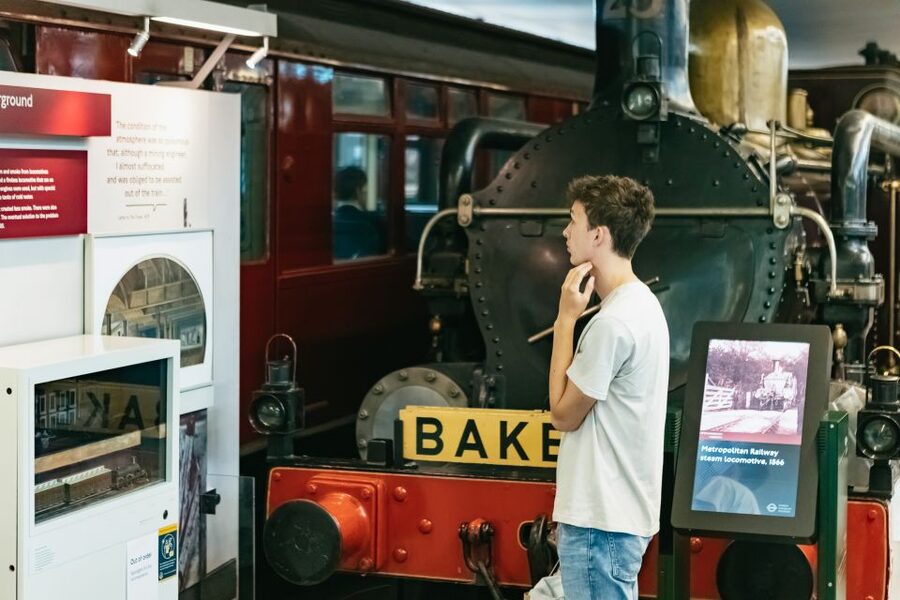
Families with children are the clearest match. The play areas, train simulator, puzzles, drawing, and hands-on machinery give younger visitors something active to do while adults explore the collection.
It also suits grandparents and adults who remember older buses, trams, or Tube designs. The displays can bring back memories of London from the 1940s, 1950s, and 1960s while showing younger visitors how much the system has changed.
You do not need to be a transport enthusiast. If you like city history, graphic design, engineering, or everyday life, you will find a useful thread here.
Couples and solo visitors can enjoy it too, especially if they visit outside busy family periods. Just expect a lively sound level around the play spaces. If you want a quiet museum with long stretches of silence, this is not the best choice on a crowded weekend.
Should you book the London Transport Museum?
I would book it if you want an indoor London attraction that combines transport, design, engineering, and family activities. The strongest parts are the first underground railway displays, the Tube map and branding story, the Global Poster Gallery, and the modern Elizabeth line simulator.
Book with at least 2 to 3 hours in mind if you want the ticket to feel like good value. Arrive early for a calmer visit, especially during school holidays. Families should make full use of the play areas and interactive machinery, while adults should save time for the poster gallery and the story of London’s growth.
Skip it if you have very little time, dislike child-friendly museums, or want a quiet art museum. For everyone else, this is a practical and engaging way to understand why London transport is more than a way to get from one attraction to another.
FAQ
Where is the London Transport Museum?
The museum is in Covent Garden, in central London, South East England.
How much does admission cost?
The stated price is about $33 per person.
How long is the ticket valid?
The entrance ticket provides access for one day.
What time does the museum close?
The museum closes at 6:00 PM daily. Last entry is at 5:00 PM.
Is the Global Poster Gallery included?
Yes. Entry to the Global Poster Gallery is included with museum admission.
Can I see the first underground railway?
Yes. The museum displays the world’s first underground steam train and an electric Tube railway.
Is the museum wheelchair accessible?
Yes, the museum is wheelchair accessible.
Can I bring luggage or a large bag?
No. Luggage and large bags are not allowed inside.
Is the museum suitable for children?
Yes. It has interactive exhibits, a modern Elizabeth line train simulator, puzzles, drawing activities, play areas, and stroller or buggy parking.
New listings around Britain
- London: Secrets of Freddie Mercury Tour with a Cocktail★ 4.1 · 15 reviews
- London: Hampton Court Private Guided Tour★ 3.4 · 15 reviews
- Edinburgh: Isle of Skye, Highlands & Jacobite Steam Train★ 4.6 · 15 reviews
- London: Jack the Ripper Tour and Underground Prison in Spanish★ 5.0 · 15 reviews
- Spanish Language : Original Harry Potter Walking Tour★ 4.5 · 15 reviews
- THE HANGOVER BRUNCH | Benidorm Bingo & Drag Queens★ 4.5 · 15 reviews
- London: Private Couples Photography Session with Landmarks★ 5.0 · 15 reviews
- London: The Saturday Supershow Cabaret at Phoenix Arts Club★ 4.5 · 15 reviews
Museums, compared.
Liverpool Football Club Museum and Stadium Tour
Read our review →
Chelsea Football Club Stadium and Museum Tour
Read our review →



British Museum Audio Tour & Priority Entrance Ticket
Read our review →Browse the lists this tour appears in