
Reviewed · SALISBURY & STONEHENGE TOURS
Shepton Mallet Prison: Guided Tour
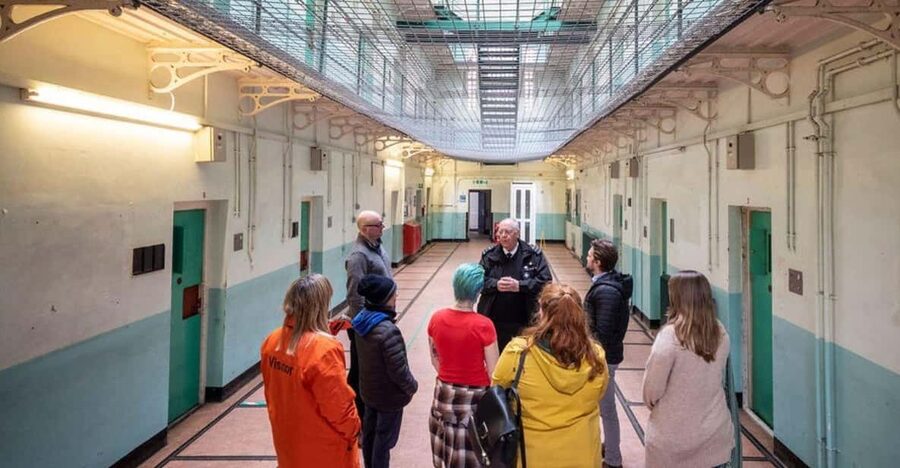
Shepton Mallet Prison gives you something museums rarely can: a real prison, with steel doors, narrow landings, old cells, and an execution room that still carries an unsettling weight. The guided walk covers two Victorian wings, the hard-labour yard, the old Gate Lodge, the exercise yard, and the route once taken by condemned men.
I like the storytelling and the chance to continue with a self-guided visit after the 1.5-hour tour. Guides such as Jason, Esther, and Cameron bring out small details you would likely miss alone. The main drawback is that the subject matter can be grim, and the visitor centre can be tricky to spot from the entrance.
Key points
- Two Victorian prison wings: Walk through B Wing, once holding up to 94 prisoners, and C Wing, built for women and children in 1848.
- Hard labour made real: See the yard linked to Victorian punishments and view the Tread Wheel building.
- A prison with 400 years of working history: Walk the landing as prison officers once did and experience the weight of the steel doors.
- Execution room and condemned cell: Learn about 25 executions carried out between 1889 and 1945, including controversies around some convictions.
- Guided and self-guided in one ticket: Take the timed tour, then explore at your own pace.
- Useful booking times: Guided tours run at 2pm on weekdays, and at 11am and 2pm on weekends and school holidays.
Why Shepton Mallet Prison feels different
Many prison attractions use recreated rooms, display cases, or theatrical sets. Shepton Mallet Prison is different because you walk through an actual former prison. The hard surfaces, steel doors, cramped cells, and worn institutional spaces do much of the work before the guide says a word.
The tour is not polished into a tidy tale of crime and punishment. It deals with prison officers, prisoners, visitors, executions, military shootings, hard labour, overcrowding, and secret wartime activity. That broad view matters. You are not simply shown where people were locked up. You get a sense of how the whole place operated.
The experience is led in English and lasts about 1.5 hours. That is enough time for a focused guided walk, though you should plan extra time afterward if you want to read displays and inspect the prison at a slower pace.
The guided portion is the part I would choose. A self-guided visit lets you set your own pace, but the prison’s stories are tied to particular rooms and routes. A good guide gives the building context and explains why an otherwise plain corridor matters.
A handful of other Britain outings to weigh up
- Stonehenge Admission Ticket
★ 4.6 · 6,388 reviews - London: Stonehenge Morning or Afternoon Tour Optional Lunch
★ 4.4 · 3,966 reviews - From London: Stonehenge Morning Day Trip with Admission
★ 4.8 · 3,423 reviews
B Wing and C Wing: two very different prison stories
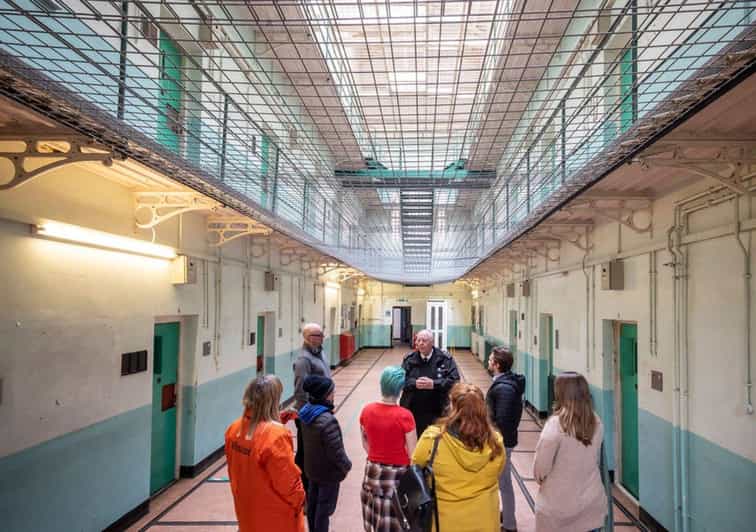
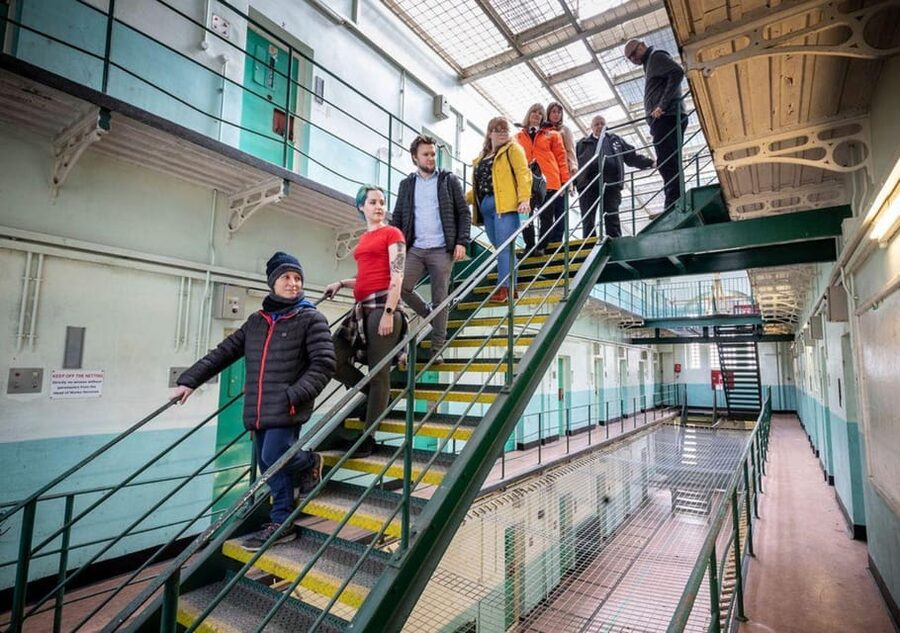
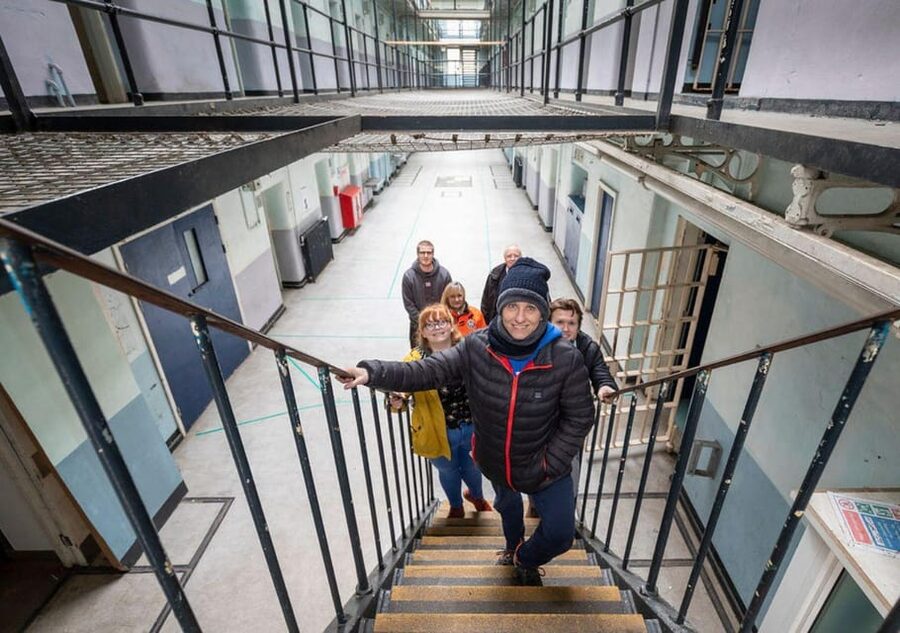
The tour includes two traditional Victorian wings, B Wing and C Wing. Their layout helps you picture prison life as a system of cells, landings, doors, and controlled movement rather than as a collection of isolated rooms.
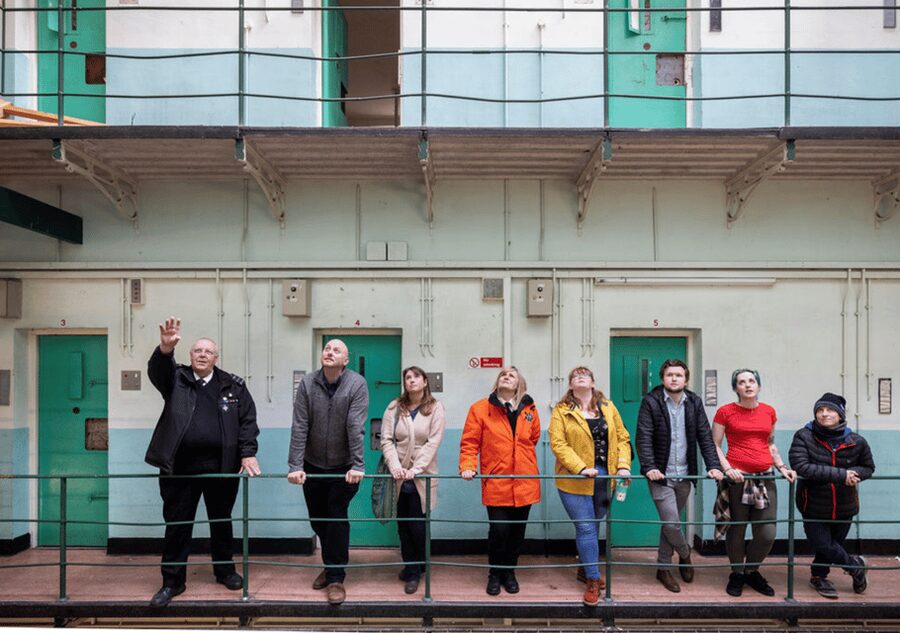
B Wing was the largest of the two. By 2001, it had capacity for 94 prisoners, but it had suffered serious overcrowding in earlier years. That detail gives the building a human scale. A room that might look merely stark or old becomes more troubling when you consider how many people were expected to live within its limits.
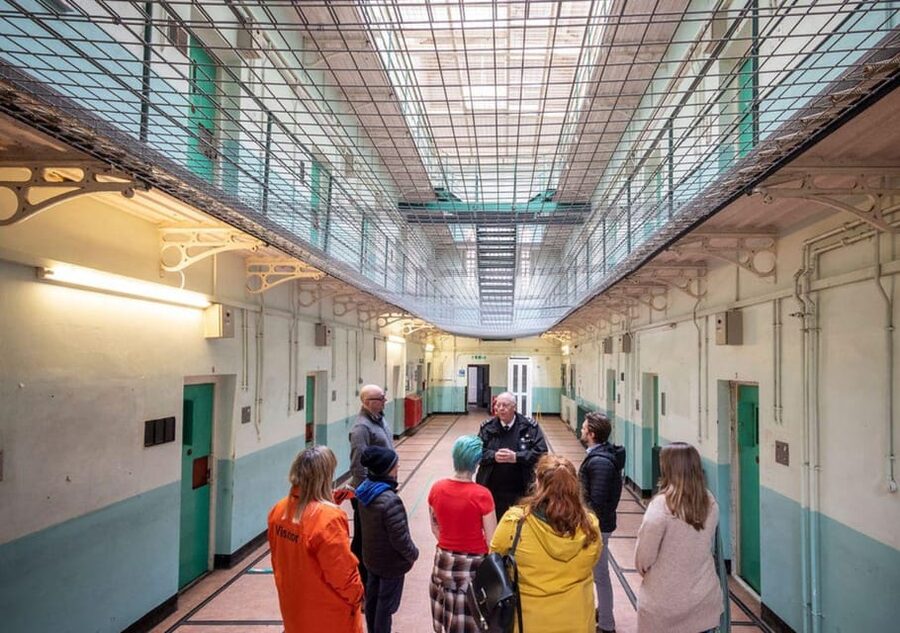
You walk the landing much as officers did for around 400 years. The landing is one of the strongest parts of the tour because it shows the prison from the controlling side. From there, officers could supervise movement and manage access to the cells. You also get the direct physical experience of steel doors closing between you and the rest of the wing.
C Wing has a different story. It was built in 1848 to hold women and children, and it continued in that role into the early 1900s. Later, during the Second World War, the wing was used for an important and top-secret purpose.
The wartime connection adds a surprise to the tour. Shepton Mallet Prison was not only a place of punishment. At different times, it was also part of wider national events. The guide can connect the ordinary prison fabric to that hidden wartime role, which is one reason the live tour adds so much.
These wings are not easy spaces for every visitor. The architecture is stark, and the subject of confinement can be uncomfortable. I would think twice before bringing a young child unless you already know they can handle serious historical material.
The landing, cells, and the feel of confinement
The prison is most effective when it lets you notice the physical details. You pass through spaces where the distance between prisoner and officer was measured in a locked door, a narrow landing, or a controlled gate.
The tour lets you discover what it was like to be shut behind those steel doors. That does not recreate imprisonment, of course, but it gives you a firm sense of the building’s basic force. The doors are not decorative. They were designed to separate, restrict, and control.
In the Gate Lodge area, an original cell has recently been uncovered. You may explore it, but only if you are willing to get down on your hands and knees. This is a small but memorable detail, and it makes the visit more physical than a standard museum tour.
I would wear practical shoes and clothing you can move in comfortably. The tour includes old prison structures rather than a flat gallery route, and the original cell is clearly not designed for easy standing access.
Hard Labour Yard and the Tread Wheel
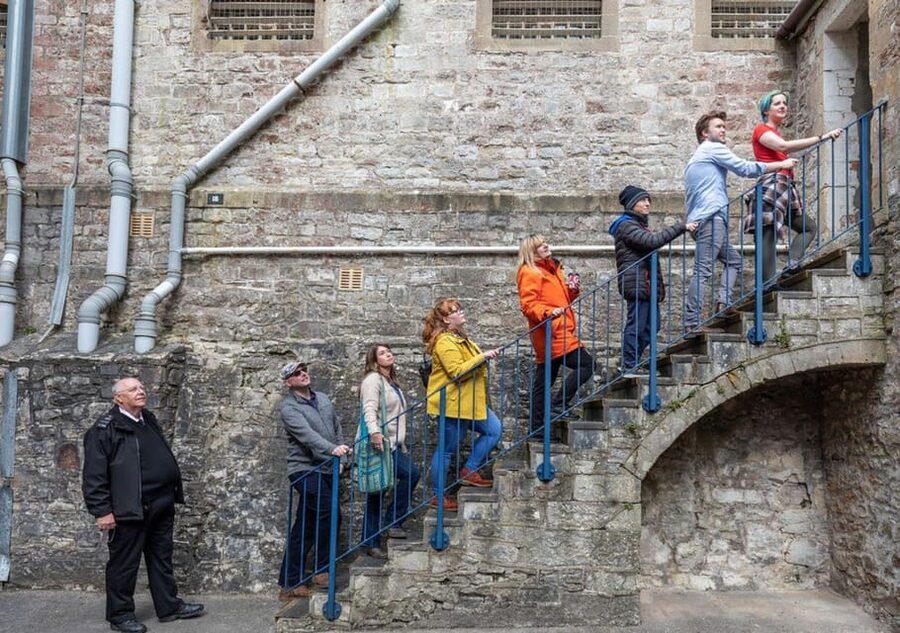
The hard-labour yard explains one of the harshest ideas in Victorian prison policy. Authorities wanted to prevent prisoners from idleness, so they introduced exhausting forms of labour that were often repetitive and of little practical value.
The yard is important because it helps you understand punishment as daily routine. Prison discipline was not limited to confinement. It could involve forced physical work, strict schedules, and tasks designed as much to tire and discipline the body as to produce anything useful.
From the yard, you can see the Tread Wheel building. The Tread Wheel was among the most physically demanding forms of Victorian hard labour used by the prison population. Even without operating it, the building gives the guide a strong starting point for explaining the experience.
This part of the tour may appeal to anyone interested in social history, prison reform, or the changing ideas behind punishment. It is less about a single dramatic event and more about the long, grinding nature of institutional life.
The drawback is that the yard and labour story can feel bleak. The tour does not turn hard labour into entertainment, and that is appropriate, but you should expect a serious tone.
Elsewhere in Britain, a change of pace:
- London: The London Eye Entry Ticket
★ 4.6 · 35,875 reviews - From London: Harry Potter Warner Bros Studio Tour
★ 4.7 · 26,588 reviews - London: Westminster to Greenwich River Thames Cruise
★ 4.5 · 22,836 reviews - Magical London: Harry Potter Guided Walking Tour
★ 4.7 · 22,044 reviews
Gate Lodge and the old Governor’s Office
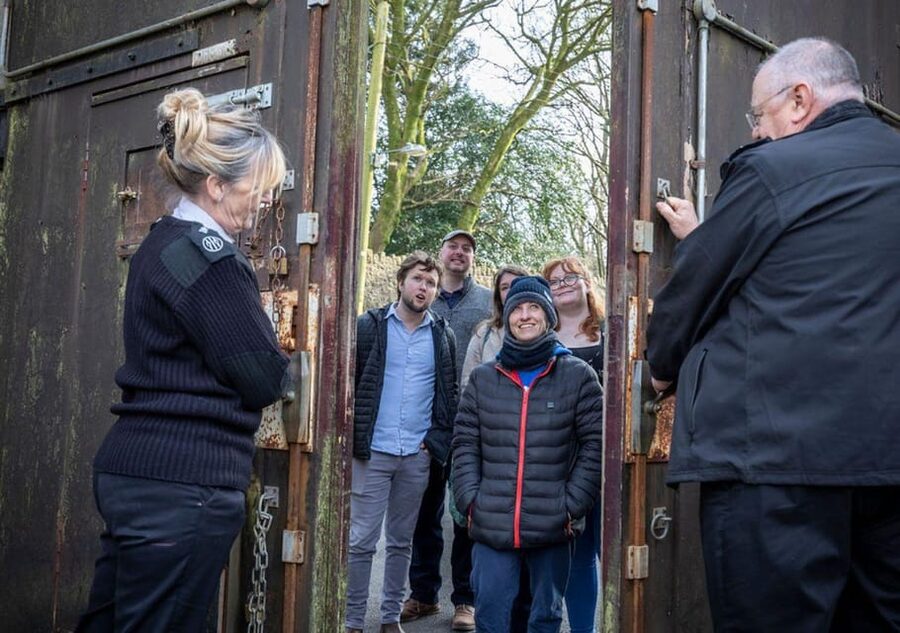
Some of the oldest parts of Shepton Mallet Prison are found around the old Gate Lodge and Governor’s Office. From the 1600s until the 1990s, this area served as the main entrance, so it changed repeatedly as the prison expanded and its role developed.
That long period of use makes this section useful for understanding how the prison grew over time. The place was not built all at once as a single Victorian institution. Different periods left their mark, and the entrance area links the older prison to its later form.
The uncovered cell is one of the most unusual features here. You can explore the space at close range, provided you do not mind crouching or crawling. It is exactly the sort of detail a guide can point out quickly, while a solo visit might leave you wondering why an ordinary-looking patch of old masonry matters.
The Gate Lodge also gives you a change of pace. After the long Victorian wings and hard-labour yard, you begin to see the prison as a layered site. Its history reaches from the 1600s through the 1990s, not just the Victorian period.
Exercise yard and the Governor’s House
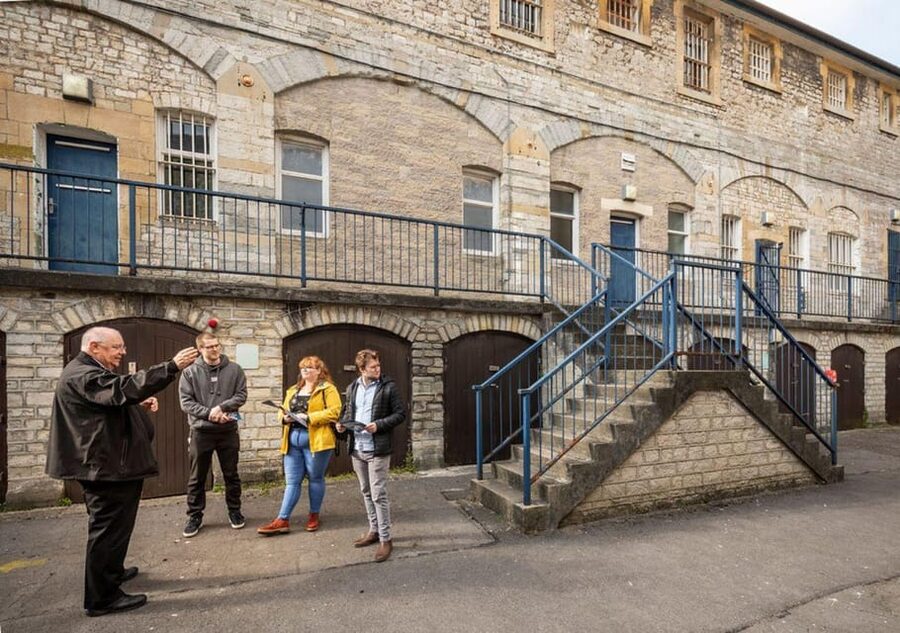
The large exercise yard is overlooked by three wings and the old Governor’s House. The view brings together the different sides of prison life: the enclosed space for prisoners, the buildings that controlled it, and the residence associated with senior prison management.
This is a good place to pause and take in the layout. The prison was designed around observation and separation. The surrounding wings were not just buildings placed beside a yard. They shaped how people moved, exercised, waited, and were watched.
The yard also helps balance the tighter indoor sections. You can step into a more open space, but the high surrounding structures keep the sense of enclosure. It is a useful stop for photographs, though the subject matter remains serious.
If you enjoy architecture, this is one of the most revealing parts of the route. The prison’s design tells you as much as the objects on display. Look up at the wings and then back toward the Governor’s House. The contrast is clear without needing much explanation.
The condemned cell and execution room
The execution section is the most emotionally difficult part of the tour. You follow the route taken by men who went from the condemned cell to the execution room, where they spent their final days before execution.
Twenty-five men were executed within the prison grounds between 1889 and 1945. Most executions took place in the execution room, often under the supervision of Albert Pierrepoint, one of Britain’s best-known executioners.
The guide explains the crimes involved and the controversies surrounding some convictions. That second part is important. The section is not simply a list of names and dates. It raises questions about evidence, justice, and the possibility of wrongful conviction.
You can also visit the final resting place of seven executed men. The prison grounds include the site of two military firing-squad executions as well, adding another layer to the story.
This is not a light attraction, and the execution room may not suit everyone. I would not treat it as a novelty stop. It works best when approached as a serious historical site, with time to listen and reflect.
What the guide adds to the visit
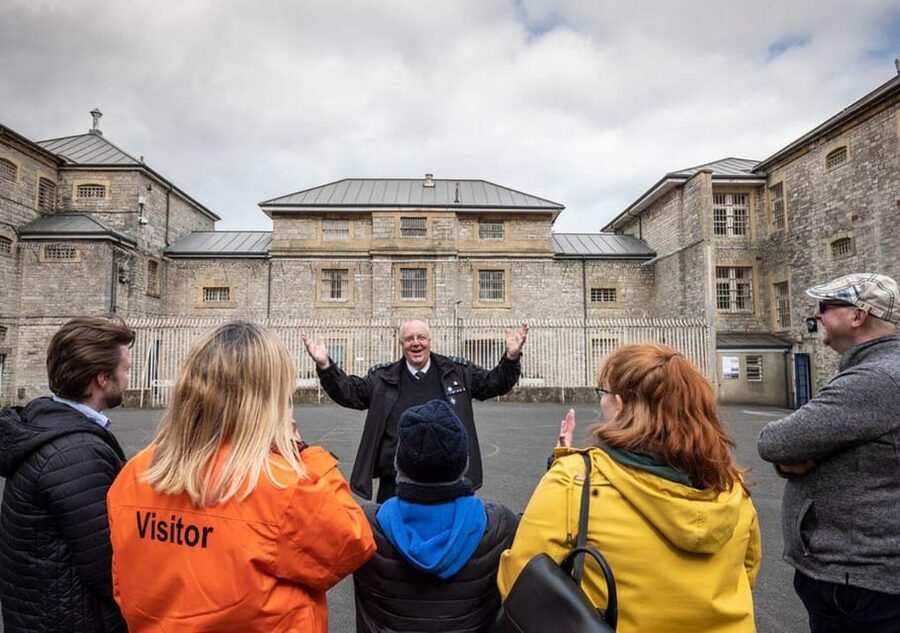
The guides are central to the experience. Jason has a clear talent for making information interesting, and Esther is a strong storyteller who connects facts with human detail. Cameron is friendly and brings a large store of prison knowledge to the walk.
That matters because the prison itself can only explain so much. A landing is a landing until someone tells you who used it, how the space functioned, or what changed over the years. The guide turns individual rooms into connected stories.
The best part of the guided format is the chance to ask questions. The guides are prepared to discuss the prison’s past and recent periods, and the tour can become more useful when you ask about a particular wing, punishment, or execution.
You should still leave time for the self-guided section. One hour may not be enough to see every display after the guided walk, especially if you read carefully. One person who enjoyed the tour planned to return because several parts of the prison remained unexplored.
The guided tour is popular, so advance booking is sensible. Weekday tours run at 2pm. On weekends and during school holidays, there are usually 11am and 2pm options. Check the available time when booking, since the tour schedule can affect the rest of your day.
Price, timing, and practical value
The experience costs about $33 per person. That is not the cheapest short attraction, but the price includes both the guided tour and self-guided access. You are paying for more than a 1.5-hour talk. You also get time to explore the wider prison at your own speed.
I think the value is strongest if you use the ticket as a half-day outing rather than a quick stop. The guided section gives you the main story, while the additional displays and rooms let you follow your own interests.
The on-site cafe serves barista-style coffee, hot drinks, and snacks. The gift shop sells souvenirs, which can be useful if you want something connected to the visit, though neither is included in the tour price.
The meeting point is the Shepton Mallet Prison visitor centre on Frithfield Lane, Shepton Mallet, Somerset, BA4 5FQ. Follow the entrance far enough to reach the centre. A sign could make the approach clearer, so allow a little extra time if you are arriving close to the tour start.
Free cancellation is available up to 24 hours before the activity for a full refund. You can also reserve and pay later, which is handy if your South West England plans are still shifting.
Who should book this prison tour?
I would recommend the guided tour to adults and older children interested in crime, punishment, British social history, architecture, or unusual historic sites. It suits anyone who prefers real places and human stories to glossy displays.
It is also a good choice for repeat visitors to Somerset who want something different from the usual country houses and gardens. Shepton Mallet Prison has a strong sense of place, and the guide-led format keeps the visit moving.
I would be more cautious if you are sensitive to executions, overcrowding, or stories about harsh treatment. The tour is informative, but it is not gentle entertainment. The condemned cell and execution room can be particularly upsetting.
You should also choose the guided option rather than relying only on the self-guided visit. The self-guided access is a useful bonus, but the history makes far more sense when Jason, Esther, Cameron, or another guide explains what you are seeing.
Should you book Shepton Mallet Prison?
Book it if you want a serious, hands-on look at one of England’s oldest prison sites, and plan to stay after the guided walk to explore the displays. The strongest reasons are the real Victorian wings, the hard-labour yard, the uncovered cell, and the detailed stories connected to the execution room.
Skip it if you want a cheerful family attraction or if the subject of executions is likely to overshadow the rest of your day. For most history-minded visitors, though, the combination of a strong guide and self-guided access makes the $33 price fair. Go in ready for a sobering visit, listen closely, and give yourself more than the basic 1.5 hours.
FAQ
How long does the Shepton Mallet Prison guided tour last?
The guided tour lasts 1.5 hours. Self-guided access is also included, so you can continue exploring after the timed tour.
What is included with the ticket?
The ticket includes entry to the guided tour, access to the real Victorian prison, an English-speaking live guide, and a self-guided visit at your own pace.
What language is the tour conducted in?
The guided tour is conducted in English.
Where does the tour start?
The tour starts at the Shepton Mallet Prison visitor centre on Frithfield Lane, Shepton Mallet, Somerset, BA4 5FQ.
What time do the guided tours run?
Guided tours run at 2pm from Monday to Friday. On weekends and during school holidays, tours run at 11am and 2pm, subject to availability.
Can I visit the execution room?
Yes. The tour includes the execution room and the condemned man’s cell, along with information about the 25 men executed within the prison grounds between 1889 and 1945.
Is the self-guided tour included?
Yes. Self-guided access is included, allowing you to explore parts of the prison after the guided tour at your own pace.
Is there food and drink at the prison?
Yes. The on-site cafe offers barista-style coffee, hot drinks, and snacks. These purchases are not included in the tour price.
Can I cancel my booking?
You can cancel up to 24 hours in advance for a full refund. Reserve-now, pay-later booking is also available.
New listings around Britain
- London: Secrets of Freddie Mercury Tour with a Cocktail★ 4.1 · 15 reviews
- London: Hampton Court Private Guided Tour★ 3.4 · 15 reviews
- Edinburgh: Isle of Skye, Highlands & Jacobite Steam Train★ 4.6 · 15 reviews
- London: Jack the Ripper Tour and Underground Prison in Spanish★ 5.0 · 15 reviews
- THE HANGOVER BRUNCH | Benidorm Bingo & Drag Queens★ 4.5 · 15 reviews
- Spanish Language : Original Harry Potter Walking Tour★ 4.5 · 15 reviews
- London: Private Couples Photography Session with Landmarks★ 5.0 · 15 reviews
- London: The Saturday Supershow Cabaret at Phoenix Arts Club★ 4.5 · 15 reviews
Salisbury & Stonehenge Tours, compared.

Stonehenge Morning or Afternoon Tour Optional Lunch
Read our review →

Stonehenge, Glastonbury & Avebury Small Group Tour
Read our review →
Stonehenge: App Guided Tour + Admission Included
Read our review →
Glastonbury Day Tour – ‘The Quest’ – Magdalene, King Arthur
Read our review →Browse the lists this tour appears in