

Reviewed · SALISBURY & STONEHENGE TOURS
Shepton Mallet Prison: Self-Guided Tour
Shepton Mallet Prison gives you a rare look inside a real working jail, not a dressed-up museum. You move through Victorian wings, old work areas, the execution room, kitchens, and exercise yards while the walls do much of the talking. I like the freedom to stop where I want, and the interactive sound boxes add useful detail without forcing you to follow a group.
I also like the range of subjects covered, from prison meals and hard labour to the diseases treated in the infirmary. The main drawback is simple: finding the route and every exhibit can take effort. The map helps, but one recent visit found the signs unclear and missed the kitchens and workshops, so a guided tour may suit you better if you want a clear route and more spoken context.
Key points at a glance
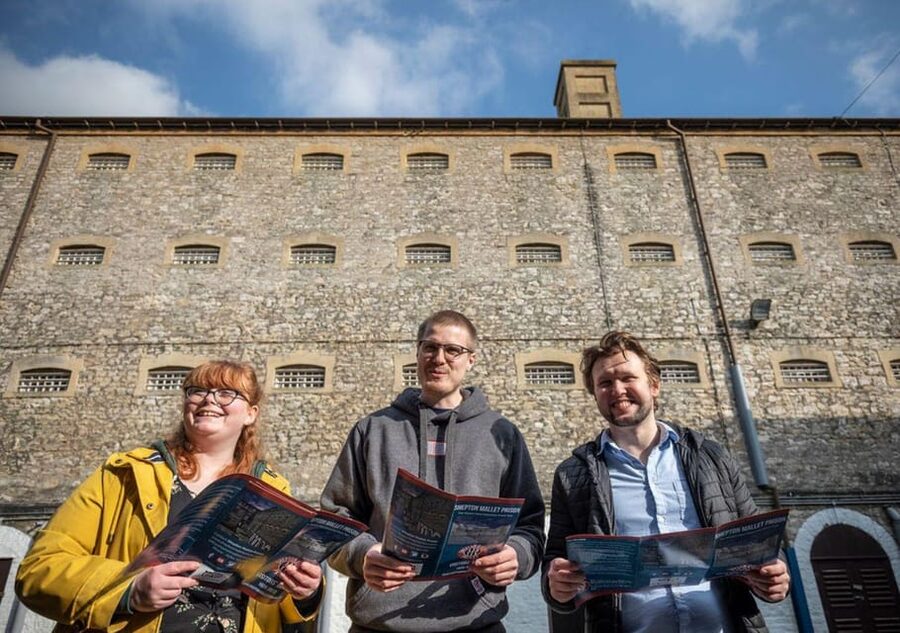
- Real Victorian prison: Explore a decommissioned jail with original areas, later prison wings, and working-era facilities.
- Self-guided freedom: Use the map, information boards, and sound boxes at your own speed.
- Execution history: See the execution room, seven graves beside the perimeter wall, and the site of two military firing squad executions.
- Hard labour on display: Learn about the treadwheel and other forms of Victorian prison work.
- Good family option: Children can investigate the venue without needing to stay with a guide for the whole visit.
- Plan for cool interiors: Wrap up warmly in winter, since the prison buildings can feel cold.
Entering through Frithfield Lane

Your visit begins at the Shepton Mallet Prison Visitor Centre, just beyond the main gates on Frithfield Lane, Shepton Mallet, BA4 5FQ. This is the place to get oriented before you enter the main prison areas.
Take a moment to collect the map and understand the suggested route. The experience is designed for independent exploring, but the buildings are not laid out like a simple museum with one obvious corridor from start to finish. If you rush straight through, you may miss a side room or an important display.
Staff are available to point you in the right direction and answer questions. That matters here because the prison has several wings, yards, rooms, and historic sections. The help is there, but you still need to pay attention to the map and signs.
The self-guided format works well if you dislike being hurried. You can pause at a sound box, spend longer in a cell, or move quickly through an area that interests you less. Families also get more flexibility than they would on a tightly timed guided walk.
More Self-Guided Tours in Salisbury & Stonehenge:
- Stonehenge: App Guided Tour + Admission Included
★ 3.6 · 20 reviews - London: Emirates Stadium Entry Ticket and Audio Guide
★ 4.7 · 5,513 reviews - London: British Museum Audio Tour & Priority Entrance Ticket
★ 4.5 · 631 reviews
Visits, kitchens, and the business of feeding prisoners
After arriving in the Visits area, make your way to the recently renovated kitchens. This is one of the more practical parts of the prison, since it shows how food preparation and cooking fitted into the daily running of the jail.
I find working spaces like this more revealing than a room filled with objects behind glass. The kitchens help you think about the prison as a functioning institution. Meals had to be prepared, equipment had to be managed, and large numbers of people had to be fed inside the walls.
The kitchen stop also gives you a useful change of pace early in the visit. Prison tours can become a long sequence of cells and corridors, so seeing a service area helps build a fuller picture of daily life.
This is one place where following the map matters. A recent self-guided visit missed the kitchens and workshops, despite them being part of the advertised route. That does not mean the areas are unavailable, but it does show why you should check your route rather than assume every major stop will appear directly in front of you.
Seven graves and two military execution sites

Near the perimeter wall, you can find the graves of seven executed men. The location is plain and serious. It is not presented as a theatrical scare attraction, and that restraint suits the subject.
You can also see the site of two military firing squad executions. These locations give the prison a darker weight than the general displays alone. They also remind you that the site served different roles over time and was connected to military punishment as well as civilian imprisonment.
I recommend taking this section slowly. The information boards and interpretation spaces provide background, but the physical setting is important too. A grave against a prison wall says a great deal with very little decoration.
This is likely to be one of the most memorable parts of the visit for adults. Parents may want to explain the subject in an age-appropriate way before arriving, especially if younger children are sensitive to discussions of death and punishment.
The treadwheel building and Victorian hard labour
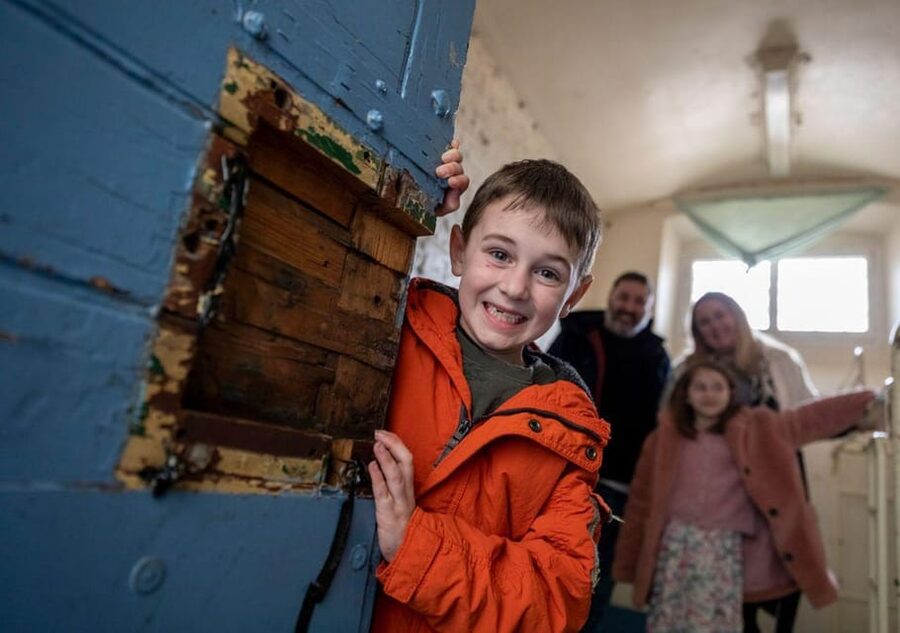
Around the treadwheel building, you learn about Victorian forms of hard labour. The treadwheel is an instantly understandable symbol of old prison discipline: repetitive work, strict routine, and physical effort used as punishment.
The building also connects to the infirmary above, where you can learn about diseases prisoners suffered from while inside. This pairing is useful because it shows both sides of prison labour. The system demanded work, while poor conditions and illness could make that work even harder.
The exhibit is not just about machinery. It helps you ask what prison authorities thought labour was meant to achieve and what it actually cost the people forced to perform it. The sound boxes and boards give you facts at your own pace, so you can spend extra time here if social history interests you.
You might find this area less immediately dramatic than the execution room, but it is one of the places that gives the visit substance. It moves the experience away from simple ghost stories or prison imagery and toward the routines that shaped everyday life.
A handful of other Salisbury & Stonehenge outings to weigh up
- Stonehenge Admission Ticket
★ 4.6 · 6,388 reviews - London: Stonehenge Morning or Afternoon Tour Optional Lunch
★ 4.4 · 3,966 reviews - From London: Stonehenge Morning Day Trip with Admission
★ 4.8 · 3,423 reviews - London: Stonehenge, Glastonbury & Avebury Small Group Tour
★ 4.6 · 90 reviews
Older sections in the Gate Lodge and Governor’s office
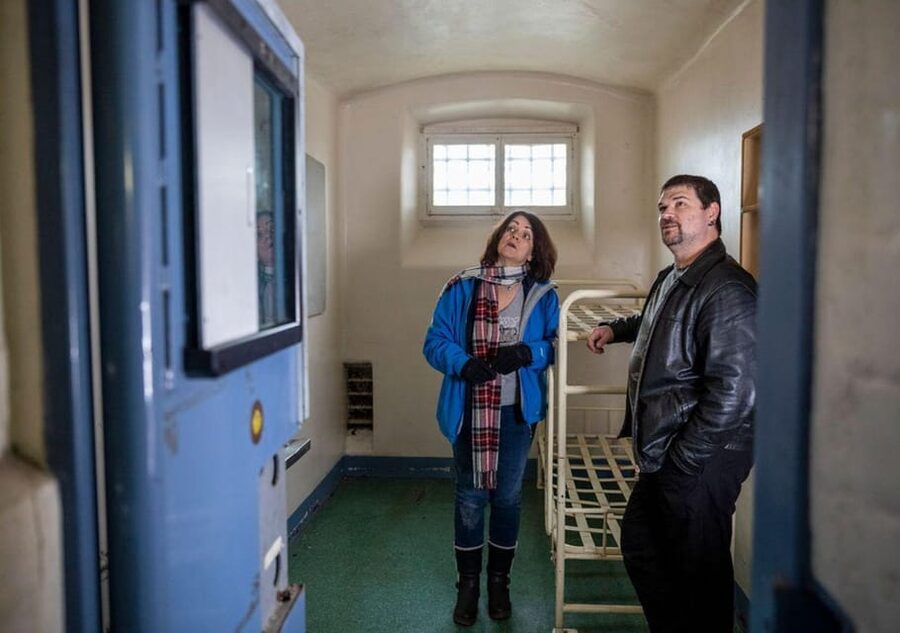
The Old Gate Lodge and Governor’s office contain features connected with the original 1600s prison. These rooms help you see that Shepton Mallet Prison was not built in one single period and then left unchanged.
The older fabric gives the site a layered feel. You can compare the early prison spaces with the later Victorian wings and see how ideas about control, management, and confinement changed over time.
The Governor’s office is also valuable because it shifts your viewpoint. Much of a prison visit naturally focuses on the people held inside, but the office represents the administrative side of the institution. Orders were issued, records were kept, and the prison was managed from spaces like this.
Do not expect every room to feel large or grand. The appeal is in the contrast between sections and in the way the buildings show different stages of the prison’s life. The information boards are particularly useful if you want the dates and background that the rooms themselves cannot provide.
Three Victorian wings around the exercise yard
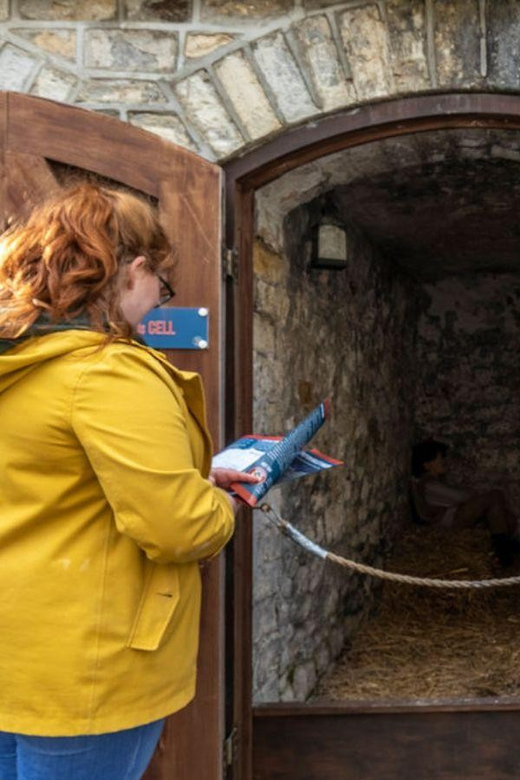
The exercise yard forms one of the main organizing points of the visit. Three Victorian wings surround it, with a fourth wing a short distance away.
This layout helps you understand the scale of the prison. You are not simply walking through a handful of preserved rooms. You are moving around a working complex designed to separate, supervise, and contain people.
The wings also make for some of the best CELLfie opportunities. The attraction encourages photographs at points around the site, so you can record the visit without treating the whole place like a standard photo stop. The setting itself supplies the atmosphere: heavy doors, enclosed yards, narrow passages, and rows of cells.
The self-guided system is useful in the wings because everyone in your group may react differently. You can stop to read, take a photograph, or listen to a sound box while someone else continues ahead. For families, that flexibility may be worth as much as the lower-pressure pace.
Still, the layout can be confusing. One visitor found the route difficult to follow and did not see some of the listed areas. Keep checking the map around the exercise yard, and ask staff if you are unsure where the fourth wing or a workshop area is located.
The execution room and the final condemned walk
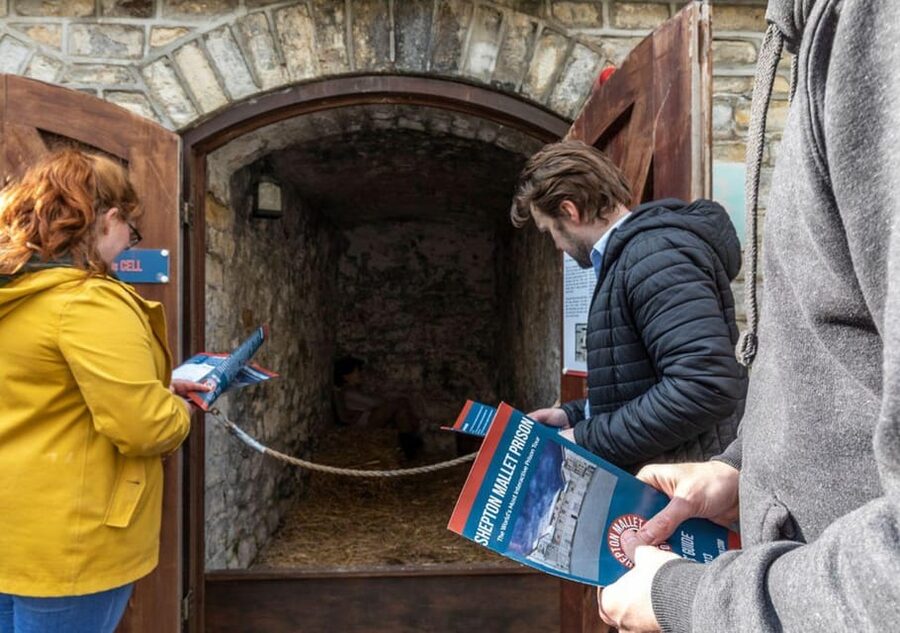
The execution room is likely to be the most intense stop. Here you can follow the route taken by condemned men who were hanged inside the prison.
The room is not simply another historic interior. Its purpose gives the surrounding corridors a different mood, and it asks you to think about the personal reality behind official punishment. The information provided helps place the room in context, while the physical setting makes the subject feel close and concrete.
You may want to leave extra time here rather than treating it as a quick photo stop. The execution room is one of those places where reading every panel changes what you take away from the space.
The prison’s execution history will not appeal to everyone. If you prefer light, hands-on attractions, this section may feel too grim. If you are interested in criminal justice, social history, or the realities of old prisons, it is an important part of the experience.
Using the map, sound boxes, and information boards

A self-guided prison tour succeeds or fails on its interpretation. Shepton Mallet provides three main tools: a map, written information boards, and interactive sound boxes.
The map gives you the basic route. The boards supply dates, facts, and explanations. The sound boxes add another layer, allowing you to hear information rather than relying only on printed panels.
I like this mix because it lets you choose how much information you want. You can scan the main points and keep moving, or stop and build a fuller picture of each area. It also makes the visit less dependent on a single guide’s pace.
The tradeoff is that self-guided interpretation asks more of you. A guide naturally points out the next room and connects one subject to another. Alone, you need to notice the signs and keep track of the route. The 5 out of 5 experience rating from the available feedback reflects the strong value and interest for some visitors, while the lower scores point to a real weakness: navigation is not always obvious.
If you want the best version of the self-guided visit, arrive ready to explore rather than simply follow a corridor. Read the map at each major area, listen to the sound boxes, and ask staff when a route seems to end too soon.
How much time and energy should you allow?
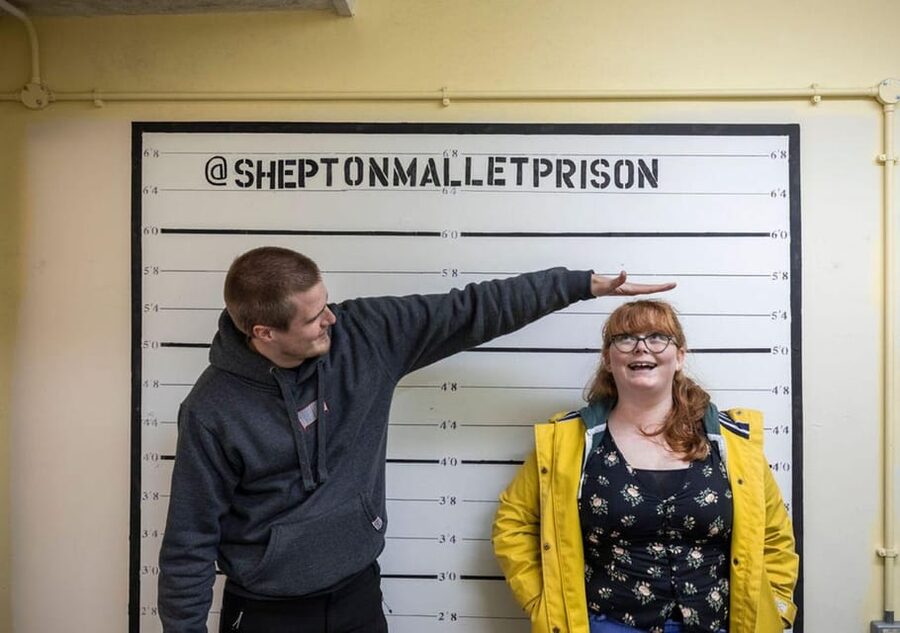
The ticket is listed at $20 per person and is valid for one day. That price is reasonable if you take time with the displays and cover the main buildings rather than racing through.
The value comes from the variety of the site. You get prison wings, kitchens, the treadwheel building, the infirmary area, older prison sections, execution sites, graves, yards, and interpretation displays in one visit. It is not just a walk past cells.
The visit can also stretch to fill much of a day because you control the pace. The supplied duration is one day, and the prison describes the experience as an ideal day out for families with young children. You should not assume every visitor will need a full day, but the option is there if you read the panels, pause for sound boxes, and explore all available areas.
Wear comfortable shoes and bring a warm layer in winter. The instruction to wrap up is practical: old prison interiors are not the place to rely on summer clothing, even if the weather outside seems mild.
Café, shop, and the return to the Visitor Centre
Finish back at the Visitor Centre, where you can find prison and local history displays. This gives you a useful final stop because it lets you review the visit after seeing the main site.
The café sells barista-style hot and cold drinks and snacks. Food and drinks are not included in the admission price, so budget separately if you plan to take a break during the day.
The gift shop sells Shepton Mallet Prison merchandise and gifts. It is an optional stop, but the prison-themed items can make a more meaningful souvenir than a generic attraction memento, especially if you have spent time learning about the site.
Having the café and shop at the end also helps families. You can finish the historic section, take a break, and leave without needing to search for refreshments elsewhere. Just remember that these extras are purchases on site, not part of the $20 ticket.
Who will enjoy this self-guided visit?
I would choose this experience if you like historic buildings, prison history, social history, or places where the setting itself carries much of the story. It also suits families with children who enjoy investigating at their own pace.
It is a good fit for independent visitors who prefer not to stay with a group. You can spend longer in the kitchen, skip quickly through a less interesting display, or stop for photographs whenever you like.
I would think twice if you want a polished, fully narrated route with every major room clearly signposted. The self-guided format has real freedom, but it also requires attention. The available feedback includes strong praise for the information and value, alongside a clear warning that the route can be hard to follow.
A guided option may be worth the extra cost if you want more explanation or worry about missing areas such as the kitchens and workshops. The self-guided ticket is the better bargain when you are happy to read, listen, ask questions, and find your own way.
Should you book Shepton Mallet Prison?
Book it if you want a serious, unusual day out in a real former prison and value freedom over a fixed tour script. The combination of Victorian wings, old prison sections, work areas, execution sites, sound boxes, and information displays gives you far more than a quick look at cells.
Go in with realistic expectations. This is not a glossy attraction, and the route may take a little work to understand. Use the map, ask staff for help, dress warmly in winter, and allow enough time to explore properly.
At $20 per person, it offers good value for visitors who take an interest in the details. Choose the guided tour instead if clear direction and spoken storytelling matter more to you than setting your own pace.
FAQ
Where does the self-guided tour start?
The experience starts at the Shepton Mallet Prison Visitor Centre, just beyond the main prison gates on Frithfield Lane, Shepton Mallet, BA4 5FQ.
How much does the self-guided tour cost?
The listed price is $20 per person.
How long is the ticket valid?
The ticket is valid for one day. You should check availability for the available starting times.
Is the tour guided?
No. This is a self-guided experience. You use a map, information boards, and interactive sound boxes, while staff remain available to answer questions and provide directions.
What can I see inside Shepton Mallet Prison?
You can see the kitchens, graves of seven executed men, two military firing squad execution sites, the treadwheel building, infirmary area, Old Gate Lodge, Governor’s office, Victorian wings, exercise yard, execution room, and Visitor Centre displays.
Are food and drinks included?
No. The on-site café sells barista-style hot and cold drinks and snacks, but these are not included in the admission price.
Can I cancel or pay later?
You can cancel up to 24 hours in advance for a full refund. A reserve now and pay later option is also available, so you do not need to pay at the time of booking.
New listings around Salisbury & Stonehenge
- Half-Day tour to Stonehenge from Bath for 2-8 adventurers★ 5.0 · 3 reviews
- From Glastonbury: 2-Day Tintagel, Boscastle & Dartmoor Tour★ 5.0 · 4 reviews
- Stonehenge, Salisbury & Wiltshire Road Trip Travel Guide★ 3.0 · 4 reviews
- Southampton Port to London via Stonehenge,Lacock & Bath★ 5.0 · 5 reviews
- Shepton Mallet Prison Guided Ghost Tour★ 5.0 · 6 reviews
- From London: Stonehenge Summer Solstice Sunset Tour (Jun 20)★ 5.0 · 7 reviews
- Glastonbury Day Tour – ‘The Quest’ – Magdalene, King Arthur★ 4.4 · 17 reviews
- Salisbury: Old Sarum Entry Ticket★ 4.1 · 18 reviews
Salisbury & Stonehenge Tours, compared.

Stonehenge Morning or Afternoon Tour Optional Lunch
Read our review →

Stonehenge, Glastonbury & Avebury Small Group Tour
Read our review →
Stonehenge: App Guided Tour + Admission Included
Read our review →
Glastonbury Day Tour – ‘The Quest’ – Magdalene, King Arthur
Read our review →Browse the lists this tour appears in